
- 4 leading manufacturers
- 48 additional suppliers
- 24 states and provinces
- 25 related categories
- 5 guide sections
Foam Converting Companies
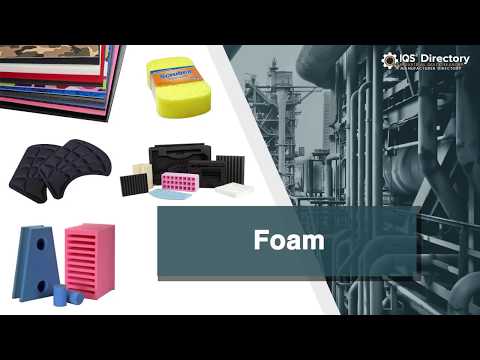
IQS Directory provides an extensive list of foam manufacturers and suppliers. Utilize our website to review and source foam manufactures with our easy-to-use features which allow you to locate foam companies that will design, engineer, and manufacturer foam for your exact specifications. Our request for quote forms make it easy to connect with leading foam manufacturers. View company profiles, website links, locations, phone number, product videos, product specific news articles and other production information. We are a leading manufacturer directory who will connect you with the right manufacturers whether you are looking for foam for cushions, foam products, or foam materials.
Suppliers located in MI, PA, NJ +21 more states
Contents (4 sections)
Leading Foam Converting Manufacturers
Showing all 4
| Placement No. | Manufacturer | Location | Contact | Actions | |
|---|---|---|---|---|---|
| 1 | American Excelsior CompanyThe applications for foam fabricating are only limited by one’s imagination; that is our slogan at American Excelsior. We are a foam supplier who offers many different foam cushions & foam padding for over a dozen industries. We offer foam materials like polyurethane foam, polyethylene foam & closed-cell foam; & services such as CNC foam cutting. Let us take your concept & turn it to reality. | Arlington, TX | |||
| 2 | FlextechSince 1992, Flextech has delivered innovative, custom engineered foam solutions. We combine our engineering and design services with our unique foam lamination, fabrication, and thermoforming capabilities, to provide quality foam components to a diverse customer base. Our customers include OEM’s in the medical, industrial, military, aerospace and consumer products markets. We invite you to connect and collaborate with our sales and engineering team. Let us show you the Flextech advantage! | St. Louis Park, MN | |||
| 3 | Deluxe Packaging, Inc.Deluxe Packaging works hard to always create cost-effective solutions and services for our clients better than anyone else. We offer a full array of high quality products, including polyurethane foam, polystyrene foam, and polyethylene foam. Our products are customizable to match a product’s fragility and size. Deluxe Packaging is your complete packaging solution provider for all of your packaging needs. | Pennsauken, NJ | |||
| 4 | Thrust IndustriesHere at Thrust Industries we provide die cut foam that comes in a variety of shapes and configurations. We die cut foam from a number of materials including: urethane, PVC, polyester, neoprene, ether, cellular, volara, and much more. If you would like customized die cut foam then please give us a call today! | Evansville, IN |
Claim your Page One Spot
Leading foam converting manufacturers are listed first on this page, each with a website preview and a Request a Quote button on its row.
Additional Foam Converting Companies
The category’s other foam converting companies are listed on their own page, with location, phone and website where each supplier provides them.
View 48 Additional Foam Converting CompaniesDo not see your company listed in Foam?
Engineers and buyers use this page to find foam converting suppliers. Add your company to the Foam listings so they can find you too.
List Your Company- Listed in the Foam directory
- A profile page for your company
- Buyers contact you directly
Quick Answers
- How many foam converting manufacturers are listed on IQS Directory?
- 4 leading manufacturers and 48 additional suppliers.
- Where are foam converting manufacturers located?
- The listed suppliers are in 24 states and provinces: Michigan (7), Pennsylvania (7), New Jersey (5), North Carolina (3), Texas (3), Washington (3), Wisconsin (3), California (2), and 16 more.
- How do I get quotes from foam converting suppliers?
- Select suppliers in the table and choose Request Quotes. IQS reviews your request and forwards it to every supplier you select.
Foam
Foam is defined as a synthetically fabricated, polymer-based material with countless air bubbles trapped inside. It is created by frothing and cooling a molten polymer material, which creates the air bubbles and gives the material a sponge-like texture.
Applications of Foam
Numerous industries use foam for a variety of applications, including:
- Insulation
- Acoustics
- Packaging
- Structural Support
- Cushioning
Different foams are used for each of these applications. Foam materials can be made from many kinds of synthetic polymers, including polyester, polyethylene, and polyurethane. Each of these materials have their own set of characteristics that make them the material of choice for certain applications.
The field of foam fabricating is rapidly evolving, with new innovations constantly being made. Foam is a fairly new material which has only been around for several decades, although it is used for countless day-to-day applications today. Researchers are constantly looking for new ways to both fabricate and implement foam. For instance, a foam mixture was recently discovered that is low in bulk weight and high in elasticity, chemical resistance, and a high rebound performance—much higher than expanded grades of ethylene vinyl acetate, polyethylene, and polypropylene—even when only a thin layer is used. All of these characteristics makes this material ideal for cushioning products, such as the lining of shoe soles or medical grade floor cushioning.
Characteristics of Foam
Every type of foam shares a few characteristics with one another, such as:
- Light Weight
- Low Water Vapor Transmission
- Low Thermal Conductivity
- Durability
- Compressibility
- Resistance to Mildew, Mold, and Bacterial Growth
Foam can also come in liquid form, which expands to fill gaps and other spaces in a way that solid foam cannot. Liquid foam is less common, but is nonetheless used for numerous applications such as fire retardant materials, and to prevent air and water leakage in construction projects.
Types of Foam
Foam can be split into two general categories:
Open Cell Structured Foam The pores—sometimes called cells—are joined together, resulting in a foam that is softer, more flexible, and can be easily compressed and broken apart. Closed Cell Structured Foam The cells are closed off from one another and do not compress or join together, thus making the foam more compact in arrangement, more firm, and more resistant to pressure.Here are some specific types of closed cell foams:
Polyurethane Foam A closed cell foam that is environmentally-friendly and ideal for applications that do not require a long life span, as the material is short-lived and capable of decomposing when exposed to either direct or indirect sunlight. Polyurethane foam is highly versatile and is commonly used in products such as lifeboats, surgical scrubbers, soundproofing, and seat cushions. It can also be used as a spray foam, which starts as a liquid and hardens after expanding and prolonged exposure to the air. Polyethylene Foam Made from mixing chemicals and adding a gassing agent, which causes the material to expand. The longer the process and the greater the intensity of the gassing agent, the more porous the foam product will be. The gas bubbles that are trapped inside the polymer make the foam flexible, unlike a solid polymer. This material is lightweight, has a high level of buoyancy, and is resistant to moisture. Because of its porous, resilient, and flexible nature, polyethylene is the ideal material for applications that require floatation, vibration, and shock absorption. In addition, polyethylene foam can extend the lifespan of a product and, in turn, greatly reduce maintenance costs.Fabrication Process of Foam
When foam is stored or transported to manufacturers, the most common form it takes are stock rolls, or buns. Foam fabricators can cut the foam to match the size, shape, and configuration of the final product. Other processes that are carried out by foam fabricators include hot wire cutting, die cutting, and water jet cutting.
Environmentally-Friendly Foam Fabrication
In addition to the growth of the foam industry, other changes are being made to the way foam is fabricated. Foam manufacturers have been favoring materials and energy sources for foam fabrication that are more environmentally-friendly. Alternative materials for foam have been the subject of many research projects. There are some companies that offer biodegradable, plant-based foams. Other companies have made it a point to manufacture their products using energy from a renewable source, such as solar and wind energy. Aside from finding an alternative source, there are simpler things that large companies can do that can reduce their carbon footprint, such as the elimination of toxins that are used in the fabrication of their products.