
- 7 leading manufacturers
- 80 additional suppliers
- 33 states and provinces
- 16 related categories
- 11 guide sections
Conveyor Manufacturers and Suppliers

IQS Directory provides a comprehensive list of conveyor manufacturers and suppliers. Use our website to review and source top conveyor manufacturers with roll over ads and detailed product descriptions. Find conveyor companies that can design, engineer, and manufacture conveyors to your companies specifications. Then contact the conveyor companies through our quick and easy request for quote form. Website links, company profile, locations, phone, product videos and product information is provided for each company. Whether you are looking for manufacturers of conveyor belts, conveyor rollers, transfer conveyors, or customized conveyors of every type, this is the resource for you.
Suppliers located in MI, OH, GA +30 more states
Contents (6 sections)
Leading Conveyor Manufacturers
Showing all 7
| Placement No. | Manufacturer | Location | Contact | Actions | |
|---|---|---|---|---|---|
| 1 | Pack Air Inc.At Pack Air Inc., we help manufacturers design and build innovative custom conveyors in the United States and Canada. Our specialty resides in creating custom conveyor solutions and product handling devices that help solve conveying problems. We don’t try to force fit pre-made conveyors into a box. Rather, we let the box define the solution, and we design your conveyor to fit right the first time. | Neenah, WI | |||
| 2 | NED Conveyor DesignWe are NED Conveyor Design, and we specialize in designing, manufacturing, and supporting conveyor systems that keep materials moving efficiently through demanding industrial environments. Our work centers on building conveyor solutions that are engineered for reliability, accuracy, and long-term performance, whether the application involves bulk materials, unit handling, or process-driven production lines. | Newark, NJ | |||
| 3 | Dynamic Air Inc.Dynamic Air custom designs and manufactures a complete line of pneumatic conveying systems for dry bulk granular materials. Dynamic Air offers 16 different pneumatic conveying concepts, utilizing both pressure and vacuum, for handling a wide variety of dry bulk solids to provide a conveying solution that fits the process perfectly. Each system has its own unique set of operating characteristics for pressure, conveying line velocity, efficiency and performance. | St. Paul, MN | |||
| 4 | Whirl-Air-Flow CorporationWhirl-Air-Flow has been specializing in the design, development and fabrication of pneumatic conveying systems since 1946. Our vast experience in dense and dilute phase conveying systems spans across a broad range of industries. Whirl-Air-Flow has over 55 years of specializing in dense and dilute phase conveying systems, blending systems, bag unloading systems, central vacuum systems, process controls and air slides to name a few. | Princeton, MN | |||
| 5 | Vecoplan, LLCVecoplan leads the charge with cutting-edge technologies that revolutionize waste and recycling. From versatile shredders and granulators to efficient conveying and sorting systems, Vecoplan offers a wide array of solutions for handling wood, paper, plastics, textiles, and more. Our tailored equipment sets new industry standards, meeting the demands of even the most challenging applications. | Greensboro, NC | |||
| 6 | Conveyor Engineering & Mfg. Co.Since 1977, Conveyor Eng. & Mfg. has been a leader in the manufacture of stainless steel screw conveyors and conveyor components (bearings, flighting, hangers, screws, troughs, etc.). We serve a wide variety of industries including wet corn milling, food, sugar, ethanol and chemical. Contact us to learn more about our conveyor systems. We are available to answer any of your questions, feel free to call us today! | Cedar Rapids, IA | |||
| 7 | Akona Process SolutionsAt Akona Process Solutions, we take pride in designing and manufacturing conveyor systems that bring efficiency, reliability, and innovation to material handling. Our team understands the importance of precision, durability, and streamlined operation, so we engineer our conveyors to meet the diverse needs of industries ranging from manufacturing and processing to packaging and distribution. | Monroe, NC |
Claim your Page One Spot
Leading conveyor manufacturers are listed first on this page, each with a website preview and a Request a Quote button on its row.
Additional Conveyor Companies
The category’s other conveyor companies are listed on their own page, with location, phone and website where each supplier provides them.
View 80 Additional Conveyor CompaniesDo not see your company listed in Conveyors?
Engineers and buyers use this page to find conveyor suppliers. Add your company to the Conveyors listings so they can find you too.
List Your Company- Listed in the Conveyors directory
- A profile page for your company
- Buyers contact you directly
Conveyor Industrial Manufacturing Guides
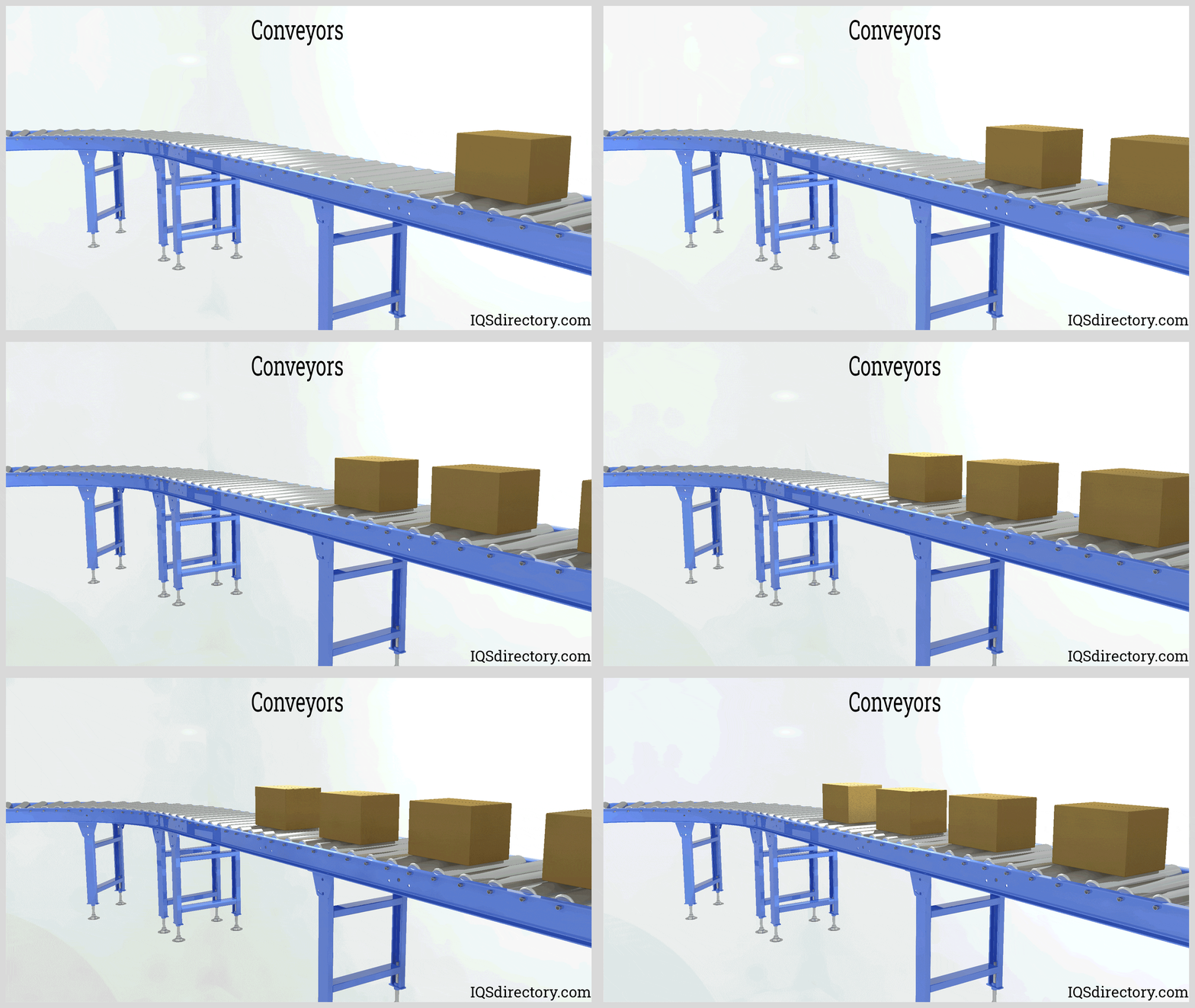
Conveyor Systems: Types, Requirements and Applications
The complete guide to conveyor systems on the internet. You will learn: What is a Conveying System? Conveyor System Requirements Types of Conveyor Systems How…
8 chapters, the longest in this category
More Guides
- Belt Conveyors: Types, Components and Applications6 chapters
- Bucket Elevators and Conveyors: Types, Applications and Advantages4 chapters
- Overhead Conveyors: Types, Applications and Benefits6 chapters
- Pneumatic Conveying: Types, Designs and Considerations8 chapters
- Roller Conveyors: Types, Applications and Benefits8 chapters
- Screw Conveyors: Types, Components and Configurations4 chapters
- Vacuum Conveyors: Everything you need to know about3 chapters
- Vertical Conveyors: Types, Uses and Benefits6 chapters
- Vibratory Conveyors: Everything you need to know about Types & Uses3 chapters
Quick Answers
- How many conveyor manufacturers are listed on IQS Directory?
- 7 leading manufacturers and 80 additional suppliers.
- Where are conveyor manufacturers located?
- The listed suppliers are in 33 states and provinces: Michigan (9), Ohio (7), Georgia (5), Ontario (5), Illinois (4), North Carolina (4), Texas (4), Virginia (4), and 25 more.
- How do I get quotes from conveyor suppliers?
- Select suppliers in the table and choose Request Quotes. IQS reviews your request and forwards it to every supplier you select.
Conveyors
Conveyors are a core component of modern material handling systems, designed to transport products, packages, food items, bulk materials, or machinery efficiently from one location to another within a facility or across multiple stages of automated production. In today’s manufacturing, warehousing, and distribution environments, conveyor systems play a central role in improving workflow efficiency, reducing manual labor, and supporting high-volume throughput operations. Because industries handle such a wide range of materials—from lightweight consumer goods to heavy industrial components—conveyors are available in numerous configurations tailored to specific operational requirements.
Among the most widely used solutions are belt conveyors, which provide smooth, continuous transport for a variety of items. These are followed by chain conveyors, roller conveyors, and spiral conveyors, each designed for unique load capacities, layouts, and production demands. Many facilities rely on fully integrated conveyor systems that combine multiple conveyor types into a cohesive solution, allowing materials to move seamlessly through sorting, assembly, packaging, and distribution stages.
Applications of Industrial Conveyors
Conveyor systems are widely used across industries such as manufacturing, food processing, packaging, logistics, and warehousing. They support continuous material flow, enabling faster production cycles and improved operational efficiency. Whether moving raw materials into production or transporting finished goods to shipping areas, conveyors help eliminate bottlenecks and reduce manual handling.
In automated environments, conveyors often integrate with robotics, sensors, and sorting systems to create intelligent workflows. For example, distribution centers rely on conveyors to scan, sort, and route packages based on destination. In food production, specialized conveyors handle delicate products while maintaining hygiene standards. Facilities frequently ask: how can conveyor systems improve throughput, reduce labor costs, or streamline packaging operations? The answer lies in selecting the right combination of conveyor technologies for each application.
History of Conveyors
The evolution of conveyor systems began in the late 19th century when Thomas Robins developed a belt conveyor to assist with mining operations. Over time, innovations in materials, engineering, and automation expanded conveyor capabilities. Modern systems now incorporate stainless steel construction, modular components, and advanced controls, allowing for greater durability and flexibility in demanding industrial environments.
How Conveyor Belts Work
Conveyor systems operate using a combination of mechanical motion, gravity, or pneumatic force. Belt conveyors rely on rotating rollers powered by motors to move items along a continuous surface. Chain conveyors use interconnected links for heavy-duty applications, while roller conveyors reduce friction to allow smooth product movement. Each system is engineered to meet specific load requirements, speed expectations, and environmental conditions.
Conveyor Design and Customization
Selecting the right conveyor system requires evaluating multiple factors, including material type, weight, dimensions, production volume, and facility layout. Custom conveyor solutions can be designed to navigate tight spaces, accommodate elevation changes, or integrate seamlessly with existing equipment. Businesses often explore questions like: which conveyor design best fits my workflow, or how can a modular system support future expansion?
Benefits of Using Conveyors
Conveyor systems offer numerous advantages, including improved efficiency, reduced labor requirements, and consistent product handling. They minimize manual lifting, enhance workplace safety, and enable continuous production. In industries such as food processing, conveyors also support sanitation and compliance standards, while in logistics, they accelerate order fulfillment and reduce processing time.
Conveyor Installation
Proper installation ensures optimal performance and longevity. Systems must be aligned with production flow, securely anchored, and tested under real operating conditions. Overhead conveyors require structural support, while floor systems must be positioned to maximize accessibility and efficiency. Planning plays a major role in ensuring seamless integration with existing operations.
Conveyor Safety Considerations
Workplace safety is a top concern when operating conveyor systems. Potential hazards include moving parts, pinch points, and falling objects. Implementing safety guards, emergency stop mechanisms, and employee training programs helps reduce risks and maintain a safe working environment.
Maintaining Your Conveyor System
Routine maintenance ensures consistent performance and prevents unexpected downtime. Regular inspections, cleaning, lubrication, and staff training all contribute to reliable operation. Facilities that invest in preventive maintenance often experience longer equipment lifespan and improved productivity.
Factors to Consider When Selecting a Conveyor System
When evaluating conveyor options, consider factors such as ease of operation, system reliability, energy efficiency, and scalability. Modern conveyor systems are designed to adapt to changing production needs, making modularity and flexibility valuable features for long-term success.
Choosing the Right Conveyor Manufacturer
Selecting a trusted manufacturer involves reviewing experience, product range, customization capabilities, and customer support. A reliable supplier will work closely with your team to design a system that meets your operational goals while ensuring performance, durability, and efficiency.
Conveyor System Types
Accumulating Conveyors
Used to collect and organize products during sorting or packaging processes.
Automated Conveyor Systems
Operate with minimal manual input, improving speed and efficiency.
Belt Conveyors
Provide smooth, continuous transport for various materials.
Chain Conveyors
Designed for heavy-duty applications requiring durability.
Common Questions
7 questions
What Are the Most Common Types of Conveyors Used in Manufacturing?
Belt conveyors are the most common, followed by chain, roller, spiral, and overhead conveyors. Facilities often integrate multiple types into one system to meet specific production needs efficiently.
How Do Gravity Conveyors Work?
Gravity conveyors rely on a slight downward incline and freely rotating rollers. Items move without motors or power, using only gravity and momentum for transport between stations.
Why Are Overhead Conveyors Popular in Industrial Facilities?
Overhead conveyors save floor space by suspending products above ground operations. They are ideal for large facilities or multi-level operations where floor-level systems may cause congestion.
What Factors Should Be Considered When Choosing a Conveyor System?
Key factors include material type, load size, throughput requirements, facility layout, automation level, maintenance needs, safety considerations, and scalability for future expansion.
How Are Conveyor Systems Installed in Industrial Facilities?
Installation involves positioning the system layout, anchoring the base, installing rollers or belts, integrating motors and controls, and aligning with production flow. Testing ensures smooth and reliable operation.
What Maintenance Is Required for Conveyor Systems?
Maintenance includes routine inspections, cleaning, lubrication, component replacement, and system monitoring to prevent downtime and extend equipment lifespan.
What Safety Concerns Exist with Conveyor Systems?
Potential risks include pinch points, falling loads, entanglement, and obstruction hazards. Proper installation, guarding, and employee training significantly reduce these risks.