



Belt Conveyors: Types, Components and Applications
IQS Directory EditorialUpdated 6 chapters
7 leading suppliers listed with this guide
Browse belt conveyors suppliersContents (6 chapters)
This article will take an in-depth look at belt conveyors.
The article will bring more understanding on topics such as:
- Belt Conveyors and their Components
- Types of Belt Conveyors
- Design and Selection of Belt Conveyors
- Applications and Benefits of Belt Conveyors
- And Much More…

Chapter 1: Understanding Belt Conveyors and Their Components
This chapter delves into the fundamentals of belt conveyors, conveyor system design, and the distinct components that support efficient material handling in industrial applications.
What Is a Belt Conveyor?
A belt conveyor is an efficient material handling system for transporting or transferring bulk materials, packaged goods, and even people from one location to another. Unlike other conveying systems that may rely on chains, spirals, rollers, or hydraulics, a belt conveyor uses a continuous conveyor belt as its primary conveying surface. This setup involves a loop of flexible material supported by idler rollers and actuated by an electric motor, creating smooth and reliable automated transport.
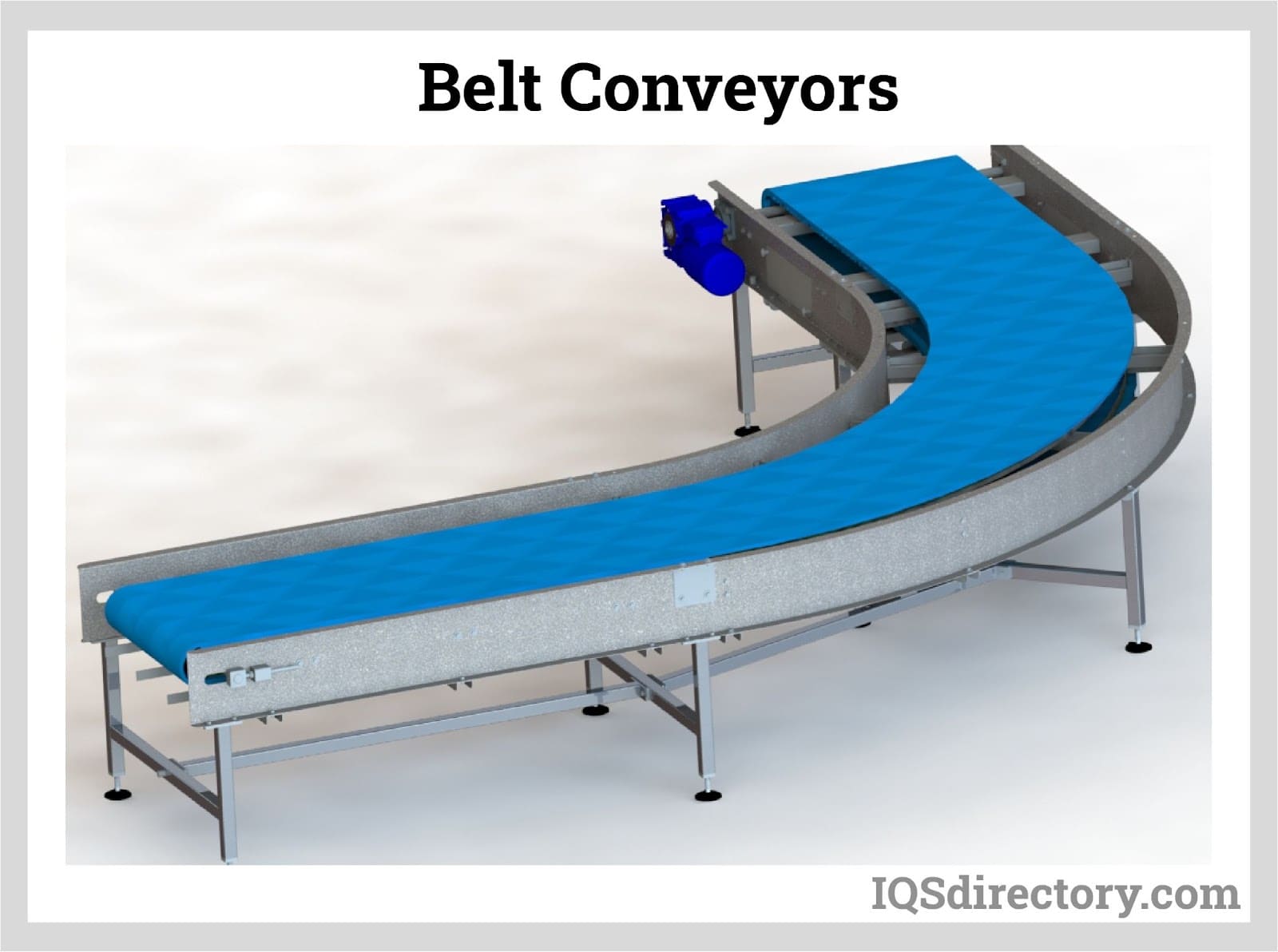
The range of items transported can be quite broad, which is why belt material selection must be matched to the application, load capacity, temperature, abrasion resistance, and operating environment. In general, conveyor belts are made from rubber, PVC, PU, polyester, or other polymer-based compounds, tailored to meet the demands of food processing, mining, packaging, warehousing, and manufacturing.
Components of a Belt Conveyor
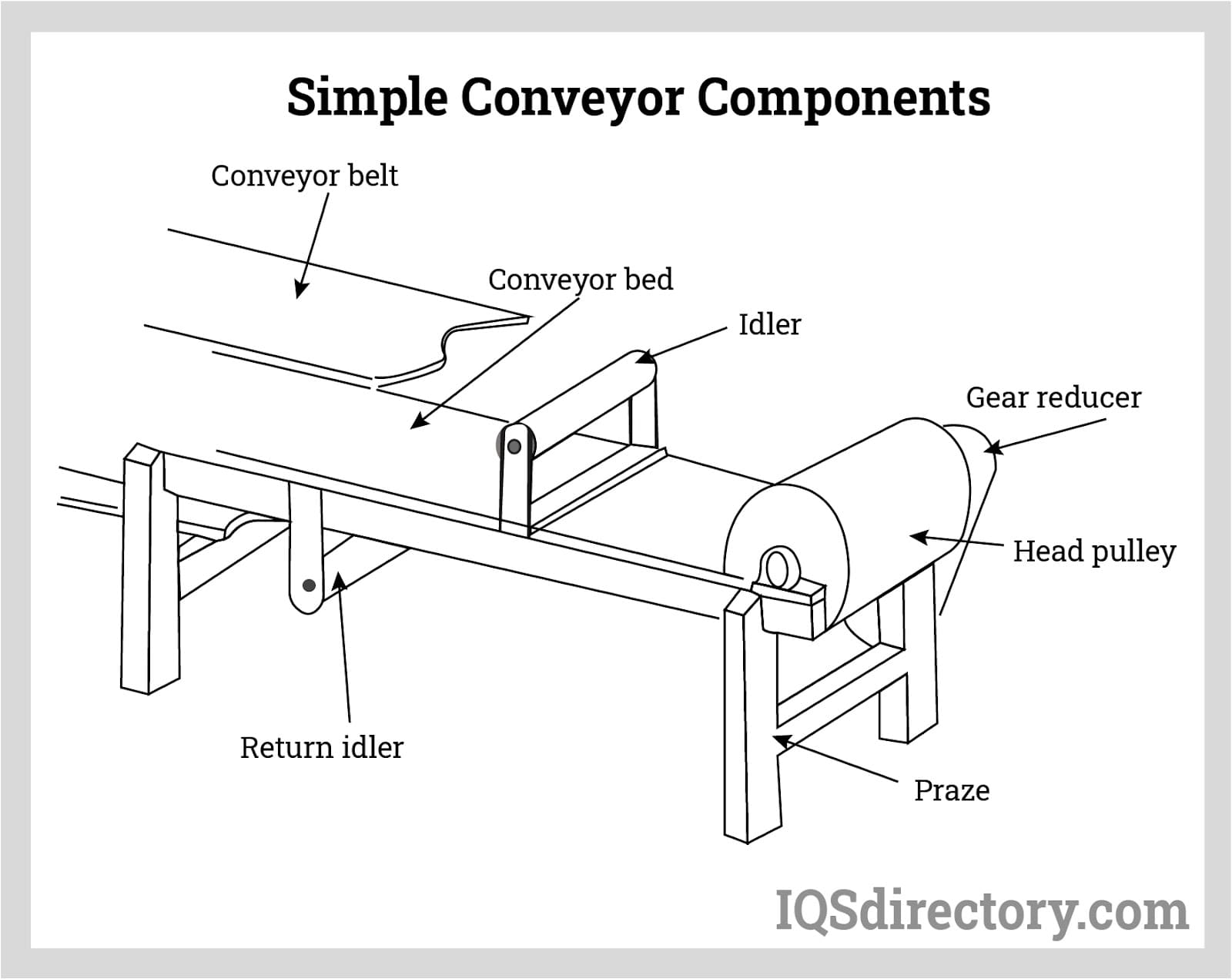
A typical belt conveyor consists of essential parts such as a head pulley, tail pulley, idler rollers, the belt itself, and the frame. In many systems, these components work together with a drive unit, take-up device, and belt tracking accessories to maintain stable operation, reduce wear, and improve throughput.
Head Pulley
Connected to an actuator and electric motor, the head pulley generates the pulling force that operates the conveyor. It is located at the discharge point where materials are unloaded, making it vital for system performance and overall conveyor efficiency. The outer surface is usually covered with a rough layer, known as lagging, to improve grip, reduce slip, and enhance power transmission.
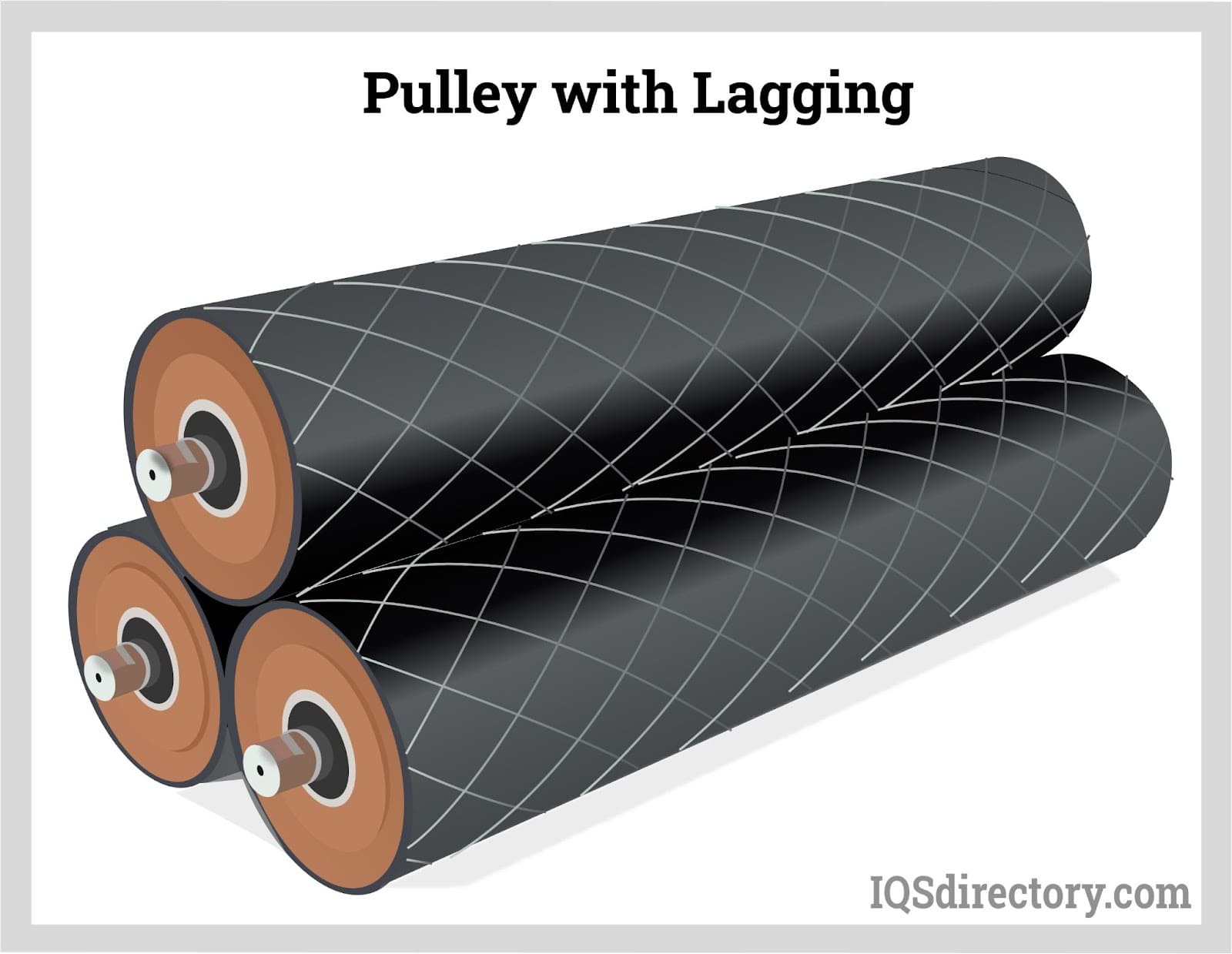
The head pulley generally has the largest diameter among all pulleys. Often, a system may contain several pulleys that can act as drive pulleys. The one at the discharge station is deemed as the drive roller, often having the maximum diameter, commonly identified as the head pulley. In many conveyor applications, selecting the correct pulley diameter, lagging type, and alignment is essential for minimizing belt wear and supporting long-term reliability.
Return or Tail Pulley
Found at the belt conveyor's loading end, the tail pulley often has a wing design to direct unwanted material away from the support structures, thereby helping clean the belt and reduce carryback. This improves belt tracking, reduces buildup, and supports smoother return-side operation.
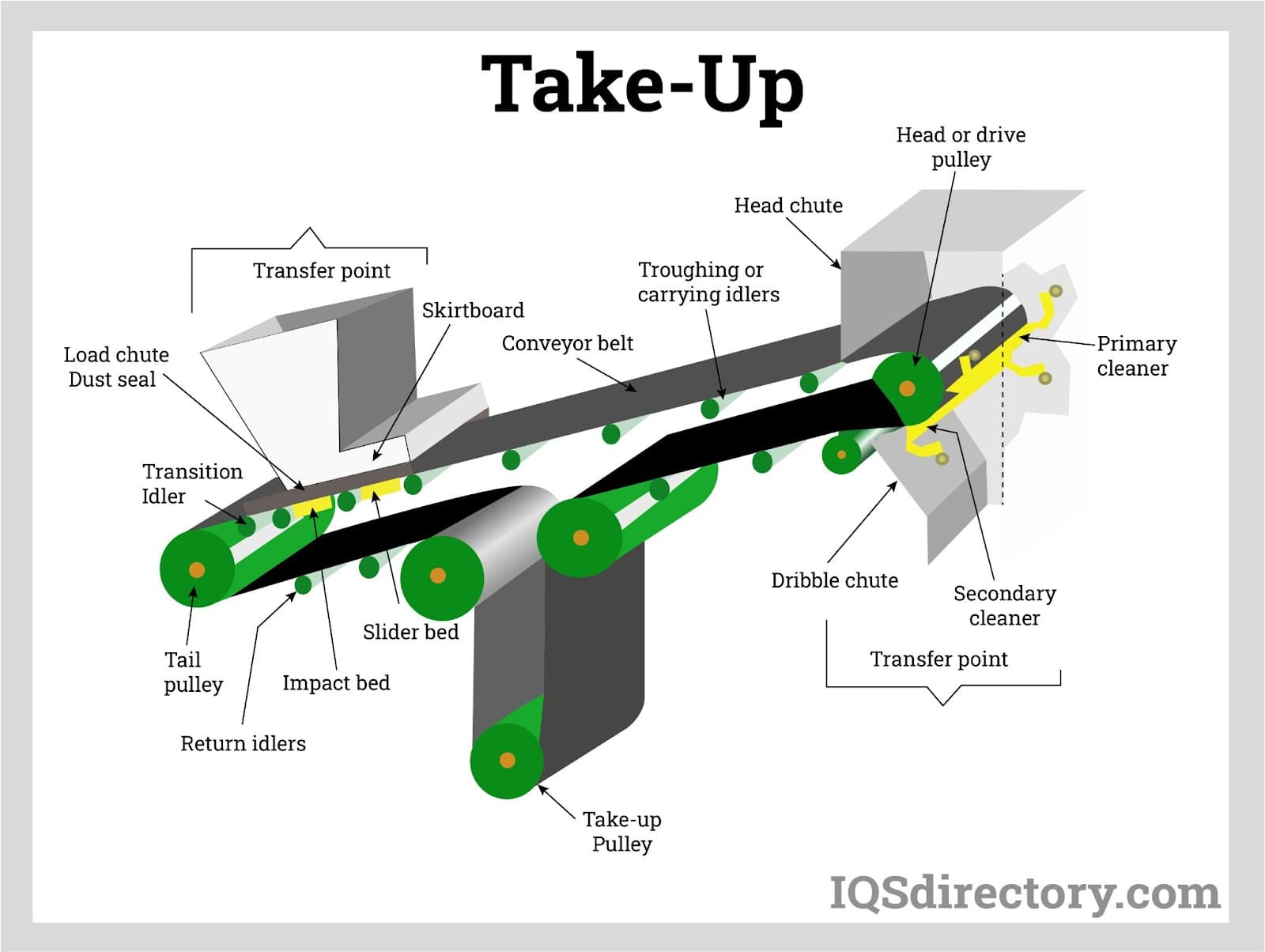
In basic setups, tail pulleys are placed on adjustable guides that allow tension adjustment. More advanced systems employ a separate mechanism called a take-up roller or take-up system for tension management, helping maintain proper belt tension, prevent slippage, and compensate for stretch over time.
Idler Roller
Positioned along the belt's length, idler rollers support the belt and its load, prevent sagging, ensure proper alignment, and clear carryback (residual material adhering to the belt). These conveyor idlers are critical for reducing friction, maintaining material flow, and protecting both the belt and frame.
Idler rollers might serve multiple functions, but their main purpose is to provide belt support and help the conveyor operate efficiently under changing load conditions.
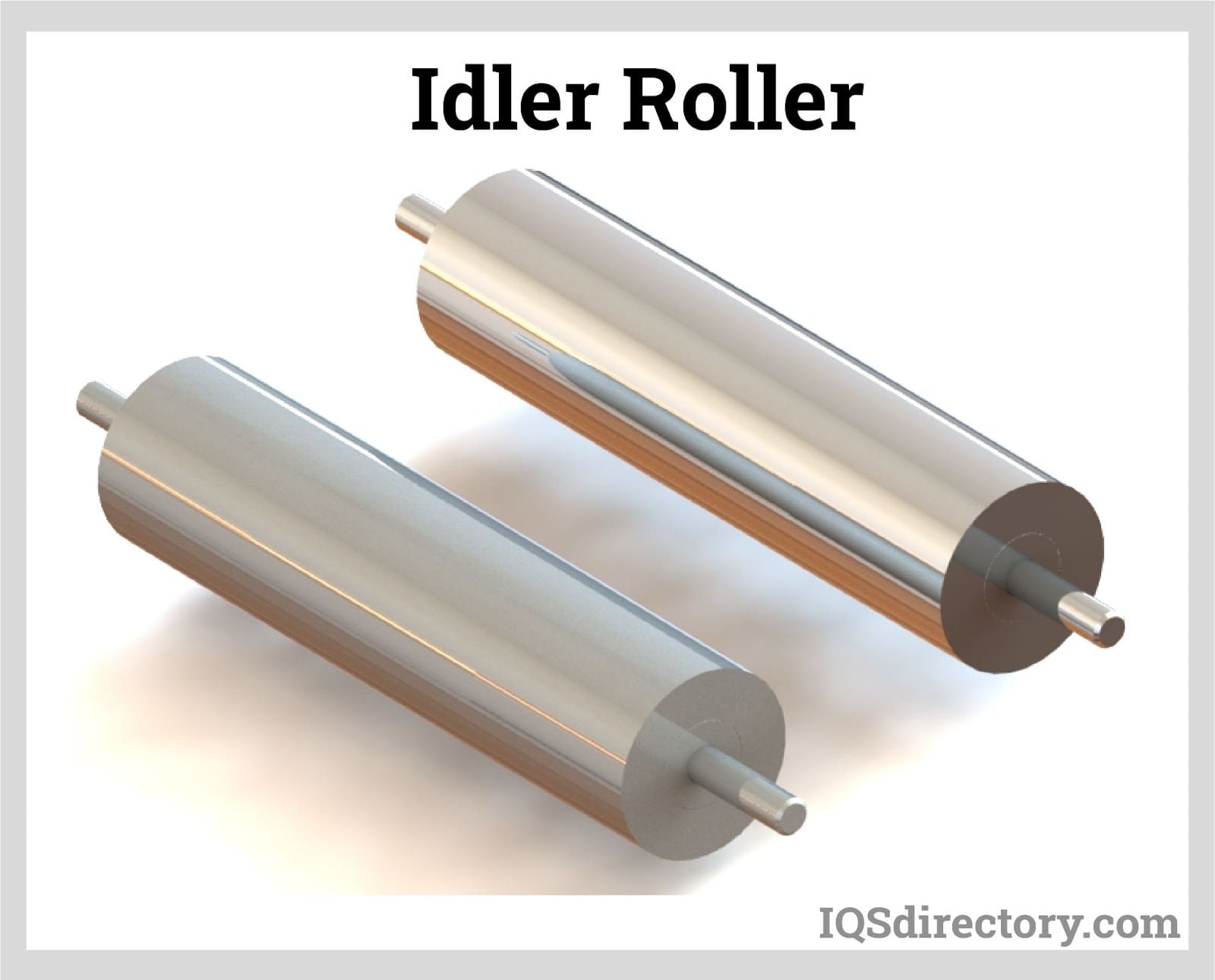
There are various idler roller types designed for distinct tasks, including troughed idlers, return idlers, impact idlers, and training idlers, as detailed below:
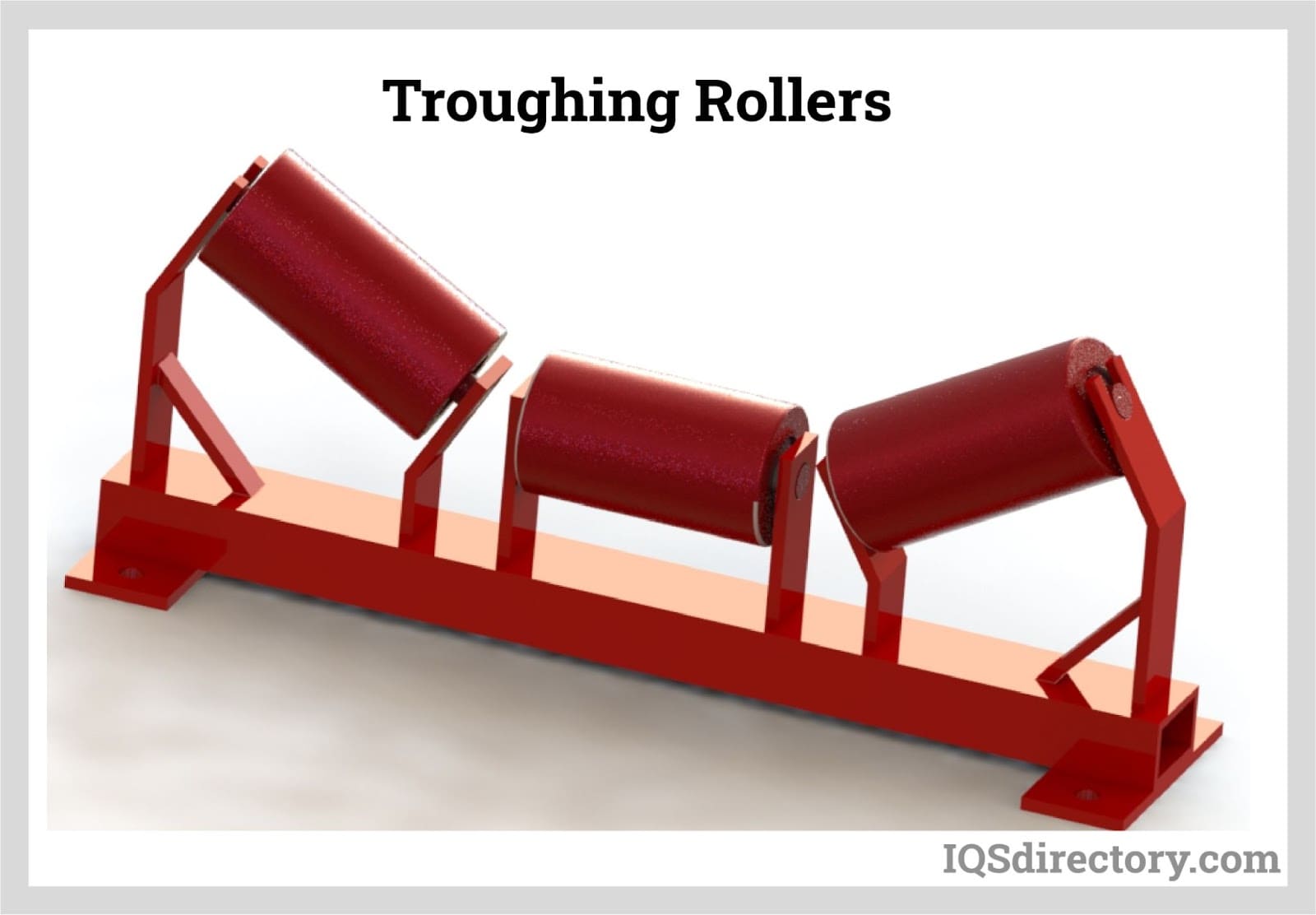
Troughing Idlers
Troughing idlers feature three rollers arranged to form a trough to support the belt on the load-carrying side. These idlers maintain belt stability by ensuring a uniform cross-sectional area across the belt's length, minimizing material spillage, improving bulk material containment, and increasing carrying efficiency.
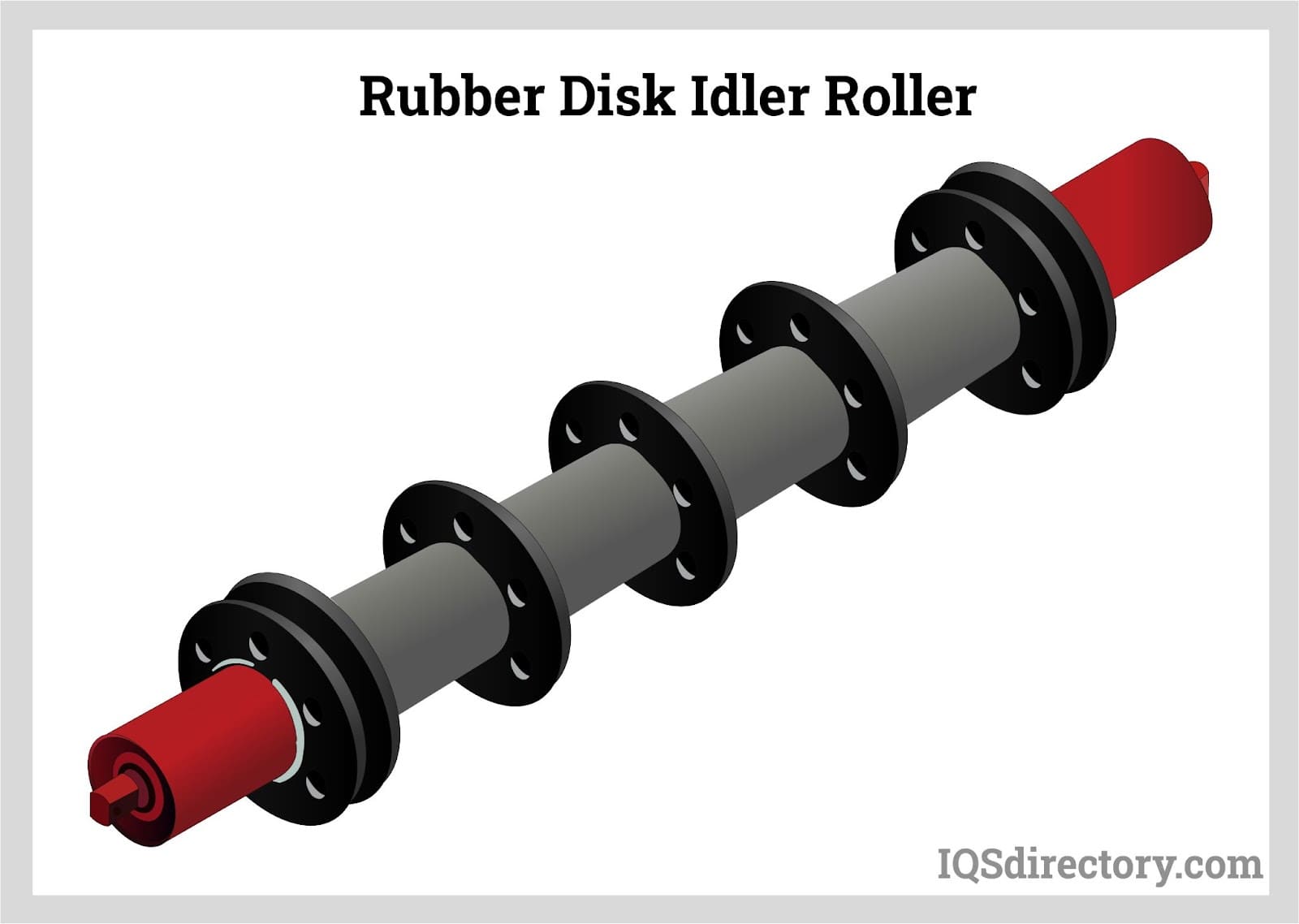
Rubber Disk Idler
Characterized by rubber disks spaced along the roller’s axis, this idler has disks at closer intervals at the ends to protect the belt edges. It helps in removing stuck materials, decreasing buildup, and reducing the likelihood of belt misalignment or mistracking. This self-cleaning design is especially useful where sticky materials, fines, or debris can accumulate.
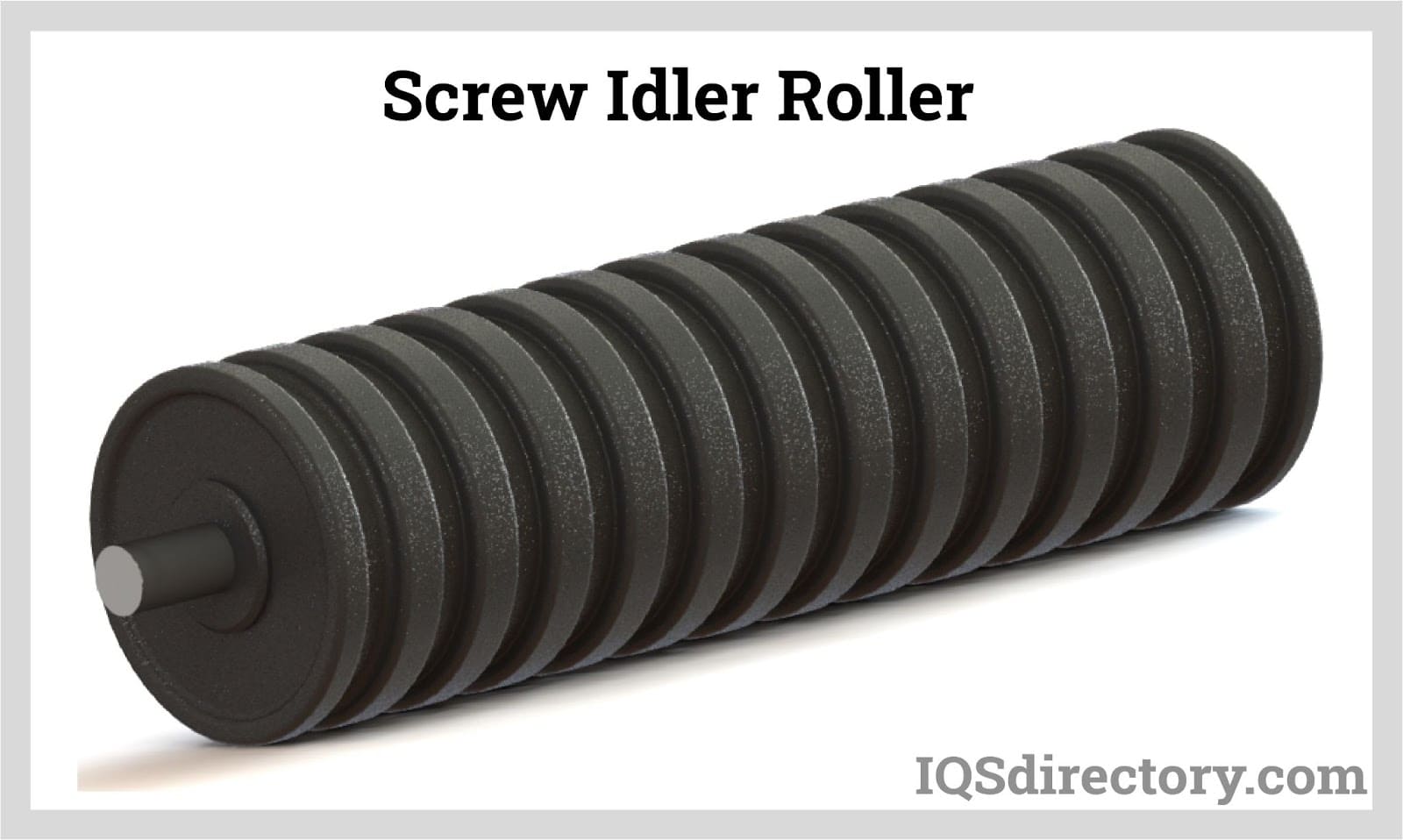
Screw Idler Roller
In some instances, the disks are arranged helically, resembling a screw, hence called a rubber screw idler roller. Although the design differs, its function remains consistent, particularly useful where a scraper isn't practical, such as on mobile conveyors, portable conveyors, and applications needing improved carryback control.
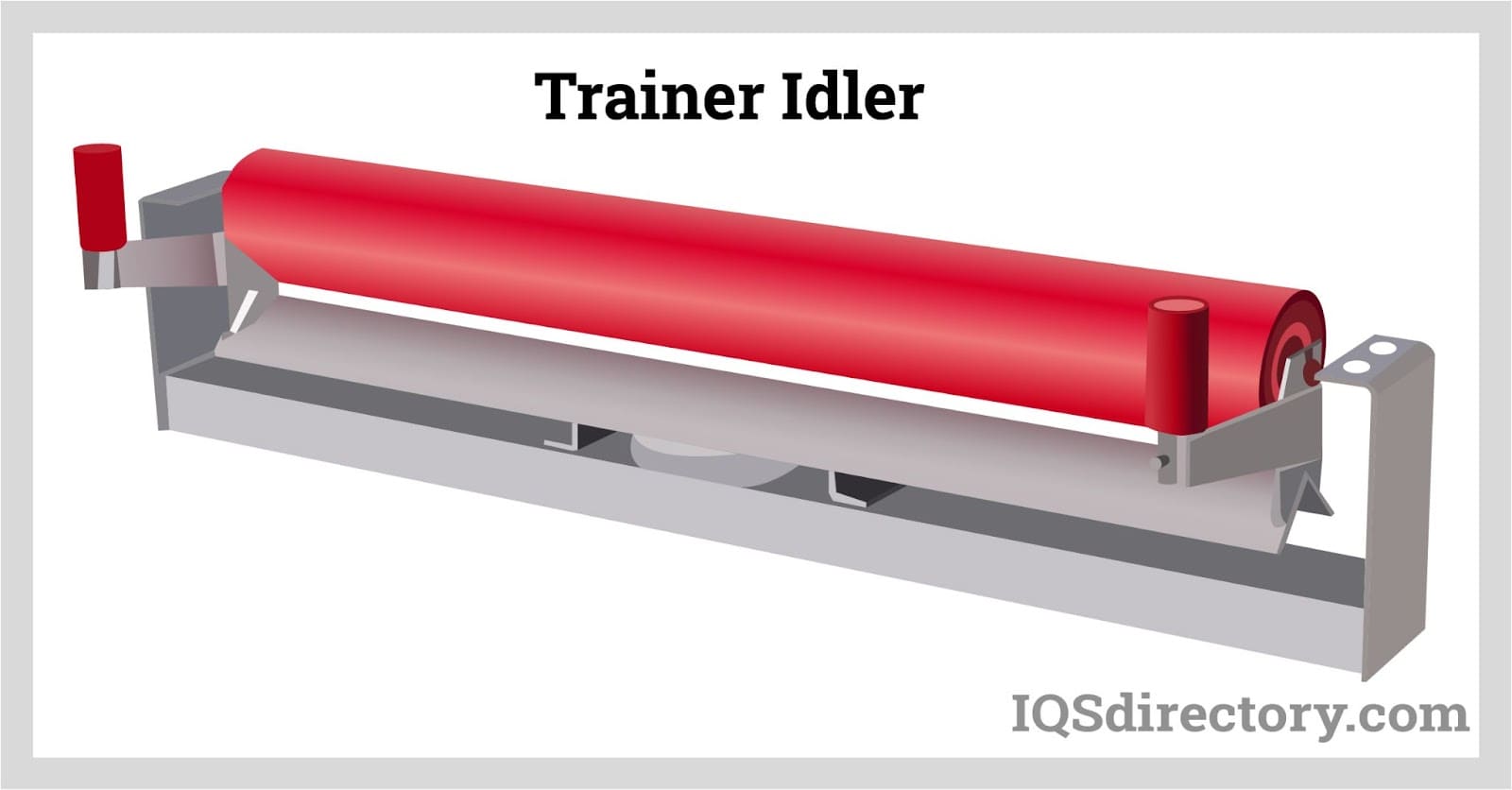
Trainer Idler
Trainer idlers are designed to maintain the belt's central path and combat mistracking. They feature a central pivot that realigns the belt if it shifts, and have two guide rollers to aid corrections. Proper conveyor alignment, idler spacing, and maintenance of these components can significantly reduce downtime and extend belt service life.
Conveyor Belt
The conveyor belt itself is often the most sophisticated component of the system. Its strength, flexibility, splice quality, and tension are crucial as it withstands the stress of loading and moving materials. Belt selection should account for abrasion resistance, tensile strength, temperature range, impact resistance, and the type of conveyed product.
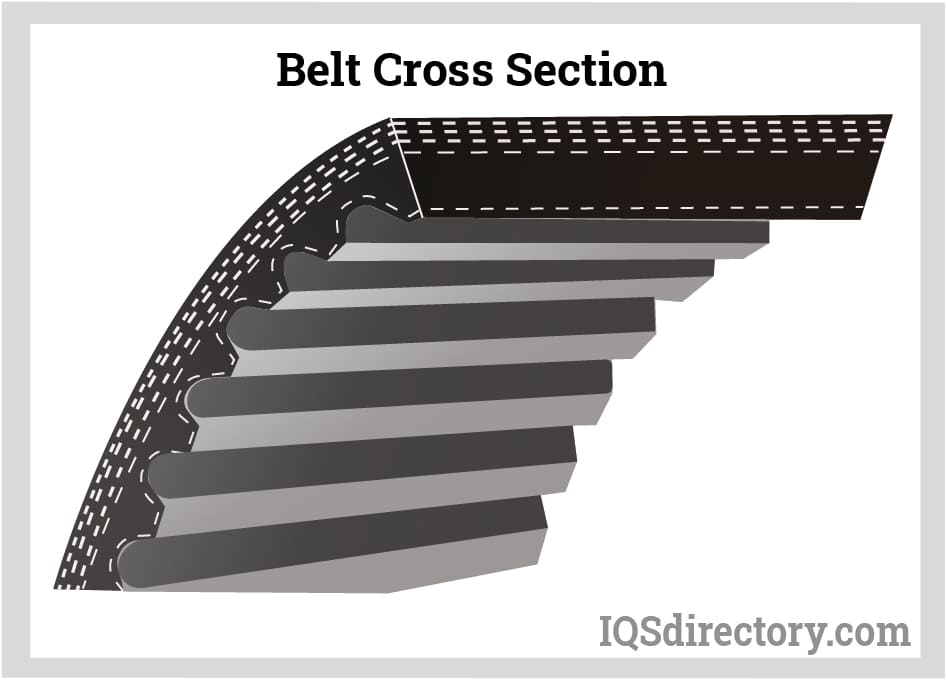
Demand for longer conveyors necessitates research into advanced materials, despite potential high costs. Opting for cost-effective materials may lead to failure, whereas strong, eco-friendly belts tend to be expensive. Typically, the belt cost should not exceed 50% of the total conveyor system cost, especially when evaluating long-term performance, maintenance requirements, and total cost of ownership.
Key components of a belt include:
Conveyor Carcass
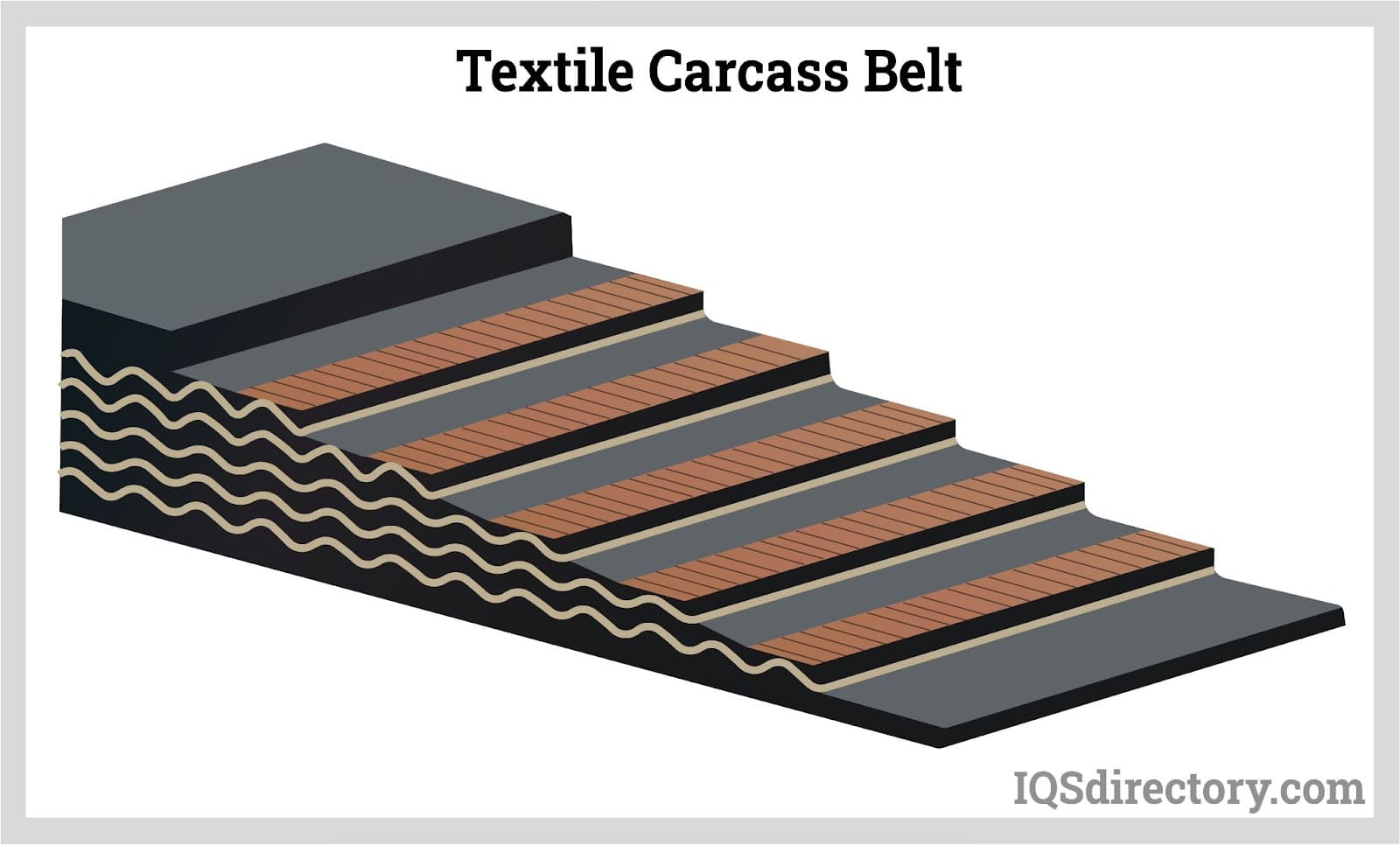
Forming the backbone of the belt, the carcass provides strength and supports the load while absorbing impact. It requires splicing to create a loop, often needing bolts and fasteners, necessitating a firm foundation in the carcass. The carcass may also influence belt tracking, flex fatigue resistance, and the conveyor’s overall load-bearing capacity.
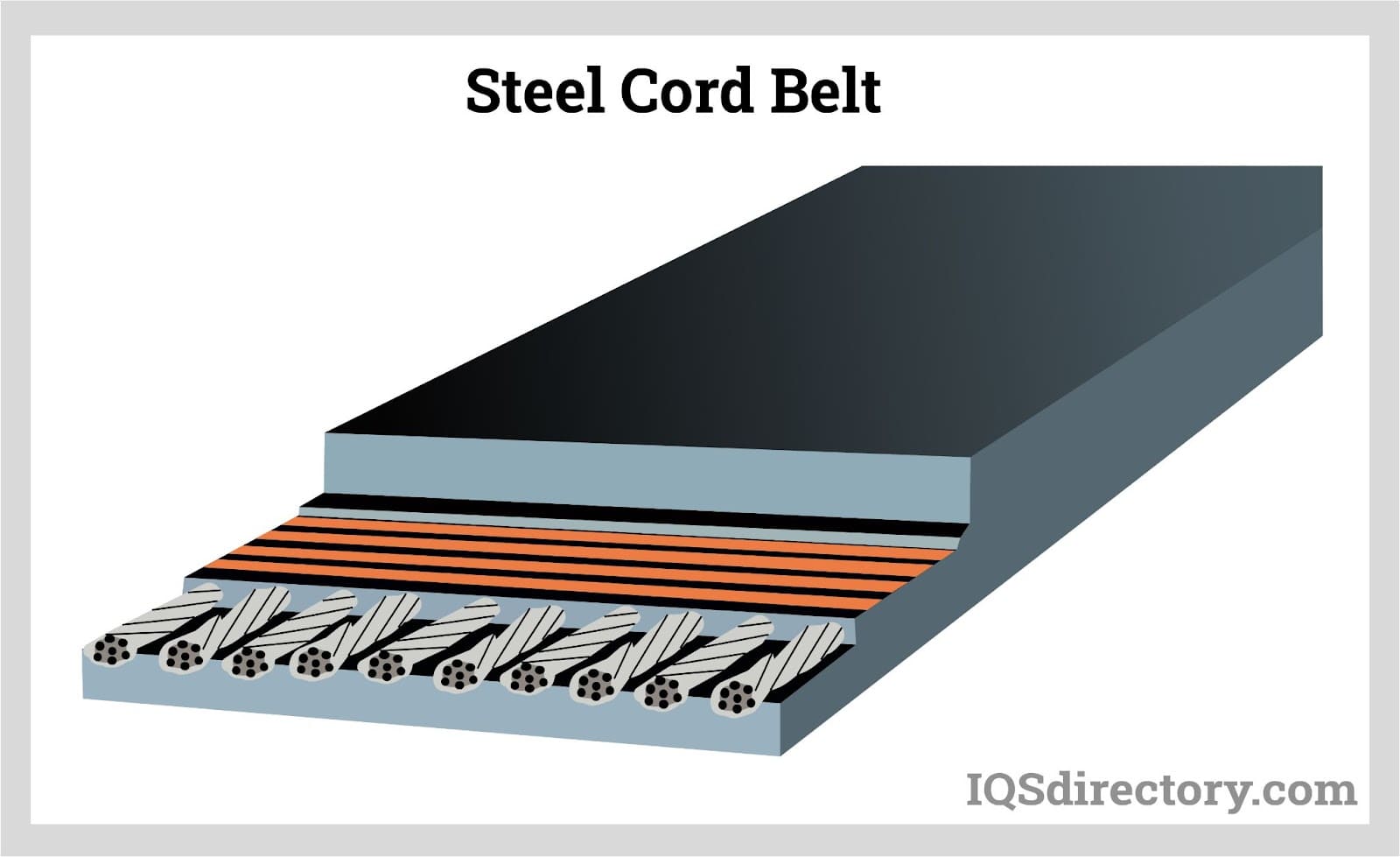
Common materials include steel cords or textile plies, like aramid, polyamide, and polyester fibers. Carcasses can include multiple layers, sometimes with PVC coating for single-ply configurations. In heavy-duty conveyor systems, steel cord belts are often selected for long-distance conveying, high tension, and demanding mining or aggregate environments.
Conveyor Covers (Top and Bottom & Sides)
Constructed from flexible materials like rubber or PVC, the covers endure environmental conditions. It's critical to select covers based on usage needs, such as flame resistance, temperature tolerance, grease resistance, and food-grade compliance. Cover thickness, wear rating, and chemical resistance also play an important role in selecting the right belt for industrial, sanitary, or high-abrasion applications.
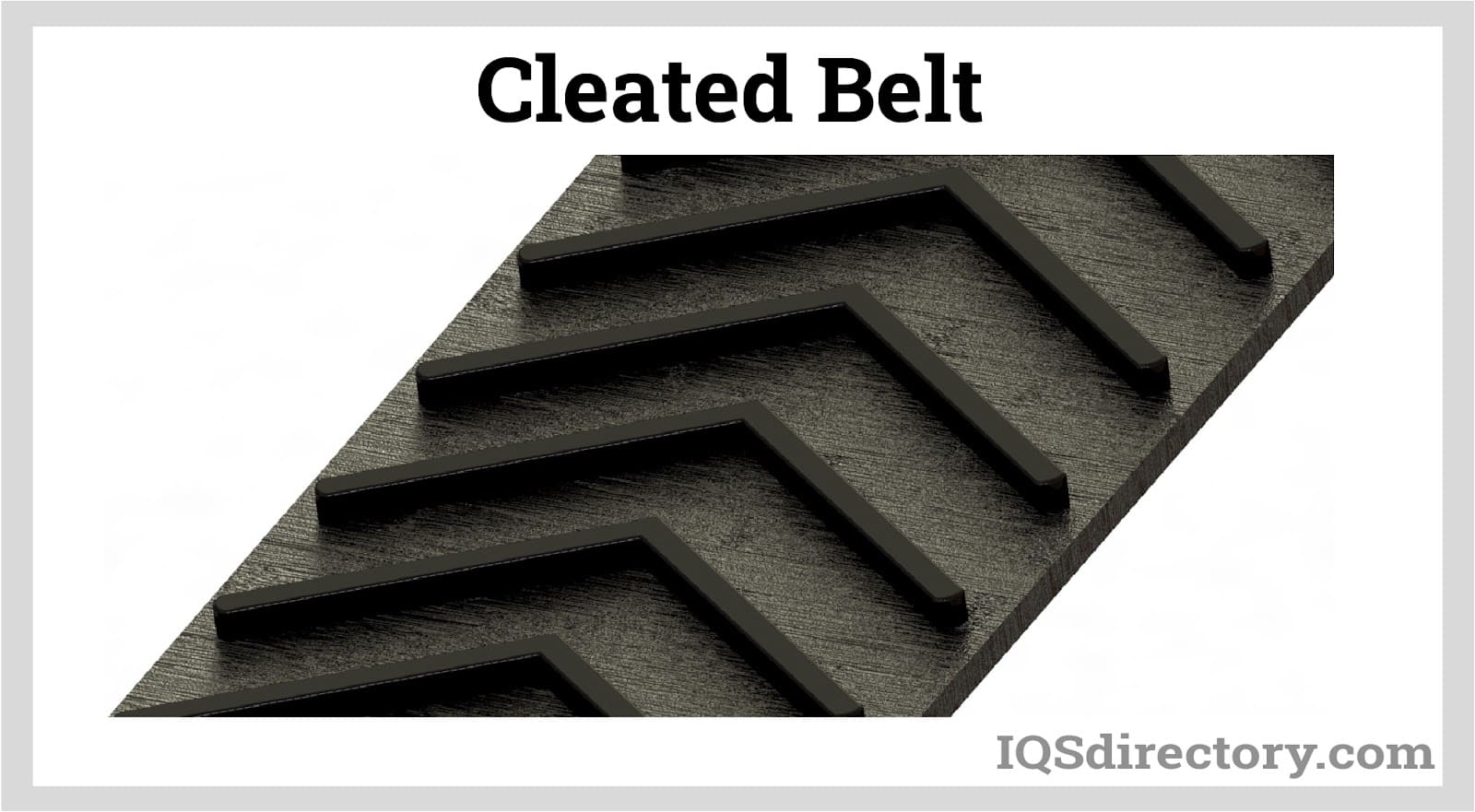
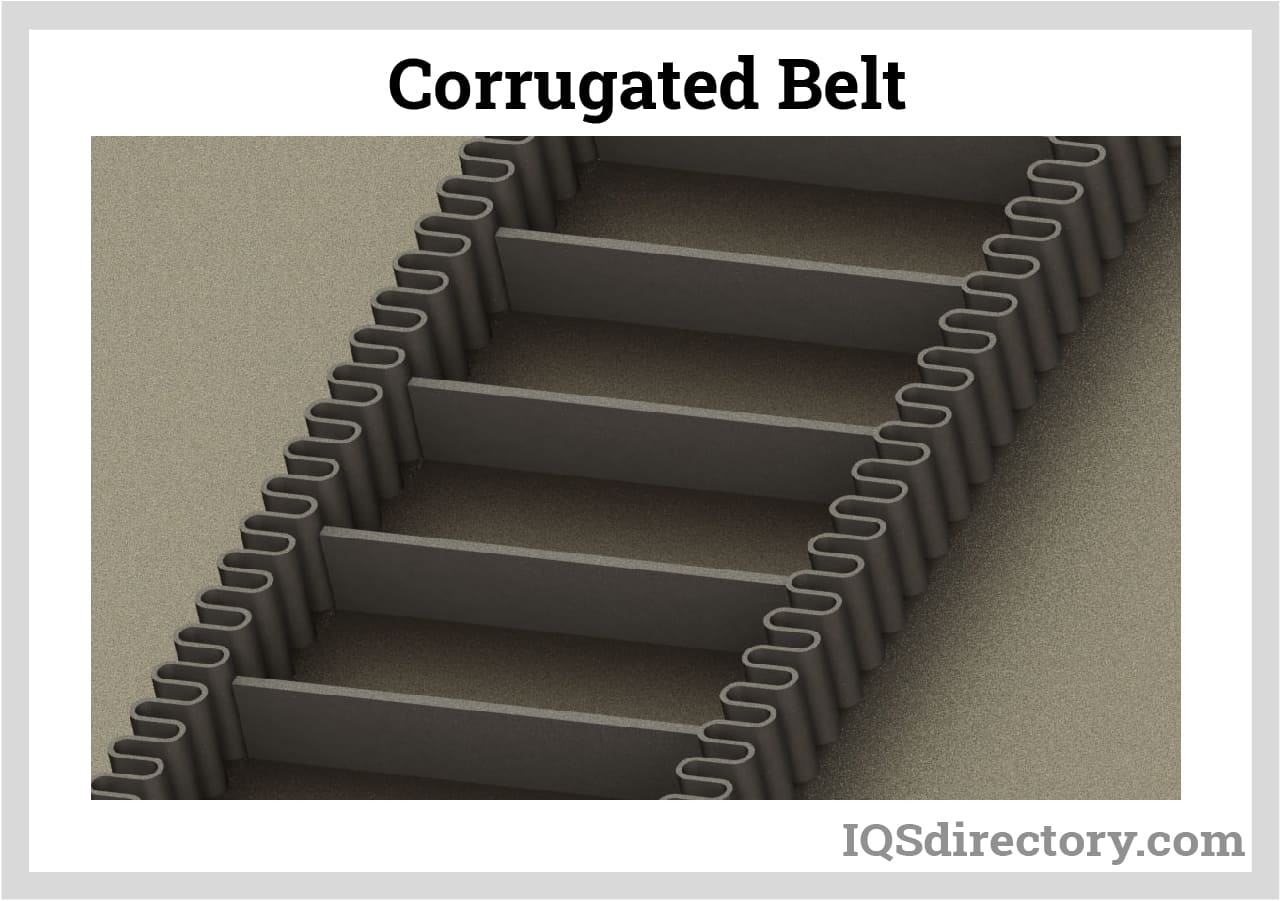
The carrying side is tailored according to the load, angle, and application, potentially featuring special designs like corrugated or cleated surfaces to suit distinct requirements. Cleated belts improve incline conveying, while chevron patterns help prevent rollback on angled conveyor systems.
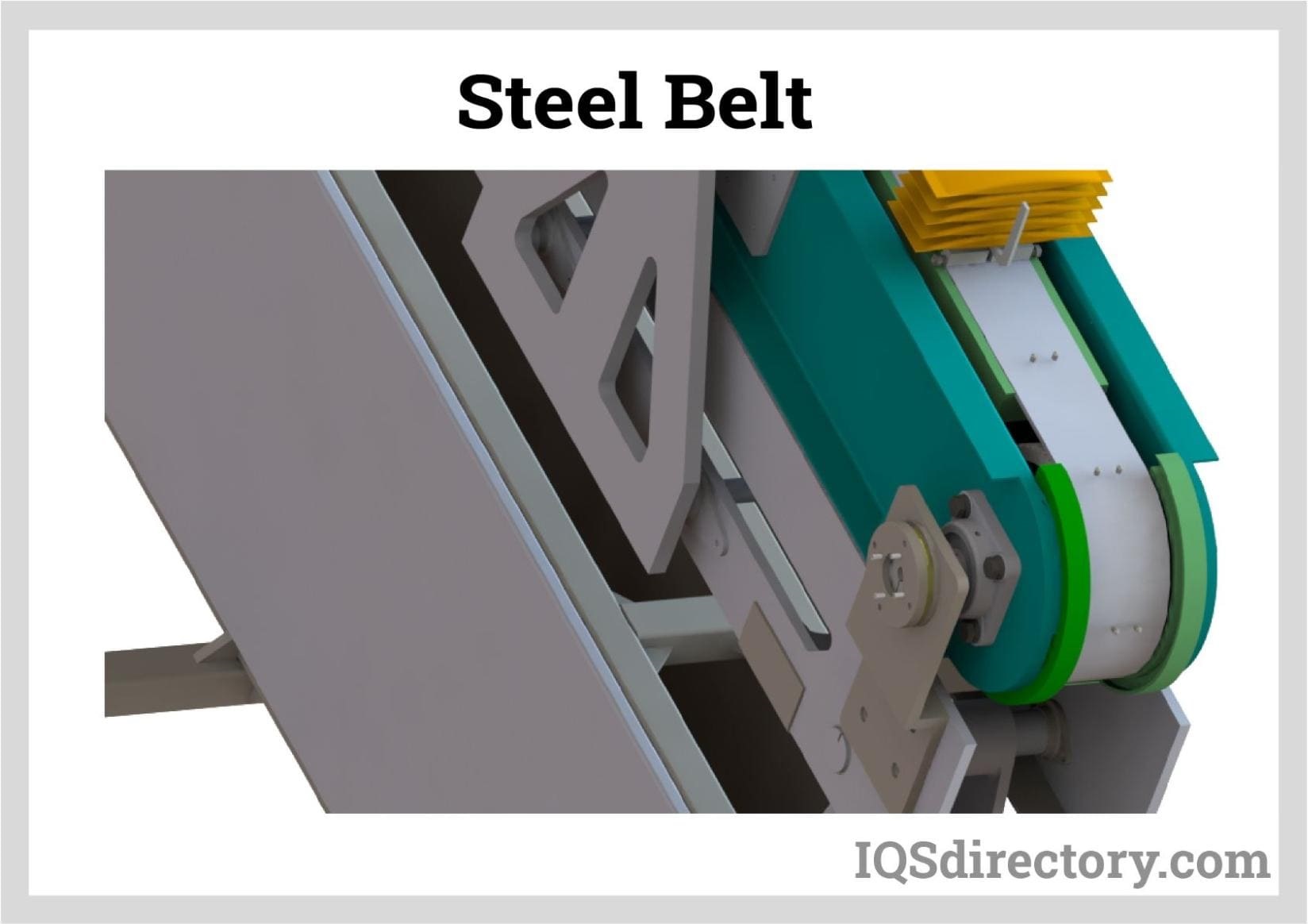
In specific settings such as CNC machine scrap conveyors, more durable steel belts are preferred for their wear-resistance. For these applications, durability, chip handling, and resistance to heat or sharp edges are key purchasing considerations.
In food processing, belts made of PVC, PU, and PE maintain product quality and hygiene by minimizing contamination risks. These food-grade conveyor belts are valued for easy cleaning, sanitary design, and compliance with modern processing standards.
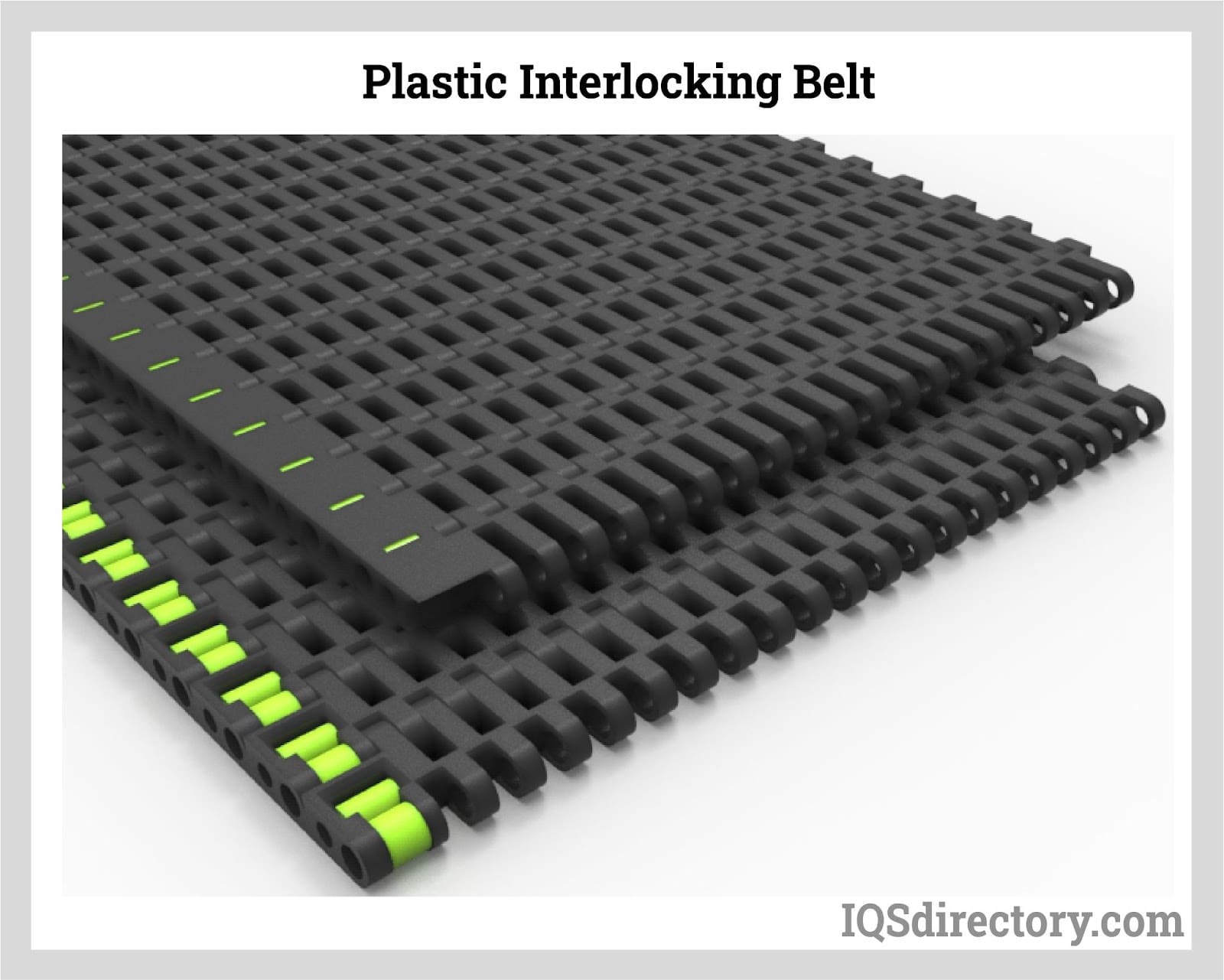
Plastic belts, despite being relatively new, are gaining traction thanks to their easy cleaning, temperature adaptability, and excellent resistance to chemicals, acids, and saltwater. Their modular construction also supports quick replacement, reduced downtime, and versatility across packaging, washdown, and production line environments.
Conveyor Frame
The conveyor frame must accommodate load factors, operating height, and the conveyance distance, varying from simple setups like cantilevers to complex trusses for hefty loads. For straightforward tasks, aluminum extrusions are popular. In larger industrial installations, steel frames may be preferred for structural rigidity, heavy-duty support, and long-span conveyor applications.
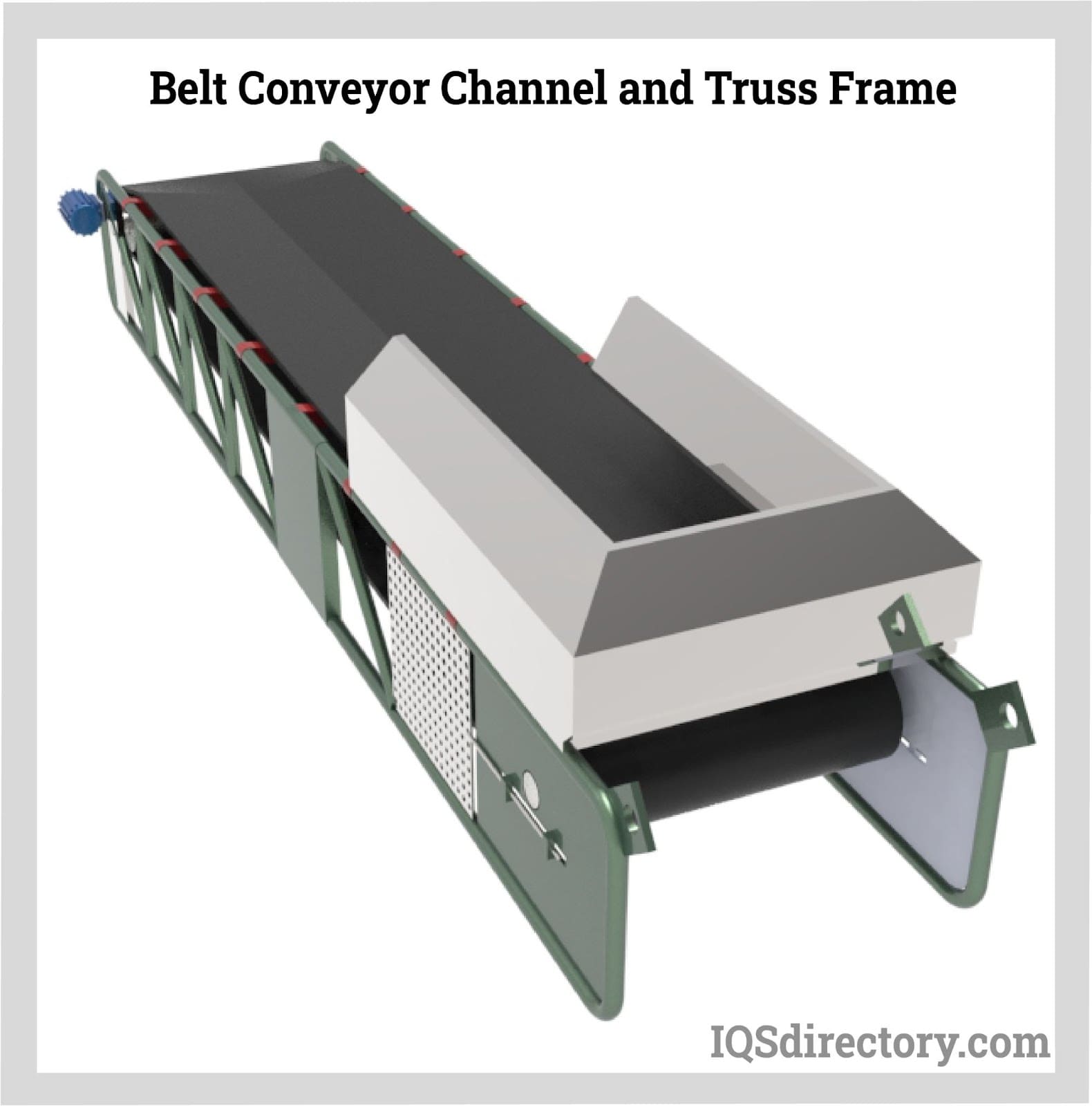
A well-designed frame is vital, as a poorly designed one may cause:
- Belt misalignment
- Structural failures, potentially leading to:
- Long downtimes, delaying production
- Injuries and accidents
- Costly spillages
- Expensive fabrication and installation procedures
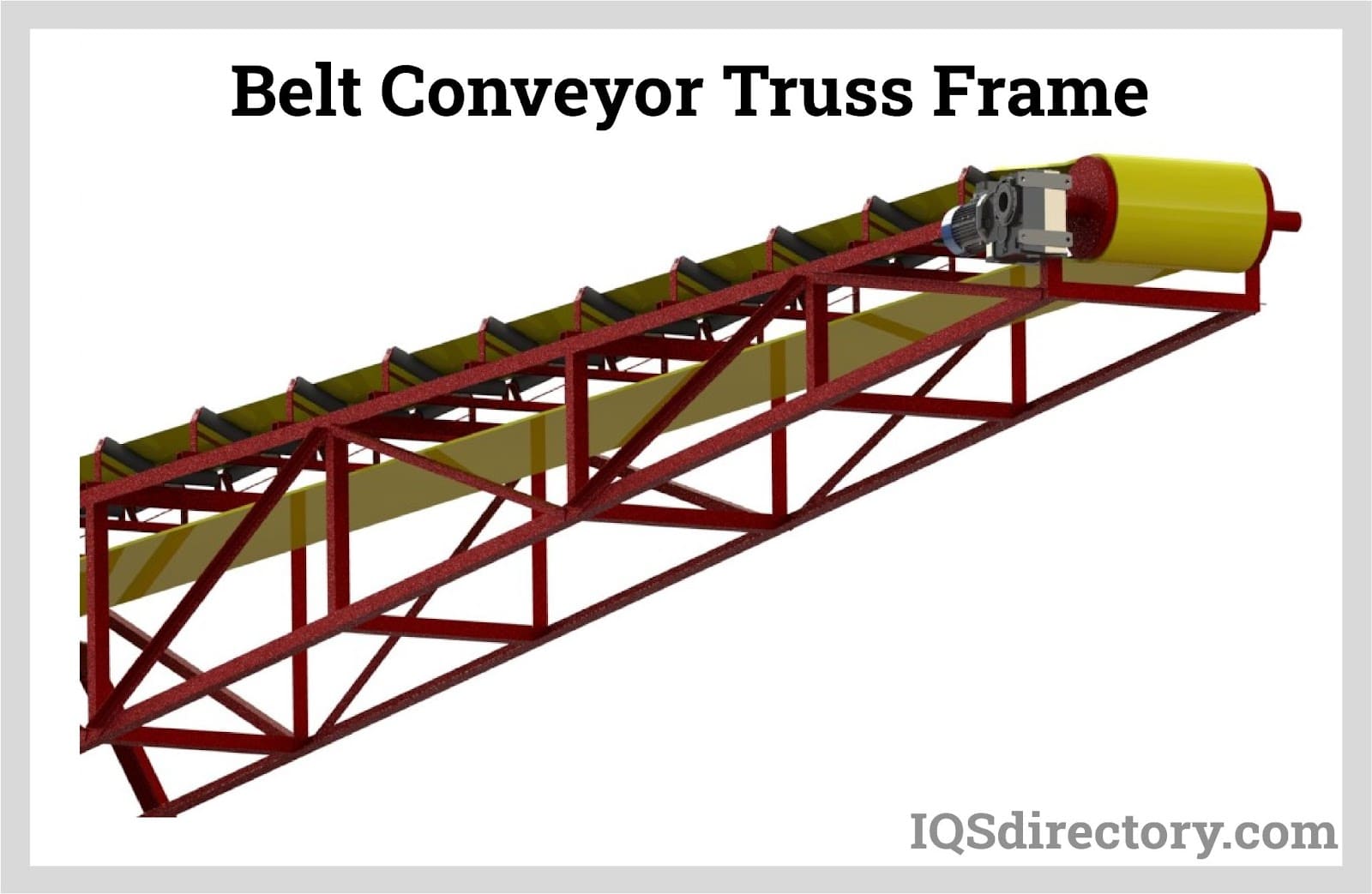
Additional elements like walkways and lighting can be affixed to the frame. Guards and sheds are often needed to safeguard the material being transported. Introducing such add-ons requires careful planning to avoid unintended overloading, while also supporting safer access, easier inspection, and more efficient conveyor maintenance.
Chapter 2: What Are the Types of Belt Conveyors? | Industrial Conveyor Systems Guide
This chapter explores the diverse types of belt conveyors used in material handling and automated conveying systems across various industries. Understanding the strengths and applications of each conveyor type is crucial for selecting the best solution to maximize efficiency, productivity, and safety in your manufacturing or logistics operation. Key types include:
Roller Bed Belt Conveyor
A roller bed belt conveyor features a surface beneath the belt composed of closely spaced rollers. This conveyor design is popular in automated material handling because the rollers minimize belt sag and friction, supporting the belt as it moves heavy or bulky items. As a result, roller bed conveyors are ideal for high-throughput operations requiring smooth, quiet, and energy-efficient product transport.
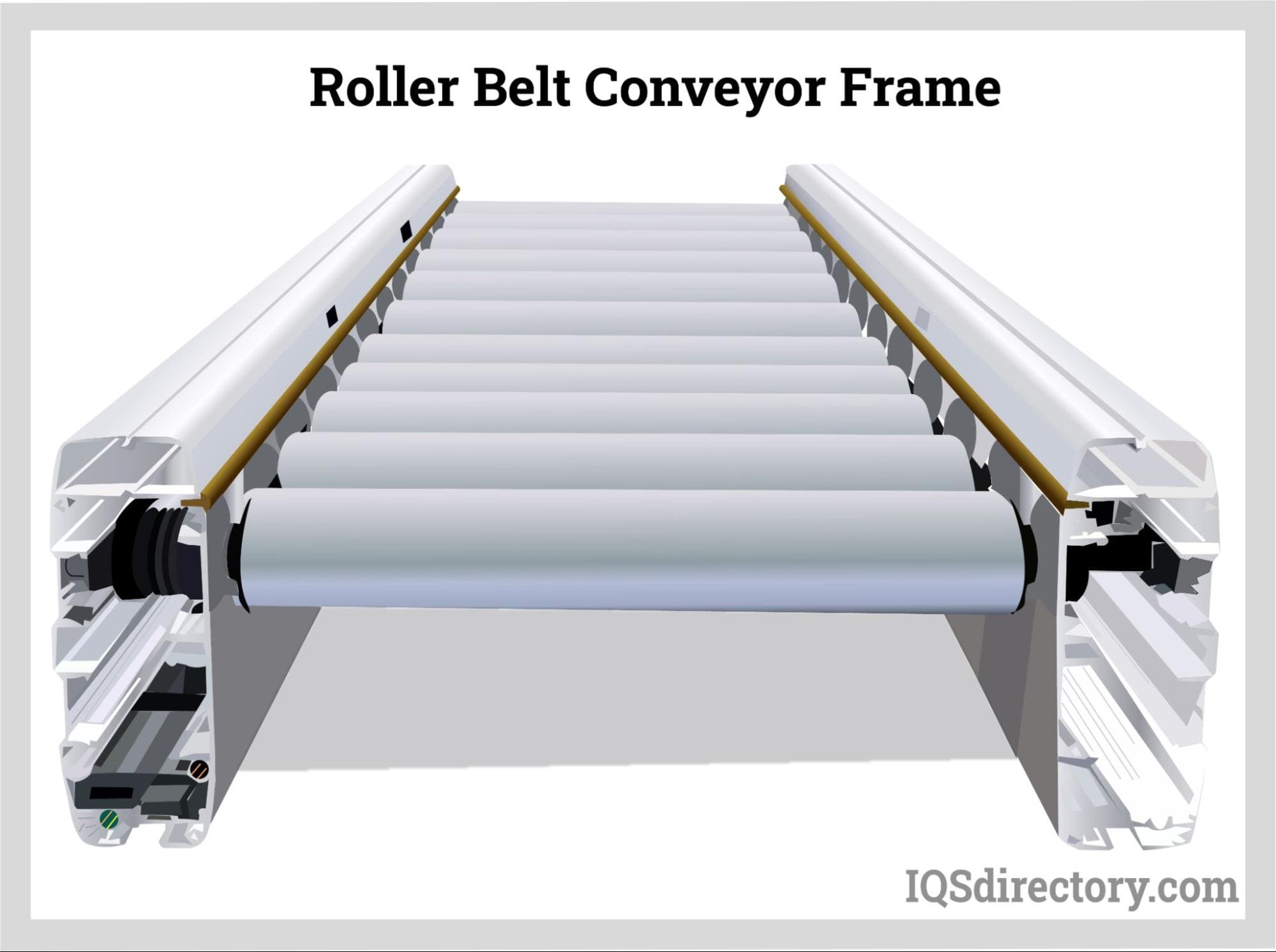
These industrial conveyors work effectively for both long and short-distance conveying, adapting to a wide range of layouts. Some compact belt conveyor systems may use just two rollers for the entire system, making them cost-effective for smaller facilities.
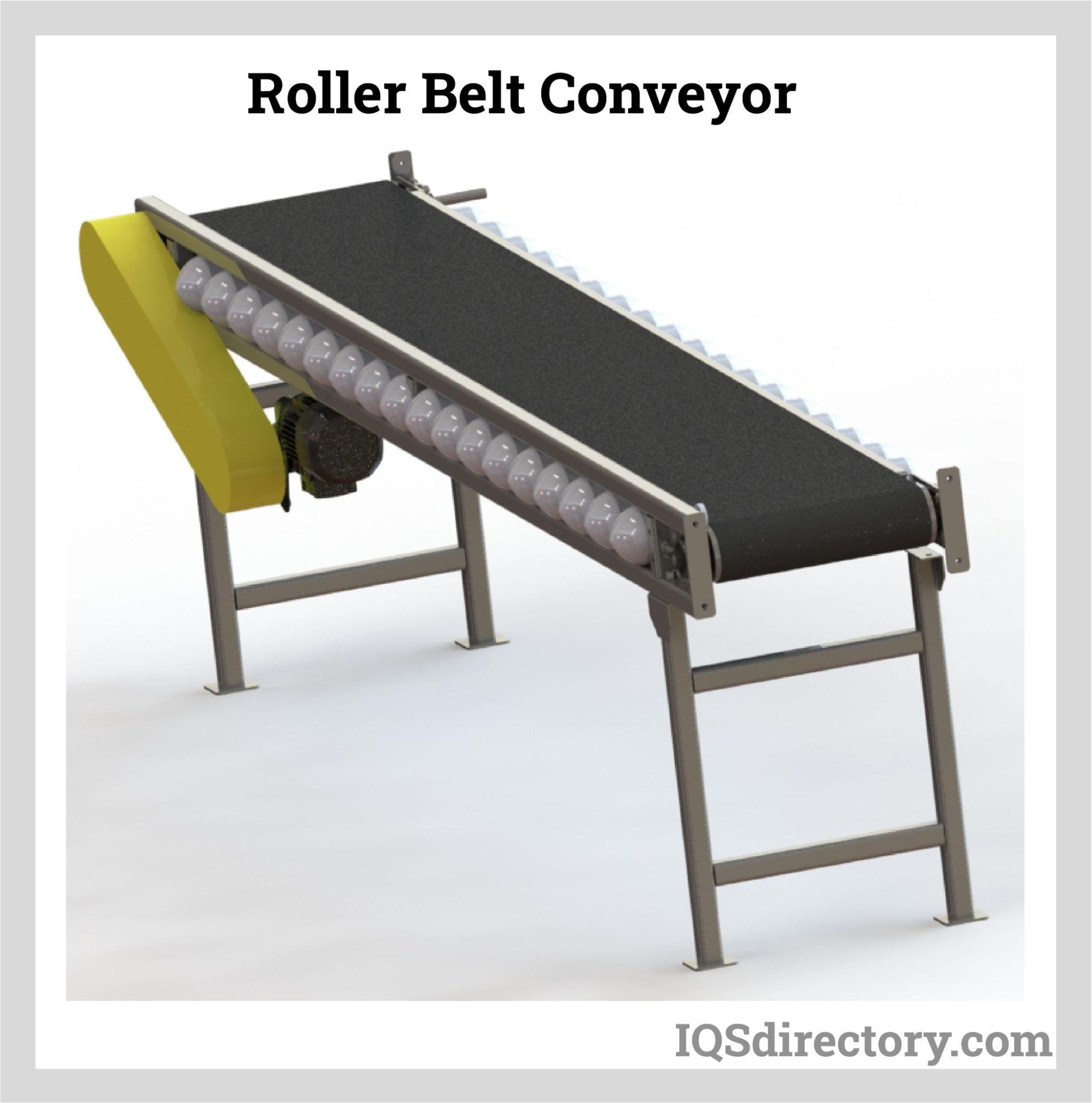
Roller bed conveyors are especially beneficial for gravity loading applications, where the use of gravity helps transport packages efficiently. However, manual loading should be carefully managed to avoid damaging the internal roller bearings, which provide reduced friction and increased conveyor belt life. Typical uses for roller bed belt conveyor systems include hand sorting, assembly lines, product inspection, and reliable package transportation. Common applications involve:
- Airport baggage handling systems
- Parcel and mail sorting for courier and postal facilities
Flat Belt Conveyor
Flat belt conveyors are among the most widely used in industrial conveyor systems for moving a wide range of products within distribution centers, assembly plants, and warehouses. Featuring a flat, continuous belt made from durable materials such as synthetic fabrics, polymers, or natural rubber, these conveyors offer flexibility to convey goods in food processing, packaging, and electronics manufacturing environments.
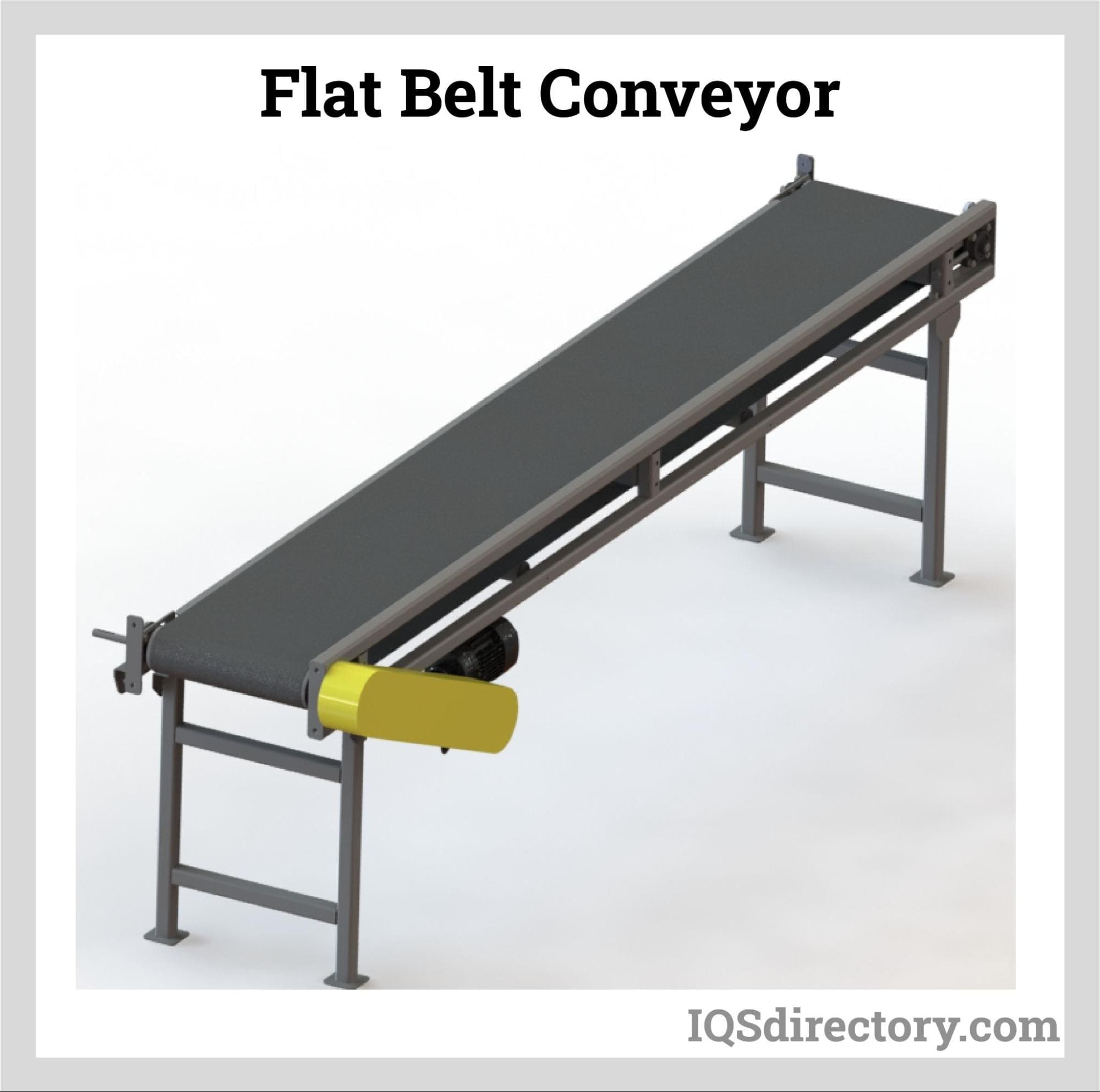
The flat belt is typically supported by pulleys or powered rollers, allowing precise, quiet, and consistent movement of items—whether lightweight, delicate, or irregularly shaped. Flat belt conveyor systems are easy to align, with adjustable tail pulleys for tension control, and are suitable for continuous process automation. These conveyors commonly operate at lower speeds, making them optimal for
- Slow-moving assembly lines in automotive or electronics industries
- Washdown and sanitary applications for food safety compliance
- Light and dusty industrial assembly environments
When specifying a flat belt conveyor, consider belt material for resistance to abrasion, loading capacity, and suitability for cleanroom or washdown requirements. Their versatility makes them a top choice for internal conveyance and distribution systems.
Modular Belt Conveyor
Modular belt conveyors utilize a chain of interlocking rigid plastic or metal modules instead of a traditional continuous flexible belt. Industry professionals prefer modular belt conveyor systems for heavy-duty material transport, especially where sanitation, durability, and product orientation are critical. Their positive drive design reduces maintenance and belt slippage, leading to high uptime and lower operational costs.
This design offers enhanced resistance to wear, temperature extremes, and aggressive cleaning chemicals, making modular belt conveyors a mainstay in food processing, beverage bottling, pharmaceuticals, and packaging automation.
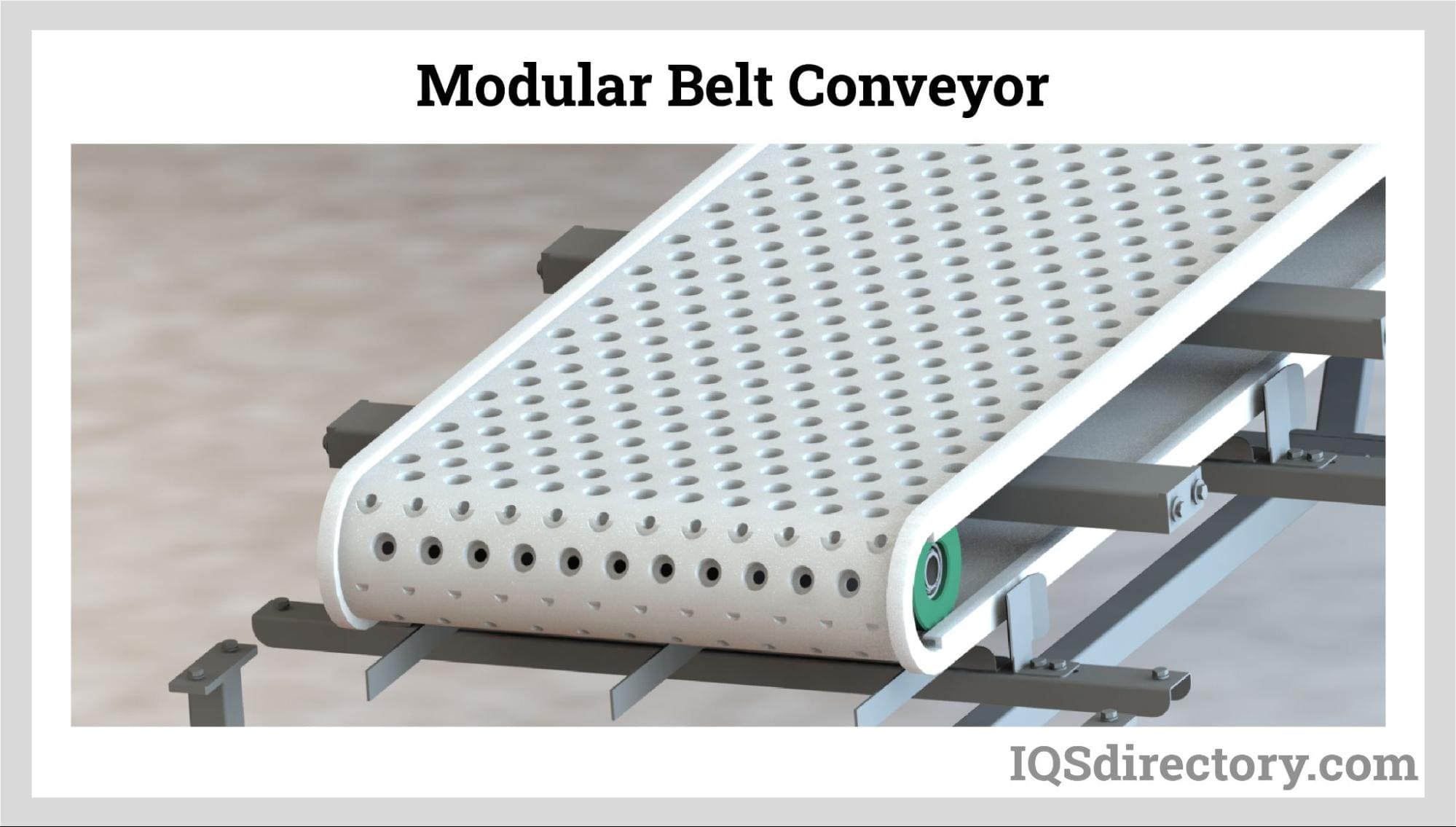
One notable advantage is that damaged belt sections can be quickly replaced without replacing the entire conveyor belt, minimizing downtime and costs. Modular belt conveyor systems excel at negotiating corners, elevation changes, and custom layouts using a single drive motor. They are ideal for:
- Food handling and safe product transfer in sanitary environments
- Fluid handling and product washing or draining
- Integration with metal detection systems for food and pharmaceutical safety
For production lines requiring non-standard conveyor geometry or frequent cleaning, modular belt technology provides exceptional reliability and flexibility.
Cleated Belt Conveyor
Cleated belt conveyors are equipped with built-in barriers (cleats) at predefined intervals to create individual compartments on the belt surface. These cleats prevent items from rolling or sliding back, especially useful when elevating materials on incline or decline conveyor systems. Cleated conveyors enhance material containment and increase throughput for loose product, irregular shapes, or items prone to shifting.
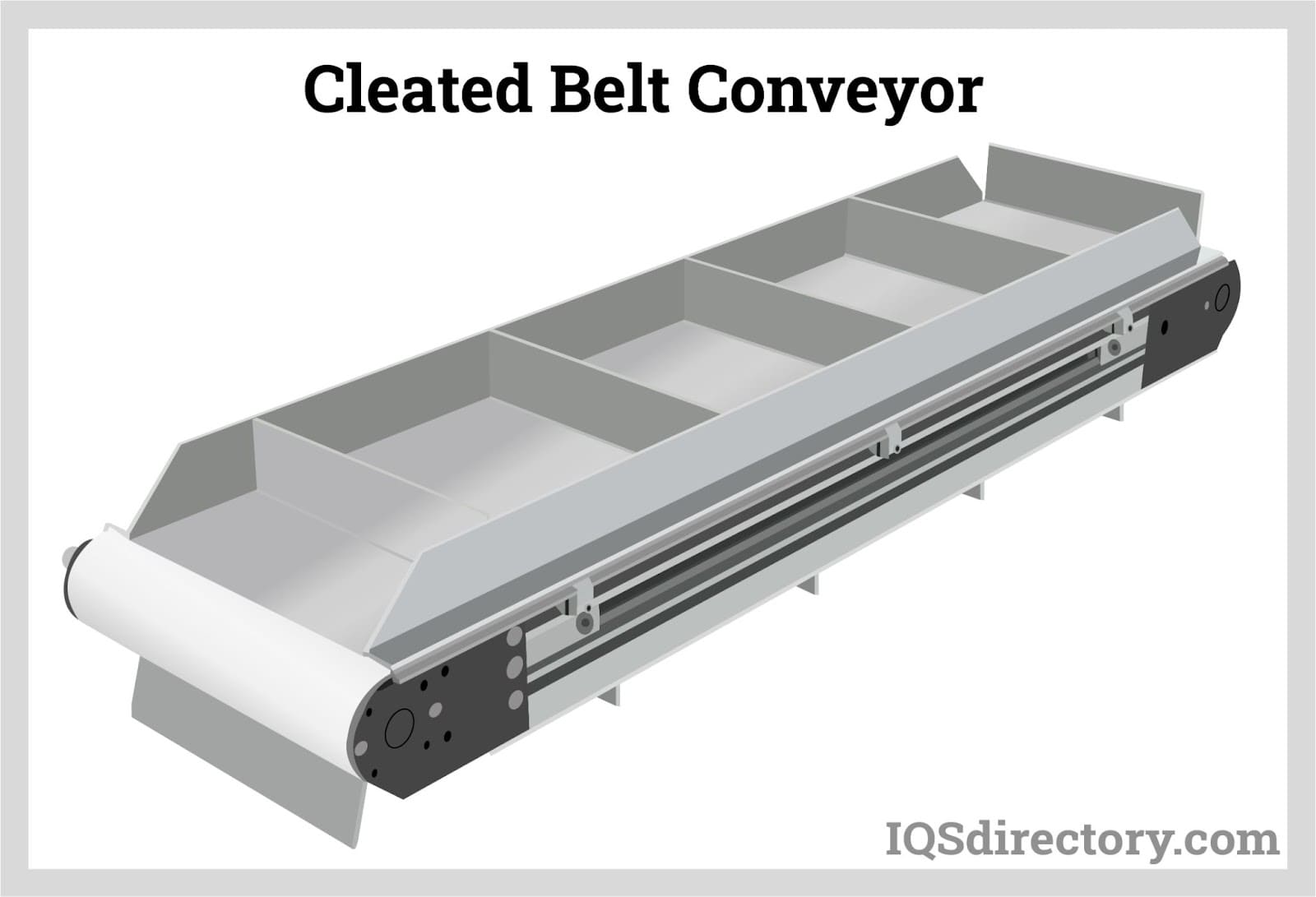
Cleats come in several shapes and configurations, tailored for optimal product containment and transport efficiency:
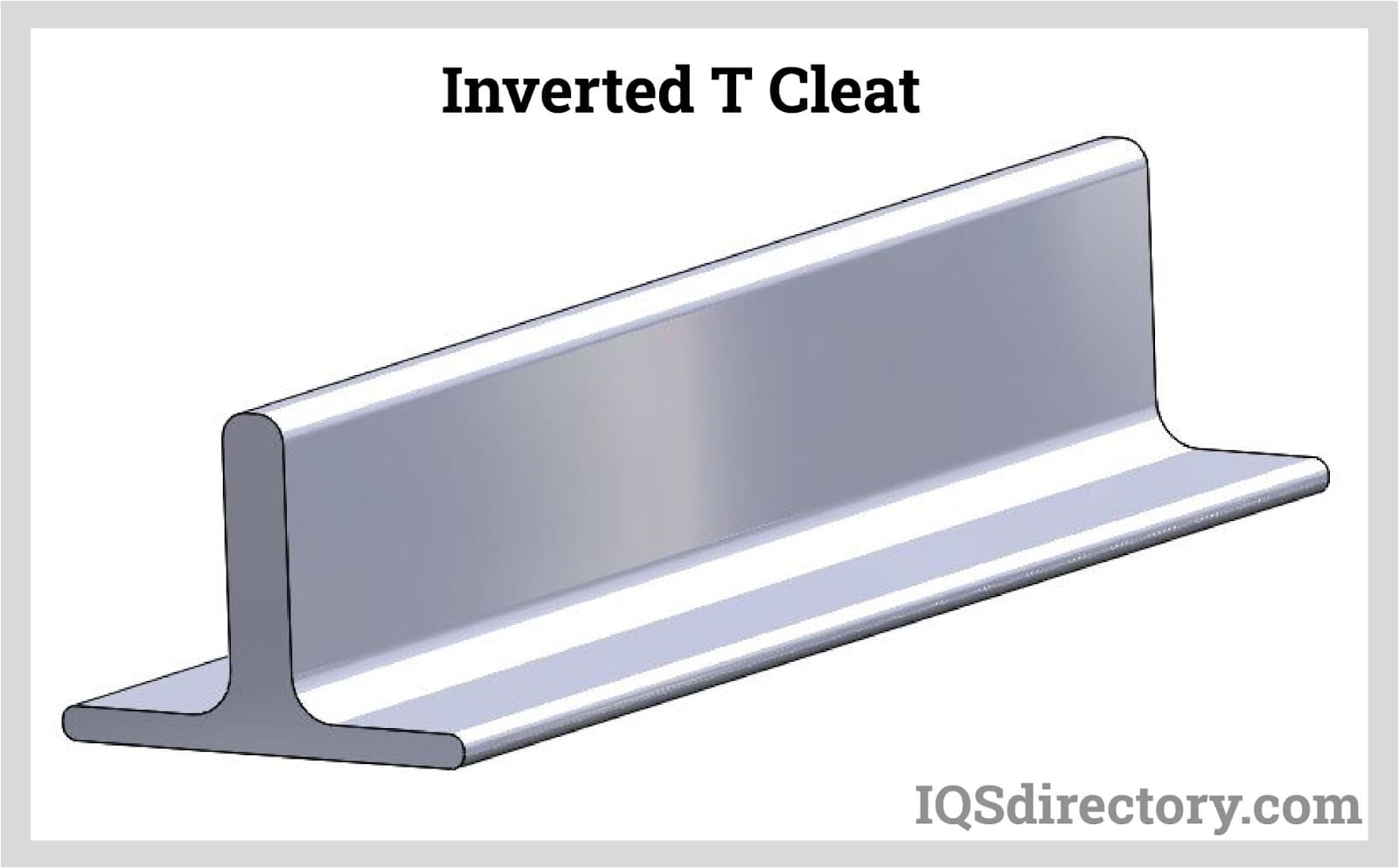
Inverted Capital T
Standing upright at a 90-degree angle to the belt, this cleat style offers robust support with flexibility, making it ideal for gentle handling of fragile products, small electronic parts, or packaged goods. It’s frequently used in the food, pharmaceutical, and electronics sectors where cleanroom conveyor conditions are necessary.
Forward-Leaning Capital L
This cleat is angled to scoop and secure granular or bulk materials against gravity, optimizing granular product transport such as grains, pellets, or powders. Its design enables efficient material transfer in agricultural conveyors and bulk handling operations.

Inverted V Cleats
With a trough-like shape and short height, these cleats excel at conveying heavy, high-impact, or bulk materials. The design efficiently contains and supports materials while accommodating demanding industrial applications.
Lugs and Pegs
Lugs and pegs facilitate drainage of liquids from freshly washed food products, such as fruits and vegetables, and efficiently handle items that don’t require full-length belt support, including boxes, rods, or products moving through quality control checkpoints. They also help sort or position products effectively during high-speed automated sorting operations.
Additional applications for cleated belt conveyors include:
- Steep incline escalators—modified cleated conveyors for bulk transport of loose materials, aggregates, or recyclables in mining and construction industries
Curved Belt Conveyor
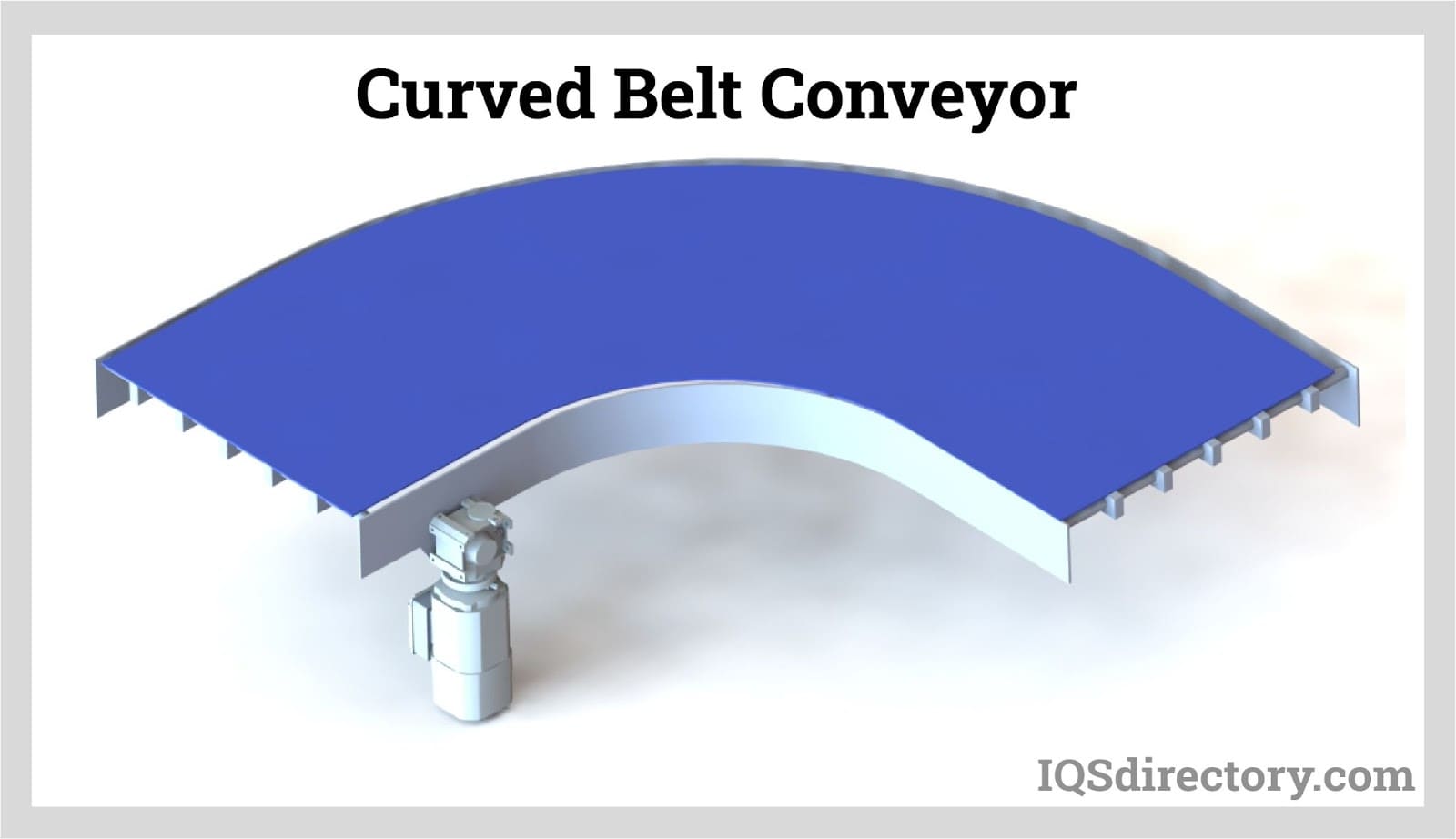
Curved belt conveyors, engineered with pre-fabricated frame curves, allow seamless transport of products around corners or complex facility layouts without the need for transfer points. This space-saving conveyor type is essential for optimizing flow in constrained environments such as warehouse automation systems, e-commerce fulfillment centers, and manufacturing plants.
Depending on the configuration, curved conveyor belts use modular interlocking plastics for straight runs and sharp corners, or flat flexible belts for predominantly curved routes. They support tight radii—up to 180 degrees—reducing system footprint and streamlining complex process flows efficiently.
Incline/Decline Belt Conveyor
Inclined and declined conveyor systems are designed for controlled vertical movement of goods. They require increased belt tension, higher torque, and enhanced belt traction to prevent product slip. Often, they feature a gear motor with a center drive and adjustable take-up devices for consistent performance. The belt surface is typically roughened or fitted with cleats for optimal grip and product stability.
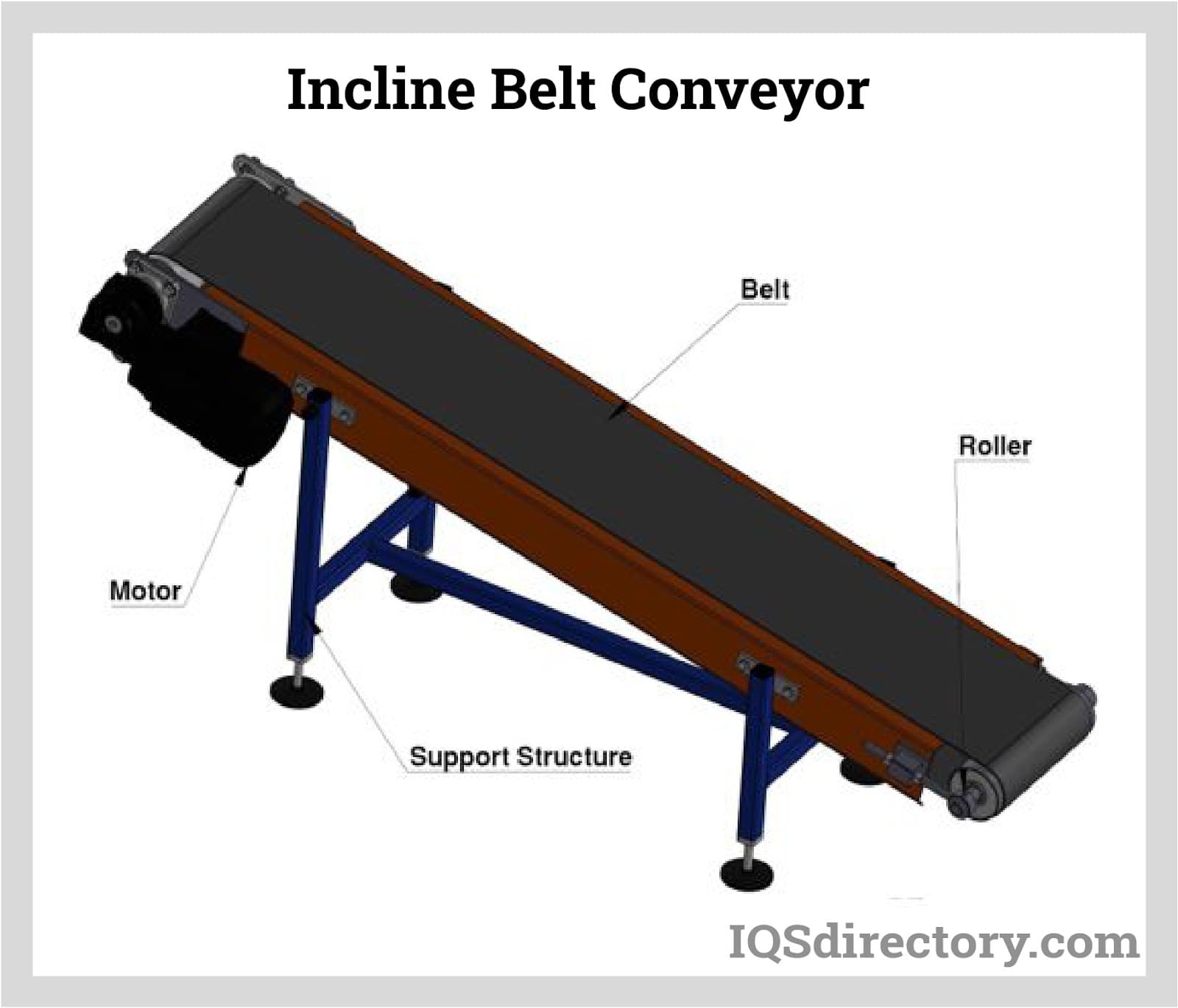
Incline/decline belt conveyors are widely used in food, packaging, container handling, and material transfer between different production elevations, streamlining warehouse and assembly line operations. They provide a critical link in integrated conveyor systems where efficient product flow is required across multiple levels.
Sanitary Washdown Conveyor
Sanitary washdown belt conveyors are purpose-built for industries requiring strict regulatory compliance for hygiene and cleanliness. Food and pharmaceutical facilities depend on these stainless steel conveyors for their resistance to corrosion and ease of washdown via high-pressure cleaning. Flat, thin belts are commonly used to facilitate frequent sanitation, minimizing contamination risks.
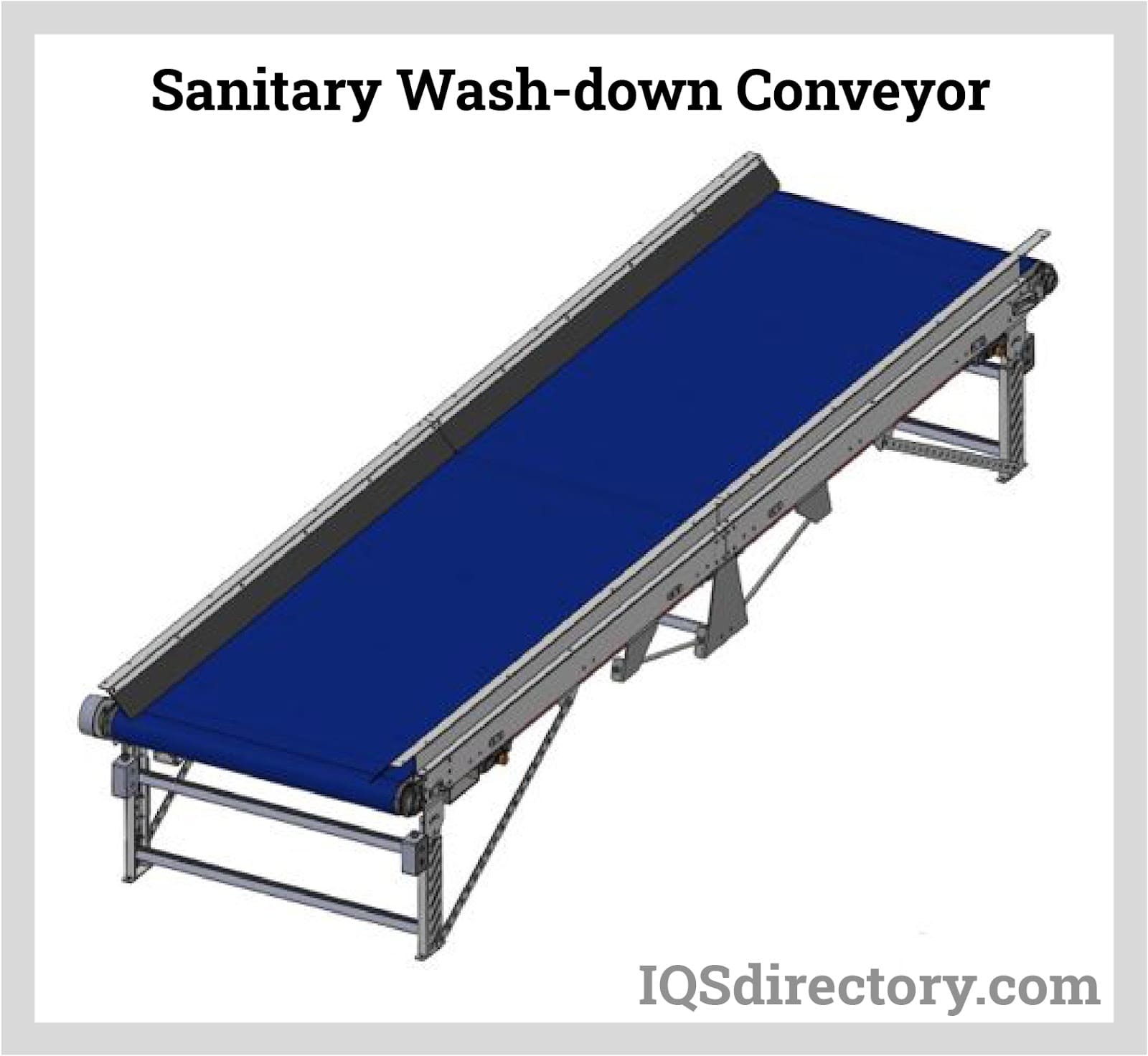
Washdown conveyors can reliably handle extreme-temperature products, from frozen foods to items just off ovens or fryers, and function in greasy or moist environments. Additional use cases include unloading oil drums or crates in marine logistics or food oil processing plants. These conveyors are integral for maintaining GMP (Good Manufacturing Practices) standards and ensuring food safety audits are passed successfully.
Troughed Conveyors
Troughed belt conveyors feature a belt shaped into a trough to better contain and control loose or bulk materials during transport. Created by strategically angled troughing idler rollers, the trough profile improves bulk material handling efficiency, minimizes spillage, and supports high-volume transfer over extended distances. Trough conveyor systems are widely used in mining, agriculture, construction, and power generation sectors.
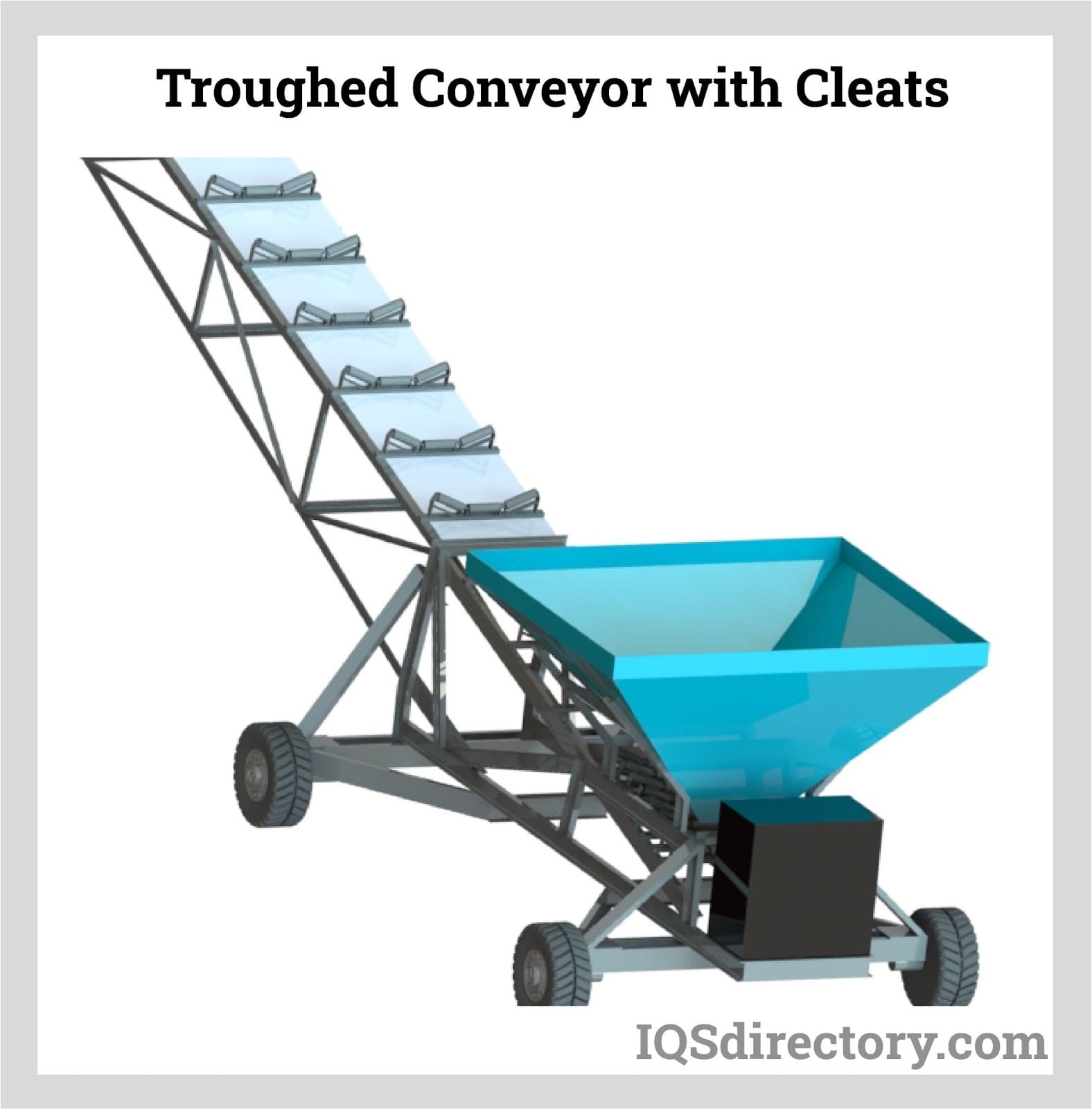
The central idler aligns horizontally, while angled wing rollers (often at 25 degrees) support the belt edges, distributing the load and ensuring a stable trough shape. This design reduces product loss, lowers dust emissions, and boosts the overall safety and efficiency of the conveyor belt system.
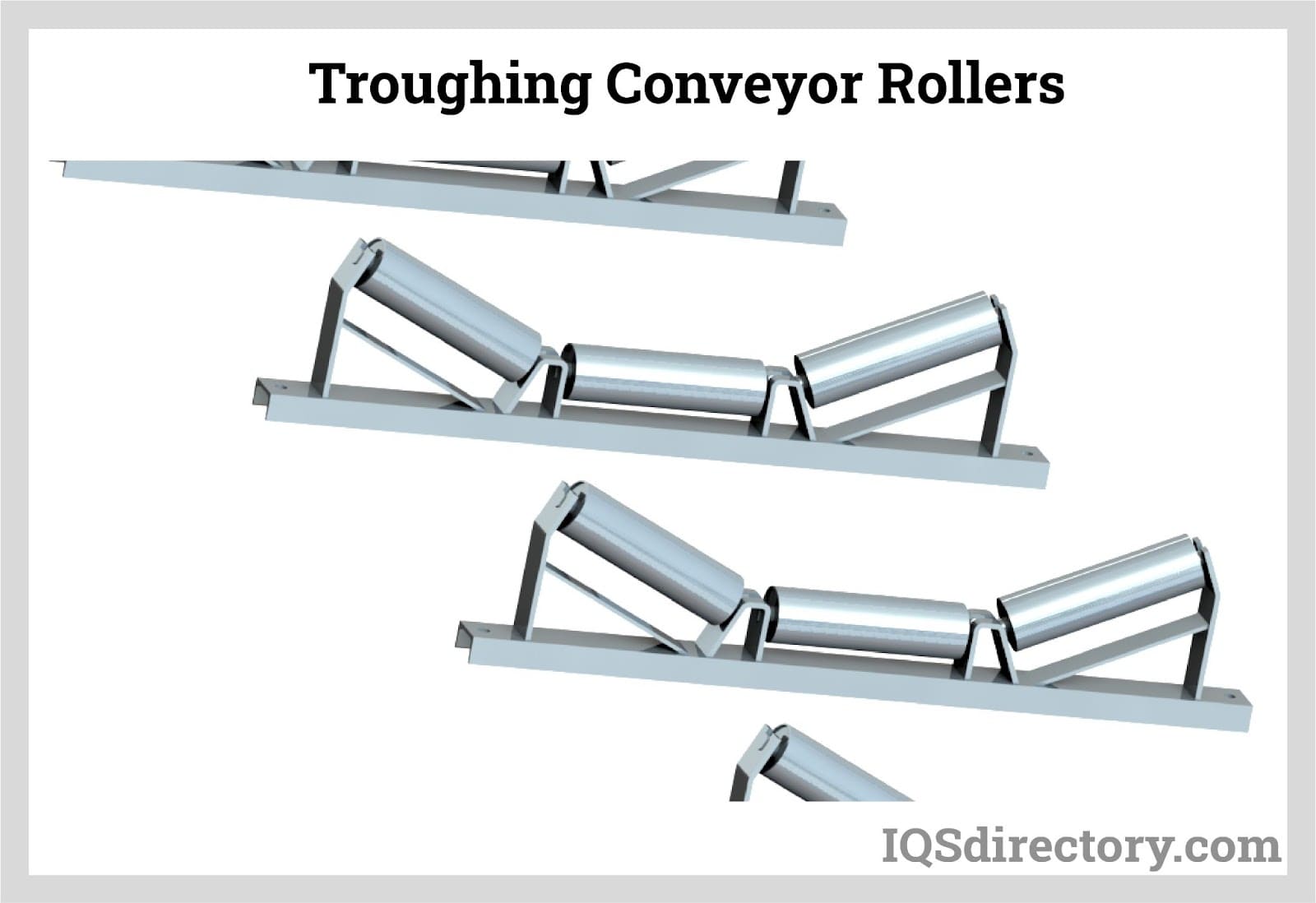
It’s crucial to avoid excessive troughing angles to prevent permanent belt deformation, cleaning difficulties, and improper belt tracking. Maintaining proper belt contact with all rollers preserves system efficiency and extends the service life of the conveyor belt.
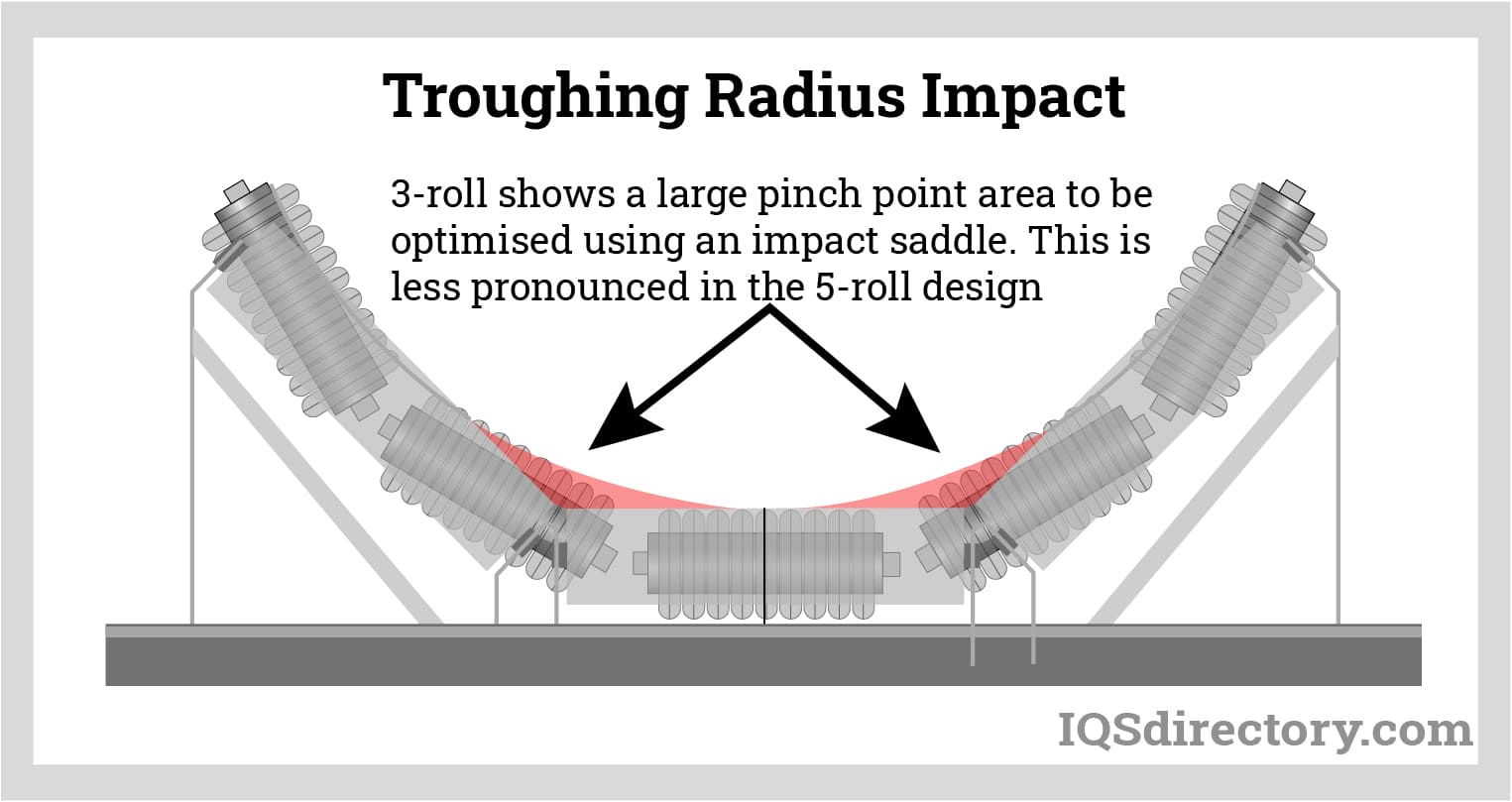
Troughed conveyors can run horizontally or at inclines up to around 25 degrees, with systems optimized for specific bulk flow and containment needs to maximize capacity and return on investment.
Magnetic Belt Conveyor
Magnetic belt conveyors are engineered for handling ferrous metal parts and materials, utilizing powerful ferrite or neodymium magnets embedded beneath the belt surface. This conveyor type is indispensable in the metalworking, recycling, stamping, and machining industries where reliable transport, secure positioning, and process automation of steel and iron products are essential.
Rare-earth magnets or electromagnets ensure that even tiny or oddly shaped metal parts remain securely fixed to the belt—even on vertical or inverted routes—making these conveyors ideal for scrap removal, metal shavings transport, and automated feeding to presses or welding lines.
The placement and strength of magnets can be tailored to suit specific product sizes, weights, and process speeds, enhancing throughput and workplace safety by minimizing the risk of jams or product loss.
Types of Magnetic Belt Conveyors
Magnetic Belt Conveyors— The most common magnetic conveyor design, these systems feature a magnetized sheet metal belt or an array of permanent magnets to attract and securely transport ferrous material, cans, metal stampings, or parts. Magnetic belt conveyors are versatile—supporting horizontal, inclined, and even upside-down conveying—enabling integration into complex production and recycling lines.
Magnetic Separator Belt Conveyors— Specifically designed for separating magnetic ore and ferrous contaminants from non-magnetic materials, these systems use powerful magnets to hold metal items on the belt, while lighter materials fall away. Available in dry and wet variants, they are critical to mining, scrap recycling, and aggregate processing for ensuring product purity and maintaining process efficiency.

By incorporating magnetic conveyors, facilities achieve improved automation, reduce manual handling, and enhance process reliability for ferrous material handling and separation.
When evaluating the best belt conveyor for your workflow, consider factors such as throughput, product type, required hygiene standards, space constraints, power options, and integration with existing automated systems. Partnering with a knowledgeable conveyor manufacturer or supplier ensures the selection of optimized conveyor technology tailored to your unique industrial needs, driving safety, efficiency, and return on investment.
For more in-depth conveyor system insights, or to request quotes from top-rated industrial conveyor manufacturers, explore our buyer's resources and connect with trusted suppliers experienced in custom conveyor solutions.
Chapter 3: How Should Belt Conveyors Be Designed and Selected?
When creating an efficient conveyor system, the design and selection of a belt conveyor hinge on several critical parameters that influence performance, reliability, and operational cost. Understanding how to specify these attributes is vital for optimizing material handling in diverse industries, from manufacturing and logistics to mining and food processing. By addressing the following key factors, engineers and facility managers can optimize their conveyor belt configurations for both productivity and safety:
- Motor and gearbox selection (drive system efficiency, power rating)
- Speed of belt (throughput rates, capacity requirements)
- Tension and take-up (belt tracking, prevention of slippage, longevity)
- Material to be conveyed (bulk density, abrasiveness, material flow characteristics)
- The distance over which to be transported (run length, transfer points)
- Working environment (ambient temperature, humidity, dust, corrosive atmosphere, and other environmental factors)
Motor and Gearbox Selection
Properly selecting the conveyor motor and gearbox is essential to ensure reliable, energy-efficient operation. Begin by defining the effective pulling force required for your specific material handling application. This calculation influences not only drive selection but also the conveyor’s load capacity, speed, and energy consumption.
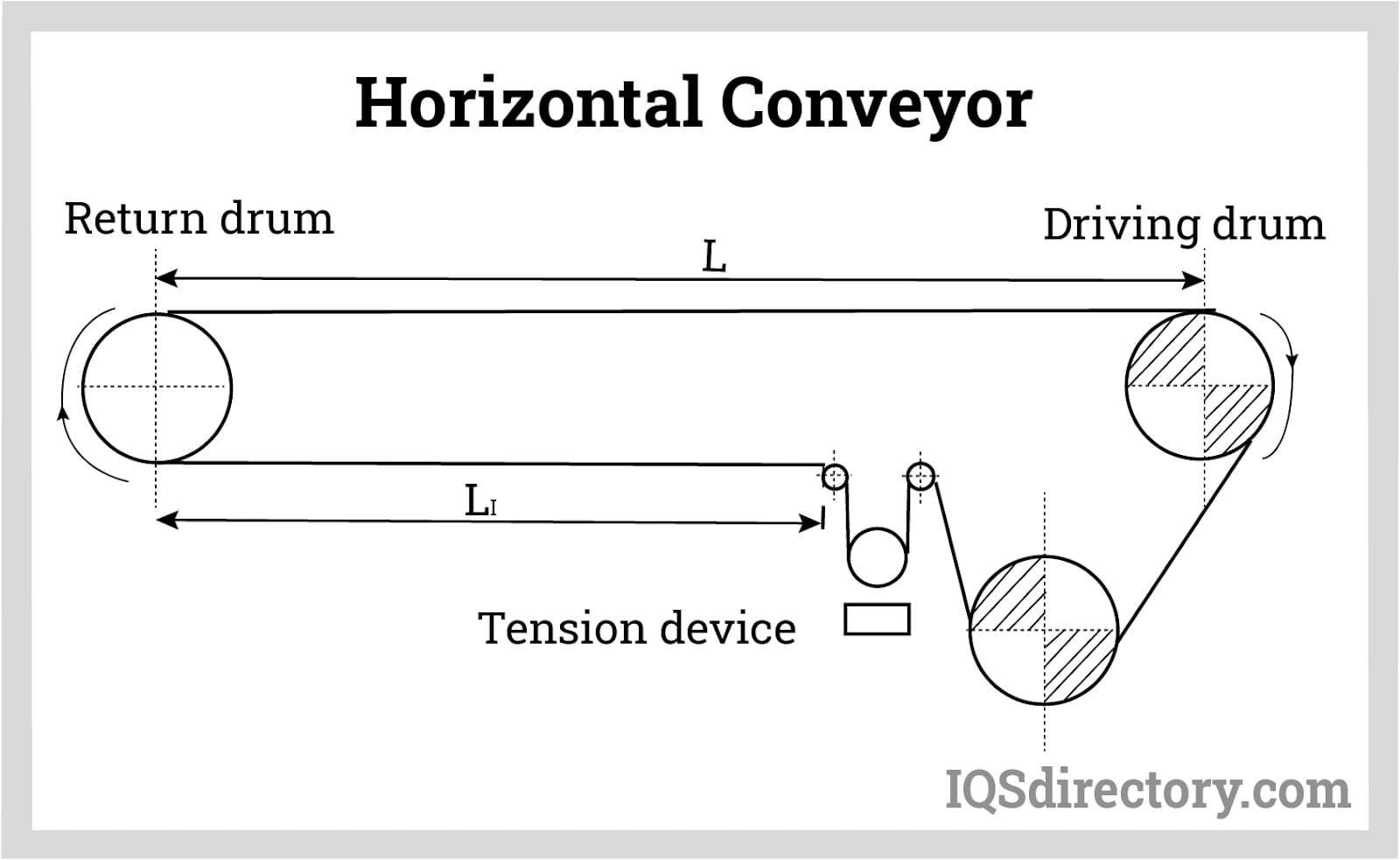
For a simple horizontal conveyor, use the following formula to determine the effective pulling force, a fundamental metric in conveyor belt design:
Fu=µR · g(m+ mb+ mR)
Where:
- Fu = Effective pulling force
- µR = Friction coefficient when running over rollers
- g = Acceleration due to gravity
- m = Mass of goods conveyed along the full conveyor length
- mb = Mass of belt
- mR = Mass of all rotating rollers minus drive roller
For inclined conveyor belt systems, which are common in aggregate handling, mining, and packaging plants, use:
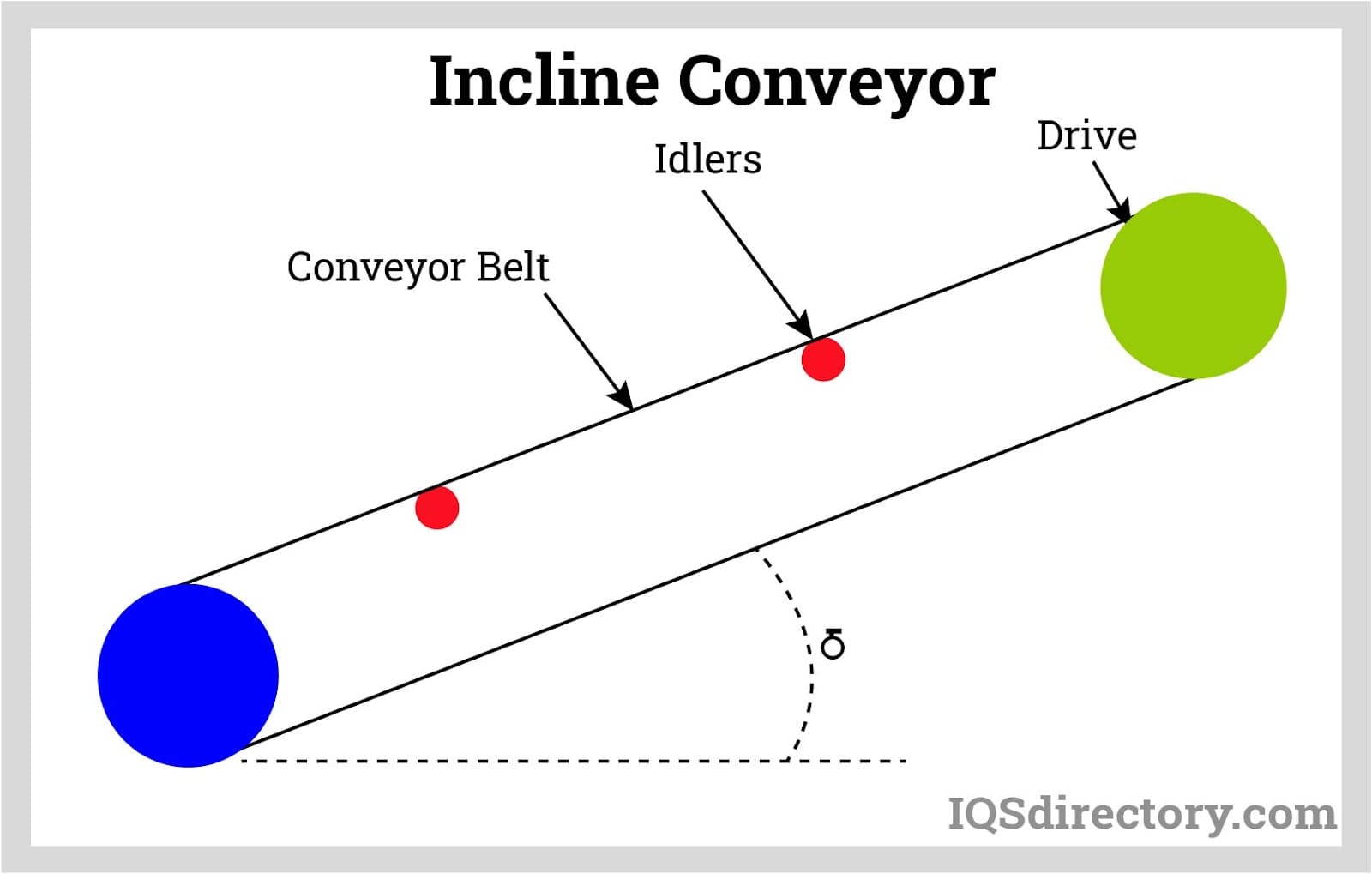
Fu=µR · g · (m + mb+ mR) + g · m · sin(a)
Where:
- Fu = Effective pulling force
- µR = Friction coefficient when running over rollers
- g = Acceleration due to gravity
- m = Mass of goods on the conveyor
- mb = Mass of belt
- mR = Mass of all rotating rollers minus drive roller
- a = Angle of conveyor inclination
Once you determine the required pulling force, calculate the torque needed at the drive pulley. This guides the sizing of both gearboxes and electric motors, ensuring compatibility for start-up loads, continuous operation, and variable frequency drive (VFD) integration if required.
Consider additional selection criteria, such as:
- Duty cycle (continuous vs. intermittent operation)
- Required service factor (for shock loads or frequent starts/stops)
- Integration with conveyor control systems and automation
Speed of Conveyor
Conveyor belt speed is a key performance parameter that impacts throughput, material flow rate, and productivity. Calculate the speed by multiplying the drive pulley circumference by its rotational frequency:
Vc=D · F
Where:
- Vc = Conveyor belt speed (meters per second)
- D = Drive pulley diameter (meters)
- F = Drive pulley revolutions per second
When selecting conveyor speed, always consider the type of material conveyed, the optimal transfer speed for system reliability, and potential spillage or degradation. Higher conveyor speeds boost productivity but may demand stricter safety controls, advanced belt cleaning systems, and more robust idler supports. Typical conveyor belt speeds range from 0.5 to 3.5 m/s, depending on the application and industry standards.
Tension and Take-Up of the Belt
Maintaining proper belt tension is essential for conveyor system performance, reducing belt wear, minimizing spillage, and preventing misalignment. An effective take-up system preserves optimal belt tension throughout the conveyor's operating life, compensating for belt elongation, load fluctuations, and other dynamic forces.
A correctly tensioned belt ensures:
- Even belt wear
- Precise belt tracking and centering over idlers and pulleys
- Uniform material conveying in the belt trough
- Longer service life of conveyor components
All conveyor belts will stretch over time—typically up to 2% of the original belt length for a new belt. This stretch causes slack that must be managed to avoid belt slip, decreased efficiency, or premature failure.
Belt stretch—especially in long conveyor runs—requires robust take-up mechanisms. For example, a 2-meter belt could stretch 40 mm, while a 200-meter system may develop up to 4 meters of extra slack. Take-up systems allow for quick maintenance and adjustments, minimizing costly downtime during conveyor servicing or belt replacement.
Types of Belt Conveyor Take-Ups
Several types of conveyor belt take-up systems exist, each engineered to meet varying operational needs and installation constraints. The choice depends on conveyor length, environmental space, and required maintenance frequency:
- Gravity take-up (automatic belt tension correction)
- Screw take-up (manual and cost-effective)
- Horizontal take-up (space-saving configuration)
Screw Take-Up
The screw take-up design employs threaded rods—often attached to the tail roller—to manually retract or extend the roller and remove belt slack. This threaded rod approach doubles as a simple belt alignment technique. Because adjustments are manual, screw take-ups are often referred to as manual take-ups.
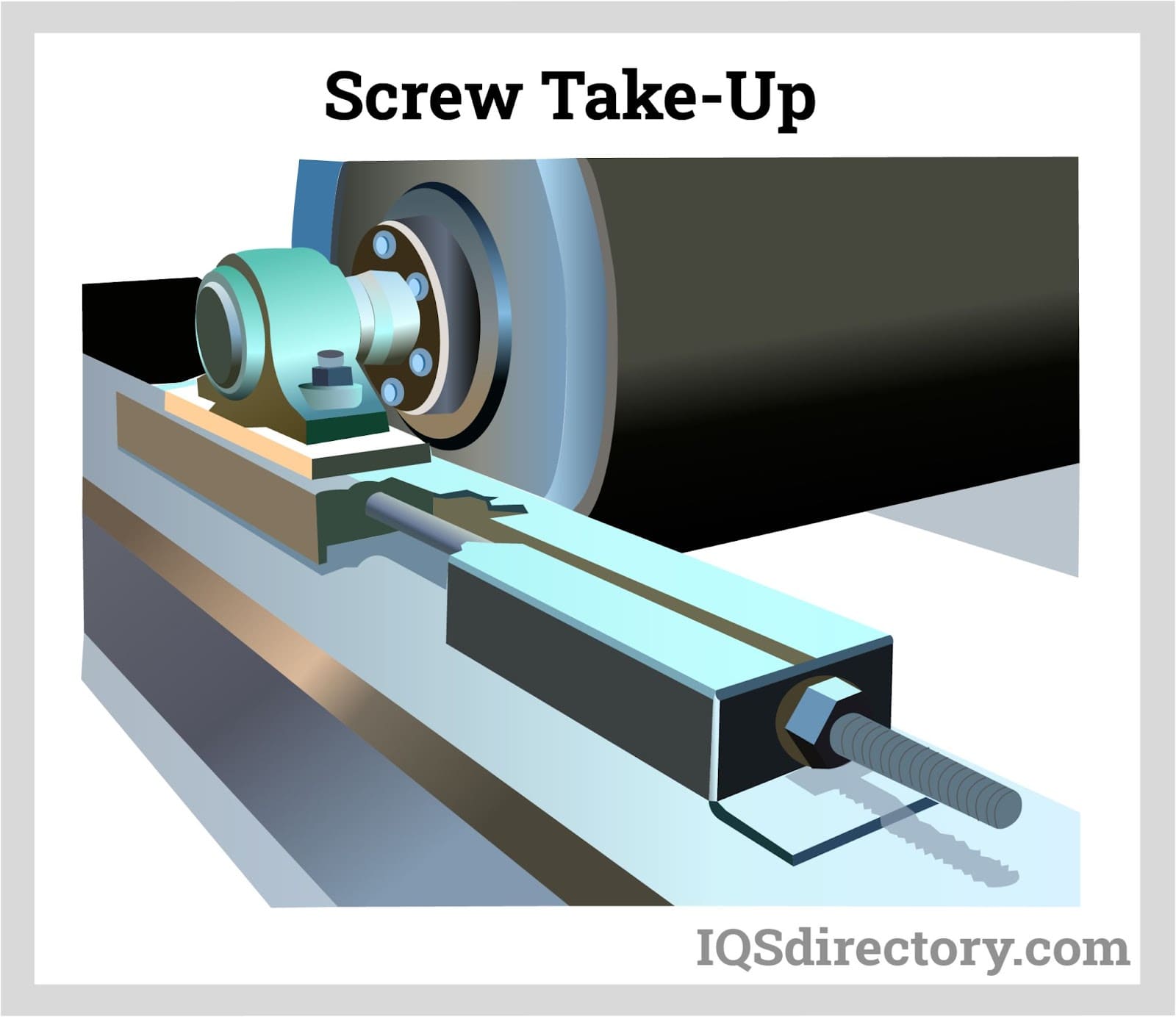
An alternate form, the top angle take-up, is widely used where a heavy-duty supporting frame is feasible, but this design also demands substantial guarding for operator safety.
Screw take-ups are ideal for relatively short conveyor belts (typically under 100 meters) and low-tension applications. They provide a cost-effective, straightforward way to maintain belt tension, extending the system’s belt life and improving tracking for various industries such as packaging, warehousing, and food processing.
Gravity Take-Up
For conveyor systems exceeding 100 meters, gravity take-up assemblies are more suitable than screw designs for managing substantial belt elongation and dynamic load variations. Gravity take-ups are reliable for bulk material handling in facilities like quarries, ports, and distribution centers.
A gravity take-up unit includes three rollers: two bend rollers and a single gravity (sliding) roller. Weighted counterbalances apply a constant force to the belt, ensuring consistent tension regardless of loading changes or belt stretch. The assembly is usually mounted beneath the conveyor frame, offering effective self-tensioning capability while minimizing operator intervention or adjustment errors.
This system ably maintains uniform belt tension, thus reducing the risk of sudden tension spikes or belt damage, and protects against misalignment and tracking issues. Gravity tensioners (sometimes called automatic take-ups) require minimal maintenance, with major servicing typically coinciding with complete belt replacement, which can involve vulcanizing or splicing as necessary for continuous operation.
When the belt has reached its maximum elongation, the take-up will be at its maximum extension, signaling the need for belt replacement or repair to prevent system failure and unplanned downtime.
Horizontal Take-Up
The horizontal take-up is particularly useful in conveyor installations where space is restricted or where standard gravity take-ups may not fit due to structural limitations. This configuration is often chosen for conveyor belts on slopes, in underground mines, or in areas with tight clearance.
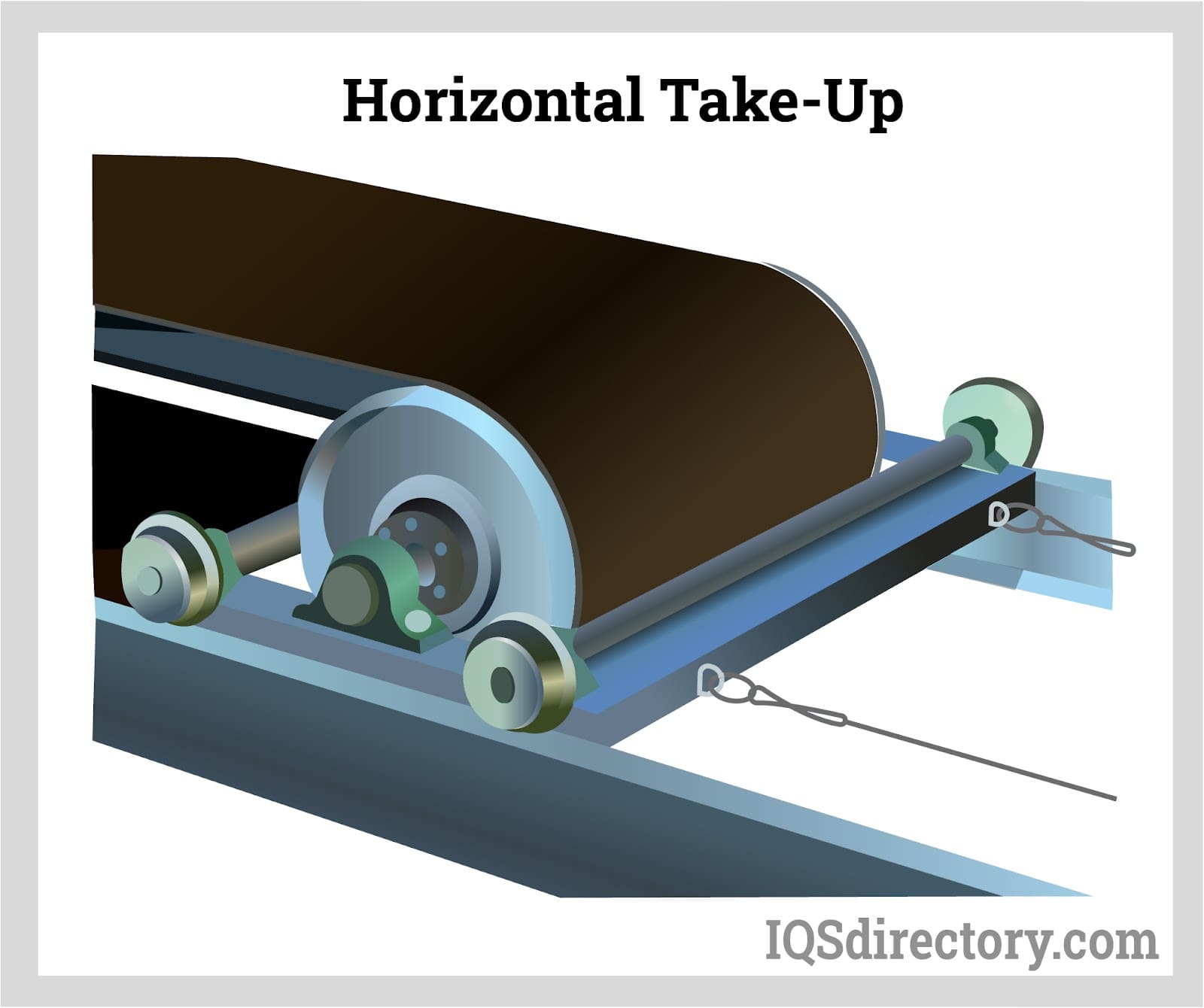
Unlike gravity methods mounted beneath the conveyor, a horizontal take-up positions the assembly vertically behind the tail roller. It employs a system of cables, pulleys, and a weight box to apply adjustable tension. The movement of the tail pulley along a carriage maintains the correct belt tension, ensuring continuous, reliable operation.
When designing a conveyor system, always evaluate the trade-offs between different take-up systems—considering installation space, maintenance access, conveyor length, and total cost of ownership. Proper take-up selection is key to maximizing system uptime, throughput efficiency, and the long-term durability of belting and mechanical components.
By carefully balancing these design parameters and considering relevant material handling industry standards (such as CEMA or ISO), manufacturers and plant engineers can ensure their belt conveyors not only meet current production demands but also offer scalability and resilience for future growth. Advanced features such as modular conveyor frames, automatic belt cleaners, and predictive maintenance sensors are increasingly integrated into modern conveyor solutions, adding another dimension to conveyor selection and design for optimized facility performance.
Frequently Asked Questions
What Are the Core Components of a Belt Conveyor System?
A belt conveyor system typically includes a head pulley, tail pulley, idler rollers, the conveyor belt, and the frame. Each component is engineered to support efficient and reliable material transport.
How Should the Belt Conveyor's Motor and Gearbox Be Selected?
Select the motor and gearbox based on the effective pulling force required for your application, calculated by considering load, belt length, friction, and operational settings. This ensures optimal drive system efficiency and power.
What Types of Belt Conveyors Are Used in Industrial Settings?
Common types include roller bed, flat belt, modular, cleated, curved, incline/decline, sanitary washdown, troughed, and magnetic belt conveyors. Each type suits specific products, environments, or automation needs.
How Is Conveyor Belt Tension Maintained for Optimal Performance?
Belt tension is controlled using take-up systems: screw (manual), gravity (automatic), or horizontal designs. Proper tension avoids belt slip, misalignment, premature wear, and maintains efficient operation.
Which Conveyor Belt Materials Are Best for Food or Sanitary Applications?
PVC, PU, and PE belts are frequently used in food and sanitary settings due to their hygienic properties, easy cleaning, and compliance with regulatory standards for minimizing contamination risk.
What Should Facilities Consider When Choosing a Belt Conveyor in Industries Like Mining or Agriculture?
Facilities should assess conveyor type, component strength, environmental factors, belt tensioning systems, and required throughput to ensure safe, efficient, and reliable bulk material transport in their specific geographic or industry context.
Chapter 4: What Are the Applications and Benefits of Belt Conveyors?
This chapter will cover the applications and benefits of belt conveyors, as well as common issues encountered with belt conveyors, their causes, and the impact of environmental factors on their performance.
Applications of Belt Conveyors
Conveyor belts are used in various industries for a multitude of applications, including:
-
Mining Industry
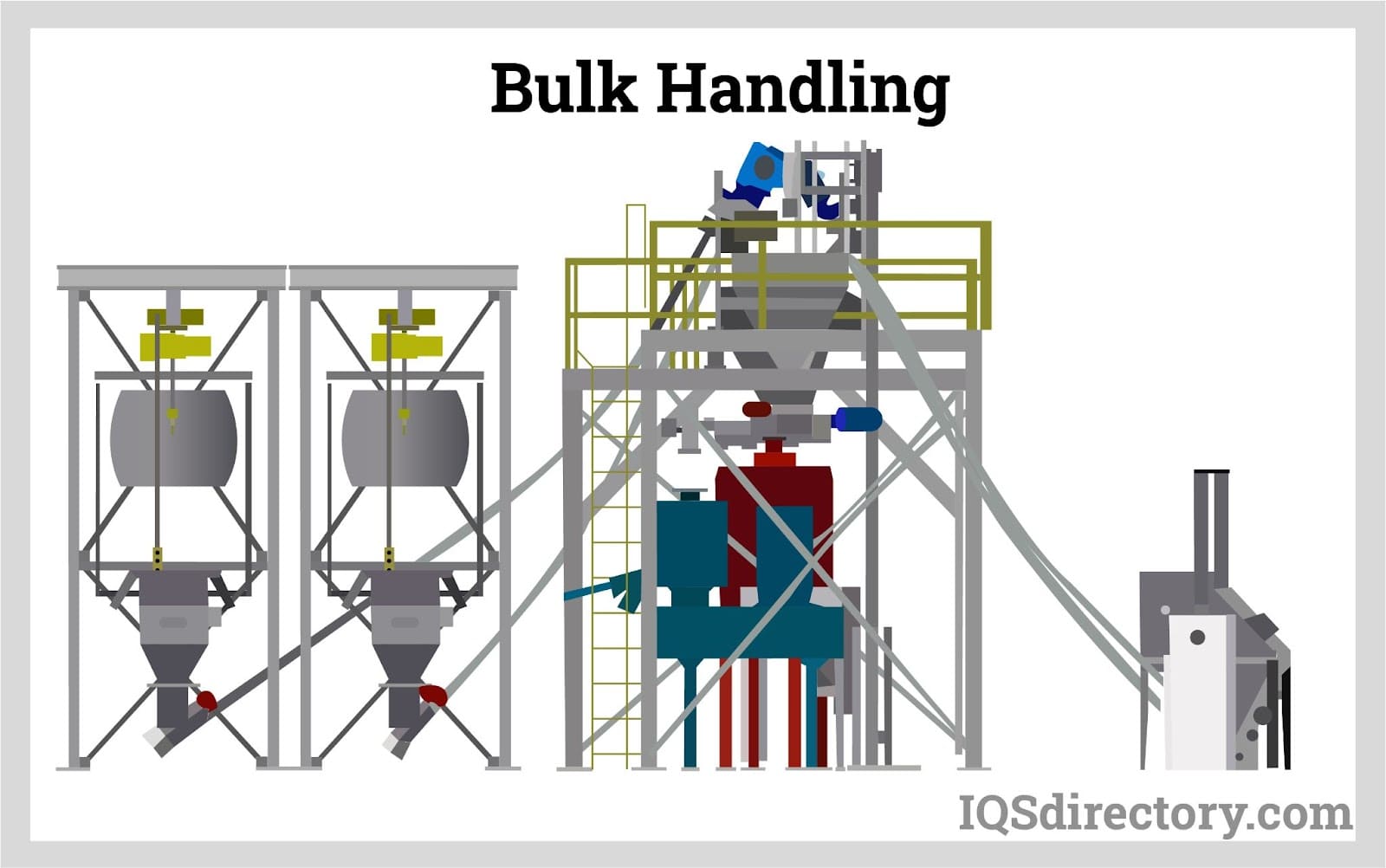
- Bulk handling
- Processing plants
- Taking ores from the shaft to the ground level
-
Automotive Industry
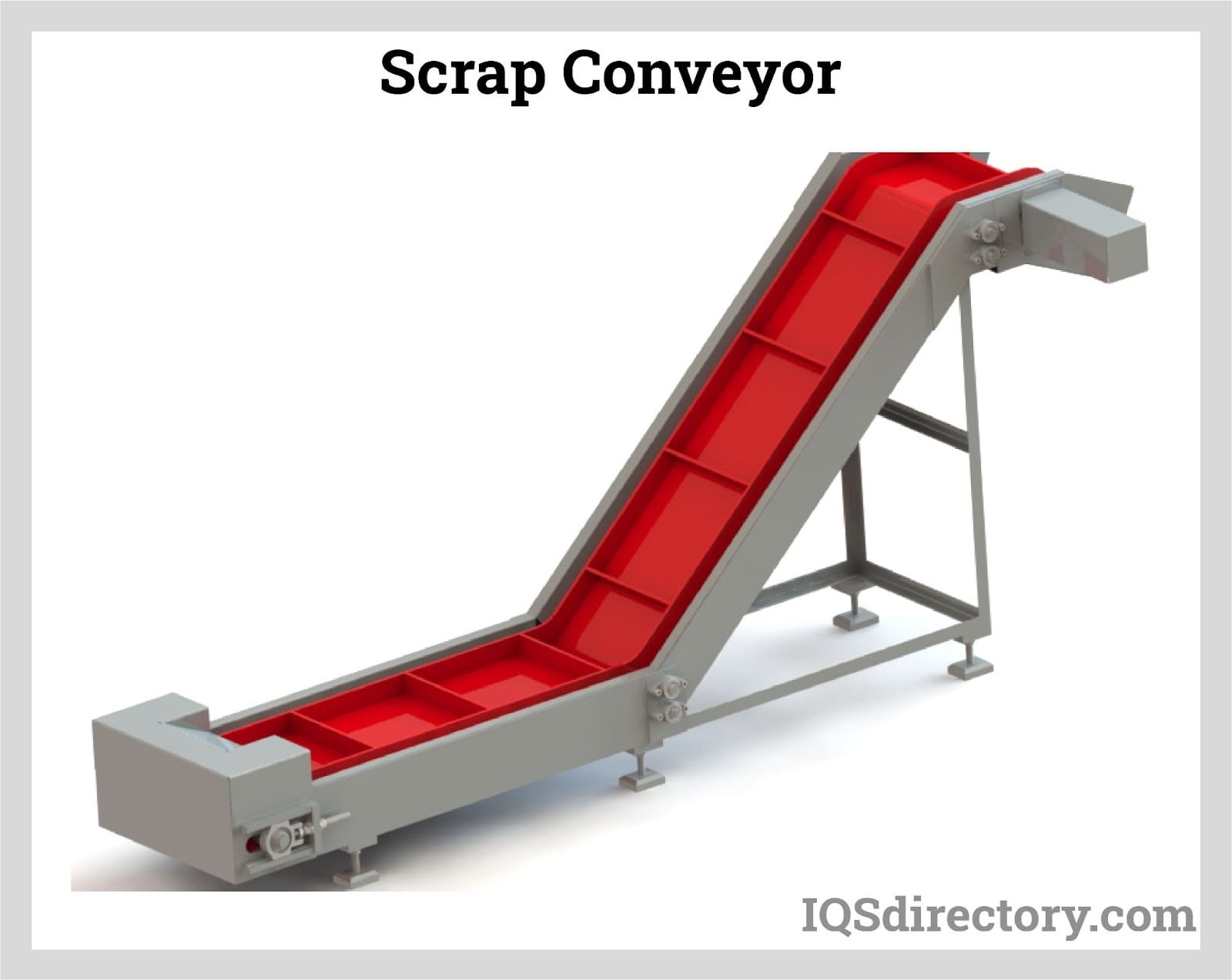
- Assembly line conveyors
- CNC machines’ scrap conveyors
-
Transport and Courier Industry
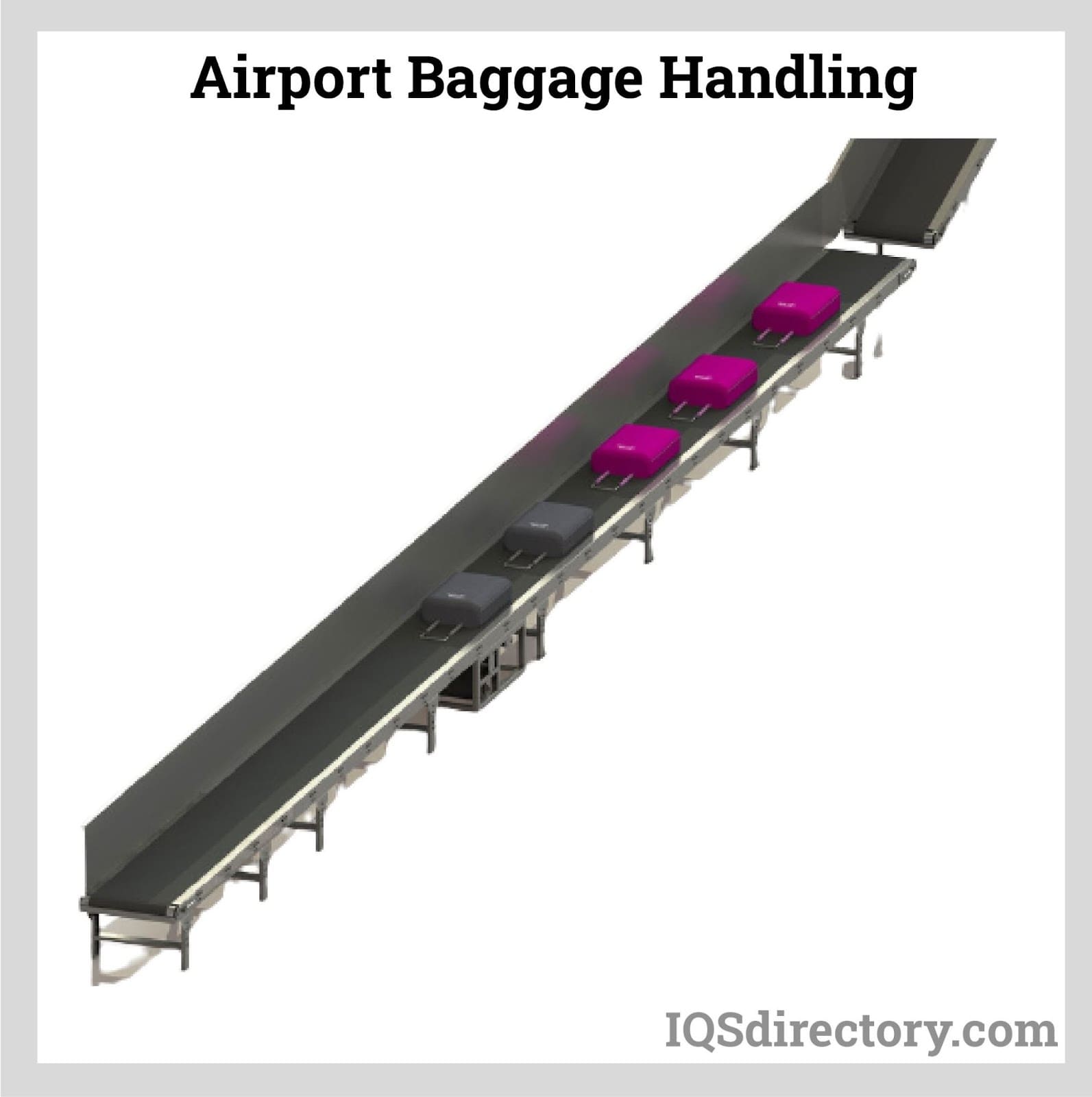
- Baggage handling conveyors at airports
- Packaging conveyors at courier dispatch
-
Retailing Industry
- Warehouse packaging
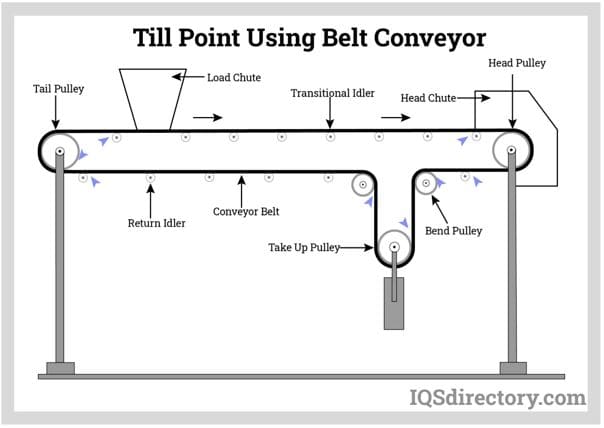
- Till point conveyors
Other conveyor applications are:
- Food handling industries for grading and packaging
- Power generation conveying coal to the boilers
- Civil and construction as escalators
Chapter 5: What Are the Types of Belt Conveyor Pulleys?
Pulleys play a crucial role in belt conveyors by providing drive tension and altering the direction of the belt's movement. Belt conveyor pulleys are categorized into several types, including drive, tension, motorized, snub, wing, and bend pulleys. These pulleys can come with various surfaces, such as smooth, rubber-coated, or cast rubber.

Motorized Pulley or Motor Drum
Motorized pulleys serve as the driving mechanism for belt conveyor systems. They feature a sealed motor and a protective exterior drum, which the motor drives. This drum provides the necessary traction to move the conveyor belt. Motorized pulleys come in various configurations to accommodate the diverse needs of conveyor systems.
Drive Pulley or Head Pulley
The drive pulley, or head pulley, is responsible for supplying traction to the conveyor belt. It typically has a surface coated with chevrons or diamonds to enhance friction between the belt and the pulley, ensuring effective movement. Drive pulleys can be single or double-sided and may have one or two drives, depending on the size and requirements of the conveyor system.
Bend Pulley
Bend pulleys are used to redirect the belt conveyor, creating a continuous loop. They function as the tail roller in a tensioning device and help change the belt's direction. Bend pulleys resemble return pulleys but are designed with a smaller diameter.
Tension Pulley
A tension pulley, also known as a return pulley, creates tension in the conveyor belt, increasing the force exerted on it. These solid pulleys are built to withstand significant forces and can be placed anywhere along the belt, although they are most effective when positioned close to the drive pulley.
Snub Pulley
The snub pulley works in conjunction with the drive pulley to increase the contact area between the belt and the drive pulley. By enhancing friction, snub pulleys are ideal for conveyor systems that require high drive power or operate under contaminated conditions.
Wing Pulley
Wing pulleys are designed to clear material from the return belt and continuously clean themselves. They offer excellent traction and come in various types, including spiral, heavy-duty, and herringbone.
Magnetic Pulley
Magnetic pulleys are integral to magnetic conveyor belts, used to separate ferrous materials from non-ferrous ones. Constructed from steel and enclosed with permanent magnets, these pulleys effectively remove both large and small ferrous debris.
Crowned Head Pulley
A crowned head pulley features a cylindrical middle with tapered ends to ensure stable operation of the conveyor belt. By guiding the belt back to the center, crowned head pulleys improve stability and are typically used with flat belt drives.

Chapter 6: What Are the Advantages and Problems Associated with Belt Conveyors?
Belt conveyors are widely recognized for their convenience and efficiency in moving, sorting, packing, and shipping goods and products. Having been in use for many years in various forms, they have significantly improved supply chain efficiency.
Advantages of Belt Conveyors
Belt conveyors offer several advantages, including:
- It is a cheap way of moving materials over long distances
- It doesn’t degrade the product being conveyed
- Loading can be done at any place along the belt.
- With trippers, the belts can offload at any point in the line.
- They do not produce as much noise as their alternatives.
- Products can be weighed at any point in the conveyor
- They can have long operating times can even work for months without stopping
- Can be designed to be mobile as well as stationary.
- Have less dangerous hazards to human injury
- Low Maintenance costs
Common Belt Conveyor Problems
Despite their advantages, belt conveyors are complex systems that require careful monitoring and management. Key concerns to address include:
Problem 1: The Conveyor Runs to One Side at a Certain Point in the System.
Possible causes of these issues include:
- Material building upon the idlers or something causing the idlers to stick
- Idlers no longer run square to the path of the conveyor.
- Conveyor frame tilted, crocked, or no longer level.
- Belt was not spliced squarely.
- Belt is not loaded equally, probably loaded off-center.
Problem 2: The Conveyor Belt Slips
Potential causes of this issue include:
- Traction is poor between belt and pulley
- Idlers stuck or not rotating freely
- Worn out pulley legging (the shell around the pulley that helps increase friction).
Problem 3: Overstretching of the Belt
Possible reasons for this include:
- Belt tensioner is too tight
- Belt material selection not done properly, probably “under belted”
- Conveyor counterweight is too heavy
- The gap between idler rolls is too long
Problem 4: The Belt Wears Excessively at the Edges
This can be attributed to factors such as:
- Belt is loaded off-center
- High impact of material on the belt
- Belt running against conveyor structure
- Material Spillage
- Material is trapped between belt and pulley
Environmental Effects On Belt Conveyors
Factors such as water, petroleum products, chemicals, heat, sunlight, and cold can all impact the performance and lifespan of a belt conveyor.
The effects and causes of these factors can be categorized as follows:
Moisture Effects
- Belt rots and cracks
- Belt loose adhesion
- Causes slippage
- Steel carcasses can rust
Effects of Sunlight and Heat
- Rubber will dry out and weaken
- Rubber will crack
- Rubber may have more slack and thus reduce belt tension
Cold Effects
- Belt stiffens and becomes harder to guide and train
- On incline systems, frost can build up and cause slippage
- Ice can build up in chutes and clog them
Effects of Oil
- Rubber will swell
- Rubber will lose tensile strength
- Rubber will lose tensile strength
- The belt will wear quicker
- Rubber will lose adhesions
Conclusion
A belt conveyor is a system designed to transport or move physical items like materials, goods, even people from one point to another. Unlike other conveying means that employ chains, spirals, hydraulics, etc., belt conveyors will move the items using a belt. It is critical to be cognizant of the design considerations and applications of various belt conveyors depending on the intended use.