
- 6 leading manufacturers
- 44 additional suppliers
- 23 states and provinces
- 15 related categories
- 8 guide sections
Heat Exchanger Manufacturers and Suppliers

IQS Directory provides a comprehensive list of heat exchanger manufacturers and suppliers. Use our website to review and source top heat exchanger manufacturers with roll over ads and detailed product descriptions. Find heat exchanger companies that can design, engineer, and manufacture heat exchangers to your companies specifications. Then contact the heat exchanger companies through our quick and easy request for quote form. Website links, company profile, locations, phone, product videos and product information is provided for each company. Whether you are looking for heat exchanger designs, heat exchanger tubes, steam heat exchangers, or customized heat exchangers of every type, this is the resource for you.
Suppliers located in TX, IL, NJ +20 more states
Contents (6 sections)
Leading Heat Exchanger Manufacturers
Showing all 6
| Placement No. | Manufacturer | Location | Contact | Actions | |
|---|---|---|---|---|---|
| 1 | Harris Thermal Transfer ProductsAt Harris Thermal Transfer Products, we specialize in delivering cutting-edge heat exchangers designed to meet the diverse needs of our clients. We excel in producing a wide range of thermal management solutions, from standard models to highly customized systems. Our commitment to innovation and quality ensures that our heat exchangers provide superior performance, reliability, and efficiency. | Newberg, OR | |||
| 2 | Perry Products CorporationSince 1947, Perry Products Corporation has been a trusted designer, manufacturer and long term heat exchanger partner for our customers. In addition to custom thermal engineered shell and tube heat exchangers, Perry maintains a line of partially fabricated but still customizable ASME heat exchangers in stock and ready to ship quick. Direct and honest communication and on time delivery is one of the reasons our customers keep coming back to Perry. | Hainesport, NJ | |||
| 3 | Isotherm, Inc.At Isotherm, Inc., we specialize in the design and manufacture of high-performance heat exchangers engineered to meet demanding thermal management requirements across a wide range of industries. Our company combines advanced engineering expertise with precision fabrication to deliver efficient, reliable solutions that optimize heat transfer, improve system performance, and support long-term operational stability in complex environments. | Arlington, TX | |||
| 4 | Diversified Manufacturing Inc.At Diversified Manufacturing, we provide precision manufacturing solutions with a strong focus on producing high-quality heat exchangers for a wide range of industrial applications. Our company combines experienced craftsmanship with modern manufacturing processes to deliver dependable thermal transfer equipment designed to meet demanding performance requirements. | Lockport, NY | |||
| 5 | API Heat Transfer Inc.Since 1953, we have been an industrial heat exchanger and heat transfer systems manufacturer offering shell and tube, marine, plate and frame, brazed plate, welded plate and air cooled heat exchangers and more. To us, service means responsive, knowledgeable support. | Buffalo, NY | |||
| 6 | JFD Tube & Coil Products, Inc.At JFD Tube & Coil Products, we manufacture precision heat exchangers designed to provide dependable thermal transfer solutions for demanding industrial and commercial applications. Our company produces a wide variety of custom tube and coil products that support efficient heating, cooling, condensing, and fluid processing across numerous operating environments. | Hamden, CT |
Claim your Page One Spot
Leading heat exchanger manufacturers are listed first on this page, each with a website preview and a Request a Quote button on its row.
Additional Heat Exchanger Companies
The category’s other heat exchanger companies are listed on their own page, with location, phone and website where each supplier provides them.
View 44 Additional Heat Exchanger CompaniesDo not see your company listed in Heat Exchangers?
Engineers and buyers use this page to find heat exchanger suppliers. Add your company to the Heat Exchangers listings so they can find you too.
List Your Company- Listed in the Heat Exchangers directory
- A profile page for your company
- Buyers contact you directly
Heat Exchanger Industrial Manufacturing Guides
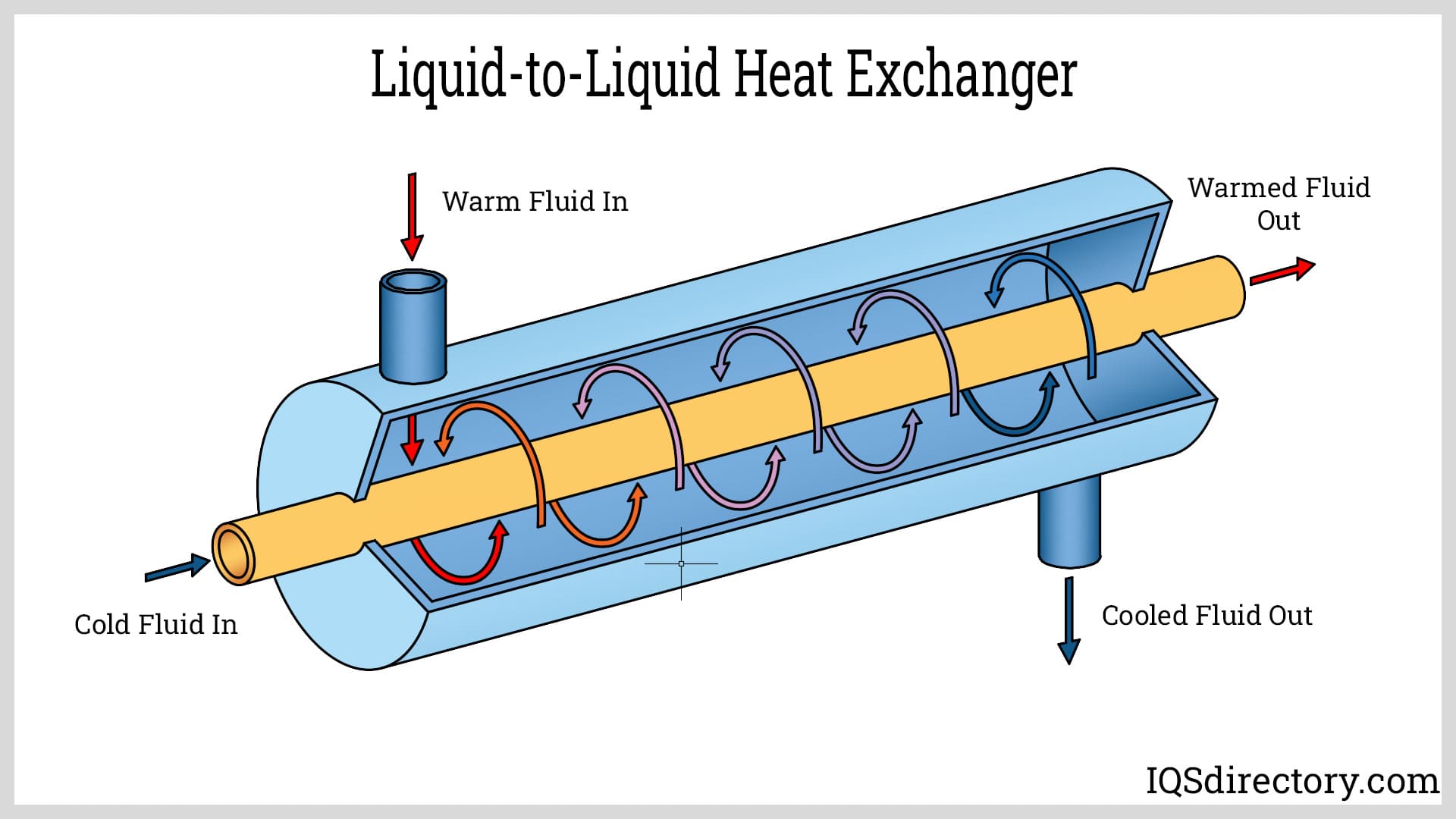
Liquid-to-Liquid Heat Exchangers: Key Types and Uses
Explanations of liquid-to-liquid heat exchangers with a list of manufacturers You will learn: What is a Liquid-to-Liquid Heat Exchanger? Types of…
7 chapters, the longest in this category
Quick Answers
- How many heat exchanger manufacturers are listed on IQS Directory?
- 6 leading manufacturers and 44 additional suppliers.
- Where are heat exchanger manufacturers located?
- The listed suppliers are in 23 states and provinces: Texas (7), Illinois (4), New Jersey (4), Pennsylvania (4), Indiana (3), New York (3), Ohio (3), Wisconsin (3), and 15 more. 1 supplier does not list a location.
- How do I get quotes from heat exchanger suppliers?
- Select suppliers in the table and choose Request Quotes. IQS reviews your request and forwards it to every supplier you select.
Heat Exchanger
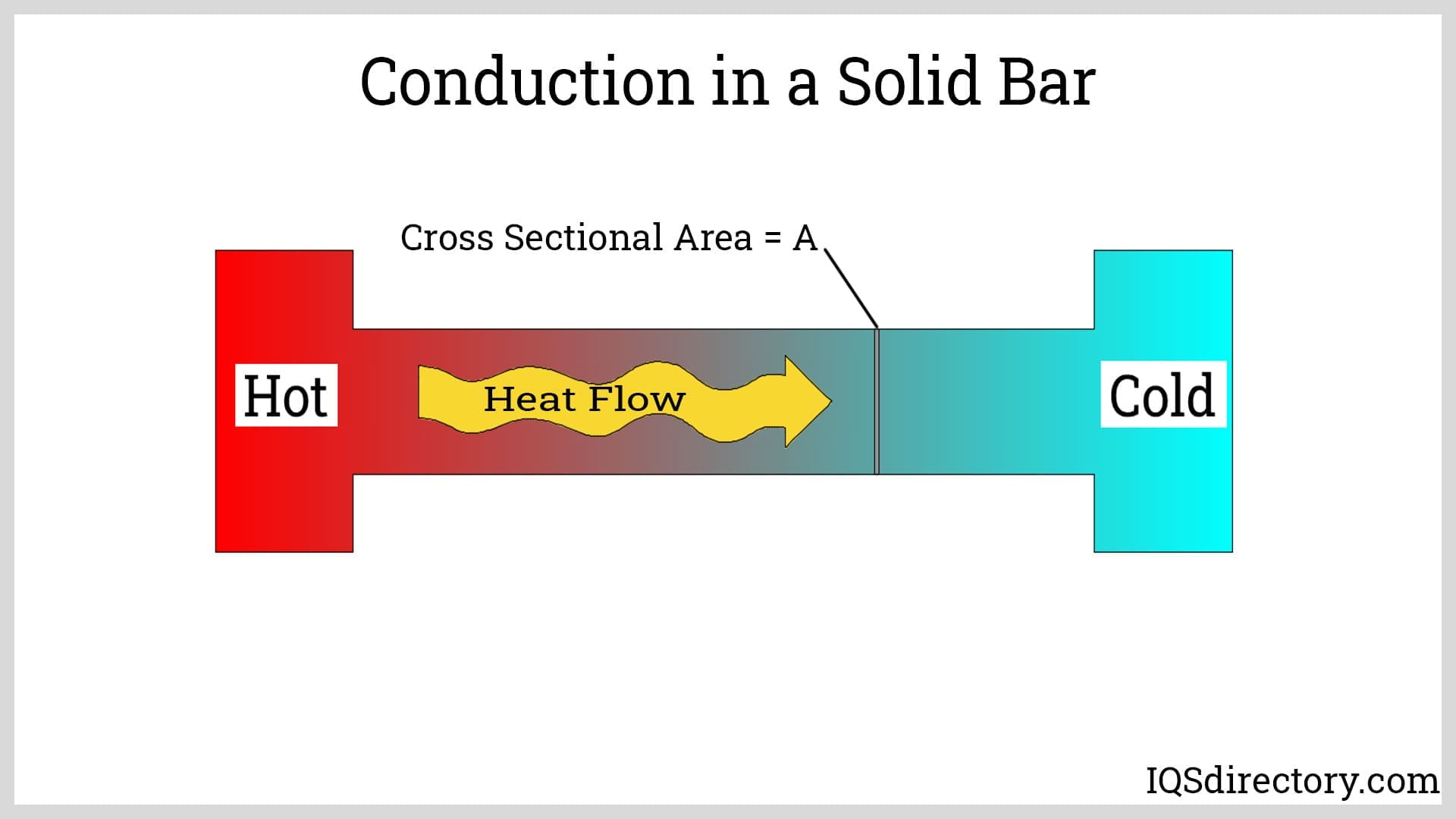
Heat exchangers are thermal transfer devices built from conductive materials and engineered to move heat from one medium to another. In most industrial and commercial systems, they transfer thermal energy between liquids, gases, steam, or process fluids while keeping those media separate. Depending on the design, the fluids may exchange heat through a wall, across plates, or through direct contact, allowing heat exchangers to support controlled cooling, process heating, temperature stabilization, energy recovery, and fluid conditioning.
Heat exchangers play a major role in heating system design, power generation, air-conditioning systems, chemical processing, manufacturing, food and beverage production, HVAC performance, refrigeration, and waste heat recovery. The same heat transfer principles used in these systems also guide the design of boilers, condensers, evaporators, radiators, chillers, and other equipment that manage indoor comfort or industrial process temperatures. Whether a buyer is evaluating thermal efficiency, corrosion resistance, pressure capability, cleanability, or long-term operating cost, the right heat exchanger can improve reliability, energy use, and process consistency.
History of Heat Exchangers
The earliest practical forms of heat transfer can be traced to heated stones used to warm shelters during early human history. The rocks absorbed energy from a fire and then released that heat indoors, offering a simple but effective way to improve comfort. The Romans later refined home heating with hypocaust systems, which created a space beneath the floor so warm air could circulate and raise room temperature through heated masonry and concrete materials that retained and released thermal energy over time.
In Korea, the Ondol system used hot air and smoke from wood fires routed through channels beneath the floor, creating another early example of controlled heat distribution. In the 1700s, Jean Simon Bonnemain developed a heated water system for incubating eggs, while in the 1800s Marquis de Chabannes designed a heat exchanger for greenhouse grape cultivation. By 1829, the Price brothers advanced steam heating in England, helping move heat exchange technology toward modern industrial and commercial use. From those early systems to today’s shell and tube, plate, regenerative, and air-cooled designs, the goal has remained the same: transfer heat efficiently, safely, and economically.
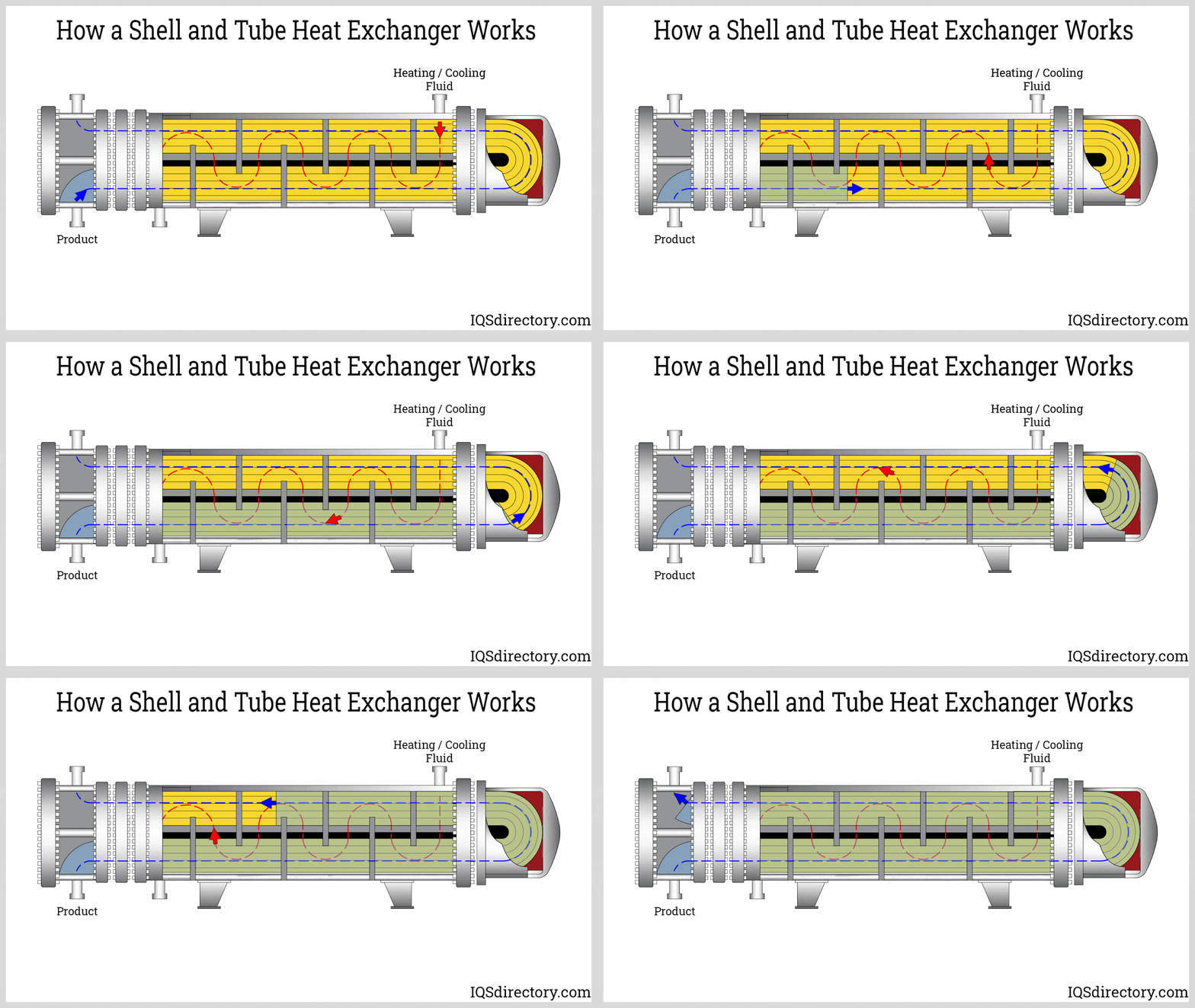
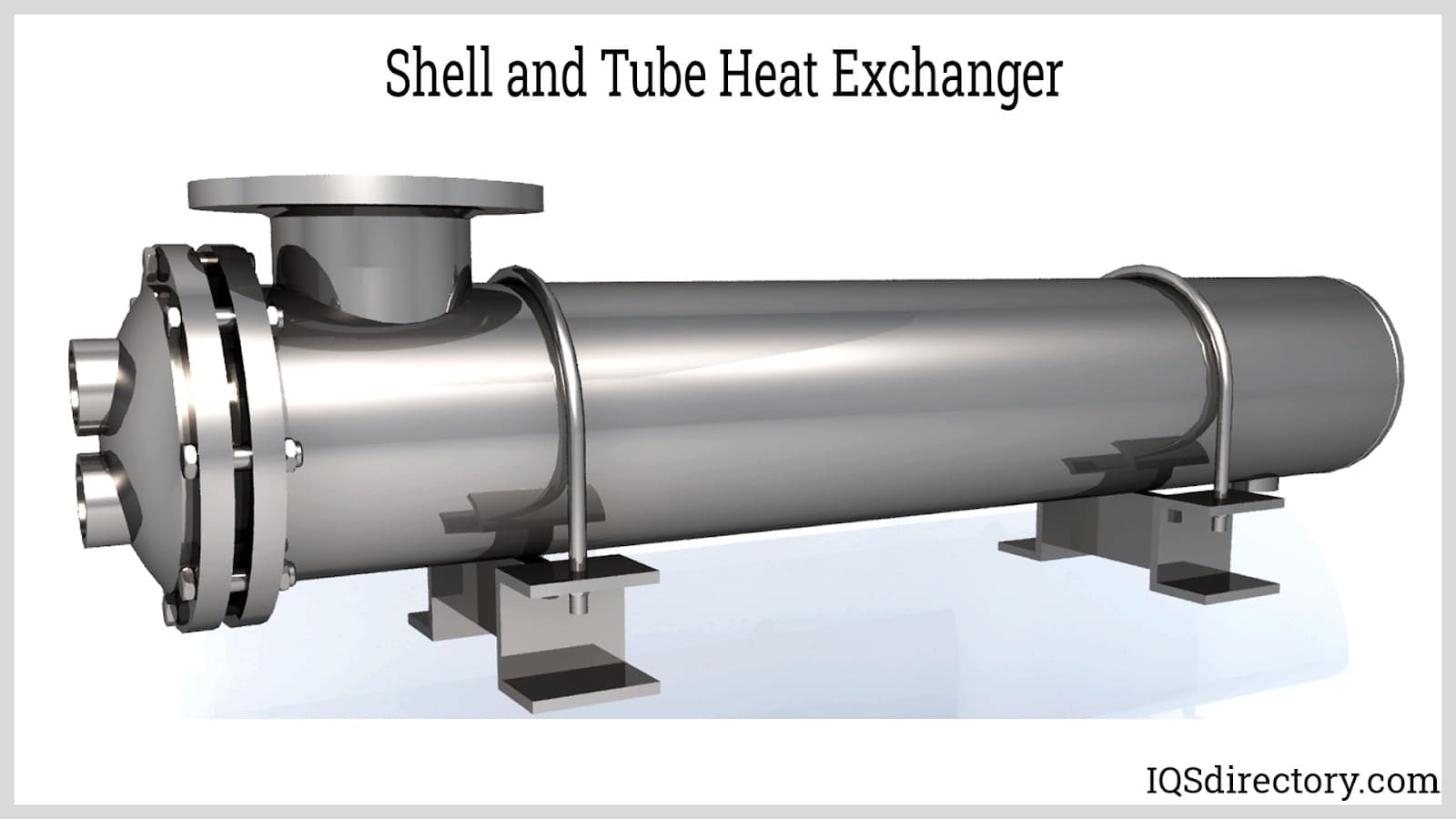
Heat Exchangers Images, Diagrams and Visual Concepts
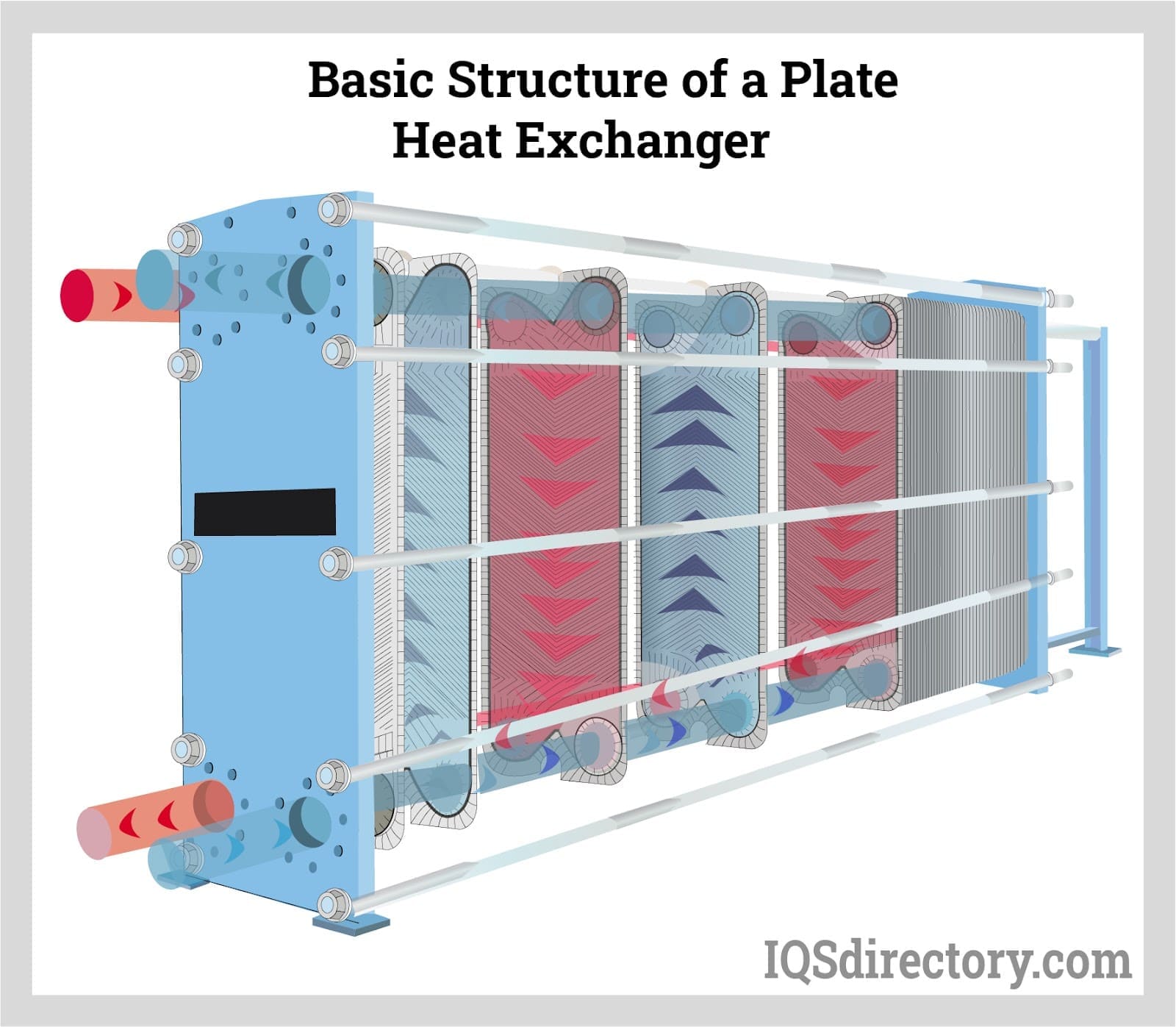
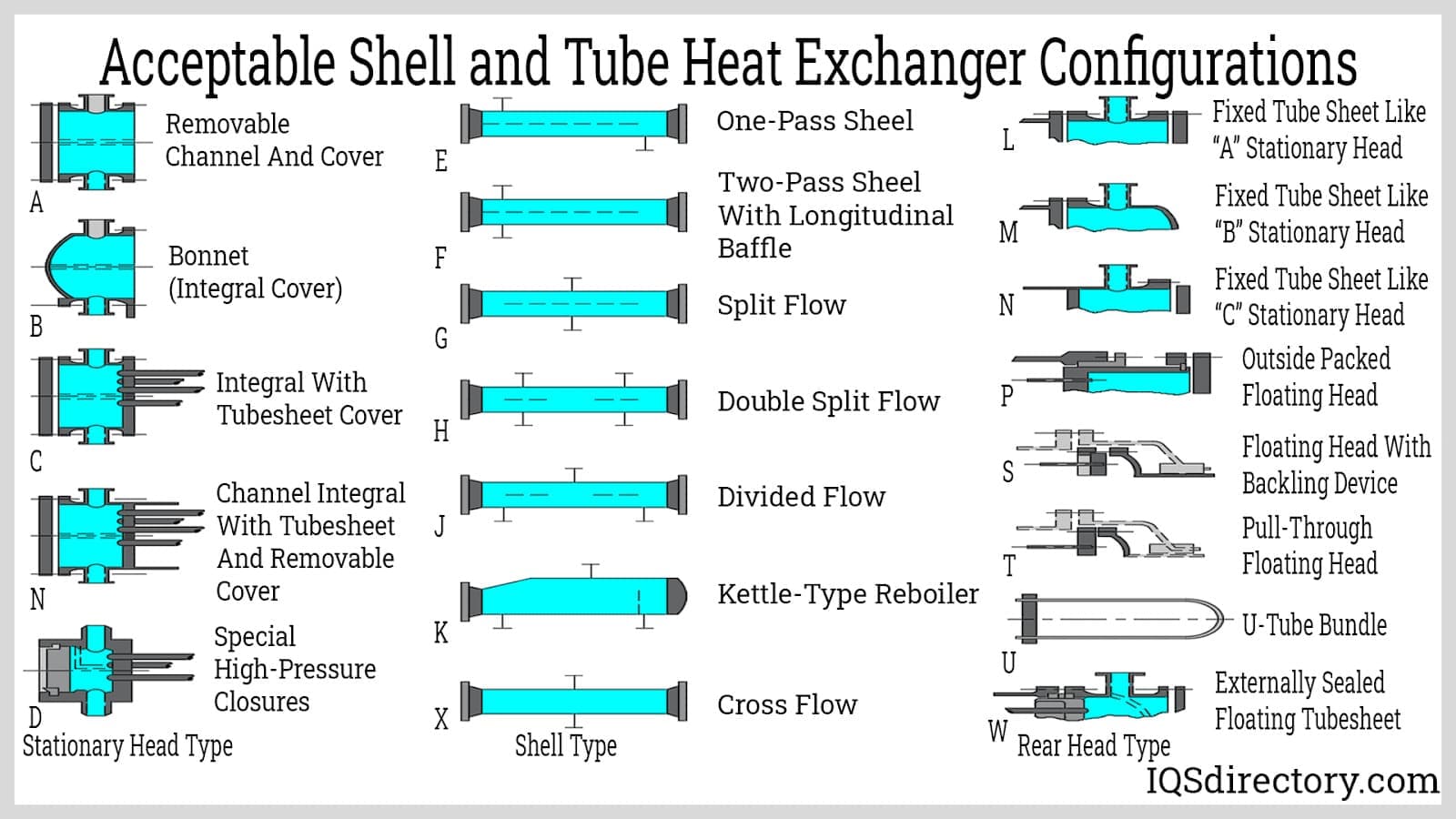
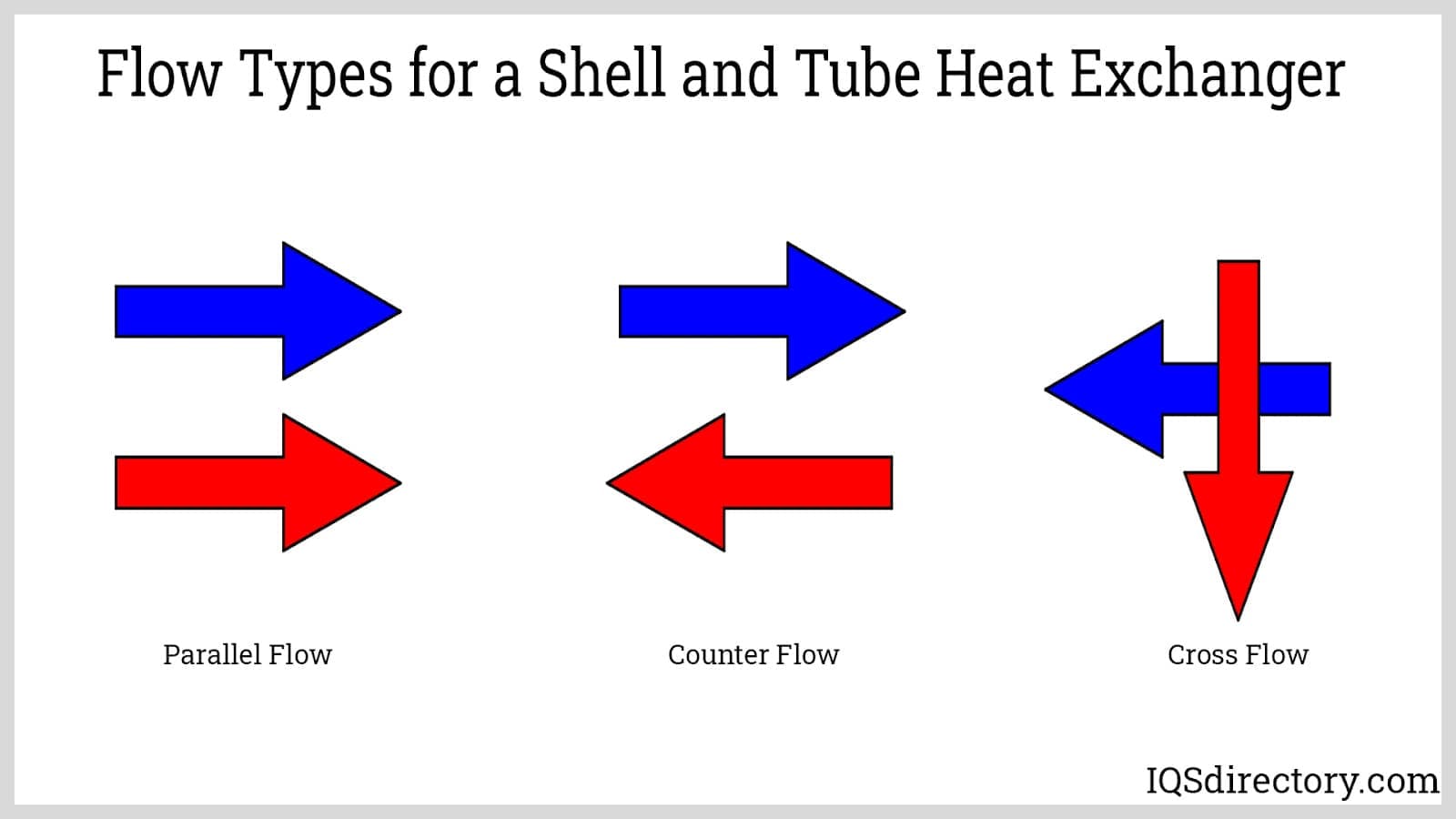
Types of Heat Exchangers
To understand how heat exchangers work in real applications, it helps to look at the two broad classification methods used by engineers and buyers: flow configuration and equipment construction. These categories shape how effectively a unit transfers heat, how easy it is to clean, what pressure and temperature it can withstand, and which industries it best serves.
Heat Exchanger Classification by Flow Configuration
The four main types of flow configurations include:
- Counterflow
- Cocurrent Flow
- Crossflow
- Hybrid
Heat Exchanger Classification by Construction
Classification according to design results into two main groups namely:
- Recuperative Heat Exchangers
- Regenerative Heat Exchangers
Maintenance for Heat Exchangers
- Plate and frame exchangers can be maintained by periodically disassembling and cleaning them, which helps restore performance and maintain good heat transfer across the plate surfaces.
- It's important to monitor the heat transfer coefficient, pressure drop, and approach temperature, because these values often reveal fouling, scaling, or other performance losses before they become more costly.
- Tube exchangers can be cleaned using bullet cleaning, mechanical brushing, chemical descaling, or high-pressure water jets, depending on the exchanger construction and the type of deposits inside the tubes.
- To minimize fouling in heat exchanger systems, facilities may use water treatment, chemical additives, filtration, scheduled inspection, and water-borne oscillation technology to reduce scale, sediment, corrosion, and biofouling over time.
Things to Consider When Choosing a Heat Exchanger
Heat Exchanger Terms
More Heat Exchangers Information
Heat Exchanger Manufacturers
Common Questions
7 questions
What Is a Heat Exchanger and How Does It Work?
A heat exchanger transfers heat between two fluids without mixing them. Using thermally conductive walls, tubes, or plates, it moves thermal energy from the hotter fluid to the cooler one so industrial equipment, HVAC systems, and process lines can maintain target temperatures with better operating efficiency.
What Are the Main Types of Heat Exchanger Flow Configurations?
The main flow configurations include counterflow, cocurrent flow, crossflow, and hybrid designs. Counterflow systems, where fluids travel in opposite directions, usually offer the strongest thermal performance because they maintain a larger temperature differential across the full length of the exchanger.
What Is the Difference between Recuperative and Regenerative Heat Exchangers?
Recuperative exchangers keep fluids in separate channels divided by a wall, while regenerative exchangers use a shared matrix that alternately stores and releases heat. Recuperative designs are more common in industrial service because they simplify sanitation, reduce mixing risk, and fit many process heating and cooling duties.
Where Are Shell and Tube Heat Exchangers Used?
Shell and tube heat exchangers are used in power generation, HVAC, petrochemical processing, oil cooling, marine systems, and heavy manufacturing. Their tube bundle design supports high temperatures, elevated pressures, and demanding fluids, making them a dependable choice for industrial thermal management.
How Are Plate Heat Exchangers Different from Tubular Models?
Plate heat exchangers use thin metal plates to separate fluids and create a large heat transfer area in a compact footprint. Tubular models rely on cylindrical tubes, so they are typically better suited for higher pressures, rugged operating environments, and applications with heavier fouling or solids.
How Is Fouling Prevented in Heat Exchanger Systems?
Fouling can be reduced through water treatment, filtration, chemical additives, routine cleaning, and design choices that limit buildup on heat transfer surfaces. Monitoring performance over time also helps teams catch scale, sediment, and biofilm early before thermal efficiency drops too far.
What Should Be Considered When Selecting a Heat Exchanger Manufacturer?
Buyers should review a manufacturer’s experience, material options, engineering support, production quality, lead times, and delivery capability. A strong supplier can match exchanger design, pressure rating, corrosion resistance, serviceability, and long-term operating value to the demands of the application.