
- 4 leading manufacturers
- 38 additional suppliers
- 17 states and provinces
- 17 related categories
- 11 guide sections
Hydraulic Press Manufacturers and Companies

IQS Directory provides a comprehensive list of hydraulic press manufacturers and suppliers. Use our website to review and source top hydraulic press manufacturers with roll over ads and detailed product descriptions. Find hydraulic press companies that can design, engineer, and manufacture hydraulic presses to your companies specifications. Then contact the hydraulic press companies through our quick and easy request for quote form. Website links, company profile, locations, phone, product videos and product information is provided for each company. Whether you are looking for manufacturers of arbor presses, shop presses, machine presses, or customized hydraulic presses of every type, this is the resource for you.
Suppliers located in CA, OH, IL +14 more states
Contents (6 sections)
Leading Hydraulic Press Manufacturers
Showing all 4
| Placement No. | Manufacturer | Location | Contact | Actions | |
|---|---|---|---|---|---|
| 1 | Grimco PressesWhen it comes to the hydraulic press industry, you want nothing but the very best! We have over 50 years of experience in the industry manufacturing quality products for our customers. We not only offer outstanding products, but we are also committed to the satisfaction of our customers no matter how large or small. We take the time to work with you to ensure your every need it met. Contact us today! | Paterson, NJ | |||
| 2 | Standard Industrial Company, Inc.At Standard Industrial Company, Inc., we design and manufacture hydraulic presses engineered to deliver controlled force, precision, and dependable performance in demanding production environments. Our company is committed to building durable press systems that support forming, molding, assembly, and other high force applications. We focus on providing equipment that maintains consistent pressure, accurate alignment, and long term reliability under continuous industrial use. | Clarksdale, MS | |||
| 3 | Williams, White & CompanyAt Williams, White & Company, we design and manufacture hydraulic presses engineered to deliver precise force, consistent control, and dependable performance in demanding industrial applications. Our company is committed to building high quality press systems that support forming, drawing, straightening, and assembly processes. We focus on providing equipment that maintains structural integrity and accurate pressure delivery under continuous production conditions. | Moline, IL | |||
| 4 | Campbell Press Repair, Inc.Here at Campbell we believe in restoring and repairing machines, instead of getting a new one altogether. Our technicians will perform preventive maintenance, maintenance, and repair work in shop for your convenience. Our team of experts will run diagnostics tests, repair, adjustments, and disassembly and assembly on-site. We are one of a few companies that is willing to manufacture and install bigger pieces; i.e. platens and rams from hydraulic presses. Everything we produce is ran through a series of stringent tests before it is chipped off to you. | Lansing, MI |
Claim your Page One Spot
Leading hydraulic press manufacturers are listed first on this page, each with a website preview and a Request a Quote button on its row.
Additional Hydraulic Press Companies
The category’s other hydraulic press companies are listed on their own page, with location, phone and website where each supplier provides them.
View 38 Additional Hydraulic Press CompaniesDo not see your company listed in Hydraulic Press?
Engineers and buyers use this page to find hydraulic press suppliers. Add your company to the Hydraulic Press listings so they can find you too.
List Your Company- Listed in the Hydraulic Press directory
- A profile page for your company
- Buyers contact you directly
Hydraulic Press Industrial Manufacturing Guides

Forging Press: Types, Processes and Benefits
The content of this article contains information regarding forging presses and their use. You will learn: What is a Forging Press? Forging Press Process…
7 chapters, the longest in this category
Quick Answers
- How many hydraulic press manufacturers are listed on IQS Directory?
- 4 leading manufacturers and 38 additional suppliers.
- Where are hydraulic press manufacturers located?
- The listed suppliers are in 17 states and provinces: California (5), Ohio (5), Illinois (4), Michigan (4), Pennsylvania (4), Wisconsin (4), Ontario (3), Tennessee (3), and 9 more.
- How do I get quotes from hydraulic press suppliers?
- Select suppliers in the table and choose Request Quotes. IQS reviews your request and forwards it to every supplier you select.
Hydraulic Presses
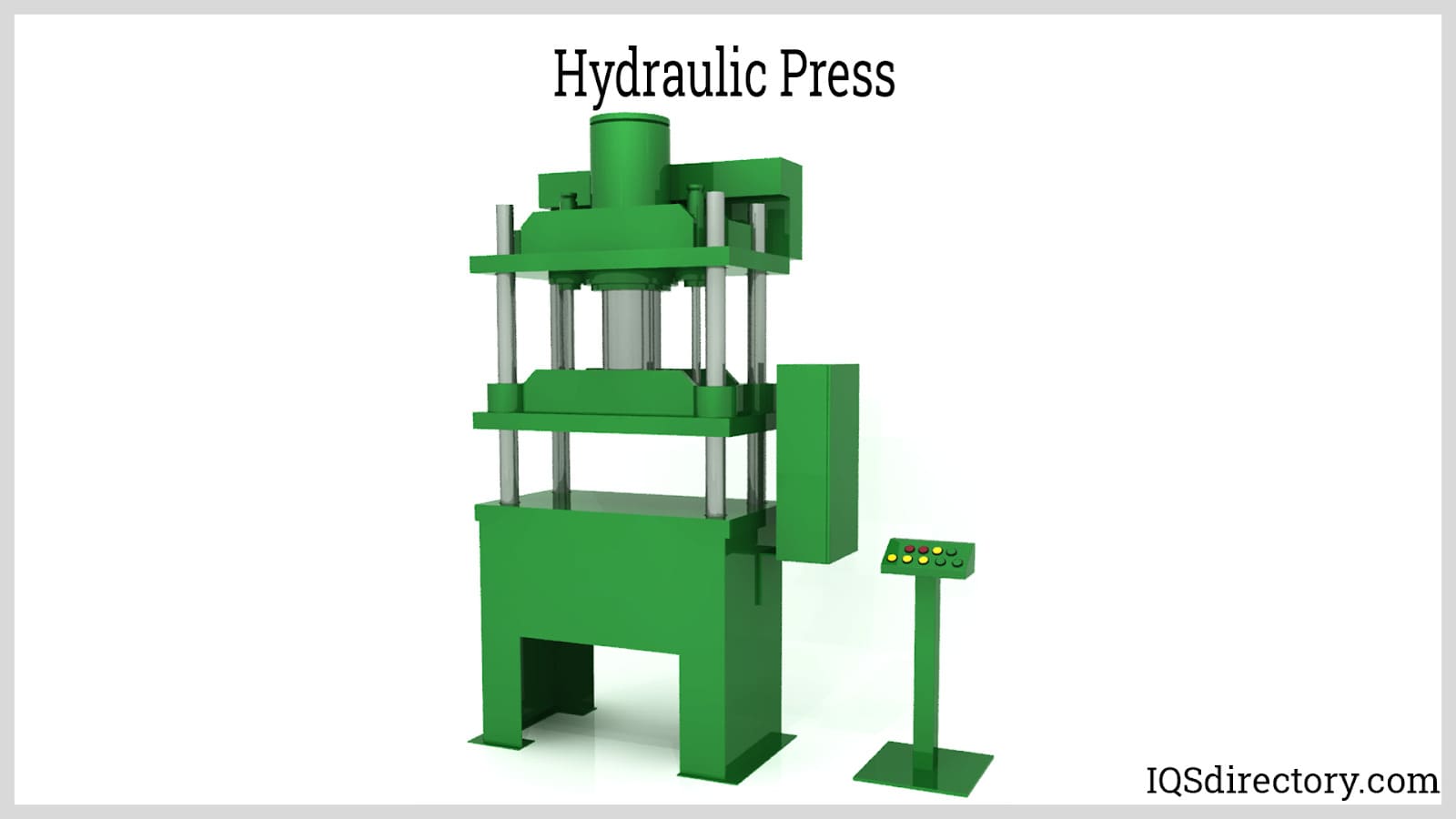
A hydraulic press is an industrial press machine that uses hydraulic pressure, transmitted through fluid-filled cylinders, to generate compressive force for shaping, forming, stamping, molding, and assembling materials. These press machines apply controlled downward force to a substrate and die, allowing manufacturers to produce repeatable parts, tight tolerances, and dependable production results across metalworking and other fabrication processes.
Hydraulic presses operate according to Pascal’s principle, which means pressure in a closed hydraulic system is distributed evenly and can be converted into substantial pressing force. That operating principle helps hydraulic press manufacturers deliver machines that outperform many pneumatic and mechanical presses in force consistency, control, stroke flexibility, overload protection, and suitability for demanding industrial applications.
Applications of Hydraulic Presses
Hydraulic presses are used across manufacturing because they can stamp, form, bend, punch, clinch, shear, mold, draw, and blank materials with a high degree of force control. Whether a company is producing heavy-gauge metal parts, formed sheet components, molded composites, or assembled subcomponents, a hydraulic press supports precision production, repeatability, and efficient workflow planning.
Common hydraulic press applications appear in automotive manufacturing, aerospace fabrication, appliance production, packaging, ceramics, defense work, food and beverage processing, pulp and paper operations, and marine manufacturing. Buyers often ask which hydraulic press machine best fits beverage can production, automotive parts, structural components, or custom formed parts, and the answer usually depends on tonnage, tooling, cycle time, material type, and production volume.
The History of the Hydraulic Press
The hydraulic press was first invented in England in 1795 by Joseph Bramah, who was inspired to explore the properties of fluids following his development of the flush toilet. As a result, hydraulic presses are sometimes referred to as Bramah presses. His invention was based on the Pascal principle, or Pascal’s law, which asserts that pressure within a closed system remains constant and is transmitted equally in all directions.
At the time of its invention, the hydraulic press had few comparable technologies, making Bramah a pioneer in hydraulic engineering. His foundational work set the stage for the development of numerous variations on the original hydraulic press, leading to the vast range of models and applications in use today.
Benefits of a Hydraulic Press
The value of a hydraulic press goes far beyond raw tonnage. For many manufacturers, the bigger advantage is the ability to combine high force output with predictable control, safer operation, process flexibility, and long-term production consistency.
Low Upfront Investment and Operating Cost Hydraulic presses are cost-effective due to their simple construction and minimal number of moving parts. This makes them inexpensive to purchase, easy to maintain, and straightforward to troubleshoot when compared to alternative press technologies. If a component fails, replacement is quick and does not require complete disassembly of the machine. Additionally, hydraulic equipment and supplies are readily available worldwide, ensuring minimal downtime and low maintenance costs. Operation of Power Stroke Unlike other types of presses that only deliver full power at the bottom of the stroke, hydraulic presses exert full power at any point in the stroke. This eliminates the need to invest in a heavier press—such as a 200-ton press—simply to achieve a lower force, like 100 tons, consistently throughout the stroke. This capability is particularly beneficial for drawing operations where precision and controlled force application are important. Easy Operation and Built-in Protection A hydraulic press designed to exert a specific pressure, such as 100 tons, will apply that exact force regardless of setup errors, making it highly reliable and foolproof. Operators do not need to worry about overloading, breaking a die, or damaging the press. When a hydraulic press reaches its set pressure, the relief valve automatically opens to prevent excessive force, eliminating the risk of overload. Control and Flexibility Hydraulic presses offer a high degree of control, allowing operators to adjust various parameters according to specific application requirements. These include pressure dwell duration, direction of movement, ram force, speed, and force release. This level of flexibility ensures optimal performance for diverse manufacturing needs. Lower Operation Noise Because hydraulic presses lack flywheels and have fewer moving parts, they operate with significantly less noise than mechanical presses. Modern hydraulic presses, when equipped with a properly mounted pumping unit, comply with and often exceed current federal noise regulations, contributing to a quieter and safer work environment. Long Machine Tool Life The built-in overload protection of hydraulic presses extends the lifespan of tools. Since the pressure applied remains consistent, the risk of tool damage due to overloading is eliminated. Additionally, the absence of shock, vibration, and impact reduces wear and tear on auxiliary equipment, such as press brakes and machine guards, leading to longer service life and reduced operational costs.How Hydraulic Presses Work
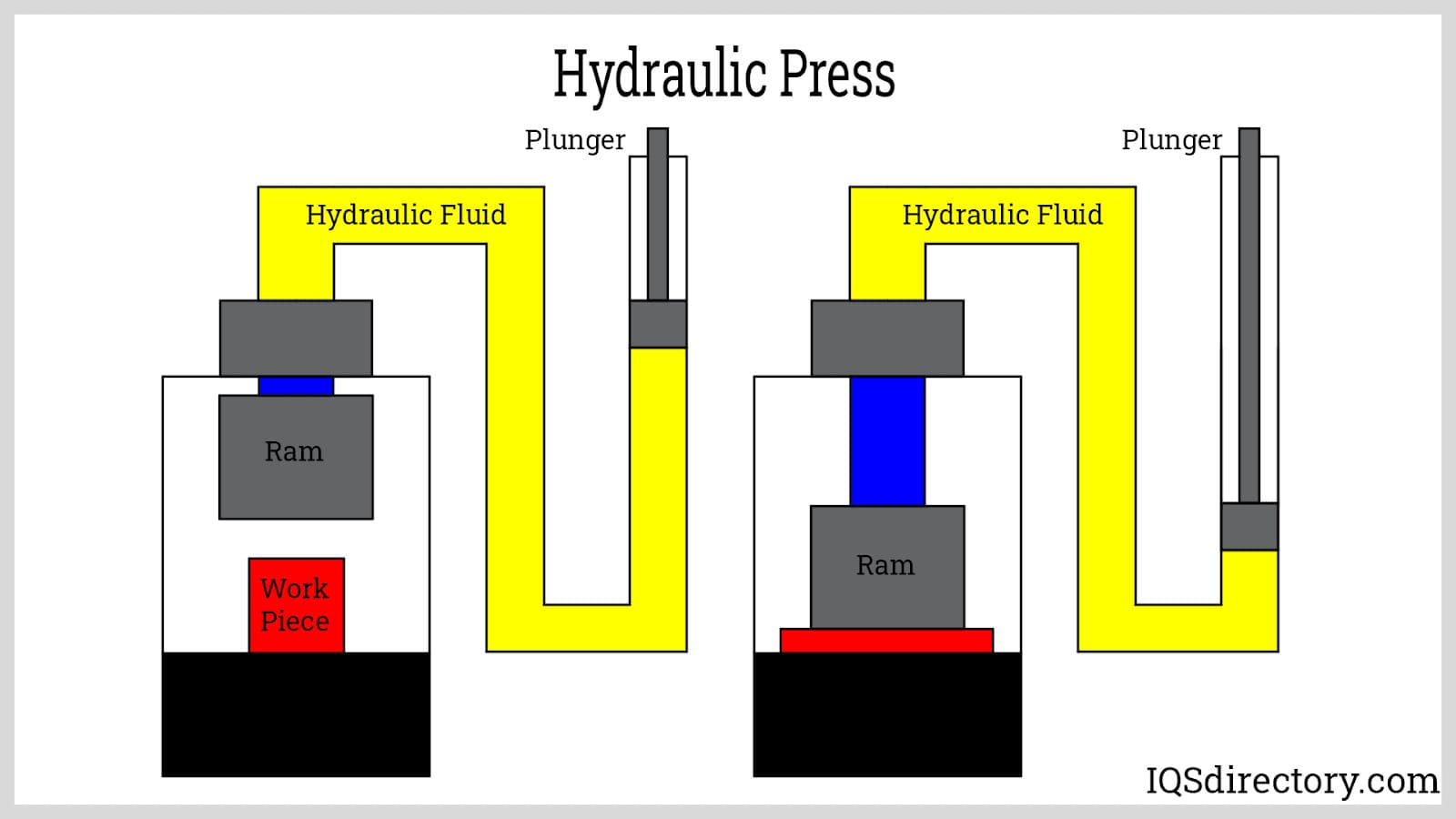
A hydraulic press works by moving pressurized hydraulic fluid through interconnected cylinders to multiply force and transfer it to the workpiece. The process begins when fluid is directed into a small double-acting cylinder, sometimes by a pump and sometimes by manual input. Inside this cylinder, a sliding piston pushes fluid through hydraulic lines and into a larger master cylinder. Because pressure is transmitted evenly, the larger piston can apply substantial forming force to a ram, platen, die, or work surface during the pressing cycle.
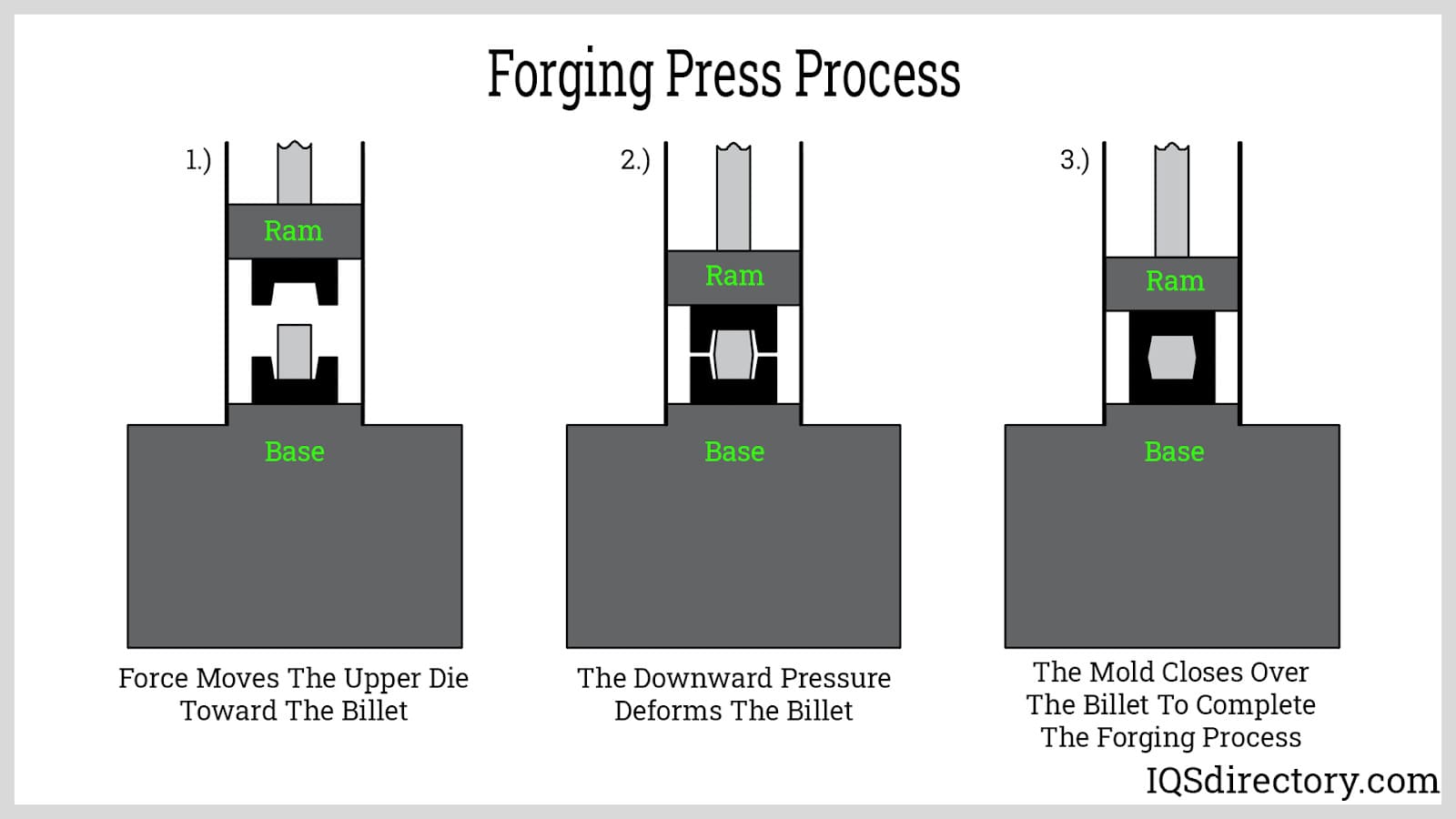
As pressure builds within the system, the press applies controlled force against the anvil, bed, baseplate, or tooling set. That force can be used to shape sheet metal, compress molded materials, seat components, straighten parts, or complete deep-drawing and forging operations with a high level of repeatability.
To help prevent overload, the hydraulic circuit uses pressure regulation and relief valves that respond when preset limits are reached. This allows the machine to maintain controlled operation, support more consistent forming results, and reduce the chance of tooling damage, press damage, or avoidable production interruptions.
Hydraulic Press Images, Diagrams and Visual Concepts
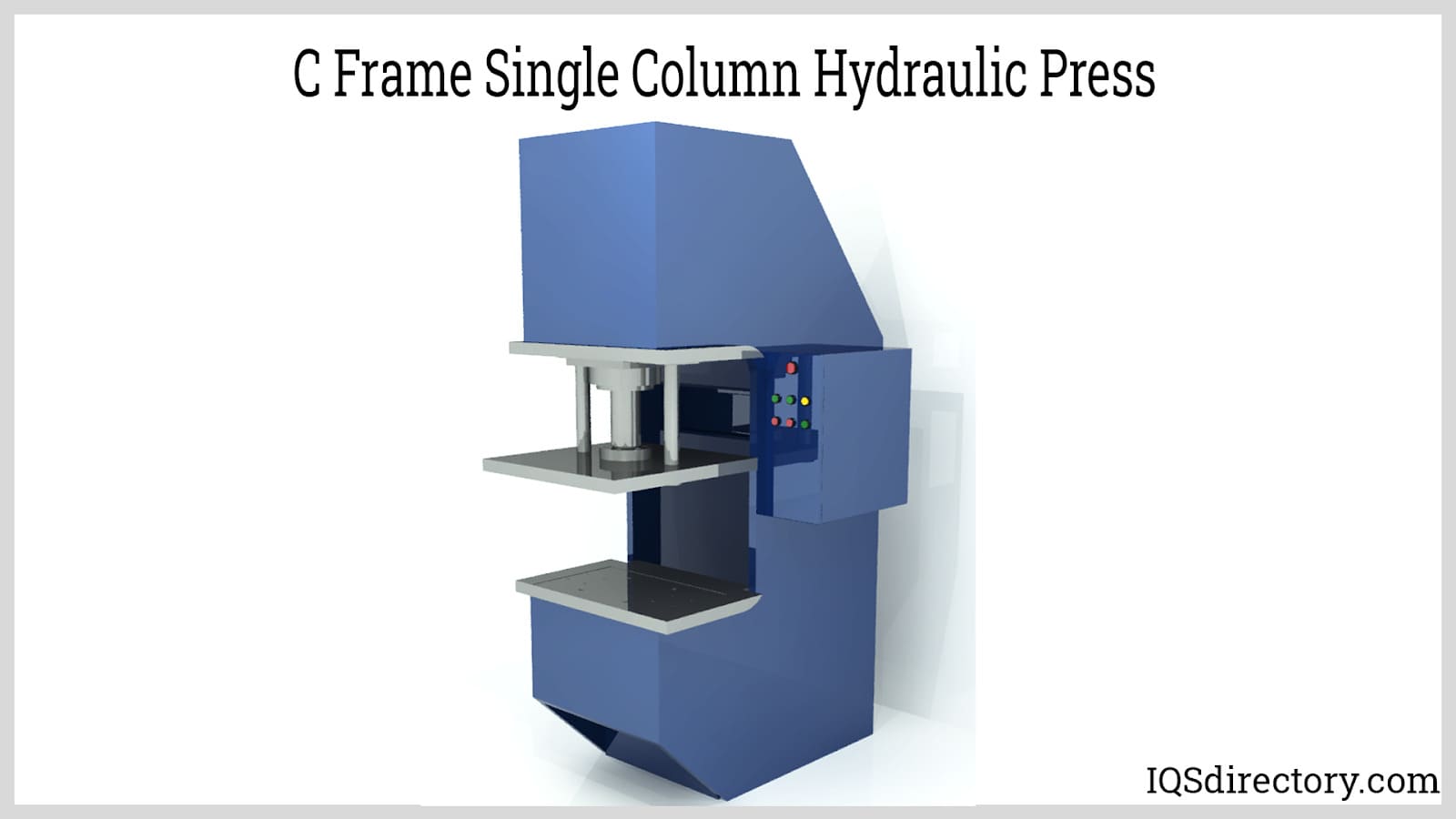
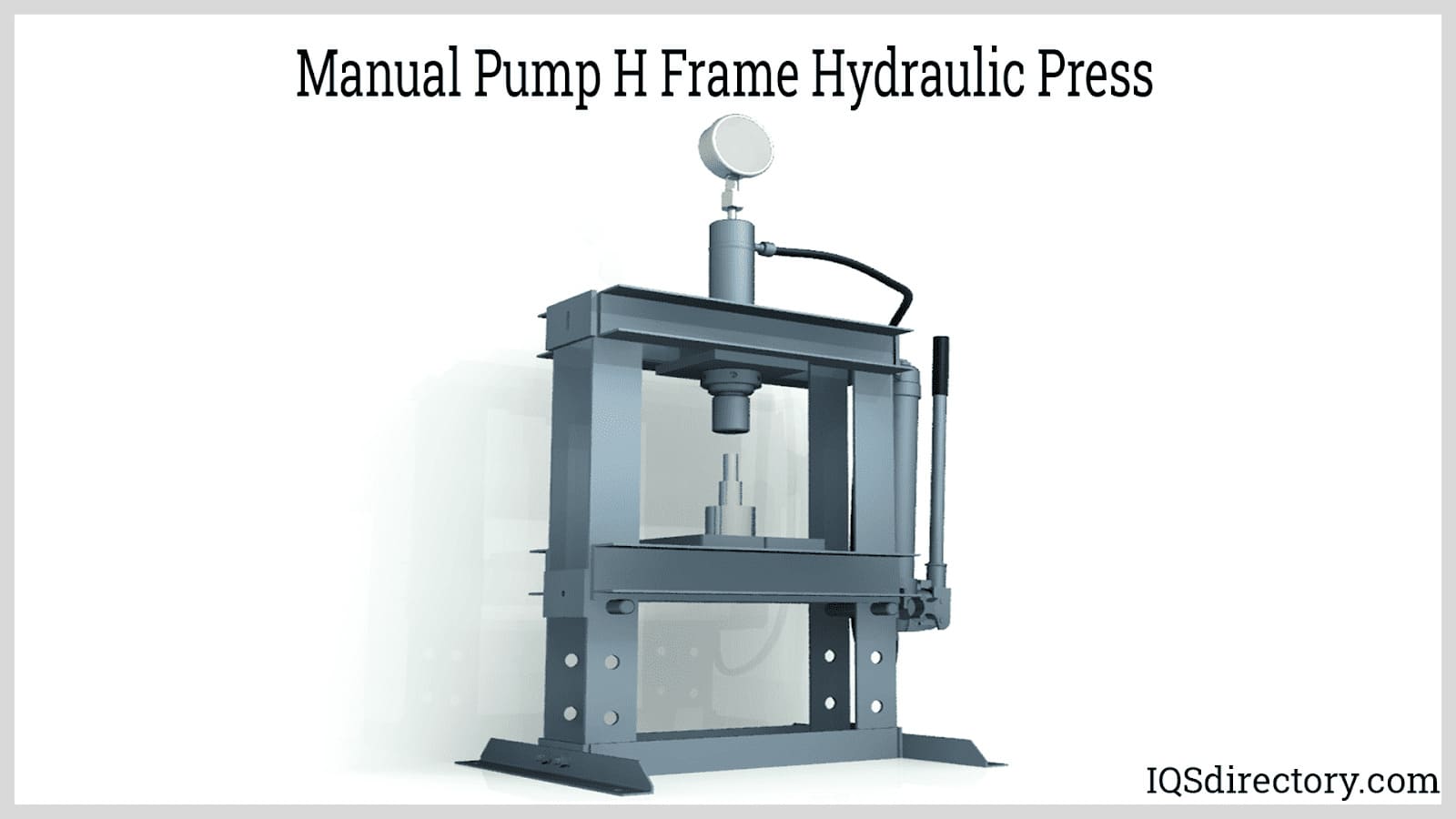
Types of Hydraulic Presses
System Equipment Components of Hydraulic Presses
A hydraulic press is built around core system components that create and direct hydraulic force. In its basic form, the machine includes double-acting cylinders, pistons—also referred to as punches—hydraulic lines, valves, a frame, and a stationary anvil or die that supports the material-forming process.
The system typically uses cylinders of different sizes, including a smaller slave cylinder and a larger master cylinder, to multiply force and deliver it where it is needed. Pistons create the thrusting motion, valves regulate fluid flow and pressure, and the anvil or die defines the final geometry of the workpiece as it moves through the forming cycle.
Design and Customization of Hydraulic Presses
Hydraulic presses are designed for a wide range of tonnage requirements, from compact laboratory and shop press applications to large industrial systems rated for thousands of tons. This broad capacity range helps buyers match press size, frame design, and operating force to the parts, materials, and production goals they are targeting.
Constructed from materials such as stainless steel, high-strength steel alloys, aluminum, and brass, hydraulic press systems are built for durability, long service life, and dependable operation. They are available in single-station and multi-station configurations depending on whether the application calls for dedicated tooling or progressive production capability.
Single-station presses use one primary tooling setup, such as a die and punch mounted within a work area, while multi-station presses support multiple operations within one system. In progressive or transfer-style production, this can improve throughput, reduce handling time, and support more efficient part flow from one stage to the next.
Manufacturers can further tailor a hydraulic press by adjusting tonnage limits, stroke length, bed size, daylight opening, die design, controls, guarding, automation features, and hydraulic fluid selection. When buyers ask how to choose the right hydraulic press, these design variables often determine whether the machine is best suited for short runs, repeat production, custom fabrication, or high-volume manufacturing.
Things to Consider When Purchasing Hydraulic Equipment
Proper maintenance helps hydraulic equipment run efficiently, safely, and predictably over time. When comparing hydraulic press machines or planning preventive service, the following maintenance practices can help reduce downtime, improve operating life, and support more stable production output.
Don’t Allow Leaks A leaky hydraulic system significantly reduces performance and efficiency. Operators should routinely inspect O-ring seals, the ram of the press, hydraulic lines, hose end fittings, and valve seats for any signs of leakage. Addressing leaks early prevents costly downtime and extends the machine’s lifespan. Don’t Exceed Load Limits Always ensure that the press operates within its designated load capacity. Applying a load heavier than the specified tonnage can place undue stress on the machine, leading to breakage, system failure, and potential safety hazards for operators. Keep a Well-oiled Machine To minimize wear and support smooth operation, hydraulic machines should remain properly lubricated, particularly around seals and moving contact points. It is also important to use the hydraulic fluid specified in the operator’s manual so the system maintains stable pressure, dependable sealing, and consistent overall performance. Check Pressure Build-up Speed A properly functioning hydraulic press should reach its working pressure within half a second to one second. If it takes more than two to three seconds to achieve the preset pressure, there may be an issue with the pump or relief valve. In many cases, the problem stems from an insufficient pump revolution rate. Valve-related issues, such as dirt in the hydraulic lines or an excessively wide valve opening, can also contribute to pressure buildup delays. Listen for Unfamiliar Machine Sounds Operators should promptly investigate any unfamiliar noises during operation. Banging sounds are often caused by valve shifts, while other abnormal noises may result from insufficient lubrication. Identifying the source early and addressing it can prevent serious mechanical failures. Check Electronic Machine Elements Hydraulic presses rely on various electronic components, including coils and relays, which have finite life cycles. Coils typically last for 3 million strokes, while relays are designed for around 1 million strokes. Regular replacement of these components reduces troubleshooting efforts and machine downtime. To streamline maintenance, use an hour meter and a non-resettable cycle counter to track machine performance and anticipate necessary replacements. Check Other Machine Elements Regular checks on machine fittings, wiring, and hoses matter for both performance and safety. Frayed hoses, loose connections, and poorly crimped fittings can lead to plumbing failures, fluid loss, and unstable press behavior, so these items should be inspected and corrected before they disrupt production. Maintain Oil and Temperature During Operation One of the simplest ways to extend the life of a hydraulic press is by maintaining proper oil levels and ensuring oil cleanliness. Running the machine with low or contaminated oil can lead to damage and reduced performance. Regular oil sampling helps detect dirt and contaminants—if present, changing the filter is necessary to maintain system health. Temperature control is equally important. The optimal operating temperature for hydraulic presses is around 120°F. If temperatures rise beyond this threshold, system efficiency declines, leading to increased wear and potential failure. Using air and water coolers can help regulate temperature, but these units, especially radiators, require regular cleaning and maintenance to function effectively.Choosing the Right Hydraulic Press Manufacturer
Hydraulic Press Terms
Common Questions
7 questions
What Is a Hydraulic Press and How Does It Work?
A hydraulic press uses hydraulic fluid, cylinders, and pistons to generate high compressive force for metal forming, molding, stamping, and assembly work. By applying pressure evenly throughout a closed system, it shapes materials with repeatable accuracy, controlled tonnage, and efficient production performance.
What Are Common Applications of Hydraulic Presses in Manufacturing?
Hydraulic presses are used for stamping, forging, blanking, punching, clinching, deep drawing, compression molding, laminating, and straightening. Automotive, aerospace, appliance, packaging, defense, and general manufacturing operations rely on them when precise force, repeatable part quality, and production efficiency matter.
Why Are Hydraulic Presses Preferred over Mechanical or Pneumatic Presses?
Hydraulic presses deliver consistent force throughout the stroke, offer adjustable speed and dwell control, and include overload protection that helps protect tooling and equipment. They also tend to run more quietly than many mechanical presses and give operators better process control for demanding forming applications.
What Types of Hydraulic Presses Are Available for Industrial Use?
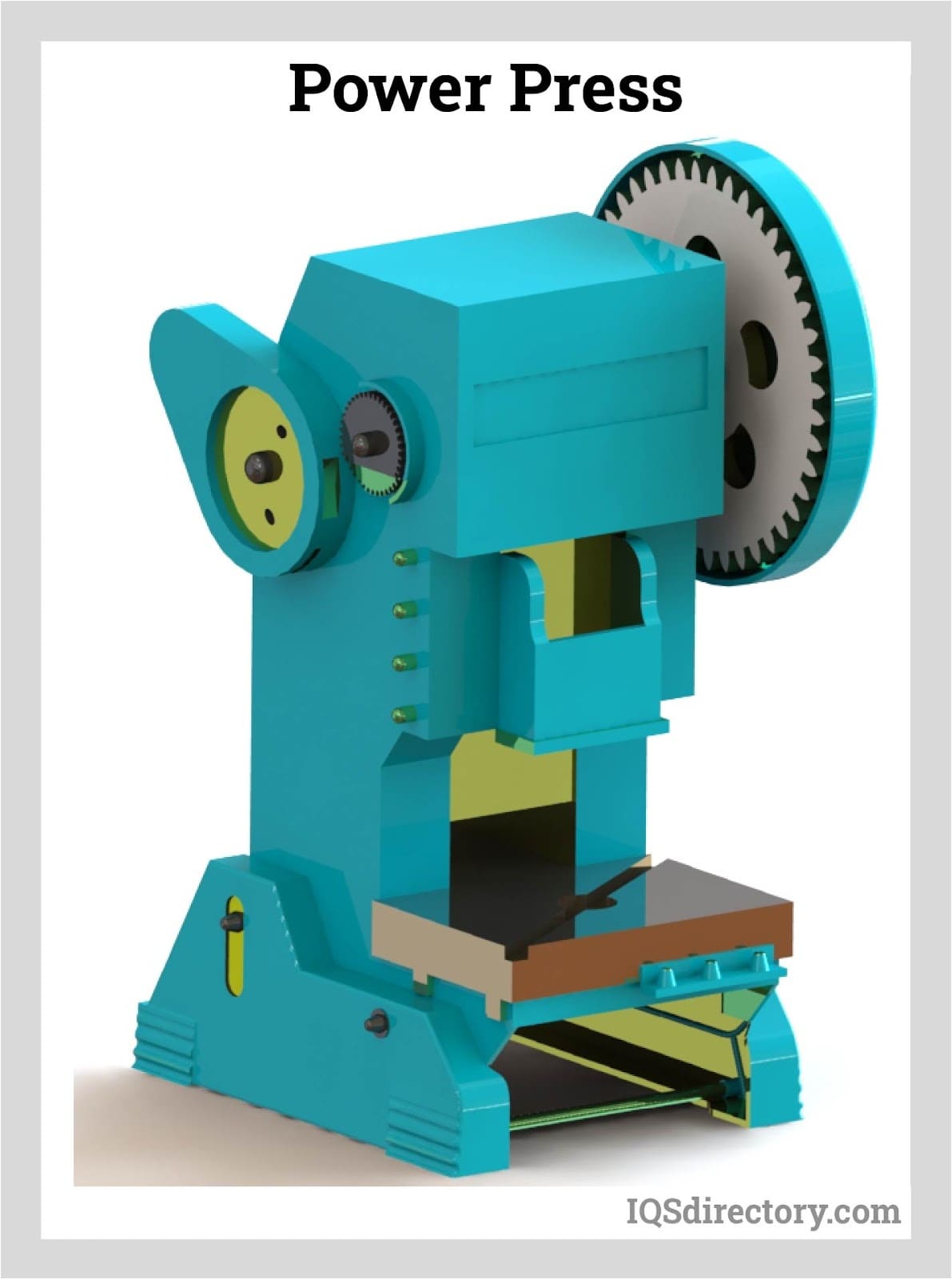
Industrial options include C-frame presses, H-frame presses, forging presses, platen presses, shop presses, extrusion presses, vacuum presses, and stamping presses. Each configuration supports different tonnage ranges, work envelopes, material-handling needs, and production goals, making application-specific press selection much easier.
How Do Manufacturers Customize Hydraulic Presses for Different Applications?
Manufacturers can customize hydraulic presses by adjusting tonnage, stroke length, daylight, bed size, frame style, controls, die dimensions, hydraulic fluid selection, and station configuration. That flexibility supports everything from laboratory testing and short runs to automated heavy-duty production systems above 3,000 tons.
What Maintenance Practices Keep Hydraulic Presses Operating Efficiently?
Routine maintenance includes checking for leaks, monitoring oil level and cleanliness, inspecting seals, hoses, fittings, and wiring, and keeping operating temperature near 120°F. Preventive service helps reduce downtime, protect press performance, and extend the working life of hydraulic components.
What Safety Features Make Hydraulic Presses Reliable for Operators?
Many hydraulic presses include relief valves, pressure controls, and overload protection that help prevent excessive force, tooling damage, and machine failure. These safeguards improve operator safety and support dependable performance in industrial production environments.