
- 7 leading manufacturers
- 76 additional suppliers
- 32 states and provinces
- 16 related categories
- 4 guide sections
Conveyor Systems Manufacturers and Companies

IQS Directory provides a detailed list of conveyor system manufacturers and suppliers. Find conveyor system companies that can design, engineer, and manufacture conveyor systems to your specifications. Peruse our website to review and discover top conveyor system manufacturers with roll over ads and complete product descriptions. Connect with the conveyor system companies through our hassle-free and efficient request for quote form. You are provided company profiles, website links, locations, phone numbers, product videos, and product information. Read reviews and stay informed with product new articles. Whether you are looking for manufacturers of small conveyor systems, industrial conveyors, and conveyor logo of every type, IQS is the premier source for you.
Suppliers located in MI, OH, NC +29 more states
Contents (5 sections)
Leading Conveyor Systems Manufacturers
Showing all 7
| Placement No. | Manufacturer | Location | Contact | Actions | |
|---|---|---|---|---|---|
| 1 | Pack Air Inc.At Pack Air Inc., we help manufacturers design and build innovative custom conveyors in the United States and Canada. Our specialty resides in creating custom conveyor solutions and product handling devices that help solve conveying problems. We don’t try to force fit pre-made conveyors into a box. Rather, we let the box define the solution, and we design your conveyor to fit right the first time. | Neenah, WI | |||
| 2 | NED Conveyor DesignWe are NED Conveyor Design, and we specialize in designing, manufacturing, and supporting conveyor systems that keep materials moving efficiently through demanding industrial environments. Our work centers on building conveyor solutions that are engineered for reliability, accuracy, and long-term performance, whether the application involves bulk materials, unit handling, or process-driven production lines. | Newark, NJ | |||
| 3 | Dynamic Air Inc.Dynamic Air custom designs and manufactures a complete line of pneumatic conveying systems for dry bulk granular materials. Dynamic Air offers 16 different pneumatic conveying concepts, utilizing both pressure and vacuum, for handling a wide variety of dry bulk solids to provide a conveying solution that fits the process perfectly. Each system has its own unique set of operating characteristics for pressure, conveying line velocity, efficiency and performance. | St. Paul, MN | |||
| 4 | Whirl-Air-Flow CorporationWhirl-Air-Flow has been specializing in the design, development and fabrication of pneumatic conveying systems since 1946. Our vast experience in dense and dilute phase conveying systems spans across a broad range of industries. Whirl-Air-Flow has over 55 years of specializing in dense and dilute phase conveying systems, blending systems, bag unloading systems, central vacuum systems, process controls and air slides to name a few. | Princeton, MN | |||
| 5 | Vecoplan, LLCVecoplan leads the charge with cutting-edge technologies that revolutionize waste and recycling. From versatile shredders and granulators to efficient conveying and sorting systems, Vecoplan offers a wide array of solutions for handling wood, paper, plastics, textiles, and more. Our tailored equipment sets new industry standards, meeting the demands of even the most challenging applications. | Greensboro, NC | |||
| 6 | Conveyor Engineering & Mfg. Co.Since 1977, Conveyor Eng. & Mfg. has been a leader in the manufacture of stainless steel screw conveyors and conveyor components (bearings, flighting, hangers, screws, troughs, etc.). We serve a wide variety of industries including wet corn milling, food, sugar, ethanol and chemical. Contact us to learn more about our conveyor systems. We are available to answer any of your questions, feel free to call us today! | Cedar Rapids, IA | |||
| 7 | Akona Process SolutionsAt Akona Process Solutions, we take pride in designing and manufacturing conveyor systems that bring efficiency, reliability, and innovation to material handling. Our team understands the importance of precision, durability, and streamlined operation, so we engineer our conveyors to meet the diverse needs of industries ranging from manufacturing and processing to packaging and distribution. | Monroe, NC |
Claim your Page One Spot
Leading conveyor systems manufacturers are listed first on this page, each with a website preview and a Request a Quote button on its row.
Additional Conveyor Systems Companies
The category’s other conveyor systems companies are listed on their own page, with location, phone and website where each supplier provides them.
View 76 Additional Conveyor Systems CompaniesDo not see your company listed in Conveyor Systems?
Engineers and buyers use this page to find conveyor systems suppliers. Add your company to the Conveyor Systems listings so they can find you too.
List Your Company- Listed in the Conveyor Systems directory
- A profile page for your company
- Buyers contact you directly
Conveyor Systems Industrial Manufacturing Guides

Conveyor Systems: Types, Requirements and Applications
The complete guide to conveyor systems on the internet. You will learn: What is a Conveying System? Conveyor System Requirements Types of Conveyor Systems How…
8 chapters
Quick Answers
- How many conveyor systems manufacturers are listed on IQS Directory?
- 7 leading manufacturers and 76 additional suppliers.
- Where are conveyor systems manufacturers located?
- The listed suppliers are in 32 states and provinces: Michigan (9), Ohio (6), North Carolina (5), Ontario (5), Georgia (4), Illinois (4), Texas (4), Virginia (4), and 24 more.
- How do I get quotes from conveyor systems suppliers?
- Select suppliers in the table and choose Request Quotes. IQS reviews your request and forwards it to every supplier you select.
Conveyor Systems
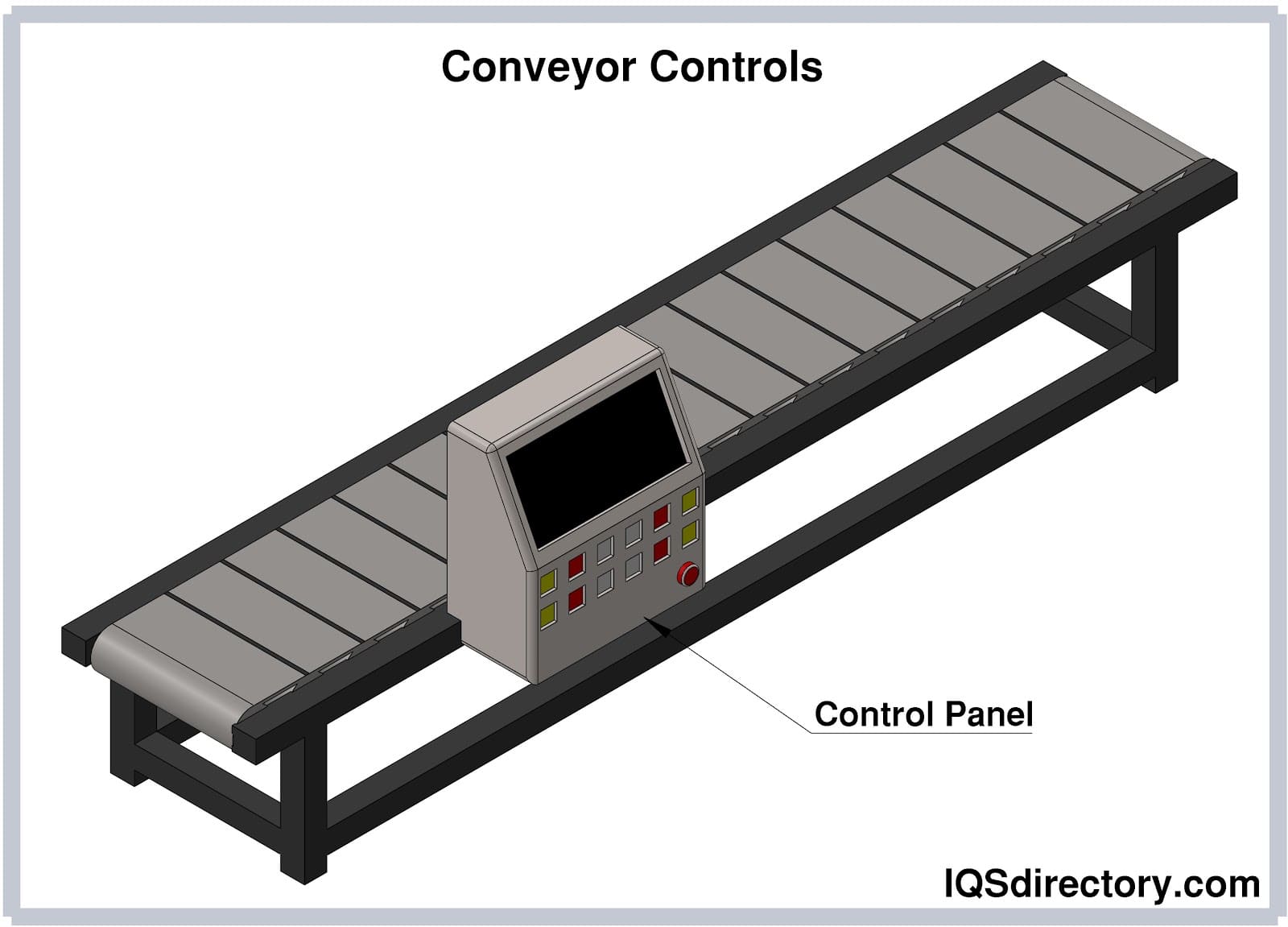
Conveyor systems are any combination of material handling equipment that move, or convey, different packages, products, parts, foods or equipment from one point to another, or several others points within a facility. Typically, the goal of this conveyance is to move goods through different stages of finishing, through different stages of automated manufacturing or simply to different locations.
Benefits of Conveyors
Conveyor Systems Images, Diagrams and Visual Concepts
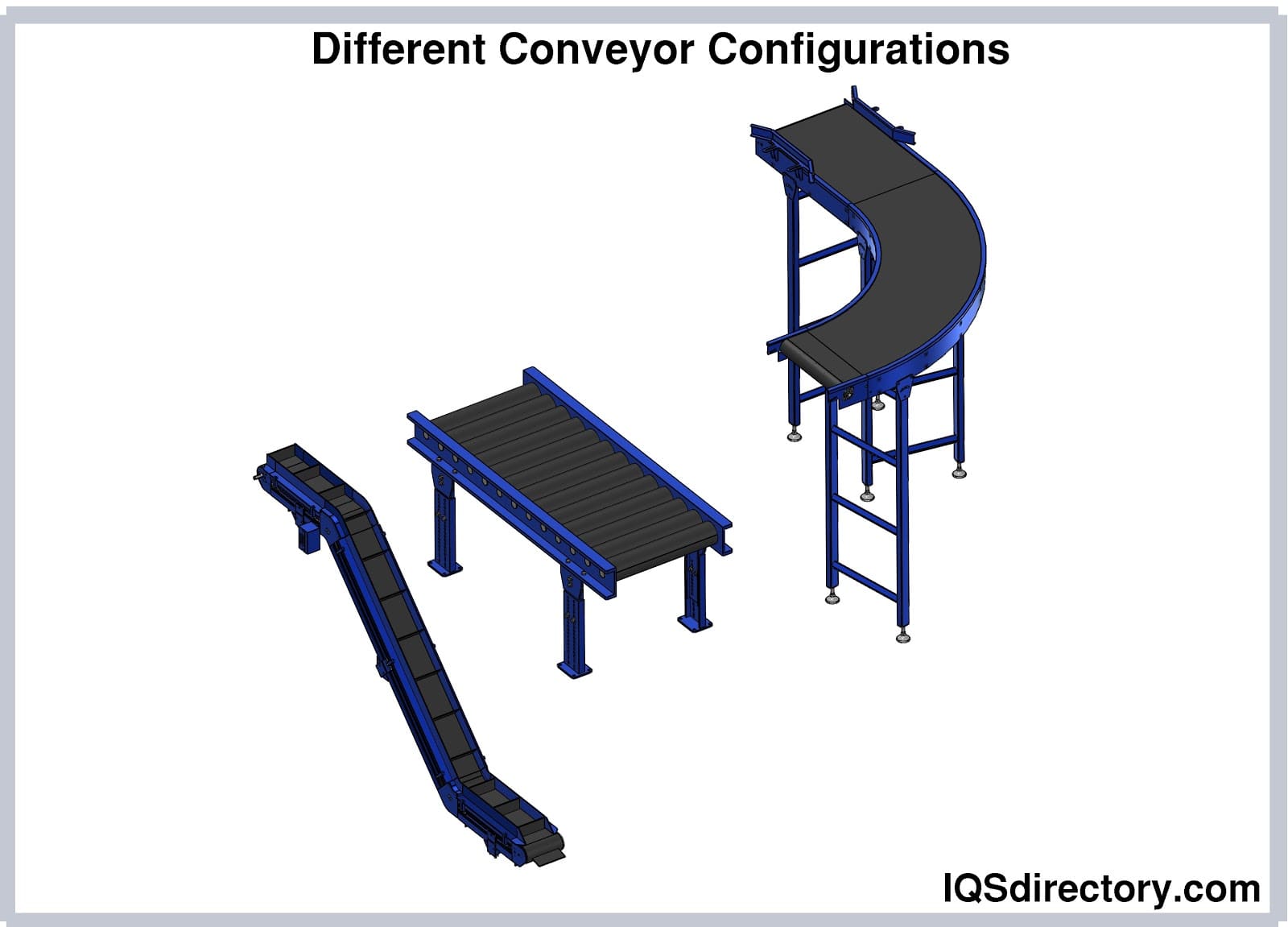
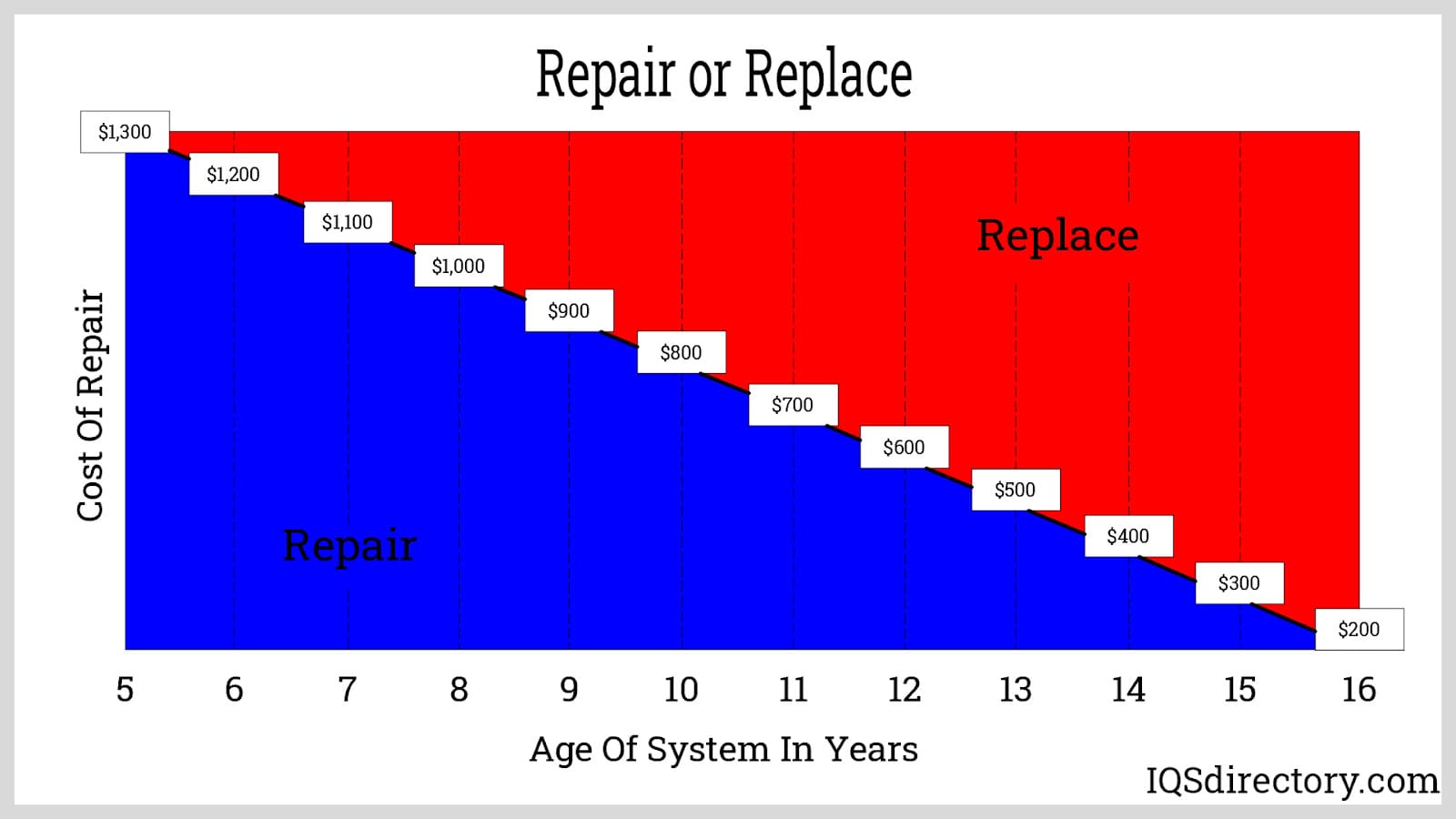
Types of Conveyor Systems
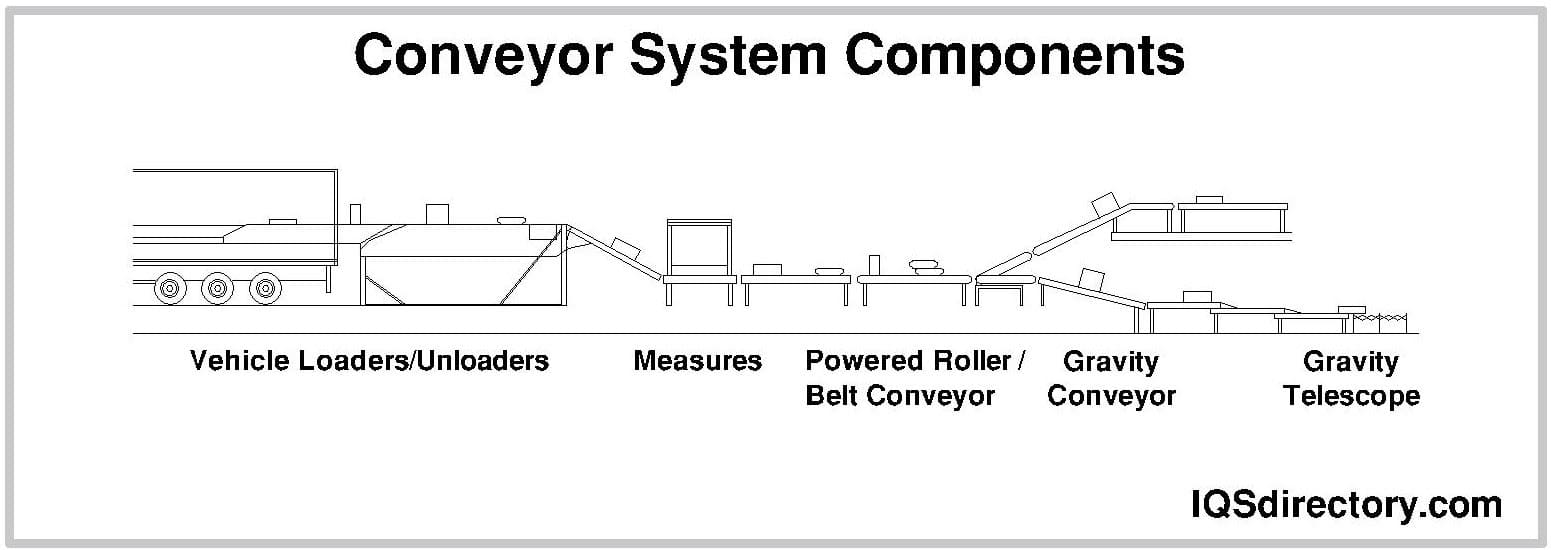
Conveyor systems serve a variety of applications, and for that reason, conveyor system manufacturers offer a variety of standard system configurations. These include belt conveyor systems, chain conveyor systems, roller conveyor systems, overhead conveyor systems, vertical conveyor systems and chute conveyor systems. Most of these systems are automated, though a few, such as chute and roller systems, are not. Conveyor systems can be made up of any number of unique combinations of conveyor configurations, allowing them to move items vertically or horizontally and/or to divert, lift, curve and sort products with high levels of efficiency.
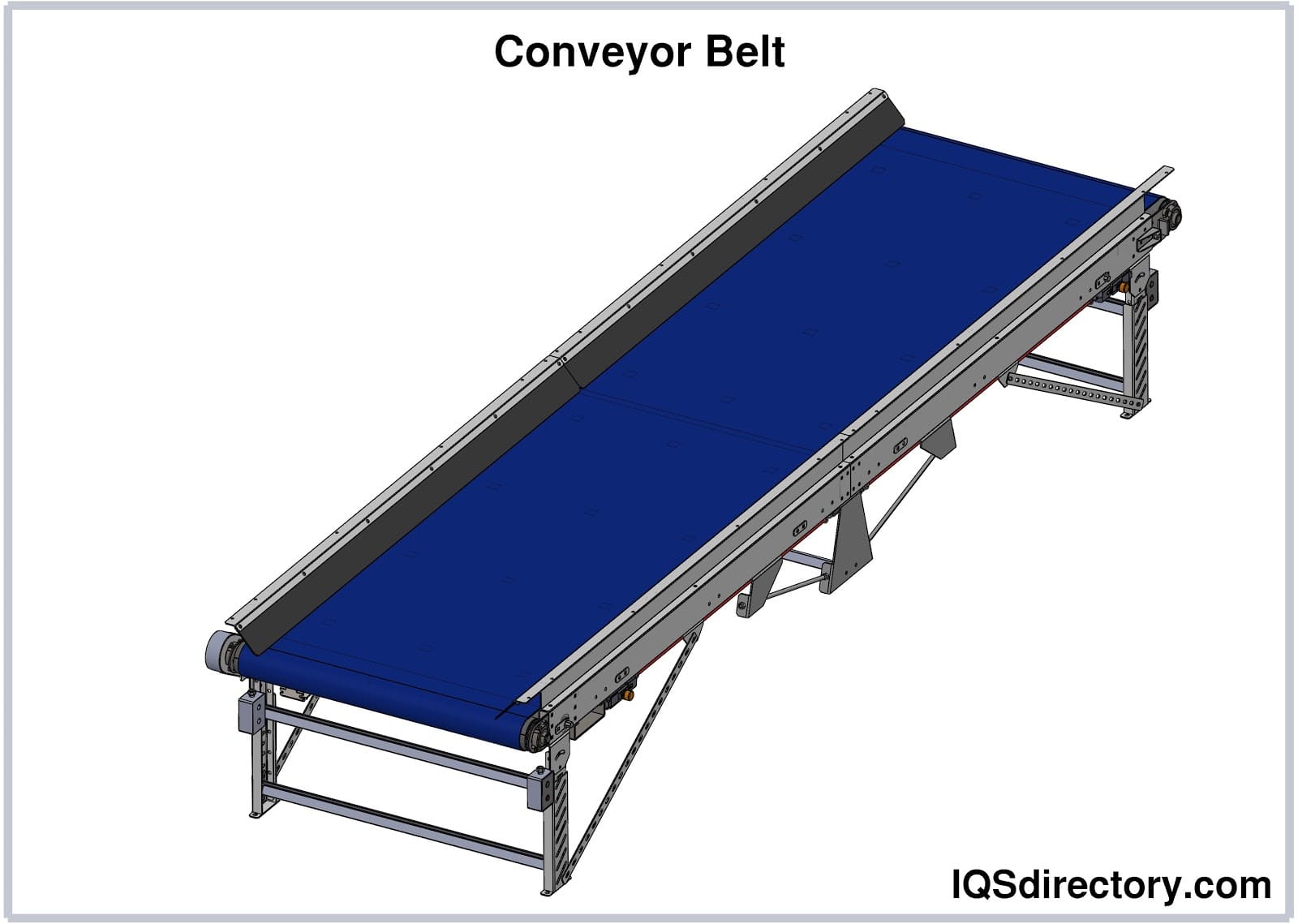
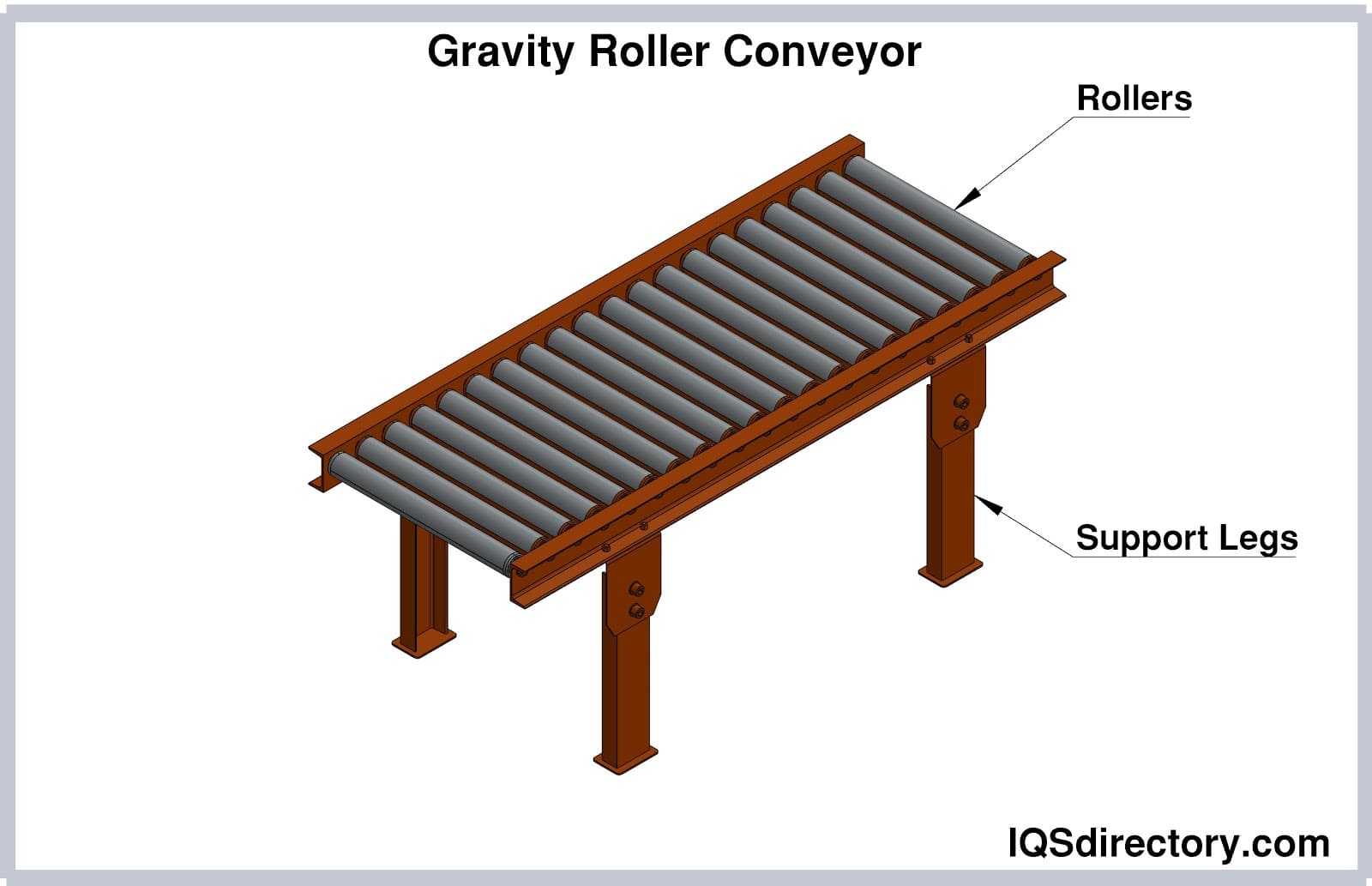
Belt Conveyor Systems The most common type of conveyor system, the belt conveyor system, uses multiple belt conveyors to move objects. These belts are wide, made from rubber or a polymer and, to move, they are wrapped around uni-directional rollers. The belt of a belt conveyor consists of one or more layers of material, such as PVC or the aforementioned polymer or rubber. The belt is typically first supported by an over layer, known as the cover, and an under layer known, known as the carcass. The cover is typically made of polymers, combination plastics or rubber. However, for speciality applications, it can also be made of more unusual materials. One such material, gum rubber, for example, provides traction. Likewise, another choice, silicon, conveys heat. The carcass is made of plastic web, polyester, nylon, cotton or mesh. It provides the belt with linear length and shape. Similarly, chain conveyor systems move items using at least one length of chain wrapped around a set of wheels. Roller Conveyor Systems Like belt and chain systems as well; they consist of several heavy-duty rollers arranged parallel to one another. Depending on their arrangement, they can be powered by an electric motor or by gravity itself. Typically, they are most popular for the conveyance of heavy items around a warehouse or manufacturing facility, and/or movement down an assembly line. Examples of these heavy items include industrial containers, pallets and grid boxes. Overhead Conveyor Systems Overhead conveyor systems and vertical conveyor systems both tend to be more complicated than their afore-detailed cousins. First, overhead conveyor systems, which are overwhelmingly preferred by parts manufacturers, move parts from an elevated level. While many floor-level systems use belt-driven conveyors, overhead conveyor systems are almost always chain-driven. The items they transport are held securely in units called trolleys. Usually, these trolleys come in the form of hooks, rings, hangers or baskets. Overhead conveyor systems can be used to transport parts and products not only from one area of a factory to another, but to and through various processing stations, such as ovens, dryers or spray paint booths. Vertical Conveyor Systems Next, vertical conveyor systems, also known as material lift systems or freight lift systems, are used to move products and materials up or down from one level of a facility to another. To this end, they consist of two parallel and adjacent conveyors that move upward together. They may be manually or automatically controlled. Also, they are outfitted with all sorts of accessories around their belts or chains, such as buckets, platforms, magnets or grippers. All of these accessories serve to facilitate the movement of products from one level to another. Note that vertical conveyor systems are not suitable for transporting humans. Other Types of Conveyor Systems In general include: heavy duty rear conveyor systems, spiral conveyor systems, vibrating conveyor systems, gravity skatewheel conveyor systems, gravity conveyor systems, electric track vehicle systems, drag conveyor systems, vertical conveyor systems, flexible conveyor systems and pneumatic conveyor systems. Conveyor systems are critical to the function of many processes. To find out which one is right for you, consult with an experienced conveyor manufacturer today.Applications of Conveyor Systems
In addition to material handling, conveyor systems benefit applications including shipping and receiving, distribution, sintering, finishing, parts washing, packaging and warehousing. These applications reside in, among others, industries such as aerospace, automotive, commercial and retail manufacturing, food processing, industrial manufacturing, military and defense, paper and pharmaceutical.
Conveyor systems are one of the most used machines in manufacturing facilities, packaging, and warehousing businesses. In simpler terms, a conveyor is a material handling technology that offers the convenience of moving heavy and bulky materials from one place to another, systematically. This plant and facility equipment offer a wide range of benefits to businesses. This article explains some of the biggest benefits of conveyors, after listing a few popular variations of these machines.