
- 4 leading manufacturers
- 54 additional suppliers
- 25 states and provinces
- 10 related categories
- 9 guide sections
Soundproofing Manufacturers and Suppliers

IQS Directory provides a comprehensive list of soundproofing companies and suppliers. Use our website to review and source top soundproofing companies with roll over ads and detailed product descriptions. Find soundproofing companies that can design and provide soundproofing services to your companies specifications. Then contact the soundproofing companies through our quick and easy request for quote form. Website links, company profile, locations, phone, product videos and product information is provided for each company. Whether you are looking for manufacturers of noise control equpment, sound control equipment, sound reduction equipment, or customized soundproofing equipment, this is the resource for you.
Suppliers located in IL, OH, PA +22 more states
Contents (6 sections)
Leading Soundproofing Manufacturers
Showing all 4
| Placement No. | Manufacturer | Location | Contact | Actions | |
|---|---|---|---|---|---|
| 1 | DDS Acoustical SpecialtiesFounded in 2019, DDS Acoustical Specialties stands at the forefront of the acoustic solutions industry, boasting a cumulative experience of more than 45 years. With a commitment to excellence, we specialize in the design, management, and installation of cutting-edge noise control and soundproofing products that cater to the unique needs of businesses across the nation. As we continue to evolve and innovate, DDS Acoustical Specialties remains committed to being at the forefront of the acoustic solutions industry. | Westfield, MA | |||
| 2 | J. A. Brown Co.At J. A. Brown Co., we provide noise control solutions designed to help industrial, commercial, and manufacturing facilities reduce unwanted sound and create safer, more productive working environments. Our company focuses on addressing a wide range of noise challenges with products and systems that help control sound at its source, along transmission paths, and within occupied spaces. | Collegeville, PA | |||
| 3 | eNoise ControlAt eNoise Control, we provide comprehensive noise control products and services designed to reduce unwanted sound in industrial, commercial, and manufacturing environments. Our company works with customers to identify noise sources and develop practical solutions that improve workplace conditions, support regulatory compliance, and protect employees from excessive noise exposure. | Noblesville, IN | |||
| 4 | Isotech, Inc.Isotech, Inc. offers a wide range of Noise Barrier products to contain/reduce/block the noise path. These include flexible portable or permanent enclosures or sheets and rolls of mass loaded vinyls, quilted barrier composites and absorber barrier composites. A noise barrier treatment is extremely effective in reducing overall noise levels depending on the extent that the noise barrier blocks the sound path. | Hatfield, PA |
Claim your Page One Spot
Leading soundproofing manufacturers are listed first on this page, each with a website preview and a Request a Quote button on its row.
Additional Soundproofing Companies
The category’s other soundproofing companies are listed on their own page, with location, phone and website where each supplier provides them.
View 54 Additional Soundproofing CompaniesDo not see your company listed in Soundproofing?
Engineers and buyers use this page to find soundproofing suppliers. Add your company to the Soundproofing listings so they can find you too.
List Your Company- Listed in the Soundproofing directory
- A profile page for your company
- Buyers contact you directly
Soundproofing Industrial Manufacturing Guides
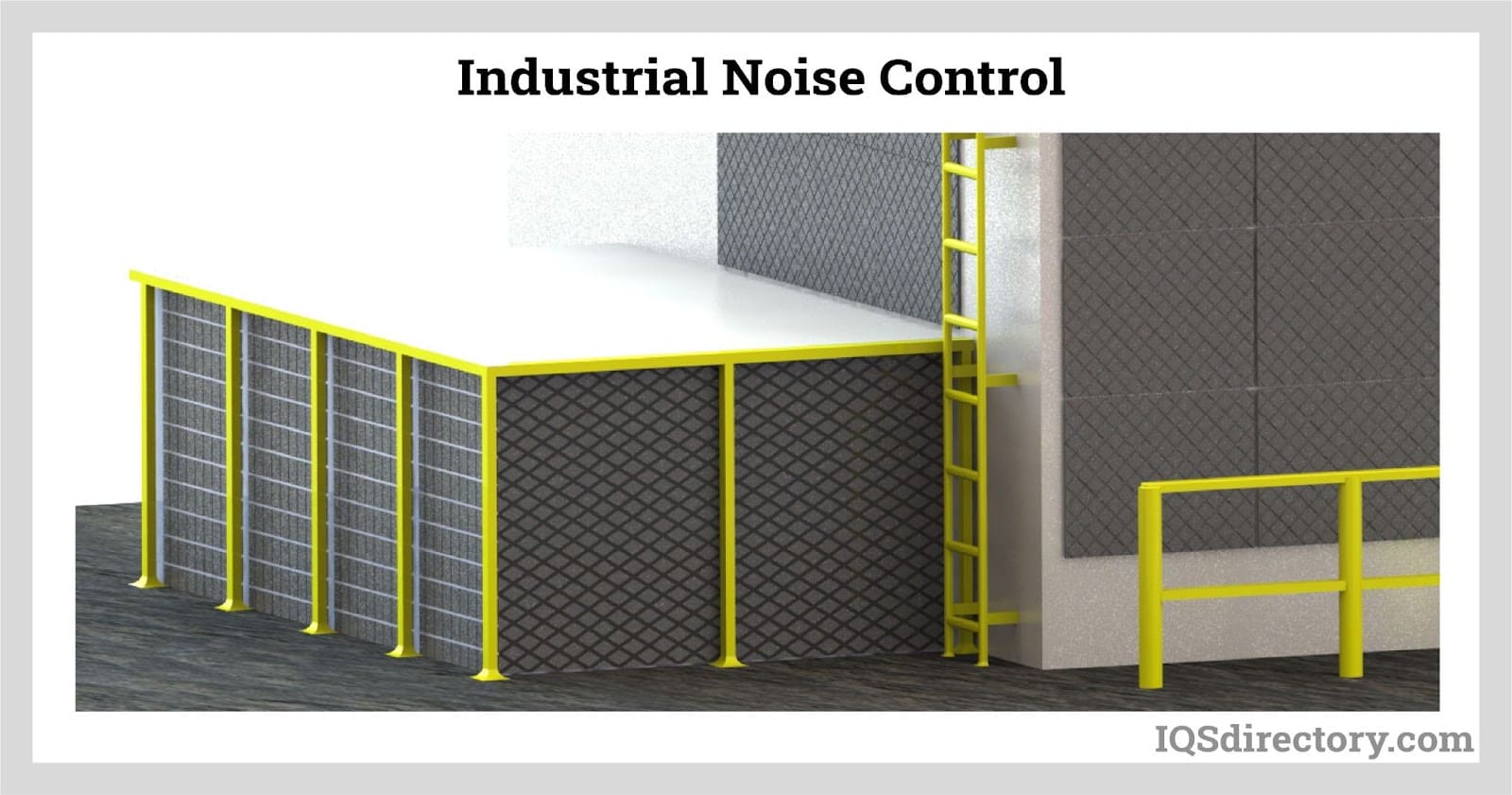
Noise Control Products: Everything You Need to Know about Benefits
This article takes an in depth look at industrial noise control products. In this article you will learn more about topics such as: What is noise pollution…
3 chapters
Quick Answers
- How many soundproofing manufacturers are listed on IQS Directory?
- 4 leading manufacturers and 54 additional suppliers.
- Where are soundproofing manufacturers located?
- The listed suppliers are in 25 states and provinces: Illinois (6), Ohio (6), Pennsylvania (6), Massachusetts (5), Minnesota (4), Texas (4), Wisconsin (3), California (2), and 17 more. 1 supplier does not list a location.
- How do I get quotes from soundproofing suppliers?
- Select suppliers in the table and choose Request Quotes. IQS reviews your request and forwards it to every supplier you select.
Soundproofing
Soundproofing is the process of reducing unwanted noise and controlling noise pollution by limiting how sound enters, exits, reflects within, or vibrates through a space. Soundproofing materials and acoustic treatment products work as silencers, mufflers, barriers, dampers, and insulation systems that absorb, block, isolate, or diffuse sound energy in rooms, chambers, buildings, and around equipment. The result is a quieter, safer, and more comfortable environment for worker protection, machinery noise control, product testing, recording studios, broadcast spaces, offices, laboratories, classrooms, and other settings where clear sound quality and lower noise levels matter.
The History of Soundproofing
The earliest audio recordings were made using the phonautograph, invented by Édouard-Léon Scott de Martinville in 1857. This device captured sound waves as visual traces on paper or glass, and the first known recording was the French folk song "Au Clair de la Lune" in 1860, which still survives today. As recording, transportation, manufacturing, and urban development expanded, the world became louder, and the demand for better noise control, sound isolation, and acoustic treatment grew with it.
Modern soundproofing began in the 1890s through the work of Wallace Clement Sabine, a Harvard physicist widely associated with the foundations of architectural acoustics. He was asked to improve the acoustics in Harvard’s Fogg Art Museum lecture hall, where excessive reverberation made speech difficult to understand. Sabine measured reverberation time at 5.5 seconds and experimented with seat cushions and other sound-absorbing materials to learn how surfaces affect reflected sound. His findings shaped the design of Boston Symphony Hall, which opened in 1900 and became one of the first buildings planned using scientific acoustic principles.
Throughout the 20th century, rising industrial output, vehicle traffic, aviation, amplified music, and household machinery increased background noise in both workplaces and residential areas. By the 1960s and 1970s, the physical and psychological effects of noise exposure were far more visible. Repeated exposure to high sound levels was linked to hearing loss, fatigue, stress, and lower productivity. Occupational noise above 85 decibels affected millions of workers, helping push soundproofing, hearing conservation, and environmental noise control into mainstream engineering and regulatory conversations.
To address noise pollution in public spaces, industrial facilities, transportation corridors, and studios, engineers and lawmakers developed a wider range of solutions. The 1972 Noise Control Act helped establish national direction for protecting public health from harmful sound. During the 1970s, the U.S. and other countries also began expanding the use of highway noise barriers—not to benefit drivers, but to reduce traffic noise for nearby residents, schools, and commercial properties. Since then, public agencies, manufacturers, acoustical engineers, and building designers have continued improving barrier systems, enclosure design, vibration control, and indoor sound management.
Today, soundproofing is more advanced and more application-specific than ever. From industrial acoustic enclosures and machinery isolation systems to office privacy panels, studio wall treatments, and transportation noise barriers, modern soundproofing combines material science, acoustic analysis, and building design to create healthier, more functional environments.
Benefits of Soundproofing
Modern life is filled with noise, and repeated exposure can affect both physical comfort and daily performance. Unwanted sound may contribute to temporary or permanent hearing loss, stress, sleep disruption, reduced concentration, lower speech clarity, and less privacy at home or work. Soundproofing solutions help reduce these problems by managing echo, reverberation, vibration, and sound transfer through walls, ceilings, floors, doors, equipment housings, and building systems. For buyers comparing soundproofing materials, one common question is: how do you reduce noise without sacrificing usable space or design? The answer often depends on the source of the noise, the frequency range involved, and whether the goal is absorption, isolation, or full enclosure. Beyond comfort and safety, soundproofing also improves recording quality, supports quieter production areas, and offers flexible options for commercial, industrial, institutional, and residential environments.
How Soundproofing Works
Soundproofing materials work by absorbing sound, dampening vibration, blocking sound at the source, isolating mechanical energy, or combining these methods for broader acoustic control. Effective soundproofing starts with understanding whether the problem is airborne noise, impact noise, low-frequency vibration, reverberation, or sound leakage through building assemblies.
Sound Absorption Uses soft, porous, open-celled materials such as polyurethane foam to trap sound waves within a network of non-reflective cells. The greater the treated surface area and the more strategically the absorptive material is placed, the more effectively it reduces reflected sound and echo. Anechoic chambers line walls, ceilings, and floors with corrugated wedges or pyramid-shaped foam panels because those shapes increase surface area and improve broadband absorption compared to flat panels alone. Vibration Dampening Reduces the transfer of mechanical energy between rigid surfaces that carry vibration across a structure. Product testing facilities, acoustic research rooms, machinery bases, and equipment enclosures use damping strategies to limit structure-borne noise and improve measurement accuracy. These systems may include acoustic foam panels, special drywall, isolation mounts, resilient supports, and acoustical ceilings designed to reduce vibration and lower transmitted noise. Sound Barrier Creation Sound barriers are dense assemblies that block noise at its source or along its transmission path. These barriers are often used along roads and highways to limit traffic noise, but they are also applied in bulkheads, firewalls, pipe wraps, cab floors, equipment enclosures, and wall systems where greater mass helps reduce sound transmission from one area to another.Soundproofing Design and Customization
When manufacturers design soundproofing equipment, one of the first questions is whether the goal is to improve sound quality inside a room, stop noise from escaping, reduce incoming noise, or control machinery vibration. That choice shapes the design of the system. For example, anechoic chambers are highly effective when the objective is low-reflection space for testing and recording, while acoustic enclosures, barriers, curtains, and insulated wall systems are often selected when source containment or room-to-room isolation is the priority.
To fabricate soundproofing products, manufacturers use engineered materials selected for sound absorption, sound isolation, or damping performance. Common materials include rock fiber wool, mineral wool, open-cell urethane foam, perforated metal facings, acoustic batting, barrier composites, and dense insulation layers. Rock wool can provide strong absorption and thermal insulation, while porous materials allow sound energy to enter and dissipate within the material. In many commercial and industrial products, wall panels, ceiling baffles, and enclosures are designed to balance acoustic performance, durability, cleanability, fire resistance, and visual appearance.
Manufacturers can also customize soundproofing systems to suit interior aesthetics, available square footage, equipment layouts, and operating conditions. Acoustic panels may be wrapped in fabric to match a room’s decor, while industrial barriers and acoustic curtains can be sized around machinery, conveyors, generators, compressors, blowers, or production cells. Custom options often include thickness, facing material, installation method, modular layout, and performance targets such as reduced reverberation, improved speech intelligibility, or lower decibel levels at the operator position.
Types of Soundproofing
Soundproofing Applications
Noises may be airborne, such as voices, music, traffic, alarms, or fan noise, or structural, such as vibration from machinery, footsteps, plumbing, elevators, and HVAC systems. These sounds can create uncomfortable, distracting, or unsafe conditions in homes, offices, schools, manufacturing plants, and commercial buildings. High equipment noise may interfere with communication, reduce concentration, affect customer experience, and in industrial settings contribute to long-term hearing damage. Soundproofing addresses these issues by reducing noise transfer, limiting vibration, improving speech clarity, and helping create a quieter environment that better fits the intended use of the space.
Soundproofing products and components are used across a wide range of industries and facilities. Medical hearing clinics, research rooms, and product testing labs require controlled acoustic environments to measure decibel output accurately and support reliable results. Recording studios, theaters, podcast rooms, broadcast spaces, and performance halls use soundproofing to improve audio quality and reduce outside interference. Manufacturers and equipment operators use acoustic enclosures, barriers, blankets, isolators, and silencers to manage machinery noise. In residential and commercial buildings, soundproofing is also used for home theaters, conference rooms, office privacy, apartment living, classrooms, and mechanical rooms where unwanted noise can travel through walls, ceilings, floors, and ductwork.
Safety and Compliance Standards for Soundproofing
Federal and workplace regulations help define acceptable noise levels in environments such as factories, schools, offices, airports, and public facilities, and soundproofing is often part of meeting those targets. EPA noise guidance, occupational noise exposure rules, and building performance expectations all influence how soundproofing products are selected and installed. In workplace settings, Occupational Safety and Health Administration (OSHA) requirements are often a major reference point when noise exposure, employee safety, and hearing conservation are part of the purchasing decision.
Independent organizations also publish standards used to evaluate soundproofing performance and acoustic quality. ISO standards address building acoustics and sound insulation, while ASTM standards are commonly referenced in the U.S. for testing and comparing materials and assemblies. Buyers often review measures such as STC (sound transmission class), absorption performance, and insertion loss when comparing soundproofing technologies for walls, ceilings, floors, enclosures, barriers, and equipment noise control systems.
How to Choose the Right Soundproofing Manufacturer
The soundproofing industry includes many manufacturers, fabricators, and suppliers, so choosing the right partner involves more than comparing price alone. Start with a reputable directory like this one to identify companies that specialize in the type of noise control solution you need, whether that is acoustic panels, acoustic curtains, industrial enclosures, sound barriers, vibration isolators, or full-room soundproofing systems. After reviewing the recommended suppliers above, visit their websites to compare capabilities, material options, industries served, customization range, and installation support. Narrow the field to three or four companies that fit your application, then prepare your room dimensions, equipment details, sound source information, and performance goals before reaching out. Ask how they handle lead times, fabrication, testing, delivery, and customer support. For many buyers, the best manufacturer is the one that understands the noise problem clearly, recommends the right mix of absorption and isolation, and works with you to build a solution that fits the space, budget, and expected acoustic results.
Soundproofing Terms
Common Questions
7 questions
What Is Soundproofing and How Does It Work?
Soundproofing reduces unwanted noise by absorbing, blocking, dampening, or isolating sound waves. Materials such as acoustic foam, rock wool, sound insulation, acoustic panels, and dense barriers help control airborne noise and structure-borne vibration so rooms stay quieter, speech privacy improves, and equipment noise is easier to manage.
Who Developed Modern Soundproofing Techniques?
Modern soundproofing and room acoustics are closely tied to the work of Wallace Clement Sabine in the 1890s. His research on reverberation time at Harvard’s Fogg Art Museum helped establish acoustical engineering as a science and influenced the design of Boston Symphony Hall in 1900.
Why Is Soundproofing Important in Workplaces and Studios?
Soundproofing helps protect workers from long-term noise exposure, supports clearer communication, lowers stress, and improves focus. In recording studios, test labs, and performance spaces, it also reduces echo, outside interference, and vibration so audio playback, speech capture, and measurement results are more accurate.
What Are the Main Types of Soundproofing Materials?
Common soundproofing materials include acoustic foam, rock fiber wool, acoustic insulation, sound barriers, baffles, panels, curtains, enclosures, damping materials, and vibration isolators. Each option is designed to absorb sound, block transmission, reduce reverberation, or control vibration depending on the application.
How Do Acoustic Panels and Baffles Control Noise?
Acoustic panels and baffles reduce echo and reverberation by absorbing and scattering sound waves. Panels are often mounted on walls to improve room acoustics and speech clarity, while ceiling baffles and cloud panels help manage airborne sound in open commercial, industrial, and institutional spaces.
What Regulations Apply to Soundproofing in the United States?
Soundproofing projects may need to align with federal, workplace, and building-related noise standards. OSHA noise exposure rules, EPA guidance, and test standards from ASTM and ISO are often referenced when evaluating sound insulation, sound transmission, and acoustic performance through ratings such as STC and related measurements.
Where Is Soundproofing Used in Industrial and Residential Settings?
Soundproofing is used in factories, offices, homes, schools, studios, theaters, clinics, and laboratories to reduce noise from machinery, HVAC systems, plumbing, traffic, voices, music, and equipment vibration. It is also widely used in manufacturing spaces where controlled acoustics and lower decibel levels support safety, comfort, and performance.