
- 4 leading manufacturers
- 48 additional suppliers
- 24 states and provinces
- 25 related categories
- 5 guide sections
Closed Cell Foam Converters Manufacturers and Suppliers

IQS Directory is a top industrial directory listing of leading industrial closed cell foam manufacturers and suppliers. Access our comprehensive index to review and source closed cell foam manufacturers with preview ads and detailed product descriptions. These closed cell foam companies can design, engineer and manufacture closed cell foam to your specifications and application need. A quick and easy to use request for quote form is provided for you to contact these closed cell foam manufacturers and suppliers. Each company has detailed profile information, locations, phone number, website links, product videos and product information defined. We are the right resource for your information requirement whether its for a manufacturer of high density closed cell foam, closed cell foam sheets, closed cell foam insulation.
Suppliers located in PA, MI, NJ +21 more states
Contents (5 sections)
Leading Closed Cell Foam Manufacturers
Showing all 4
| Placement No. | Manufacturer | Location | Contact | Actions | |
|---|---|---|---|---|---|
| 1 | American Excelsior CompanyThe applications for foam fabricating are only limited by one’s imagination; that is our slogan at American Excelsior. We are a foam supplier who offers many different foam cushions & foam padding for over a dozen industries. We offer foam materials like polyurethane foam, polyethylene foam & closed-cell foam; & services such as CNC foam cutting. Let us take your concept & turn it to reality. | Arlington, TX | |||
| 2 | FlextechSince 1992, Flextech has delivered innovative, custom engineered foam solutions. We combine our engineering and design services with our unique foam lamination, fabrication, and thermoforming capabilities, to provide quality foam components to a diverse customer base. Our customers include OEM’s in the medical, industrial, military, aerospace and consumer products markets. We invite you to connect and collaborate with our sales and engineering team. Let us show you the Flextech advantage! | St. Louis Park, MN | |||
| 3 | Deluxe Packaging, Inc.Deluxe Packaging works hard to always create cost-effective solutions and services for our clients better than anyone else. We offer a full array of high quality products, including polyurethane foam, polystyrene foam, and polyethylene foam. Our products are customizable to match a product’s fragility and size. Deluxe Packaging is your complete packaging solution provider for all of your packaging needs. | Pennsauken, NJ | |||
| 4 | Thrust IndustriesHere at Thrust Industries we provide die cut foam that comes in a variety of shapes and configurations. We die cut foam from a number of materials including: urethane, PVC, polyester, neoprene, ether, cellular, volara, and much more. If you would like customized die cut foam then please give us a call today! | Evansville, IN |
Claim your Page One Spot
Leading closed cell foam manufacturers are listed first on this page, each with a website preview and a Request a Quote button on its row.
Additional Closed Cell Foam Companies
The category’s other closed cell foam companies are listed on their own page, with location, phone and website where each supplier provides them.
View 48 Additional Closed Cell Foam CompaniesDo not see your company listed in Closed Cell Foam?
Engineers and buyers use this page to find closed cell foam suppliers. Add your company to the Closed Cell Foam listings so they can find you too.
List Your Company- Listed in the Closed Cell Foam directory
- A profile page for your company
- Buyers contact you directly
Closed Cell Foam Industrial Manufacturing Guides
Closed Cell Foam: Applications, Types and Benefits
This article will take an in-depth look at closed cell foam. The article will bring more understanding on topics such as: Principle of Closed Cell Foam Types…
4 chapters
Quick Answers
- How many closed cell foam manufacturers are listed on IQS Directory?
- 4 leading manufacturers and 48 additional suppliers.
- Where are closed cell foam manufacturers located?
- The listed suppliers are in 24 states and provinces: Pennsylvania (8), Michigan (7), New Jersey (5), North Carolina (3), Texas (3), Washington (3), California (2), Illinois (2), and 16 more.
- How do I get quotes from closed cell foam suppliers?
- Select suppliers in the table and choose Request Quotes. IQS reviews your request and forwards it to every supplier you select.
Closed Cell Foam
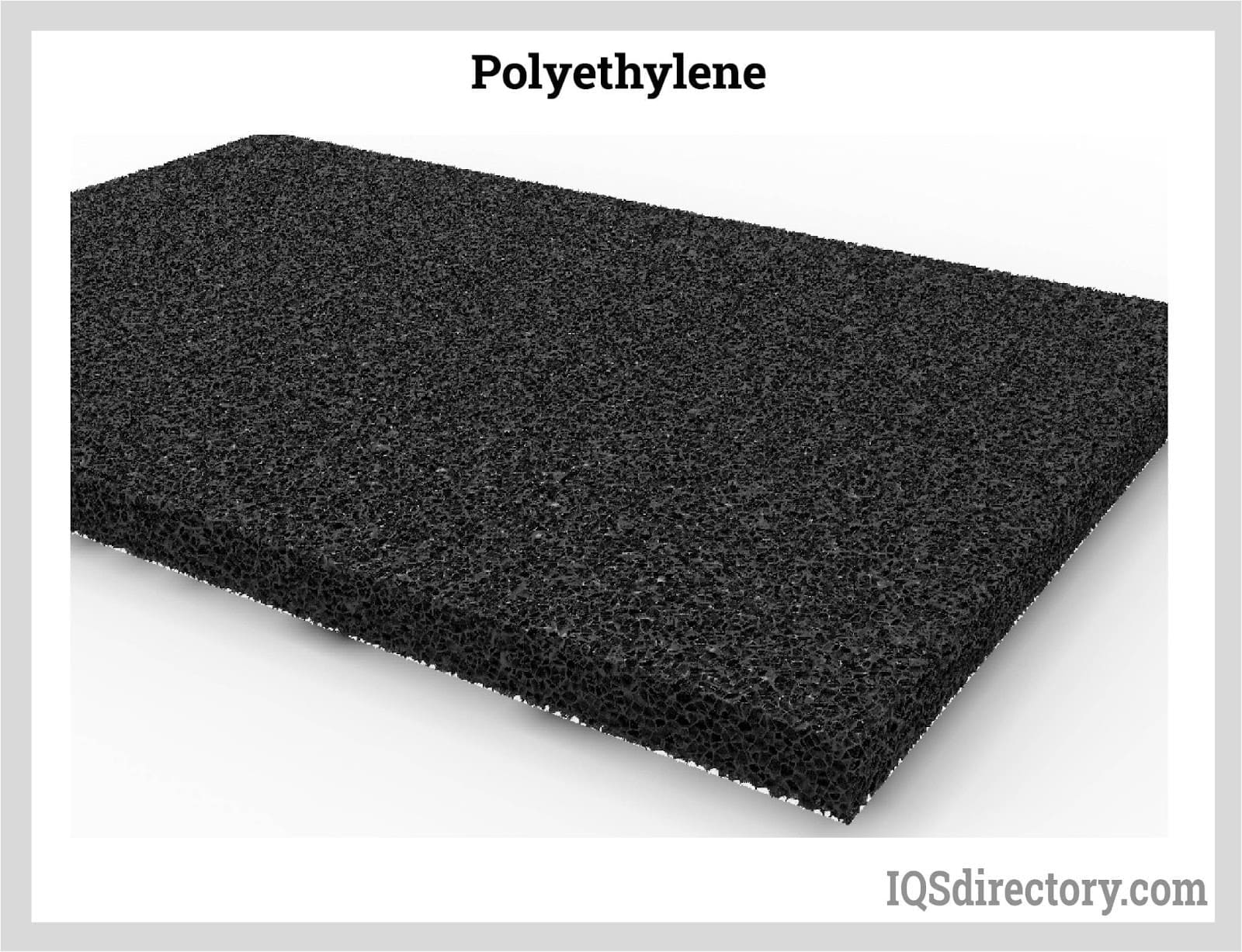
Closed cell foam consists of cells that are not broken within the material, making it much higher in stability and compressive strength, as well as more resistant to leakage in water vapor and air. The cells exert pressure on each other and make the material highly rigid. Because of these properties, closed cell foam is a highly recommended material for outdoor or heat insulation. Closed cell foam is also the material of choice for flotation and buoyancy devices because it is impervious to moisture, unlike the porous much less dense open cell foam, which will soak up water.
Applications of Closed Cell Foam
Closed cell foam is commonly used in building applications, such as outdoor and marine environments, schools, office buildings, industrial buildings, and residential homes.
More specifically, applications that utilize closed cell foam include:
- Flotation and Nautical Buoyancy Applications
- Packaging Materials
- Couches and Chairs
- Foam Cushions
- Foam Padding
- Foam Mattresses
Characteristics of Closed Cell Foam
Foam can fall under two categories, open cell foam and closed cell foam, each of which can come in a wide range of characteristics. Closed cell foam is a type of foam in which the cells are “closed,” or packed and sealed together, giving the foam a high level of compressive strength and density. Because the cells are so closely packed together and closed off from one another, gas or liquid molecules cannot travel from cell to cell. Closed cell foam is highly recommended as a heat insulator due to the ability of the cells to expand upon exposure to heated gas.
As opposed to its open cell counterpart, the cells—or pores—of closed cell foam are not interconnected. Instead, the cells are sealed off from each other and are more compact, making the foam more dense and resistant to pressure. Compare a kitchen sponge, which is made from open cell foam, to a foam mattress, which is made from closed cell foam. Closed cell foam is more supportive and resistant to the elements, as opposed to the less sturdy open cell foam. Some varieties of closed cell foams are more dense than others and can vary in levels of hardness.
Fabrication Process of Closed Cell Foam
Foam is created when gas bubbles are trapped inside a chemical solution by way of either the application of heat (endothermic reaction) or the mixing of chemicals (exothermic reaction).
Foam can be cut in a variety of methods, including die cutting, foam felting and routing, hot wire cutting, and contour cutting. Foam cutting, in addition to the application of pressure and heat, are the most common methods of foam fabrication. Each cutting method can shape a piece of foam material into a desired configuration.
Factors to Consider When Purchasing Closed Cell Foam
Although closed cell foam can be used for a variety of applications, it does have several disadvantages. Closed cell foam has a higher material cost. For applications that require foam that is more dense and sturdy, production and material costs will increase. Foam has a tendency to break down over time due to exposure to wear and tear, and it will need to be replaced at some point, regardless of the application for which it is used. Foam can vary in terms of elongation, thermal conductivity, tear strength, tensile strength, and density. Therefore, it is important to consider each of these characteristics in deciding which foam is appropriate for the desired application.
Notable Types of Closed Cell Foam