


Plastic Gears: Materials & Applications | IQS Directory
IQS Directory EditorialUpdated 6 chapters
9 leading suppliers listed with this guide
Browse plastic gear suppliersContents (6 chapters)
This article will present an in-depth discussion on plastic gears.
The article will provide more detail on topics such as:
- What are Plastic Gears?
- Plastic Gear Design
- Materials Used for Plastic Gears
- Types of Plastic Gears
- Thermoplastic vs Thermoset Plastic
- Advantages and Disadvantages of Plastic Gears
- And much more…

Chapter 1: How Are Plastic Gears Manufactured?
This section provides an overview of plastic gears, focusing on their manufacturing processes, material selection, and how they work in a wide range of industrial and commercial applications. Whether you are evaluating custom plastic gears for a prototype, replacement part, or high-volume production run, understanding the available fabrication methods can help you choose the right solution for performance, durability, and cost.
What Are Plastic Gears?
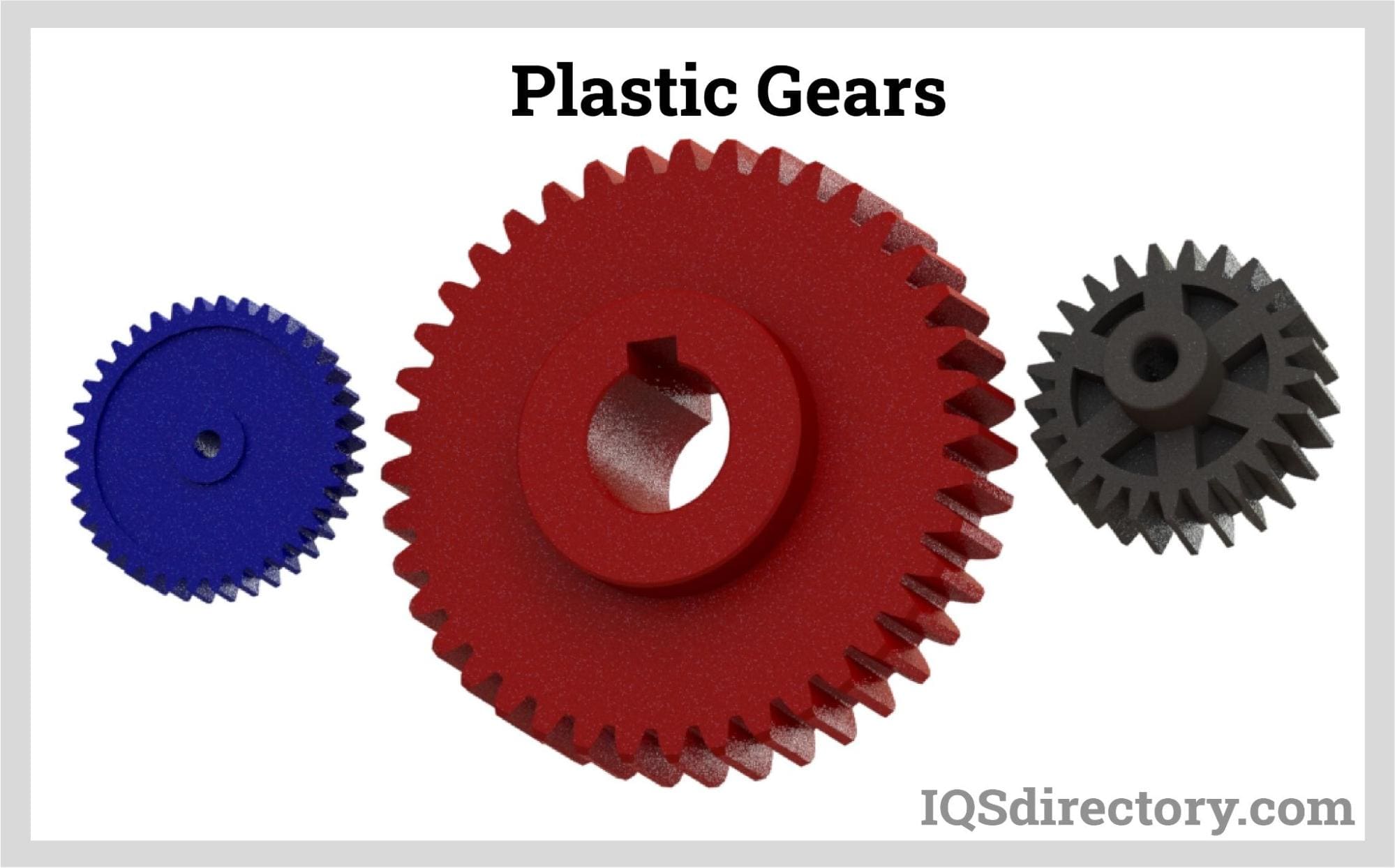
Plastic gears are toothed wheels made from advanced engineering plastics, primarily used to alter speed ratio, torque, and rotational motion between a motor and its connected components. Among the most popular materials for these gears are nylon, a form of polyamide resin, and polyacetal (POM), both known for their strength, low friction, and wear resistance. Compared with metal gear options, polymer gears are often selected for quieter operation, lighter weight, corrosion resistance, and the ability to reduce vibration in precision assemblies.
Methods of Manufacturing Plastic Gears
The method of producing plastic gears closely resembles that of metal gears, with the main difference being the material composition. Each gear design is tailored to meet specific application requirements, influencing whether the gear is produced through gear hobbing, injection molding, or CNC machining. Because plastics do not possess the same strength as metals and are more affected by variations in temperature, engineers must account for creep, thermal expansion, stiffness, and load-bearing performance during the design phase. Additionally, plastic gears have a lower modulus of elasticity and mesh stiffness, causing more deflection under load, which can affect tooth profile, backlash, and service life.
Although there are similarities between metal and plastic gears, designing and engineering plastic gears require additional attention to material characteristics, operating environment, lubrication needs, and the intended production volume. These factors help determine the best manufacturing process for achieving tight tolerances, smooth meshing, and reliable long-term performance.
Plastic Gear Hobbing
Hobbing employs a hob—a cylindrical tool with teeth designed for cutting. During this process, a flat plastic disk is placed near the rotating hob. As it spins, the hob carves the gear teeth into the disk, creating precise tooth geometry and consistent pitch. By varying the hob's contact angle, different types of gears can be crafted, including spur gear, helical, and spline profiles for custom applications.
This gear hobbing technique is economical due to its speed and efficiency, producing highly accurate spur gears, helical gears, splines, worm wheels, and sprockets. It is often preferred for medium production runs where dimensional accuracy, repeatability, and fast turnaround are important purchasing considerations.

Injection Molding
Injection molding involves a steel mold that shapes the gear with precise dimensions. The mold's accuracy is crucial as it dictates the gear's final form, tooth profile, and surface finish. Molten plastic is injected under pressure to fill the mold cavity completely, making this process ideal for high-volume production, consistent part replication, and complex geometries. Though costly at the tooling stage, it is often the best option for large-scale production runs where unit cost, repeatability, and cycle time matter.
Characteristics of Injection Molded Gears
- Exceptional precision
- Excellent replication
- Cost-effective
- Resistant to abrasion and wear
- Non-corrosive
- Superior performance

CNC Machining of Plastic Gears
CNC machining is a flexible cutting technology that can produce virtually any gear type by removing layers of material from a plastic rod or disc, guided by G codes. Despite offering high precision, CNC machining is often slower and more expensive due to its limited production capacity per cycle, making it best suited for low-volume production, custom gear manufacturing, and rapid prototyping.
This method is highly effective for crafting gears with exacting shapes and tight tolerances. Broaching, a technique integrated into CNC machining, shapes the gear teeth, bolstering both efficiency and accuracy in the manufacturing process. It is also useful when buyers need design changes, specialized tooth profiles, or short-run parts without the tooling investment required for mold making.
Characteristics of CNC Machined Plastic Gears
- Lighter weight and lower inertia
- Minimal maintenance
- Shock and vibration absorption
- Quiet operation
- Low friction
- Self-lubricating and durable
- Extended life span
- Suited for food and moisture-prone settings
- Resistant to corrosion

Differences between Machining and Injection Molding
Speed of Machining
Machining is more expeditious for smaller production volumes and is often the preferred option for prototypes, replacement gears, and custom one-off parts. However, for larger quantities, injection molding presents a more efficient solution. Despite its initial setup time and costs, the injection molding process allows for rapid scalability once the mold is in place, offering strong value for buyers who need consistent output, shorter lead times, and lower per-part costs.
Cost of Production
Machining is usually more economical for small-scale productions of a few hundred parts. As the number of parts increases, machining becomes less cost-efficient. Conversely, injection molding significantly reduces the per-unit cost for mass production. While the initial cost of creating molds is higher, this expenditure is offset over large production runs, making injection molding more viable for mass manufacturing and long-term supply contracts. Buyers comparing total cost of ownership should also consider tooling, material waste, and maintenance requirements.
Raw Material Choice
Machining provides a wide variety of material choices, enabling the creation of components from high-strength plastics that offer superior durability. This flexibility contrasts with injection molding, which primarily utilizes thermoplastics and thermoset resins that can be molded efficiently without losing integrity. Injection molding excels in crafting parts from materials that balance strength, dimensional stability, and wear resistance, including engineering-grade polymers used in industrial gear applications.
High Tolerance
Machining prioritizes precision and accuracy with tight tolerances, attributed to the reliable control offered by computer programming. This minimizes variables that may impact the final product and is especially valuable for applications requiring exact tooth geometry and consistent backlash control. In comparison, injection molding may introduce more defects like flow lines, voids, or warping, as it prioritizes mold tolerances over end products, though optimized process settings can improve repeatability and part quality.
Design Flexibility
Injection molding is highly repeatable, advantageous for reproducing identical parts. However, altering designs incurs costs for creating new molds, reducing cost efficiency for continual design changes. Machining, conversely, offers enhanced flexibility, allowing for swift updates through CAD adjustments without incurring substantial costs. For engineering teams and procurement professionals, this makes CNC machining a practical choice during product development, while injection molding is typically the better fit for stable, high-volume gear production.
Chapter 2: Who Are the Top Manufacturers of Plastic Gear-Making Machines?
Plastic gear manufacturing has become a crucial component in a variety of industries thanks to the unique benefits that high-performance plastic gears provide, such as lightweight design, cost-efficiency, low noise, resistance to corrosion, and high adaptability. These advantages make plastic gears highly suitable for applications in the automotive industry, robotics, medical device manufacturing, industrial equipment, consumer electronics, milling, and mining. With growing demand for precision-molded plastic gears and gear components, choosing the right plastic gear making machine—and the manufacturer—becomes essential for maintaining quality, efficiency, and competitiveness in modern gear production processes.
Leading manufacturers in the United States and Canada offer advanced plastic gear molding equipment, including automatic and servo-driven injection molding machines, overmolding solutions, multi-shot molding technology, and high-precision CNC gear cutting machinery. Below is an overview highlighting top companies that specialize in the production and supply of plastic gear making machines for injection-molded and custom gear manufacturing:
Arburg - Allrounder Series
Arburg delivers a wide range of injection molding machines perfectly suited for high-precision plastic gear production, with the Arburg Allrounder series being particularly notable. These modular machines are widely recognized for their exceptional flexibility, precision, and intelligent control systems utilized in gear molding and component manufacturing. Key features include high process repeatability, efficient energy usage, precise mold temperature regulation, and advanced servo-hydraulic technology, all of which ensure consistent part quality for engineered plastic gears, spur gears, and helical gears. The Allrounder series is favored by manufacturers due to its ability to support both high-volume automated gear molding and specialized, custom gear runs, while providing consistent process reliability and optimum cycle times. As a result, Arburg is a trusted partner for companies seeking scalable and reliable plastic gear injection molding solutions.
Engel - Victory Series
Engel stands out as a top manufacturer of injection molding equipment for plastic gear production, particularly with their Engel Victory series. This line is celebrated for its tie-bar-less design, offering maximum mold space and easy automation integration for multi-cavity gear molds and insert molding. Engel Victory machines feature servo-electric drives to deliver superior control, high energy efficiency, and the repeatability required for precision-molded plastic gears such as bevel, worm, planetary, and custom gears. The advanced multi-component technology available in the Victory series enables manufacturers to produce complex, multi-material, and high-strength gear assemblies. Engel's focus on digital solutions and intelligent process monitoring further strengthens their leadership in efficient, high-volume plastic gear manufacturing for the automotive, medical, and industrial sectors.
Sumitomo (SHI) Demag - IntElect Multi Series
Sumitomo (SHI) Demag is renowned for delivering state-of-the-art all-electric injection molding machines like the IntElect Multi series, which are ideally suited for the precise and efficient production of plastic gears. The IntElect Multi series specializes in multi-component and overmolding applications frequently required in gear manufacturing. With ultra-high-speed operation, low maintenance, and advanced automation systems, these machines enable the production of intricate and detailed gear profiles—including internal gears and differential gears—consistently and to stringent quality standards. The IntElect Multi series also supports rapid mold changeovers and the processing of various engineering plastics, enhancing versatility for gear manufacturers who require flexibility for small-batch prototyping as well as high-volume manufacturing of plastic gearing components.
Milacron - Elektron Multi-Shot Series
Milacron is a prominent supplier of precision injection molding equipment for gear manufacturing, offering the Elektron Multi-Shot series specifically designed for multi-material and multi-color gear molding. These machines are equipped with intuitive servo-electric drive technology, ensuring accurate shot control, high repeatability, and rapid cycle times—critical for mass production of precision-molded plastic gears, pulleys, and drive components. The Elektron Multi-Shot series stands out for its ability to support advanced automation, including integrated robotics for high-efficiency gear cell manufacturing. Milacron's commitment to engineering innovation and process optimization helps gear manufacturers achieve higher throughput, improved dimensional accuracy, and significant cost savings in their plastic gear production lines.
Nissei - NEX Series
Nissei manufactures high-quality injection molding machines ideal for producing industry-standard plastic gears, with the NEX Series exemplifying their expertise. Designed for high-speed, energy-efficient operation, NEX Series machines deliver precision, dependability, and robust control for gear manufacturing environments. Featuring advanced injection unit technology, micro-molding capabilities, and user-friendly interfaces, Nissei NEX machines help gear manufacturers achieve stable, repeatable results for even the most demanding engineering plastic gears, miniature gears, and custom small module gear sets. Their reliability in both prototyping and high-volume gear production makes Nissei a preferred choice for OEMs and contract manufacturers in North America and globally.
These manufacturers are recognized industry leaders, offering advanced machinery tailored for a wide range of plastic gear manufacturing needs—from automotive transmissions and electric motors to high-precision instrumentation and consumer products. When selecting the best plastic gear making machine for your specific requirements, factors such as machine size, automation capabilities, energy efficiency, compatibility with engineering polymers, and technical support should be considered. For up-to-date model specifications, customization options, and expert guidance, it is advisable to contact manufacturers directly or consult their comprehensive product catalogs. Investing in reliable, state-of-the-art gear molding equipment ensures consistent product quality, reduces production downtime, and positions your business for growth in the rapidly evolving plastic gear market.
Chapter 3: What Are the Design Considerations and Materials Used for Plastic Gears?
In the US, approximately 80% of gears are chosen from catalogs. While this approach is common, the optimal method is to collaborate with the customer’s engineers to design gears that address specific issues or design challenges, such as inertia or contamination. For instance, open gearing in industries like paper, food processing, or semiconductor manufacturing can introduce substantial contaminants, highlighting the need for custom-engineered gear solutions.
To engineer the ideal solution for an application, it is crucial to consider a comprehensive range of operational parameters, including required torque, rotational speed (RPMs), shock loads, backlash requirements, inertia, chemical resistance, and the need to withstand fluctuating operational temperatures and environmental conditions. Modifications to gear teeth geometry, optimizing gear width, or selecting advanced polymer materials may be necessary to ensure that a plastic gear achieves optimal mechanical performance, low wear, and precise transmission in its intended application.
Plastic Gears Design Details
Gear Face Width
The face width of a gear tooth refers to the width of the tooth's top surface, parallel to the gear's axis. Increasing the face width enhances the gear's bending and surface strength, improving its durability and resistance to failure under repetitive loading. This design parameter is especially critical for high-load applications and power transmission systems prone to fluctuating stresses.
It is essential for the face width of a gear to be smaller than the space where it engages with another gear, a condition known as effective face width. This should not be confused with the face of a gear tooth, which is the surface above the pitch surface. Remember, the face width is specifically the top portion of the gear tooth that interfaces with the space between the teeth of a mating gear, directly influencing load capacity, noise reduction, and operational efficiency in plastic gear trains.
Gear Module
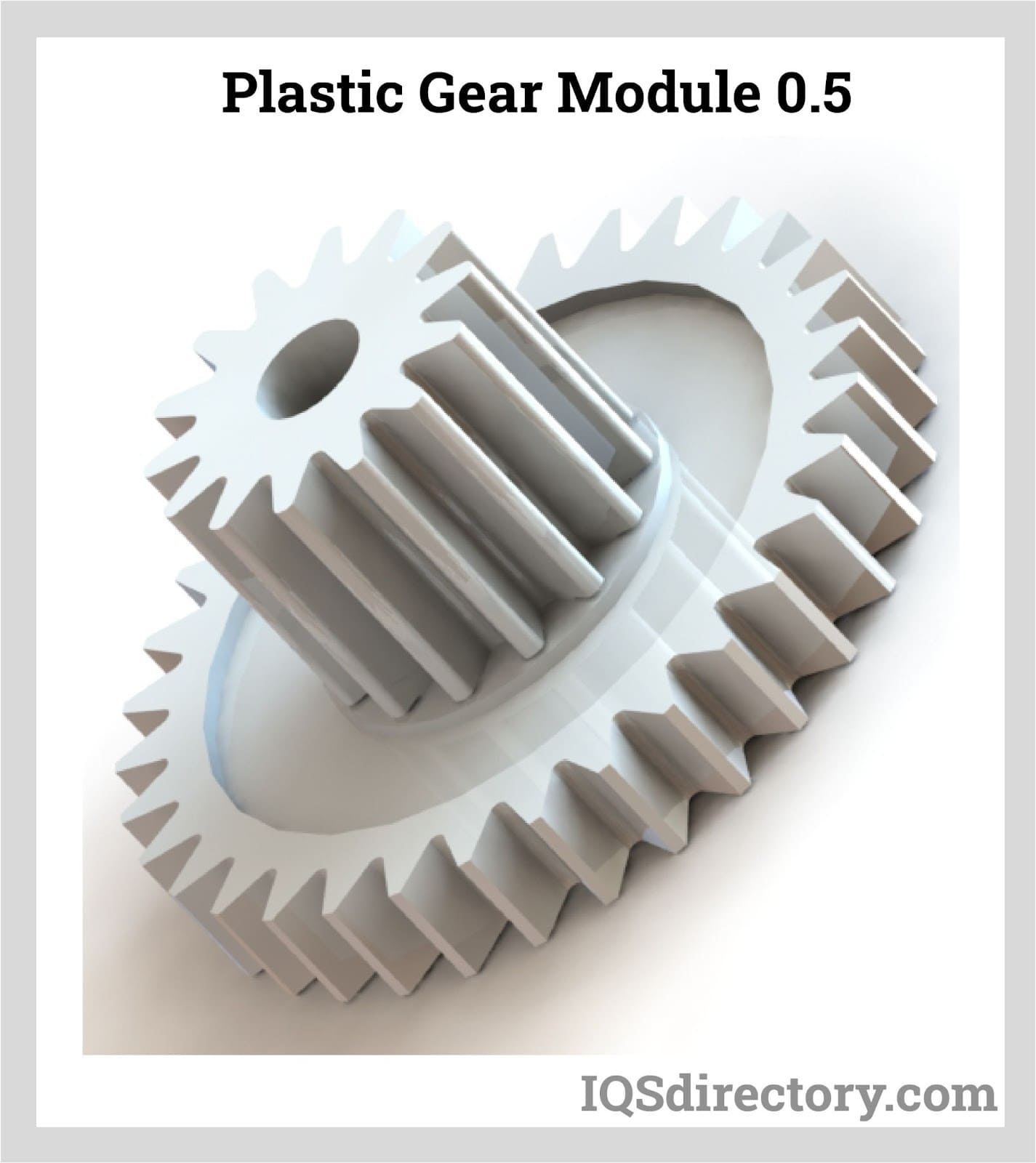
The size of a gear is represented by its module, an essential metric in gearing systems that defines the gear's scale and compatibility within a drive assembly. The module is calculated as the ratio of the gear's pitch diameter to the number of teeth. When selecting a gear for plastic gear design, both the module and the number of teeth are crucial factors. They determine not only the gear size but also the contact ratio, gear meshing accuracy, and longevity, which are particularly important in high-speed and precision-driven applications.
Pressure Angle
The pressure angle of a gear is defined by the angle between two tangent lines that intersect at the gear’s pitch circle and the top arc of a tooth. Traditionally, a pressure angle of 14.5° was standard; however, advancements in gear manufacturing and material science have shifted the standard towards pressure angles of 20° or higher for increased strength. A larger pressure angle results in robust, load-bearing gear teeth, contributing to enhanced durability and improved load distribution—key considerations in the design of polymer gears for demanding engineering environments.
Gear Tooth Backlash
Backlash is the space between the meshing teeth of gears. It occurs when there is a slight gap, allowing controlled movement or play. During gear design, it is possible to minimize backlash to ensure a tighter mesh between the teeth, which improves precision, positional accuracy, and efficiency in gear operation. For plastic gears, managing backlash is essential to reduce noise, vibration, and mechanical losses in automated systems and high-precision drive mechanisms.
Tooth Temperature
Temperature is a critical factor affecting the performance and longevity of plastic gears. Selecting appropriate materials during the design phase helps address temperature concerns, especially for continuous-duty or high-load applications. However, accurately predicting the working temperature of a gear can be challenging, given the variation in heat generation from friction and environmental exposure. It's beneficial to monitor gear operation to ensure that the temperature remains within safe limits and to prevent heat-related deformation or material degradation. Many engineering thermoplastics, such as polyamide-imide (PAI) and polyether ether ketone (PEEK), can function at temperatures up to 500 °F (260 °C) or higher, making them suitable for advanced gear applications requiring excellent thermal stability.
Gear Life for Plastic Gears vs. Metal Gears
The root, flank, and wear strength are crucial parameters for estimating gear life. These parameters, including root pulsating strength and flank strength, are influenced by the number of load cycles and vary depending on operating temperatures, chemical exposure, and lubrication type (oil, grease, or dry running). For plastic gears, these factors significantly impact performance, durability, and reliability, whereas a single value is typically sufficient for steel gears.
Comparatively, Young's Modulus for plastic is approximately two magnitudes lower than for steel, with POM around 2800 N/mm² versus 206,000 N/mm² for steel. Similarly, the permissible bending stress for plastic is about one magnitude lower: 25 N/mm² compared to 250-450 N/mm² for steel. This difference means metal gears experience less relative deformation than plastic gears, impacting their ability to maintain precise gear meshing under load.
Despite these differences, plastic gears excel in shock absorption and vibration damping compared to metal gears. They often incorporate a mechanical stop design to minimize wear and tear on both the gear teeth and the motor, leading to longer wear periods and extended service life. In many cases, metal gears can wear down more quickly in applications that experience frequent starts, stops, or reversing loads, while plastic gears maintain stable operation.
Plastic gears typically do not require frequent backlash adjustments as metal gears do. Most steel gears need regular backlash adjustments to counteract issues caused by progressive wear, heat expansion, and gear or motor vibrations. In contrast, plastic gears can absorb these vibrations, which often extends their operational lifespan and reduces the need for scheduled maintenance in automated equipment and industrial machinery.
Gear Calculation
For specialized gears such as PowerCore, the size of injection-molded gears is constrained by the press size, typically up to about 5” to 6”. Unlike catalog gears, custom-designed gears developed in collaboration with mechanical engineers directly address complex challenges such as inertia management, lubricant contamination, or precise load transmission, particularly in high-tech manufacturing sectors, robotics, and automation systems. This custom approach ensures that materials selection, design modifications, and advanced manufacturing techniques are fully aligned with the technical requirements of the end-use application.
Engineering a solution involves evaluating all critical operating parameters, including torque transmission, rotational speed (RPM), potential for shock load, required backlash tolerances, inertia effects, chemical resistance (particularly in semiconductor and food-grade environments), and temperature ranges. This holistic assessment enables engineers to propose alternative solutions—such as custom tooth shapes, relief cuts, modified pressure angles, or increased gear width—to optimize mechanical strength, minimize friction, and ensure that the plastic gear performs reliably over its intended service life.
Calculating gear life is a critical element of the mechanical engineering process. This calculation predicts the number of operational hours a gear will perform under specific load, speed, temperature, and lubrication conditions. Conversely, gears can be engineered to meet industry- or application-specific longevity requirements, such as the five-year minimum life expectancy required by medical equipment and device manufacturers. Over the past two decades, advanced gear life calculations and simulation tools have become essential for evaluating whether a plastic gear—especially when intended to replace a metal counterpart—will provide sufficient reliability, wear resistance, and compliance with industry standards for given applications.
Sample Gear Calculation
| z1 | 21 | Number Teeth Pinion |
| z2 | 210 | NUmber Teeth Gear |
| n1 | 1000 | RPM Pinion |
| n2 | 100 | RPM Gear |
| DP | 10 | Diametral Pitch |
| b | 1" | Face Width |
| g | 20° degrees | Pressure Angle |
| t | 65°C | Operating Temperature |
| P | 0.75 hp | Transmitted Power |
| Cs | 1.10 | Shock Load Factor |
| dw1 | 2.10° | Pitch Pinion Diamter |
| dw2 | 21.00° | Pitch Diamter Gear |
| dk1 | 2.30° | Outside Diameter Pinion |
| dk2 | 21.20° | Outside Diameter Gear |
| Hk1 | 0.10° | Addendum Pinion |
| Hk2 | 0.10° | Addendum Gear |
| ea | 1.74 | Contact Ratio |
| i | 10.00 | Transmission Ratio |
| a | 11.55 | Center Distance |
| V | 2.79 m/sec | Pitch Line Velocity |
| T1 | 3.9 ft lbs | Torque at Pinion Shaft |
| T2 | 39.4 ft lbs | Torque at Gear Shaft |
| Sb2 | 4.15 | Gear Tooth Root Stress Safety |
| Sg2 | 2.34 | Gear Tooth Flank Pressure Safety |
| SigmaW2 | 6.0 N/mm2 | Gear Tooth Root Stress |
| Kw2 | 0.6 N/mm2 | Gear Tooth Flank Pressure |
Types of Materials Used in Plastic Gears
One of the main advantages of using plastic resins for gear manufacturing is the flexibility to choose from a broad range of polymers and engineering plastics. This includes a variety of specialty blends, glass-reinforced plastics, and additives designed to improve wear resistance, dimensional stability, noise reduction, and temperature tolerance in high-performance plastic gears. Typically, crystalline and semi-crystalline plastics are favored due to their superior strength, resilience, and resistance to chemical attack—key benefits for gears intended for industrial, automotive, consumer electronics, and medical applications.
When selecting material for plastic gears, additional considerations include cost-effectiveness, machinability, self-lubrication properties, and compliance with regulatory standards such as FDA or RoHS for food processing or electronics manufacturing. Polymer selection directly impacts long-term reliability, load-bearing capabilities, and gear precision, making it a core factor in successful plastic gear design.
Polyacetal Gears
Polyoxymethylene (POM), also referred to as acetal, polyacetal, or polyformaldehyde, is a semicrystalline engineering thermoplastic well-known for its application in precision gears requiring high stiffness, low friction, and excellent dimensional stability. Produced through the polymerization of formaldehyde, POM is available in both homopolymer and copolymer grades. These provide distinct combinations of mechanical properties, fatigue resistance, and chemical stability. Six different grades of polyacetal address various industrial requirements, including static dissipation, UV resistance, and enhanced lubricity, while retaining a fundamental profile of strength, stiffness, and excellent machinability. Common uses for polyacetal gears include automotive window lifts, home appliances, and business equipment, where reliability and precision are critical.
Polyphenylene Sulfide (PPS) Gears
PPS, or polyphenylene sulfide, is highly regarded as a high-performance engineering thermoplastic due to its excellent temperature resistance, high strength-to-weight ratio, and dimensional stability under load. Like polyacetal, PPS is a rigid, opaque semicrystalline polymer with a melting point of 536 °F (280 °C). It is synthesized through a reaction between sodium sulfide and dichlorobenzene in a solvent. The superior thermal stability, low moisture absorption, and chemical resistance of PPS make it the material of choice for gears used in automotive engines, electric motor components, and electronics where reliability in extreme conditions is required.
Nylon Gears
Nylon is a synthetic polymer best known for its excellent toughness, fatigue endurance, and wear resistance. Gears made from nylon are utilized in applications demanding increased torque and power, such as conveyors, gear motors, printers, and automated equipment. A significant factor influencing the adoption of nylon gears is their low noise emission and superior vibration damping properties—a key advantage in applications where quiet, efficient operation and low friction are critical. Nylon’s inherent lubricity also extends service intervals and reduces maintenance in critical drives.
Polyamide Gears
Similar to nylon, polyamide is selected for gear manufacturing due to its superior mechanical and thermal properties, as well as its ability to sustain high torque loads at low speeds. Polyamide gears tolerate temperatures up to 248°F (120°C) and are ideal for harsh environments involving exposure to acids, aggressive chemicals, gases, and saltwater. Their lightweight nature and reduced material costs lead to cost-effective alternatives to metal gears, making them popular in marine, chemical processing, and portable power equipment.
Polycarbonate (PC) Gears
Polycarbonate is a transparent engineering thermoplastic valued for its outstanding impact strength, dimensional accuracy, and resistance to breakage. As an eco-friendly and recyclable polymer, polycarbonate is increasingly used in pressure-molded or injection-molded gears for applications requiring both toughness and clarity. Polycarbonate’s robust strength and melting point of 311°F (155°C) lend it to use in display gear systems, precision optical assemblies, and premium consumer products, though its higher material cost may limit application in high-volume, low-cost gear manufacturing.
Polyurethane Gears
Polyurethane is renowned for its combination of high elasticity, resistance to chemicals, and low maintenance requirements. It operates with minimal noise and superior resistance to corrosion, moisture, and chemical attack. Polyurethane provides "zero backlash” gears and is particularly valued in industrial automation, printing equipment, robotics, and noise-sensitive environments. Its versatility allows for use in a range of gear profiles, including spur, helical, worm, and pinion types. The inherent durability, self-lubricating potential, and long operational lifespan of polyurethane make it a preferred material for demanding and extended-duty applications.
The six polymers mentioned are just a few examples of the many advanced engineering plastics and custom composites available for gear manufacturing. Selection of a particular plastic depends on application-specific requirements, such as strength-to-weight ratio, operating environment, anticipated loads, and service life expectations. Continued advancements in material science and polymer processing technologies have led to the expanded adoption of plastic gears in high-performance, safety-critical, and innovative fields, enabling plastic to serve as a reliable alternative to traditional metal gears in a growing range of industries.
Additional material options for plastic gears include PEEK (Polyether ether ketone), known for its exceptional heat and chemical resistance; UHMW-PE (Ultra-high molecular weight polyethylene) for abrasion resistance; and lubricated or fiber-reinforced resin blends for increased performance in custom gear designs. Selecting the right material, designing for manufacturability, and testing for long-term performance are all essential steps in developing an optimized plastic gear solution for today’s advanced machinery and automated systems.
Frequently Asked Questions
What Are the Primary Manufacturing Methods for Plastic Gears?
Plastic gears are produced using hobbing, injection molding, and CNC machining. Each method offers unique advantages in terms of accuracy, efficiency, cost, and suitability for different production scales and gear types.
How Does the Choice between Machining and Injection Molding Impact Gear Production?
Machining is ideal for small runs, harder plastics, and flexible designs. Injection molding offers cost savings and scalability for mass production, but incurs higher initial mold costs and suits softer plastics. Tolerance and repeatability differ by method.
What Materials Are Commonly Used for Plastic Gears?
Common materials include polyacetal (POM), polyphenylene sulfide (PPS), nylon, polyamide, polycarbonate, and polyurethane, with additional options like PEEK and UHMW-PE for specialized requirements. Selection depends on intended use, strength, and environmental factors.
What Are Key Design Considerations for Optimizing Plastic Gear Performance?
Critical factors include face width, module, pressure angle, backlash, operating temperature, and material choice. Custom designs targeting torque, speed, load, and environmental resistance enhance gear durability and transmission accuracy.
Who Are the Top Plastic Gear-Making Machine Manufacturers in North America?
Leading manufacturers in the United States and Canada include Arburg, Engel, Sumitomo (SHI) Demag, Milacron, and Nissei. They supply advanced injection molding and CNC gear-cutting machinery for various volume and precision requirements.
How Do Plastic Gears Compare to Metal Gears Regarding Wear, Maintenance, and Noise?
Plastic gears absorb shock and vibration, operate more quietly, and often require less maintenance than metal gears. They are corrosion-resistant and suitable for environments needing reduced noise and lower friction.
Chapter 4: What Are the Different Types of Plastic Gears?
There are various types of plastic gears, which include:
Plastic Spur Gears
These types of gears are the most commonly used and are easily identifiable due to the teeth that extend from their perimeter. Their teeth and the shaft axis are aligned parallel to each other.

Plastic spur gears do not produce axial thrust force. They are designed to operate on parallel axes, transferring motion between two shafts that are aligned parallel to each other.
Plastic Spur Gear Characteristics
- Module: 1-3
- Material: MC901
- Hardening: None
- Tooth Finish: Cut (non-ground)
- Grade: JIS N9 equivalent
Plastic Spur Gear Industries
- Food
- Beverage
- Automotive
- Forestry
- Energy
- Unit Handling
Plastic Spur Gear Applications
- Small conveyors
- Package handling equipment
- Farm machinery
- Planetary gear sets
- Automotives
Plastic Spur Gears With Steel Cores
These applications are typically similar to those of plastic spur gears but without a steel core.
Plastic Spur Gear with Steel Core Characteristics
- Module: 1-2
- Material: MC901/SUS303
- Hardening: None
- Tooth finish: Cut (non-ground)
- Grade: JIS N9

Injection Molded Plastic Spur Gears
Injection molded spur gears are suitable for use in the same sectors as other plastic spur gears.
Injection Molded Plastic Spur Gear Characteristics
- Module: 0.5-1
- Material: Duracon (R)(M90-44)
- Hardening: None
- Tooth Finish: Injection molded
- Grade: Equiv.to JIS N12
- Low-priced
- Suitable for light loads

Plastic Bevel Gears
This type of gear has a conical shape with straight or spiral-cut teeth. Plastic bevel gears transfer motion between two intersecting axles, changing the rotation axis. These types of gears are mostly utilized in power tools and automotive applications. The spiral-cut version can be smoother and less noisy than other designs.

Plastic Bevel Gear Characteristics
- Module: 1-3
- Speed ratio: 1.5-3
- Material: MC901
- Hardening: None
- Tooth Finish: Cut (non-ground)
- Grade: JIS 4 equivalent
- Lubrication: Not needed
Plastic Bevel Gear Industries
- Cement
- Food
- Beverage
- Mining
- Energy
- Bulk material handling
Plastic Bevel Gear Applications
- Medium-to-large conveyors
- Mixers
- Crushers
- Water treatment applications
Plastic Rack or Rack & Pinion Gears
Plastic racks are designed to convert rotational motion into linear motion. The teeth are aligned along a straight bar, working with a cylindrical mating gear. With one gear axis fixed, plastic racks provide short oscillating strokes and are commonly used in steering systems, conveyors, and machinery for lifting applications.

Plastic Rack Characteristics
- Module: 1-3
- Length: 500 or 1000mm
- Material: Polyacetal
- Hardening: None
- Tooth finish: Cut (non-ground)
- Grade: KHK R001 5
Molded Flexible Racks
Molded Flexible Rack Characteristics
- Module: 0.8-2
- Length: 2000mm
- Material: Duracon (R)(M25-44)
- Hardening: None
- Tooth Finish: Injection molded
- Grade: KHK R0018
- Bendable

Plastic Miter Gears
Plastic Miter Gear Characteristics
- Module: 0.5-1.5
- Material: Duracon (R)(M90-44)
- Hardening: None
- Tooth finish: Injection molded
- Grade: JIS 6
- Low priced
- Suitable for light loads

Injection Molded Bevel Gears
Characteristics of Injected Molded Bevel Gears
- Module: 0.5-1
- Speed ratio: 2
- Material: Duracon (R)(M90-44)
- Hardening: None
- Tooth Finish: Injection molded
- Grade: JIS 6
- Low priced
- Suitable for light loads

Plastic Screw Gears
Plastic Screw Gear Characteristics
- Module: 1-3
- Material: MC901
- Hardening: None
- Tooth Finish: Cut (non-ground)
- Grade: JIS N10 equivalent
- Lubrication: Not needed

Plastic Worm Wheels (Worm Gears)
These types of gears transmit power through right angles on shafts that are non-intersecting. Worm gears produce thrust load and are mostly suitable for high shock load applications. However, worm gears offer very low efficiency compared to other gears. Therefore, they are often used in lower horsepower applications.
Plastic Worm Gear Characteristics
- Module: 0.5-0.8
- Speed ratio: 10-60
- Material: Polyacetal
- Hardening: None
- Tooth Finish: Cut (non-ground)
- Grade: KHK W0025

Plastic Worm Gear Industries
- Food
- Beverage
- Automotive
- Forest
- Energy
- Unit handling
Plastic Worm Gear Applications
- Small conveyors
- Package handling equipment
- Farm machinery
Plastic Internal or Planetary Gears
Planetary gears feature teeth cut around the internal diameter of a central gear, with one or more spur gears meshing with these central teeth. This design allows the planetary gear to rotate around its internal diameter. Additionally, teeth can be arranged on the outside of the larger gear to accommodate additional gears running around its outer diameter. Planetary gears are frequently utilized in automotive gearboxes due to their compact design and efficient power transmission capabilities.

Plastic Helical Gears
Helical gears differ from spur gears in that their teeth are angled relative to the shaft. This design results in multiple teeth engaging simultaneously during operation, which allows plastic helical gears to handle greater loads compared to plastic spur gears. The load is distributed across the teeth, enabling helical gears to operate more smoothly and quietly. However, plastic helical gears do produce a thrust load during operation, which must be taken into account. They are primarily used in enclosed gear drives due to their efficiency and quieter performance.
Plastic Helical Gear Industries
- Cement
- Food
- Beverage
- Mining
- Marine
- Energy
- Forestry
- Bulk material handling

Plastic Helical Gears Applications
- Medium-to-large conveyors
- Mixers
- Large pumps
- Water treatments
- Crushers
Plastic Double Helical Gears
In these types of gears, two helical faces are positioned next to each other with a gap separating them. They are a variation of helical gears. The faces of the gears have identical helix angles opposite to each other. Double helical gears eliminate thrust loads and allow greater tooth overlap and a smoother operation. Double helical gears are also used in enclosed gear drives, just like helical gears.
Plastic Double Helical Gear Industries
- Mining
- Marine
- Heavy-duty industries

Plastic Double Helical Gear Applications
- Milling
- Steam turbines
- Ship propulsion
Plastic Herringbone Gears
Herringbone gears are similar to double helical gears but feature continuous helical faces without a gap between them. Their compact design makes them well-suited for high shock and vibration applications. However, due to the complexity of manufacturing and the associated high costs, herringbone gears are not as commonly used as other types of gears.
Plastic Herringbone Gear Industries
- Mining
- Marine
- Heavy-duty industries

Plastic Herringbone Gear Applications
- Milling
- Steam turbines
- Ship propulsion
Plastic Hypoid Gears
Plastic hypoid gears are akin to spiral bevel gears but differ in that their shafts do not intersect. In hypoid gears, the shafts are supported by bearings at each end, with the pinion positioned on a different plane than the gear. This arrangement allows for smooth operation despite the non-intersecting shafts.
Plastic Hypoid Gear Industries
- Cement
- Food
- Beverage
- Mining
- Energy
- Bulk material handling

Plastic Hypoid Gear Applications
- Small-to-medium conveyors
- Small mixers
- Crushers
- Water treatment
Bull Plastic Gears
Bull plastic gears are used in conjunction with pinion gears to transmit power. A bull gear can drive several pinion gears, allowing for speed adjustments through gear changes. Typically, one gear in the set is larger than the other, with the larger gear known as the bull gear and the smaller gears referred to as pinion gears.

Chapter 5: Thermoplastic vs Thermoset Plastic
Thermoplastics and thermoset plastics are polymers that have differing behavior when exposed to heat. When thermoplastics are exposed to heat, they melt after curing. In contrast, thermoset plastics retain their form and shape when exposed to heat and stay in a solid, rigid configuration. This difference between the materials is a major factor in their life span and use.
Since thermoplastics easily melt when exposed to heat, they are used for applications where materials can be recycled. Thermosets are polymers that undergo a chemical reaction when heated that creates a three-dimensional network of bonded molecules. The process is irreversible, guaranteeing a thermoset will keep its shape and cannot be melted. The result is a hard, solid, strong plastic that is resistant to heat and chemicals. The term thermoset is indicative of the physical permanence and chemical composition of thermoset plastics with the key word being “set”, meaning the plastic cannot be changed.
The key to the differentiation between the plastics is their curing process. Thermosets form strong chemical bonds during curing, which makes them impossible to remold. Thermoplastics do not form chemical bonds during curing, a factor that makes them re-moldable and recyclable. The three-dimensional bonds formed in the curing of thermoset plastics is the reason for their strength and heat resistance, which is not present in the curing of thermoplastics.
Advantages of Thermosets
- High-temperature resistance
- Good chemical resistance
- Excellent dimensional stability
- High strength, toughness, and rigidity
Advantages of Thermoplastics
- Eco-friendly and recyclable
- Excellent impact resistance
- Better aesthetic finishing
- Good adhesion to metals
Disadvantages of Thermosets
- Non-recyclable (cannot be remolded)
- Poor thermal conductivity (for electrical housings)
- Brittle
Disadvantages of Thermoplastics
- Can degrade when exposed to UV
- May soften when exposed to heat
- Can be more expensive than a thermoset
| Thermosets | Thermoplastics |
|---|---|
| The material is injected into a hot mold in a cold state | The plastic is melted and injected into a mold |
| Non-remoldable and non-recyclable | Remoldable and recyclable |
| Creates a permanent chemical bond | Fully reversible as there's no chemical bonding |
| Surface finishing is relatively challenging | Provides accurate and aesthetically pleasing surfaces |
| Less heat and pressure requirements | Requires significant heat and pressure |
| Produced through condensation polymerization | Formed by additional polymerization |
| Includes compression, transfer, and casting processes | Involves injection, extrusion, and blow molding processes |
| Common products: tool handles, billiard balls, insulation, computer and TV parts, various electronic and gardening equipment, sprockets, and cooking tools | Common products: vacuum cleaners, toys, machine screws, gear wheels, kettles, packaging films, sacks, power tool housings, toasters, gas lines, and connections |
| Drawbacks include inability to recycle and emission of VOCs | Drawbacks are costliness, ease of melting, and difficulty in prototyping |
Recyclability
As can be determined from the characteristics of the two plastics, thermoplastics are easy to recycle and can be melted and reused multiple times. Existing parts and components can be ground to granules and melted to make new parts. Thermoplastics can be manipulated in several ways, such as adding new thermoplastic resin to old ground up resin to produce new components. The reuse of thermoplastics is a necessity since it takes several decades for the plastic to decompose. Many sustainability programs emphasize the need to reuse and repurpose thermoplastics.
The crosslinked bonds of thermoset plastics prevent the plastics from being melted, reformed, and reused. The molecular structure of thermoset plastics gives them a long useful life but prevents them from being restructured and reused. The solid structure of thermoset plastics enhances their damage to the environment. Like thermoplastics, it takes many decades for thermoset plastics to decompose. They can languish in a trash dump and never change their form or shape.
Cost
The cost factor for the plastics relates to their recyclability. The manufacture of thermosets requires special tooling as well as fillers and additives that are necessary to complete the crosslinking. This aspect of the process affects the cost of thermosets and makes them more expensive. Although this can also be true of thermoplastics, the recyclability of thermoplastics has a distinctive effect on their cost.
As with many aspects of manufacturing, the cost factors for thermosets and thermoplastics are not necessarily black and white. Although the thermoset process is slow and time consuming, the material difference between the plastics can range from $0.90 per pound up to $10 per pound. This contrast is generated by the different properties of the plastics. In most cases, engineers choose between the plastics based on their properties, appropriateness for an application, and their functionality without regard to cost.
Chapter 6: What Are the Advantages and Disadvantages of Plastic Gears?
This chapter will explore the benefits and drawbacks of using plastic gears.
Advantages of Plastic Gears
Larger and Stronger Parts
One significant advantage of plastic gears is their capacity to handle increased loads due to their tooth bending and load-sharing characteristics. Bending stress can attempt to deform the gear teeth and shear them from the main body of the gear, which can lead to fatigue and breakage. Contact stress can also cause surface wear and eventual failure. In contrast, plastic gear teeth distribute the load across more teeth and deflect more under pressure. This load-sharing ability enhances the load-bearing capacity of plastic gears.
Lower Cost
Typically, plastic gears are less costly to produce compared to metal gears. Moreover, plastic gears generally do not require additional finishing processes, which can result in cost savings of approximately 50% to 90% compared to their metal counterparts.
Molding Design Freedom
Plastic molding provides the flexibility to create a wider range of efficient gear geometries compared to metal. It is particularly suitable for producing complex shapes like internal gears, worm gears, and cluster gears, which can be prohibitively expensive to manufacture using metal.
Plastic Gear Accuracy
Plastic gears can attain high precision levels through consistent material quality and meticulous control over the molding process.
Corrosion Resistance
Unlike metal gears, plastic gears are resistant to corrosion, making them suitable for use in environments such as water meters and chemical plant controls. Their inert nature also allows them to be employed in applications where metal gears might corrode or degrade.
Light Weight
Plastic gears are lighter than their metal counterparts of the same size. For instance, nylon and acetal have specific gravities around 1.4, whereas steel has a specific gravity of 7.85.
Good Shock Absorption
Plastic gears are capable of deflecting to absorb impact loads more effectively than metal gears. They also distribute localized loads caused by misalignment and tooth errors, reducing the impact on gear performance.
Reduced Noise
Plastic gears help reduce noise levels due to the noise-dampening properties of plastics, leading to quieter operation. This makes plastics ideal for applications where high precision and flexible materials are needed to achieve quieter drives.
Inherent Lubrication
Plastic gears possess inherent lubricity, making them suitable for applications such as printers, toys, and other uses where low-load and dry gears are essential.
More specifically, plastic gears offered by companies like PowerCore offer several advantages, including:
Metal Core
- Allows for a precise and safe attachment to a shaft
- Reduces up to 50% thermal expansion of the plastic portion of the gear
- Available in stainless steel for corrosive applications and aluminum where low inertia is required
- Dissipates heat from plastic gear teeth
Polymer Material
- Does not absorb moisture, i.e., the gears retain their precise dimensions in humid or washdown environments
- Resistant to chemicals/corrosion
- Stress-free, highly crystalline structure
- Absorbs shock and vibrations
- Noise reduction in gears up to 6 dBa
- Can operate in sub-zero temperatures
Gear Sizes and Gear Types
- Gear sizes from OD=1/2” to OD=28”
- Types include spur, helical, bevel, worm gears and shafts, internal gears, and rack and pinion
- Improved transmission efficiency, e.g., 7 to 8% in worm gears, energy savings
- PowerCore gears can be mated with metal gears
- No lubrication required
Engineering and Gear Design
- Proprietary gear life calculation
- Gear design and gear sizing
- Backlash-free tooth modification
- Low friction, temperature-reducing tooth modification
Disadvantages of Plastic Gears
- When they are under strain, plastic gears can warp. This can be detrimental if the plastic must operate in high temperatures or if the levels of humidity change.
- Plastic gears experience greater dimensional instabilities resulting from a larger coefficient of thermal expansion and moisture absorption.
- Plastic gears can be negatively affected by certain chemicals.
- The initial mold to develop tooth form and dimensions require high costs.
Despite these benefits, the disadvantages of plastic gears are far outweighed by their advantages.
Conclusion
Plastic gears are manufactured from two main methods: the injection molding process and the machining process. The type of manufacturing process depends on the volume of the parts needed to be produced and other factors like the required strength of the parts. As already mentioned, plastic gears offer many advantages over metal gears. Each type of plastic gear has a unique characteristic that makes it suitable for a particular application. Therefore, caution must be taken when selecting plastic gear for a particular application for successful and efficient performance.