






Worm Gears: Types, Uses and Processes
IQS Directory EditorialUpdated 6 chapters
7 leading suppliers listed with this guide
Browse worm gear suppliersContents (6 chapters)
This article provides a detailed look at.
Read further to answer questions like:
- What is a Worm Gear?
- How Worm Gears are Made
- Types of Worm Gears
- Uses for Worm Gears
- And much more …
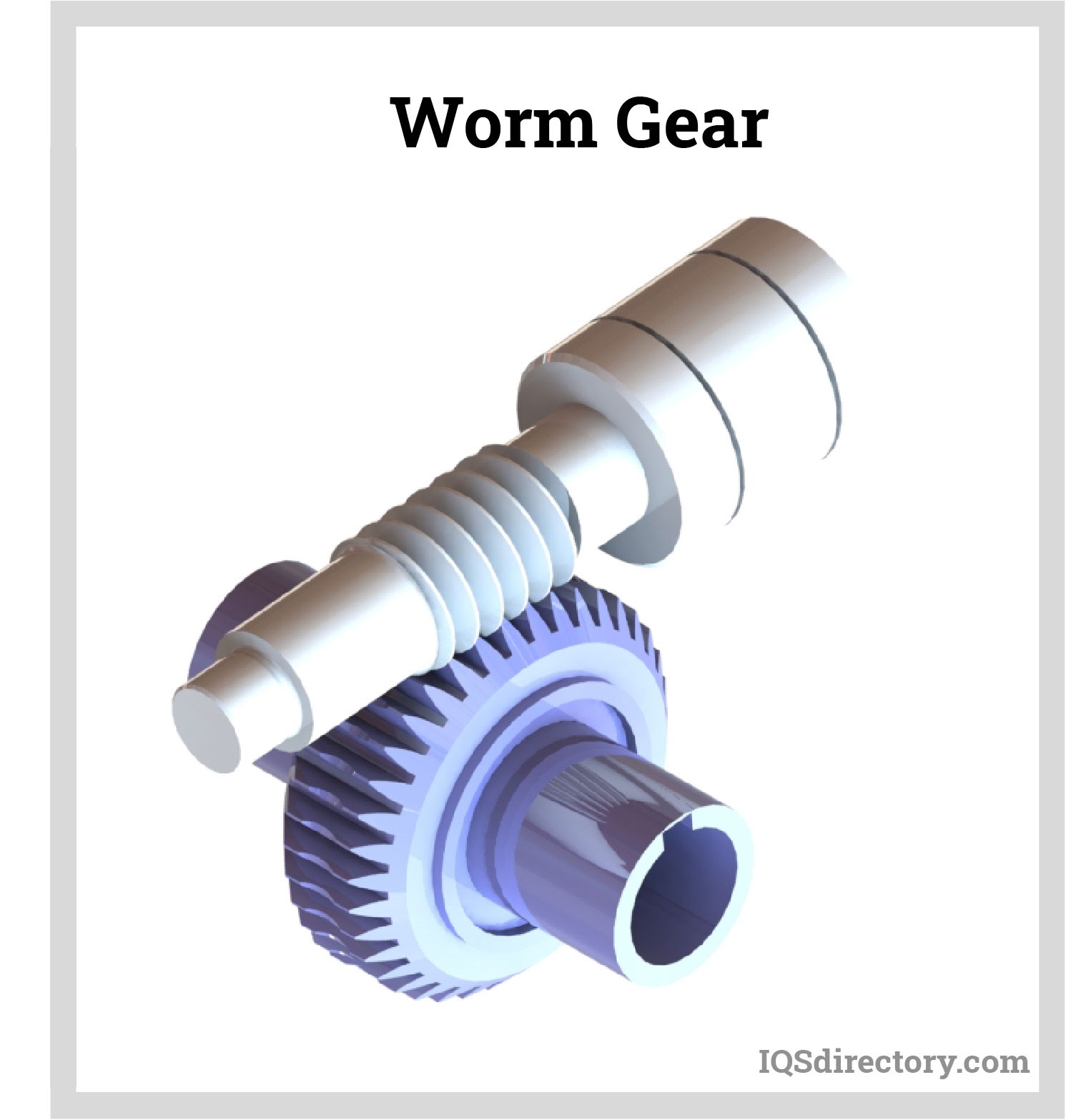
Understanding Worm Gears
Worm gears are a specialized type of staggered shaft gear, also known as a worm drive or screw gear mechanism, designed to transfer motion between non-parallel, non-intersecting shafts through threads engraved on a cylindrical rod, enabling high torque output and speed reduction. This system comprises two essential parts: the worm and the worm wheel. The speed diminishment results from the interplay between the worm's threads and the worm wheel's teeth, creating a gear reduction ratio that is ideal for applications requiring controlled motion, precise positioning, and smooth power transmission.
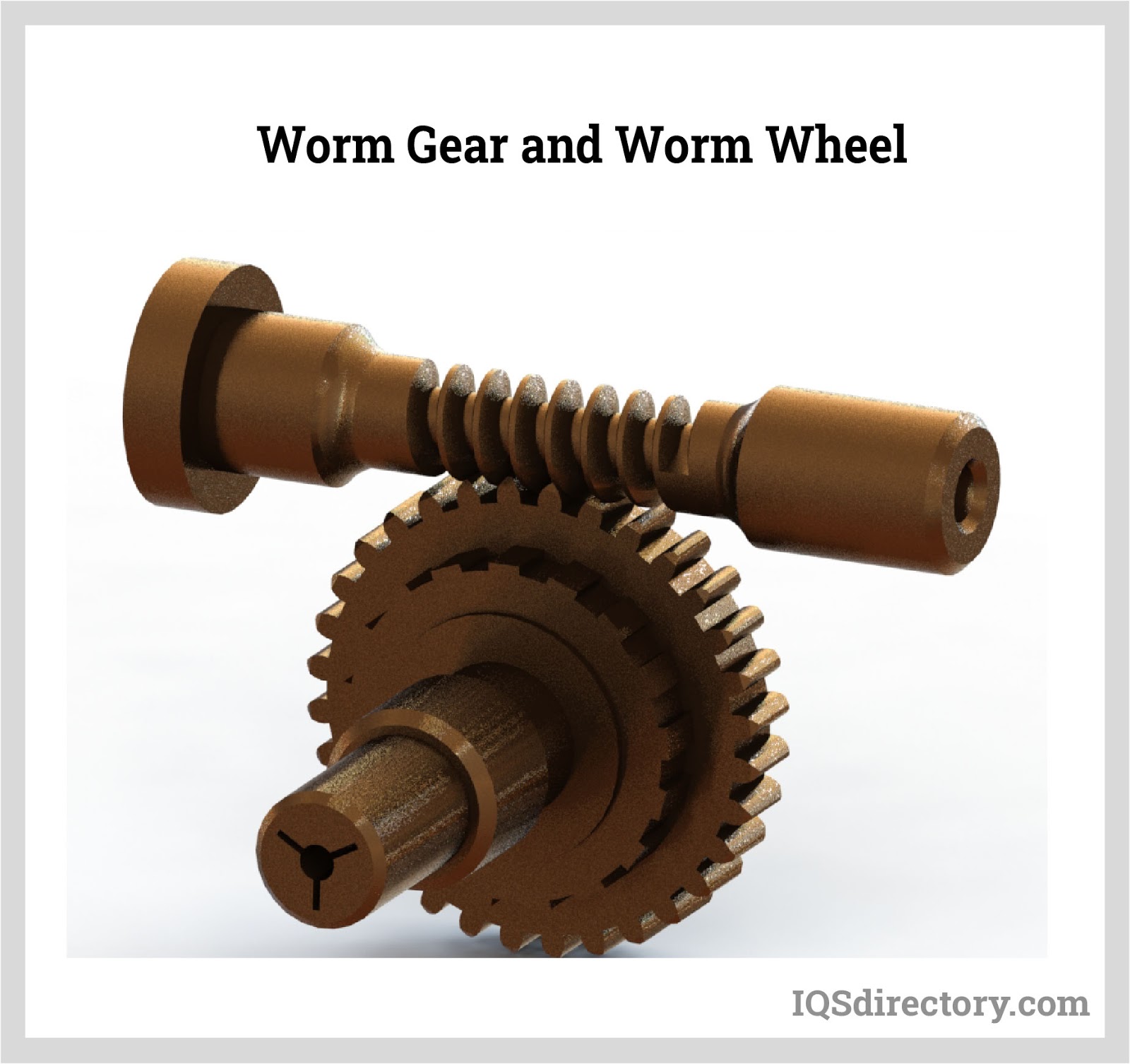
Worm gears provide advantages such as reduced noise, less vibration, and excellent load-carrying capacity, while maintaining a compact form factor that supports space-saving mechanical design. Their construction from hardened metals, bronze, and other wear-resistant materials ensures durability and reliable performance, which is especially important because worm gear systems can generate considerable heat and require proper lubrication to reduce friction, improve efficiency, and extend service life. Commonly used in industrial machinery, conveyors, elevators, actuators, and gear reducers, worm gear assemblies are valued for self-locking capability in some configurations, making them a practical choice when backdriving resistance and safety are important considerations.
How Are Worm Gears Made?
A worm gear is one of the most compact gearing systems available and plays a vital role in modern power transmission solutions. Renowned for its ability to achieve high-ratio speed reduction and directional change, the worm gear design is highly efficient in industrial automation, robotics, and heavy machinery. Due to their highly compact profile, worm gear assemblies can be installed in limited spaces while still delivering smooth, quiet, and reliable operation even under heavy load conditions. When paired with a compatible worm wheel, the worm gear ensures excellent torque transfer and anti-backlash performance, making it a preferred choice across multiple industries, including automotive, aerospace, packaging, and material handling.
The most common method for manufacturing worm gears involves hobbing, a precision machining process that uses a gear-cutting tool known as a hob. This specialized cutting tool closely resembles the gear tooth profile that the finished worm gear will eventually engage with. In addition to hobbing, worm gears are frequently produced using turning, high-precision milling, and finishing grinding techniques to achieve the necessary geometry and surface finish. Advanced CNC (computer numerical control) machines play a crucial role in these manufacturing processes, ensuring superior dimensional accuracy and repeatability for modern worm gear sets.
How Are Worm Gears Being Made?
Hobbing
Hobbing is the primary process used for worm gear manufacturing, especially for high-volume production. This method produces highly precise gear teeth by utilizing a set of customized hobs specifically designed for the desired pressure angle and module or diametral pitch. Hobbing is considered a cold working forging process, in which a punch with an exact gear geometry is pressed into the workpiece, creating highly accurate gear profiles suitable for demanding applications such as gearboxes, conveyor systems, and machine tools.
The hobbing machine’s tool, known as a hob, is typically crafted from hardened high-speed steel or carbide, forming a helical hob cutter. The combination of accurate pressure, rotational speed, and cold forging enables the production of worm gears with tight tolerances, optimal concentricity, and a smooth surface finish that extends component lifespan.
Modern hobbing machines are fully automated and available in various configurations, enabling manufacturers to produce gears of many shapes and sizes—from miniature precision gears for medical devices to heavy-duty worm gears for industrial equipment. These machines generally include two main spindles: one for clamping the gear blank (workpiece) and another for holding and rotating the hob, ensuring synchronized cutting action and uniform tooth formation.

Milling
During the milling process, worm gears can be manufactured by cutting gear teeth using a precision gear cutter on specialized milling machines or jig grinders. Often, an indexing or rotary table is used to accurately position the gear blank for each sequential cut. The gear teeth are formed as a rotating multi-edge gear cutter shapes them to match the desired tooth geometry, commonly referred to as the gear profile. This procedure is used for producing both standard and custom worm gears, particularly in prototyping, small production runs, or for bespoke applications where standard hobbing is unsuitable.
Precision in worm gear milling is contingent on the cutter’s quality and the accuracy of the setup, as even minor misalignment can affect power transmission efficiency and noise levels. Indexing plays an essential role in the milling process to guarantee all teeth are evenly cut and conform to design specifications. Advanced CNC gear milling has further enhanced the precision and speed of this process, meeting strict industry standards for worm wheel manufacturing.

Grinding
Grinding is a finishing process that employs multiple cutting edges operating at high velocity to remove material and produce the exceptionally smooth surfaces demanded by precision worm gears. Grinding is especially crucial for worm gears made from hardened steel or other tough engineering materials, where surface finish and micro-geometry are critical to minimize friction, noise, and wear during operation. This method, often called hard finishing, refines gear teeth to their final dimensions and improves tribological performance, extending operational life for high-load or high-speed worm gear assemblies.
The grinding process relies on advanced multi-axis grinders equipped with bonded grinding worms (threaded wheels) composed of abrasives harder than the base gear material. These machines integrate precise infeed (X-axis), vertical feed (Z-axis), and lateral shifting motions (Y-axis) to ensure flawless cutting of worm threads and gear teeth. Worm gear grinding also improves load-carrying capacity and efficiency, making it essential in the production of gears for automotive transmissions, robotics, and motion control systems.

Gears
Worm gears consist of a specially shaped worm and a worm wheel, utilizing helical gears designed to transfer rotational power and motion between non-intersecting, typically perpendicular shafts. These gears are engineered in three main forms: spur, left-hand helical, and right-hand helical. For worm drive applications, left-hand or right-hand worm gears are essential and selected based on the direction of transmission required for the specific application.
The unique design of helical worm gear teeth allows them to efficiently engage with the mating worm wheel, reducing backlash and silent operation, which is crucial in motion-sensitive industries. Key material considerations for worm gears include bronze, steel, and specialized alloys, selected for optimal durability, wear resistance, and compatibility. Proper lubricants and gear surface treatments are also critical to minimizing wear and maintaining consistent performance in demanding worm gear reducers and speed reducer gearboxes. Understanding the differences between worm gears and other gear types (such as bevel gears or planetary gears) helps users select the best power transmission solution for their requirements.

When evaluating worm gear suppliers, it’s important to consider their experience in manufacturing high-quality worm gear sets, capacity for custom gear production, engineering support, and ability to meet industry-specific certification requirements such as ISO or AGMA standards. Leading gear manufacturers often provide detailed technical consultation, rapid prototyping, and precision-engineered solutions for OEMs and end-users in diverse markets.
If you’re seeking custom worm gears, worm gearboxes, or precision-engineered gear assemblies, review suppliers’ capabilities in advanced gear cutting, heat treatment, material selection, and post-processing services. Look for manufacturers with state-of-the-art production facilities and extensive experience with both standard and custom worm gearing solutions to ensure lasting performance, efficiency, and cost-effectiveness.
What Are the Different Types of Worm Gears?
One notable advantage of worm gears lies in their exceptional capacity for gear reduction and torque multiplication within a highly compact footprint. In an industrial setting or motion control application, a worm gear system allows for large speed reductions without complex or bulky gearing arrangements. Typically, a worm gear set features a large worm wheel (or gear) with a shallow helical thread that engages perpendicularly with a mating worm shaft. This configuration is highly valued in gear motors, conveyor systems, and other power transmission solutions that require precise, space-saving, and quiet operation.
The performance and efficiency of worm gears depend heavily on the accurate positioning, precision engineering, and assembly of the gear teeth. Because each worm gear mechanism relies on tightly controlled tolerances and custom tooth profiles, strict tooth design ensures a proper mesh between the worm and the wheel gear. Any misalignment or imperfections can lead to excessive friction, poor efficiency, noise, or even premature failure. Choosing the right worm gear type and specifications based on load requirements, transmission ratio, and speed control is essential for long-term reliability.
There are two primary types of worm gears: cylindrical (straight) and cone (double enveloping). Additionally, worm gears can be distinguished by their face geometry into categories such as straight, hobbed, or concave. Among these, cylindrical worm gears are the most common due to their versatility, ease of manufacturing, and suitability for a wide variety of industrial gear drives and automation equipment.
Worm Gear Types and Classifications
Within worm gear assemblies, it is essential that the axial pitch of the worm matches the circular pitch of the worm wheel, ensuring smooth and efficient power transmission. The circular pitch refers to the distance between the points of adjacent teeth along the gear’s pitch circle, while the axial pitch is the equivalent measurement along the worm’s axis. The thread direction (left-handed or right-handed) and the number of starts or threads on the worm shaft are critical in defining gear ratio, backlash, and mechanical efficiency.
The lead of a thread—the distance a point on the thread advances in one revolution—combined with the lead angle (the angle between the thread helix and a reference plane perpendicular to the worm's axis) are key design parameters that impact load capacity, reduction ratio, and smoothness of rotation. An optimal lead angle ensures efficient operation and minimizes frictional losses, especially under demanding loads or continuous duty cycles.
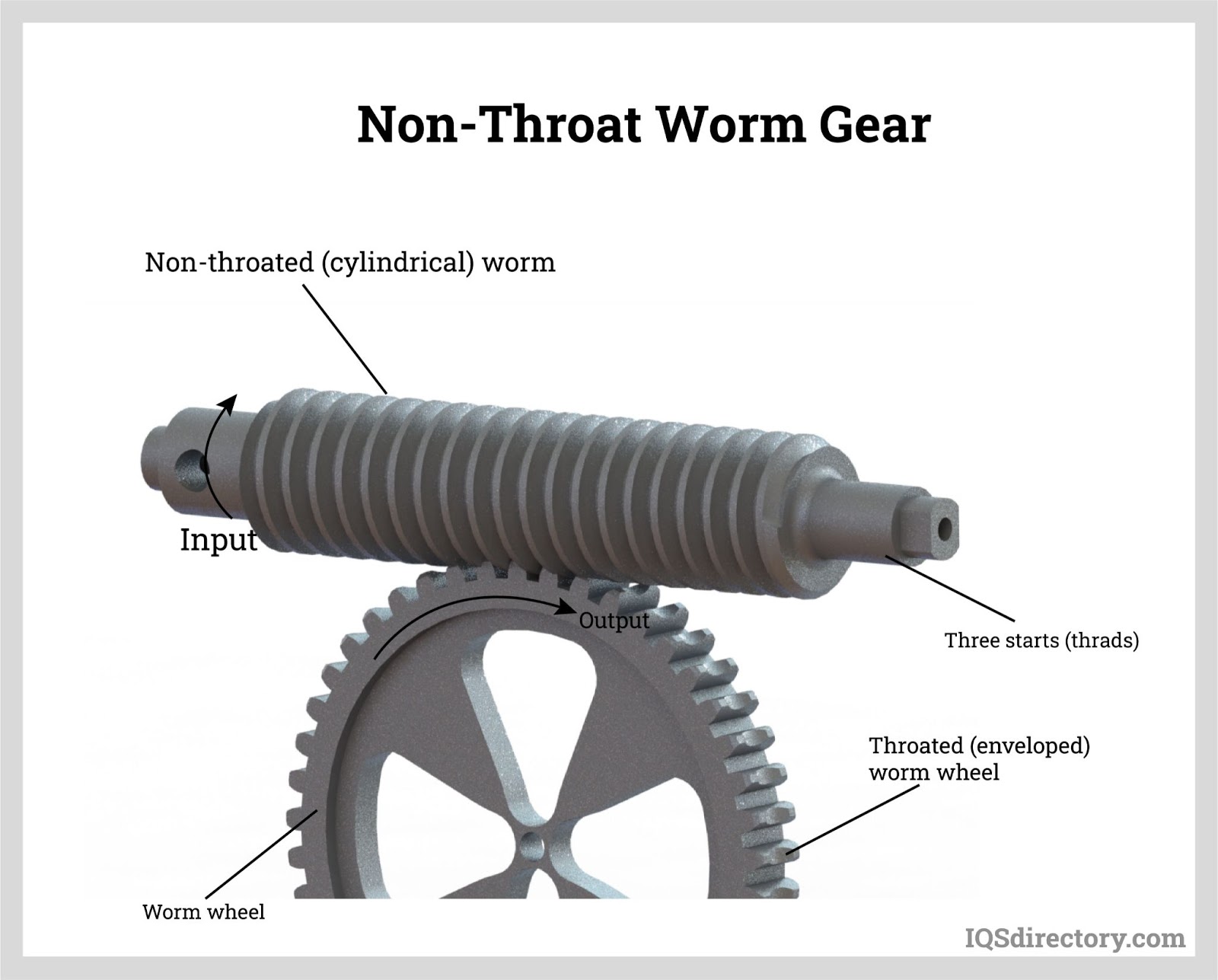
Non-Throat Worm Gears
Non-throat worm gears are characterized by the absence of a throat or groove machined on either the worm or the worm wheel. These gears use straight or simple helical geometry, leading to a single-point tooth contact during operation. As a result, this design usually experiences higher wear and greater friction loss compared to throated types, limiting its use to light-duty applications where cost-effective manufacturing and simplicity are prioritized. Non-throated gearboxes are common in basic mechanical assemblies and hobby projects with modest load requirements.
Single Throated Worm Gears
A single-throated worm gear features a curved or incurvate tooth profile on the worm wheel, allowing it to partially envelop the worm. This design increases the contact area to a continuous line rather than a single point, which leads to significantly lower wear, smoother operation, and the ability to transmit higher torque loads. Single-throat worm gears are commonly found in material handling systems, escalators, and hoists—any application where moderate torque capacity, backdrivability prevention, and enhanced efficiency are required. These worm gears must be manufactured from carefully selected materials; typically, the worm is made of hardened steel, while the wheel is composed of bronze or similar alloys to improve meshing and extend service life.

Double Throat Worm Gears
The primary difference between single throat and double throat worm gears is the presence of a concave profile not just on the wheel, but on both the worm and the gear, resulting in a double enveloping (hourglass-shaped) design. This configuration maximizes contact area and alignment, enabling superior load-carrying capacity, higher mechanical efficiency, and exceptional shock resistance. Double-throat worm gear sets are critical in heavy-duty machinery, elevators, and critical automation drives, where high torque, minimal backlash, and long-term durability are essential. Their precision-machined tooth profiles and high-quality materials contribute to smooth motion and quiet operation, even under relentless industrial use.
Double throat worm gears are designed to handle high loads effectively. Their double throat design ensures a secure and precise connection between the worm and the gear, optimizing performance and durability.

Worm Gear Mounting Methods
Accurate and robust mounting of a worm gear assembly is crucial for optimal transmission performance and system longevity. Proper installation with multiple, controlled contact points prevents excessive force concentrations, uneven wear, and excessive stress on the lead angle, which could easily lead to gear teeth failures or noise.
Keyway
Keyway mounting is a widely used technique involving one or more precision-machined square cutouts in the gear’s inner bore. This keyway allows a key to be inserted between the gear and the shaft, providing a positive mechanical lock that transmits rotational force and prevents slippage. Keyways are commonly specified in gear reducer assemblies and heavy-duty power transmission systems.

Set Screw
Set screw mounting involves drilling a small hole through the gear hub, into which a set screw is inserted and tightened against the shaft. This method is widely used in light- to medium-duty gear and shaft connections for its simplicity and adjustability, supporting low- to moderate-precision mechanical assemblies.

Split
A split mounting uses a clamp that fits over a notched or split section of the gear hub. When the clamp is tightened, the hub is compressed, creating secure friction that firmly locks the gear to the shaft. Split hub designs allow for easy installation and removal, making them ideal for applications requiring frequent disassembly or alignment adjustments, such as prototypes, test equipment, and quick-change gearboxes.

Worm Gearboxes for Power Transmission
A gearbox is an enclosed mechanical unit designed to transfer torque and adjust speed between a drive motor and a driven load. A worm gearbox specifically accommodates a worm shaft with a threaded profile that meshes with a worm wheel, achieving high reduction ratios and exceptional torque multiplication in a compact housing. As the worm rotates, it drives the worm wheel, resulting in smooth, incremental movement of the output load. Worm gearboxes are essential in conveyor belts, packaging machines, and powered gates where space, reliability, quietness, and resistance to backdriving are prioritized. When selecting a worm gearbox, consider reduction ratio, load capacity, lubrication needs, and required mounting configuration to maximize system efficiency and lifespan.

Worm Gear Threads and Transmission Ratios
The number of threads (or starts) on a worm determines how many gear teeth are advanced per revolution. This factor directly impacts the gear reduction ratio, speed control, and overall drive efficiency. For example:
- A single-start (single-thread) worm gear moves the worm wheel one tooth per revolution, providing very high reduction ratios and greater torque multiplication—ideal for lifting and positioning machinery.
- A double-start (two-thread) worm gear advances two teeth per turn, delivering moderate reduction and faster rotational speeds.
- Higher thread counts (triple-start or more) are chosen for systems requiring increased speed and reduced torque multiplication.
For high helix angles, a single thread is generally preferred to minimize sliding friction and heat development. In contrast, lower helix angles and higher thread numbers may be used where moderate speed increases and smoother meshing are desired. Optimizing the number of threads and the helix angle is fundamental for achieving the desired performance in industrial gear assemblies. It's important that the worm threads are matched correctly to the mating gear to ensure efficient power transfer, reduce backlash, and extend operational lifespan.


In summary, the optimal choice of worm gear type, mounting method, thread design, and gearbox specification results in more reliable, efficient, and long-lasting power transmission for diverse industrial applications, automation projects, and motion control systems. Understanding these distinctions helps engineers and purchasing professionals source the best solution for their specific mechanical requirements and operational goals.
Frequently Asked Questions
What Are Worm Gears and How Do They Function?
Worm gears are compact gear systems that transfer motion and reduce speed between non-intersecting shafts using a threaded rod (worm) and a matching gear (worm wheel), enabling torque multiplication and smooth, quiet operation.
What Manufacturing Methods Are Used to Make Worm Gears?
Worm gears are primarily produced using hobbing, milling, and grinding. Hobbing creates accurate teeth for high-volume needs, milling is used for prototypes or custom gears, and grinding finishes the surface for precision and durability.
What Are the Different Types of Worm Gears?
Worm gears come in non-throat, single throat, and double throat (double enveloping) types. Non-throat is for light-duty use, single throat offers higher torque, and double throat ensures maximum load capacity and life.
How Does the Number of Threads on a Worm Gear Affect Performance?
The number of worm threads (starts) controls reduction ratio and speed: single-start offers high reduction and torque, double-start increases speed, and higher counts allow faster motion but less torque multiplication.
What Should I Look for in a Worm Gear Supplier or Manufacturer?
Choose suppliers with advanced gear cutting, custom manufacturing abilities, engineering support, and ISO or AGMA certifications. Experience in producing both standard and custom worm gears is crucial for quality and reliability.
Which Industries Use Worm Gears for Power Transmission?
Worm gears are widely used in automation, robotics, automotive, packaging, conveyors, elevators, material handling, and motion control due to their space-saving design, torque multiplication, and quiet operation.
What Are the Common Uses for Worm Gears?
Worm gears are highly versatile due to their availability in various sizes and configurations. Their range of dimensions, shapes, and designs makes them suitable for a wide array of devices and machines.
The interaction between the wheel gear and worm gear creates a sliding action that results in low output speed and high torque. This gear arrangement is both efficient and specialized, enabling it to handle specific tasks with precision.
Worm gears offer two key benefits: efficient motion transfer and unidirectional operation. Unlike most gear assemblies, worm gears transfer motion at a 90-degree angle. Additionally, their design ensures that they only move in one direction. Attempting to reverse the motion will cause the worm gear to lock up and halt, preventing any change in direction.
Worm Gear Usage
Noise
In applications where noise is a concern, worm gears are an excellent choice. Unlike other gears that generate high-pitched whines at elevated speeds, worm gears operate with exceptional quietness. Their noiseless performance makes them a preferred option for use in public spaces.
Fast Stopping
The distinctive design of worm gears allows them to stop quickly, making them ideal for elevator operations. While they can't serve as the sole component of the braking system, they effectively complement other braking elements to enhance overall safety.
Space
Worm gears are commonly used in various applications primarily due to their compact design, which requires minimal space. Their small footprint makes them ideal for situations where efficiency is essential but space is limited.
Shock Absorption
Worm gears are constructed from two distinct metals: a harder metal for the worm and a softer metal for the wheel. This design allows the worm gear to effectively absorb shock loads encountered in construction equipment and other heavy-duty applications.
Torsion
Off-road and construction vehicles require varying amounts of torque for each wheel to adapt to different terrains. This need for torque variation arises from the diverse surfaces the wheels encounter. Worm gears play a crucial role in these vehicles by allowing them to navigate and drive over uneven ground with reduced risk of damage.
Tuning
The simplest worm gears are often found in stringed instruments. Positioned on the instrument's head, these worm gears facilitate easy tuning and adjustments, allowing musicians to raise or lower the pitch of a string with precision.

Non-Reversible
Another feature of worm gears in lifts or elevators is their non-reversibility, which acts as a fail-safe braking mechanism in case the primary braking system fails.
Conveyor Belts
Worm gears are frequently used in conveying systems because they provide unidirectional motion and can lock in place when movement ceases. When a conveyor is turned off, it must remain stationary. Worm gears effectively lock in position when motion stops, ensuring that the conveyor does not slip or move forward.
Automatic Door Systems
Automatic doors move both right and left, and their motion needs to be halted once they reach the desired distance. This stopping mechanism is controlled by a worn gear that regulates the end of the door's movement.
Automotive Steering Systems
In an automotive steering system, the worm gear is linked to the steering wheel via the steering column. The effectiveness of steering wheel movement relies on the exact gear ratio of the worm gear mechanism.

What Materials Are Commonly Used to Make Worm Gears?
Worm gears are used for gear reduction, and they can achieve reduction ratios ranging from 20:1 to 300:1. This amount of stress placed on worm gear assemblies requires metals that are capable of withstanding the reduced speeds or increased torque. They are normally made of steel, iron, or bronze with a harder more durable metal used for the shaft of the worm.
Originally, worm gears were crafted from wood and used in hand-crank mechanisms for shipbuilding. However, with advancements in technology and metallurgy, contemporary worm gears are now manufactured from stronger and more durable materials.
Materials Used to Make Worm Gears
Bronze
Bronze is commonly used to manufacture worm wheels because of its excellent mechanical properties. Bronze is an alloy of copper, and its composition can vary depending on the additional elements mixed with the copper, such as nickel, zinc, tin, or aluminum. Worm wheels are often made from tin bronze or aluminum bronze because these alloys offer superior strength and resistance to fatigue, friction, and wear.

Brass
Similar to bronze, brass is used to manufacture the wheel gear due to its softness, which helps prevent wear on the worm gear shaft. Brass worm gear configurations are suitable for light loads, as brass can only withstand lower amounts of stress.

Steel
While both steel worm gears and worm wheels are available, the typical setup involves a steel worm gear paired with a bronze or brass worm wheel. Steel is chosen for its durability, tensile strength, and long-lasting performance. However, a combination of steel worm gears and steel worm wheels is more costly and demands significant time and effort for repairs when failures occur.

Plastic
Plastic worm gears are ideal for handling very light loads, including applications in automotive components and robotics. When combined with metal worms, these gears operate more quietly and eliminate the need for lubrication. Additionally, plastic worm gears are lightweight and offer resistance to corrosion and chemicals.

Stainless Steel
Stainless steel worm gears are crafted from 303 and 316 grade stainless steel, making them highly suitable for damp and wet environments due to their resistance to rust and corrosion. These gears are commonly utilized in settings where cleanliness is crucial, such as in food and beverage manufacturing. Their smooth surfaces and exceptional durability make them easy to clean, ensuring they maintain high performance and reliability in sanitary conditions.

How Should You Properly Lubricate Worm Gears?
Worm gears experience significant stress, torque, and motion, necessitating the use of lubricants to ensure effective lubrication between metal surfaces. Mineral-based lubricants, derived from mineral oil—a byproduct of crude oil—are commonly used with worm gears. The primary purpose of these lubricants is to safeguard the worm drive from friction, corrosion, and operational inefficiencies, thereby enhancing the gear's performance and longevity.
A lubricant cannot prevent gear wear indefinitely. However, using a blend of natural and synthetic additives can offer enhanced protection and extend the lifespan of worm gears.
The viscosity of a lubricant ensures that the worm gear does not come into direct contact with the wheel in the worm gear assembly. The choice of lubricant depends on the load and size of the gearing.
Lubricating worm gears presents challenges due to their design. The primary issue arises from the sliding motion of the gears, which tends to remove the lubricant.
The sliding action of worm gears necessitates the use of metals with low friction coefficients. Typically, the worm wheel is made from a yellow metal like bronze or brass, while the worm gear is crafted from a hardened metal such as steel.
Worm Gear Lubrication
Compounded
Compounded oil features a mineral base combined with rust and oxidation inhibitors and includes four to six percent acidless tallow or synthetic fatty acids. This formulation allows the oil to adhere to cylinder walls, withstanding temperatures up to 180°F (82°C). When operating conditions exceed the film strength of the bulk oil, the additives create a protective barrier between the interacting surfaces.
The viscosity of the lubricant is influenced by factors such as the worm's size, type, speed, and operating conditions. Typically, classes 7 and 8 compounded oils from the American Gear Manufacturers Association (AGMA) are used.
Extreme Pressure (EP)
Under high pressure and temperature conditions, EP (Extreme Pressure) oil reacts with metal surfaces to create a chemical layer that helps prevent wear and welding. These lubricants are particularly effective in situations involving shock or vibration, providing excellent protection for steel components. EP gear oils, similar to compounded oils, have temperature limits and are classified under AGMA grades 7 and 8.
Synthetic
Two types of synthetic gear oils have found success with worm gear applications: polyalphaolefin (PAO) and polyalkylene glycol (PAG). PAO and PAG have excellent lubricity qualities and characteristics.
PAO is versatile and suitable for both low and high temperature applications and works well with mineral oils. Unlike standard synthetics, PAO does not damage seals or paint and includes an anti-wear mineral additive to enhance its protective boundaries. The primary drawback of PAO is its higher cost.
PAG offers similar capabilities to PAO but features a higher viscosity index compared to other synthetic fluids. While it possesses anti-wear properties, it lacks extreme pressure (EP) additives. PAG is not compatible with other fluids and can damage paints and seals.
Conclusion
- A worm gear is a staggered shaft gear that creates motion between shafts using threads that are cut into a cylindrical bar to provide speed reduction.
- The advantages of worm gears include noise and vibration reduction as well as compactness.
- A worm gear system is the most compact type of gearing system; this makes it capable of being placed in very small spaces and still providing high ratio speed reduction.
- One of the major benefits of worm gears is their ability to offer gear reduction and torque multiplication in a small footprint.
- The assortment of dimensions, shapes, and designs make worm gears adaptable for any number of devices and machines.