


Cartridge Heaters: Everything you need to know about Types & Uses
IQS Directory EditorialUpdated 6 chapters
5 leading suppliers listed with this guide
Browse cartridge heaters suppliersContents (6 chapters)
This article contains everything you need to know about Cartridge Heaters.
You will learn more about topics such as:
- What is a Cartridge Heater?
- How Cartridge Heaters Work
- How Cartridge Heaters are Made
- Types of Cartridge Heaters
- And much more…

What Is a Cartridge Heater?
A cartridge heater is a cylindrical heating element designed to deliver accurate and consistent heat to a variety of materials, machinery, and other equipment. In contrast to an immersion heater, a cartridge heater is inserted into a pre-drilled hole within the object that requires heating, supplying internal radiant heat. These heaters are extensively used in manufacturing operations to provide specifically targeted localized heat for industrial applications, including plastic injection molding, dies, hot plates, sealing tools, and packaging machinery.

Engineered for easy installation, cartridge heaters ensure uniform heat distribution and feature watt densities tailored for unique applications. Their diameter is slightly smaller than the hole into which they're inserted, ensuring a snug and secure fit for optimal performance. When properly specified, they offer fast heat-up times, efficient thermal transfer, and dependable temperature control, making them a preferred choice for OEMs and maintenance teams seeking reliable electric resistance heating solutions. Buyers commonly compare sheath material, operating voltage, wattage, maximum temperature, lead configuration, and overall heater life when selecting the right cartridge heater for their process.
How a Cartridge Heater Works?
Cartridge heaters are high-performance industrial heating elements engineered to heat metal blocks and other solid materials from the inside out. Commonly used in applications such as plastic injection molding, die casting, packaging machinery, and medical device manufacturing, cartridge heaters deliver precise, localized heat at a user-specified wattage. Installation requires a custom-drilled hole in the metal block, die, or mold, with a diameter slightly larger than that of the cartridge heater to accommodate proper insertion and thermal expansion.
The construction of a cartridge heater features a ceramic core tightly wound with a high-resistance wire, such as nickel-chromium (NiCr). This assembly is encased in a dielectric metal sheath—usually stainless steel or Incoloy—which provides durability, corrosion resistance, and excellent thermal conductivity. High-purity magnesium oxide insulation fills all gaps, enhancing dielectric strength and maximizing heat transfer efficiency from the resistance wire to the sheath and ultimately into the surrounding material or process environment.
Cartridge heaters are available in a wide array of watt densities and voltages, with low-, medium-, and high-watt density models tailored to specific application requirements. Capable of reaching temperatures up to 1400°F (760°C), these versatile heaters are engineered for durability in demanding industrial environments. Their superior heat uniformity and rapid thermal response make them ideal for applications where accurate, stable temperatures are critical—for example, sealing bars, medical diagnostic equipment, food processing, semiconductor manufacturing, and more.
When selecting and installing a cartridge heater, it’s important to consider key factors such as wattage, voltage, dimensions (length and diameter), sheath material, watt density, and the specific thermal requirements of your application. Proper sizing and configuration ensure optimal performance, energy efficiency, and extended heater service life.
Insertion Point
Proper cartridge heater installation begins with the insertion point. Industrial equipment and heavy-duty machinery typically feature pre-drilled insertion ports or bores that precisely fit the chosen cartridge heater dimensions. For custom applications—including metal molds, platens, dies, or automated tooling—the installer must accurately drill a hole in the workpiece to the recommended diameter and depth.
Uniform heat distribution is achieved by careful alignment of the cartridge heater within uniformly-shaped or multi-cavity molds. In complex mechanical assemblies or intricate mold designs, proper hole placement and spacing require thorough engineering planning to prevent cold spots or thermal gradients, thus ensuring consistent temperature profiles and process repeatability.
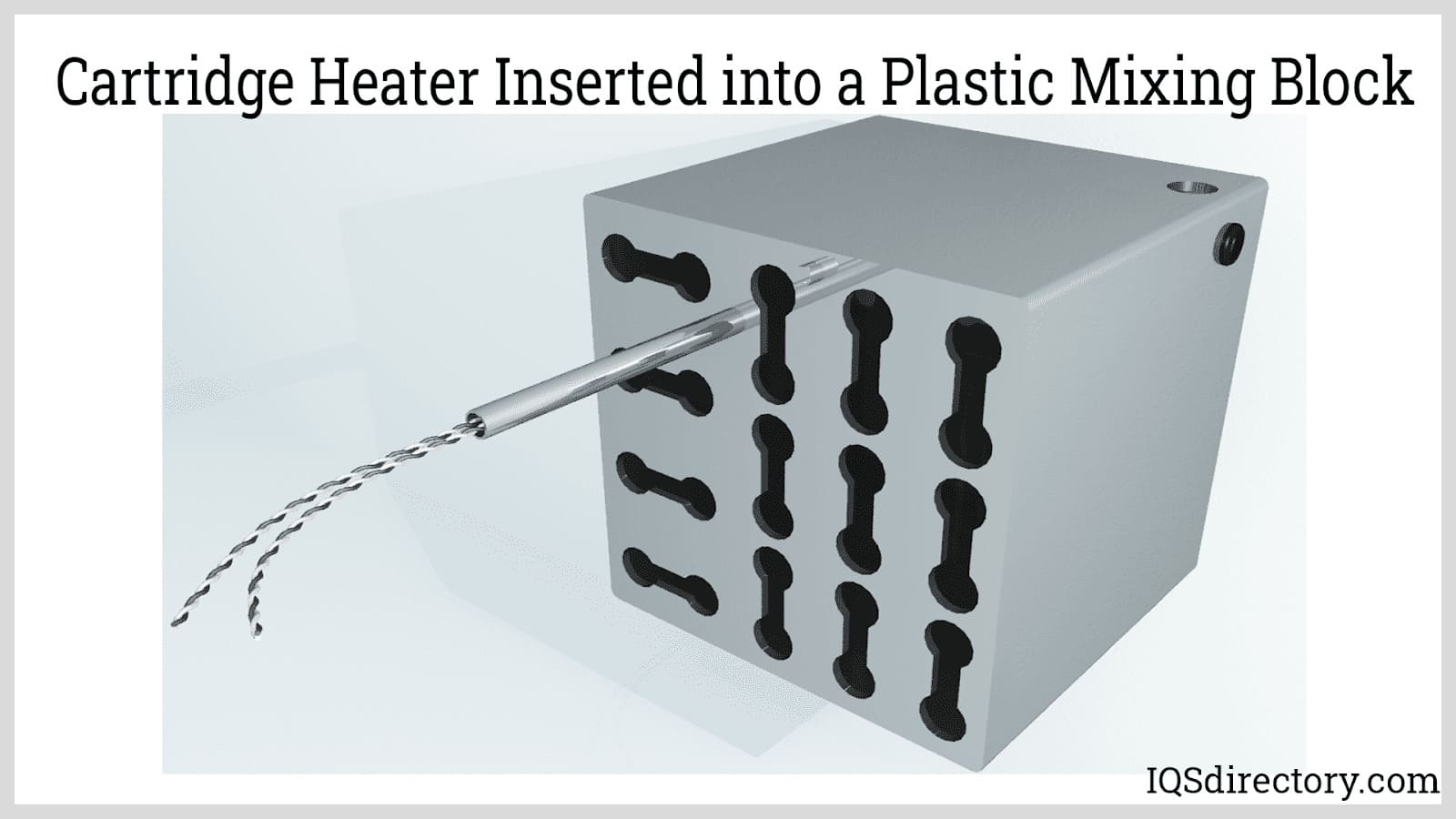
The image below illustrates a plastic mixing block with a dedicated insertion port designed for a ten-inch cartridge heater with a five-inch heated section—highlighting how strategic placement impacts process heating efficiency.
Cartridge Heater Diameter
Matching cartridge heater diameter to the correct hole size is essential for optimal heat transfer and efficient, safe operation. As a general rule, the heater’s outer diameter should measure 0.004 inches less than the hole's diameter for a snug press fit that allows for thermal expansion during operation. This careful tolerancing prevents excessive air gaps—which can lead to overheating and uneven temperature distribution—and minimizes the risk of bore seizure or heater damage. Refer to the chart below for standard imperial and metric diameter specifications and tolerances to help you select the right heater for your application.
| Hole Diameter | Actual Maximum Diameter | Actual Minimum Diameter | Hole Diameter | Actual Maximum Diameter | Actual Minimum Diameter |
|---|---|---|---|---|---|
| Imperial | Metric | ||||
| 0.125" | 0.124" | 0.120" | 6 mm | 5.97 mm | 5.87 mm |
| 0.16" | 0.155" | 0.152" | 6.5 mm | 6.48 mm | 6.38 mm |
| 0.19" | 0.186" | 0.183" | 8 mm | 7.98 mm | 7.85 mm |
| 0.25" | 0.249" | 0.244" | 10 mm | 9.96 mm | 9.85 mm |
| 0.31" | 0.312" | 0.308" | 12 mm | 11.96 mm | 11.86 mm |
| 0.38" | 0.374" | 0.369" | 12.5 mm | 12.47 mm | 12.34 mm |
| 0.5" | 0.499" | 0.494" | 13 mm | 12.98 mm | 12.85 mm |
| 0.625" | 0.624" | 0.619" | 15 mm | 14.99 mm | 14.86 mm |
| 0.75" | 0.749" | 0.741" | 16 mm | 15.95 mm | 15.82 mm |
| 0.94" | 0.936" | 0.928" | 17.5 mm | 17.47 mm | 17.27 mm |
| 1" | 0.999" | 0.991" | 20 mm | 19.96 mm | 19.76 mm |
| 1.25" | 1.249" | 1.241" | - | - | - |
| 1.9" | 1.910" | 1.890" | - | - | - |
| 2.38" | 2.385" | 2.365" | - | - | - |
Heated Length
The heated length of a cartridge heater refers to the section of the heater that actively emits heat. It is calculated by subtracting unheated (cold) sections at each end from the total length of the heater. Choosing the optimal heated length ensures uniform heating throughout the workpiece and minimizes the risk of overheating or localized hotspots. For high-density, custom, or swaged cartridge heaters, standard unheated sections are typically 10 mm at the lead end and 6 mm at the disc end. For instance, a 152 mm (6 in) cartridge heater will have an effective heated section of 136.5 mm, maximizing energy efficiency and longevity.
Many engineers specify cartridge heater heated lengths to match the exact heating zone required, allowing for precise process control in applications such as hot runner systems or packaging seal bars. Selecting the correct heated length is especially important in assemblies with tight temperature tolerances or sensitive materials.

Temperature
The optimal operating temperature of a cartridge heater depends on several process variables, including application type, material thermal conductivity, watt density, and the fit between the heater and the hole. High-temperature applications, such as mold heating or industrial ovens, may require specialized designs with high-temperature electrical terminals and leads that remain below their rated maximum to ensure safety and compliance. For low-temperature or sensitive applications, choosing low-watt density heaters and tight bore tolerances minimizes heat loss and ensures product quality.
Watt density, a crucial factor in temperature management, is defined as watts per square inch of the cartridge heater’s active surface area. Maintaining proper watt density prevents premature heater failure, inhibits thermal degradation of workpiece materials, and enhances overall installation safety and reliability. Applications with variable or high thermal loads should always factor in the impact of watt density, thermal insulation, and sheath material when specifying heaters.
Cartridge Heater Protection
Contamination
Cartridge heater reliability often depends on environmental protection. Keep leads and heater ends clean and free from contaminants such as water, oil, plastic residues, or metal shavings. Exposure to moisture can cause internal shorts, arcing, or corrosion. When contamination occurs, remove moisture by baking the heater in a warm oven before use. For harsh or wet applications, specify moisture-resistant or sealed terminal designs.
Over Temperature
A properly fitted cartridge heater minimizes the risk of overheating and thermal runaway. Loose fits can impede efficient heat transfer, allowing the heater to reach temperatures above its rated maximum and ultimately causing burnouts. Always seat the heater flush with the bore, keep leads exposed outside the heated zone, and ensure the heated length is enveloped by the workpiece for uniform thermal distribution.
Over Cycle
Excessive power cycling, often caused by imprecise controls, can accelerate heater wear. Operating a cartridge heater at about 80% duty cycle is ideal, minimizing the oxidation and fatigue that repeated on-off switching can cause to the internal resistance wire. For high-frequency processes, specify industrial-grade heaters and advanced control systems for maximum lifecycle and uptime.
Bore Seizure
Bore seizure occurs when a cartridge heater expands within the hole and becomes stuck or difficult to remove, often due to improper fit or repeated thermal cycling. For easy maintenance and replacement, drill bores to manufacturer-recommended tolerances and use anti-seize coatings or sleeves for high-temperature installations.
Hole Insertion
Do not fully enclose the cartridge heater within the bore; always keep leads accessible outside the hole for safe wiring and heat dissipation. Proper insertion depth is critical to prevent unheated sections from overheating or causing insulation breakdown. The inserted length should match the heated zone length, leaving no gap at the distal end for optimal energy transfer.

Watt Density
Cartridge heater longevity correlates directly with watt density regulation. Avoid operating heaters at maximum watt density for extended periods. Lower watt densities distribute heat more evenly, reduce risk of surface overheating, and considerably extend the heater’s operational life—especially for continuous processing or high-temperature industrial heating applications.
Inserted Cartridge Heater
The following image demonstrates the insertion of a multi-zone, or zoned cartridge heater, into a nine-zone heating plate. Multi-zone heaters are critical for advanced process control, allowing independent temperature management in each zone—a necessity in injection mold plates, die-casting tools, and high-precision manufacturing. These specialized heaters enable industries to achieve consistent part quality, reduced scrap, and enhanced productivity.

Cartridge Heater Control Systems
Comprehensive power and temperature control is essential for maximizing cartridge heater efficiency and service life. Simple on-off switches may suffice in basic applications but typically result in significant temperature fluctuations and shortened heater lifespan. In contrast, solid-state relays and thyristor power controllers deliver smooth, accurate power adjustments, reducing thermal cycling and improving process consistency.
A range of temperature control and monitoring technologies can be paired with cartridge heaters to meet industry requirements. Thermocouples, RTDs (Resistance Temperature Detectors), and thermistors offer precise temperature measurement and are commonly equipped with adhesive or clamp mounting for rapid installation on heater surfaces. Advanced digital temperature controllers support multiple input types—such as thermocouple and RTD signals—and provide DC pulse or analog voltage outputs for proportional control of the heating element.
For critical applications, integrating programmable logic controllers (PLCs), PID controllers, and over-temperature alarms with your cartridge heater system ensures process reliability and prevents production downtime. These systems can optimize heater cycling, maintain tight temperature tolerances, and provide data logging for quality assurance or traceability in regulated industries.
Investing in a properly engineered cartridge heater control system is the key to achieving energy efficiency, process stability, and longer heater lifespan. Modern power controllers, precise temperature sensors, and integrated safety features together create an intelligent heating solution for manufacturing, food processing, plastics, packaging, and laboratory testing environments.

What Are the Different Types of Cartridge Heaters?
Cartridge heaters are an essential industrial heating solution used across a wide range of manufacturing, processing, and commercial applications. They vary in several critical aspects, including maximum operating temperature, heating element type, watt density, application specificity, heated length, overall length, tube diameter, and sheath material. These factors directly impact the selection process, performance, and cost-effectiveness of the cartridge heater for each unique application. Understanding these variables allows engineers and procurement specialists to choose the optimal cartridge heater for improving energy efficiency, process reliability, and product quality.
While the basic construction of cartridge heaters—including wiring, ceramic core, metallic sheath, and end cap—is generally consistent, the choice of metals, wire gauges, and core materials can differ based on specific operating environments and performance requirements. High-quality cartridge heaters often use stainless steel or Incoloy® for corrosion resistance, and advanced resistance wire alloys (such as Nichrome) for extended service life. The reliability, durability, and heat transfer capabilities of a cartridge heater are profoundly affected by the precision of the manufacturing process and the quality of materials used, especially in demanding environments like plastics processing, packaging machinery, or mold heating.
Types of Cartridge Heaters
The modern industrial market offers a variety of cartridge heater types engineered for application-specific advantages. Selecting the correct cartridge heater design—whether for high-temperature performance, precise thermal control, compact form factor, or specialized mounting—ensures consistent results and operational safety. Below is a detailed overview of the most commonly utilized cartridge heater types, each tailored to specific industry needs and engineering criteria.
Thermocouple Cartridge Heaters
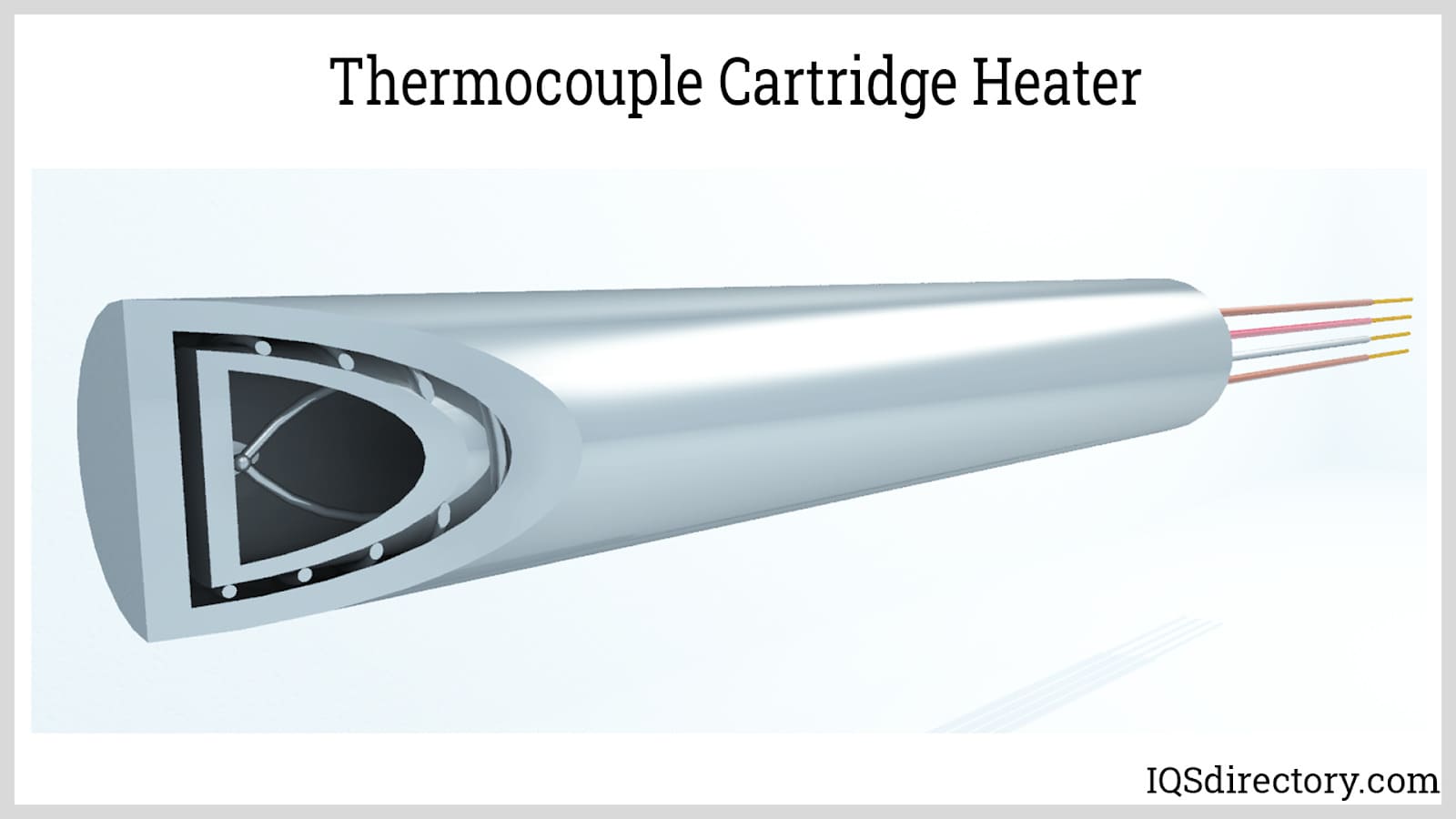
Cartridge heaters equipped with an integrated thermocouple function as both a heating element and a temperature sensor, providing precise thermal regulation in real-time. The internal thermocouple, often type J or type K, measures the sheath temperature of the heater and can relay a 4 to 20 mA signal to the distributed control system (DCS) when the desired setpoint is reached or exceeded. This built-in thermal feedback loop is vital for applications where temperature control, safety, and process repeatability are paramount—such as in plastic injection molding, semiconductor equipment, and packaging lines.
The primary advantage of these heaters is overtemperature protection and accurate heat management. The power and sensor leads of the thermocouple are positioned outside the sheath to isolate measurement signals from power circuitry, minimizing electromagnetic interference. Several variations of thermocouple-equipped cartridge heaters are produced, each tailored for different sensor locations (middle, tip, or distributed along the length) depending on the thermal profile required by the heating application. Integrating a built-in thermocouple reduces wiring complexity and ensures continuous feedback for automated process control systems.
Flanged Cartridge Heaters
Flanged cartridge heaters incorporate a robust flange, permanently attached to the exterior end of the heating element. This structural feature provides a secure, vibration-resistant method for mounting the heater to flat surfaces, plates, or machinery components. The flange ensures optimal alignment and heat distribution, reducing installation time and simplifying maintenance procedures. Common uses include dies, platens, and process tanks where reliability and a tight seal are required—critical in industries like food processing, chemical manufacturing, and OEM equipment.

Swaged Cartridge Heaters
The swaging process, unique to swaged cartridge heaters, involves compacting all internal components—resistance wire, ceramic core, and high-purity magnesium oxide (MgO) insulation—under high pressure. This mechanical compression reduces the heater’s diameter, eliminates air gaps, and maximizes the density and thermal conductivity of the assembly. The result is superior heat transfer, higher watt density, and increased dielectric strength. Swaged heaters are essential in applications with tight bores or demanding environments, because they can withstand frequent thermal cycling and resist vibration-induced damage. Miniature, high-density, and high-temperature cartridge heaters frequently employ this construction method for enhanced performance and safety.
Premium swaged cartridge heaters utilize high-grade magnesium oxide, an exceptional insulator that prevents electrical shock while allowing efficient thermal transmission through the sheath, making them ideal for safety-critical and high-output applications.

Miniature Cartridge Heaters
Miniature cartridge heaters, often called micro or microtubular cartridge heaters, are engineered for localized heating where space constraints and precision are top priorities. Typically less than three inches in length and with compact diameters (3.175 mm, 3.97 mm, or 4.76 mm), these heaters are constructed from corrosion-resistant stainless steel (grades 304 and 316) for hygiene-sensitive or corrosive environments. Their small footprint and swift response time make them indispensable for medical device manufacturing, lab instrumentation, and electronic assembly processes.
Most miniature heaters are swaged to reinforce durability, elevate dielectric strength, and guarantee vibration resistance, reducing the risk of premature failure in automated or portable devices.

Multizone Cartridge Heaters
Multizone cartridge heaters feature multiple independently controlled heating zones within a single sheath, each with its own coiled resistance element and set of power leads. Some installations utilize a common wire for shared connections, optimizing wiring simplicity. The chief benefit of multi-zone cartridge heaters is their ability to generate tailored temperature gradients or isolate heat to only active process areas—crucial for molds, platens, and applications requiring variable thermal distribution.
This design gives users enhanced process flexibility, energy efficiency, and precise thermal profiling—essential for advanced molding, laminating, and custom packaging equipment.

Square Cartridge Heaters
Square cartridge heaters, sometimes called slot heaters or rectangular cartridge heaters, offer all the high-performance characteristics of round models but are specifically shaped for slotted grooves or milled slots. Their square or rectangular cross-section enables secure mechanical clamping for direct surface contact—often in hot runner systems, die blocks, or form tooling—maximizing surface area engagement and uniform heat transfer. This distinctive shape also facilitates expedited removal and simplified maintenance routines, reducing downtimes during tool changeover or cleaning.

Threaded Fittings
Cartridge heaters with threaded fittings feature machined threads designed for secure, leak-resistant integration into process assemblies. These fittings simplify both installation and removal, especially in applications requiring routine heater service or repositioning. Added moisture seals (such as silicone boots or PTFE gaskets) deliver additional ingress protection against fluids—making threaded cartridge heaters especially valuable in humid, washdown, or outdoor environments where environmental sealing and rapid changeover are essential for operational reliability.

Split Sheath Cartridge Heaters
Split sheath cartridge heaters are specially designed for enhanced bore contact and easier removal. Their unique expandable sheath structure allows the heater to expand outward when energized, tightly engaging bore walls for optimized heat transfer and thermal uniformity. Instead of a traditional ceramic core, these heaters employ densely packed magnesium oxide (MgO) insulation around the resistance coil, maximizing dielectric strength and safe operation at high temperatures. Split sheath cartridge heaters are ideal for applications subject to frequent maintenance requirements, as their design minimizes risk of bore seizure and reduces installation/removal labor time—crucial for core box heating and large die assemblies.

High Density Cartridge Heaters
High density cartridge heaters are engineered for the highest watt densities, delivering concentrated heating power and exceptionally even thermal distribution across the casing. Manufactured to handle punishing process environments, they offer superior resilience against vibration, thermal expansion, and demanding duty cycles. Standard construction utilizes a durable ceramic core and precisely wound resistance coils within a compact sheath—often allowing multiple power zones for greater process control. High watt density heaters are the premier choice for plastics machinery, packaging equipment, and any application where fast heat-up rates, reliability, and operational longevity are top priorities.
High Temperature Cartridge Heaters
High temperature cartridge heaters are meticulously designed for industrial heating applications where process temperatures range from 1400°F (760°C) up to 1600°F (870°C). Commonly manufactured using high-temperature stainless steel, Incoloy®, or other advanced alloys, these heaters are often swaged to enable superior heat transfer, maximize reliability, and resist vibration or shock. Typical use cases include hot stamping, heat staking, sealing bars, forming tools, heating platens, and die blocks. High-temp cartridge heaters support demanding manufacturing operations—delivering uniform thermal energy in challenging and high-output environments.

Cartridge Heater Selection Tips:
- Assess Application Requirements: Evaluate required voltage, watt density, target temperature, and environmental factors (such as moisture or chemical exposure).
- Choose the Right Sheath Material: Stainless steel and Incoloy® are best for corrosive or high-temperature applications.
- Factor in Control Needs: Integrated thermocouples or multi-zone systems provide advanced temperature management for complex processes.
- Optimize for Fit and Mounting: Select appropriate diameter, heated length, and mounting method (flange, thread, split sheath, or square) to ensure safe and efficient installation.
- Consider Manufacturer Customization: Many industrial cartridge heater suppliers offer custom designs for unique challenges, such as rapid heat-up, small bores, or challenging geometries. For reliable results, request technical consultation to tailor the solution to your specific needs.
When evaluating and purchasing cartridge heaters, consider life expectancy, energy efficiency, precise thermal control, ease of installation/removal, and the availability of industry certifications (such as UL, CSA, or CE marks). A thorough understanding of cartridge heater types and engineering variables empowers buyers and engineers to maximize process productivity, minimize downtime, and ensure safe, cost-effective operation across a spectrum of industrial heating applications.
Frequently Asked Questions
What Is a Cartridge Heater and How Does It Differ from an Immersion Heater?
A cartridge heater is a cylindrical heating element inserted into a pre-drilled hole, providing precise internal heat to solid objects. Unlike immersion heaters, which heat liquids, cartridge heaters target localized heating within metal blocks, molds, or machinery components.
How Do You Ensure Optimal Heat Transfer and Prevent Bore Seizure with Cartridge Heaters?
Optimal heat transfer is achieved by selecting a heater diameter 0.004 inches smaller than the hole diameter for a snug fit. This minimizes air gaps and overheating while reducing the risk of bore seizure during thermal expansion cycles.
What Are the Main Types of Cartridge Heaters for Industrial Applications?
Key types include thermocouple cartridge heaters, flanged, swaged, miniature, multizone, square, threaded fittings, split sheath, high density, and high temperature cartridge heaters. Each type addresses unique industrial needs such as thermal control, mounting, or specialized temperature requirements.
How Does Watt Density Impact Cartridge Heater Life and Performance?
Watt density, defined as watts per square inch of heater surface, affects longevity and reliability. Lower watt densities ensure even heating, prevent surface overheating, and significantly extend cartridge heater life—especially in high-temperature or continuous use conditions.
What Should Be Considered When Specifying Cartridge Heaters for Manufacturing in Environments Like Food Processing or Plastics?
Selection should consider sheath material (such as stainless steel for corrosion resistance), watt density, required voltage, fit, heated length, mounting style, and control systems. Customization may be necessary for demanding or regulated industrial environments.
How Are Cartridge Heaters Protected from Environmental Contamination and Over-Temperature?
Protection involves keeping leads and heater surfaces clean, using moisture-resistant or sealed terminals, ensuring proper fit, and employing advanced control systems to prevent over-temperature and minimize oxidation or fatigue.
What Are the Uses for Cartridge Heaters?
The primary function of a cartridge heater is to provide localized heat for various manufacturing processes. They are engineered for optimal performance, delivering heat precisely and efficiently.
The effectiveness of a cartridge heater hinges on its dielectric strength, heat transfer to the sheath, and heat transfer from the sheath to the metal being heated. Dielectric strength is measured by the heater's ability to maintain electrical insulation and prevent current leakage within the coil.
Uses for Cartridge Heaters
Die Casting
The die casting process involves injecting molten metal into an open or closed die to create various shapes and forms. A critical aspect of this process is monitoring and controlling the metal’s temperature. Cartridge heaters are installed in holes within the die to precisely regulate the temperature of the molten metal. This careful control ensures the quality and consistency of the final casting.
Mold Process
The molding process shares similarities with the die casting process but differs in materials and techniques. As with dies, it is crucial to monitor the solidification temperature of the heated metal closely. Cartridge heaters are inserted into the mold to help regulate this temperature. During solidification, the cartridge heater maintains a consistent heat, preventing weaknesses and unevenness in the molded part.
In injection molding, cartridge heaters provide precise temperature control, enhancing the process's efficiency. Their effective heat transfer capabilities ensure that the desired temperature is reached quickly, minimizing time and energy waste.

Food Production
Food production requires the same level of accuracy and control as die casting and molding, with the primary focus on ensuring precise food preparation. This is particularly critical in high-volume food production, where maintaining a constant cooking temperature throughout the production run is essential. Cartridge heaters play a crucial role in achieving consistent heat control across all stages of food preparation.
Medical
Precise heat control is crucial in medical treatments to ensure patient safety and the effectiveness of various procedures. Cartridge heaters are used in applications such as regulating the temperature in baby incubators, kidney dialysis machines, and injector ports. They are instrumental in heating aluminum or stainless steel subassemblies, providing exceptional heat transfer and uniform temperature across a range of medical applications.

Engine Block Heater
Engine block heaters are essential for preventing coolant and lubricants from freezing, which can cause severe damage to the engine. At extremely low temperatures, ice formation in the cooling galleries can force core plugs out of the engine block. Expansion plugs, sealing discs, Welch plugs, or core plugs are used during engine casting to seal the holes left in the engine block.
Among the various types of block heaters, cartridge heaters are the most effective and easiest to install. They utilize thermal induction to quickly and efficiently heat the fluids in an engine, preventing freezing and ensuring reliable operation.
Plastic Extrusion
During the extrusion process, it is crucial that molten plastic is evenly heated as it is pushed through the mold by the screw. Cartridge heaters are installed to ensure consistent heat, which is vital for the stability and quality of the extruded products.
Cartridge heaters offer several advantages for extrusion, including rapid heating and a long service life. Like all cartridge heaters, those used in extrusion processes must be customized to fit specific applications and are typically inserted into the die to maintain a constant temperature.

How Cartridge Heaters Are Made?
Although cartridge heaters vary in use and type, their main components remain consistent, though they are adjusted to meet specific heat and size requirements. One key factor that engineers focus on is watt density, which measures the rate of heat transfer through the heater's surface.
Watt density significantly impacts the lifespan of a cartridge heater. Higher watt density results in higher internal temperatures, pushing the heater's components to operate at their maximum allowable limits. Excessive temperatures can reduce the heater’s longevity.
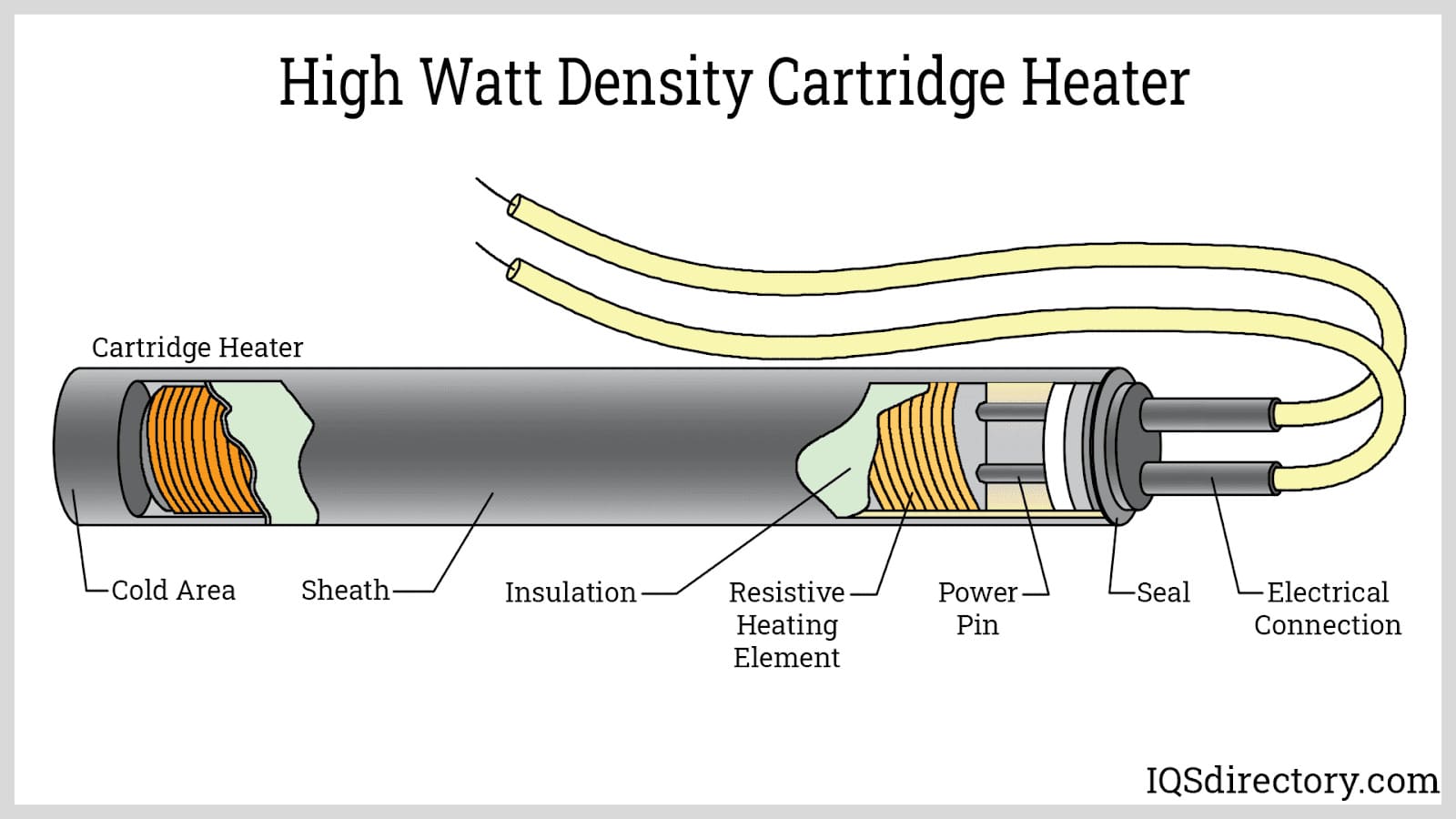
The basic structure of a cartridge heater includes a ceramic core, resistance wire, insulation, a sheath, and lead wires. Manufacturers may arrange these components differently to enhance the heater’s quality and heating performance.
The split sheath type of cartridge heater eliminates the core and features a continuously running wire immersed in insulating material. This design is a recent innovation aimed at addressing specific limitations of traditional cartridge heaters.
Core
Ceramic is a commonly used material for the core, but magnesium is also employed in some cartridge heaters. For heaters that include a core, the resistance wire, typically made of nickel-chromium, is wound around it.
Heating Coil
The heating coil, or resistance wire, is responsible for the electrical load. Various types of resistance wire are available, with nichrome (NiCr), a nickel-chromium alloy, being the most prevalent. Nichrome is widely used in heating elements such as toasters and space heaters. The watt density is determined by the number of wire turns per inch around the core. As current flows through the wire, it heats up and subsequently heats the sheath of the cartridge heater.
Insulation
Insulation, usually magnesium oxide (MgO), is used to prevent the resistance wire from coming into contact with the sheath. If the wire touches the sheath, it can cause grounding, short circuits, and melting of the sheath, leading to heater failure.
During the filling process, the sheath is vibrated to ensure the MgO insulation is tightly packed. Further packing and tightening occur when the cartridge heater is swaged.
Sheath
The sheath serves two main functions: it houses the cartridge heater's internal elements and transfers heat to the material being heated. It remains in constant contact with the material to ensure efficient heat transfer.
Sheaths are typically made from alloyed metals, including stainless steels 304 and 316, and Incoloy 800. For specific applications, the sheath can be designed to resist acid and corrosion.
The chart below lists some common metals used for sheaths, with nichrome and Incoloy being among the most frequently used.
| Metal | Sheath Characteristics and Color |
|---|---|
| Aluminum | Silver White, Malleable, Duct, Light Weight With Good Electrical, Thermal Conductivity, and Oxidation Resistant. |
| Brass | Excellent Strength, High Temperature Resistance, Electrical Conductivity, Corrosion Resistance, and Low Magnetic Permeability. |
| Copper | Reddish, Ductile, Malleable, Heat Conductivity, and Electricity Conductivity. |
| Iron | Heat and Electricity Conductivity and Strongly Magnetic. Usually Combined with Other Metals. |
| Nickel Alloys | Most Common of the Sheath Materials. Corrosion Resistant and has Exceptional Strength. |
| Nichrome | High Thermal Conductivity, High Operating Temperature, Corrosion Resistant, Oxidation Resistant. |
| Stainless Steel | Chemical and Corrosion Resistant With A High Pressure Rating. |
| Steel | Malleable, Ductile, Exceptional Tensile Strength, Conductive, and Durable. |
Sealing
The sealing process is essential for containing and securing the contents of the cartridge heater. It is completed once the MgO insulation has been tightly packed around the coil and core. Epoxy is a commonly used sealing material, as it ensures the heater can pass various electrical tests, maintains dielectric strength, and prevents electrical shorts.
Termination
Termination types vary widely depending on the cartridge heater type and manufacturer. As shown in the diagram below, leads can exit the cartridge heater in several configurations, with straight leads being the standard method. In applications where leads might be exposed to harsh chemicals or extreme temperatures, they are often shielded with metal or silicone for added protection.

Lead Wire
The types and specifications of lead wires vary based on the conditions in which the cartridge heater will be used. The lead wire provides the crucial electrical connection for the heater. Since it is vital for the heater's efficient operation, it is carefully chosen to suit the specific application and conditions. For high-temperature applications, fiberglass-insulated wire is commonly used. The chart below offers an overview of different cartridge lead wires, including their temperature ratings and characteristics.
| Type Wire | Rating | Qualities |
|---|---|---|
| Durable | 1022°F / 550°C | Flexible Not Waterproof |
| TGGT | 482°F / 250°C | Durable Not Waterproof |
| Teflon | 482°F / 250°C | Abrasion Resistance, Waterproof Small OD |
| Silicon Rubber | 302°F / 150°C | Flexible, Waterproof Easily Marked |
| Braided Silicon Rubber | 392°F / 200°C | Flexible, Waterproof Abrasion |
Anti-Seize Coating
Cartridge heater seizing can significantly disrupt production and efficiency. When a heater seizes, it becomes stuck in the application and must be removed by drilling, leading to substantial delays.
To address this issue, split sheath cartridge heaters were developed. These heaters expand within the hole to ensure proper contact with the material being heated. As the heater cools, it contracts and can be easily removed.
Another method to prevent seizing involves using an anti-seize coating applied during the insertion of the cartridge heater. This coating, which is high-temperature, insulating, and thermally conductive, reduces oxidation and enhances heat transfer. It can be brushed or sprayed on to form a thin layer, facilitating easier insertion of the heater into the hole.
Completed Cartridge Heater
The diagram below illustrates the various components and parts of a completed cartridge heater.

What Are the Benefits of Cartridge Heaters?
Cartridge heaters are crucial for industrial processes that demand localized heating. Their popularity stems from their efficiency, precision, responsiveness, and reliability in providing heat.
These heaters are remarkably durable and can operate effectively under the harshest conditions. They can be customized and designed to suit a wide range of industrial heating applications, from warming molten plastic to maintaining the temperature of metal molds.
The Benefits of Cartridge Heaters
Flexibility
The diverse sizes, types, configurations, and adaptations of cartridge heaters make them an ideal solution for delivering directed heat. They are versatile enough to fit any application that requires a concentrated heat source, ensuring precise heat transfer to the desired focal point.
Cartridge heaters also play a crucial role in regulating the temperature of devices and components that are sensitive to condensation, such as control panels and closed circuits. In the packaging process, they ensure the consistent flow of glue, contributing to a smooth and efficient operation.
Heavy Duty
Manufacturing processes often require equipment that can withstand harsh conditions. Cartridge heaters are designed to meet these demands, being durable and robust enough to handle heavy impacts and high pressures. They are built to perform reliably in tough environments, making them a top choice for effective heat transfer.
Accuracy
Many industrial applications demand precise and controlled heat to meet specific requirements. Cartridge heaters excel in this area, providing highly focused and controllable heat to ensure the quality and performance of produced parts and components. Their advanced engineering enables them to deliver accurate temperature control in production settings.
Economical
Cartridge heaters offer a cost-effective solution for heat transfer in manufacturing. They are energy-efficient, require minimal maintenance, and deliver excellent performance. Additionally, they have a minimal environmental impact, making them a sustainable choice for modern manufacturing processes.
Over Heating
Overheating is a critical concern in heating processes, as it can damage both the final products and the heating equipment. Cartridge heaters are equipped with temperature sensing capabilities to prevent overheating, reducing the need for constant monitoring. They provide focused, controlled, and localized heat efficiently and automatically.
The built-in temperature sensing features enhance the efficiency of the heat transfer process and extend the heater's lifespan.
Compact Design
Cartridge heaters are notable for delivering significant heat from a compact design. This efficiency has made them widely used across various industries. With a minimal investment, manufacturers can achieve concentrated heating and improved process performance, making cartridge heaters a valuable addition to production operations.
Conclusion
- A cartridge heater is a cylindrical tubular heating device that provides concise and precise heating for various forms of materials, machinery, and equipment.
- A common function for cartridge heaters is to heat metal blocks from the inside at a predetermined wattage to meet the needs of an application.
- The variations in cartridge heaters include maximum temperature, watt density, type of applications, heated length, overall length of the heater, tube diameter, and the type of heating element.
- An important factor that cartridge heater engineers are most aware of is watt density, which is the rate of heat being transferred through the surface of the heater.
- Cartridge heaters have become an essential part of industrial processes that require localized heating. The popularity of cartridge heaters is due to their ability to provide efficient, precise, responsive, and dependable heat.