
Power Cords: Standards, Terminology & Coupler Guide
Contents (15 sections)
Looking to find and compare power cord manufacturers? See our Power Cords Directory to request free quotes. Connect directly with vetted suppliers for standard NEMA cords, IEC couplers, custom wire harnesses, and heavy-duty line assemblies.
Contact Companies
Please fill out the following form to submit a Request for Quote to any of the following companies listed on
Get Your Company Listed on This Power Page
Introduction
This comprehensive guide explores power cord fundamentals, technical terminology, coupler standards, and safety mechanisms:
- What is a Power Cord?
- Power Cord Terminology (Cords vs. Cables)
- How Do Power Cords Work?
- IEC 60320 Appliance Coupler Standards
- Global Plug Standards & Safety Features
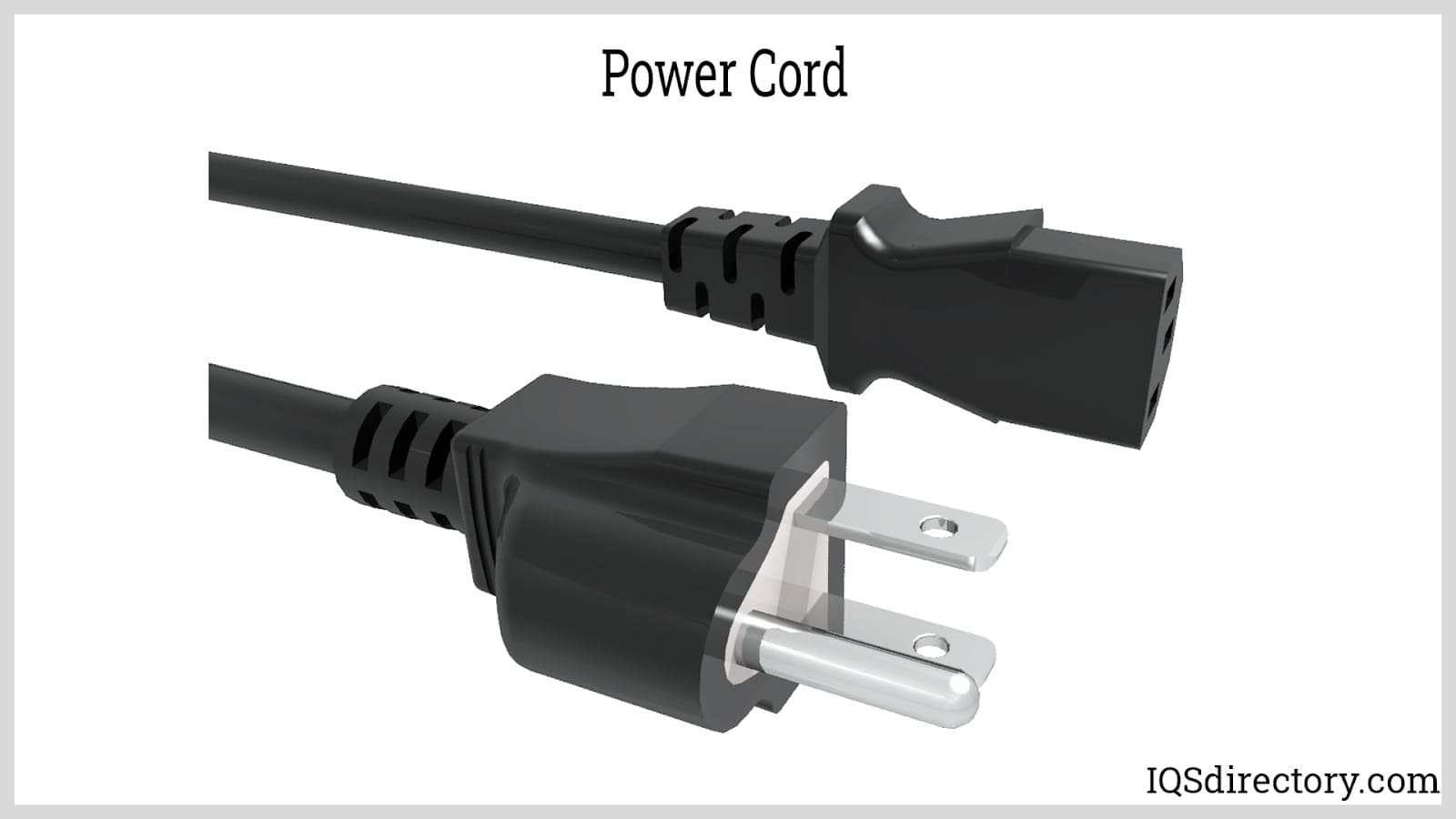
Chapter 1: What Is a Power Cord?
A power cord is a crucial electrical component designed to connect appliances and electronic equipment to a power source or electrical utility. Also referred to as an AC power cord, mains cord, or power supply cord, it consists of insulated copper wire with molded connectors. One end features a male plug that connects to an outlet, wall socket, or extension cord, while the opposite end features a female connector or fixed appliance leads.
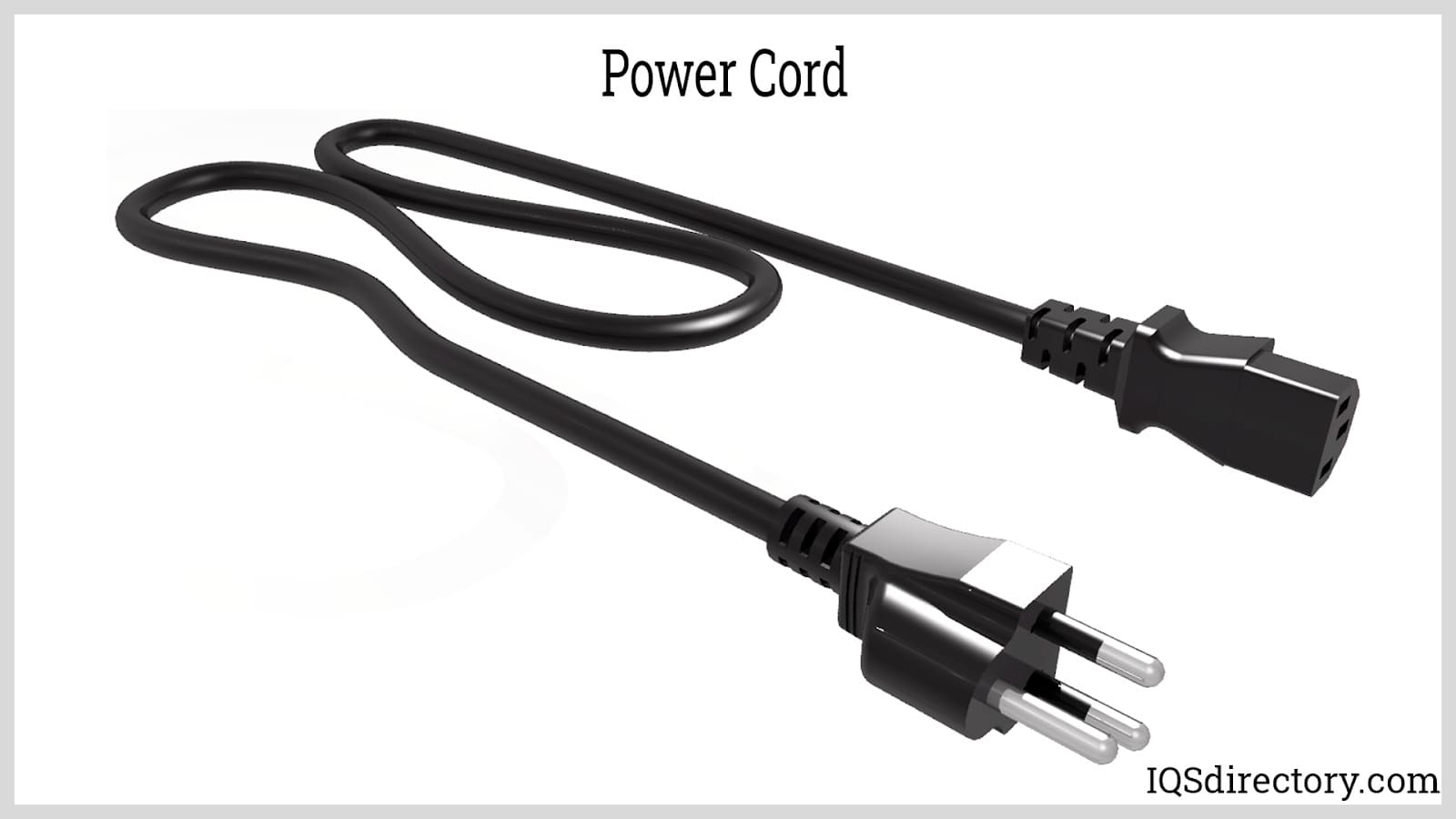
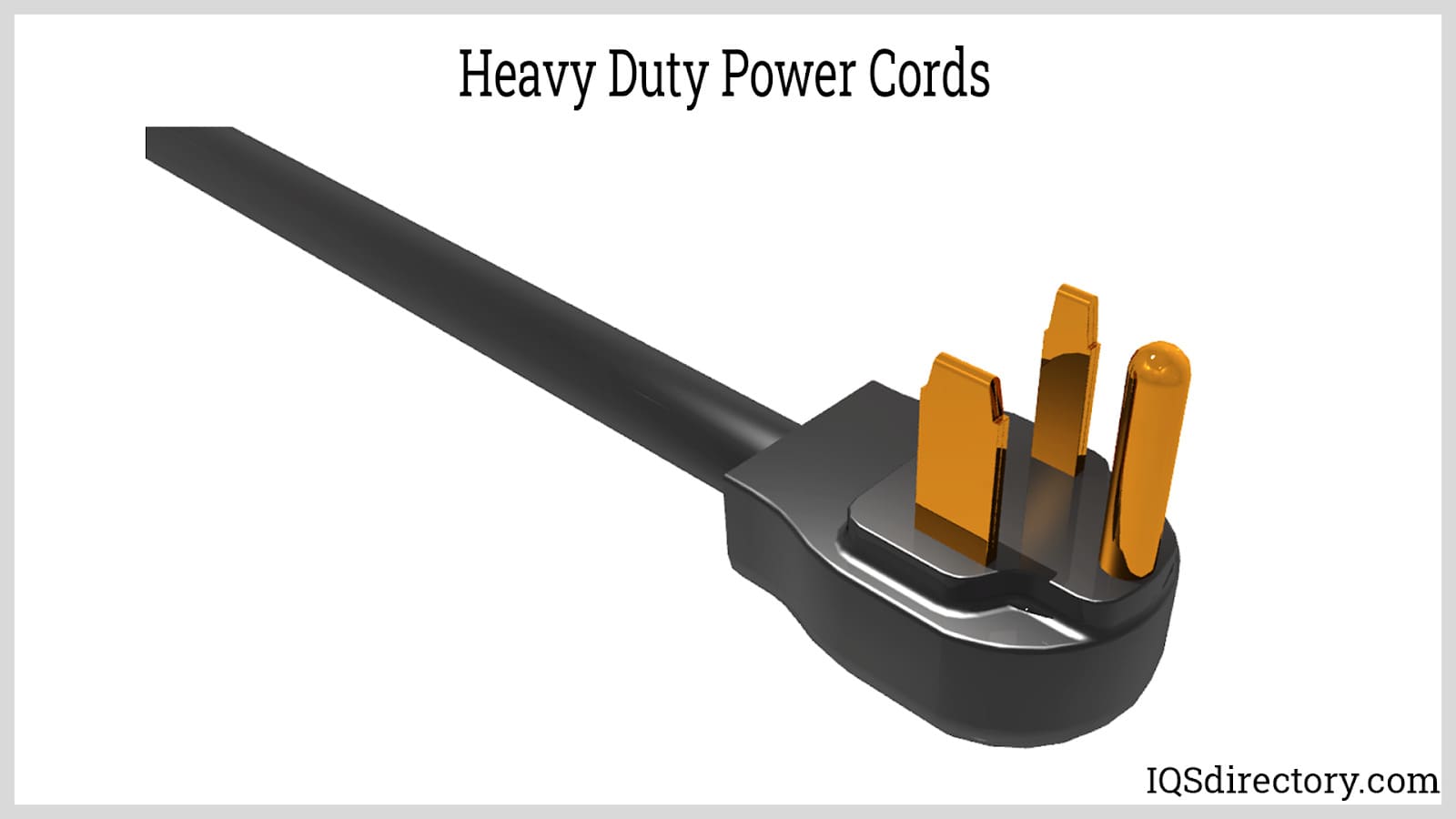
Standard commercial cords handle currents from 16 A to 20 A and voltages from 125 V to 250 V. Heavy-duty industrial cords accommodate larger wire gauges (AWG) for higher amperage machinery.
Chapter 2: Power Cord Terminology
Understanding precise power cord terminology ensures correct product selection, safety compliance, and system compatibility.
Comparison: Power Cord vs. Power Cable
| Characteristic | Power Cord | Power Cable |
|---|---|---|
| Primary Definition | Flexible line assembly with molded end connectors | Broad category of flexible or rigid power conductors |
| Flexibility & Portability | Highly flexible stranded copper conductors | Varies; includes semi-rigid distribution lines |
| Voltage & Current Range | 125V – 250V / Up to 20A (Standard) | Includes high-voltage 600V+ industrial runs |
| Common Applications | Consumer electronics, laptops, appliances, office gear | Industrial feeds, generators, utility grid wiring |
Essential Terminology Glossary
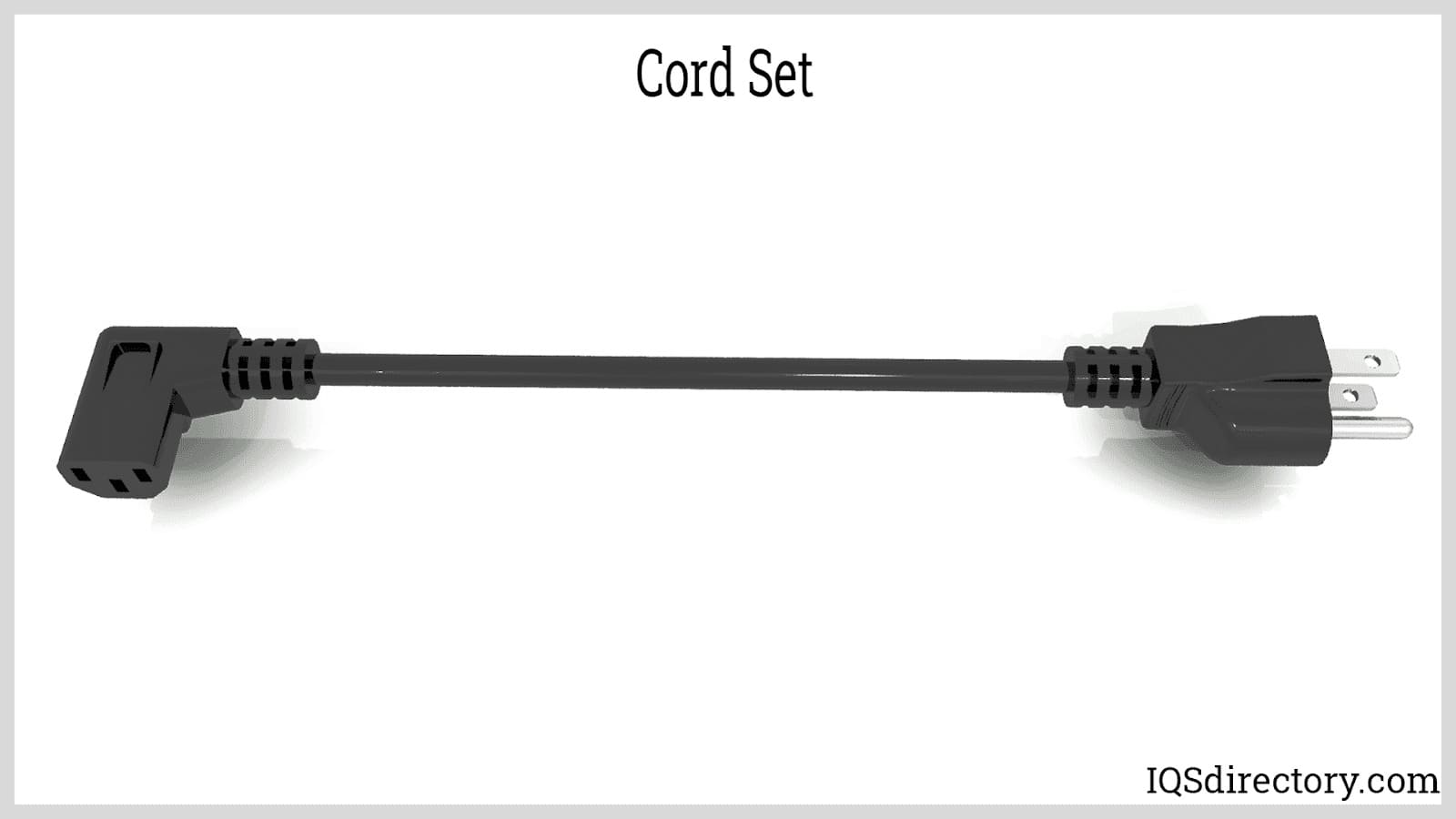
- Cord Set: An assembly consisting of a plug, flexible cable, and connector.
- Interconnection Cord Set: Assembly with male/female couplers linking two appliances directly (e.g., UPS to server).
- AC Power Cords: Cords carrying sinusoidal alternating current from utility mains.
- Custom Power Cords: Tailored line assemblies specified by gauge, shielding, angle plugs, or hospital-grade ratings.
- Generator Cords: Heavy-duty, high-amperage (up to 50A) weather-resistant lines.
- Electrical Plug: Movable male connector inserting into female sockets.
- Plug Adapters: Devices connecting plugs and sockets of differing formats.
Leading Manufacturers and Suppliers

Chapter 3: How Do Power Cords Work?
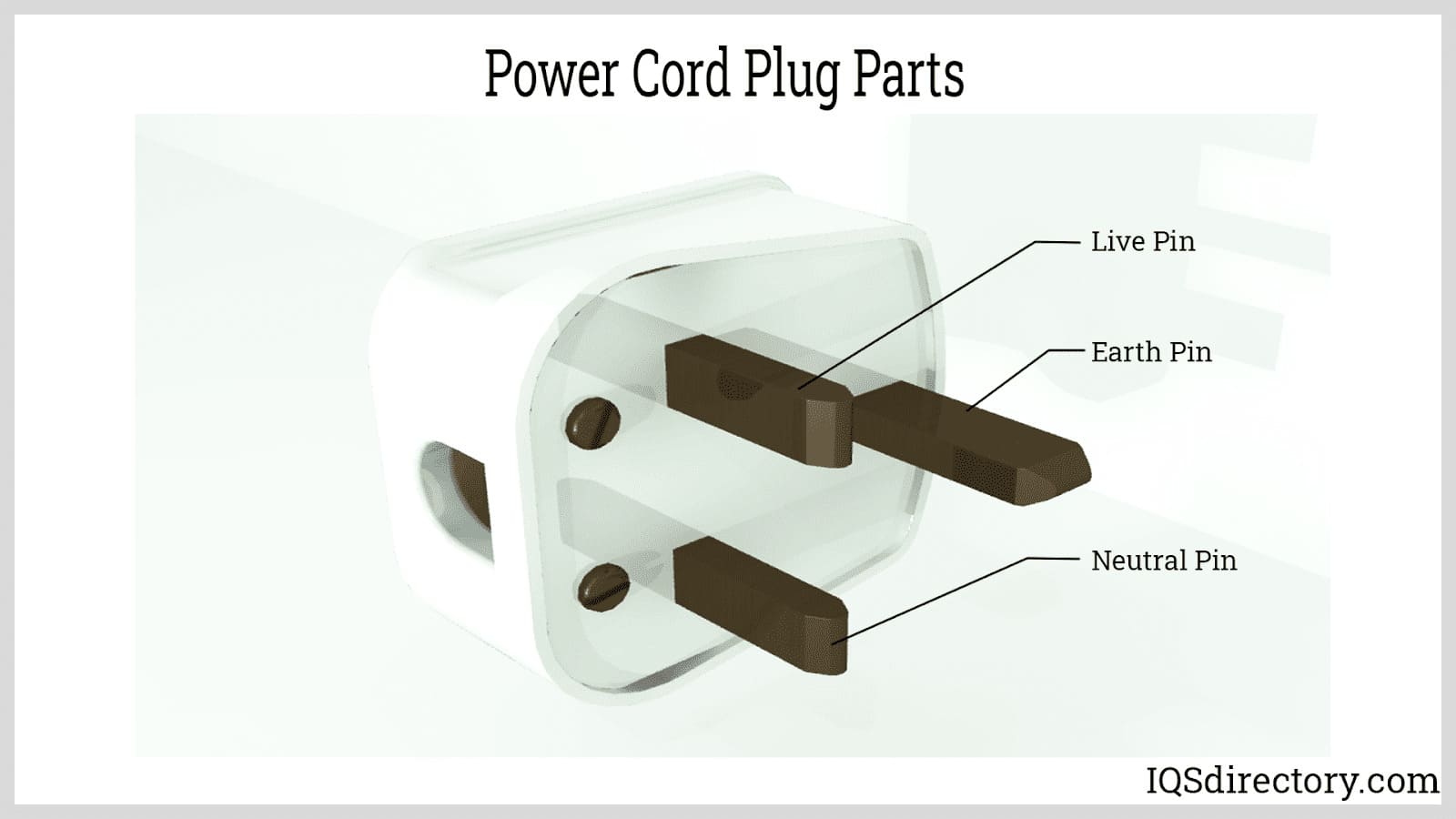
Power cords transmit electrical energy via internal copper conductors surrounded by insulating polymers and outer jacket sheathing. When plugged in, electrons flow through live and neutral wires while a longer earth ground pin connects first to divert potential electrical shock.
Chapter 4: Power Cord Couplers (IEC 60320)
IEC 60320 defines international standards for appliance couplers.
IEC 60320 Appliance Coupler Specifications Summary
| Connector (Female) | Inlet (Male) | Current / Temp. Rating | Earthing & Polarity | Primary Uses |
|---|---|---|---|---|
| C1 | C2 | 0.2A / 70°C | Unpolarized / Ungrounded | Electric shavers, small battery chargers |
| C5 ("Mickey Mouse") | C6 | 2.5A / 70°C | Polarized / Grounded | Laptop power supplies, portable projectors |
| C7 ("Figure-8") | C8 | 2.5A / 70°C | Unpolarized / Ungrounded | Audio/video equipment, radios, game consoles |
| C13 ("Cold Connector") | C14 | 10A (Int) / 15A (US) / 70°C | Polarized / Grounded | Desktop PCs, monitors, printers, PDUs |
| C15 ("Kettle Lead") | C16 | 10A / 120°C (C15A to 155°C) | Polarized / Grounded | Electric kettles, high-temperature server racks |
| C19 | C20 | 16A (Int) / 20A (US) / 70°C | Polarized / Grounded | High-power enterprise servers, UPS units, blade centers |
Frequently Asked Questions
What Is the Primary Difference between a Power Cord and a Power Cable?
Power cords generally refer to flexible, detachable line assemblies with molded connectors used for consumer and commercial appliances. Power cables encompass a broader category, including heavy-duty, fixed, or high-voltage lines used for industrial power transmission.
What Is an IEC 60320 Appliance Coupler?
IEC 60320 is an international standard defining detachable power cord couplers (such as C13/C14, C5/C6, and C19/C20) that safely connect equipment inlets to AC power sources up to 250V.
How Does Wire Gauge (AWG) Affect Power Cord Safety?
Lower AWG numbers represent thicker internal conductors capable of carrying higher electrical currents with less resistance. Selecting the proper AWG prevents excessive heat buildup and voltage drop over extended cable runs.
What Is a Cord Set vs. an Interconnection Cord Set?
A standard cord set connects a wall outlet to an appliance (plug-to-connector). An interconnection cord set features a male plug and female connector designed to link two appliances directly, such as a UPS unit to a computer server.
Why Are Earth Pins Longer Than Live and Neutral Pins on Power Plugs?
The ground or earth pin is designed longer so that it makes electrical contact before the live and neutral pins engage, ensuring the appliance is safely grounded before voltage is applied.
What Are Polarized Power Connections?
Polarized connections use asymmetric pin widths or mechanical keying to ensure live and neutral conductors connect in a specific orientation, preventing reverse current flow and enhancing user safety.
Chapter 5: Power Cord Plugs
Global plugs are classified from Type A through Type O under IEC standards. Type A and B (NEMA 1-15 and 5-15) dominate North America, Type C/E/F (Schuko) cover continental Europe, and Type G (BS 1363) serves the UK.
Conclusion
Power cords provide flexible, safe electrical energy transmission from outlets to devices. Matching correct AWG wire gauges, NEMA plug specifications, and IEC 60320 coupler ratings guarantees system compatibility and electrical code compliance.
Power Cords Suppliers on IQS Directory
- Quail Electronics, Inc.
- Interpower Corporation
- Kord King
- Consolidated Electronic Wire & Cable
- International Configurations, Inc.
View all Power Cords suppliers · Request a quote for Power Cords
Table of Contents
Loading Leading
Category Companies
Related Posts
AC Power Cord
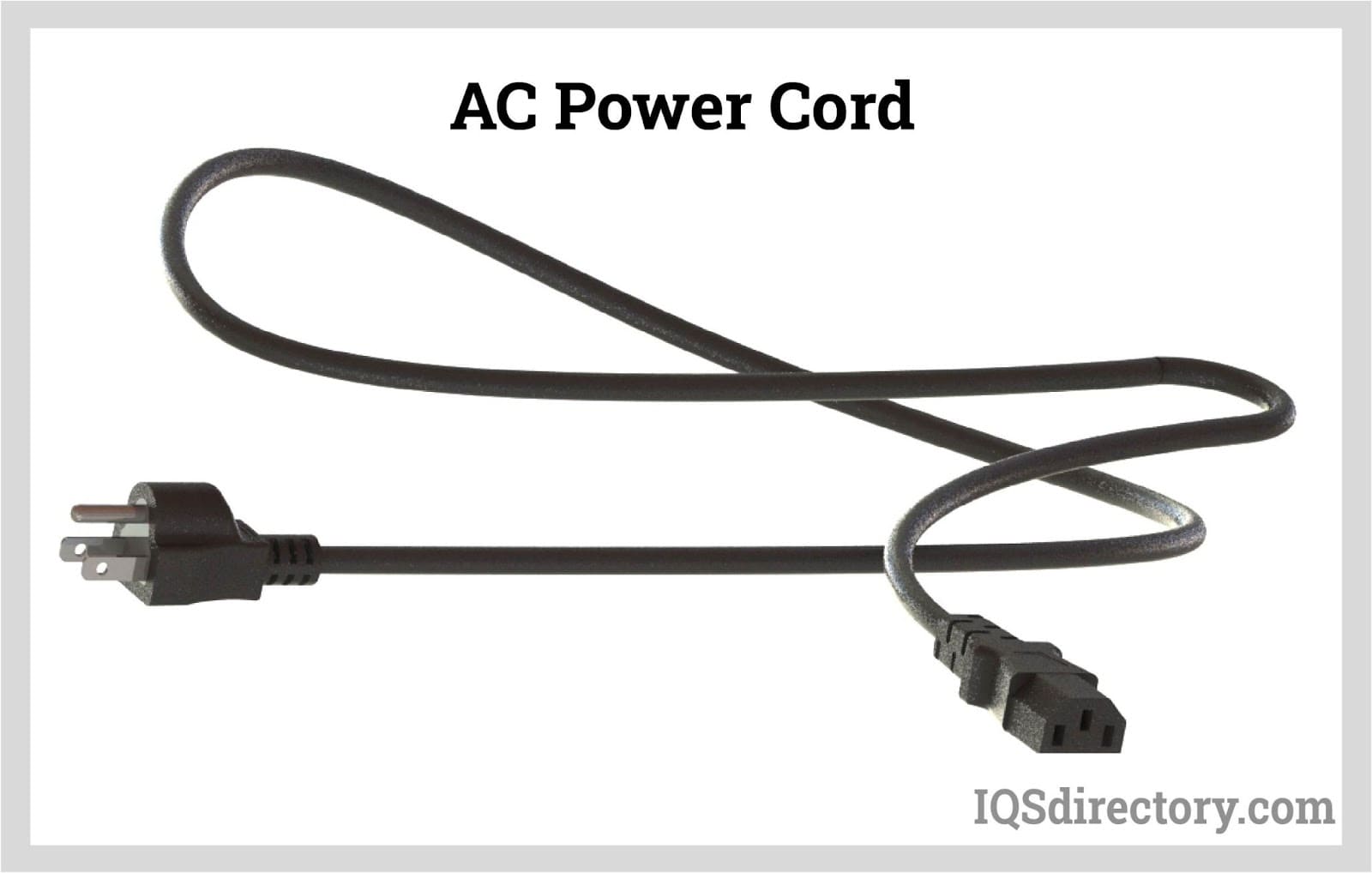
An AC power cord delivers alternating current from a mains supply to electrical equipment...
Electrical Plugs
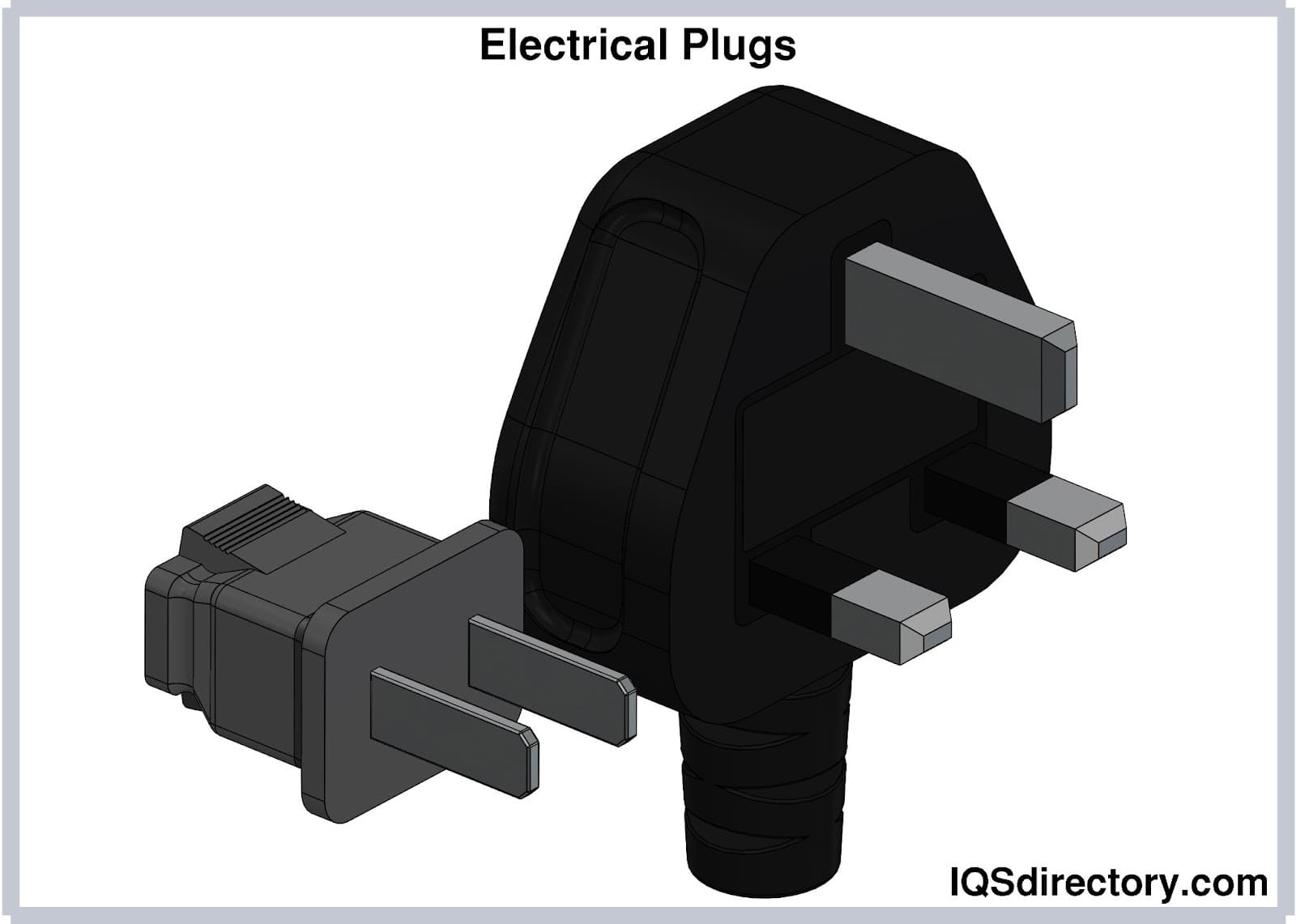
Electrical plugs supply current from receptacles to appliance circuitry...
NEMA Connectors
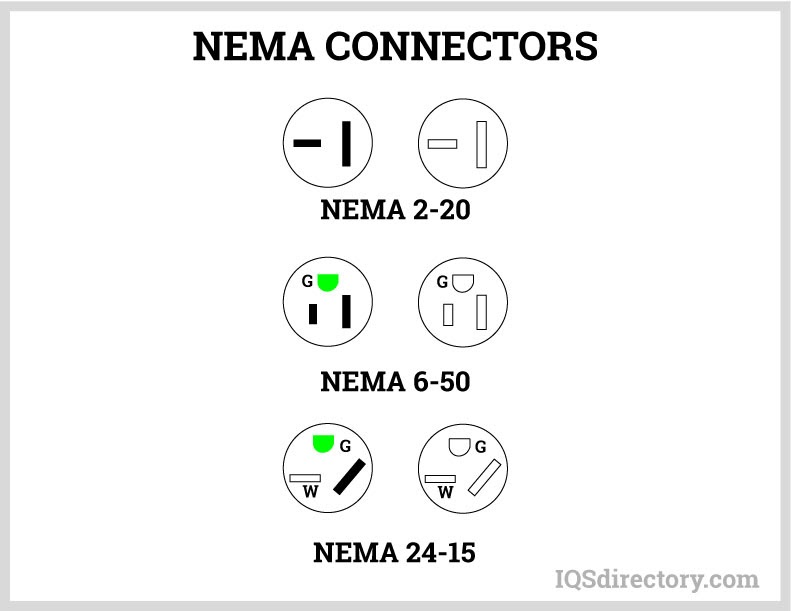
A NEMA connector standardizes connections for electronic devices across outlets...