
AC Power Cords: Types, Conductors & Connector Guide
Contents (13 sections)
Looking to find and compare AC power cord manufacturers? See our Power Cords Directory to request free quotes. Connect directly with vetted suppliers for standard NEMA cords, IEC connectors, hospital-grade cables, and custom molded line assemblies.
Contact Companies
Please fill out the following form to submit a Request for Quote to any of the following companies listed on
Get Your Company Listed on This Power Page
Introduction
This article provides an in-depth analysis of AC power cords, conductor mechanics, and connector standards:
- Principle of AC Power Cords
- Conductor Materials: Copper vs. Aluminum
- Types of AC Power Cords (IEC C13/C14, C5, C7, C15, C19/C20)
- Applications and Benefits of AC Power Cords
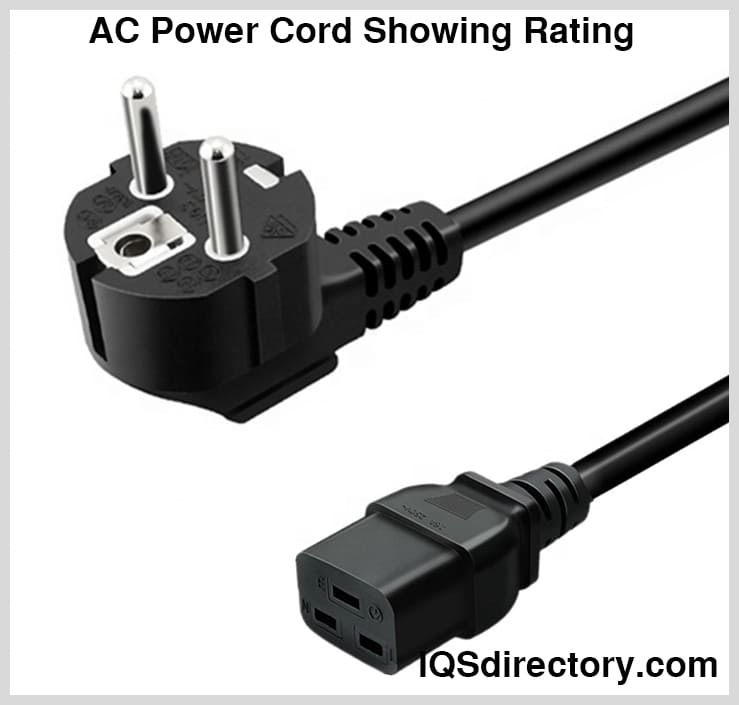
Chapter 1: Understanding the Fundamentals of AC Power Cords
This section explores the basic principles of AC power cords, including construction, electrical performance, safety features, and operational functionality.
Defining an AC Power Cord
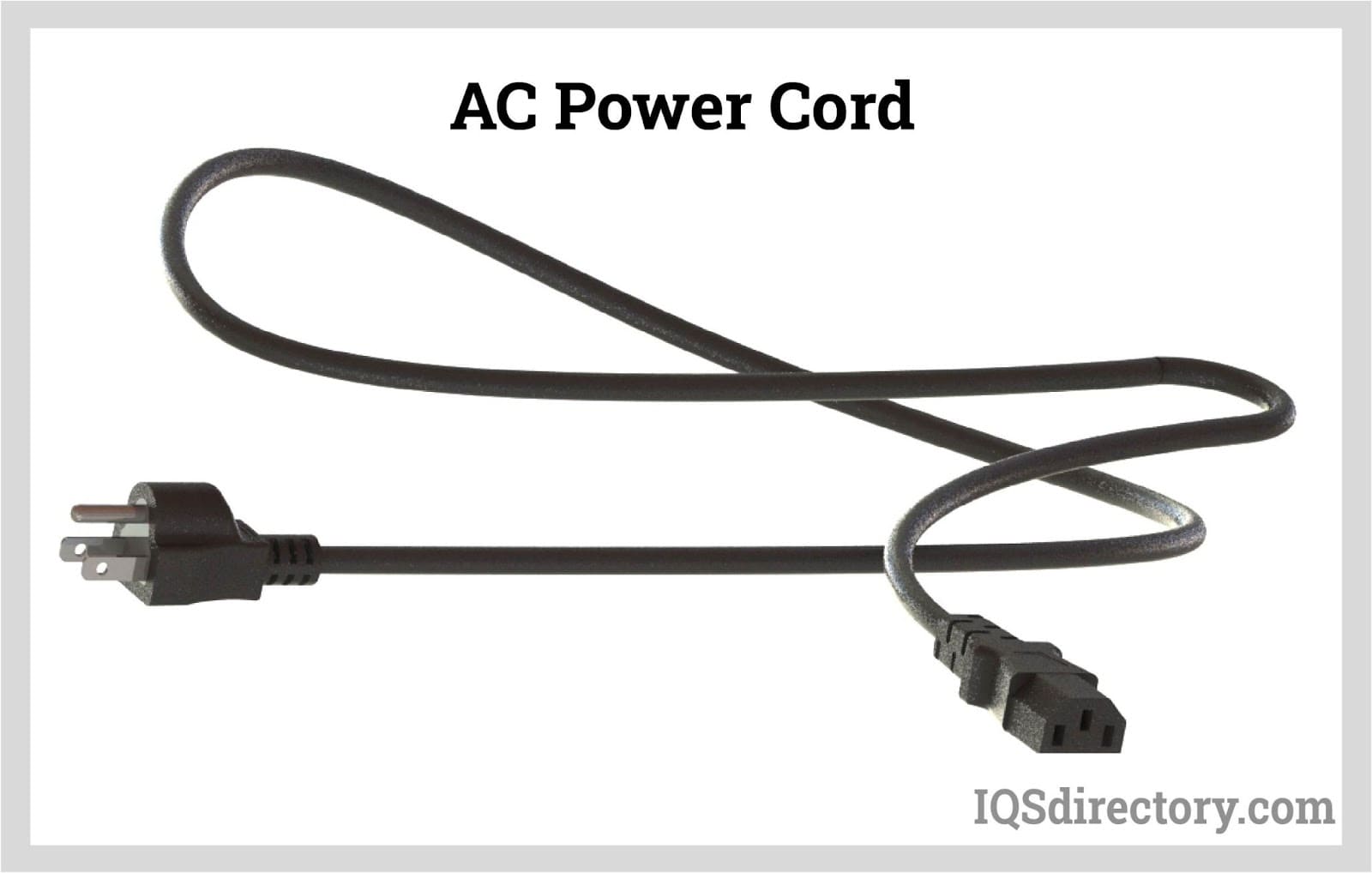
An AC power cord is a detachable electrical cord that delivers alternating current (AC) from a mains supply to electrical devices and appliances. Commonly used across retail, industrial, electronics, entertainment, and residential environments, these cables power tools, shop equipment, servers, and household appliances.
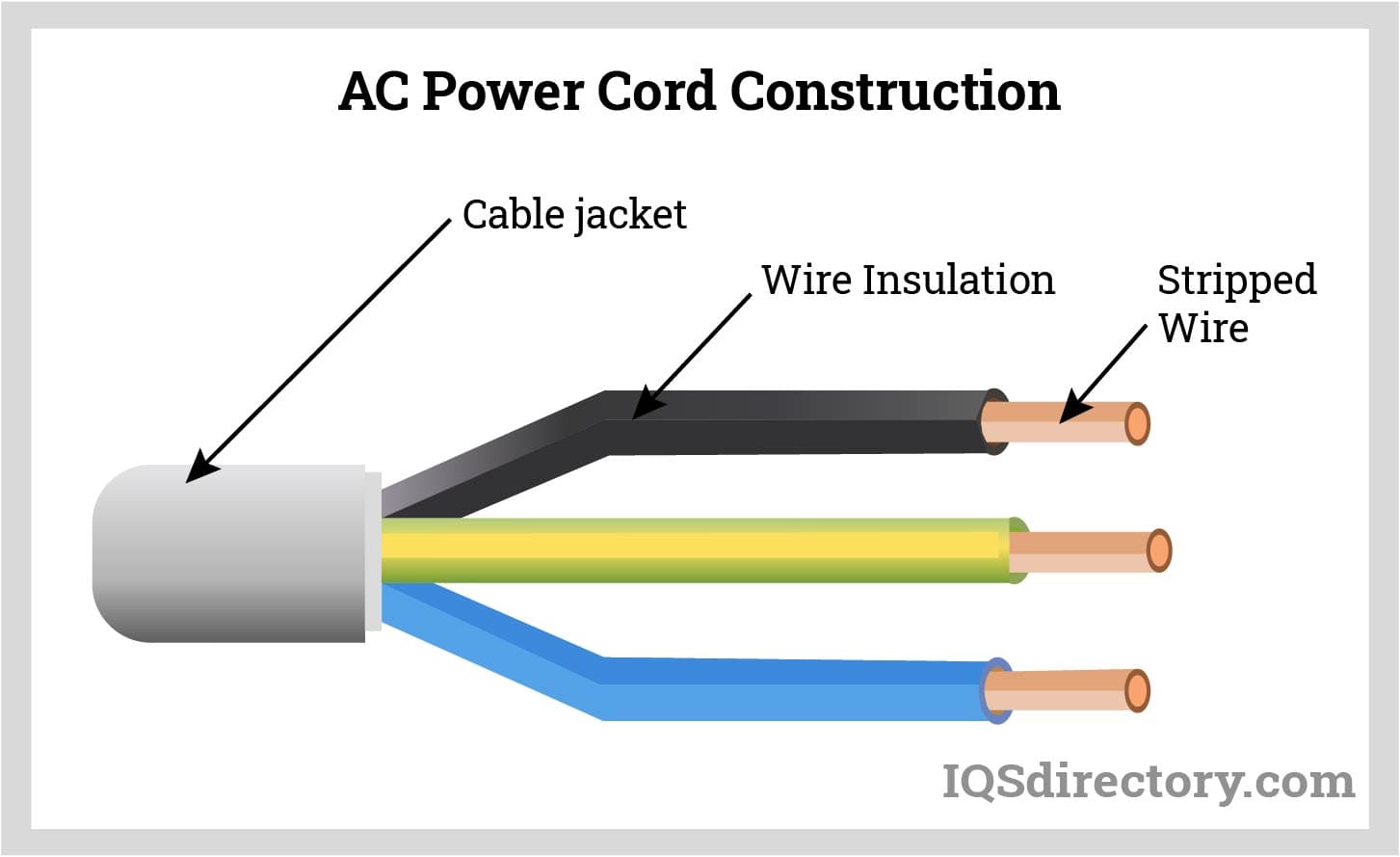
AC Power Cord Construction
AC power cords transfer alternating current, with electrons changing direction periodically to convey electrical energy. They feature conductive wires shielded in insulation and encased in a rubber or polymer outer jacket.
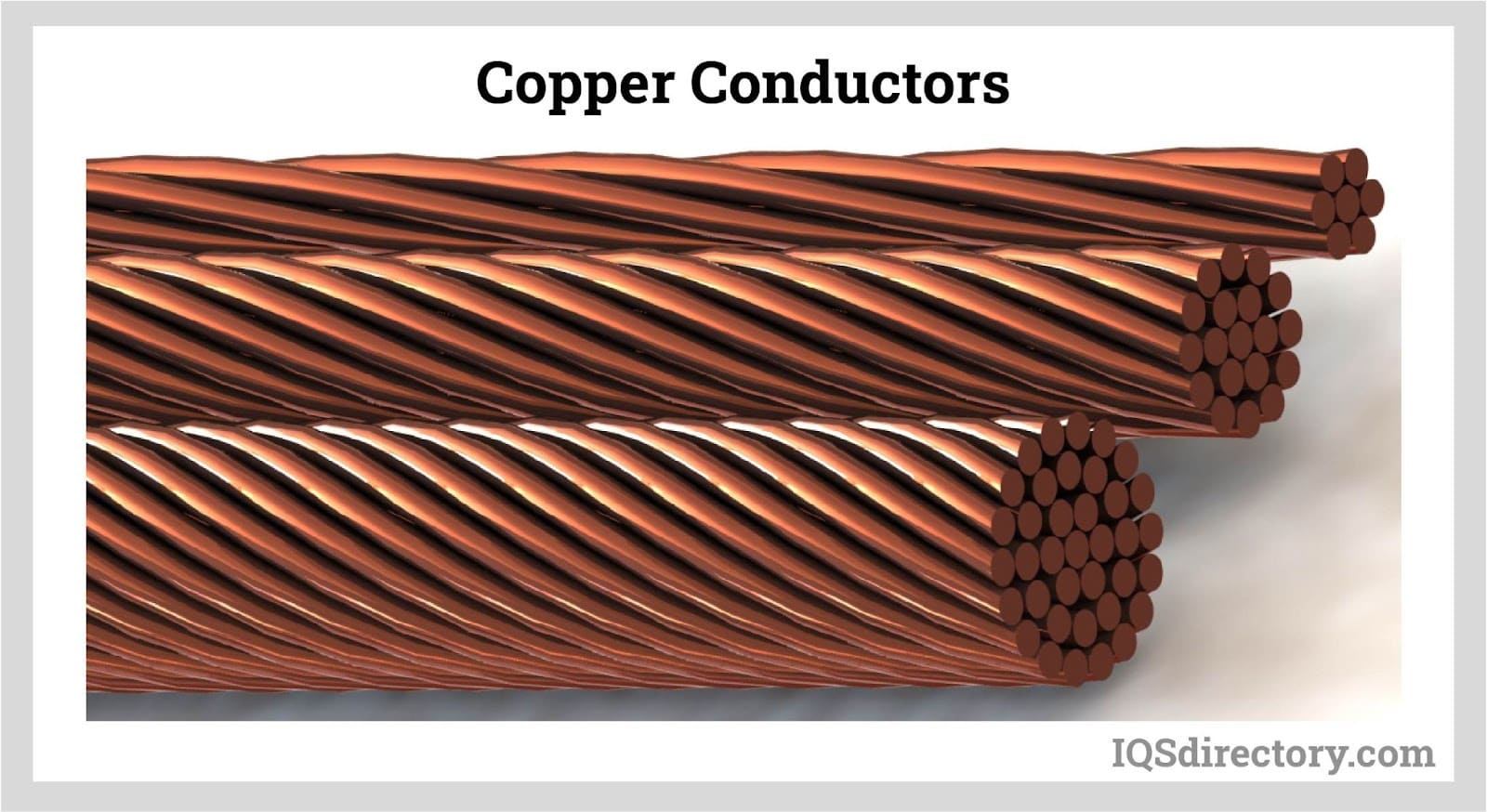
Comparison of Power Cord Conductor Materials
| Conductor Property | Copper Wire | Aluminum Wire | Impact on Power Cord Design |
|---|---|---|---|
| Electrical Resistivity | 16.78 nΩm at 20°C (Low) | 28.2 nΩm at 20°C (~60% copper conductivity) | Aluminum requires 1.56x larger cross-section for equivalent current capacity. |
| Tensile Strength & Fatigue | High tensile strength; resists stretching | Lower fatigue resistance under dynamic stress | Copper handles repeated flexing and handling better in portable cords. |
| Thermal Expansion & Oxidation | Stable thermal response; conductive oxide | High expansion; non-conductive oxide coating | Aluminum terminations require anti-oxidant paste to prevent high-resistance hot spots. |
| Relative Weight & Cost | Denser; higher material cost | Lightweight; lower raw material cost | Aluminum is favored for long static transmission, while copper dominates power cords. |
Conductor Options: Copper vs. Aluminum
Copper is preferred in AC power cords for its low resistivity, high ductility, superior tensile strength, and ease of installation without special termination lugs. Aluminum is lighter and cheaper but requires larger gauges and careful management of oxidation and creep.
Wire Insulation & Jacket Options
Insulation shields against current leakage and environmental damage. Options include:
- Plastic Insulation: PVC (economical general-purpose), PE (polyethylene for low capacitance), and PUR (polyurethane for high flexibility).
- Rubber Insulation: Neoprene (high oil/flame resistance) and Silicone (extreme temperature tolerance up to 200°C).
- Fluoropolymers: PTFE and PFA for chemical processing and extreme temperature environments.
Leading Manufacturers and Suppliers

Frequently Asked Questions
What Are the Main Parts of an AC Power Cord?
An AC power cord includes conductive wires (usually copper or aluminum), insulation made of plastic, rubber, or fluoropolymer, and an outer jacket. It may also have shielding, connectors (couplers or plugs), strain relief, and optional grounding wires for safety and durability.
How Does the C13/C14 Connector Differ from C19/C20 for AC Power Cords?
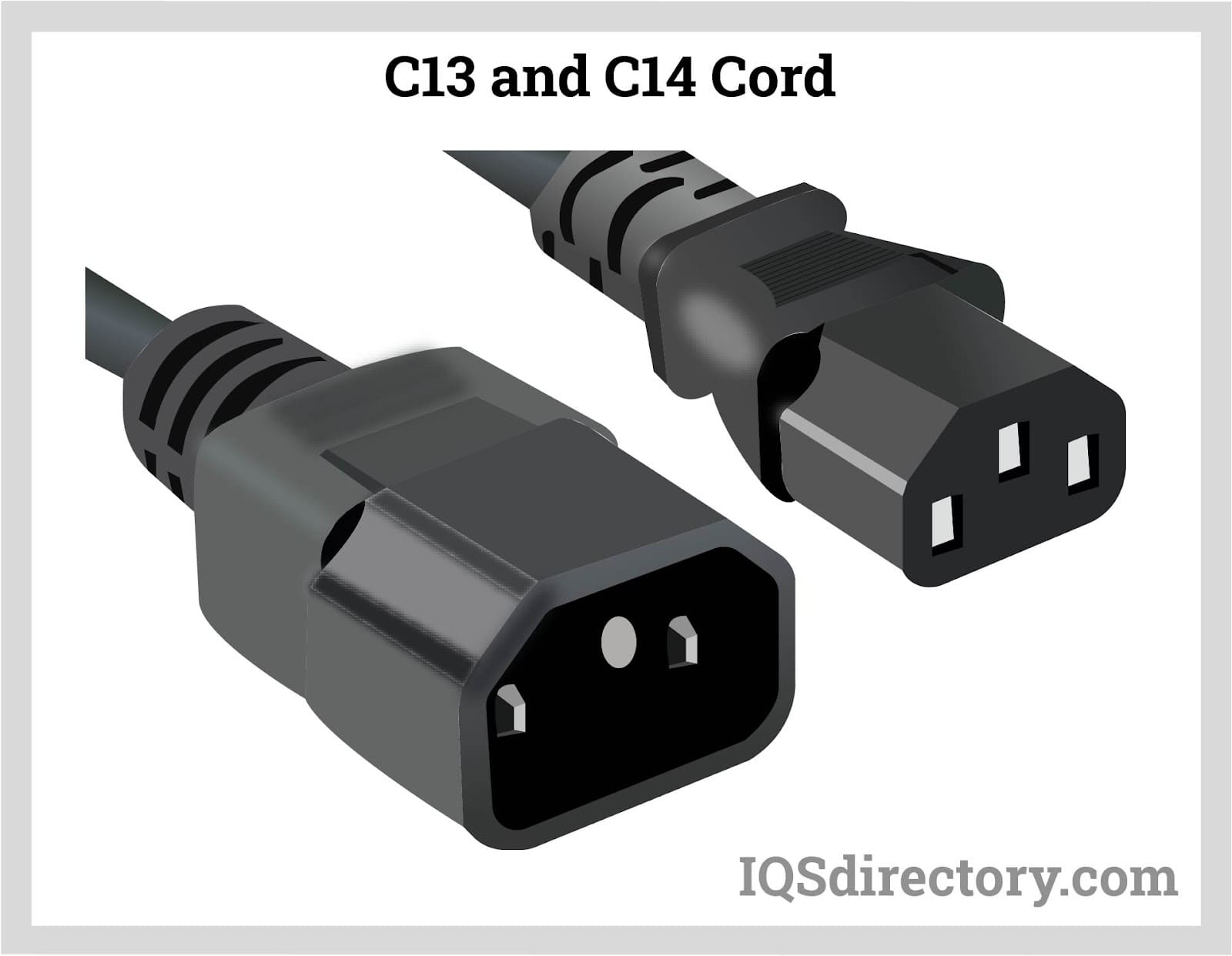
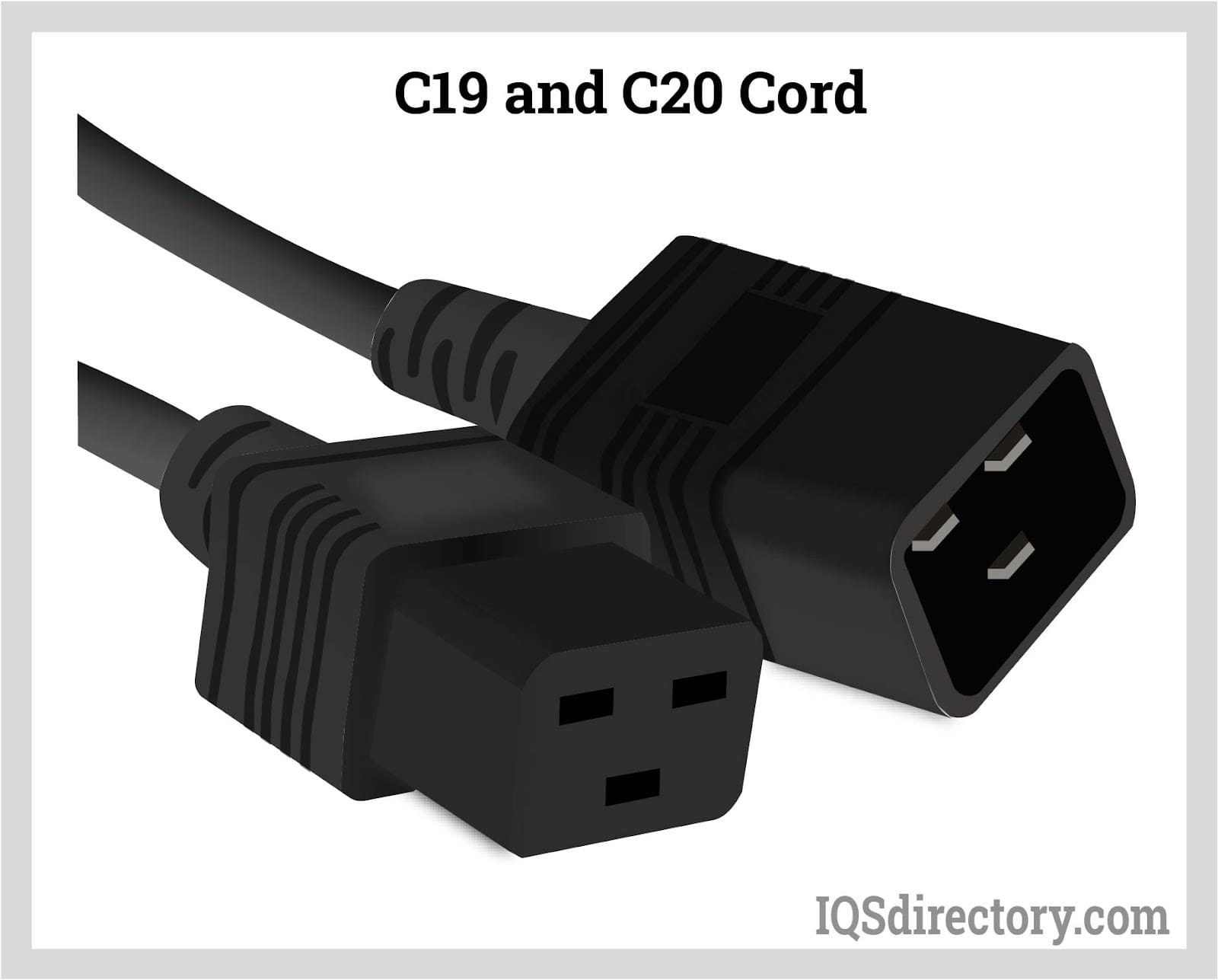
C13/C14 connectors are used for computers, monitors, and similar devices, supporting up to 10A or 15A. C19/C20 connectors allow higher amperage (16A or 20A), are more robust, and power data centers, servers, and industrial-grade equipment where higher current capacity and secure locking connections are required.
What Should Be Considered When Choosing an AC Power Cord for International Use?
Select a cord matching your device’s voltage and amperage, and ensure the plug or coupler is compatible with your country’s socket standards, such as the Type G plug used in the UK and other Commonwealth countries. It is also important to confirm regional safety certifications and grounding requirements.
What Materials Are Commonly Used for AC Power Cord Insulation?
Common insulation materials include polyvinyl chloride (PVC), semi-rigid PVC, polyethylene (PE), polypropylene (PP), polyurethane (PUR), chlorinated polyethylene (CPE), nylon, thermoplastic rubber, neoprene, silicone, and fluoropolymers like PTFE.
What Are Typical Applications for AC Power Cords in Commercial and Industrial Settings?
AC power cords are used in data centers, power tools, lighting, shop equipment, refineries, chemical plants, public buildings, airports, manufacturing, and server farms, supporting both IT infrastructure and heavy-duty industrial operations.
How Do You Maintain an AC Power Cord for Long-Term Use?
Regularly inspect cords, keep them organized, avoid moisture, and ensure usage within the manufacturer’s specified amperage. Dust cords often, prevent kinking and over-bending, and store them in dry environments to extend their lifespan and reliability.
Chapter 2: Types of AC Power Cords
AC power cords are categorized by their IEC 60320 couplers and regional NEMA / Type G plug ends.
Comparison of Standard AC Power Cord Connector Types
| Connector Code | Amperage / Voltage Rating | Pin Setup & Form Factor | Temp. Rating | Target Applications |
|---|---|---|---|---|
| C13 / C14 | 10A (Int) / 15A (US) at 250V | 3-pin grounded rectangular | 70°C | Desktop PCs, monitors, printers, PDUs, IT racks |
| C5 / C6 ("Mickey Mouse") | 2.5A – 10A at 250V | 3-prong cloverleaf layout | 70°C | Laptop power adapters, projectors, portable AV gear |
| C7 / C8 ("Figure-8") | 2.5A at 250V | 2-pin ungrounded (Polarized option available) | 70°C | Radios, game consoles, shavers, double-insulated electronics |
| C15 / C16 | 10A (Int) / 15A (US) at 250V | 3-pin grounded with bottom notch key | 120°C (C15A to 155°C) | Electric kettles, hot-pluggable server gear, high-heat PDUs |
| C19 / C20 | 16A (Int) / 20A (US) at 250V | Heavy-duty 3-blade horizontal layout | 70°C | High-power enterprise servers, blade chassis, UPS units |
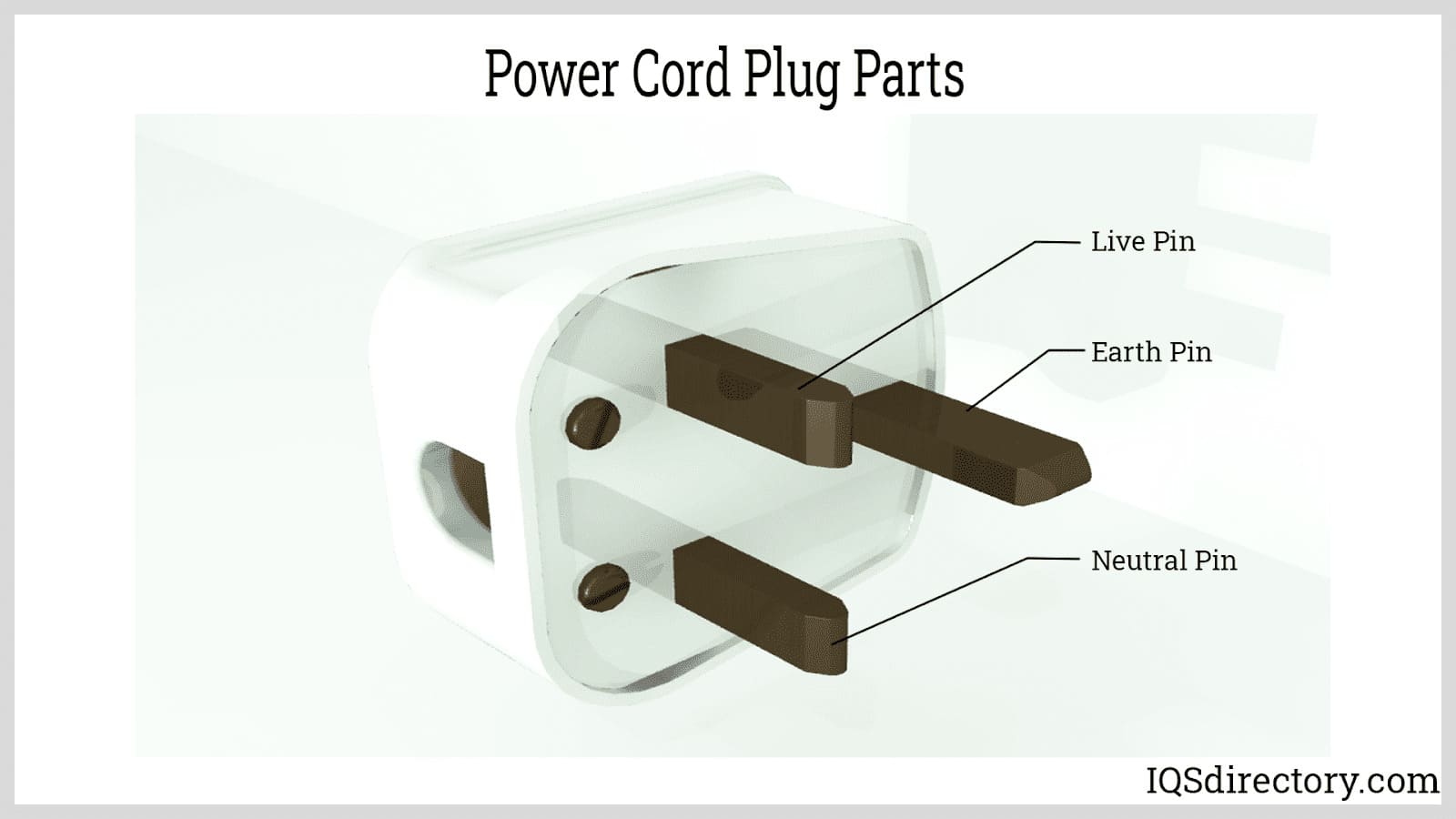
| Type G Plug (BS 1363) | Up to 13A at 250V | 3 rectangular prongs with internal fuse | Standard | UK, Ireland, and Commonwealth regional wall power |
Chapter 3: Applications and Benefits of AC Power Cords
AC power cords are installed across commercial buildings, airports, refineries, chemical plants, and data centers. Key benefits include low energy loss, flexible routing, safe insulation handling, and simple replacement.
Conclusion
AC power cords serve as detachable line cables that deliver alternating current from mains supplies to target devices. Matching conductor gauge, jacket insulation, current rating, and IEC/NEMA connector standards ensures safe, reliable power distribution.
AC Power Cords Suppliers on IQS Directory
- Quail Electronics, Inc.
- Interpower Corporation
- Kord King
- Consolidated Electronic Wire & Cable
- International Configurations, Inc.
View all AC Power Cords suppliers · Request a quote for AC Power Cords
Table of Contents

Loading Leading
Category Companies
Related Posts
Electrical Plugs
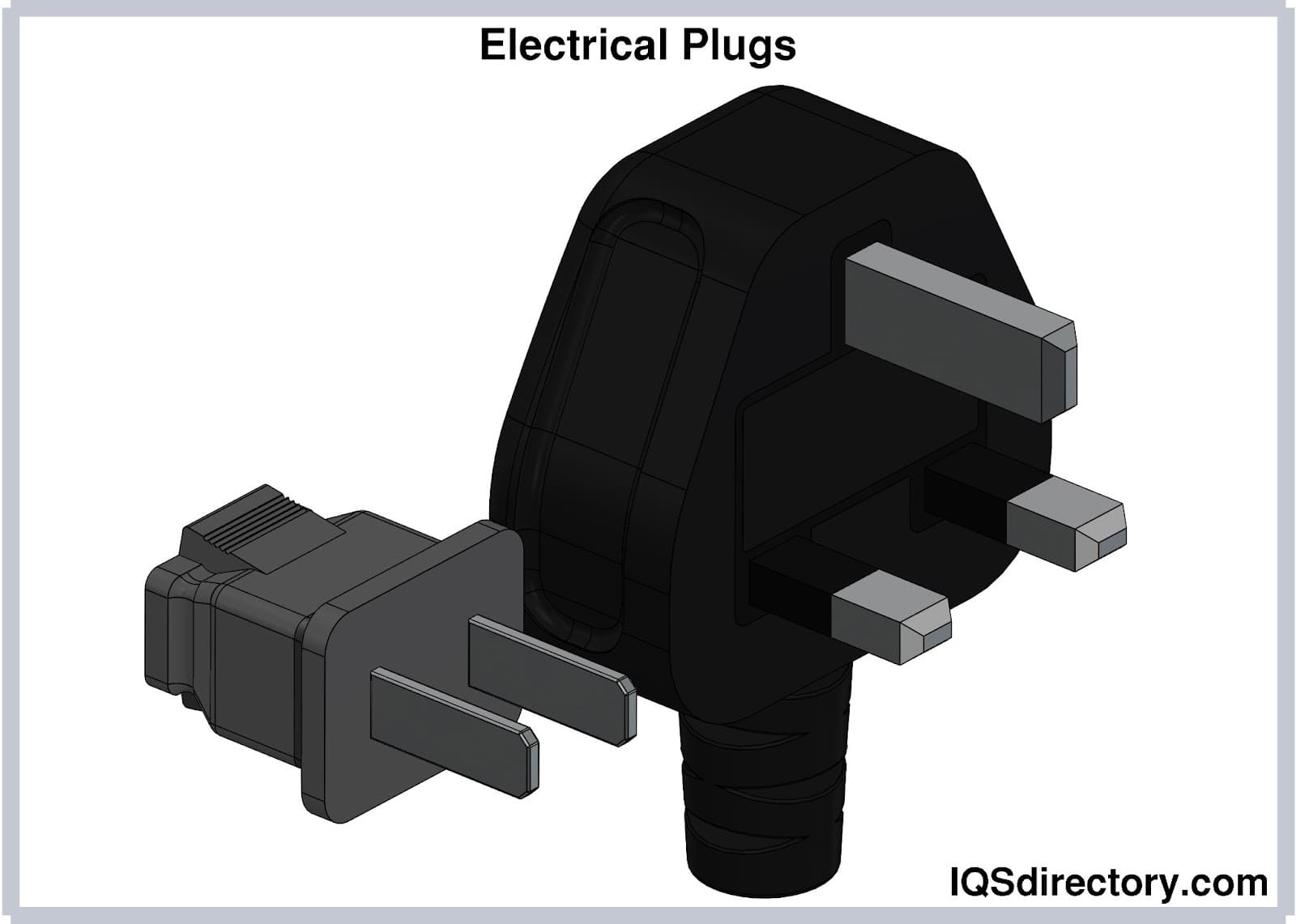
Electrical plugs supply and draw current from a receptacle to device circuitry...
NEMA Connectors
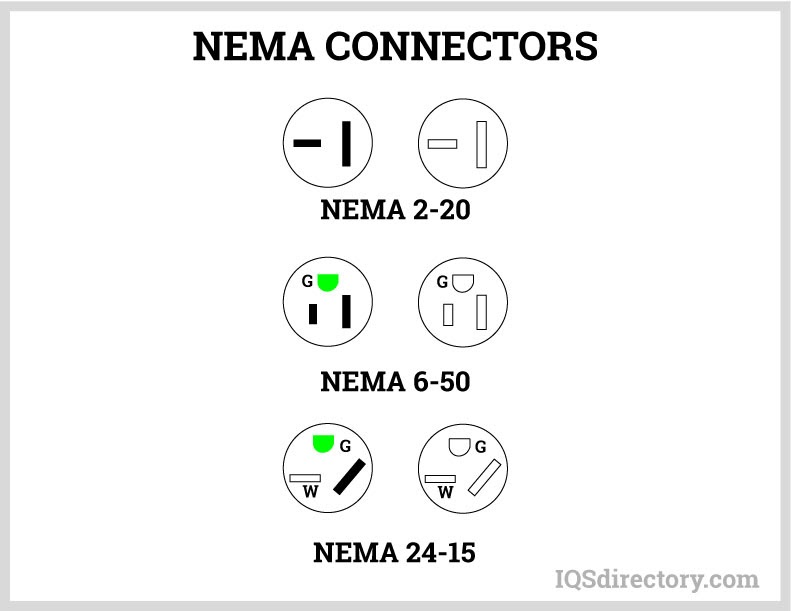
NEMA connectors standardize device connections across North American power outlets...
Power Cords
A power cord connects appliances to electrical utilities using insulated cables and molded couplers...