


Polyurethane (PU) Sheets
IQS Directory EditorialUpdated 8 chapters
4 leading suppliers listed with this guide
Browse urethane sheets suppliersContents (8 chapters)
The benefits of polyurethane and how it is made with a list of polyurethane manufacturers
You will learn:
- What are Polyurethane Sheets?
- How Polyurethane Sheets are Made
- Uses for Polyurethane Sheets
- Types of Polyurethane Sheets
- And much more ...
Chapter 1: What Are Polyurethane Sheets?
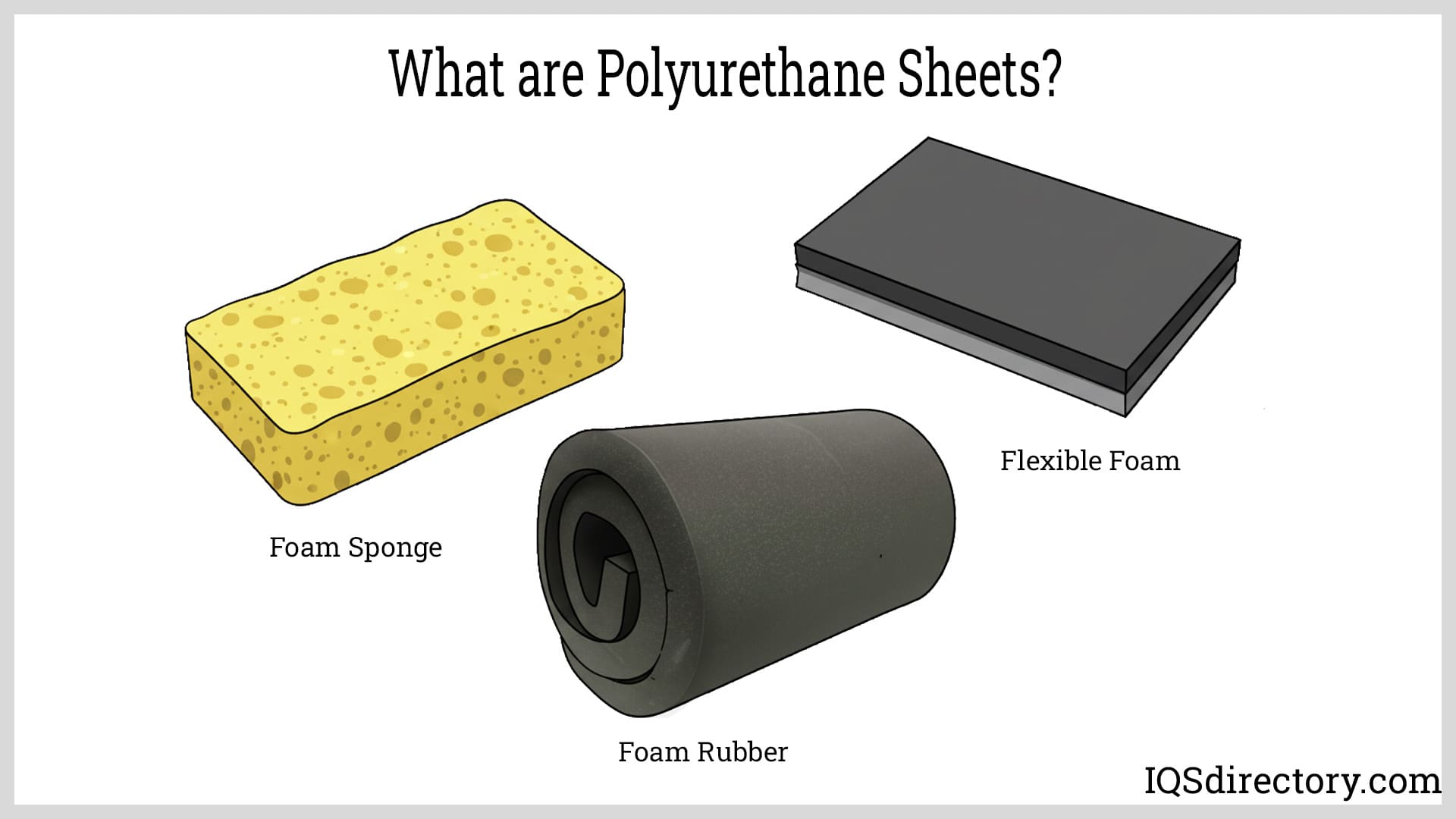
Polyurethane sheets are manufactured by combining isocyanate and a polyol blend with a catalyst in a controlled chemical reaction. This process creates a versatile polyurethane material that can be formulated as rigid foam, semi-rigid sheet stock, or flexible polyurethane foam depending on the required performance characteristics. The result is a durable, strong, and resilient material used across a wide range of construction, manufacturing, industrial, and commercial applications. The structure of polyurethane sheets contains long-chain polymer molecules with attached side groups, and their molecular structure places them in the carbamate group known as NHCO₂.
The popularity of polyurethane sheets comes from their ability to be customized for density, hardness, stiffness, and load-bearing performance. Available in low-density, hard, solid, and flexible formulations, these sheets are selected for applications that require impact resistance, vibration dampening, thermal insulation, cushioning, or structural support. In building and industrial environments, polyurethane sheet products are commonly used for insulation panels, soundproofing, padding, furniture cushions, upholstery, gasketing, packaging, and concrete support. Buyers often compare polyurethane sheet thickness, compression strength, chemical resistance, and temperature stability when choosing the right grade for a project.

The characteristics and properties of polyurethane allow it to be molded, shaped, contoured, and configured to meet the requirements of a wide range of products and industrial applications. Because polyurethane sheets can be engineered for abrasion resistance, flexibility, resilience, and long service life, they are widely used in custom fabrication, protective components, and insulation systems. Flexible polyurethane sheets are especially valued for cushioning and comfort, while firmer grades are preferred for structural and load-bearing uses. The many uses of polyurethane and its different forms make it one of the most popular materials on the market.
Chapter 2: How Polyurethane Sheets Are Made
Polyurethane, known as polycarbamates, is one of the most versatile and resilient polymers. The final form of polyurethane can take four different forms, which are elastomers, coatings, and foam. The different forms are mixed and manufactured for specific uses based on their unique properties.
The manufacture for all types of polyurethane begins with reacting an isocyanate and a polyol, such as toluenediisocyanate (TDI) and methylenebisdiphenyldiisocyanate (MDI), PTMEG polyetetramethylene ether glycol (PTMEG), and polypropylene ether glycol (PPG). included in the chemical process are small portions of catalysts that are selected to speed up the reaction and create a specific type of PU sheeting. The mixing of the chemicals takes place at a controlled temperature and pressure with various additives included to achieve the requirements of a specific form of polyurethane.
The basic elements that make up the structure of polyurethane sheets come from crude oil. Computer software monitors and controls the manufacturing process to ensure the accuracy of the process and the precision of measurements. Polyols and isocyanates are combined in a 1:2 ratio.
Mixing Head
The manufacture of polyurethane sheets involves the use of differing components that work together to create the mixture. Bulk storage, blending systems, pressure metering systems, and gas nucleation equipment have different rolls in the process. Of the many different components and parts, the essential element is the mixing head, which mixes the foundational ingredients and distributes them as required by an application. The methods for mixing involve closed pouring, spraying, and various other distribution methods.
The term mixing head refers to different mixing head systems. The differentiating between the mixing heads is in regard to how the critical chemicals for the process are distributed. Three common forms of mixing heads are L-Style, Straight Style, and Spray Style.
-
L-Style Mixing Heads – L-style mixing heads have two mixing chambers that are arranged perpendicular to each other. When chemicals enter, they counter impinge in a cylindrical chamber that is followed by a 90° angle that slows the velocity of the chemicals and provides for more thorough mixing. The slowing of the chemicals ensures a steadier flow and better distribution. L-style mixing heads come in various forms, are highly efficient and are designed for high pressure applications.

- Straight Style Mixing Head – Straight style mixing heads are used for closed pouring and have longer nose lengths to reach the tooling. The key to straight style mixing heads is the length of their nose, which come in different lengths to meet the needs of an application. The extended mixing heads allow for pouring in hard-to-reach spaces. When straight style mixing heads are not pouring, the chemicals are recirculated to maintain proper mixing ratios and temperatures.
- Spray Style Mixing Head – Spray style mixing heads distribute the chemicals at high pressure onto a surface, evenly and smoothly. The power for the process is provided by hydraulic or pneumatic pumps and are usually mounted on a robotic arm. A unique feature of spray style mixing heads is their ability to self-clean.
Storage Tanks
The chemicals for the manufacture of polyurethane sheets are stored in separate tanks in liquid form. Agitators, usually placed at the bottom of the tanks, are used to prevent the chemicals from settling and enable them to maintain their integrity. The storage tanks are connected to the mixing head through a series of pipes. The flow from the tanks is carefully controlled, monitored, and measured using a specifically designed computer system that oversees the process and provides in-process data.
As the chemicals move along the pipes, the polymerization reaction takes place and polyurethane is formed by the time the liquid reaches the end of the pipe. The mixing head is located at the end of the pipe to pour the polyurethane onto baking paper, into molds, or other forming methods for the formation of PU sheets. The thickness of the sheets is precision controlled and ranges from a few millimeters to several inches.
The variations in the hardness of polyurethane sheets are in accordance with the formulation of the mixture. The toughness and flexibility of the sheets can be adjusted from soft and pliable to rigid and hard. This aspect of the production process allows polyurethane manufacturers to produce polyurethane sheets that precisely fit the requirements of an application.

Heat Exchanger
One of the most important factors in the production of polyurethane sheets is the maintenance of constant heat. In most cases, a heat exchanger is located close to the mixing head to correlate the temperature of the raw materials. The precision of the heat exchanger is critical to the success of the manufacturing process to ensure the chemicals have the right viscosity and reactivity as they enter the mixing head.
The function of a heat exchanger in PU production is to heat or cool the chemicals to meet the required temperature of the process. Maintaining viscosity is critical to providing the proper flow rate for entering the mixing head. The correct viscosity ensures proper metering and provides for correct impingement.
As critical as the flow rate may be, the temperature of the chemicals is just as essential. The heat exchanger is programmed to heat or cool the chemicals such that they provide a consistent and stable chemical reaction.

Baking Paper
One method for creating PU sheets involves the use of baking paper, which is specially coated to prevent polyurethane from sticking to the paper. It is a form of release paper that has a film or coating for allowing the sheets of polyurethane to form. Baking paper is placed on a conveyor belt over which the mixing head pours the polyurethane. The precision of the mixing head ensures even distribution to achieve the exact thickness of the sheets.

The method for making polyurethane sheets described above is one of many methods used. The variety of processes varies from casting and molding methods to DIY projects that create blocks of polyurethane, which are cut into different thicknesses of sheets. The aspect of the process that is commonly used is the mixing process where the chemicals are kept in separate tanks before being mixed, which is a precise and controlled manufacturing method.
Of the various methods, the block method is used for manually creating polyurethane sheets and for mass production. The process allows for adjusting the thickness of the sheets by changing the cutting of the blocks into sheets. The essence of the method includes placing the mixture into a large barrel like mold or having the mixture pass through a conveyor system at the end of which a block is formed. The blocks are then cut manually or automatically into sheets.

Slitter
The slitter is the device that cuts the PU blocks into sheets. Since not all blocks are the same, slitters get varying numbers of sheets out of a block. In addition, the slitter can be adjusted to cut varying thicknesses of sheets from a block, a factor that adds to the flexibility of the process. Thicknesses can be mixed to match the height of the block.
Chapter 3: Types of Polyurethane Sheets
The term polyurethane sheets is a generic term that covers a wide range of PU sheets that vary in thicknesses, hardness, size, and texture. This aspect of polyurethane sheets is one of the reasons for their popularity. Essentially, manufacturers can adjust, change, and custom produce polyurethane sheets to meet the requirements of any application. In many instances, polyurethane sheeting is crucial for providing durability, impact resistance, and flexibility. Choosing the correct form of polyurethane sheeting is important for the success of an application.
Soft Flexible Polyurethane Sheets
The softness of soft flexible polyurethane sheets is achieved through the use of a high molecular weight polyol. The type of polyol that is commonly used to create soft polyurethane sheets is either polyether or a polyester polyol that lower the number of reactive sites. The addition of a small amount of water, 1.8 to 5 parts by weight of water per parts by weight, and other chemicals enhance the softness of the sheets.
The result of the special mixture is soft, flexible, and resilient polyurethane sheets that bend, flex, and absorb without having permanent deformation. A common use for soft polyurethane sheets is seat cushions, mattress toppings, low pressure seals, and vibration and shock absorption applications.

High Density Hard Polyurethane Sheets
The method for forming high density polyurethane sheets involves creating the initial chemical blend and placing it in a mold. Once the mixture is in the mold, the polyurethane expands and swells binding the various materials in the mixture together. The volume of the foam material inflates to five times its original size.
Cooling and compressing the enlarged mass, using various mechanical means, for 24 hours, results in polyurethane sheets with a density of 178 kg/m³ with air permeability of 200 l/m² sec. Once the sheets are cured, they are cut and trimmed. In some cases, they are coated with fabric or vinyl, depending on how they will be used.
High density hard polyurethane sheets are capable of supporting heavy weight, last longer, and have less wear. The hardness of the sheets can be adjusted to meet the requirements of different applications. In many cases, the customization of hard polyurethane sheets is necessary to make them applicable for different industrial uses. The thicknesses and colors of high-density polyurethane sheets vary in relation to their use with some varieties being as thick as two feet (60.96 cm).

Transparent Polyurethane Sheeting
The mixing of the chemicals for transparent polyurethane sheeting follows the same process as that which is used for all polyurethane sheet production. During distribution, liquid polyurethane is cast at low temperature in order to form clear sheets. The process is computer controlled to prevent contamination and deformations. The chemical reaction that occurs prior to the mixing head is carefully controlled to minimize anything that can scatter light. Aliphatic diisocyanates are essential to the process in order to produce clear sheets.
With the extrusion process, the liquid TPU is forced between films and rollers that are set to the required thickness. Adjustments to the chemical formula and the cooling rate, allows manufacturers to control the crystalline structure of the polyurethane. As with other special forms of polyurethane sheets, the ratio of polyols to isocyanates is adjusted to change the crystallinity, which leads to the translucent appearance.

Anti-Static Polyurethane Sheets
Anti-static polyurethane sheets, known as ESD polyurethane sheets, are used for ESD protection. They guard against the buildup of static charge and provide shock resistance and cushioning for electronic components. The manufacture of anti-static polyurethane sheets follows the same process as that which is used for all polyurethane sheets. The factor that differentiates anti-static sheets from all other polyurethane sheets is the addition of an anti-static coating that dissipates static charges. The coating makes it possible to transport electronic devices without fear of random static charges damaging the devices.
The choice of polyurethane for the protection of electronics is due to the materials strength, durability, and resilience, which ensures that it can endure the rigors of constant handling and transport. Although anti-static polyurethane sheets are widely used in several industries, their ability to protect electronics has made them a necessity for electronics manufacturing. The strength of the sheets with their anti-static and protective properties offers peace of mind regarding the safety of electronic devices.

Thermoplastic Polyurethane (TPU) Sheets
Thermoplastic polyurethane is a polyurethane polymer that is thermoplastic. This is unlike other polyurethanes that are thermosets that harden irreversibly, which is unlike a thermoplastic that is pliable when heated and hardens when cooled. TPU sheets have a unique set of physical properties that make them ideal for a wide range of applications.
The manufacture of TPU follows the same chemical process as that which is used for all forms of polyurethane and includes the reaction of an isocyanate with a polyol. The varying of the ratio, structure, and molecular weight of the compounds creates the different types of TPUs. Changing the polymer structure results in the desired final properties of the sheets. The various chemical adjustments make it possible to alter the hardness of TPU from as soft as rubber to a hard and rigid plastic.

Chapter 4: Polyurethane Catalysts
Polyurethane catalysts are used to accelerate the chemical reaction required for the forming of polyurethane. As the isocyanate and polyol react with a catalyst, the resulting reaction forms rigid polyurethane and flexible polyurethane. The reaction caused by a catalyst optimizes the reaction rate and enhances the quality of polyurethane sheets. Without catalysts, the reaction between the isocyanate and polyol would be too slow, detrimentally affecting the quality of the final polyurethane sheets.
Organotin
Organotins come in different forms depending on how they are produced but always contain at least one atom of tin bound to a hydrocarbon. They are widely used in the manufacture of paint and are considered to be a toxic substance. Organotin catalysts are the most commonly used polyurethane catalyst and are known for the speed at which they cause the reaction process, providing exceptionally efficient production cycles.
The process for synthesizing organotin takes several forms with the reaction of a Grignard reagent with tin halides being the most common method.

Amine
Amine is an organic compound that contains carbon and nitrogen bonds. It is formed when hydrogen atoms in ammonia are replaced by alkyl or aryl groups. The classification of amine is any compound derived from ammonia being replaced by hydrogen with one or more monovalent hydrocarbon radicals. Of the varieties of amine, tertiary amine is used in the production of polyurethane sheets due to its ability to create the water reaction that produces CO₂ gas.
Mercury
The types of mercury catalyst used to produce polyurethane sheets are phenylmercuric acetate, propionate, and neodecanoate, which drive the formation of urethane and a rapid back-end cure. Although mercury catalysts are highly efficient, they are seldom used due to their toxicity.
Bismuth (BI)
Bismuth as a catalyst is used due to it being non-toxic and its ability to create exceptional mechanical properties. It is an alternative to mercury, lead, and tin catalysts, which are being avoided due to their environmental impact and health concerns. A key feature of bismuth is its hydrolytic stability in cases where such stability is required. Bismuth is a liquid that is yellow or amber in color when its mixture contains 9.5% up to 10.5% bismuth. The bismuth carboxylate version of bismuth is stable in water, which assists with the chemical reaction of urethane and a polyol.
Zinc
Zinc based catalysts used in the production of polyurethane sheets are zinc octoate and zinc neodecanoate. In many cases, zinc catalysts are used in combination with bismuth carboxylate. As with bismuth catalysts, zinc catalysts are popular replacements for mercury, tin, and other toxic catalysts. The use of zinc as a catalyst causes increased pot life and good curing. It is widely used when polyurethane cures at temperatures over 60°C (140°F).
Polyurethane Catalyst General Information
Catalysts are an essential part of the polyurethane manufacturing process and are divided into two general categories, which are amine catalysts and metal catalysts. The purpose of catalysts is to promote the reaction of the polyol with isocyanate with one of the main chemical reactions being resinification, which is the formation of a urethane bond. The other type of chemical reaction is a foaming reaction, a generation of carbon dioxide.
Amine catalysts promote both forms of reactions, while metal catalysts form only resinification reactions. Regardless of the polyurethane sheet manufacturing process, only a very small amount of a catalyst is used. These small bits of chemicals determine the commercial value of a polyurethane sheet.
Chapter 5: Uses for Polyurethane Sheets
The versatility and durability of polyurethane sheets makes them the ideal solution for many industrial applications. It is often used for household products that provide comfortable and relaxing solutions. In addition, the durability and strength of polyurethane sheets provide protection for delicate products and electronic instruments. The various thicknesses, sizes, and configurations enable polyurethane sheets to be used in every aspect of residential and commercial life.
Household Items
The different densities of polyurethane sheets makes it a perfect material for the manufacture of comfortable furniture and beds. The different densities offer an array of firmnesses that are adapted to meet the requirements of users and manufacturers. Polyurethane sheets for furniture and bedding are available in sheets, blocks, and molded sheets that are high density and flame retardant. The sheets can be aligned to adhere to specific and custom conditions with rigid sheets having intumescent properties to meet flammability requirements.

Thermal Insulation
Low density polyurethane sheets are commonly used for insulating walls to reduce heating and cooling costs. In addition, polyurethane sheets help control carbon emissions to decrease negative effects to the environment. A feature of polyurethane that makes it ideal for insulating buildings is its long life, which can be as much as fifty years without deteriorating. Once installed, polyurethane sheets do not require any form of follow up or maintenance, a factor that further makes them the perfect solution for building insulation.

Appliances
Polyurethane sheets are an important part of refrigerators and freezers where the sheets are used as thermal insulation. Rigid polyurethane sheets are a cost effective, lightweight material that is used to meet energy ratings. The thermal insulating properties provide a closed cell structure that resists heat transfer.
Electronics
Non-foam polyurethane sheets, referred to as potting compounds, are used in the electronic industry to encapsulate, seal, and insulate fragile, pressure sensitive, microelectronic components, underwater cables, and printed circuit boards. The sheets are specially formulated to meet the physical, thermal, and electrical properties of electric devices. Aside from protecting components, polyurethane sheets provide dielectric properties as well as protection from solvents, water, and extreme temperatures.

Packaging
A very common use of polyurethane sheets is as packaging since it provides firm, sturdy protection for delicate and sensitive items. Polyurethane sheets are a unique form of material that securely holds items in place while providing impact and vibrations protection. The different forms of polyurethane sheets as foam and rigid material allows for the selection of the perfect material to support any type of device. This aspect of polyurethane sheets, which is normally taken for granted, has added to its popularity and wide use.

Automobile Seats
The original seats for automobiles were made in the same way as furniture, with springs and cotton, hair, and batting. These types of seats made for luxurious and comfortable seating that was attractive and sturdy. It was a form of car seating that remained popular from the end of the 19th century into the middle of the 20th century when automobiles were large and heavy.
In the middle of the 20th century, manufacturers changed the materials used to produce automobiles, which included the seats. In the 1960s, molded polyurethane sheets became the new standard for automobile seating. Although the durability, strength, resilience, and flexibility were some of the reasons for the use of polyurethane sheets to produce automobile seats, another reason was the weight of automobiles. During the latter part of the 20th century, automobile manufacturers strove to lighten cars to make them more energy efficient and gas saving. The advent of polyurethane sheets used for making seats fit into the concepts that engineers were perfecting.

Polyurethane Panels
Polyurethane panels that include polyurethane sheeting are a widely used construction material. The composition of polyurethane panels includes a polyurethane core that is placed between outer skins that can be stainless steel, aluminum, steel, or other metals and plastics. The structure of polyurethane panels has several functions, which includes sound proofing, roofing, sealing cold storage units, and material for prefab structures.
The lightweight and strength of polyurethane panels has made them an extremely popular construction material. The panels are ideal for mobile structures due the easy mobility of the panels and their lightweight. Cabins and rooms can be instantly added to expand a space and provide cleanroom type conditions.

Molded polyurethane sheets are incredibly versatile and can be formed into a wide range of densities, hardnesses, and thickness to conform to any application. This aspect of polyurethane sheeting is one of the reasons for its wide use. The consistency and properties of polyurethane enables it to easily fit into designs, configurations, and processes.
Chapter 6: Properties and Characteristics of Polyurethane Sheeting
Polyurethane sheets are lightweight and come in an assortment of forms. In many respects, they are unlike other types of plastics and metals but have comparable strength and durability. Since the introduction of polyurethane and polyurethane sheets, manufacturers have been astounded by the many aspects of the material and how it radically changes the perspective of how to engineer and design various products.
Durability
Any discussion of polyurethane sheets begins with its unequaled durability. Polyurethane sheets are designed to last for decades. The consistency of the material and its chemical make up resists the many factors that cause other materials to deteriorate. The toughness of PU enables it to withstand wear and tear, factors that ensure its longevity. Over time, polyurethane sheets retain their shape and appearance providing a continuous pleasing aesthetic appeal. The abrasion resistance of polyurethane sheets makes them suitable for high stress conditions that endure constant use.
Protection
As with durability, protection is at the center of the characteristics of polyurethane sheets due to their ability to withstand impacts, moisture, heat, scrapes and scratches. The protective quality of polyurethane sheets has made them essential for use with modern electronics.
Flexibility
Polyurethane sheets are known for their flexibility, which allows them to fit into a wide range of applications. Unlike rigid metals, polyurethane sheets can be shaped and flexed to fit easily into any configuration. The flexibility of polyurethane sheets is part of their protective properties since polyurethane sheeting’s have the ability to absorb shocks and vibrations, which is due to the materials flexibility.
Cost
When industries focus on a particular material and find it to be an asset, it is easy to determine that the material positively affects a company’s bottom line. Compared to rubber and metal, polyurethane sheets provide a significant cost advantage. The initial cost of PU sheets is comparable to or slightly higher than rubber. Their extended life and reduced maintenance make them substantially less costly than rubber. Unlike rubber, polyurethane sheets do not necessitate replacement or maintenance during their useful life. The amortization of the initial cost makes sheets far less expensive.
Environmental Impact and Sustainability
It is difficult to discuss any industrial or commercial material without examining the material’s environmental impact and its place in sustainability projects. The impact on the future of the planet has become a central focus of innumerable industries as the emphasis on the effort has grown over the years. Unlike many commonly used industrial materials, polyurethane sheets are recyclable. As polyurethane technology advancements progress, new and unique uses for recyclable polyurethane are being discovered and introduced.
Chemical and Oil Resistance
PU sheets are resistant to the effects of oils, solvents, and chemicals, critical factors for chemical processing, the auto industry, and machinery maintenance. This aspect of polyurethane sheets makes it one of the most reliable industrial materials.
Chapter 7: How to Choose the Correct Polyurethane Sheeting
The success of an application can depend on the right choice and correct type of polyurethane sheeting. Although all forms of polyurethane sheeting are impact resistant, flexible, and durable for a wide range of applications, changes of the PU sheeting, such as hardness, thickness, and chemical resistance, impact the performance and longevity of the sheeting. When the right PU sheeting is matched to a process or function, the success of an application is greatly increased and reduces any type of cost.
Thickness and Layering
Thickness of PU sheeting determines the sheeting’s durability and flexibility. Thicker sheets have increased wear resistance while thinner sheets are adaptable to the shape of an application. The right thickness ensures the performance and effectiveness of components while protecting against wear.
Hardness
As with all materials, the hardness of PU sheeting is measured on the Shore A or D scale. The choice of harder sheets is for use with heavy machinery or areas subjected to impacts. Softer PU sheets are used for cushioning and vibration protection. The correct hardness is a balance between protection and performance.
Chemical and Temperature Resistance
Certain industrial environments are susceptible to the effects of oils, acids, alkalis, and extreme changes in temperature. The choice of polyurethane sheeting should be capable of enduring such harsh conditions and be able to maintain their stability. Special forms of PU sheeting are manufactured with chemical and temperature resistance to meet hostile conditions. Their design is to ensure the sheeting maintains its positive properties and does not prematurely degrade.
Surface Finish
The surface finish of PU sheeting is dictated by the application for which the sheeting is chosen. Smooth surfaces are chosen for easy cleaning and aesthetic appeal while textured or rough surfaces are designed for easy gripping and to avoid slippage. Surface finishes have to be considered in regard to the ease of handling and safe removal of polyurethane sheets.
Customizability
All forms of PU sheeting are customizable. In most cases, engineers and designers have planned well in advance the type of PU sheeting they require. PU manufacturers work closely with their clients to provide PU sheeting that has been cut, molded, shaped, and fabricated to the dimensions and size a client requires. Regardless of the requirements and specifications, all PU manufacturers can provide the perfect type of polyurethane sheeting to fit a client’s needs.
Chapter 8: What Is the Difference Between Urethane & Polyurethane?
There is no real difference; "urethane" is often used interchangeably with "polyurethane," though technically polyurethane is the polymer made of multiple urethane links. For practical purposes, they refer to the same family of materials used in products like foams, coatings, adhesives, and elastomers.
- Urethane vs. Polyurethane: The technical and practical distinction.
- Technically: "Urethane" is the chemical functional group, while "polyurethane" refers to the polymer chains created when multiple urethane groups link together. "Poly-" means "many," so polyurethane is literally "many urethane" units.
- Practically: The terms are used interchangeably because the polymer is what is used in most applications. Manufacturers and industries often use one term or the other, or both, without a functional difference.
- Application: The specific properties of the material (like rigidity or flexibility) depend on the formulation, not the name itself. For example, a product labeled "urethane" can be rigid or flexible, just as one labeled "polyurethane" can be.

Conclusion
- Polyurethane sheets are specialized polymers that are produced by combining isocyanate with a polyol and a catalyst. The result of the chemical reaction is a highly durable, dependable, and long-lasting material that has an unlimited number of uses.
- The many positive properties of polyurethane include its abrasion and tear resistance that make it ideal for the protection of surfaces and products.
- A unique feature of polyurethane sheets is their many forms, which include flexible, rigid, soft, and hard versions, a factor that makes polyurethane sheets adaptable to any application, requirements, and process. The wide range of Shore hardnesses makes polyurethane sheets an ideal replacement for traditional materials like metals.
- Unlike other polymer materials, polyurethane has a high load bearing capacity while maintaining its light weight and ease of maneuverability.
- A factor that is often overlooked with polyurethane sheeting is its ability to endure chemicals and extremely hostile conditions. This aspect of its properties adds to its applicability and its ability to conform to any conditions.