


Fiberglass Molding: Everything you need to know about Types & Uses
IQS Directory EditorialUpdated 9 chapters
6 leading suppliers listed with this guide
Browse fiberglass molding suppliersContents (9 chapters)
Here is everything you will need to know about fiberglass molding available on the internet.
You will learn:
- What is Fiberglass Molding?
- How Fiberglass Molding is Made
- Types of Fiberglass Molding
- Uses for Fiberglass Molding
- And much more...
What Is Fiberglass Molding?
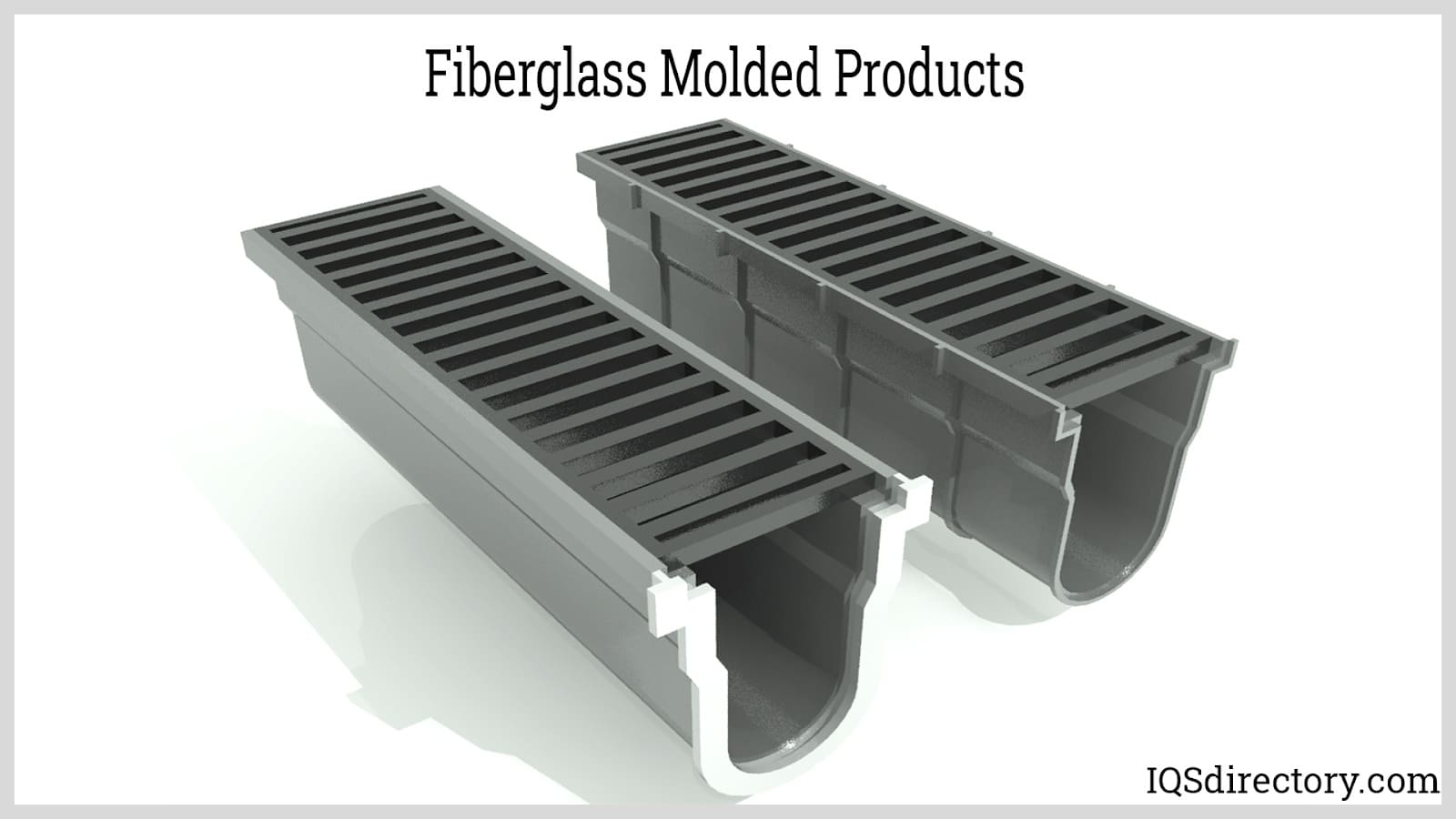
The process of fiberglass molding is used to manufacture detailed, durable, and complex composite parts from fiberglass resin and reinforcing fibers. Common applications include custom enclosures, automotive body panels, marine components, industrial housings, and other precision fiberglass parts. Some primary benefits of utilizing fiberglass molding are its economical nature, relatively simple fabrication process, excellent strength-to-weight ratio, corrosion resistance, and efficient part replication for both prototype and production runs.
The creation of a fiberglass component initiates with a pattern, acting as a precise duplicate of the end product. Various materials can be used to make these patterns, and they are meticulously designed to capture even the finest and most intricate details of the intended design. This helps ensure dimensional accuracy, consistent wall thickness, and a high-quality surface finish in the final fiberglass molded components. Depending on the application, manufacturers may use hand lay-up, open molding, or other composite molding techniques to achieve the desired performance, appearance, and production volume.

Parts molded from fiberglass are both robust and cost-efficient for producing lightweight, long-lasting components that can withstand moisture, chemicals, and environmental exposure. These parts can either be used right out of the mold or prepared with a smooth surface suitable for painting, gel coating, or secondary finishing, providing versatility in the product's ultimate look and functionality. For buyers comparing fiberglass molding services, key evaluation factors often include tooling cost, lead time, part durability, custom fabrication options, and the ability to scale from low-volume runs to repeat production.
What Are the Uses of Fiberglass Molding?
Fiberglass molding is a cost-effective and highly efficient method for producing durable, long-lasting, and custom-engineered products and parts. This advanced composite manufacturing process involves layering fiberglass reinforced plastic (FRP) within precise molds to create components that meet strict performance and aesthetic requirements. Beyond its affordability for both low- and high-volume production, fiberglass offers numerous advantages: it is stronger and more resilient than many metals, non-conductive, corrosion-resistant, lightweight, and capable of being molded into intricate and complex shapes. As a versatile material, fiberglass is chemically inert, making it suitable for environments where exposure to chemicals or moisture might compromise traditional materials. Due to these benefits, fiberglass molding is used extensively across a wide spectrum of industries, including automotive, aerospace, marine, construction, industrial manufacturing, water treatment, and consumer goods. From recreational products and infrastructure components to passenger aircraft and custom industrial equipment, fiberglass molded parts are valued for their versatility, cost savings, and reliability.
Uses for Fiberglass Molding
Fiberglass Storage Tanks
Fiberglass storage tanks are widely used in industrial, municipal, and agricultural settings for their exceptional durability and design flexibility. These corrosion-resistant composite tanks can be installed above or below ground and are highly versatile for various applications, including rainwater harvesting, oil and chemical storage, liquid fertilizer containment, potable water storage, septic systems, wastewater treatment, and irrigation. Available in a wide range of dimensions and capacities—from small tanks suitable for residential or backyard use to large industrial tanks exceeding 1,000,000 gallons—fiberglass tanks are engineered to withstand environmental exposure, harsh chemicals, and temperature variations. Additionally, these tanks can be custom-shaped, internally coated, externally insulated, fitted with accessories, and reinforced to meet stringent industry specifications for safety and compliance.
Storage tanks come in several different varieties, which include horizontal, upright, cone bottomed, and open topped. Fiberglass tanks are also preferred in the chemical processing industry and for fire protection systems, thanks to their chemical inertness and low maintenance requirements.

Fiberglass Boat Building
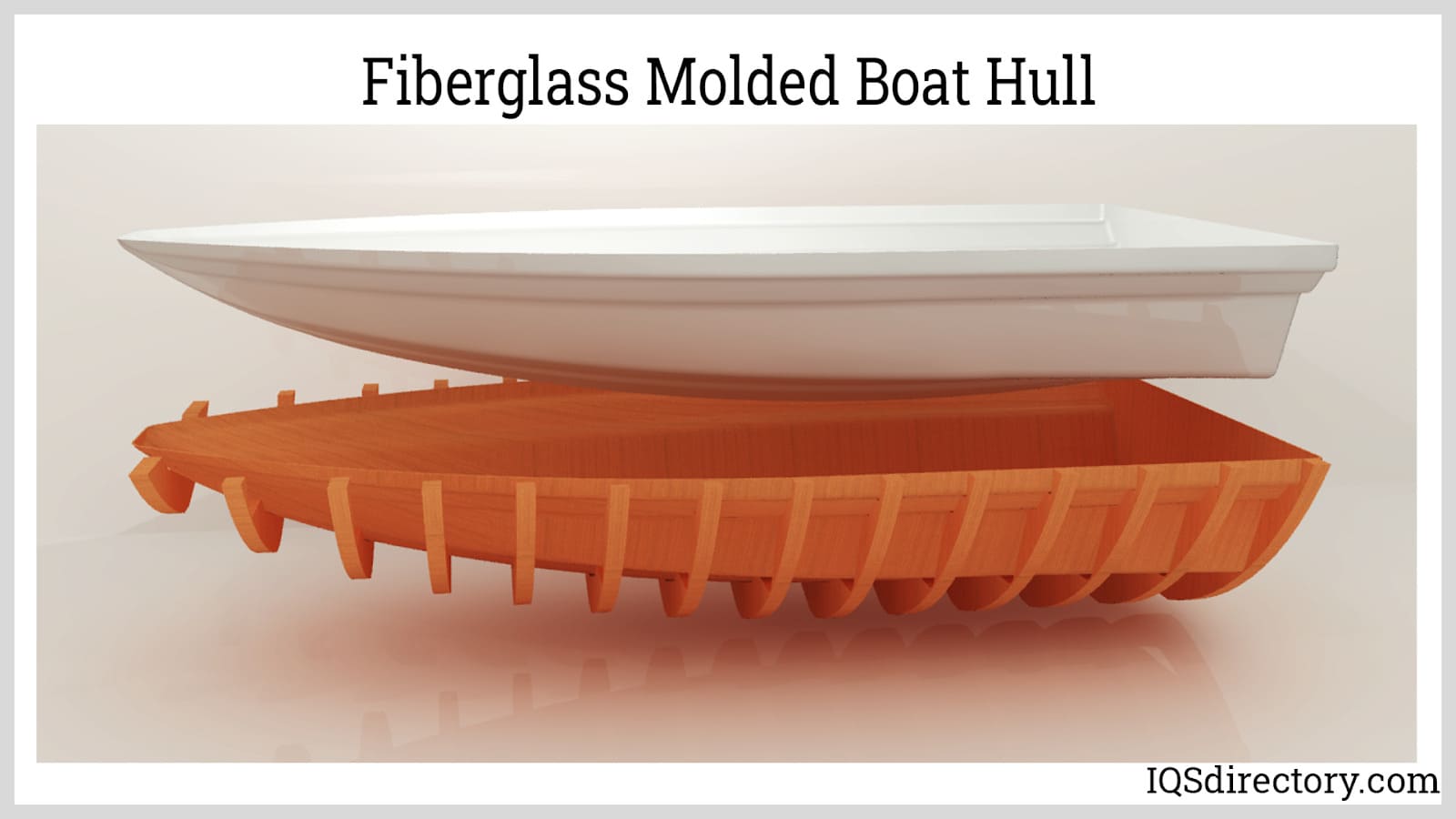
Modern boat building has largely transitioned away from traditional materials like wood and steel, favoring molded fiberglass construction for greater performance and longevity. Today, nearly every component of a recreational or commercial vessel can be crafted from fiberglass-reinforced plastics, with polyester or vinyl ester resins most commonly used for enhanced water resistance. The fiberglass molding process enables boat manufacturers to produce smooth, hydrodynamic hulls, complex deck shapes, and precision parts that resist corrosion, UV exposure, and harsh marine conditions. The manufacturing process begins with spraying a female mold with gelcoat for a high-gloss, protective surface finish, followed by careful layering of fiberglass cloth and resin infusion. Once the resin cures, the resulting boat hull, deck, or structural component is strong, lightweight, and ready for further assembly. Because of their ability to withstand exposure to saltwater and intense sun, fiberglass boats require less maintenance and deliver a long service lifespan—making them the leading choice for marine vessel construction.
Fiberglass Home Building Materials
In the construction industry, fiberglass is a preferred building material for both exterior and interior applications, including architectural facades, siding, roofing panels, and structural framing. Its lightweight, high strength, and moldability make it possible to fabricate complex architectural elements, energy-efficient windows, and attractive roofing shingles. Architects and builders select fiberglass for its ability to replicate traditional wood, stone, or metal appearances while adding superior resilience against weathering, moisture, and pests. Fiberglass is also commonly implemented in shades, awnings, skylights, and insulation panels, delivering enhanced thermal performance and outstanding weatherproofing for homes and commercial buildings. The result is improved energy efficiency, reduced maintenance costs, and long-lasting protection against the elements.

Fiberglass Pipes
Fiberglass reinforced pipes (FRP) are engineered for high-performance fluid transport in municipal water systems, oil and gas lines, chemical processing plants, and waste management infrastructure. The many factors that make fiberglass piping ideal are its lightweight composition, superior resistance to temperature changes, strength-to-weight ratio, and outstanding resistance to corrosion and chemical attack. Their low maintenance requirements, ease of field installation, and compatibility with trenchless horizontal directional drilling methods make them a prime choice as piping materials in modern infrastructure projects. Fiberglass pipes provide superior flow rates due to their exceptionally smooth inner and outer finishes, reducing pressure drop and minimizing scaling or buildup, which is critical for the long-term efficiency of fluid handling systems.

Fiberglass Platforms
Fiberglass's durability, structural strength, and inherent corrosion resistance make it an ideal material for manufacturing both interior and exterior industrial platforms, catwalks, walkways, stairs, and work platforms. Frequently found in wastewater treatment plants, food processing facilities, marine terminals, and chemical plants, these platforms must deliver exceptional stability and withstand rugged, heavy-duty use. Fiberglass’s flexibility allows for design customization and modular construction, making it a preferred choice where precise sizing and ergonomic design are critical. Additionally, composite platforms do not rust, warp, or absorb moisture, ensuring a safe, long-lasting, and virtually maintenance-free solution for industrial access needs.

Fiberglass Grating
Molded fiberglass grating is engineered for use in environments requiring excellent impact resistance, slip resistance, and superior strength-to-weight ratios. Like other fiberglass products, this composite grating is corrosion-resistant, lightweight yet sturdy, nonconductive, and nonmagnetic, making it the preferred choice for walkways, drains, trench covers, and work platforms in manufacturing, oil and gas, marine, food processing, and chemical processing plants. Additionally, fiberglass grating enhances jobsite safety through its non-slip texture, electrical insulation properties, and resistance to fire, making it compliant with strict OSHA regulations and ideal for environments where conductivity and magnetism are concerns.

Fiberglass Doors
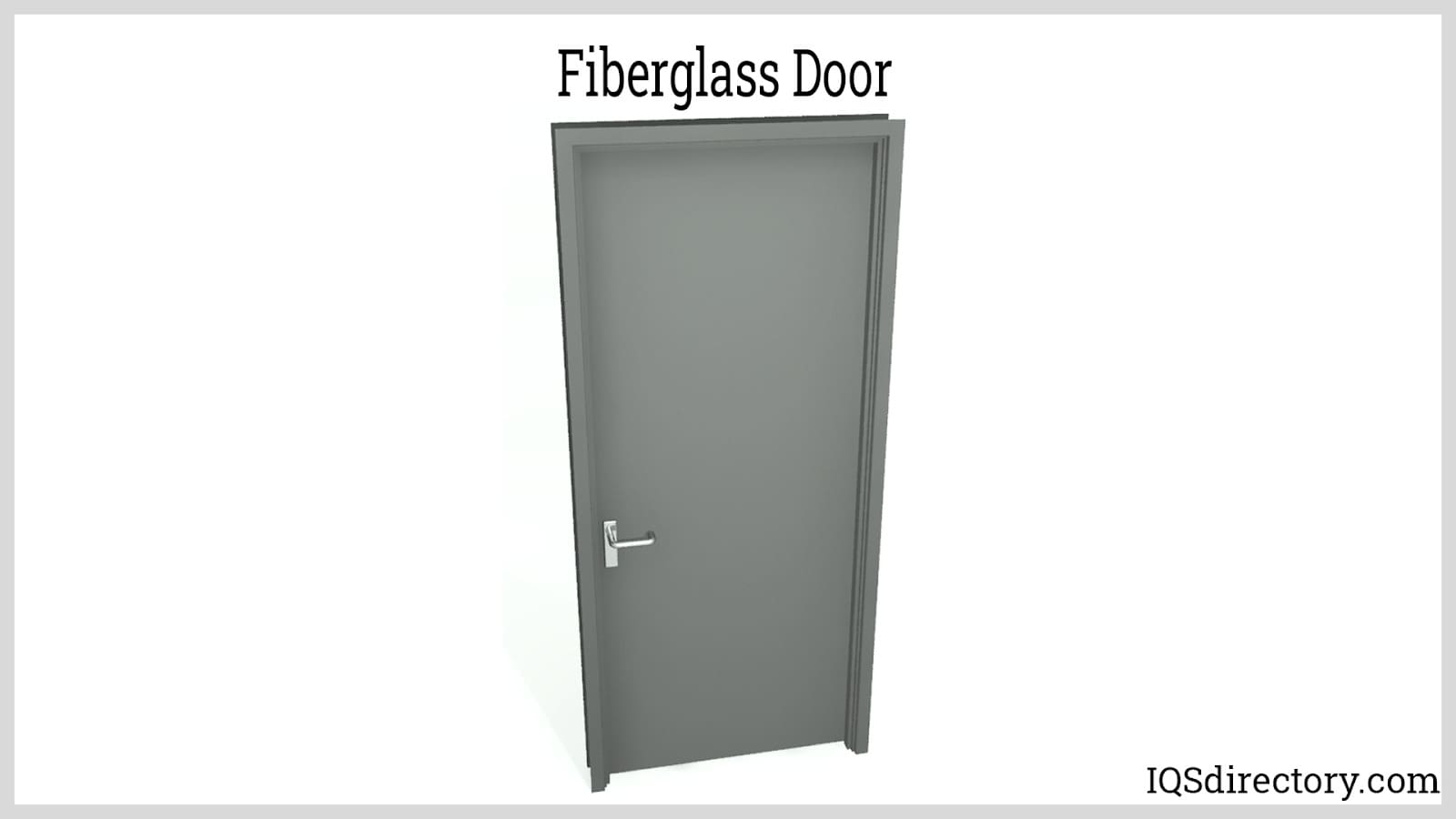
Fiberglass doors are an excellent alternative to metal, aluminum, or steel doors in a range of applications—from residential entryways to industrial facilities. Engineered to offer a tight seal and exceptional energy efficiency, fiberglass doors resist corrosion, denting, warping, rot, and pest damage, unlike traditional wood or metal options. Their high performance in moisture-rich, corrosive, or hazardous environments, and their customizable design, make them particularly well-suited for harsh manufacturing settings, schools, hospitals, and laboratories. Available in a variety of finishes, textures, and sizes, fiberglass molded doors can be tailored to meet fire ratings, security standards, and architectural requirements.
In industrial environments, fiberglass doors are particularly well-suited to withstand the challenging and hazardous conditions often found in manufacturing settings, ensuring long-term durability and minimal maintenance costs.
Fiberglass Sinks
Fiberglass sinks are a popular modern addition to both residential and commercial kitchens and bathrooms due to their remarkable durability, lightweight construction, and longevity. Unlike traditional ceramic or stainless steel sinks, fiberglass reinforced sinks are resistant to stains, chips, impact damage, and scratching, and are exceptionally easy to maintain. They maintain a neat, clean appearance and are highly resistant to bacteria growth, mold, and chemical exposure. Fiberglass sinks can be customized to fit any installation, including corner sinks, double basins, or integrated drain boards, and are available in a wide array of colors and finishes to match any décor. Their nonporous surfaces make cleaning simple, while straightforward installation and mounting further enhance their appeal for both homeowners and professional builders.

Fiberglass Furniture
Fiberglass is commonly used in the production of stylish office chairs, modular workstations, school furniture, and outdoor patio or garden furniture due to its exceptional durability, attractive appearance, and versatile design capabilities. Compared to wood, steel, or plastic alternatives, fiberglass furniture is lighter, easier to clean, and requires minimal maintenance, making it ideal for areas of high foot traffic, such as commercial offices, hotels, restaurants, and educational institutions. Its inherent resistance to fading, UV degradation, and moisture also ensures years of reliable use, even in harsh outdoor conditions. Designers and architects increasingly choose molded fiberglass furnishings for their ability to realize ergonomic shapes, vibrant colors, and innovative forms not possible with traditional fabrication methods.

Fiberglass Auto Parts
In the automotive industry, the drive for enhanced fuel efficiency, structural strength, and innovative design has made fiberglass molded components essential in car, truck, and specialty vehicle manufacturing. Common automotive parts made from fiberglass include hoods, body panels, bumpers, spoilers, dashboards, and reinforced trunk lids. Fiberglass’s lightweight properties directly contribute to reduced vehicle weight, improved fuel economy, and lower emissions. Its versatility in molding enables automakers and aftermarket manufacturers to create complex shapes, aerodynamic designs, and high-performance parts that meet rigorous safety and aesthetic standards. Additionally, molded fiberglass auto parts offer exceptional resistance to dents, corrosion, road debris, and extreme temperatures, making them ideal for both personal vehicles and commercial fleets.

How Fiberglass Is Made?
Fiberglass, a vital composite material in modern engineering and manufacturing, was first developed during the early stages of the industrial revolution. The contemporary version widely used today was invented by a researcher at Owens-Illinois (which later became Owens Corning). They patented the name "fiberglas" with one "s" after making a groundbreaking discovery: by directing a jet of compressed air at molten glass, it could be turned into fine, strong fibers. This chance breakthrough paved the way for the large-scale production of glass fiber, transforming several industries.
Originally deployed as an effective thermal insulation material, fiberglass has evolved into a highly versatile substance, now fundamental to sectors like automotive, aerospace, marine, construction, and wind energy. Fiberglass offers exceptional strength-to-weight ratio, durability, chemical resistance, and thermal insulation properties. Today's sophisticated fiberglass manufacturing process leverages advances in materials science, combining glass filaments with advanced polymers and resins to create reinforced composite materials suited for diverse applications such as fiberglass panels, insulation batts, reinforced plastics, and structural composites.
How Fiberglass Is Made
Fiberglass is composed of extremely fine glass fibers that provide the core reinforcement in various fiberglass products. These glass fibers are broadly categorized into two types based on their geometry: continuous fibers and discontinuous (or chopped) fibers. Continuous fibers are similar to yarns — long, unbroken threads used extensively in textiles and woven reinforcements, while chopped or staple fibers are shorter and commonly used in nonwoven fiberglass mats and insulation.
The use of glass fibers actually dates back to the Renaissance, where artisans incorporated them as decorative threads in stained glass artwork and tapestries. However, the industrial weaving of fiberglass started in the 20th century, enabling mass adoption in commercial and industrial applications such as composite fabrication, piping, tank lining, and wall panels.
Raw Materials
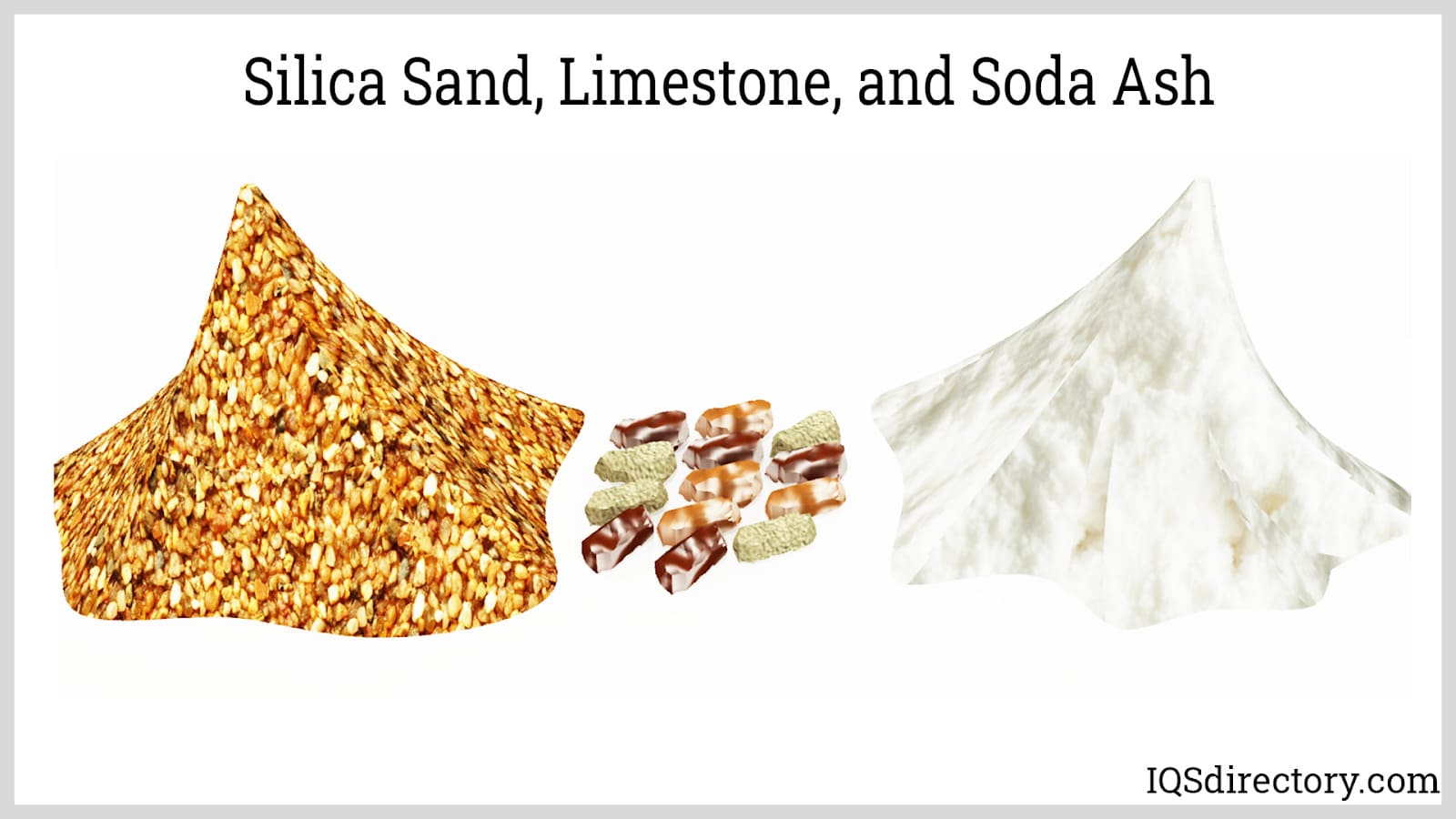
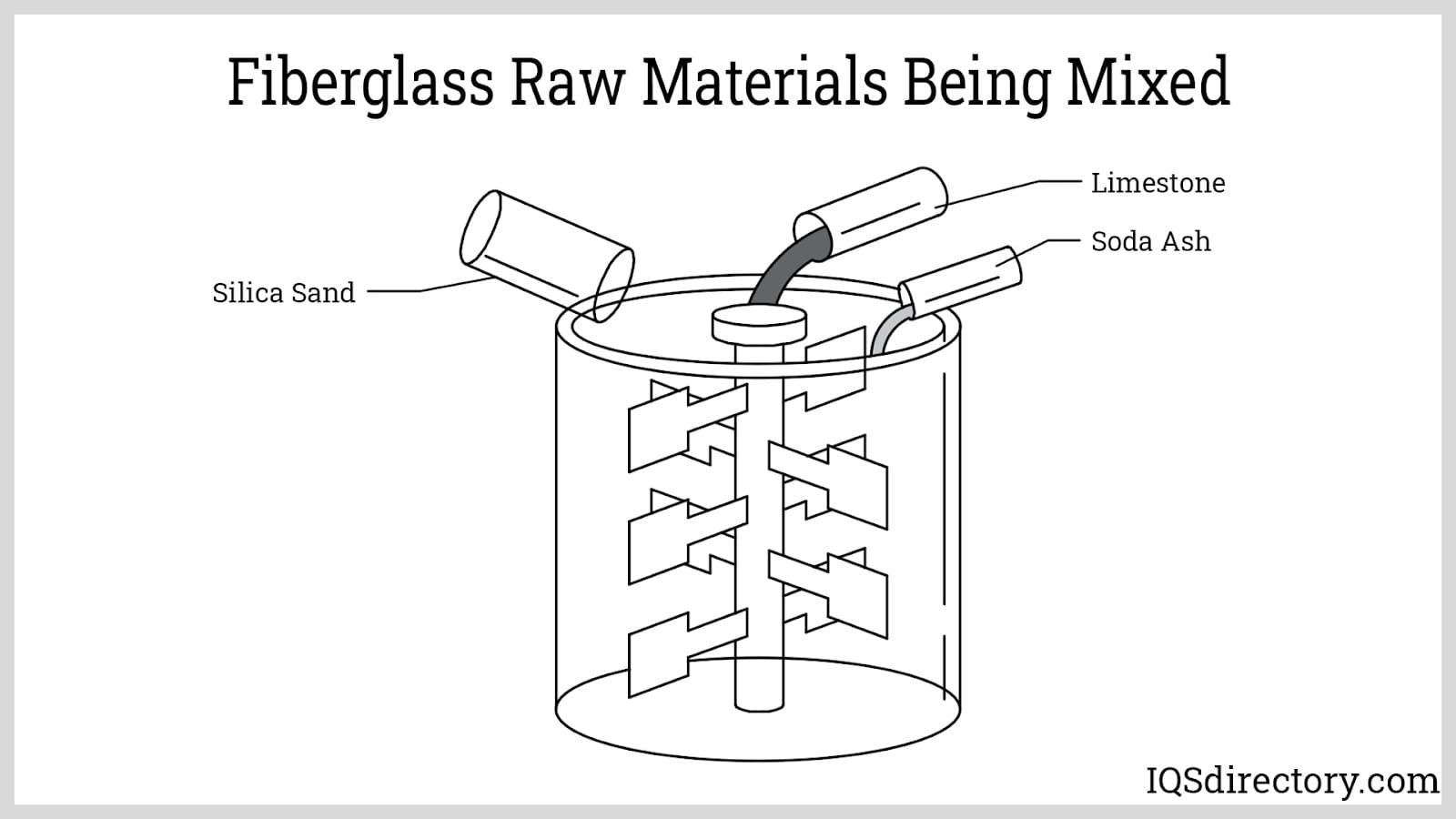
Producing fiberglass starts with a carefully engineered mix of raw ingredients, each contributing specific attributes to the final composite product. The primary raw materials include silica sand, limestone, and soda ash (sodium carbonate), which provide the necessary silica content and act as fluxing agents to lower the melting point of the glass. To fine-tune physical and chemical properties for specialized fiberglass types, manufacturers add calcined alumina, borax (for better durability and flame resistance), feldspar, nepheline syenite, magnesite, and kaolin clay. Each batch is meticulously measured and blended to achieve optimal viscosity and clarity of the molten glass, crucial for forming high-strength, defect-free fibers suitable for structural and insulating applications.
Melting
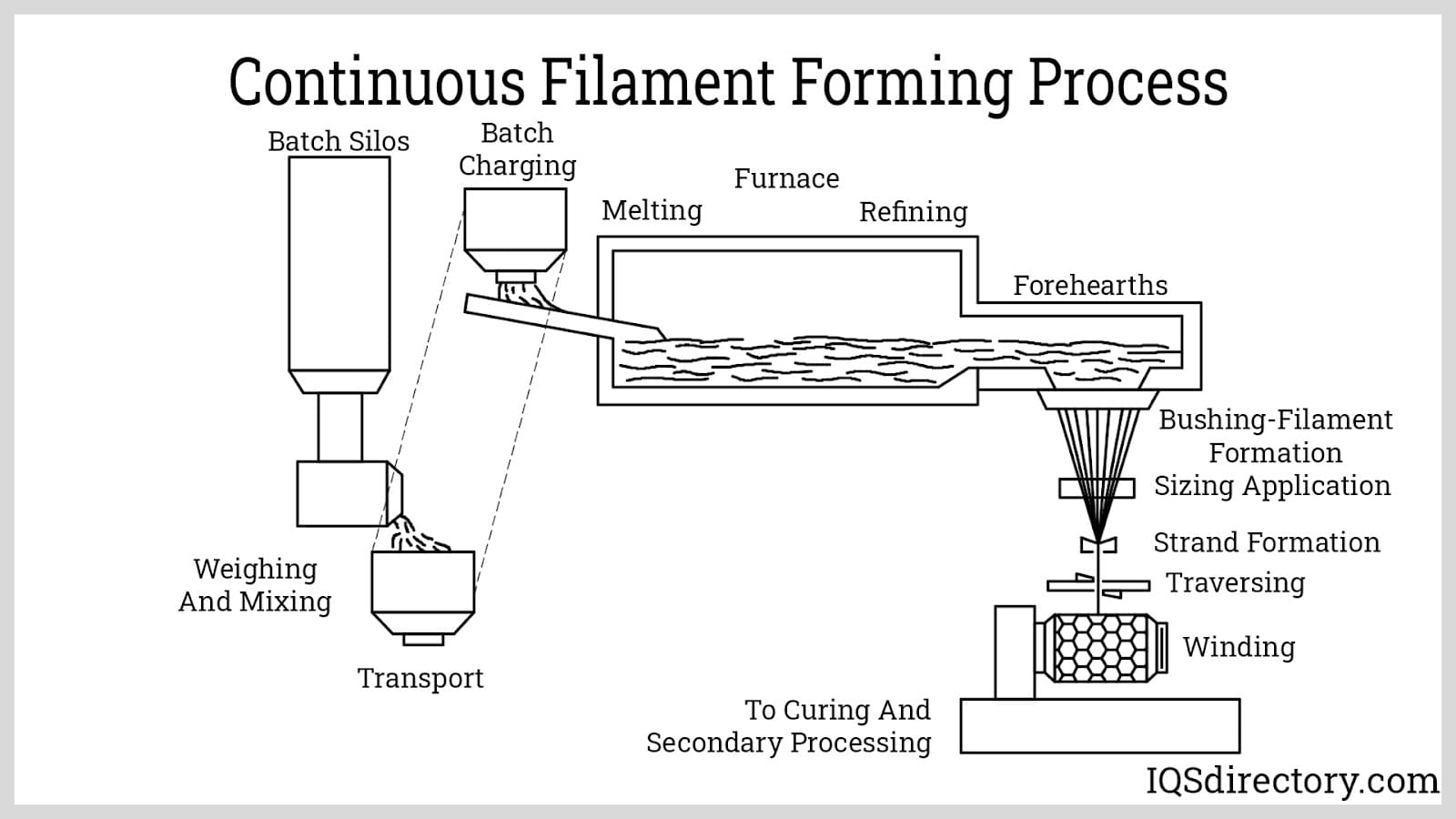
The blended batch is transferred into a high-temperature furnace, where it is heated to approximately 2500° F (1371° C)—significantly higher than the melting point of standard glass. This thermal process ensures that all constituent compounds fully dissolve to achieve uniformity and homogeneity in the molten glass. Precise temperature control is essential to prevent crystallization or devitrification, which may compromise fiber strength and performance. The resulting molten glass is now ready for the fiber-forming stage of fiberglass manufacturing.
Fiber Forming
The molten glass is shaped into fibers through a range of fiber-forming techniques. For textile-type continuous fibers, molten glass is drawn directly from the furnace onto high-speed bushings. Alternatively, in the marble fiber process, molten glass is cast into small marbles, each of which is inspected for impurities or defects before being remelted and extruded into fibers. Key to this stage is the spinneret—a precision engineered bushing with hundreds or thousands of fine nozzles—through which the molten glass is extruded and stretched into ultra-thin filaments. The diameter of these filaments, typically measured in microns, plays a critical role in determining the mechanical properties and intended use of the resulting fiberglass product.
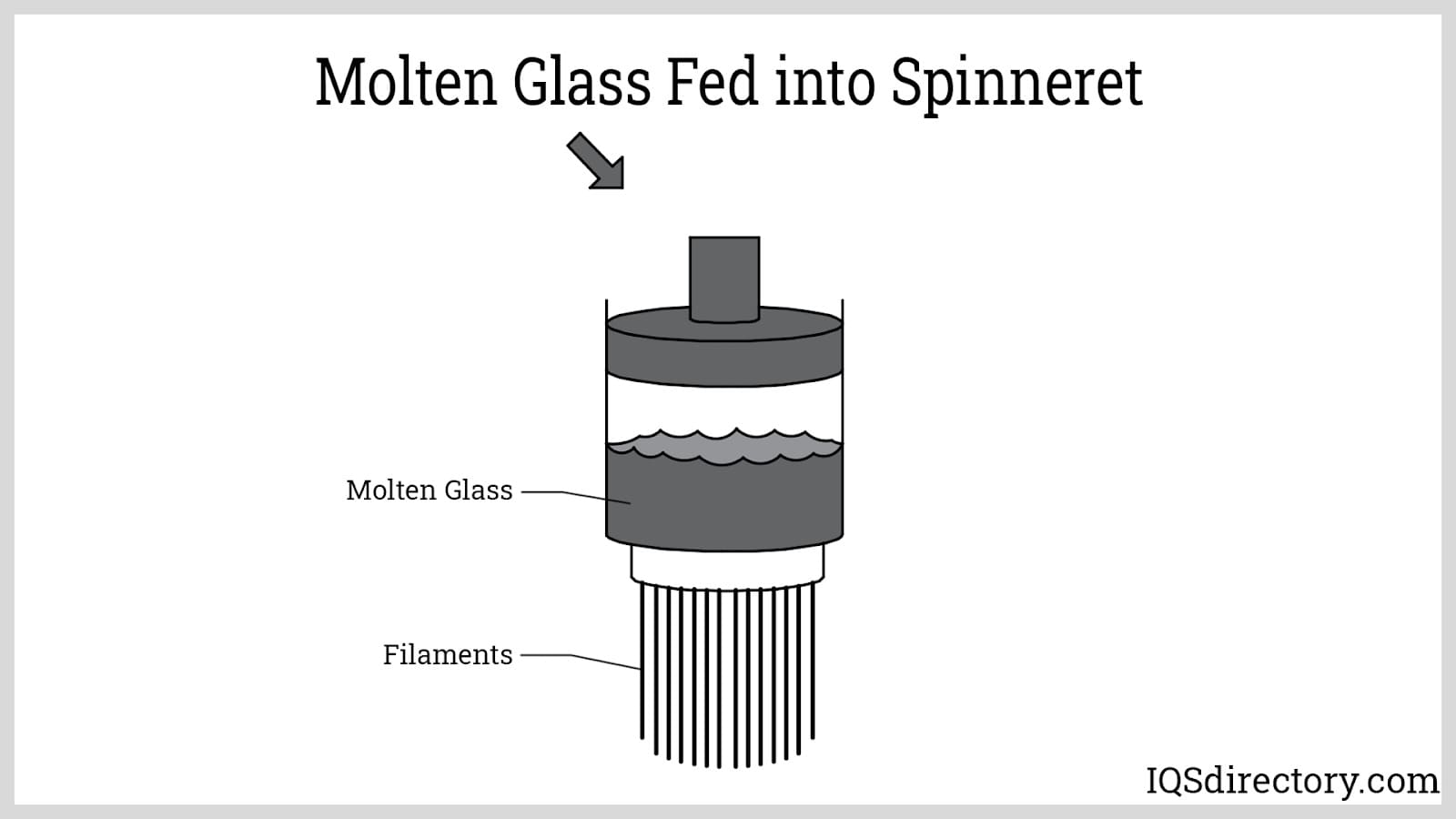
After the initial formation, filaments undergo additional processing to create distinct fiberglass reinforcement formats suitable for resin infusion, filament winding, or compression molding. Below is an overview of principal fiber finishing methods:
Continuous
During continuous filament processing, freshly formed glass strands are rapidly collected by a high-speed winder, spinning at rates of up to two miles per minute. The drawing force further attenuates the filaments, producing ultra-fine, uniform strands. Surface binders and starch coatings are applied during the winding process to prevent static build-up and inhibit strand breakage. These continuous filaments are twisted or plied into fiberglass yarns—the foundation for woven fabric, tape, roving, and mesh products commonly used in composite materials, reinforcing tapes, boat hulls, and aerospace components.
Staple Fiber
In the staple fiber forming method, the molten glass stream exiting the bushing is subjected to high-velocity cold air jets, which cool and fracture the fibers into short, discrete lengths—typically ranging from a few centimeters to several inches. These fibers are treated with lubricants to improve tensile strength and reduce static, then formed into loosely assembled webs which are further carded and stretched to create fiberglass yarn or batts for insulation and preforms. Staple fiber techniques are ideal for manufacturing thermal and acoustic insulation used in construction, HVAC systems, and automotive applications.
Chopped Fiber
Chopped fiber production involves cutting continuous strands into shorter segments, which are then collected on bobbins or creels. These glass fibers are directed through a specialty chopping machine, producing lengths suitable for reinforcing sheet molding compound (SMC), bulk molding compound (BMC), or nonwoven fiberglass mat products. Chopped fiberglass is commonly integrated into thermoplastic resins or cementitious materials, enhancing impact strength, dimensional stability, and crack resistance in final composite parts. The chopped mats, after binder application and oven curing, are rolled up for storage and transport.

Glass Wool
Glass wool—often referred to as fiberglass insulation—is produced using rotary or spinner processes. In rotary methods, molten glass pours into a spinning drum with small orifices along its side. As the drum spins, glass filaments are centrifugally forced through these holes and subjected to blasts of air or hot gas. The result is a tangled mass of ultra-fine glass fibers that fall onto a conveyor, forming a low-density, fluffy mat. A thermosetting binder is sprayed onto the mat before it passes through an oven, where it is compressed and cured, locking the structure into the familiar rolls or batts of insulation widely used in commercial and residential buildings for energy efficiency and fire safety.
For all filament and staple fiber processing methods, binders provide initial cohesion and mechanical integrity. Additional surface treatments such as sizing agents, which contain anti-static and corrosion inhibitors, are applied to optimize fiber performance, enhance compatibility with resin systems, and provide moisture resistance.
Protective Coatings
Throughout binder and coating application, a combination of lubricants, sizing, and anti-static compounds is used to reduce handling damage, improve processability, and increase the longevity of the finished fiberglass product. For strengthened corrosion resistance, a protective coating—or even a coupling agent—may be added, especially for fiberglass intended for use in reinforced plastics (such as GRP or FRP composites), corrosion-resistant tanks, or outdoor structures. These coatings not only stabilize the fibers but also promote better bonding with polymer resins, optimizing composite performance in marine, aerospace, and construction environments.
By understanding the complete fiberglass manufacturing process—from raw material batching to melting, fiber formation, and application-specific finishing treatments—buyers and engineers are better equipped to evaluate and select the ideal type of fiberglass material for their project needs, whether it's for electrical insulation, reinforced polymer composites, industrial filtration, or architectural applications.
Frequently Asked Questions
What Are the Main Advantages of Fiberglass Molding?
Fiberglass molding offers economical production, long-lasting durability, excellent part replication, and adaptability for detailed or complex components. It is also lightweight, corrosion-resistant, and can be prepared for various finishes.
Which Industries Rely on Fiberglass Molding for Their Products?
Fiberglass molding is extensively used in automotive, aerospace, marine, construction, water treatment, chemical processing, and consumer goods industries for manufacturing durable, custom-engineered parts.
How Are Raw Materials Transformed into Fiberglass?
Silica sand, limestone, soda ash, and other materials are melted at high temperatures, then extruded into fine fibers via spinnerets. These fibers are processed further into formats like yarns, mats, or insulation, often with binder coatings.
What Makes Fiberglass Storage Tanks Suitable for Harsh Environments?
Fiberglass storage tanks are highly durable, corrosion-resistant, and designed for both underground and above-ground use. They withstand exposure to chemicals, weather, and temperature variations, making them ideal for municipal, industrial, and agricultural settings.
Why Is Fiberglass Preferred for Boat and Home Construction?
Fiberglass is chosen for boat hulls and building materials due to its lightweight, moldability, and exceptional resistance to water, UV, and corrosion. It ensures long-lasting performance with low maintenance needs and versatile design options.
What Local Applications Use Fiberglass Molded Products?
Municipalities often use fiberglass in water treatment systems, storage tanks, and piping for infrastructure projects due to its chemical resistance and low maintenance, benefiting community utilities and public works facilities.
What Are the Different Fiberglass Molding Processes?
The choice of molding process for fiberglass depends on the type of part or component being created. Factors to consider include the type of fiberglass material used, such as vinyl ester or polyester resin, fiberglass roving or matting, and gelcoat. Each material offers distinct advantages depending on the specific application.
Similar to the production of fiberglass filaments, there is no single method for molding fiberglass. The selection of a molding process must account for various factors, including the intended use of the product. The methods used for molding commercial products often differ significantly from those employed in industrial applications.
Fiberglass Molding Processes
Plug
In the fiberglass molding process, the plug represents the final part, which can be the actual part, a scaled model, or a completely new design. When engineering the mold, factors such as surface finish, draft angles, undercuts, and production methods are carefully considered.
Achieving an excellent surface finish starts with thorough planning. Any imperfections in the plug will be transferred to the final part. Producers aim for a "Class A" finish, characterized by a polished, high-luster appearance free from porosity or scratches.

Release Agent
Even if the plug is smooth and well-formed, it can still adhere to the applied fiberglass during the molding process. To prevent this, a release agent is used to ensure that the final part can be easily removed from the mold.
In industrial operations, fiberglass release agents are designed to efficiently and quickly release the part from the mold in a single step. These release agents often include a sealer that protects and seals the substrate.

Gelcoat
Gelcoat is a specially formulated polyester resin applied as the initial coat in a mold. It creates an opaque, UV-resistant surface. Once the part is removed from the mold, the gelcoat serves as the exterior finish. After applying the gelcoat, the mold is cured to solidify the coating.

Open Molding
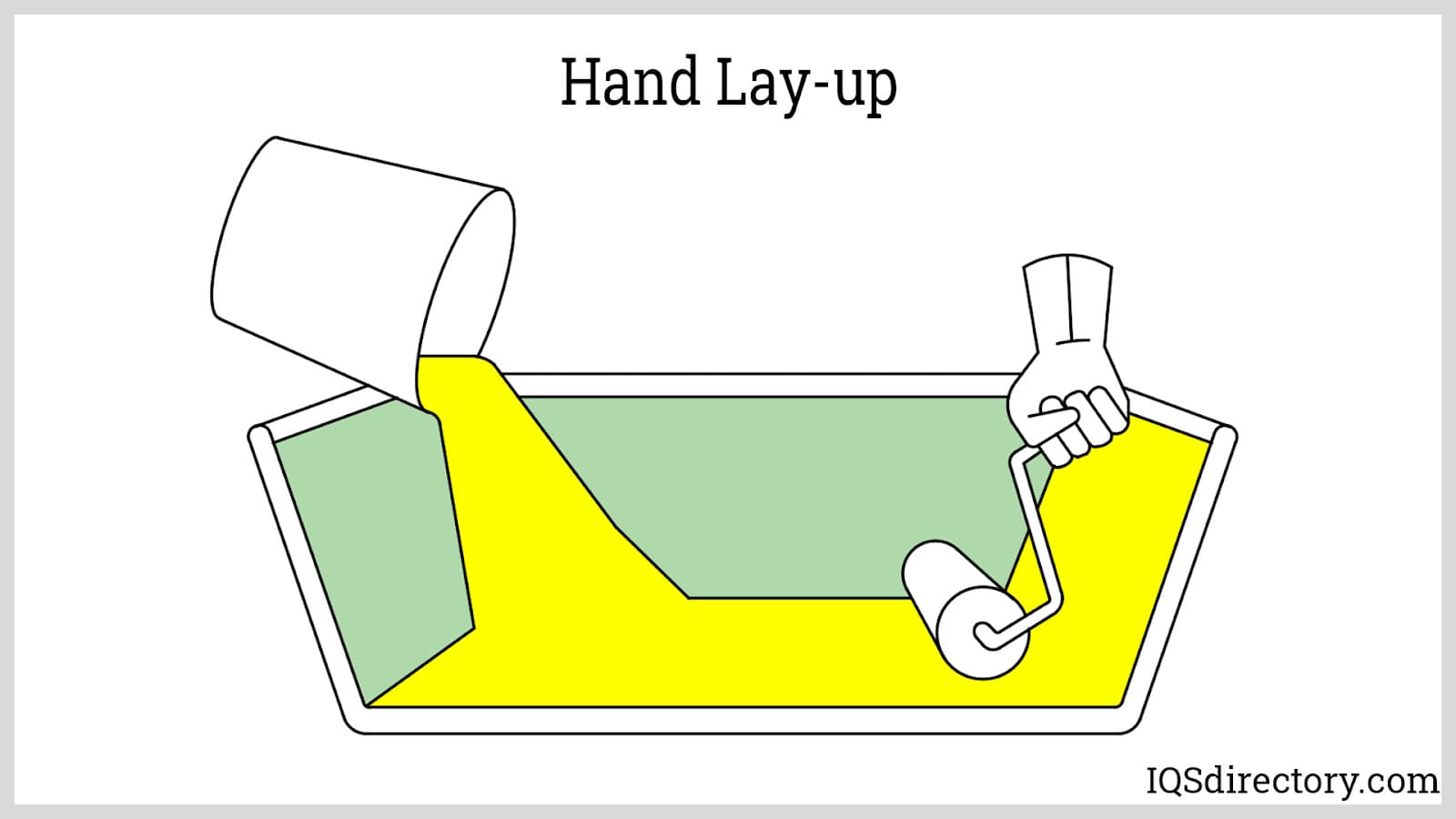
The open molding process uses a single-sided mold that defines the shape and surface of the finished part. Gelcoat is first applied to the mold surface, followed by the addition of reinforcements. Resin and fiberglass can be either sprayed into the mold or applied by hand over the gelcoat. Layers of laminate are built up to achieve the desired thickness of the final part.
Once all materials are added, it is crucial to remove any air pockets or bubbles by rolling over the mold. After ensuring the mold is properly filled and free of air pockets, it is cured to complete the process.
Open molding offers significant flexibility, allowing for the production of a wide variety of sizes, designs, configurations, and components.
Closed Molding
Closed molding encompasses several techniques, including resin transfer molding (RTM), resin infusion, vacuum infusion, and compression molding.
- Resin Transfer Molding (RTM) – RTM is a low pressure and temperature method of transferring a liquid resin into a closed mold through injection ports. The process is noted for its dimensional accuracy and high quality surfaces since the injected resin fills all of the voids in the mold impregnating the complete surface of the material.
- Resin Infusion – Resin infusion is a process where a vacuum is formed to pull resin into a dry fiber laminate in a one sided mold. The mold is sealed by placing a film membrane over the top to encapsulate the outside of the mold and cover the layers. The benefits of the process are less porosity of completed parts and exceptional casting strength.
- Compression Molding – For compression molding, the fiberglass material is compressed in a metal die using vertical force. As the pressure is applied the resin flows to fill the mold cavity. During the time that the mold is closed, the material undergoes curing that permanently hardens the molded shape in the mold cavity. The process can take several seconds or minutes to be completed.
Curing
Curing is the process of allowing the fiberglass mold to harden and set. It generally refers to the process where a liquid solidifies into a solid. Several methods can be used to cure fiberglass molds. The simplest method involves allowing the molded shape to cure at room temperature after applying a catalyst or hardening additive.
The curing process can be accelerated by applying heat using an oven and pressure. The vacuum bagging process helps consolidate the various layers of the mold and removes any voids by off-gassing.
Electron beam (E-beam) curing is used by some manufacturers for curing thin laminates. In this method, the molded part is exposed to electrons, which provide ionizing radiation that causes crosslinking of the resins.
Ultraviolet (UV) curing uses UV radiation to activate a photoinitiator added to the resin. When UV rays hit the workpiece, the photoinitiator triggers a crosslinking reaction in the resin.
Careful monitoring of the curing process is essential. This involves measuring the conductivity of ions in the resin material. Higher viscosity resins result in slower ion movement.
Fire Ratings and Retardants
For certain applications, regulations require building materials to be fire retardant and not contribute to the spread or prolongation of a fire. While fiberglass itself is incombustible, the resin used is highly flammable and must be coated to prevent it from fueling a fire. Several flame control and flame retardant coatings are applied during production to meet federal, state, and local building and fire codes.
Building materials are typically tested using the American Society for Testing and Materials (ASTM) E-84 test. This test assesses flame spread and burning behavior of a material sample. The test results include a Flame Spread Index (FSI) and a Smoke Developed Index (SDI), which classify materials as A, B, C, D, or E.
One type of fiberglass coating, known as intumescent flame retardant (IFR), uses intumescent technology to retard fire spread and reduce heat. IFR is an eco-friendly, high-efficiency flame retardant that produces low smoke and toxicity. It contains aluminum oxide, silicon oxide, and various metal oxides.
Fire retardant paint coatings react to heat by releasing a flame-dampening gas, which slows the spread of fire and provides time to extinguish it. This coating is highly effective in suppressing fire reactions in fiberglass and has an ASTM E-84 Class A rating, indicating very slow fire spread and high resistance to severe fire exposure.
Who Are the Leading Manufacturers of Fiberglass Molding Machines?
Numerous machines are available for fiberglass molding, playing a crucial role in today’s industries by enabling efficient and precise manufacturing of fiberglass components. These components are widely used in sectors such as automotive, construction, and marine, providing lightweight, durable, and corrosion-resistant solutions. Below, we explore several brands of machines commonly used for fiberglass molding in the United States and Canada:
Brand: Magnum Venus Products (MVP)
Model: Patriot RTM System
Features: The MVP Patriot RTM System is designed for closed-mold fiberglass manufacturing processes, such as resin transfer molding (RTM). It provides precise control over resin injection and flow, ensuring consistent part quality and reduced material waste. This system includes advanced features like temperature control, pressure monitoring, and automated controls, making it efficient for producing complex fiberglass parts with excellent surface finish and dimensional accuracy. The Patriot RTM System is renowned for its reliability, durability, and ease of use.
Brand: GRACO
Model: Reactor E-XP2
Features: The GRACO Reactor E-XP2 is a plural-component proportioning system used in fiberglass composite manufacturing. It ensures precise mixing and dispensing of reactive resins and catalysts for various fiberglass molding processes. The Reactor E-XP2 offers advanced control features, including ratio monitoring, temperature control, and programmable settings. It supports efficient and accurate material application, ensuring proper curing and optimal part properties. This system is widely used for applications such as spray-up and hand lay-up processes.
Brand: Fiber-Tech Industries
Model: FRP Panel Manufacturing Line
Features: Fiber-Tech Industries specializes in complete FRP (Fiberglass Reinforced Plastic) panel manufacturing lines. These lines include machinery for resin impregnation, continuous lamination, and curing. The FRP Panel Manufacturing Line offers high-speed production capabilities with consistent quality and dimensional control. It is suitable for producing fiberglass panels for construction and transportation applications. Known for its efficiency, automation, and versatility, this manufacturing line excels in delivering reliable results.
Brand: RTM North Ltd.
Model: Hydra Filament Winder
Features: RTM North Ltd. offers the Hydra Filament Winder for the automated production of fiberglass composite products, such as pipes, tanks, and tubes. This machine provides precise fiber placement, tension control, and resin impregnation, ensuring consistent and high-quality parts. It supports various filament winding techniques and accommodates different part sizes and shapes. The Hydra Filament Winder is recognized for its reliability, flexibility, and efficient production capabilities.
Brand: KOBELCO
Model: FCP Series
Features: KOBELCO’s FCP Series filament winding machines are designed for the precise and automated production of cylindrical or conical composite structures. These machines offer control over winding patterns, fiber tension, and resin impregnation, resulting in uniform and high-strength parts. The FCP Series supports customization for specific part requirements and production volumes. KOBELCO’s filament winding machines are known for their advanced technology, reliability, and performance.
Please note that the availability and specific features of these models may change over time. For the most up-to-date information, it is advisable to contact the manufacturers or their authorized distributors.
What Are the Benefits of Using Fiberglass Molded Parts?
Among various fabricating materials, fiberglass stands out as the most popular choice for reinforcing and stabilizing polymers due to its numerous benefits. Initially used during World War II as a substitute for plywood in aircraft construction, fiberglass has since expanded into a wide range of industries. Its strength, cost-effectiveness, and ease of fabrication have made it a versatile material in applications beyond aircraft design.
Benefits of Using Fiberglass Molded Parts

Tensile Strength
Fiberglass parts offer strength comparable to steel but with only a quarter of its density, significantly reducing the weight of the finished product. The high MPa rating of fiberglass ensures excellent rigidity, making it ideal for construction projects that demand substantial strength.
The remarkable strength of fiberglass is evident in its applications, including the manufacture of bridges, balconies, building facades, and platforms. Its high strength-to-weight ratio makes it particularly suitable for gratings designed to support vehicular loads.

Non-Conductivity
Fiberglass is an effective insulation material, even at relatively low thicknesses. Both the glass and resin used in fiberglass are non-conductive because they do not contain metals or free electrons, which makes them excellent insulators against electricity.

Incombustibility
Incombustibility refers to a material's ability to resist burning. Fiberglass is composed of mineral materials that are naturally incombustible, meaning they do not support or produce flames. When exposed to heat, fiberglass does not emit smoke or release toxic substances.

Dimensional Stability
Dimensional stability is crucial for parts, as maintaining their original shape and size is essential for their functionality. Fiberglass excels in this regard because it is not affected by temperature fluctuations, humidity, or moisture. Its low coefficient of thermal expansion ensures that it retains its original shape and configuration even under the harshest conditions.

Thermal Conductivity
Thermal conductivity, or the transfer of heat, is a key factor in evaluating building materials. Fiberglass is essential in construction primarily because of its low thermal conductivity. It does not burn, remains unaffected by curing temperatures, and retains 50% of its strength at 700°F and 25% at 1000°F.

Chemical Resistance
Fiberglass has become widely used primarily due to its resistance to substances that cause rot or decay. It is highly resistant to prolonged exposure to water and is unaffected by most acids, except for hydrofluoric and phosphoric acids.
Dielectric Permeability
Similar to its nonconductivity, materials with dielectric properties do not permit electric currents to pass through and are the opposite of electrical conductors. This characteristic of fiberglass makes it ideal for applications that require protection from electromagnetic fields (EMF).

Durability
In addition to its exceptional tensile strength, fiberglass is highly durable, as it does not rot, corrode, or rust. This durability ensures the integrity and longevity of parts and materials made from fiberglass. It is designed to withstand tough, rigorous, and harsh conditions, making it a preferred choice for environments involving corrosive substances or materials.
Lightweight
Despite having strength comparable to steel, fiberglass weighs significantly less—approximately one-fourth the weight of steel. This lightweight nature, combined with its dimensional stability, enhances its usability and durability. The reduced weight simplifies installation and allows for flexibility in design and configuration.
One drawback of heavy materials is the higher cost associated with their installation, which often requires cranes, lifts, and other equipment. In contrast, fiberglass installation is more cost-effective, as it does not necessitate such heavy machinery.
Maintenance
Fiberglass is known for its durability and low maintenance requirements, which significantly reduces its overall cost of use. Throughout its lifespan, a fiberglass part typically needs minimal upkeep, such as painting or chemical cleaning.
Design Freedom
Fiberglass is used to create a wide range of products due to its versatility, allowing designers to bring their visions to life. From broom handles and electrical enclosures to car doors and fenders, fiberglass can be molded, shaped, and customized to meet the specific requirements of various products.

Soundproofing
Various types of fiberglass are effective for soundproofing, with their suitability determined by the NRC (Noise Reduction Coefficient) rating. A higher NRC rating indicates better sound absorption. For example, fiberglass insulation with a thickness of 3.5 inches typically has an NRC rating of 0.9 to 0.95, making it highly effective for soundproofing applications.

Biological Resistance
Several biological and environmental factors can affect the lifespan of a product. However, fiberglass is known for its longevity and resistance to environmental contamination and microorganisms. Once installed, fiberglass typically lasts throughout the lifespan of the application.
Fiberglass also boasts biological resistance, including its inability to absorb materials like water, which can cause other fabrics to rot.

Insensitive to UltraViolet (UV) Radiation
Ultraviolet degradation, a type of photo corrosion caused by light with wavelengths between 10 and 400 nanometers (NM), is harmful to various materials, including textiles, wood, certain steels, aluminum, and polymers. Although these UV rays are not visible to the naked eye, they can lead to inconsistencies and accelerate corrosion.
To counteract UV degradation, fiberglass is often treated with specialized coatings that help preserve the integrity and strength of the fibers.
What Are the Different Types of Fiberglass?
Fiberglass can be tailored for specific applications, with each type varying in composition to produce distinct characteristics. Despite the differences, the basic composition of fiberglass remains largely the same, with variations arising from specific raw materials.
The variation in fiberglass types is due to the different proportions of raw materials used. While the core materials include silica sand, soda ash, and limestone, additional ingredients such as borax, calcined alumina, magnesite, kaolin clay, and feldspar can be incorporated to modify the fiberglass's properties and characteristics.
The classification of fiberglass types is based on their properties and characteristics. For instance, adding certain raw materials can enhance chemical resistance, while others may be used to create fiberglass suited for applications like cookware.
Types of Fiberglass
A-Glass
A-glass, also known as alkali or soda-lime glass, is the most common type of fiberglass material. It accounts for approximately 90% of glass production and is used in making jars, bottles, and windows. A-glass is chemically stable, inexpensive, highly workable, and durable. Its ability to be remelted and softened multiple times adds to its popularity.
There are two main types of A-glass: flat glass and container glass. Flat glass is produced using the float process, while container glass is made using the blow method. The key difference between the two types lies in the quantity and mixture of raw materials used in their production.
C-Glass
C-glass, also known as chemical glass, is specifically designed to resist chemical influences and offer protection in corrosive environments. Its high calcium borosilicate content imparts these chemical-resistant properties. C-glass is commonly used as a laminate, similar to surface tissue, for applications such as pipes and tanks that store water and chemicals.

D-Glass
D-glass, known for its low dielectric constant due to the inclusion of boron trioxide, is ideal for manufacturing optical cables. The addition of borosilicate further provides it with a low coefficient of thermal expansion. These characteristics make D-glass well-suited for electrical appliances and cookware, where minimal thermal expansion and excellent electrical insulation are essential.
E-Glass
The "E" in E-glass stands for electrical glass, reflecting its lightweight nature and suitability for aerospace, marine, and various industrial applications. Its excellent draping properties make it easy to handle and clean.
Originally developed for electrical applications, E-glass is now widely used to reinforce thermosetting plastics. Its robust nature provides strong protection against mechanical impacts, making it versatile for many different applications beyond its initial scope.
HR-Glass
HR-glass, known for its exceptional thermal resistance, can withstand temperatures up to 800°C. This aluminosilicate material is a viable alternative to E-glass due to its superior high-temperature performance.
Advantex Glass Fibers
Advantex glass combines E-glass with ECR glass, offering the same corrosion resistance as ECR glass but at a lower cost. With its higher melting point, Advantex fiberglass is suitable for environments with thermal fluctuations and is commonly used in the oil, gas, mining, and wastewater management industries.
ECR Glass
ECR glass, or electronic glass fiber, is known for its mechanical strength, waterproofing properties, and resistance to alkali and acids. Made with calcium aluminosilicates, it offers durability, acid resistance, and electrical conductivity at a lower cost compared to other fiberglass types.
AR-Glass
AR-glass, or alkali-resistant glass, is specifically designed for use in concrete. It contains Zirconia, which enhances the concrete's strength and flexibility. AR-glass is highly resistant to dissolution in water and remains stable across varying pH levels.
R, S, and T-Glass
R, S, and T-glasses offer superior tensile strength and better wetting and acidic resistance compared to E-glass. Their improved properties come from reduced filament diameter. These types are used in military and aerospace applications, as well as for rigid ballistic armor, and are priced higher due to their specialized uses.
S2-Glass
S2-glass is the highest quality fiberglass, characterized by its increased silica content, which enhances weight, temperature resistance, compressive strength, and impact resistance. It boasts a tensile strength 85% greater than other fiberglass types, making it exceptionally durable and resistant to damage.
SiO₂-Glass
SiO₂-glass, with its remarkable temperature resistance of over 1000°C, is a durable fiberglass that does not vaporize or melt under extreme heat. Its tetrahedral and amorphous molecular structure contributes to its longevity and distinguishes it as a next-generation fiberglass.
M-Glass
M-glass fibers are known for their strength and ability to endure high pressure and impact. Made with silicone-treated reinforced fiber plastic, M-glass offers greater dimensional stability due to its densely aligned fibers, enhancing strength without increasing weight. The addition of beryllium increases its elasticity.
Z-Glass
Z-glass features outstanding mechanical properties and resistance to UV rays, acids, alkali, salts, scratches, wear, and temperature changes. It is one of the most durable fiberglass types, offering semi-transparency and compatibility with 3D printing. Z-glass is a reliable alternative to brittle glass, used in automotive prototyping.
Forms of Fiberglass
Tow and Roving Fiberglass
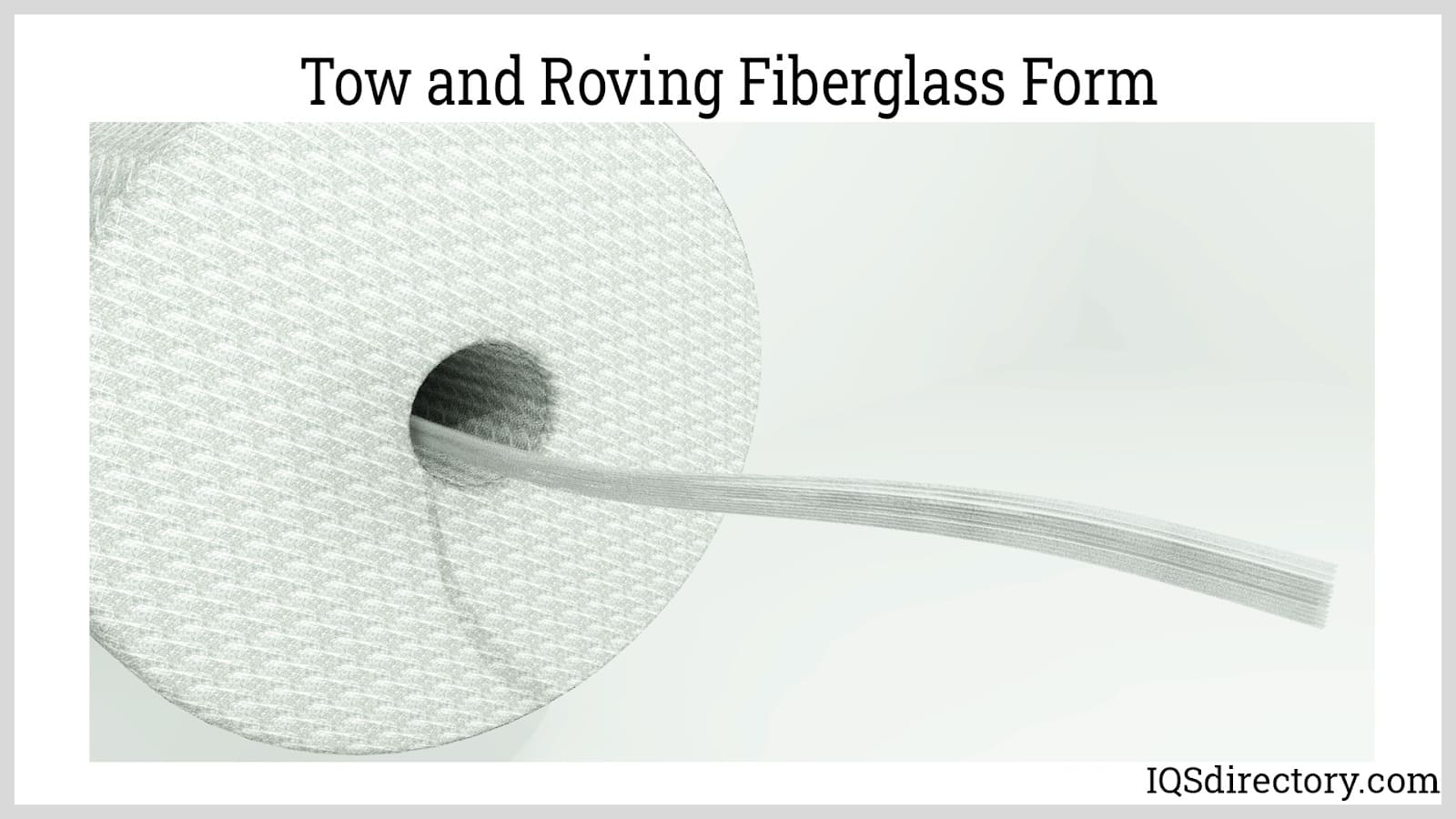
Tow and roving fiberglass, known for its superior properties, is delivered in spools for use in filament winders or cut for stiffening. It must be stored under tension to maintain its mechanical properties.
Veil Mats
Veil mats consist of thin continuous strands of fiber arranged in a roll with a tissue-like consistency and held together by a light binder. While not intended for structural applications, they are used in molds behind surface coatings.
Chopped Strand Mat
Chopped strand mat is made from fibers a few inches long, placed haphazardly. Though not very strong, it is isotropic, providing uniform strength in all directions. It is the most economical and commonly used type of fiberglass mat, suitable for mold production.
Woven Fabric
Woven fiberglass fabric is anisotropic, with fibers oriented in two directions and bundled like yarn, resulting in high strength. It must be aligned parallel to the load, and additional fabric is needed for strength in other directions. Various weaves, including plain, twill, and satin, offer differing levels of pliability and strength, with plain weaves being the least pliable.
Woven fiberglass fabric comes in various types, with plain weave being the most common yet least pliable. Twill and satin weaves offer greater pliability and strength compared to plain weaves. Their increased flexibility allows them to conform easily to complex shapes and designs.
What Are the Industrial Uses of Fiberglass Molding?
The discovery that fiberglass, when combined with resin, enhances strength and durability revolutionized its role in various industries. Its widespread use is attributed to its affordability, resistance to impact, corrosion, and chemicals, as well as its outstanding strength-to-weight ratio.
Fiberglass plays a crucial role in numerous industries, so much so that its applications could fill a book. Below are a few examples of industries where fiberglass is an essential resource for product manufacturing.
Industrial Use of Fiberglass Molding
Boat Building
Fiberglass is integral to boat construction, used in everything from hulls to decks, tables, and chairs. Since its first application in boat design in 1942, advancements in resin technology and production methods have made fiberglass the material of choice for manufacturers. Compared to wood, aluminum, and steel—materials that are more challenging and costly to shape—fiberglass offers a cost-effective and versatile alternative.
Home Furnishings
Fiberglass is widely utilized in home furnishings, with applications including door frames, window frames, shower stalls, bathtubs, swimming pools, hot tubs, and even kitchen sinks and appliances. Its versatility and durability have expanded the possibilities in the home furnishing industry, offering a range of innovative products.
Amusement Park Attractions
Fiberglass is essential for creating amusement park attractions, such as water slides, troughs, and funnels. Its ease of shaping and forming allows for the construction of themed elements like rocks and facades, either crafted on-site or off-site. Amusement parks employ specialists skilled in fiberglass repair to maintain the many attractions effectively.
Electronics
Fiberglass is crucial in electronics, providing the base material for circuit boards in devices such as laptops, computers, and cell phones. Its lightweight properties make it an ideal choice for these applications, ensuring that fiberglass is a fundamental component in various electronic devices found in homes.
Automotive Industry
The first car body made entirely of fiberglass was introduced in 1953. While the initial design faced challenges in terms of efficiency and practicality, advancements in fiberglass technology and the demand for fuel efficiency have since made it a key material in automotive design and production.
Fiberglass's versatility in shaping and forming allows automobile designers to create unique and intricate designs with ease. It facilitates the production of custom and replacement parts, as well as the reproduction of classic designs.
Additionally, fiberglass offers a significant cost advantage over metal tooling. The manufacturing of fiberglass parts is more cost-effective and efficient compared to metal presses, making it a valuable material in today's automotive industry.
Aircraft and Aerospace
For aircraft and aerospace applications, components must be sturdy, durable, and lightweight. S-glass, known for its high strength-to-weight ratio, is ideally suited for these requirements. It offers exceptional resistance to fatigue and maintains its dimensions even under high temperatures, making it a preferred material in aerospace construction.
Additional benefits of S-glass fiberglass include its superior mechanical strength and electrical nonconductivity. For military aircraft, its low radar thermal profile provides a tactical advantage, enhancing stealth capabilities.
Construction
In the construction industry, fiberglass is valued for its dimensional stability, lightweight nature, and durability. Its resistance to combustion, impact, and long lifespan make it a versatile material. Fiberglass is used for a wide range of applications, including exterior finishes, interior design elements, fences, skylights, swimming pools, solar heating systems, fixtures, railings, stairs, and platforms.
What Are the Safety Concerns for Fiberglass Molding?
Fiberglass, also known as glass wool, fibrous glass, or glass fibers, consists of extremely fine glass and chemical fibers. During processes like sanding, cutting, chopping, or trimming, fiberglass can produce harmful dust. This dust contains fibers that may come into contact with the skin or eyes, posing health risks to workers.
Manufacturers of fiberglass products are acutely aware of these hazards and implement stringent safety measures to protect their workforce. This concern for safety is a significant priority in the industry.
Furthermore, the Occupational Safety and Health Administration (OSHA) has established guidelines for the safe handling and production of fiberglass. The Environmental Protection Agency (EPA) also regulates the installation and use of fiberglass products, as well as the pollutants generated during their production.
Safety Concerns for Fiberglass Molding
Fiberglass Hazards
Fiberglass fibers can cause irritation to the skin, eyes, and upper respiratory tract. Prolonged exposure may lead to serious health issues. Unprotected skin contact with fiberglass can result in irritation and rashes, while inhalation of fiberglass dust may irritate the nose, throat, and respiratory passages.
Swallowing fiberglass dust can cause stomach irritation, and inhaled fibers can settle in the lower lungs, leading to persistent irritation and breathing problems.
Protective Gear
To mitigate the hazards of handling fiberglass, employers provide employees with inspected and approved safety gear. Basic protection includes safety glasses to shield the eyes, and goggles for full eye enclosure. Various types of masks that cover the nose and mouth are also used to prevent particle inhalation.
Gloves are a standard piece of equipment designed to prevent fiberglass particles from coming into contact with the hands. These gloves usually extend up to the elbow, covering the forearm.
For those who work with fiberglass regularly, more comprehensive protective gear is provided, including head and neck coverings with built-in respirators and interchangeable air filters.
Additionally, protective clothing such as jumpsuits covers workers from neck to ankles. This clothing is crafted from a fine weave of resilient material designed to block dust particles.
First Aid Measures
Work areas involved in fiberglass production are equipped with eye washing fountains featuring dual jets of water. Additionally, manufacturers provide showers and hand washing stations to ensure thorough hygiene and protection for employees.
Occupational Safety and Health Administration (OSHA)
Several sections of OSHA regulations address concerns for workers exposed to fiberglass dust:
General Industry 29 CFR 1910: This regulation pertains to dust from synthetic fibers.
Health Effects: OSHA publishes information on the health effects of exposure to synthetic fibers, based on data from various national and international organizations.
Exposure Limits: This section provides details on exposure limits for all chemicals, including synthetic fibers, with specifics for each type of toxic material.
OSHA No. 2005-149: This document describes exposure limits, measurement methods, protection and sanitation practices, first aid, respiratory recommendations, symptoms, targeted organs, and potential cancer risks.
OSHA also offers guidance on appropriate protective gear, lung protection strategies, and identifies carcinogenic materials.
Standard 1926.957: This standard is specifically tailored for the construction industry, addressing the use of fiberglass in construction.
Environmental Protection Agency (EPA)
The EPA provides information on the pollutants produced by fiberglass fabrication, including methods for reducing these pollutants and resources for managing them effectively.
Conclusion
- Fiberglass molding is a method for forming complex and intricate parts using fiberglass resin.
- Fiberglass molding is an inexpensive method for the production of durable and lasting products and parts.
- From its original discovery to be used as insulation, fiberglass has grown into a widely used material that can be shaped into limitless products.
- The ingredients for fiberglass include silica sand, limestone, and soda ash. Added to those basic ingredients are calcined alumina, borax, feldspar, nepheline syenite, magnesite, and kaolin clay to name a few.
- The determination of the process used to mold fiberglass depends on the type of part or component that is being created.