



Rotary Latches: Types and Applications
IQS Directory EditorialUpdated 6 chapters
3 leading suppliers listed with this guide
Browse rotary latches suppliersContents (6 chapters)
This article is a thorough examination of rotary latches and their use.
You will learn:
- What is a Rotary Latch?
- Types of Rotary Latches
- How Rotary Latches are Made
- Metals Used to Make Rotary Latches
- And much more …
Chapter 1: What Is a Rotary Latch?
A rotary latch refers to a secure locking mechanism designed to fasten openings such as doors, enclosures, cabinets, compartments, and access panels, preventing them from unintentionally opening during use, transport, or vibration. Also known as slam latches, these devices engage with a striker to lock when pushed into place, making them a popular choice for automotive, industrial, and equipment applications. The fundamental components of a rotary latch typically include a housing, jaw, lever, and spring, where the housing supports the latch components and enables mounting. Rotary latches belong to a broader category of latches, often called slam latches, named for the action required to lock a door or lid securely.
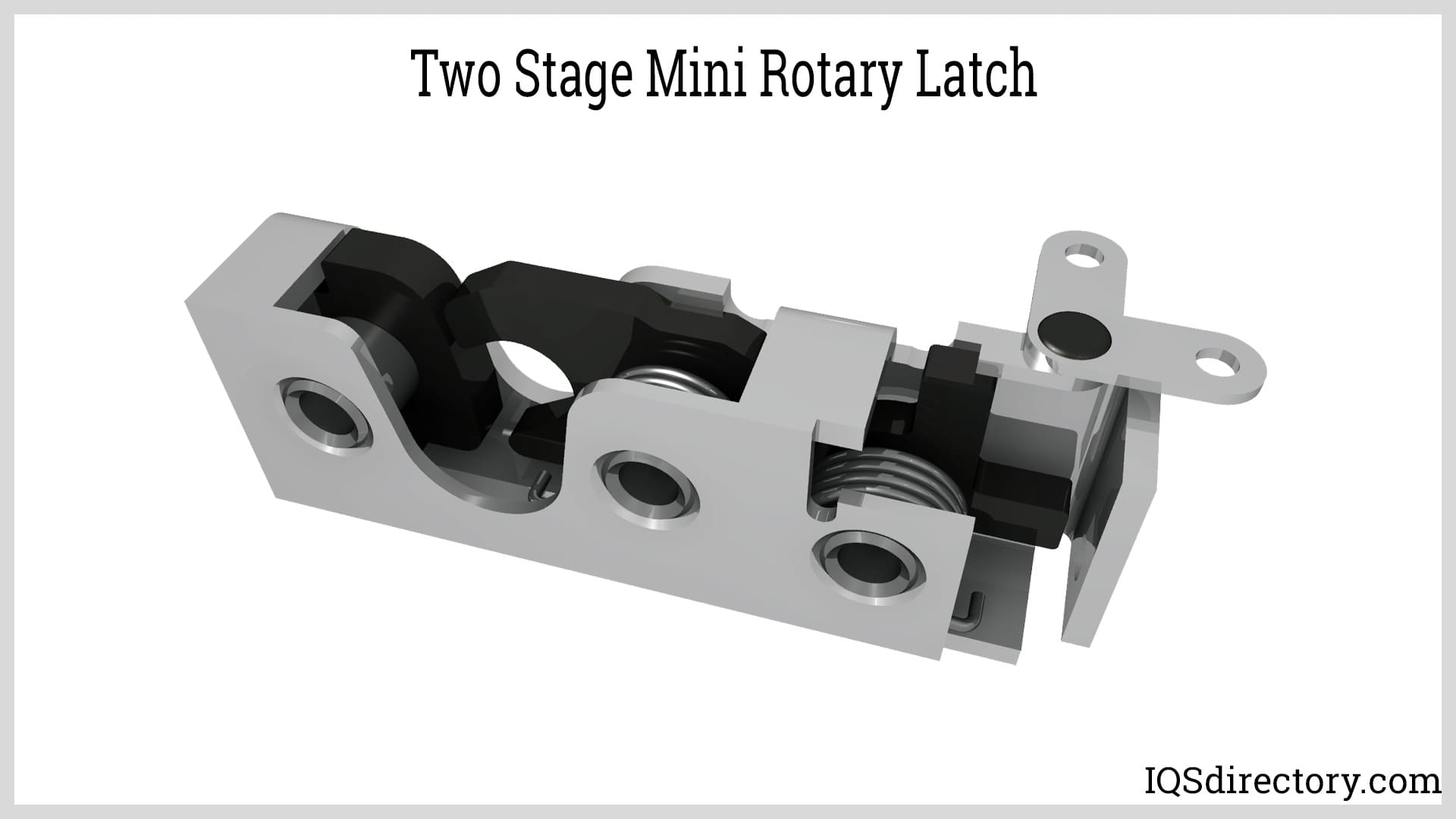
There are several types of rotary latches available, mainly classified as single, double, and two-stage versions. A single rotary latch features a solitary rotating mechanism, whereas a double rotary latch includes two rotating mechanisms for added security and load distribution. The two-stage rotary latch operates in two segments to secure itself, helping improve safety and controlled closure in demanding environments. An actuator, linked via a rod or cable, releases the latch to allow for the opening of doors or panels, and many systems can be paired with handles, remote release mechanisms, or key-operated access hardware depending on the application.

Rotary latches are straightforward to install and have been in use for securing vehicle doors, storage compartments, and industrial machinery doors for many years. They offer remarkable holding strength that remains reliable despite exposure to vibrations, shock loads, frequent use, or harsh environmental conditions. Rotary latch systems are highly favored for their user-friendly nature, enabling disengagement with a single button press, unlike other latching systems that may require multiple actions to unlock and open an enclosure. For buyers comparing latch solutions, important selection factors often include corrosion resistance, load rating, durability, over-center action, and compatibility with existing striker plates and mounting hardware.
Chapter 2: What Are the Types of Rotary Latches?
Rotary latches play a critical role in mechanical, industrial, and automotive applications by securing and ensuring the closure of various access points, doors, and panels. Choosing the appropriate size, load rating, and strength of a rotary latch is vital for optimal system performance, user safety, and the longevity of equipment. When selecting a rotary latch, engineers, manufacturers, and facility managers must consider factors such as latch mechanism type, actuator compatibility, material durability, and the latch’s intended environment or application.
The different types of rotary latches are typically categorized into single-stage, double-stage, and specialized variants, each tailored for distinct operational requirements. Within these broad categories, rotary latches can be further defined by materials (such as stainless steel or zinc-plated alloys for corrosion resistance), actuation styles (manual, remote, or electronic), mounting configurations, and load capacities to ensure a perfect fit for your specific application—ranging from light-duty access panels to heavy-duty vehicle doors and industrial enclosures.
The key to choosing the best rotary latch lies in matching its features to your unique opening, whether rigid or flexible, as well as evaluating security needs, vibration resistance, and installation space. Advanced rotary latch systems may require multi-point locking, remote release integration, or tamper-resistant features. Assessing these requirements early can lead to improved equipment integrity, user convenience, and compliance with industry standards.
Single Stage Rotary Latches
A single-stage rotary latch features a single rotor and can be configured for either right- or left-hand closing. This rotor engages directly with the striker pin or latch post. As the most basic type of rotary latch, it is well-suited for light to medium-duty latching applications, including panels, cabinets, and access doors in commercial vehicles and enclosures. Despite its straightforward latch mechanism, single-stage rotary latches offer various trip levers and mounting options. For optimal security and function, ensure the rotary latch is matched with a door or panel whose weight and usage frequency fall within the latch’s specified load capacity.
Single-stage rotary latches are favored for their compact design, which offers flexibility in numerous OEM and custom-fit applications. Typically, these latches feature multiple actuation points and stacked actuator levers, making them highly configurable. Their versatility makes them ideal for automotive glove boxes, machinery covers, and small-scale industrial doors where ease of installation and reliable engagement are top priorities.

Two Stage Rotary Latches
Two-stage rotary latches are engineered for heavy workloads and are widely used in automotive latching systems, industrial machinery, and critical safety enclosures. They commonly feature built-in rubber bumpers that trap the striker between the rubber and the latch rotor, eliminating noise, rattling, and vibration. Although visually similar to single-stage latches, two-stage rotary latches offer superior safety and locking performance due to their unique engagement process with the striker plate.
These latches provide a secondary latching position—an essential safety feature in automotive and transportation industries—helping to prevent accidental opening, false latching, and offering improved misalignment tolerance. Two-stage rotary latches may feature multiple actuators, remote release cables, or electronic actuation options, providing a variety of flexible design choices. They support applications in automotive door latches, bus and truck access panels, and marine hatch closures, where vibration, shock loading, and compliance with strict safety standards are concerns.

Single Rotor Rotary Latch
Single rotor rotary latches, a subset of both single- and two-stage latches, incorporate a robust single rotor that engages with the striker pin. They are ideal for light to medium-duty load requirements and feature a compact footprint, making them suitable for enclosures with limited space or where minimizing hardware intrusion is critical. While versatile and easy to install, the application of these latches is usually limited by the panel or door’s thickness and overall weight.
Best practices involve selecting a single rotor rotary latch with durable construction and corrosion-resistant materials—like powder-coated steel or stainless steel—when dealing with harsh environments or outdoor use. Common uses include utility cabinets, machinery guards, and access panels requiring consistent, repeatable engagement.

Double Rotor Rotary Latch
Double rotor rotary latches provide enhanced structural strength, greater load distribution, and improved misalignment tolerance over other latch types. Designed to handle exceptionally high workloads, they feature two independently operating rotors that create a wide catch opening, making them ideal for applications where panels or doors may become misaligned due to vibration or heavy use.
These heavy-duty rotary latches are widely utilized in construction equipment, aerospace, heavy trucks, railway cars, and armored compartments—environments demanding maximum reliability and security. Double rotor designs typically enable direct handle actuation, remote release compatibility, both left- and right-hand mounting, and the option for electronic or tamper-resistant upgrades for added safety and convenience.

Pawl Rotary Latch
A pawl rotary latch operates using a rotating cam mechanism that alternates between latched and unlatched positions, engaging with the striker to provide secure closure. This mechanism is similar to that in two-stage rotary latches, offering a quarter turn for initial engagement and an additional quarter turn for complete lock. By allowing movement in a single direction and preventing reverse rotation, pawl latches function as a reliable anti-backlash or anti-loosening solution for access doors and covers. Frequently, they are paired with a ratchet wheel for enhanced motion control and detent function.
Pawl rotary latches are available as fixed grip (suitable for universal frames by compressing against the mounting surface) and adjustable grip models (enabling precise fit across a variety of door thicknesses and frame dimensions). Adjustable grip latches often utilize a long shaft or threaded bolt to separate the external handle from the cam, increasing installation versatility. These latches excel in applications needing tool-free actuation, vibration resistance, and adaptability, such as electronics enclosures, HVAC panels, and industrial access doors.
Quarter Turn Spring Latches
Quarter turn spring latches operate by rotating 90° to lock or unlock, utilizing a spring-loaded mechanism that maintains a consistent pressure on the latch bolt. This design is highly effective for vibration-prone or frequent-access locations, where holding power and user convenience are key factors. During actuation, the cross pin moves through a curved slot, tensioning the integrated spring and securely locking the latch in place—which helps suppress noise and prevents accidental disengagement, even in high-vibration settings.
Installation is straightforward and cost-effective—these rotary latches require no fasteners or bolts and can be fitted into openings quickly. Their unique design allows for quick-release and captive features that are popular in OEM applications. Industries relying on quarter turn spring latches include HVAC equipment, lawn and garden machinery, water heater enclosures, and electrical or telecom cabinets (among the most common places for these latches in the field). Their combination of affordability, reliability, and ease of installation has led to widespread adoption by engineers and specifiers globally.
Quarter turn spring latches also offer excellent tamper resistance and are frequently selected where quick maintenance access is needed without sacrificing security or compliance with enclosure safety standards.

Rotary Draw Latch Opened with a Tool
While most rotary latches are actuated by keys, handles, or levers, tool-actuated rotary draw latches provide an added layer of tamper resistance and security in industrial settings. This special type requires a screwdriver or other hand tool to operate, making it ideal for applications where unauthorized access must be deterred. Like conventional draw latches, this model utilizes a keeper and catch plate: the keeper hooks onto the catch plate and, as the latch is rotated with a tool, draws the two components together for a secure, high-tension closure.
This style of rotary latch is widely implemented in agricultural equipment, safety shield panels, heavy-duty machinery, and other industrial enclosures—especially where vibration, environmental sealing, or high safety standards are present. Designed to withstand several hundred pounds of tension, these latches are available in multiple mounting hole patterns and head configurations, including notched heads compatible with various tools, to match all enclosure security requirements. Specifying a tool-operated rotary latch can improve equipment safety, deter tampering, and ensure compliance with occupational safety regulations.

Understanding the vast array of rotary latch types and their technical characteristics—including single-stage, two-stage, pawl, quarter turn, double rotor, and tool-operated variants—enables engineers, designers, and purchasing managers to select the optimal latching solution for their mechanical assemblies or safety-critical equipment. For further details on choosing the right rotary latch for your project or to explore leading rotary latch suppliers, visit our Rotary Latch Manufacturers Directory.
Chapter 3: What Are the Components of a Rotary Latch?
Rotary latches are essential mechanical locking devices known for their exceptional longevity, high strength, durability, and reliable performance under a wide variety of operating conditions. These robust locking mechanisms are commonly used in industrial applications, including cabinets, access panels, doors, electrical enclosures, machinery covers, and animal cages. A rotary latch system is engineered to enhance security, prevent unauthorized access, and provide safe, repeated operation in both indoor and outdoor environments. The complete rotary latch assembly typically consists of one or more actuators, a housing, rotors, a lever, a spring, and a set of connectors—all working together to deliver secure and consistent locking action for demanding applications.
Latch
The latch itself is the central component of any rotary latch system, acting as the main locking element that determines the overall strength, reliability, and integrity of the closure. The durability and size of the latch mechanism are critical factors for maintaining high load capacity and resistance to tampering. Rotary latches are available in a variety of configurations to meet diverse application requirements, and the choice between a one-stage or two-stage latch directly affects the required security level. Single-stage latches provide basic closure, while two-stage (or secondary-locking) rotary latches offer added protection, reducing the risk of accidental opening and enhancing safety in high-vibration or high-security environments.
The rotor, often regarded as the heart of the rotary latch, engages with the striker to secure the opening. Most rotary latch designs utilize a single rotor, but double rotor latches are available for enhanced strength, misalignment tolerance, and improved performance in applications where superior holding force or rugged reliability are essential. These design factors are especially important for industries requiring robust locking solutions, such as automotive, aerospace, telecommunications, HVAC, and heavy equipment manufacturing.

Actuator
Actuators are an integral part of rotary latch systems, facilitating user interaction and providing the essential interface required for latching and unlatching. Available in multiple forms and designs, rotary latch actuators include mechanical and electronic release options to fit various operational and security requirements. The actuator is typically the only externally visible part, simplifying access and enhancing usability while ensuring alignment with ergonomic and operational needs.
When selecting the right actuator, consideration should be given to its placement—either on the interior or exterior of the access point. Interior actuators, including finger pulls, recessed handles, and push buttons, are designed to be flush with the application surface for a clean and tamper-resistant look. Materials for actuators range from reinforced plastics to zinc and aluminum alloys, each offering unique advantages regarding corrosion resistance, weight, aesthetics, and durability.
Exterior actuators provide expanded choices, with options for flush mounting, surface mounting, pull handles, lift handles, and even lock options such as keyed entry or keyless digital pads. Mechanical actuation is most often achieved through coated steel cables or rods, ensuring quick, positive engagement without requiring direct access to the latch. Actuator cables are specially constructed from resilient materials to maximize lifespan and resist stretching, deformation, or corrosion—critical for commercial transportation, marine, and outdoor use. Cable liners minimize friction and prolong system life, supporting smooth actuator function over thousands of operating cycles.
For high-security or remote-controlled applications, electromechanical actuators deliver advanced security, enabling remote release of the rotary latch while also permitting user monitoring and access control. These electronic actuation systems are commonly used in secure storage, automotive anti-theft devices, and sensitive equipment enclosures to provide enhanced access management and real-time status monitoring.

Actuator End Fittings
The performance and versatility of a rotary latch cable system often depend on the selection of actuator end fittings. A wide variety of end fittings—including barrel, L, Z, eyelet, ball, and bare cable options—ensure compatibility with different rotary latch types and actuator mechanisms. Choosing the correct cable end fitting allows for optimal installation, reliable performance, and a secure mechanical connection between the actuator and latch. Barrel fittings stand out for their flexibility and ability to mate with most actuator designs, while L fittings are preferred in rotary latch applications due to their secure clipping and minimized metal-to-metal contact, reducing wear and vibration noise.
The choice of end fitting should consider factors such as load requirements, space constraints, environmental conditions, and required cycle life, ensuring the rotary latch system delivers precise, repeatable operation for the life of the equipment.

Striker
The striker is a pivotal element within any rotary latch assembly, designed to interface directly with the rotor and securely hold the enclosure, panel, or door closed. Strikers typically take the form of robust rods, shafts, or U-shaped brackets engineered from hardened materials such as steel or stainless steel to deliver long-term durability, weather resistance, and high resistance to tampering or forced entry. The role of the striker is to smoothly align and engage with the latch, ensuring positive locking action and preventing accidental or unauthorized opening of doors, access hatches, and machine covers.
Precision in striker design and fitting is critical; a well-matched striker not only guarantees secure closure but also minimizes rattle, vibration, or potential misalignment. High-quality strikers are essential for heavy-duty enclosures, off-road equipment, electronics cabinets, and other industrial grade applications. By effectively locking the access point, strikers play a key role in operator safety, asset protection, and the overall integrity of the enclosure system.

Frequently Asked Questions
What Is a Rotary Latch and How Does It Work?
A rotary latch is a locking mechanism used to secure doors, enclosures, cabinets, and panels. It locks by engaging with a striker when pushed into place, preventing unintended opening and enabling easy disengagement with a button press or actuator.
What Are the Main Types of Rotary Latches Available?
Rotary latches include single-stage, two-stage, pawl, quarter turn spring, single rotor, double rotor, and tool-actuated draw latches. Each type varies in engagement mechanism, security features, and suitability for specific applications or load requirements.
Where Are Rotary Latches Commonly Used?
Rotary latches are widely used in industrial machinery, vehicles, electrical enclosures, construction equipment, railway cars, marine hatches, and HVAC panels—chosen for their strength, reliability, ease of installation, and ability to withstand vibration or harsh conditions.
How Do I Choose the Right Rotary Latch for My Application?
Select a rotary latch by evaluating load capacity, latch type, material durability, mounting configuration, actuator compatibility, environmental exposure, required security level, and installation space. Match features to your specific application for optimal performance and safety.
What Components Make up a Rotary Latch System?
A rotary latch system consists of the latch (rotor), housing, actuator, actuator end fittings, spring, striker, and connector parts. Each component contributes to reliable, secure locking and user-friendly access in demanding applications.
Are Rotary Latches Suitable for High-Vibration or Outdoor Environments?
Yes, rotary latches are designed for durability and high holding strength, making them ideal for high-vibration, industrial, vehicular, or outdoor environments. Materials like stainless steel and specialized features minimize rattling and resist corrosion.
Chapter 4: What Materials Are Used to Manufacture Rotary Latches?
The strength, longevity, and durability of a rotary latch are influenced by the materials used in its production. The choice of metals depends on the latch's intended use. Critical and high-security latches require hardened metals for increased strength, while latches subjected to less stress can be made from softer, less durable metals.
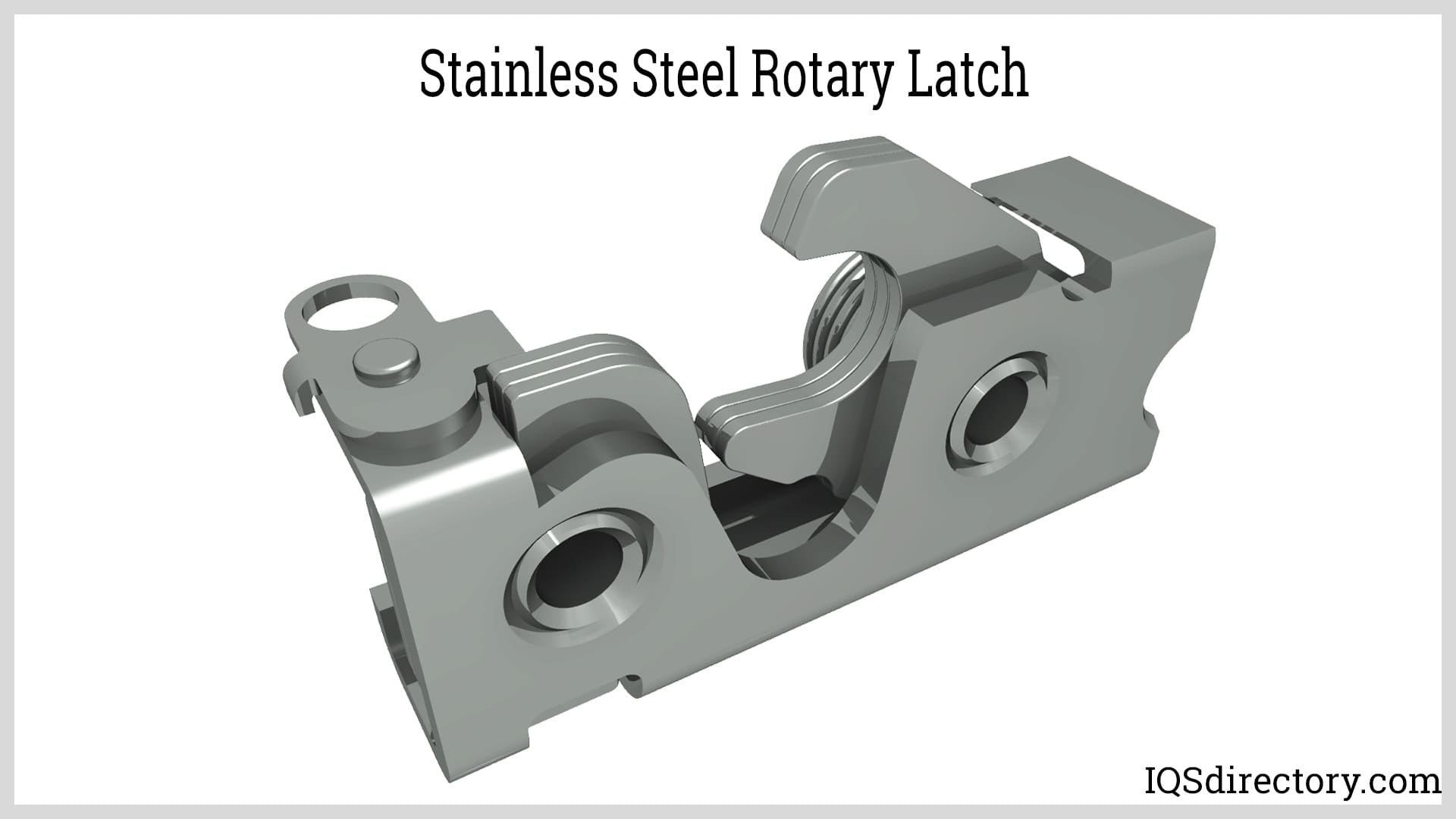
Rotary latches are manufactured from metals such as carbon steel, alloy steel, stainless steel, aluminum alloys, and copper alloys, selected for their formability, machinability, and strength. After forming, latches may undergo secondary processes like polishing or coating to improve their appearance. The type of coating applied is chosen based on the expected number of cycles the latch will endure.
Aluminum
Aluminum is chosen for manufacturing rotary latches due to its positive properties, such as resistance to impact, moisture, and corrosion. The 6000 series aluminum alloys are selected for their strength and ability to endure frequent use. While softer alloys may look better, they lack the strength needed to secure a latch effectively. Aluminum is an ideal material because it can be easily cast, forged, shaped, and molded into the complex forms required for rotary latches.
Brass
Brass has historically been used in the production of latches, but its use has declined with the rise of more durable metals. Brass, an alloy of copper and zinc, is castable, moldable, and strong. However, its appearance can deteriorate over time and may require regular cleaning. Despite these drawbacks, brass remains a choice in some regions for its decorative qualities and strength in rotary latch manufacturing.
Bronze
Bronze latches are used in various environments due to the high copper and tin content of bronze. Although it is one of the more expensive metals for latch manufacturing, bronze offers an excellent appearance. The copper content in bronze makes it both moldable and castable, resulting in harder and more durable latches that can withstand multiple cycles.

Carbon Steel
Carbon steel is the toughest and most durable metal used in rotary latch production. Although it can be challenging to work with, it is one of the least expensive options and is typically forged or cast into the desired shape. Carbon steel latches are ideal for demanding conditions that involve frequent use. To combat rust and corrosion, carbon steel rotary latches are usually coated, metal-plated, or painted.
Stainless Steel
Stainless steel is a popular choice for manufacturing rotary latches due to its cost-effectiveness and protective coating, which ensures excellent appearance and durability. Unlike carbon steel, stainless steel can be cast, forged, molded, or stamped from sheets, offering greater workability while maintaining comparable strength. Its appearance makes it suitable for both residential and industrial applications. Users often prefer stainless steel latches over aluminum and carbon steel for their superior longevity.
Finishing and Coating
The manufacturing processes for producing latches can stress the metal, leading to marks and scratches. To enhance their appearance, rotary latches undergo finishing methods that address surface imperfections. Common finishing techniques include painting, polishing, powder coating, and plating, each designed to improve the latch’s look and surface quality.
In addition to enhancing the appearance, these finishing processes provide a protective layer that helps prevent rust, corrosion, wear, and damage from impacts.
- Polishing – Metal polishing involves the use of abrasives that are carefully selected to match the type of metal. In the initial phase of the polishing process, a rough abrasive is used to remove visible imperfections. This step requires a great deal of control to ensure that the metal is not damaged. Once the metal is sufficiently smoothed, a finer abrasive is used. To achieve a mirror finish, a buffing compound is applied using a high-speed polisher.
- Powder Coating – The coating process adds a polymer layer that enhances the appearance of a latch and protection from corrosion, weathering, and damage from impacts. Powder coatings can also be used to add coloring to a latch, which may be necessary for latches that are decorative or visible on furnishings. Metals such as aluminum and stainless steel that have natural layers of protection may have a layer of powder coating added to change the color of their surface.
- Metal Plating – Metal plating also adds a coating or layer to the metal of a latch that is different from the application of powder or paint and involves the use of metals that are applied to a latch by electrochemical deposition. Unlike powder coatings or painting that are applied and baked on to the metal latch, metal plating forms a permanent bond between the surface of the latch and the metal layer. The adherence of the bonded layer is exceptionally strong and never cracks, peels, or flakes.
Chapter 5: How Rotary Latches Are Made?
The primary methods for fabricating latches are die casting, stamping, and forging, which shape metals into latch components. After forming plates, discs, and sheets into various parts, these components are assembled using techniques such as spot welding or screwing. Despite the durability of the materials, proper assembly is crucial, as any loose or improperly connected components can lead to latch failure.
Stamping
Stamping encompasses several processes, including blanking, punching, embossing, and die stamping of metal sheets. This method deforms the metal under force to achieve the desired shape for latch components. Stamping is favored for its speed and efficiency, allowing large volumes of parts to be produced in a single run.
Metals commonly used for rotary latches, such as stainless steel, steel alloys, aluminum, brass, and copper alloys, are well-suited for stamping. This method not only boosts productivity but also achieves precise tolerances, essential for accurately fitting latch components into small spaces.
Forging
Forging, like stamping, involves shaping metal discs, sheets, or plates using force and hammering. The main forging methods are open die, closed die, and upset, and can be performed as hot forging or cold working. These processes apply substantial pressure repeatedly to form and shape rotary latch components. Forging enhances the strength of parts by altering their grain structure. However, parts produced by forging often require additional finishing to remove waste or flash from the shaping process.
Forging, like stamping, achieves precise tolerances that meet industry standards. It is used to produce nearly all components of a rotary latch, including the striker. Achieving the desired shape may require multiple passes through the forge. In addition to trimming the finished parts, secondary processing might involve adding holes, bending, or cutting shapes into the workpiece.

Casting
Stamping and forging are forms of cold working processes that pound, hammer, and force metal sheets and billets into a mold or specific shape. They are based on applying pressure to a workpiece in order to achieve a necessary shape. During stamping or forging, the workpiece is a solid form even though it may be heated to make shaping it easier. With casting, the metal is melted and poured into a mold or die.
Casting involves using either permanent or temporary molds to shape molten metal. Metal ingots, billets, or slabs are melted in a furnace and transferred to a mold via a crucible. The molten metal is poured into the mold through a sprue or riser. Permanent molds consist of two tightly fitted halves, whereas nonpermanent molds can be made from materials such as sand, wax, or other substances.
Unlike stamping and forging, casting molds must account for shrinkage that happens as the metal cools. This factor is crucial as it affects the final part's tolerance. The casting process is favored for its ability to produce latch components with intricate details and precise shapes that match the design specifications of the latch.
Secondary Processes
Regardless of the production method used for rotary latch components, each part undergoes secondary processing. This can involve adding holes, smoothing surfaces, bending, shaping, and configuring components to ensure a precise fit. Despite achieving excellent tolerances, every component must fit accurately to ensure the latch's strength and durability. Secondary processes shape and form each piece to ensure proper assembly. Often, welding and screws are employed to connect and secure the components.
Chapter 6: What Are the Benefits of Rotary Latches?
For many years, rotary latches have been employed in diverse applications, from securing cupboards to ensuring car doors are tightly sealed. Their strength and reliability make them a crucial component in engineering designs. Rotary latches are preferred over cam latches and push-to-close latches due to their superior performance and dependability.
Convenience
Unlike other latches that require multiple actions to disengage, rotary latches can be released with a simple push of a button or pull of a switch. This feature allows for quick access to an enclosure. Additionally, engaging the locking mechanism is straightforward, requiring only a push or slam of a door or lid to securely close the opening.
Security
One reason for the popularity of rotary latches is their secure engagement, which helps prevent accidental entry. They can be designed with no visible means of access, reducing the risk of break-ins or theft. This security makes rotary latches a preferred choice for auto manufacturers to secure compartments. Additionally, specialty rotary latches can be operated by an interior button or switch for convenience.
Longevity
The long lifespan of rotary latches reduces overall costs and makes them an ideal locking mechanism. Their simple structure allows for installation in a wide range of applications. With a maintenance-free design, rotary latches do not need replacement during their service life. Made from exceptionally strong and durable materials, they resist damage from wear and tear as well as external factors like impacts and abrasions. This sturdiness makes them suitable for both indoor and outdoor use.
Versatility
Rotary latches come in a wide variety, making it possible to find one suited for any condition or environment. Over the years, these latches have been adapted and engineered to meet diverse requirements, with custom options continually emerging to address new and unique challenges. Manufacturers collaborate closely with customers to ensure that each latch perfectly matches the application and needs. The compact design of rotary latches is a key advantage, allowing them to fit seamlessly into any environment, even under stressful or harsh conditions.
Conclusion
- A rotary latch is a locking mechanism that secures openings such as doors, enclosures, cabinets, and panels so that they are locked and unable to accidentally open. They are referred to as slam locks since they lock by being pushed against the striker to be tightly locked.
- Rotary latch systems are easy to install and have been used for decades to secure car doors, storage trunks, and the doors of bulky heavy equipment. The exceptional holding power of rotary latches is unaffected by vibrations, stress, or harsh conditions.
- The selection of the right size and strength of a rotary latch can be critical to the operation of a mechanical system and intended application. To determine the correct rotary latch for an application, it is necessary to have an understanding of the various types regarding their function, strength, and viability.
- The wide use of rotary latches is due to their long useful life and their strength, durability, and exceptional performance in all conditions
- The most common methods used to fabricate latches are die casting, stamping, and forging, which are methods that form and shape metal into the various parts of a latch.