




Automated Guided Vehicles: Everything you need to know about Types
IQS Directory EditorialUpdated 5 chapters
7 leading suppliers listed with this guide
Browse automated guided vehicle suppliersContents (5 chapters)
This article gives comprehensive information about automated guided vehicles (AGVs).
Read further to learn:
- What are Automated Guided Vehicles?
- Types and Applications for AGVs
- Overview of an AGV Navigation System
- How AGV Locomotion Works
- And much more…
Chapter 1: Exploring Automated Guided Vehicles
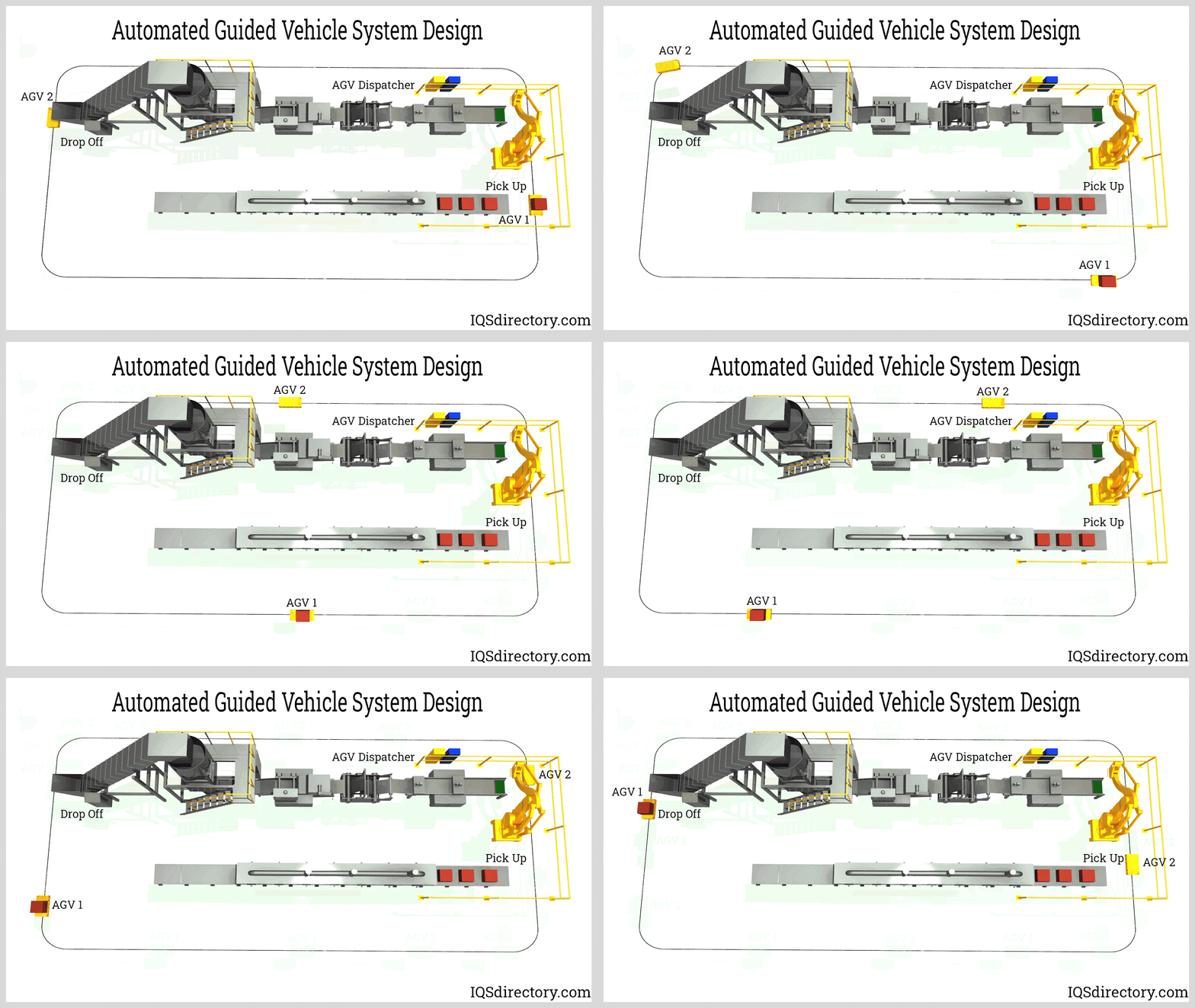
Automated Guided Vehicles (AGVs), commonly referred to as mobile robots or autonomous material handling vehicles, are flexible robotic systems that navigate along lines, across surfaces, or within designated areas. Unlike stationary robotic arms that are fixed to a base structure composed of joints and links, AGVs are autonomous and offer extensive movement and accessibility. Yet, when AGVs are paired with robotic arms, their capabilities are greatly amplified, creating a more versatile industrial automation solution for modern operations.
Combining AGVs with robotic arms results in a mobile workstation capable of executing a diverse array of tasks, such as remote manipulation, telemanipulation, scanning, and probing. In manufacturing, warehouse automation, and intralogistics, AGV systems can also support pallet transport, parts delivery, machine tending, and repetitive material movement with greater consistency. AGVs find their utility in a wide range of sectors, including manufacturing, logistics, inspection, exploration, transport, and defense.
The technology behind AGV systems lies in the realm of automation, showcasing intricate control mechanisms and cutting-edge guidance systems that allow them to traverse long distances and be multifunctional. These systems incorporate navigation techniques such as perception, localization, path planning, and motion control, which can be coordinated through an onboard computer, a centralized computer system, or even a dispatcher. Depending on the application, AGVs may use magnetic tape, laser guidance, vision systems, or natural feature navigation to move efficiently and safely through a facility.
The routes for AGVs are carefully designed to prevent any obstacles, blockages, or interferences that might disturb their activities. Furthermore, AGVs require a flat, smooth terrain to function efficiently, as they are not built to handle uneven surfaces like holes, bumps, or cracks. This makes route planning, traffic management, and facility layout essential considerations for companies evaluating AGV implementation, especially in high-volume production environments where uptime, throughput, and operational safety are critical.
The 2020 pandemic propelled AGVs into the spotlight due to the necessity for social distancing and the e-commerce boom. This surge in demand triggered advancements in more dependable and efficient AGV systems. Many factories integrated AGVs into their workflow to maintain social distancing while still maneuvering products, equipment, and necessary resources. As a result, AGV adoption accelerated across distribution centers, smart factories, and automated warehouses seeking labor optimization, improved productivity, and reduced handling errors.
With the swift progression of AGV technology, the expansion of wireless connectivity has followed suit. AGVs depend on strong, dependable connectivity to guarantee seamless, efficient functionality during their operations. Reliable Wi-Fi, industrial Ethernet, and fleet management software are increasingly important for real-time monitoring, navigation updates, and coordination across multiple vehicles, helping businesses scale automation with greater control and visibility.
Chapter 2: What Types of AGVs Are There, and How Are They Used in Industry?
Automated Guided Vehicles (AGVs) play a pivotal role in modern industrial automation and material handling solutions, particularly within logistics and manufacturing environments. While logistics remains the primary industry sector driving AGV adoption—such as warehouse automation, e-commerce fulfillment centers, and distribution hubs—these intelligent machines are also used for exploration, inspection, and specialized service robotics. AGVs are further categorized by their load capacity, navigation systems, and mode of transport, helping businesses to optimize workflow, boost efficiency, and reduce manual labor costs.

Forklift AGV
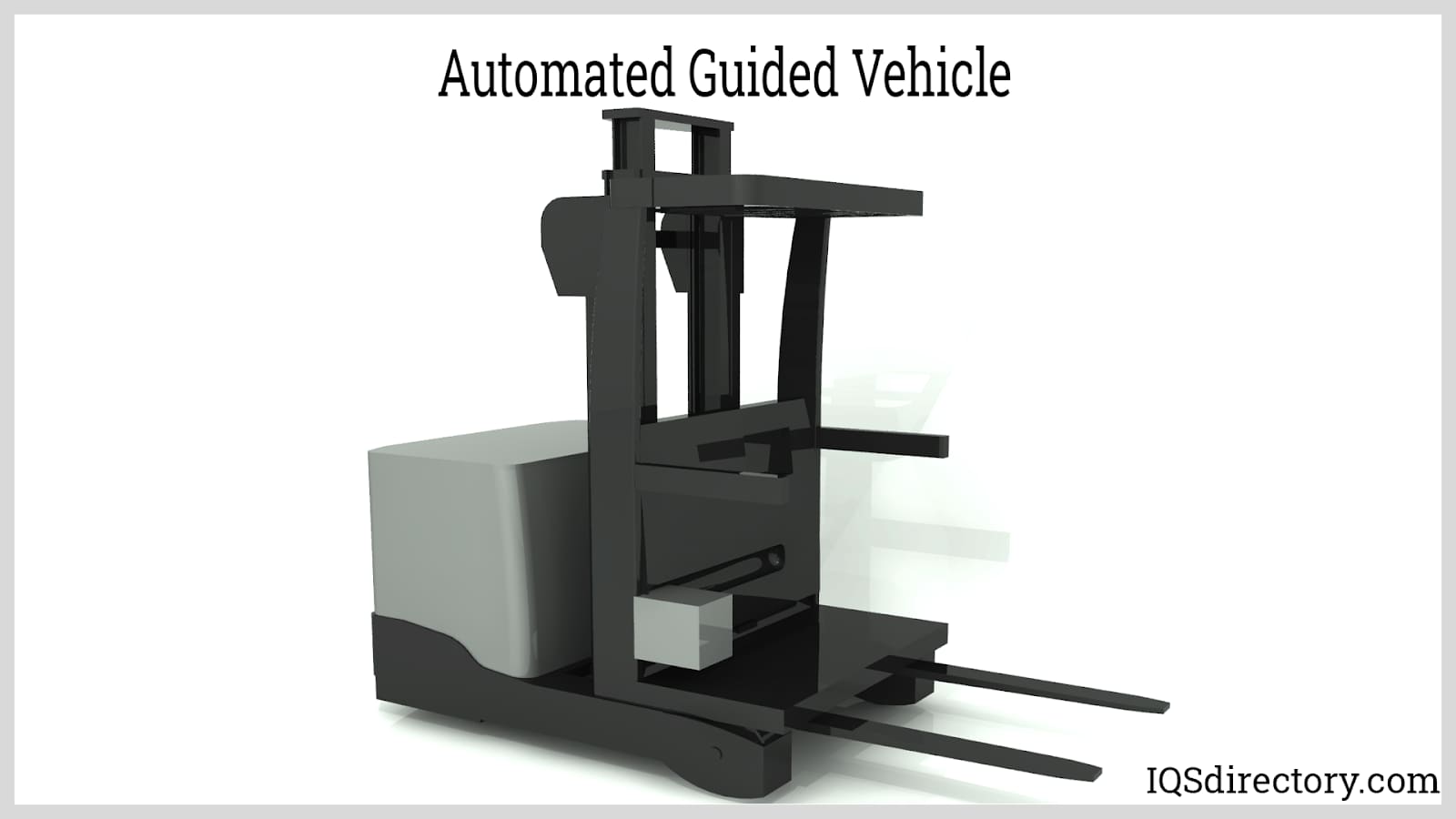
Forklift automated guided vehicles are self-driving forklifts integrating advanced AGV navigation technologies such as laser guidance, magnetic tape, or vision-based systems. These vehicles are ideal for floor-level pallet pick-up as well as stacking pallets at various racking heights within automatic storage and retrieval systems (ASRS). As a backbone of automated warehouse operations, Forklift AGVs facilitate safe, collision-free movement of goods and materials—even in environments with human workers—by using powerful fleet management software. Their navigation can be switched to manual mode for flexibility during complex material handling tasks.

Underride AGV
Underride Automated Guided Vehicles (AGVs), sometimes referred to as Automated Guided Carts (AGCs), are engineered to autonomously lift loads by driving beneath baskets, carts, or transport platforms, then gently raising them. These compact AGVs excel in environments requiring reliable, automated transport—such as hospitals (for food service delivery, linens, and sterile medical supplies), pharmaceutical manufacturing, and electronic assembly plants. They operate efficiently in set pathways and can communicate with building management systems for scheduled deliveries, supporting lean manufacturing and hospital logistics strategies.


Towing AGV
Towing or tugger automated guided vehicles are designed to pull undriven carriers, trailers, or carts through a pre-defined route. Because they do not lift loads, towing AGVs excel at moving heavy or multiple loads simultaneously, making them suitable for just-in-time (JIT) manufacturing, automotive assembly lines, and large-scale logistics centers. Unlike forklifts or underride AGVs, tow AGVs strictly provide horizontal transport and are not designed for load placement at specific locations, but they are essential for streamlining in-plant logistics and milk run operations.

Unit Load AGV
Unit load Automated Guided Vehicles (AGVs) specialize in transporting standardized containers, bins, or palletized goods, which are loaded and unloaded via automatic transfer interfaces such as conveyors, robotic arms, or cranes. Commonly used in manufacturing, order picking, and goods-to-person systems, unit load AGVs optimize workflow by integrating seamlessly with warehouse management software and production control systems. They are invaluable for high-throughput applications where minimizing human intervention is essential for productivity and traceability.

Assembly AGV
Assembly Automated Guided Vehicles (AGVs), also called tunneling AGVs or assembly line AGVs, are purpose-built for delivering parts or components to workstations within assembly environments. Their navigation is highly precise and streamlined for use in assembly cells or defined production lines, operating at controlled speeds for maximum safety and efficiency. High maneuverability allows these AGVs to dock, transfer, and orient parts directly within tight workspaces using advanced localization, such as RFID, laser-based, or natural feature guidance.
For example, tunneling AGVs haul companion frames containing multiple items to assembly stations and receive instructions via RFID pucks, streamlining component delivery. Their efficiency and cost-effectiveness outpace that of forklift AGVs, especially in lean manufacturing, automotive, and electronics assembly operations, where frequent part movement is required but payloads remain relatively light.

Heavy Load AGV
Heavy load Automated Guided Vehicles (AGVs) are engineered for material handling applications requiring extra strength and durability. Found in sectors such as steel manufacturing, automotive, shipbuilding, and paper mills, these AGVs can transport massive rolls, coils, dies, or finished products safely and efficiently. Featuring robust steel frames, reinforced drive systems, and advanced obstacle detection, heavy-duty AGVs ensure compliance with safety regulations while handling demanding, high-capacity jobs. Their role is critical for automating heavy load transport in environments where manual handling would be impractical or hazardous, supporting both productivity and workforce safety.

Mini AGV (Small Load Carrier)
Mini Automated Guided Vehicles (AGVs)—often referred to as small load carriers, mobile robots, or swarm robots—are optimized for high-speed, flexible movement of small parts, typically in light manufacturing or order fulfillment centers. Their compact, three-wheel drive design allows for precise maneuvering and efficient navigation in high-density racking systems, micro-fulfillment centers, and laboratories. Mini AGVs are ideal for industries implementing advanced robotics, Industry 4.0 initiatives, or smart warehouse automation, where scalable, decentralized fleets can quickly adapt to changing production and fulfillment needs while ensuring maximum space utilization.

AGV Scissor Lift
AGV scissor lifts merge the functionalities of automated material transport and ergonomic lifting. Essential for assembly lines and workstations, these AGV platforms dynamically adjust product height, eliminating the need for workers to strain during assembly or inspection. Their load capacity often exceeds one or two tons, with lift heights extending to 50 inches, supporting both large component handling and high-access assembly work.
Through intelligent programming, AGV scissor lifts efficiently move between multiple stations within a facility—whether delivering inbound goods for kitting, transporting heavy assemblies between work cells, or removing finished products for warehousing and shipping. This automation enhances operator safety, streamlines workstation efficiency, reduces musculoskeletal injuries, and aligns with goals for improved lean manufacturing and facility productivity.

Truck Loading AGV
Truck loading Automated Guided Vehicles (AGVs), also called Automated Trailer Loading (ATL) systems, are designed to fully automate dock operations without requiring modifications to fleet trucks or dock infrastructure. Equipped with advanced laser and vision-based navigation, these AGVs can load or unload pallets, roll cages, or containers in mixed patterns and navigate easily over dock plates and uneven terrain. Their applications are most prevalent in distribution centers, 3PL logistics, high-volume cross-docking operations, and food and beverage distribution—anywhere speed, consistency, and minimal downtime are critical for outbound or inbound logistics.
Truck loading AGVs improve turnaround by automating the crucial link between warehouse operations and over-the-road transport, supporting 24/7 operations, minimizing labor costs, and optimizing supply chain workflows for rapid throughput and warehouse efficiency.
Cobot
Cobot is a collective term for a collaborative robot that is engineered to operate safely alongside human workers in shared workspaces. Outfitted with advanced force sensors, machine vision, and collision avoidance technology, cobots intelligently adjust their motion for enhanced safety—pausing or entering a protective mode when encountering humans or unexpected obstacles.
Modern AGV systems increasingly integrate collaborative robots to form AGV-cobot solutions, transforming both flexible manufacturing and warehouse automation. These integrated systems handle advanced tasks such as order picking, kitting, parts delivery, machine tending, and dynamic workspace reconfiguration, all while reducing repetitive strain and workplace hazards for employees. AGV-cobot deployments address the requirements of both high-mix, low-volume and repetitive, high-volume production, giving manufacturers the adaptability needed to meet rapidly shifting demands.
Key benefits of integrating AGVs and cobots include:
- Reduced Downtime – Mobility allows cobot-equipped AGVs to move dynamically between stations without lengthy repositioning.
- Fast and Easy Programming – Unified software platforms make it simple to program collaborative workflows and seamlessly coordinate AGV and cobot tasks.
- Smaller Footprint – Optimized layouts leverage the compact design of cobots, further maximized by mobile AGV platforms for space efficiency.
- Healthier and Safer Working Conditions – Multiple onboard sensors and cameras enable safe human-machine collaboration, helping facilities meet rigorous safety standards.
- Consistent High-Quality Work – Automated workflows maintain reliable, repeatable quality—enhancing traceability, compliance, and product consistency.
- Flexible Applications – Easily customizable tooling and attachments (including robotic arms, conveyors, pallet lifts, and pick totes) allow a single AGV-cobot to serve varied needs.
- Improved Productivity – Combining collaborative robots with AGVs streamlines operations, reduces lead times, and maximizes overall equipment effectiveness (OEE).

Chapter 3: How Does an AGV Navigation System Work?
An Automated Guided Vehicle (AGV) navigation system enables a guided vehicle or mobile robot to autonomously determine its precise location within a mapped environment and safely travel to its destination. This process—central to material handling, warehouse automation, and industrial robotics—depends on advanced technologies to avoid obstacles, optimize routes, and respond to dynamic changes in real time. The AGV navigation process comprises four key components: perception, localization, path planning, and motion control.
Perception of Surroundings
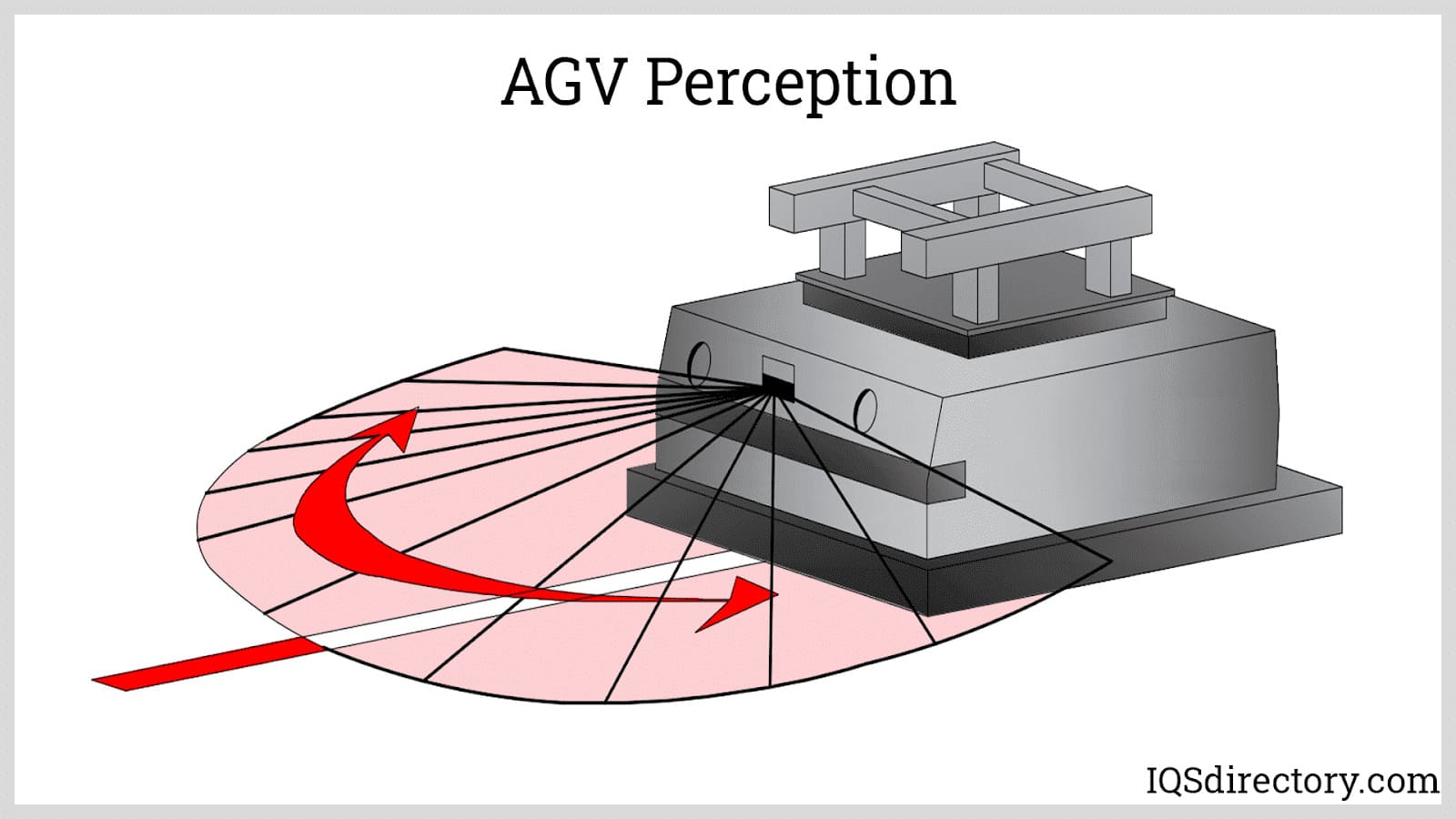
Data acquisition for mobile robot navigation, especially within AGV systems used in logistics or manufacturing facilities, is considerably more complex and comprehensive than for stationary robotic arms. Whereas robotic arms often operate within more controlled spaces, AGVs must perceive, interpret, and interact with dynamic environments. This elevated intelligence is realized through an array of sensors—ranging from vision systems to lidar and radar—enabling AGVs to accurately measure and relate their position globally and relative to continuously changing conditions, including pedestrians, forklifts, and unexpected obstacles.
Sensor Classification
Effective navigation in AGV robotics hinges on reliable sensor data. Sensors are categorized along two functional axes: proprioceptive/exteroceptive and passive/active. Proprioceptive and exteroceptive sensors monitor the Automated Guided Vehicle (AGV) itself and its operating environment. Passive and active sensors differ in whether they simply receive or actively emit energy to gather data about the surroundings—an important distinction for operational accuracy, especially in varying lighting or noise conditions often found in warehouses and manufacturing floors.
- Proprioceptive sensors measure AGV-internal values such as battery levels, wheel position, motor speed, load conditions, temperature, and current. Common types include encoders, potentiometers, gyroscopes, and electronic compasses.
- Exteroceptive sensors detect factors in the AGV's external environment—measuring distances, electromagnetic wave levels, and sound amplitude. Examples are sonar, infrared (IR), and ultrasonic distance sensors.
- Passive sensors harness temperature probes, microphones, and cameras to absorb ambient energy, aiding in obstacle detection and environmental awareness.
- Active sensors emit energy (such as ultrasonic or laser pulses) and analyze the returned signals. A classic example is a sonar sensor transmitting an acoustic wave and measuring its echo for object localization and surface mapping.

Types of Sensors
Tactile Sensors
Tactile sensors, critical for safety in AGV operations, include contact switches and proximity sensors. These devices allow AGVs to detect collisions, boundary limits, and presence of objects through physical contact (limit switches) or electromagnetic phenomena, such as magnetism (reed and Hall effect switches) and electric induction (inductive switches). High-precision tactile sensors are essential for preventing accidents and ensuring compliance with safety standards in automated transport systems.

Heading Sensors
Heading sensors—such as electronic compasses and MEMS gyroscopes—track the AGV’s orientation by providing reference to a global or local coordinate system. This function is essential for accurate path tracking, orientation correction, and maintaining reliable navigation even when GPS or other environmental cues are disrupted, common in dense storage or industrial settings.

Wheel and Motor Sensors
Wheel encoders and motor sensors are pivotal in real-time AGV control, sending instantaneous feedback about wheel rotation, speed, and angular acceleration to the vehicle’s onboard microcontroller. This closed-loop feedback enables precise movements, consistent with AGV fleet management requirements, and supports accurate path following in both automated warehouses and production lines.

Motion and Speed Sensors
Motion and speed sensors—including Doppler radar and optical flow sensors—measure the AGV’s velocity relative to the floor or nearby objects. These exteroceptive sensors play a key role in AGV collision avoidance, path optimization, and throughput maximization by ensuring the AGV adapts to changes in transport speed or vehicle proximity within high-traffic environments.

Acceleration Sensors
Acceleration sensors (accelerometers) register changes in the AGV’s velocity and work alongside heading sensors within an Inertial Measurement Unit (IMU) to track precise movement and trajectory. Though less critical for some navigation tasks, they become essential when dead reckoning is used or when GPS signals are weak, providing backup for short-term localization accuracy.

Beacon-Based Sensors
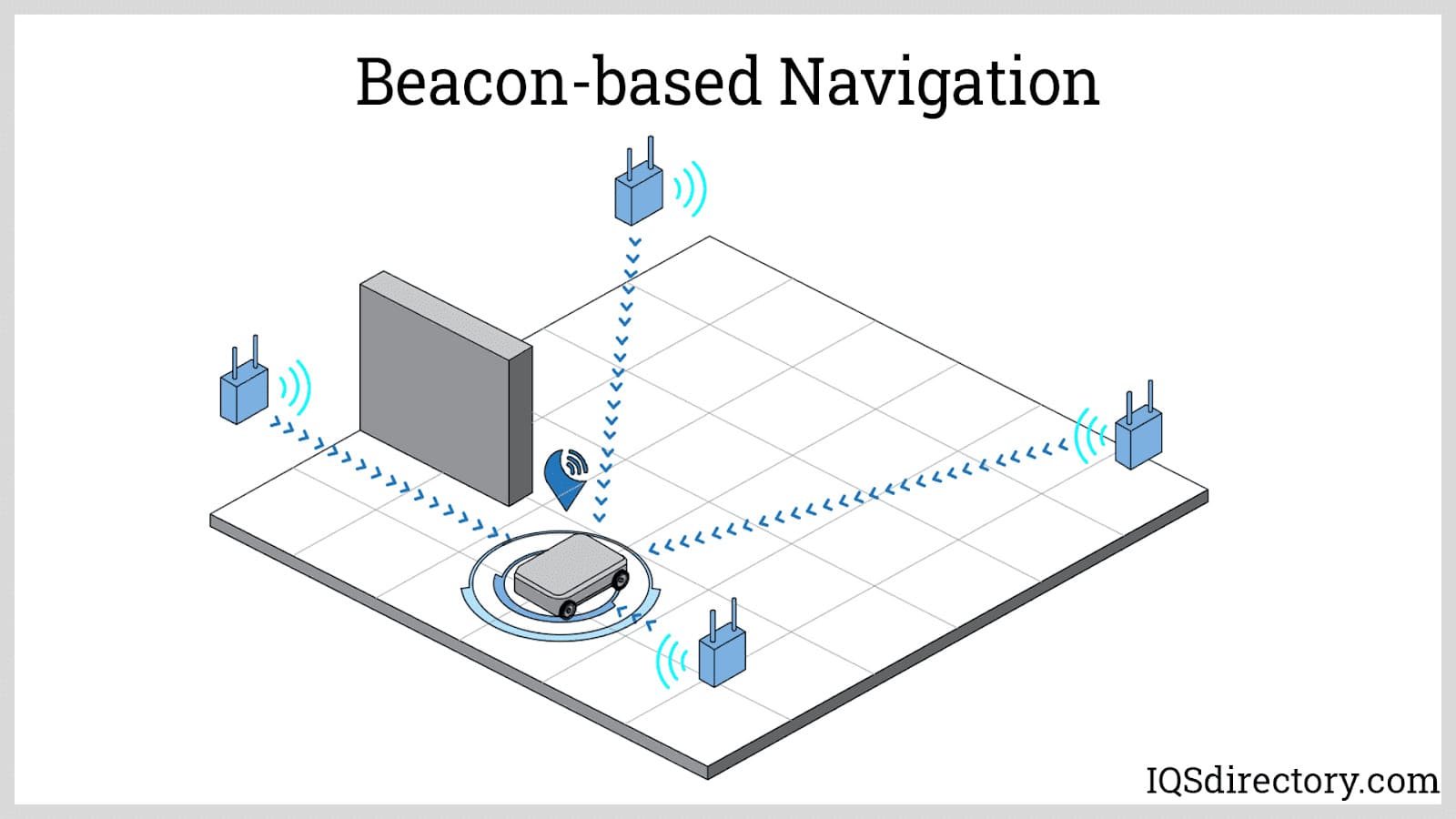
Beacon-based positioning sensors are integral to global navigation. Technologies such as Global Navigation Satellite Systems (GNSS), RFID markers, and Bluetooth beacons allow AGVs to position themselves within large facilities or outdoor areas through triangulation and time-of-flight measurements. This ensures seamless AGV operation across vast and variable warehouse or yard environments where absolute positioning is necessary for task completion.
Active Ranging Sensors
Active ranging sensors—including advanced lidar, radar, and sonar devices—provide high-resolution 3D spatial data vital for simultaneous localization and mapping (SLAM), real-time obstacle avoidance, and dynamic route adjustment. These technologies empower AGVs to safely maneuver in changing environments, detect impediments, and optimize operational efficiency.

Visual Sensors
Vision-based navigation, driven by cameras and computer vision algorithms, equips AGVs with advanced localization, object identification, barcode reading, and obstacle avoidance capabilities. Modern AGV visual sensors enable automated vehicles to adapt to complex environments, recognize lane markings, signage, and dynamically update navigation strategies using artificial intelligence.

Localization and Orientation
Once AGVs collect environmental data via sensor arrays, they must process this information to determine precise location and orientation—a process known as localization. Traditional approaches like odometry (dead reckoning) or triangulation offer basic guidance but can accumulate errors, especially over extended distances or in complex warehouses. High-accuracy navigation systems leverage Simultaneous Localization and Mapping (SLAM) to build and continuously update digital maps, correcting drift and identifying new landmarks or obstacles in real time. This capability is essential for flexible manufacturing systems, automated material transport, and logistics environments with ever-changing layouts or workflows.
AGVs often use hybrid mapping and sensor fusion to ensure robust operation: integrating lidar, GNSS, RFID, and vision data for redundancy and maximum precision even under challenging conditions—such as signal obstruction, reflective surfaces, or variable lighting. This multimodal approach enables AGVs to adapt to facility expansions, reconfigurations, and traffic changes with minimal downtime, boosting warehouse productivity and operational safety.

Path Planning
Path planning, or AGV route optimization, determines the most efficient and collision-free path within a facility to execute transport assignments. Using data from maps and live sensor inputs, the AGV dynamically generates a trajectory considering both static and dynamic obstacles. Advanced AGV path-finding algorithms—such as A*, Dijkstra’s, and Rapidly-exploring Random Trees (RRT)—are designed for real-time operation and rapid recalculation when unexpected impediments arise. Optimal path planning not only minimizes travel distance and energy consumption but also is crucial for throughput, on-time delivery, and avoiding traffic congestion in multi-vehicle systems.

Path planning requires the AGV system to incorporate four fundamental factors: robot geometry, actuator degrees of freedom, detailed facility maps, and both initial and end-point configurations. By representing operational constraints in 'configuration space'—which accounts for the vehicle's dimensions and environmental obstacles—AGVs are able to plan safe, repeatable, and efficient trajectories. This process is pivotal for applications ranging from goods-to-person systems to automated assembly lines, as it provides reliable and scalable solutions for modern material handling.
Motion Control
AGV motion control translates planned trajectories into precise movement commands by sending inputs to the vehicle’s drive, steering, and actuator systems. Most industrial AGV solutions utilize closed-loop control systems—most notably Proportional-Integral-Derivative (PID) control—to continuously measure, correct, and adapt vehicle behavior based on real-time feedback. This adaptive control ensures that AGVs maintain accurate positioning along complex paths, balance payloads safely, and adjust for wheel slip or surface irregularities—all crucial for maintaining operating efficiency and safety in environments where human-robot interaction is common.

Zone Blocking
Zone blocking is an AGV traffic management technique overseen by a central fleet control system to prevent AGV collisions in high-traffic areas, such as intersections, loading bays, and sharp turns. The AGV system controller regulates which vehicles can enter designated zones, ensuring only one AGV occupies a restricted area at any moment. This strategy minimizes downtime due to traffic interference, boosts throughput during peak periods, and enhances the overall coordination of large AGV fleets in busy distribution centers and automated warehouses.
Accumulative Blocking
Accumulative blocking is an alternative AGV control method where vehicle flow is managed by distributed, often decentralized, object detection sensors instead of a single system controller. Particularly effective along long and linear guide paths or in high-speed transport lanes, accumulative blocking enables AGVs to autonomously detect and queue behind slower-moving or stationary vehicles ahead, creating an agile and efficient convoy system. This approach reduces bottlenecks and supports continuous material flow in expansive facilities without the need for complex centralized scheduling systems.
Frequently Asked Questions
What Industries Benefit Most from Automated Guided Vehicles (AGVs)?
Industries such as logistics, manufacturing, automotive, electronics, shipbuilding, paper mills, and healthcare benefit from AGVs due to their automation capabilities, improving workflow, safety, and reducing labor costs.
How Do AGVs Navigate and Avoid Obstacles in Dynamic Environments?
AGVs use a combination of sensors—such as lidar, radar, vision cameras, and tactile sensors—to perceive their surroundings. Advanced algorithms enable real-time obstacle detection, localization, and adaptive path planning for safe and efficient navigation.
What Are the Main Types of AGVs, and How Do They Differ?
AGV types include forklift AGVs, underride AGVs, towing AGVs, unit load AGVs, assembly AGVs, heavy load AGVs, mini AGVs, AGV scissor lifts, and truck loading AGVs. Each type is optimized for specific material handling, load capacity, or workspace integration tasks.
How Does Zone Blocking Improve AGV Safety and Efficiency in Warehouses?
Zone blocking is managed by a central control system, allowing only one AGV in restricted areas like intersections at a time. This reduces collision risks, minimizes downtime, and increases throughput during high-traffic operation periods.
Can AGV Systems Be Integrated with Collaborative Robots (Cobots) for Flexible Manufacturing?
Yes, AGV-cobot integration enables dynamic workflows such as order picking, kitting, parts delivery, and machine tending. These systems enhance flexibility, improve safety, and reduce repetitive tasks for human workers in manufacturing and warehousing.
Are There AGV Solutions Designed Specifically for Hospital or Healthcare Environments?
Yes, underride AGVs (or Automated Guided Carts) are used in hospitals for automated delivery of food, linens, and sterile medical supplies, supporting efficient and reliable logistics in healthcare facilities.
Chapter 4: What Are the Different Types of AGV Navigation Systems?
The complete navigation system is developed through the integration of perception, localization, path planning, and motion control processes. Additionally, various navigation systems can be designed by combining different sensors, controllers, software programs, and algorithms. Below are some of the most commonly used navigation systems for automated guided vehicles.
Physical Guides
Physical guides include guide tracks, tapes, and wires that are detected either actively or passively. This navigation system relies on fixed reference points or environmental landmarks, which are measured and interpreted by sensors and controllers. Because the automated guided vehicle (AGV) follows predetermined paths, its path planning can be preprogrammed into its system.
One example is the inductive guide track, or wire guidance system, which involves embedding a current-carrying conductor into the ground or floor. The tracks are sectionalized into segments that can be individually activated or deactivated. An alternating current flows through the wire, generating electromagnetic waves that are detected by sensors mounted on the AGV. These sensors, which contain two coils, detect the induced currents and convert them into analog signals that are sent to the feedback controller.

Examples of physical guides also include magnetic, metallic, and optical guide strips. These strips are applied to the floor and detected by various sensors mounted on the AGV. Magnetic proximity sensors use the Hall effect to identify magnetic materials, while inductive proximity sensors rely on electromagnetic induction to detect metallic objects. Optical sensors, on the other hand, recognize the guide strips by their color or other visual features. While physical guides are generally more cost-effective and easier to reconfigure than wire guidance systems, they may not perform well in dirty environments or high-traffic areas.

Anchoring Points
Anchoring points are another form of physical guide that enable more flexible navigation. Instead of using fixed paths like wires or tapes, a grid of permanent magnets or transponders is placed on the floor. These guides help the automated guided vehicle (AGV) determine its location and orientation. Magnetic proximity sensors mounted on the AGV detect these anchors, allowing the vehicle to follow a path based on preprogrammed routes or dynamic path planning.

Laser Navigation
Laser navigation is a versatile system that employs active-ranging light sensors for precise localization. Reflective markers, such as foils or tapes, are placed on walls or objects, making them easily detectable by the laser sensor. At least three markers are required for accurate triangulation. This system allows the automated guided vehicle (AGV) to perform both localization and path planning, offering a high degree of flexibility in its trajectory and enabling the computation of the most efficient path.

Global Positioning System (GPS)
GPS navigation is employed in outdoor environments where placing artificial markers is impractical. The system uses GPS satellites as beacons, sending data to the automated guided vehicle (AGV) to triangulate its position. However, relying solely on GPS can be problematic due to its lower accuracy, particularly indoors. To ensure reliable performance, there must be an unobstructed line of sight between the satellite and the AGV.

Wireless Connectivity for AGV Navigation
The growing adoption of AGV systems has heightened the demand for dependable connectivity solutions to support swift and efficient operations. When designing and planning a wireless connectivity system, several key factors must be considered to ensure optimal reliability.
Reliability
In manufacturing environments, factors like electrical interference from ground loops and conveyor belts can disrupt AGV performance. Additionally, vibrations from AGV operation can also impact functionality. To mitigate these issues, wireless navigation systems must incorporate radio frequency (RF) and power isolation to protect against electrostatic discharge and motor current surges.
Robust protective features ensure that AGVs maintain stable wireless connections even in electrically active and harsh environments. These measures not only enhance reliability but also extend the operational lifespan of the AGVs.
Continuous Operation
AGVs, due to their roaming technology, continuously search for and switch to access points with stronger signals. It is crucial to provide an environment that facilitates smooth transitions between access points and ensures seamless connectivity.
Wi-Fi coverage plays a key role in determining how quickly an AGV can connect to an access point. Wireless devices with multiple input and multiple output (MIMO) capabilities can enhance coverage and reduce the need for additional access points.
Choosing the right wireless communication system is essential for integrating AGV systems smoothly. The first step is to configure the wireless local area network (WLAN) settings appropriately. Additionally, equipping AGVs with external antennas can improve their Wi-Fi coverage.
Despite taking precautions, environmental obstacles such as walls, pillars, or large equipment can still cause interference, hindering access point detection and potentially leading to collisions. Implementing a request to send and clear to send (RTS/CTS) mechanism can help prevent these issues and avoid collisions.
Security Software
Securing the wireless network with appropriate security protocols is vital to prevent unauthorized access, which could disrupt system operations. All wireless communication devices should be secured to restrict access to authorized personnel only. Management software can help monitor the network environment and control access to connections, ensuring overall network security.
Chapter 5: What Are the Types of AGV Locomotion Systems?
Locomotion refers to the capability of automated guided vehicles (AGVs) to move from one location to another. Wheels are a popular choice for locomotion due to their simplicity and low friction. However, wheeled AGVs can struggle on irregular or uneven surfaces. In such environments, legged robots are often preferred due to their ability to navigate challenging terrain more effectively.
Wheeled AGVs
Wheels are a widely used technology in robotics, valued for their efficiency and straightforward mechanical design. They offer a high degree of freedom, stability, and excellent maneuverability. In the context of robotics, wheels can be categorized based on their kinematic properties. Below are the various types of wheels commonly employed in automated guided vehicles.
Standard Wheel
Wheels are a widely used technology in robotics, valued for their efficiency and straightforward mechanical design. They offer a high degree of freedom, stability, and excellent maneuverability. In the context of robotics, wheels can be categorized based on their kinematic properties. Below are the various types of wheels commonly employed in automated guided vehicles.

Caster Wheel
As with the standard wheel, a caster wheel offers two degrees of freedom. One is rotation around the wheel axis, while the other is around an offset from the center of the wheel. Caster wheels are generally used to provide support for the chassis. It is rarely used for maneuvering and delivering motion since steering using caster wheels exerts forces on the chassis. The main advantage of using caster wheels is their automatic alignment when moving forward after turning.

Mecanum Wheel
Also known as Swedish wheels, Mecanum wheels offer three degrees of freedom: rotation around the wheel axis, rotation around the rollers, and rotation at the contact point. These wheels feature rollers mounted at 45° angles around the wheel's circumference. Another type of omnidirectional wheel has rollers positioned at 90° angles. To enable omnidirectional movement, an AGV typically uses three or more Mecanum wheels mounted on its chassis, which rotate in both clockwise and counterclockwise directions.

Ball or Spherical Wheel
Spherical wheels provide three degrees of freedom, allowing rotation around all three axes. While the concept of true spherical wheels is intriguing, their practical implementation in large chassis presents challenges such as conflicting rotations between drivers, lack of unpowered stability, and complications in power transmission systems.
To achieve the desired stability and maneuverability, various wheel configurations can be combined. A statically stable robot requires at least two wheels, with stability ensured by lowering the robot's center of mass below the wheel axle. For robots with three or more wheels, stability is maintained by keeping the center of mass within the polygon formed by the wheel contact points on the ground. Common configurations include two-wheel drives with one or two undriven wheels for steering, often using a differential for maneuvering. Four-wheel drives can utilize two pairs of driven and steered wheels or four individually driven and steered Mecanum wheels for enhanced maneuverability.
Legged AGVs
A legged AGV is a type of terrestrial automated guided vehicle designed for high maneuverability on uneven terrain. It can traverse gaps or holes if its legs extend beyond the width of the gap. Despite its advantages, legged AGVs are less common in industrial settings due to limitations in load-carrying capacity and the complexity of their mechanical systems. Each leg comprises multiple links and joints, often requiring independent actuators. The increased number of actuators adds weight, reducing the robot's payload capacity, and necessitates additional power and control systems. Consequently, much of the development effort for legged AGVs is focused on optimizing the leg kinetics and control mechanisms rather than on other aspects like navigation and localization.
Aerial AGVs
Aerial automated guided vehicles (AGVs) operate on different principles of flight and can be classified into two main categories: Lighter Than Air (LTA) and Heavier Than Air (HTA). LTAs include balloons and blimps. Balloons offer limited control, primarily for elevation, while blimps are equipped with propellers for lateral movement. HTAs encompass gliders, planes, and rotorcrafts. Gliders and planes use wings and airfoils to interact dynamically with the air, while rotorcrafts use rotary blades or propellers to generate lift and move laterally. Among these, rotorcrafts, such as unmanned aerial vehicles (UAVs) or drones, are the most practical and versatile. They are lightweight, compact, and easy to control, with the added benefit of vertical takeoff and landing. Drones are widely used for various applications, including photography, inspection, navigation, and agriculture.

Submersible/Aquatic AGVs
Submersible automated guided vehicles, or autonomous underwater vehicles (AUVs), operate on principles similar to aerial AGVs. AUVs are comparable to blimps in that they use buoyant force to stay afloat and employ rotor blades for lateral movement. These vehicles are utilized in various scientific and industrial applications, including seafloor mapping, environmental monitoring, and inspections of pipelines and cables.
Roll Handling AGVs
Roll handling automated guided vehicles (AGVs) are designed to transport large rolls of paper, plastic, or steel coils. These vehicles retrieve and deposit rolls at designated locations. They feature forks that extend towards the rear of the vehicle, lifting the roll two to four inches off the ground. Once elevated, the AGV moves the roll to its assigned destination. Roll handling AGVs typically handle loads weighing up to four tons, with roll diameters ranging from 60 to 110 inches (152.4 to 279.4 cm).
Conclusion
- Automated guided vehicles (AGV), or mobile robots, are types of guided robotic systems that are not bounded by a fixed range of motion. They are generally used in logistics.
- Navigation is the ability of the guided vehicle or mobile robot to determine its location and autonomously know where proceed while avoiding collisions and unsafe conditions.
- The whole navigation system is created by integrating the processes of perception, localization, path planning, and motion control. Common navigation systems are physical guides, anchoring points, laser guides, and GPS.
- Locomotion is the ability of AGVs to propel themselves from one point to another. The most common mode of locomotion is through rolling components or wheels, which are widely used due to their simplicity and minimal friction loss.