
- 6 leading manufacturers
- 20 additional suppliers
- 16 states and provinces
- 19 related categories
- 10 guide sections
Ultrasonic Cleaners Manufacturers and Suppliers
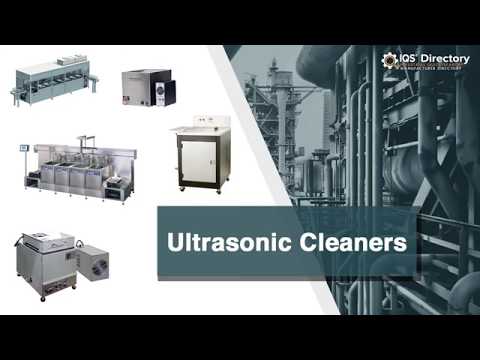
IQS Directory provides a comprehensive list of ultrasonic cleaner manufacturers and suppliers. Use our website to review and source top ultrasonic cleaner manufacturers with roll over ads and detailed product descriptions. Find ultrasonic cleaner companies that can design, engineer, and manufacture ultrasonic cleaner to your companies specifications. Then contact the ultrasonic cleaner companies through our quick and easy request for quote form. Website links, company profile, locations, phone, product videos and product information is provided for each company. Whether you are looking for manufacturers of industrial ultrasonic cleaners, heated ultrasonic cleaners, digital ultrasonic cleaners, or customized ultrasonic cleaners of every type, this is the resource for you.
Suppliers located in IL, OH, CT +13 more states
Contents (6 sections)
Leading Ultrasonic Cleaners Manufacturers
Showing all 6
| Placement No. | Manufacturer | Location | Contact | Actions | |
|---|---|---|---|---|---|
| 1 | ESMA, Inc.Since 1972, Esma Inc. has been producing quality ultrasonic cleaners, as well as benchtop electropolishing equipment. Esma offers a unique and progressive approach to automating the ultrasonic cleaning process by transferring liquids to a single ultrasonic process chamber from individual heated storage tanks, which are designed to re-use and filter the detergents, acids and rinse water. | South Holland, IL | |||
| 2 | Giant Finishing, Inc.Giant Finishing, Inc. is a worldwide manufacturer and supplier of finishing equipment. We are a family owned business with over 25 years of experience in the industry. Our goal is to provide quality equipment and quality customer service for all surface finishing needs, and we supply equipment, chemicals, compounds, and finishing media to companies around the world. Visit our website or call us today to see how we can help! | Addison, IL | |||
| 3 | Great Lakes Finishing EquipmentGreat Lakes Finishing Equipment, Inc. is a full line supplier of aqueous and semi-aqueous ultrasonic cleaning equipment. Equipment includes benchtop cleaners, tank and generator series, immersible transducers, console systems and engineered systems. Our customers include defense, aerospace, medical, firearms and industrial. | South Elgin, IL | |||
| 4 | EmersonWe specialize in ultrasonic cleaning technology that redefines precision and efficiency across industrial applications. At Emerson, we design and manufacture advanced ultrasonic cleaning equipment engineered to remove contaminants from complex parts with unmatched thoroughness. | St. Louis, MO | |||
| 5 | SHARPERTEK USAAt SHARPERTEK USA, we specialize in delivering advanced ultrasonic cleaning equipment that meets the highest standards of precision, reliability, and performance. Based in the United States, we design and manufacture a full line of ultrasonic cleaners that serve industries ranging from medical and dental to aerospace, automotive, and industrial manufacturing. | Pontiac, MI | |||
| 6 | Mettler Electronics CorpWe take pride in being innovators at Mettler Electronics Corp, where we specialize in developing high-performance ultrasonic cleaning equipment trusted by professionals across industries. Our systems are designed to deliver powerful, precise cleaning through advanced ultrasonic technology that removes contaminants from intricate surfaces with efficiency and care. | Anaheim, CA |
Claim your Page One Spot
Leading ultrasonic cleaners manufacturers are listed first on this page, each with a website preview and a Request a Quote button on its row.
Additional Ultrasonic Cleaners Companies
The category’s other ultrasonic cleaners companies are listed on their own page, with location, phone and website where each supplier provides them.
View 20 Additional Ultrasonic Cleaners CompaniesDo not see your company listed in Ultrasonic Cleaners?
Engineers and buyers use this page to find ultrasonic cleaners suppliers. Add your company to the Ultrasonic Cleaners listings so they can find you too.
List Your Company- Listed in the Ultrasonic Cleaners directory
- A profile page for your company
- Buyers contact you directly
Ultrasonic Cleaners Industrial Manufacturing Guides
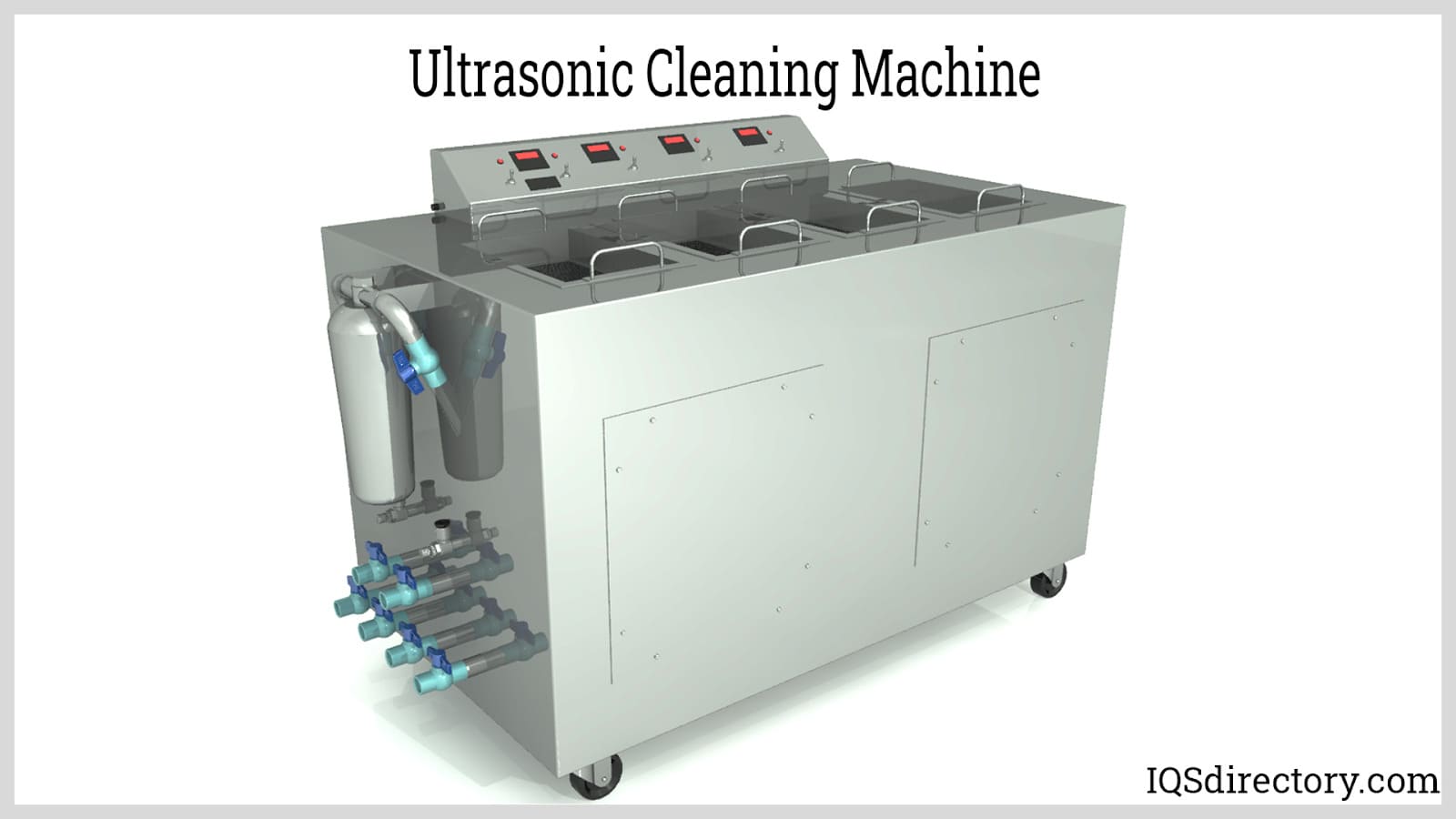
Ultrasonic Cleaners: Types, Uses and Advantages
This article takes an in depth look at ultrasonic cleaners. Read further to learn more about topics such as: What is an ultrasonic cleaner Advantages of…
5 chapters, the longest in this category
Quick Answers
- How many ultrasonic cleaners manufacturers are listed on IQS Directory?
- 6 leading manufacturers and 20 additional suppliers.
- Where are ultrasonic cleaners manufacturers located?
- The listed suppliers are in 16 states and provinces: Illinois (4), Ohio (4), Connecticut (3), Missouri (2), New Jersey (2), Arizona (1), California (1), Iowa (1), and 8 more.
- How do I get quotes from ultrasonic cleaners suppliers?
- Select suppliers in the table and choose Request Quotes. IQS reviews your request and forwards it to every supplier you select.
Ultrasonic Cleaners
Ultrasonic cleaners are advanced cleaning machines used across a wide range of industries where fast, precise, and repeatable parts cleaning matters. Sectors that rely on ultrasonic cleaning for dependable results include healthcare settings such as general practice, surgery, optometry, and podiatry; laboratories involved in sonochemistry, scientific instrument cleaning, cell disruption, and mixing applications; and manufacturing environments that handle machined parts, tools, molds, and assemblies. They are also widely used in jewelry, aerospace, automotive, defense, filtration, molding, fabrication, pharmacy, and equipment reconditioning. Whether a buyer is comparing ultrasonic parts cleaners for delicate instruments or researching industrial ultrasonic cleaning systems for production components, these machines are valued for their ability to remove oils, debris, residues, and fine contamination from surfaces, recesses, and hard-to-reach passages with impressive consistency.
The History of Ultrasonic Cleaners
The technology behind ultrasonic cleaners comes from the broader field of ultrasound, first observed by chance in the 1930s in a laboratory setting. Employees at the Radio Corporation of America (RCA) were using freon to cool radio components and noticed ultrasonic wave activity around a crystal operating at 300 kHz. Although the finding was not immediately turned into a commercial cleaning process, it helped open the door to future research in high-frequency sound applications. Practical ultrasonic cleaning equipment did not begin to take shape until around 1949, and by 1952, ultrasonic cleaners were already being used in production facilities where manufacturers needed faster, more thorough parts washing than manual methods could provide.
By the 1970s, ultrasonic cleaning technology had expanded into more affordable commercial and consumer applications. Since the 1990s, the field has advanced significantly through higher frequencies, better transducer designs, improved generators, digital controls, and integrated process steps such as spray cleaning, rinsing, precision flushing, and parts drying. Modern ultrasonic cleaning systems can support batch cleaning, precision parts washing, and residue removal with a high degree of consistency. When paired with deionized water and a properly selected ultrasonic cleaning solution, many of today’s systems can leave parts exceptionally clean and ready for assembly, inspection, packaging, or further finishing operations.
Advantages of Ultrasonic Cleaning
Ultrasonic cleaners deliver a level of parts cleaning that many traditional washing methods struggle to match, especially when contamination is trapped inside recesses, threads, channels, or tight clearances. For buyers researching how to clean small metal parts, delicate instruments, medical tools, or production components without abrasive contact, ultrasonic cleaning offers a strong combination of cleaning power and surface protection. It is also environmentally friendly, cost-conscious, time-saving, versatile, gentle on delicate items, energy efficient, highly reliable, and especially effective for cleaning small or intricate components that demand repeatable results.
Environmental Friendliness Ultrasonic cleaning reduces waste, lowers emissions, and helps create a safer workplace environment by limiting the need for harsher manual cleaning practices and excessive solvent consumption. Cost Effectiveness Ultrasonic cleaning uses soap-based solutions and sonic energy, resulting in relatively low operating costs. Total expense varies with the chemistry, cycle time, part geometry, and contamination level, but the process is often more economical than labor-heavy or multi-step cleaning methods. Time Efficiency Ultrasonic cleaning removes contaminants from metal parts and precision components quickly, helping reduce labor demands, shorten cleaning cycles, and save time and money in both maintenance shops and production environments. Versatility Ultrasonic cleaners can remove a broad range of contaminants including oil, grease, metal shavings, dirt, sand, paint residue, carbon, oxides, buffing compounds, and other particles from many kinds of surfaces and materials. Gentleness Unlike abrasive or aggressive mechanical cleaning, ultrasonic cleaners use controlled cavitation to clean without damaging parts, making them suitable for sensitive items such as electronics, machined components, coated parts, and fine assemblies. Energy Efficiency Ultrasonic cleaners generally consume less energy than many traditional parts washers. They often operate with a streamlined design and efficient power delivery, helping reduce utility usage while still providing strong cleaning action. Ultrasonic washing machines are built for productive, efficient operation. Reliability Ultrasonic cleaning is dependable because the system design includes few moving or rotating elements. That simplicity supports steady performance, repeatable cleaning cycles, and less mechanical wear in many applications. Small Parts Cleaning Ultrasonic cleaners excel at washing small or hard-to-reach parts that are difficult to clean with standard methods. They effectively clean inside passageways, cracks, holes, and tiny openings where residue can remain after spray or hand cleaning. Ultrasonic cleaning machines are well suited for detailed components.Process of Ultrasonic Cleaners
Ultrasonic cleaners remove dirt and contaminants from small parts and complex components using high-frequency sound waves, typically beginning around 18 kHz, to create cavitation in a liquid bath. Cavitation is the rapid creation and collapse of microscopic bubbles in the cleaning solution. As those bubbles implode, they release energy that dislodges and lifts away particles from surfaces and crevices that are otherwise difficult to access. Common contaminants removed by ultrasonic cleaning include sludge, polishing compounds, mold release agents, coolants, shop soils, and oil. If you are researching how ultrasonic cleaning works for precision parts, medical instruments, or metal components, the answer usually comes down to this controlled cavitation effect and the way it reaches places brushes and sprays cannot.
Ultrasonic cleaning equipment is widely used for cleaning jewelry, watches, electronic parts, medical and dental tools, precision instruments, heat exchangers, and firearms. It is also a practical option for shops evaluating cleaning methods for machined parts, plated components, molded items, lab instruments, and maintenance hardware where appearance, function, and cleanliness all matter.
Design of Ultrasonic Cleaners Every ultrasonic cleaning system includes at least an ultrasonic transducer, a generator, and a tank, often called an immersion tank. Transducers convert electrical energy into high-frequency mechanical vibrations. The generator supplies the power required by the transducer, which may be mounted to the side or bottom of the tank or positioned as a submerged assembly. The tank holds both the items being cleaned and the cleaning solution. As the transducer sends ultrasonic waves through the liquid, cavitation forms throughout the bath and creates the scrubbing action that loosens contamination. The tank contains a cleaning solution that may be heated water, an aqueous-based chemistry, or a solvent used for vapor cleaning. Each medium suits different cleaning goals, contamination types, and material requirements. As the solution forms and collapses bubbles, those implosions clean the part surfaces. Materials commonly cleaned this way include stainless steel, iron, aluminum, copper, brass, plastics, molded rubber, wood, and absorbent cloth. Materials of Ultrasonic Cleaners Most ultrasonic cleaner components, especially the tank, are made from stainless steel because it offers corrosion resistance, durability, and long service life in demanding wash environments. Ultrasonic cleaning systems can be customized in many ways. For example, adding a square wave signal can create a multi-frequency system that helps address different contaminants and part geometries. Upgrades such as digital controls, casters for mobility, timed cycles, automated handling, and battery-supported portability may also be available depending on the application. Before cleaning begins, parts are lowered into the tank, usually in a basket or fixture. The system is activated through digital controls or knobs, and the cavitation inside the ultrasonic bath releases energy and heat that help the cleaning solution reach exposed surfaces as well as hidden areas, recesses, and internal passages. Ultrasonic cleaners provide impressive cleaning quality by reaching more of the part surface more thoroughly and efficiently than many conventional cleaning technologies, especially when the chemistry, frequency, and cycle time are matched to the job.Types of Ultrasonic Cleaners
There are many types of ultrasonic cleaners, and they are often categorized by their intended use, tank size, automation level, or the kinds of parts they handle. Examples include ultrasonic blind cleaners, ultrasonic jewelry cleaners, golf club cleaners, gun cleaners, ultrasonic degreasers, benchtop units, industrial ultrasonic tanks, and fully automated ultrasonic cleaning systems.
Ultrasonic blind cleaners are designed specifically to remove dirt, grease, fingerprints, and nicotine from blinds and shades. Jewelry cleaners are built for rings, watches, and other small valuables, while golf club cleaners are used to remove dirt and residue from clubs and related equipment. Ultrasonic gun cleaners are intended for firearm components, and ultrasonic degreasers remove grease and shop soils from automotive and industrial parts. Other options include industrial ultrasonic cleaners, immersible ultrasonic cleaners, and fully automated ultrasonic cleaning systems for higher-volume production work.
Industrial ultrasonic cleaners use high-frequency sound waves to remove dirt, debris, oil, and residue from objects. They work with specialized cleaning solutions and often include a powerful electric heater to improve bath performance, detergent action, and cycle consistency. Immersible ultrasonic cleaners are flexible and easy to install, making them a good fit for retrofits, custom tanks, and process lines that need durable operation and layout flexibility.
Fully automated ultrasonic cleaners can improve pre-assembly cleaning, reduce solvent use by up to ninety percent in some applications, and use heat pump thermal transfer to reduce solvent evaporation. Diagnostic controls, programmable cycles, and computerized transporters help maintain consistent, repeatable cleaning results, which is valuable for buyers comparing automated parts washing equipment for quality-sensitive production.
Benchtop Cleaners Used to wash small parts. They have a compact footprint and are often placed on a counter, bench, or worktable for convenient access in labs, clinics, repair rooms, and light-duty production areas. Golf Club Cleaners Clean golf clubs quickly and thoroughly. They are widely used at golf courses and service areas where a neat, fast cleaning process is preferred. Immersion Cleaning Takes place in a tank using an aqueous solution. In this process, cavitation helps release the contaminant from the surface of the part or product being cleaned. Industrial Ultrasonic Cleaners Large-capacity parts cleaners that use sound waves to create cavitation for cleaning, degreasing, and sanitizing products in manufacturing, rebuilding, and maintenance applications. Tabletop Cleaners Used to wash small parts. As the name suggests, they are compact enough to sit on a table or bench while still providing effective ultrasonic action. Tank Cleaners Do not require a large amount of complicated machinery. They are commonly rectangular in design and often hold 100 gallons or less, depending on the process. Ultrasonic Blind Cleaners Equipment designed to clean window blinds using ultrasonic cleaning techniques. They support very thorough cleaning and can remove allergens such as dust, pollen, soot, nicotine, and other accumulated grime. Ultrasonic Cleaning A process that uses high-frequency sound waves in a liquid medium to clean surfaces, passages, and fine features that are difficult to reach manually. Ultrasonic Cleaning Equipment Uses millions of tiny cavitation bubbles to scrub surfaces and help remove contamination from parts and components. Ultrasonic Cleaning Solution Used in ultrasonic parts cleaners as an important part of the cleaning process, since water alone is often not enough to remove oils, residue, or embedded soils from the dirty part or product. Ultrasonic Cleaning Systems Use sound waves to clean, degrease, and sanitize products, parts, and machine components by removing grease, dirt, wax, lubricants, oil, and other contaminants. Ultrasonic Degreasers Used to clean demanding parts by combining ultrasonic immersion cleaning with conventional vapor degreasing practices in suitable applications. Ultrasonic Jewelry Cleaners Use ultrasonic frequencies to clean cracks and crevices in jewelry that are difficult or impossible for traditional cleaning methods to reach effectively. Ultrasonic Parts Cleaners Underwater cleaning systems that use high-frequency sound waves to clean parts with hard surfaces, detailed contours, and tight spaces. Ultrasonic Tanks The components of ultrasonic cleaners that hold the water, cleaning solution, and parts to be cleaned during the wash cycle. Ultrasonic Vapor Degreasing Equipment Uses solvents in an environmentally safer chamber. The vapor and ultrasonic agitation work together to clean parts efficiently. Ultrasonic Transducers The power-producing components of larger cleaning systems that convert electrical energy from a generator into mechanical energy, or sound vibrations, which then create cavitation. Ultrasonic Washers Use ultrasound waves and specialized fluids to clean jewelry, surgical instruments, golf clubs, and many other small components.Installation of Ultrasonic Cleaners
Ultrasonic cleaners can be installed in several locations, such as on a table, within a frame, mounted next to walls fitted with transducers, or used as a self-contained unit. The right installation approach depends on tank size, throughput needs, operator workflow, available utilities, and whether the system is stand-alone or part of a larger cleaning line.
Wherever you position your cleaner, make sure it is near a grounded electrical outlet and installed in a space that supports safe loading, unloading, draining, and ventilation. Before plugging in the system, confirm that the outlet voltage and the cleaner’s power requirements are compatible so the unit operates as intended from the start.
Standards and Specifications of Ultrasonic Cleaners
The standards you follow depend on your application as well as industry and government regulations. For example, ultrasonic cleaners used for medical parts must comply with FDA requirements, while units used for military equipment may need to meet Mil-Spec guidelines. In many industries, buyers also review process documentation, material compatibility, operating frequency, tank construction, heater capacity, and cleanliness verification methods before making a purchase. For strong long-term results, make sure your ultrasonic cleaning equipment and procedures align with guidance from organizations such as ISO, ASTM, and NIST.
Things to Consider When Choosing Ultrasonic Cleaners
Begin by considering what items you need to clean, including their size, shape, material, and daily volume. This helps determine the right tank size, basket configuration, and cycle capacity for your ultrasonic cleaning equipment, which is available in a wide range of sizes and system layouts. Are you comparing benchtop ultrasonic cleaners for instruments, or are you looking for industrial ultrasonic tanks for parts washing at higher throughput? Defining the load first makes the rest of the selection process easier.
Also factor in your application’s cleaning demands. For heavy-duty cleaning, choose higher-capacity ultrasonic cleaners with the right power density, bath chemistry, and operating controls, as these systems are generally more robust than light-duty units. Buyers often also compare heater options, automation level, drain design, frequency range, and whether the process requires rinsing, drying, filtration, or validation steps.
The type of cleaning solution is also important. Solutions can be alkaline, acidic, or neutral. Alkaline cleaners work well for hard metals like stainless steel, but may damage non-ferrous or softer metals like aluminum. For ferrous metals, use a water-based solution with a rust inhibitor. Neutral pH cleaners are often best for delicate components such as copper wires, fine metal layers, and jewelry pieces where appearance and surface condition matter. Matching the chemistry to the material and contaminant is one of the most effective ways to improve cleaning performance.
To help secure the right cleaning system for your operation, choose a manufacturer willing to meet your specifications for performance, budget, and delivery timeline. Buyers often look for suppliers that can discuss application testing, custom tank sizing, controls, material handling options, and post-sale support. For a list of reputable manufacturers, see the companies featured above.
Proper Care for Ultrasonic Cleaners
When operated correctly, ultrasonic cleaners usually require minimal maintenance. The most important step is following recommended operating practices and inspecting the machine regularly for wear, improper heating, low solution levels, or other signs that performance may be dropping.
One common mistake is placing parts directly on the bottom of the tank, which can damage the transducers or interfere with the cleaning pattern. Always use a basket or fixture to support the load properly. A frequent problem with used ultrasonic cleaners is heat damage, because transducers generate heat that must be dissipated into the liquid. Running the cleaner with insufficient solvent or solution can damage the bond between the transducers and the tank and may stop cavitation from occurring correctly. Discoloration on the housing can be an early sign of overheating.
To further improve the performance and service life of your ultrasonic cleaning equipment, maintain the proper temperature, watt density, and output frequency. Standard units often operate at 40 kHz, though other frequencies may be preferred for specific contaminants or part geometries. The right cleaning solution and proper settings help maximize longevity, cleaning consistency, and day-to-day operating value.
Accessories of Ultrasonic Cleaners
Ultrasonic washers generally require few accessories because of their straightforward operation. However, optional accessories are available to suit specific applications, such as extra sinks, casters for mobility, hinged or insulated lids, containment baskets, custom fixtures, and handling aids that support repeatable part placement and smoother workflow.
Ultrasonic Cleaners Terms
Common Questions
7 questions
What Industries Commonly Use Ultrasonic Cleaners?
Ultrasonic cleaners are used across healthcare, laboratories, manufacturing, jewelry, aerospace, automotive, defense, and maintenance sectors. They efficiently clean medical tools, precision instruments, and small or intricate parts in industrial plants, repair facilities, and research environments where consistent surface cleanliness is a priority.
How Does Ultrasonic Cleaning Work?
Ultrasonic cleaners use high-frequency sound waves, typically around 18 kHz and above, to create cavitation bubbles in a liquid bath. When those microscopic bubbles collapse, they loosen and lift dirt, oil, polishing compounds, and other contaminants from exposed surfaces, crevices, bores, and blind holes without aggressive scrubbing.
What Are the Main Advantages of Ultrasonic Cleaners?
Ultrasonic cleaners provide deep yet gentle cleaning with low labor input and efficient energy use. They are environmentally friendly, dependable, and cost-conscious to operate. Their ability to clean delicate, detailed, or high-value components makes them a strong choice for electronics, medical device cleaning, jewelry processing, and precision manufacturing.
What Materials Can Be Cleaned with Ultrasonic Equipment?
Ultrasonic cleaners can clean metals such as stainless steel, iron, aluminum, copper, and brass, as well as plastics, rubber, wood, and cloth. They are commonly used to remove grease, oil, oxides, residue, and polishing compounds while helping protect the underlying surface finish when the right frequency and cleaning solution are selected.
What Types of Ultrasonic Cleaners Are Available?
Types include benchtop, industrial, immersible, and fully-automated systems. Specialized models such as ultrasonic jewelry cleaners, blind cleaners, gun cleaners, and golf club cleaners are built for specific cleaning goals and load sizes, from small precision parts and instruments to larger production components and maintenance items.
How Should Ultrasonic Cleaners Be Maintained?
To maintain ultrasonic cleaners, avoid placing parts directly on the tank bottom and make sure solvent or aqueous solution levels stay within the recommended range to prevent heat damage. Regular inspection, proper temperature control, suitable watt density, and correct chemistry selection all help extend equipment life and support strong cleaning performance.
What Standards Apply to Ultrasonic Cleaning Systems?
Standards depend on the application. Medical ultrasonic cleaners must meet FDA regulations, while systems used for military or aerospace work may need to follow Mil-Spec requirements. Many ultrasonic cleaning processes also align with ISO, ASTM, and NIST guidelines for process quality, validation, and repeatable cleaning performance.