
- 7 leading manufacturers
- 67 additional suppliers
- 26 states and provinces
- 8 related categories
- 11 guide sections
Sheet Metal Fabrication Companies and Services

IQS Directory implements a thorough list of sheet metal fabrication companies and suppliers. Utilize our listing to examine and sort top sheet metal fabrication companies with previews of ads and detailed descriptions of each product. Any sheet metal fabrication company can design, engineer, and provide sheet metal fabrication services to meet your companies specific qualifications. An easy connection to reach sheet metal fabrication companies through our fast request for quote form is provided on our website. The company information includes website links, company profile, locations, phone, product videos and product information. This source is right for you whether it's for a provider of sheet metal fabrication tools, axis sheet metal fabrication, and sheet metal fabrication tools.
Suppliers located in CA, IL, OH +23 more states
Contents (6 sections)
Leading Sheet Metal Fabrication Manufacturers
Showing all 7
| Placement No. | Manufacturer | Location | Contact | Actions | |
|---|---|---|---|---|---|
| 1 | Accurate Metal FabricatingAccurate Metal Fabricating has been providing metal fabrication to OEM's and job shops for over 80 years. We fabricate, engineer, and perforate to the most precise specifications for the most demanding companies. We offer a full range of metal customization and fabrication capabilities that bring your design to reality. Our abilities range from forming and laser-cutting to powder coating and welding. | Cicero, IL | |||
| 2 | Acro Industries, Inc.At Acro Industries, we deliver precision sheet metal fabrication solutions built on craftsmanship, advanced technology, and a deep understanding of industrial manufacturing demands. Our company specializes in transforming flat sheet metal into high-performance components and assemblies that meet exact customer specifications. | Rochester, NY | |||
| 3 | Pacific West America, Inc.At Pacific West America, Inc. we provide custom metal stamping, CNC machining, printed circuit boards, and membrane switches. Utilizing state of the art machinery, we offer precision metal fabrication and sheet metal fabrication. For unparalleled service and design, contact us today! | Calabasas, CA | |||
| 4 | Remaly Manufacturing Company, Inc.At Remaly Manufacturing, we deliver precision-driven sheet metal fabrication solutions built to meet the evolving demands of modern industry. Our company combines advanced equipment with skilled craftsmanship to transform raw materials into durable, high-quality components. | Tamaqua, PA | |||
| 5 | Anco Engineering Inc.At Anco Engineering Inc., we provide sheet metal fabrication solutions designed to produce durable, high-quality components for industrial and commercial applications. Our company focuses on transforming raw sheet metal into finished parts and assemblies that meet strict dimensional, structural, and performance requirements. By combining disciplined production practices with fabrication expertise, we deliver components that support dependable operation, consistent quality, and efficient manufacturing across custom and repeat programs. | Shelton, CT | |||
| 6 | Champ Metal FabricationAt Champ Metal Fabrication, we specialize in providing high-quality metal fabrication services to a diverse range of clients across various industries. We take pride in our ability to deliver customized solutions that meet the unique needs and requirements of each of our clients. Our range of products includes an array of metal components and structures such as brackets, frames, enclosures, panels, and more. | Jamestown, ND | |||
| 7 | American Industrial CompanySince 1981, American Industrial has been on the cutting edge of all things sheet metal. This has helped us achieve our spot as a leader of the industry. Our family-owned business takes pride in offering products that will stand the test of time and come with unmatched customer support in every aspect of our business. | Gurnee, IL |
Claim your Page One Spot
Leading sheet metal fabrication manufacturers are listed first on this page, each with a website preview and a Request a Quote button on its row.
Additional Sheet Metal Fabrication Companies
The category’s other sheet metal fabrication companies are listed on their own page, with location, phone and website where each supplier provides them.
View 67 Additional Sheet Metal Fabrication CompaniesDo not see your company listed in Sheet Metal Fabrication?
Engineers and buyers use this page to find sheet metal fabrication suppliers. Add your company to the Sheet Metal Fabrication listings so they can find you too.
List Your Company- Listed in the Sheet Metal Fabrication directory
- A profile page for your company
- Buyers contact you directly
Sheet Metal Fabrication Industrial Manufacturing Guides

Sheet Metal Fabrication: Types, Applications and More
This article takes an in depth look at sheet metal fabrication. You will learn more about topics such as: What is sheet metal fabrication? Sheet metal…
7 chapters
Quick Answers
- How many sheet metal fabrication manufacturers are listed on IQS Directory?
- 7 leading manufacturers and 67 additional suppliers.
- Where are sheet metal fabrication manufacturers located?
- The listed suppliers are in 26 states and provinces: California (9), Illinois (7), Ohio (6), Pennsylvania (6), Indiana (5), Minnesota (5), New York (4), Texas (4), and 18 more.
- How do I get quotes from sheet metal fabrication suppliers?
- Select suppliers in the table and choose Request Quotes. IQS reviews your request and forwards it to every supplier you select.
Sheet Metal Fabrication
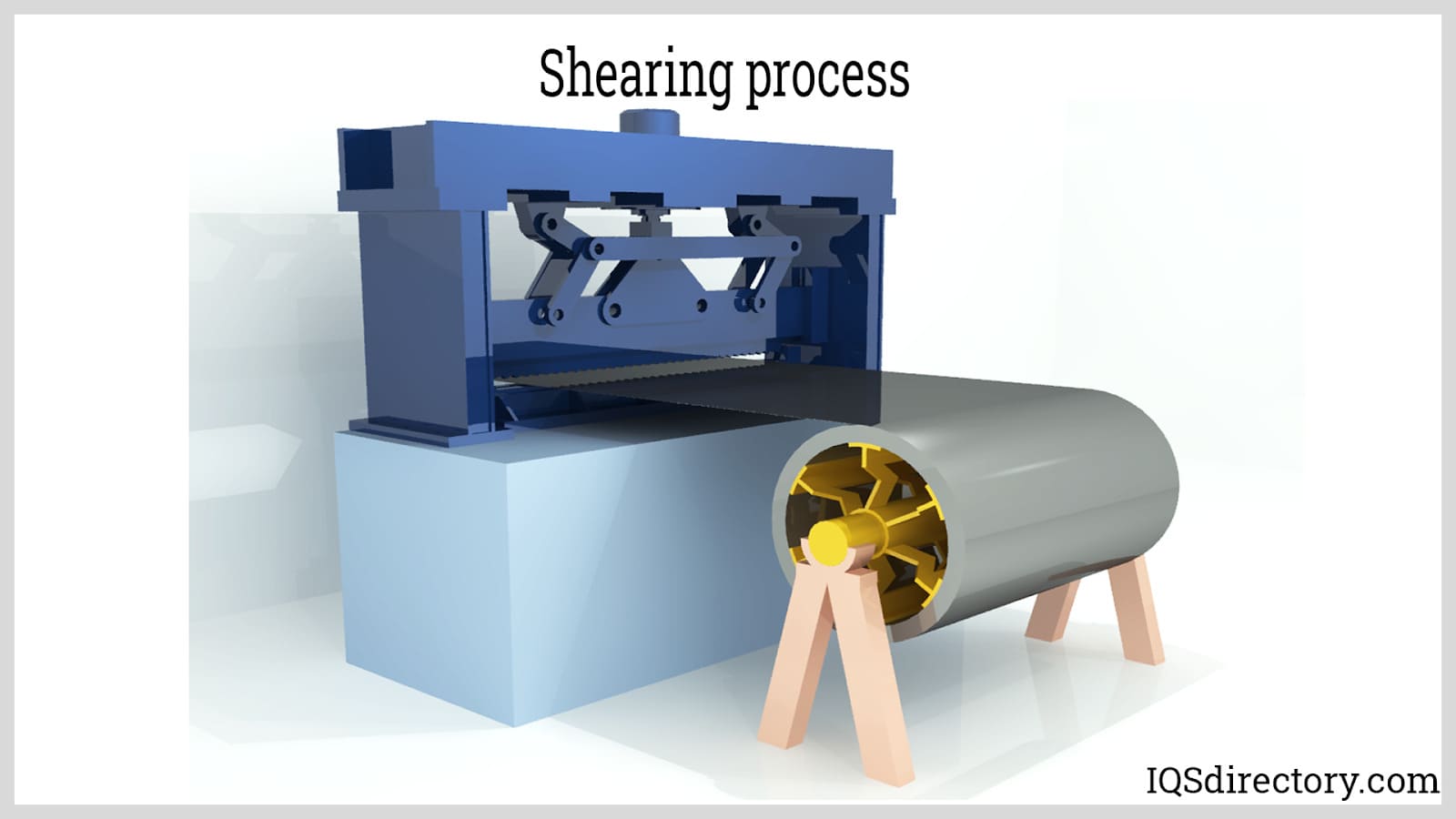
Sheet metal fabrication is a flexible metalworking and manufacturing process that transforms thin, flat sheets of metal into finished components, assemblies, and end-use products through forming, cutting, joining, and finishing. Manufacturers rely on sheet metal fabrication for both standard and custom parts because it supports tight tolerances, repeatable production, and a wide range of materials. Common fabrication methods include stretching, drawing, bending, flanging, punching, shearing, and spinning to achieve the desired final component, whether the goal is a simple bracket, an enclosure, ductwork, or a complex precision assembly.
The History of Sheet Metal Fabrication
Benefits of Sheet Metal Fabrication
Sheet metal fabrication, whether performed manually or with automated equipment, offers a wide range of advantages. It provides high precision, reduces material waste, supports efficient labor use, and enables the creation of durable, high-quality products with consistent dimensions. It is also highly versatile, making it suitable for small custom jobs, engineered assemblies, and large production runs. For companies comparing fabrication services, common decision points include tolerances, surface finish, lead times, tooling, material selection, and whether the supplier can scale from prototype development to repeat manufacturing without sacrificing quality.
Materials Used in Sheet Metal Fabrication
The most frequently used sheet metal materials are aluminum sheet metal and stainless steel sheet metal. Other commonly fabricated metals include copper, titanium, mild steel, structural steel, brass, and bronze. The right material depends on required strength, corrosion resistance, conductivity, weight, appearance, and how the finished component will be formed, welded, or finished.
Aluminum is widely chosen for sheet metal fabrication due to its light weight, corrosion resistance, and favorable tensile and compressive strength. It is often selected for enclosures, transportation components, architectural parts, and products where low weight and good formability matter.
Stainless steel sheet metal is highly valued in manufacturing thanks to its corrosion resistance, strength, durability, and clean appearance. Its easy-to-clean surface makes it ideal for use in harsh environments, food processing applications, medical equipment, and fabricated parts that must perform reliably in wet, sanitary, or demanding operating conditions.
Sheet Metal Fabricating Process
Design of Sheet Metal Fabrication
During the design stage, sheet metal fabricators address more than just dimensions, material, and shape. They consider factors such as part size, required strength, quantity, tolerance expectations, assembly needs, edge condition, finish requirements, and any secondary operations. Their goal is to ensure the final product is safe, effective, manufacturable, and aligned with industry standards while identifying possible stress points, deformation risks, or production inefficiencies early. To reduce costs or support sustainability goals, manufacturers may also use recycled or previously fabricated sheet metal when the application allows. Buyers often ask how to choose a sheet metal fabricator, how to compare custom fabrication capabilities, or how to reduce fabrication costs without lowering part quality, and the design phase plays a large part in those outcomes. Contact your supplier for further details.
Machinery Used in Fabrication
Sheet metal fabrication relies on a wide array of equipment, including punch and die systems, press brakes, drills, automated production lines, CNC machining technology, and more. Equipment selection affects accuracy, repeatability, throughput, and how efficiently a fabricator can handle custom jobs versus long production runs.
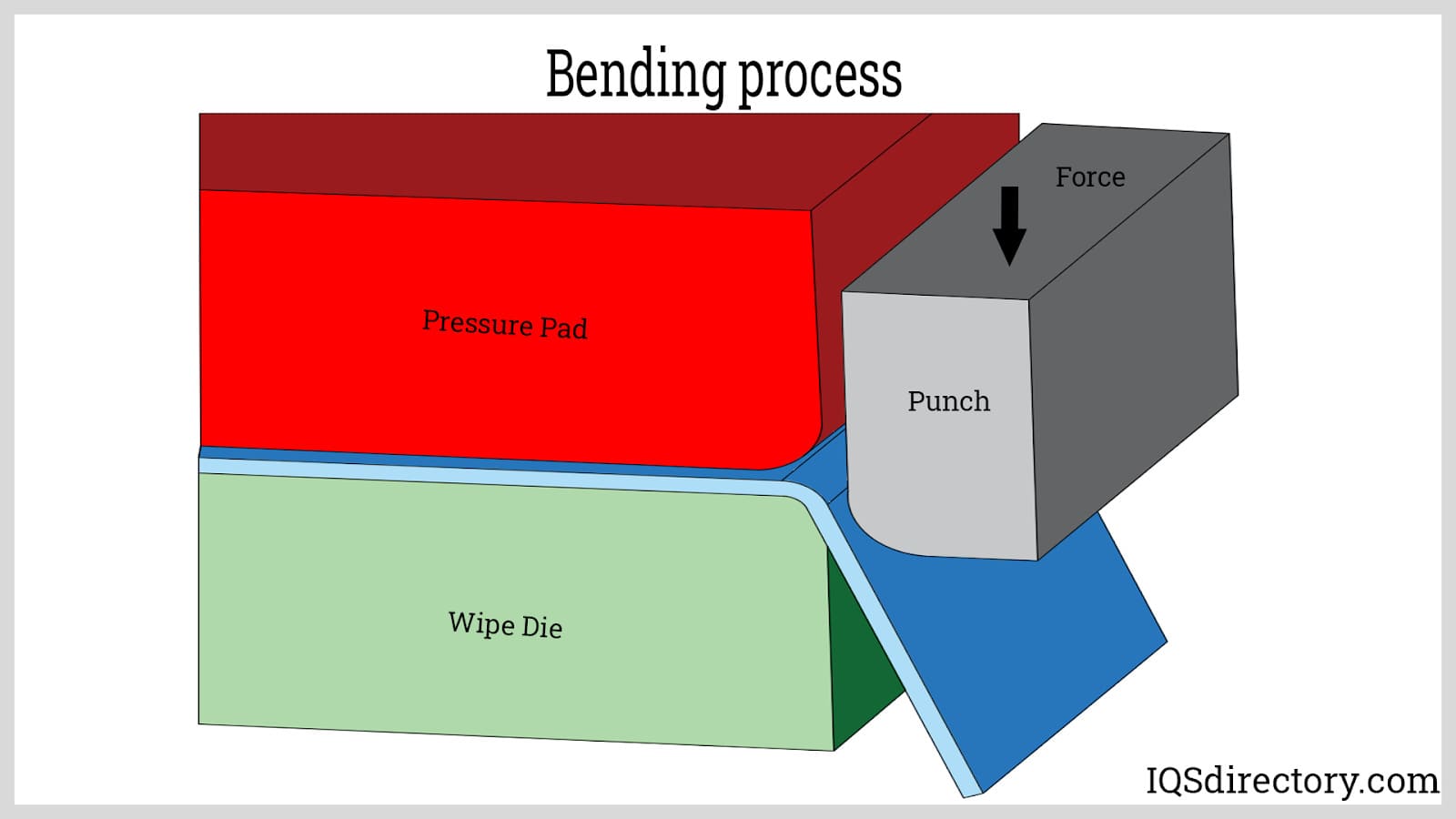
Punch and die systems operate by securing flat sheets of metal and then deforming them with a descending punch. These systems often work alongside press brakes or other specialized presses, allowing for various shapes, holes, embosses, and bends. Press brakes are primarily used to bend sheet metal and can be paired with a range of punch and die tools to produce repeatable formed components.
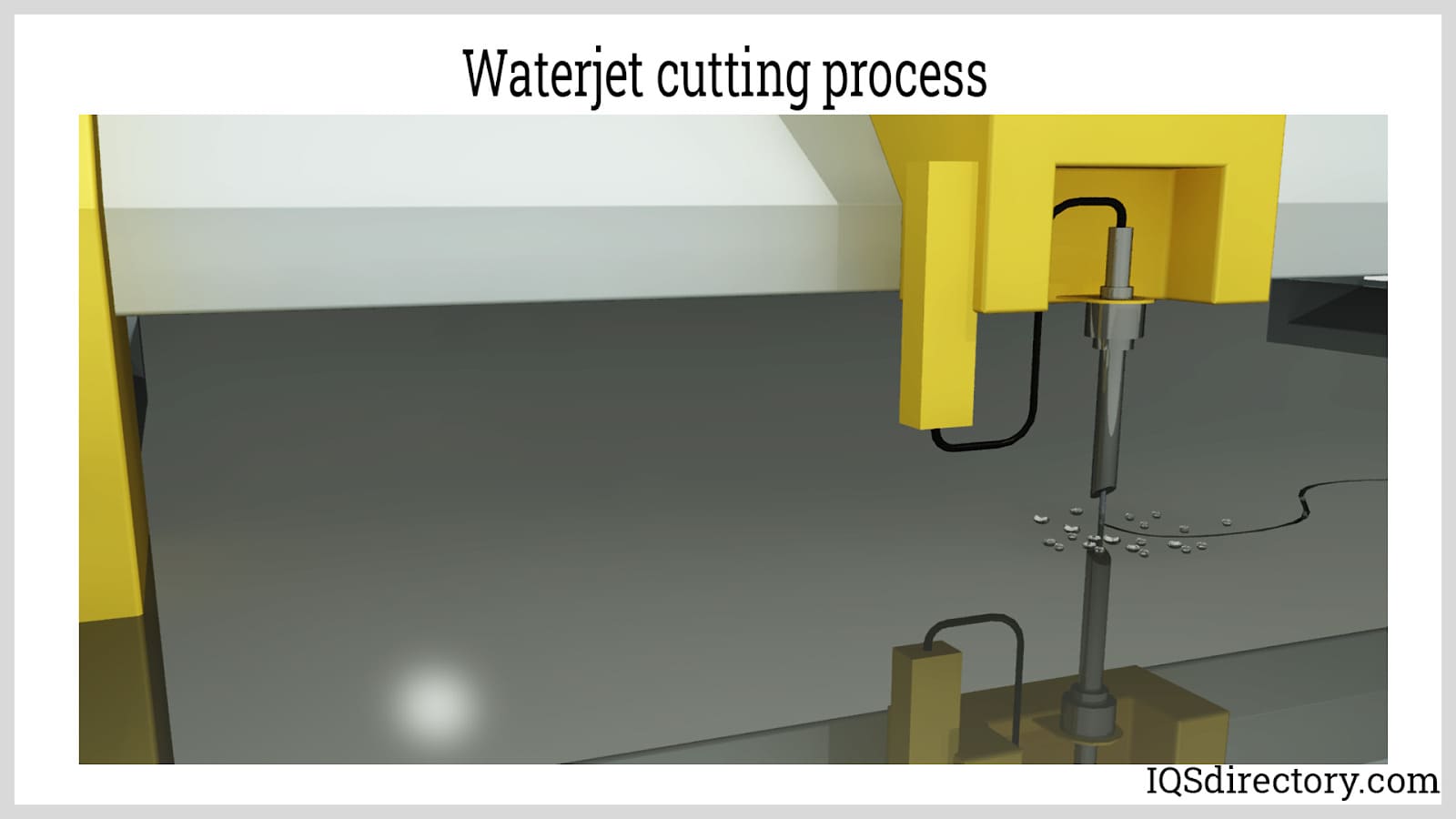
Modern drills used in fabrication are often supported by laser or CNC-guided technology, enabling both drilling and precise cutting. Laser cutting equipment allows manufacturers to achieve clean edges, narrow kerf widths, and accurate cuts at specific depths and angles, which is helpful when producing precision sheet metal parts with tight tolerances.
Robotic automated lines are common in large-scale facilities. Robots handle and position sheet metal workpieces as they are formed, cut, and finished throughout the fabrication process, improving consistency, worker safety, and production speed while reducing variability in repetitive operations.
CNC machinery, utilizing advanced software, enables manufacturers to produce highly accurate and consistent parts through automated control. For customers evaluating suppliers, CNC capability often signals better repeatability, better documentation, faster setup changes, and smoother movement from prototype fabrication to full production.
Sheet Metal Fabrication Images, Diagrams and Visual Concepts
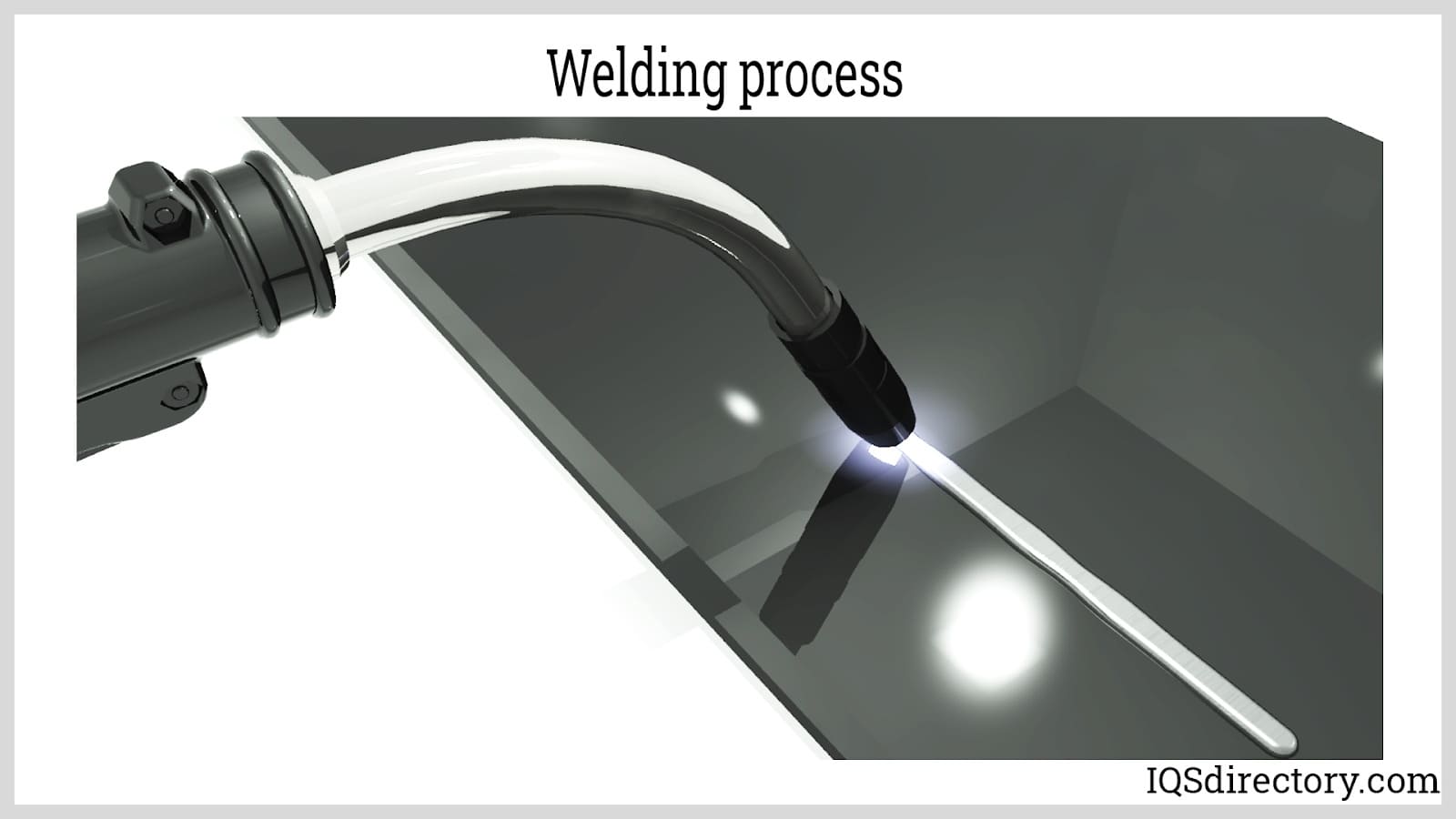
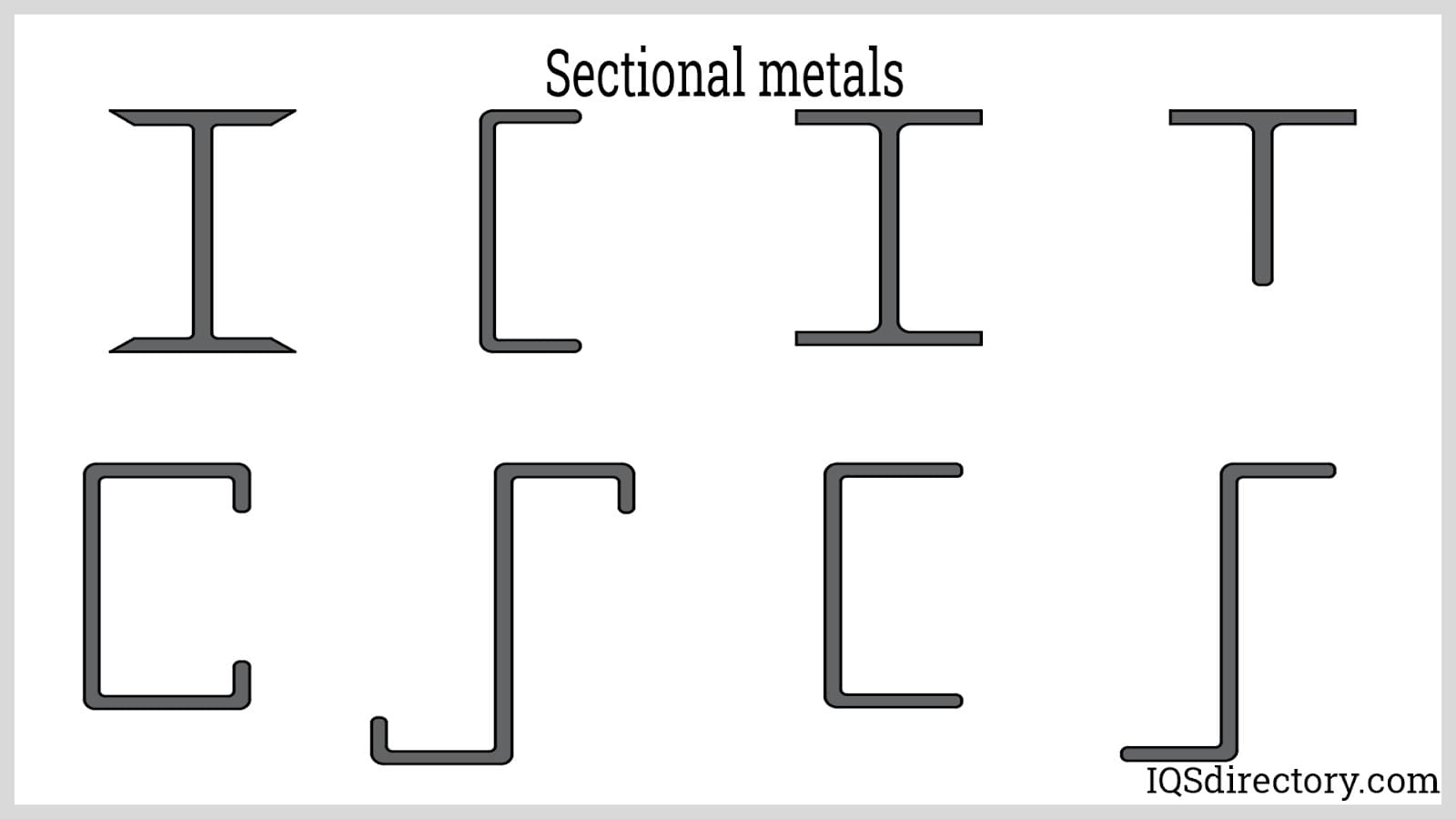
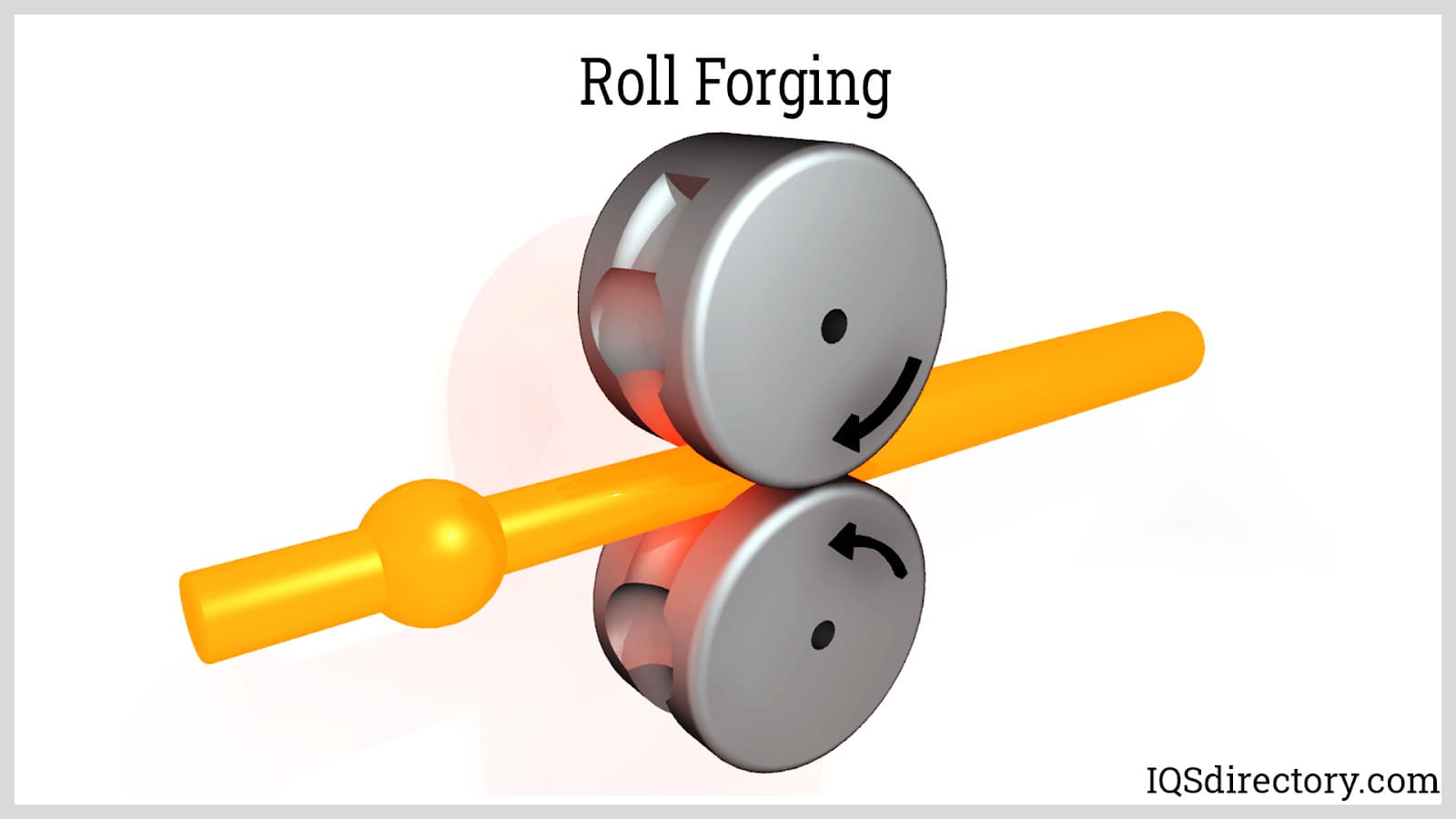
Applications of Sheet Metal Fabrication
Nearly every sector, from residential and commercial to industrial, relies on precision sheet metal fabrication. Key industries that use sheet metal fabrication include military, food processing and storage, communications, automotive, computers, medical, electronics, aerospace, pharmaceutical, construction, agriculture, and energy. Because sheet metal can be cut, formed, joined, and finished in so many ways, it supports both simple commodity products and complex engineered assemblies.
Manufacturers use precision sheet metal fabrication to produce a wide variety of products. Common examples are HVAC components like grating and ductwork, stairwell railings, structural supports such as airplane frames and bridge skeletons, lighting hoods, cutlery, scissors, fencing, cages, shelving, and fabricated metal furniture such as metal cabinets for storage. Buyers often search for custom sheet metal parts, precision metal enclosures, fabricated stainless steel components, or production-ready aluminum parts, and all of those needs fall within the broad capabilities of sheet metal fabrication.
Things to Consider When Choosing Sheet Metal Fabrication
If you need custom sheet metal parts or products, it’s important to work with a manufacturer that understands your specifications and can deliver quality results. Review the companies listed above, browse their profiles, or visit their websites directly to learn more about their services and capabilities. The best choice will be a company that listens to your needs, evaluates drawings carefully, communicates about tolerances and lead times, and delivers custom products within your budget. It also helps to compare material options, finishing services, production capacity, tooling experience, inspection practices, and whether the fabricator can support prototyping, short runs, and ongoing production as your requirements change.
Variations and Similar Services for Fabrication
Sheet Metal Fabrication Terms
Common Questions
7 questions
What Is Sheet Metal Fabrication?
Sheet metal fabrication is the process of cutting, forming, bending, joining, and finishing flat metal sheets to create usable parts or complete products. Fabricators use methods such as punching, welding, laser cutting, stamping, and brake forming to produce durable, dimensionally accurate components for commercial and industrial applications.
Which Materials Are Commonly Used in Sheet Metal Fabrication?
Fabricators commonly work with aluminum and stainless steel because they offer a strong combination of corrosion resistance, formability, and strength. Other frequently used materials include mild steel, galvanized steel, copper, brass, bronze, and titanium, with material selection depending on part performance, environment, finish requirements, and budget.
How Has Sheet Metal Fabrication Evolved over Time?
Sheet metal fabrication has evolved from manual hammering and hand tools to advanced CNC and CAD-driven production systems. Innovations such as rolling mills, hydraulic presses, laser cutting machines, press brakes, robotic handling, and automated inspection have improved production speed, design flexibility, and part consistency across low- and high-volume manufacturing.
What Are the Main Steps in the Sheet Metal Fabrication Process?
The process typically includes material selection, design and engineering, cutting, forming, optional heat treatment, assembly, and finishing. Each stage supports final part accuracy, surface quality, durability, and fit, helping manufacturers produce custom sheet metal parts that meet performance, dimensional, and application-specific requirements.
Why Is CNC Machining Important in Sheet Metal Fabrication?
CNC technology improves precision, repeatability, and process control in sheet metal fabrication. By automating cutting, drilling, punching, and forming operations, CNC systems help reduce waste, shorten setup time, support complex geometries, and maintain consistent part quality for prototype work as well as larger production runs.
What Industries Rely on Sheet Metal Fabrication?
Sheet metal fabrication serves many sectors, including aerospace, automotive, food processing, medical equipment, electronics, construction, HVAC, agriculture, communications, and general industrial manufacturing. Businesses depend on fabricated metal parts for structural supports, machine guards, housings, panels, cabinets, ducting, and custom equipment components.
What Are the Advantages of Using Sheet Metal Fabrication?
Sheet metal fabrication offers accuracy, strength, material efficiency, scalability, and design versatility. It supports custom manufacturing, repeat production, and durable finished products while helping control labor costs and scrap. For buyers comparing fabrication options, it is often a practical choice for both lightweight and heavy-duty metal components.