
- 3 leading manufacturers
- 61 additional suppliers
- 23 states and provinces
- 12 related categories
- 10 guide sections
Lubricant Manufacturers and Suppliers

IQS Directory provides a comprehensive list of lubricant manufacturers and suppliers. Use our website to review and source top lubricant manufacturers with roll over ads and detailed product descriptions. Find lubricant companies that can design, engineer, and manufacture lubricants to your companies specifications. Then contact the lubricant companies through our quick and easy request for quote form. Website links, company profile, locations, phone, product videos and product information is provided for each company. Whether you are looking for manufacturers of solid lubricants, lubricant adhesives, precision lubricants, or customized lubricants of every type, this is the resource for you.
Suppliers located in IL, OH, CA +20 more states
Contents (6 sections)
Leading Lubricant Manufacturers
Showing all 3
| Placement No. | Manufacturer | Location | Contact | Actions | |
|---|---|---|---|---|---|
| 1 | Clearco ProductsAt Clearco Products, we specialize in providing high-quality lubricants and specialty silicone-based products designed to meet the needs of various industrial applications. Our company offers lubrication solutions that help reduce friction, minimize wear, and support efficient equipment operation. | Willow Grove, PA | |||
| 2 | Fluoramics Inc.At Fluoramics Inc., we specialize in developing and manufacturing high-performance lubricants designed to reduce friction, minimize wear, and improve the efficiency of mechanical equipment. Our company provides innovative lubrication solutions for industrial, automotive, commercial, and specialized applications. | Winona, MN | |||
| 3 | B'laster CorporationAt B'laster Corporation, we provide high-performance lubricants and maintenance products designed to help protect equipment, reduce friction, loosen stubborn components, and keep mechanical systems operating reliably. Our company develops lubricant solutions for automotive, industrial, commercial, and general maintenance applications. | Valley View, OH |
Claim your Page One Spot
Leading lubricant manufacturers are listed first on this page, each with a website preview and a Request a Quote button on its row.
Additional Lubricant Companies
The category’s other lubricant companies are listed on their own page, with location, phone and website where each supplier provides them.
View 61 Additional Lubricant CompaniesDo not see your company listed in Lubricants?
Engineers and buyers use this page to find lubricant suppliers. Add your company to the Lubricants listings so they can find you too.
List Your Company- Listed in the Lubricants directory
- A profile page for your company
- Buyers contact you directly
Lubricant Industrial Manufacturing Guides
Industrial Lubricants: Uses & Types
This article will discuss industrial lubricants. This article will give a better understanding of the topics below: What is an industrial lubricant Types of…
4 chapters
Quick Answers
- How many lubricant manufacturers are listed on IQS Directory?
- 3 leading manufacturers and 61 additional suppliers.
- Where are lubricant manufacturers located?
- The listed suppliers are in 23 states: Illinois (9), Ohio (8), California (5), New Jersey (5), Georgia (4), Michigan (4), Texas (4), Wisconsin (4), and 15 more.
- How do I get quotes from lubricant suppliers?
- Select suppliers in the table and choose Request Quotes. IQS reviews your request and forwards it to every supplier you select.
Lubricants
Lubricants, or lubes, are substances formulated to minimize friction (enhance lubricity) and dissipate heat between two moving surfaces. Lubricants also help with the movement of particles and manage heating and cooling processes. Additionally, they can serve as conductive agents to improve electrical current flow.
The History of Lubricants
Advantages of Lubricants
Lubricants deliver efficiency and smooth operation between hard surfaces such as metals. They also protect machinery from wear and extend equipment lifespan, while helping safeguard workers who interact with these systems.
Design of Lubricants
When creating or choosing a lubricant, suppliers consider factors like minimum and maximum operating temperatures, load requirements, environmental conditions (corrosiveness, moisture, dryness), surface tension, system pressure, and more.
Based on these criteria, suppliers determine the necessary properties and type of lubricant, whether it requires a base oil or specific additives. Certain lubricants are designed for specialized applications, such as improving thermal conduction or minimizing electrical receptivity. Food processing manufacturers require non-toxic, food-grade lubricants to ensure safety if the lubricant contacts food.
Each industrial lubricant has its own oxidation and degradation characteristics and must be compatible with specific machinery, temperatures, and environments. High temperature lubricants, for instance, are engineered to perform under extreme conditions. Lubricants can be found in liquid form like lubricating oil, as semi-solids such as lubricating grease, or as dry lubricants typically made from silicone compounds.
Types of Lubricants
There are many types of lubricants, each with unique consistencies and intended uses. The following are some common examples.
Automotive Lubricants Primarily oil-based or industrial grease-based, though some possess synthetic properties. Their chemistry is similar to heating oil, and they are used in transmissions, engines, seals, gears, and chassis points in vehicles. When applied to gears, they are called gear oils. Biodegradable Lubricants Made from plant or animal sources, these lubricants are commonly used in agricultural equipment. They are non-toxic and increasingly popular in settings where environmentally friendly lubricants are required, such as food, agriculture, and automotive industries. Compounded Lubricants Composed of mineral oil blended with vegetable, animal, or chemical oils to enhance specific physical or chemical qualities of the final product. Compressor Lubricants Designed for use in compressors, which convert mechanical motion into pneumatic energy. Conductive Lubricants Provide both lubrication and improved electrical or thermal conductivity between sliding surfaces, while also guarding against moisture and corrosion. Dry Lubricants Contain no liquids, instead using synthetic silicone or similar compounds resistant to oxidation and thermal breakdown. With a wide temperature range, dry lubricants can also act as sealants. They are ideal for applications where oil or grease could cause issues, such as risk of spills or contamination. Engine Lubricants Produced primarily for automotive applications, engine lubricants (or motor oils) can be organic (petroleum-based) or synthetic (chemically engineered). Food Grade Lubricants Specially formulated, extreme-pressure synthetic lubricants used in industrial machines where accidental food contact is possible. Food grade lubricants are often biodegradable and must meet strict FDA regulations. They are produced to be odorless, colorless, tasteless, and digestible for safety. Petroleum jelly is a commonly used food grade lubricant. Grease Lubricants Also called lubricant greases, these are made by thickening oils with soaps or similar agents to achieve a semi-solid or solid state. High Temperature Lubricants Formulated to perform at temperatures above the limits of regular lubricants, which may break down or oxidize under intense heat. Hydraulic Oils Used to transfer power in hydraulic systems, such as power steering, brakes, and transmissions. Hydraulic oils may be mineral- or water-based and often include additives. Industrial Lubricants A broad category of specialty lubricants designed for a wide range of industrial applications. Lubricating Grease A semi-solid lubricant formed from oil and soap. Unlike oils, greases do not drip and are used in high-pressure, high-friction settings, often applied via grease guns to machinery. Lubricating Oil A liquid lubricant that minimizes friction, prevents corrosion, reduces electrical currents, and cools machine components. Common in the automotive industry, lubricating oil is used on bearings, dies, chains, cables, spindles, pumps, rails, and gears for smoother operation and improved reliability. Marine Lubricants Specialized oil blends used for machinery on large marine vessels and ships. Petroleum-Based Lubricants Traditionally used in automotive applications, though synthetic lubricants have become more common for modern vehicles. Silicone Lubricants Can function as either dry or liquid lubricants, depending on their specific material formulation. Stamping Lubricants Lubricants applied during the metal stamping process. These range from synthetic blends to straight oils, with straight oils requiring more involved cleanup. Synthetic Lubricants Lubricants engineered through chemical synthesis rather than being refined from petroleum, providing tailored properties for demanding applications. Water-Based Lubricants Soluble in water and have a lower viscosity than oil-based lubricants, allowing them to flow more freely. Water-based lubricants are commonly incorporated into cutting fluids by manufacturers.Industries Using Lubricants
Lubricants are vital for the efficient operation and maintenance of machines and components where multiple moving parts interact. Key industries that rely on lubricants include automotive, aerospace, marine, metal fabrication, and food and beverage processing.
In the automotive sector, lubricants are used throughout vehicle manufacturing and daily operation. They are essential for car transmissions, engines, chassis, gears, and seals, all of which contribute to optimal vehicle performance and extended lifespan. Oils and greases minimize wear on parts, reducing friction and ensuring reliability. In aerospace, industrial lubrication oils can even serve as jet fuel.
The marine industry uses oil lubricants in crosshead and trunk piston engines to power large ships. Metal fabrication industries employ lubricants extensively to manufacture metal components and products. In the food and beverage industry, lubricants reduce friction in grinders, mixers, and packaging machinery to enhance productivity and safety.
Applying and Maintaining Lubricants
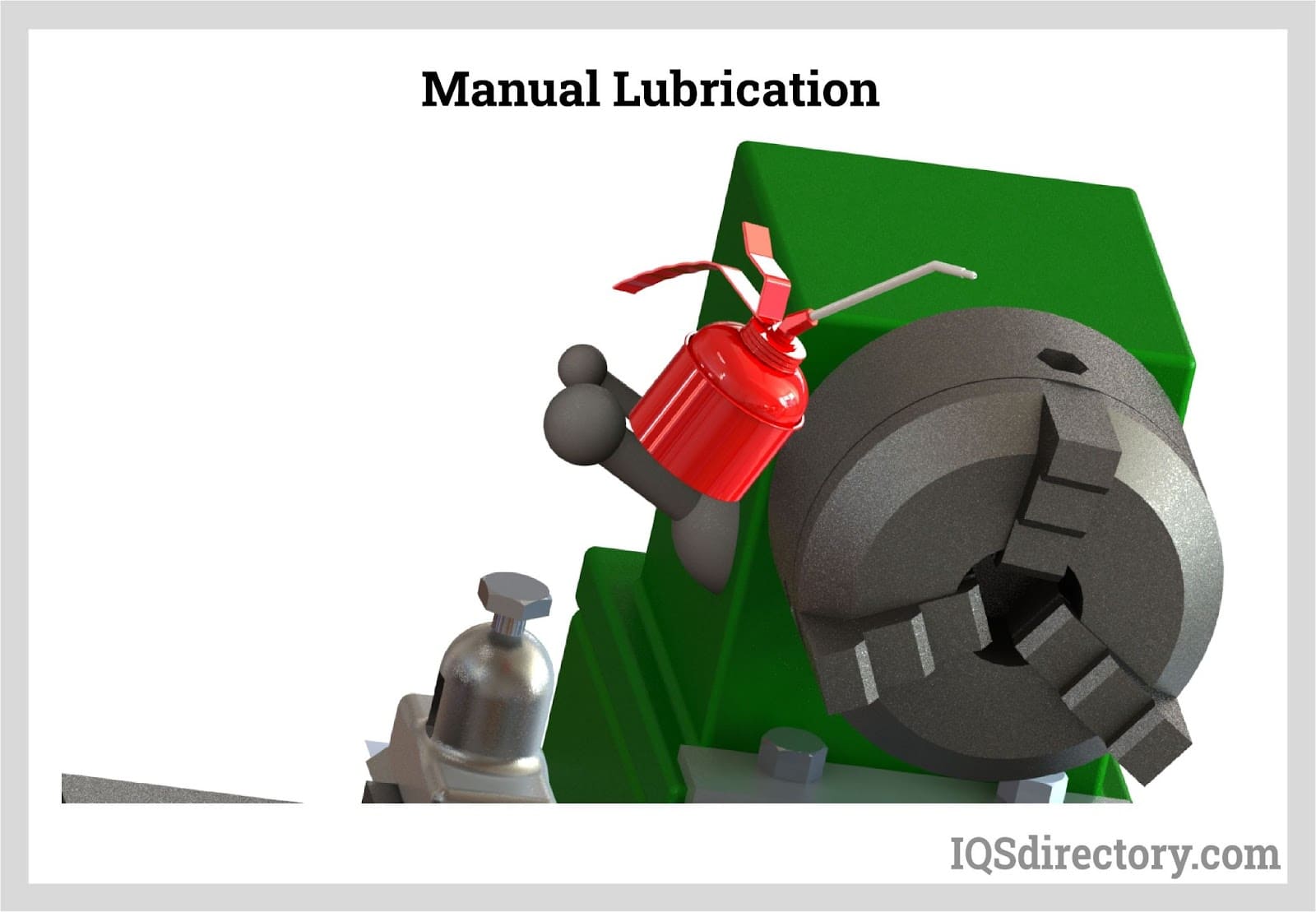
Applying lubricant is a straightforward process, usually done with a tube or brush. However, it is important to know the right amount to use and the proper intervals for reapplication to maintain effectiveness and safety. Consult your equipment manufacturer for guidance on application frequency and quantity.
Regardless of your maintenance schedule, regularly check for signs of deterioration, leaks, or contamination. To ensure long-lasting performance, always operate within the lubricant’s recommended temperature ranges, load capacities, and friction conditions.
Standards and Specifications for Lubricants
Several organizations set lubricant performance and safety standards, including the American Petroleum Institute (API), Society of Automotive Engineers (SAE), Independent Lubricant Manufacturing Association (ILMA), and National Lubricating Grease Institute (NLGI). Industry requirements often follow these guidelines. Lubricants intended for food contact must be food grade, while those used in military vehicles must meet military specifications. For industry-specific standards, consult with relevant industry authorities.
Finding the Right Lubricant Manufacturer
When sourcing industrial lubricants, it’s important to partner with a reputable and reliable supplier. This ensures your systems run efficiently, safely, and without interruption. To assist in your search, we provide a directory of trusted lubricant manufacturers with detailed company profiles. Access the list by scrolling to the top of this page.
Lubricant Accessories
Typical lubricant accessories include pumps, level switches, rupture indicators, broken line indicators, vent valves, zone valves, pressure sensors, relief valves, and relief indicators.
Lubricant Terms
Common Questions
7 questions
What Are Lubricants and How Do They Work?
Lubricants reduce friction and heat between moving surfaces, helping machinery run smoothly. They can also improve electrical conductivity, manage heat transfer, and extend equipment life by minimizing wear and corrosion.
When Did Lubricants Start Being Used in Machinery?
Lubricants have been used since ancient Egypt, where oils reduced friction in chariots and construction. During the Industrial Revolution, petroleum-based lubricants became essential for metal machinery and remain vital in modern manufacturing.
What Is the Difference between Synthetic and Petroleum-Based Lubricants?
Petroleum-based lubricants come from refined crude oil, while synthetic lubricants are chemically engineered for stability and high performance. Synthetics resist oxidation, handle extreme temperatures, and are preferred for demanding industrial or automotive applications.
Which Industries Rely Most on Lubricants?
Automotive, aerospace, marine, food processing, and metal fabrication industries all depend on lubricants. They are used in engines, gears, compressors, and production machinery to ensure smooth operation and prevent wear.
What Are Food-Grade Lubricants Used For?
Food-grade lubricants are specially formulated for machinery that may contact food during production. They are odorless, colorless, biodegradable, and FDA-approved to ensure product safety in food and beverage processing plants.
How Often Should Lubricants Be Reapplied or Replaced?
Lubricants should be reapplied according to equipment manufacturer guidelines. Regular inspections for leaks, contamination, or breakdown help maintain performance. Operating within recommended temperature and pressure ranges extends lubricant life.
What Organizations Set Lubricant Quality Standards?
Standards for lubricants are set by groups such as the American Petroleum Institute (API), Society of Automotive Engineers (SAE), and National Lubricating Grease Institute (NLGI). These organizations ensure safety, performance, and compatibility across industries.