
- 10 leading manufacturers
- 25 additional suppliers
- 19 states and provinces
- 15 related categories
- 11 guide sections
Dust Collector Manufacturers and Suppliers

IQS Directory provides an extensive list of dust collector manufacturers and suppliers. Utilize our website to review and source dust collector manufactures with our easy-to-use features which allow you to locate dust collector companies that will design, engineer, and manufacture dust collectors for your exact specifications. Our request for quote forms make it easy to connect with leading dust collector manufacturers. View company profiles, website links, locations, phone number, product videos, product specific news articles and other production information. We are a leading manufacturer directory who will connect you with the right manufacturers whether you are looking for woodworking dust collectors, wet dust collectors, or shop dust collect systems.
Suppliers located in MN, IL, MI +16 more states
Contents (6 sections)
Leading Dust Collector Manufacturers
Showing all 10
| Placement No. | Manufacturer | Location | Contact | Actions | |
|---|---|---|---|---|---|
| 1 | Scientific Dust CollectorsScientific Dust Collectors (SDC) began in 1981 when our first patent for improving filter cleaning was issued. Since then, SDC has been issued a number of additional related patents for improvements in dust collector cleaning technologies including our patented nozzle-based cleaning system which is superior to other collectors. Combined with our High Side Inlets, Wide Filter Spacing, and Inlet Baffling, we are able to guarantee performance, efficiency, and filter life. If you want the best, please consider SDC. | Alsip, IL | |||
| 2 | Griffin FiltersGriffin Filters is a trusted and dedicated leading manufacturer in the dust collector industry. We offer a wide selection of dust collectors with customization options available in order to serve various industries. Our experts are committed to manufacturing high-quality dust collectors that fit our customers' needs at competitive prices. Since its start in 1950, Griffin Filters has been setting industry standards in the dust collecting industry. | Liverpool, NY | |||
| 3 | Clean Air Technology SolutionsOur world-class facilities set us apart from the competition. We work hard to make our customers happy with our dust collector systems. We can provide what you need to keep your air clean in whatever industry you are in. Our goal is to exceed your expectations so you can focus on what you do best! Whether you need support in design, products, delivery, or support, we can supply it all! | Hopkinsville, KY | |||
| 4 | RoboVentEver since our inception in 1989, Robovent has been a leader in the manufacturing and design of ventilation and filtration systems. We have experience coming up with solutions to protect our customers from a wide range of dust, including aluminum dust, cast iron grinding dust, fertilizer dust, and more. Industries we serve include automotive, military, construction, medical, and aerospace. For a complete list of our services and capabilities, visit our website or call Robovent today! | New Baltimore, MI | |||
| 5 | Environmental Clean Air CompanyEnvironmental Clean Air Company provides clean air solutions for a wide variety of indoor air quality problems. We offer a wide selection of dust collectors, mist collectors, welding booths, work containment booths, cyclones, electrostatic filters, air cleaning and filtration equipment to meet the demands of today's Industry. | Loganville, GA | |||
| 6 | Air Impurities Removal SystemsAt Air Impurities Removal Systems, we specialize in advanced dust collector solutions designed to control airborne particulates, protect workers, and maintain regulatory compliance across a wide range of industrial environments. We engineer and manufacture high-performance dust collection systems that capture, filter, and remove contaminants generated by processes such as grinding, sanding, cutting, welding, conveying, and material handling. | Wauwatosa, WI | |||
| 7 | WAM® Inc.At WAM Inc., we specialize in designing and manufacturing advanced dust collection equipment engineered to improve air quality, workplace cleanliness, and production efficiency across demanding industrial environments. We provide dependable dust collectors that support operations in manufacturing, material handling, processing, and bulk solids applications where airborne particles and fine contaminants must be effectively controlled. | Lawrenceville, GA | |||
| 8 | Donaldson Company, Inc.Donaldson Industrial Solutions provides advanced dust collector systems that help manufacturers capture dust, fumes, and mist while improving air quality, worker safety, and operational efficiency. Our dust collection solutions, replacement filters, and engineering expertise support regulatory compliance, reduce maintenance, protect equipment, and maximize uptime across demanding industrial environments. | Minneapolis, MN | |||
| 9 | Midwest Finishing Systems, Inc.Our dust collecting systems are designed to eliminate respirable airborne contaminants from the work environment. We believe that eliminating airborne contamination in the workspace can lead to better employee performance and a lower rate of absenteeism. Therefore, we focus on excellence and customer satisfaction and will handle your unique dust collection challenge. | Hartland, WI | |||
| 10 | Air Dynamics Industrial Systems CorporationAt Air Dynamics Industrial Systems Corporation, we provide dust collection solutions that help industrial facilities control airborne particulate, improve process cleanliness, and support efficient work environments. We work with customers to develop systems that capture dust at the source, move contaminated air through properly configured ductwork, and separate particulate from the airstream. | York, PA |
Claim your Page One Spot
Leading dust collector manufacturers are listed first on this page, each with a website preview and a Request a Quote button on its row.
Additional Dust Collector Companies
The category’s other dust collector companies are listed on their own page, with location, phone and website where each supplier provides them.
View 25 Additional Dust Collector CompaniesDo not see your company listed in Dust Collector?
Engineers and buyers use this page to find dust collector suppliers. Add your company to the Dust Collector listings so they can find you too.
List Your Company- Listed in the Dust Collector directory
- A profile page for your company
- Buyers contact you directly
Dust Collector Industrial Manufacturing Guides
Dust Collection Systems: Uses, Types and Benefits
Here is everything available about dust collection systems on the internet. You will learn: What is a Dust Collection System? How a Dust Collection System…
8 chapters, the longest in this category
Quick Answers
- How many dust collector manufacturers are listed on IQS Directory?
- 10 leading manufacturers and 25 additional suppliers.
- Where are dust collector manufacturers located?
- The listed suppliers are in 19 states and provinces: Minnesota (4), Illinois (3), Michigan (3), Ontario (3), Wisconsin (3), Georgia (2), Kentucky (2), New Jersey (2), and 11 more.
- How do I get quotes from dust collector suppliers?
- Select suppliers in the table and choose Request Quotes. IQS reviews your request and forwards it to every supplier you select.
Dust Collectors
A dust collector is a highly effective piece of air filtration equipment engineered to improve indoor air quality across industrial, commercial, and manufacturing environments. These systems capture airborne particulate matter—including fine dust, fumes, and contaminants—before they circulate through facilities or are released into the atmosphere. By removing harmful particulates associated with air pollution, dust collectors support cleaner operations, improved worker safety, and better compliance with environmental regulations.
Whether used in high-volume production plants or smaller workshops, modern dust collection systems are designed to manage a wide range of particle sizes, airflow volumes, and application-specific challenges. Many buyers researching industrial dust collection solutions ask: how do dust collectors improve air quality, and which system is best for my facility? The answer depends on factors such as dust type, system capacity, and regulatory requirements. By understanding how these systems function, operators can make informed decisions that enhance both productivity and safety.
The History of Dust Collectors
The development of dust collectors began during the Industrial Revolution, when factories produced increasing amounts of airborne dust and particulate matter. Early innovations, such as the single bag filter, introduced fundamental filtration concepts that still influence modern systems. Over time, engineers refined filtration technologies, leading to advancements like mechanical shaking filters, reverse air systems, and pulse jet cleaning methods.
As industrial operations expanded, so did the need for more efficient and reliable air filtration systems. The introduction of pulse jet dust collectors significantly improved performance by allowing continuous operation without shutting down for cleaning. These advancements helped reduce downtime, increase airflow efficiency, and improve particulate capture rates.
Today, dust collection technology continues to evolve with innovations in filter media, automation, and energy efficiency. Facilities now benefit from systems that are not only more compact and effective but also easier to maintain and integrate into modern manufacturing environments.
Benefits of Dust Collectors
Many organizations evaluating dust collection systems ask: what are the long-term benefits of installing a dust collector? Beyond safety improvements, these systems help extend equipment lifespan, reduce maintenance costs, and support regulatory compliance. Over time, this translates into measurable cost savings and improved operational efficiency.
Why Use a Dust Collector
Dust collection systems are designed to capture airborne particles generated during manufacturing processes such as cutting, grinding, sanding, and material handling. Without proper filtration, these particles can accumulate in the air, posing health risks to workers and damaging sensitive equipment. A properly designed system removes contaminants at the source, ensuring cleaner air circulation throughout the facility.
In addition to improving workplace conditions, dust collectors play a key role in meeting regulatory standards. Agencies such as OSHA and the EPA establish guidelines for air quality and emissions, requiring facilities to control airborne pollutants effectively. Implementing a dust collection system helps businesses meet these requirements while maintaining efficient operations.
Industries such as mining, cement production, metal fabrication, pharmaceuticals, and agriculture rely heavily on dust collection solutions. Whether using centralized systems or portable units, these industries benefit from improved air quality and reduced environmental impact.
Dust Collector Design
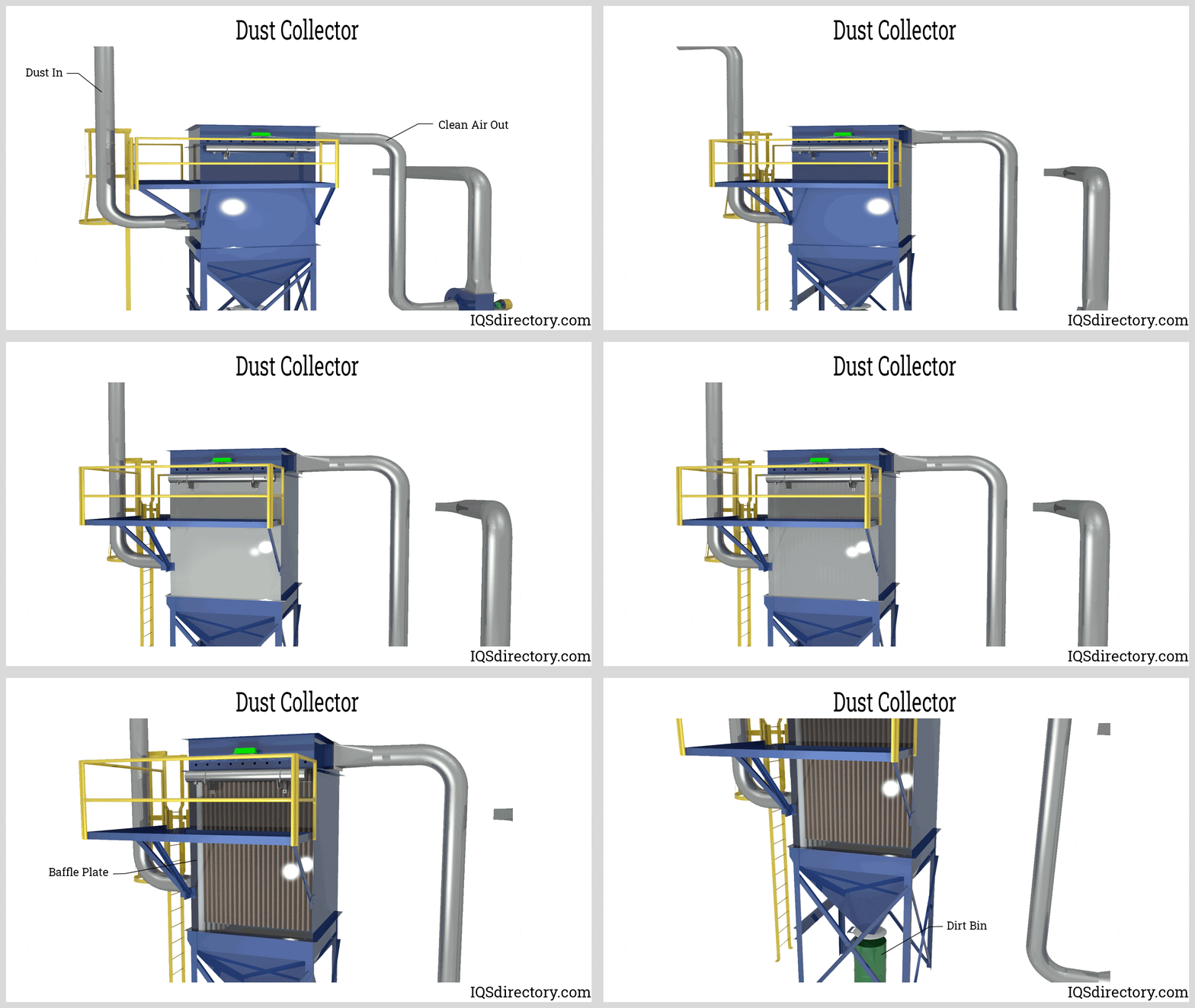
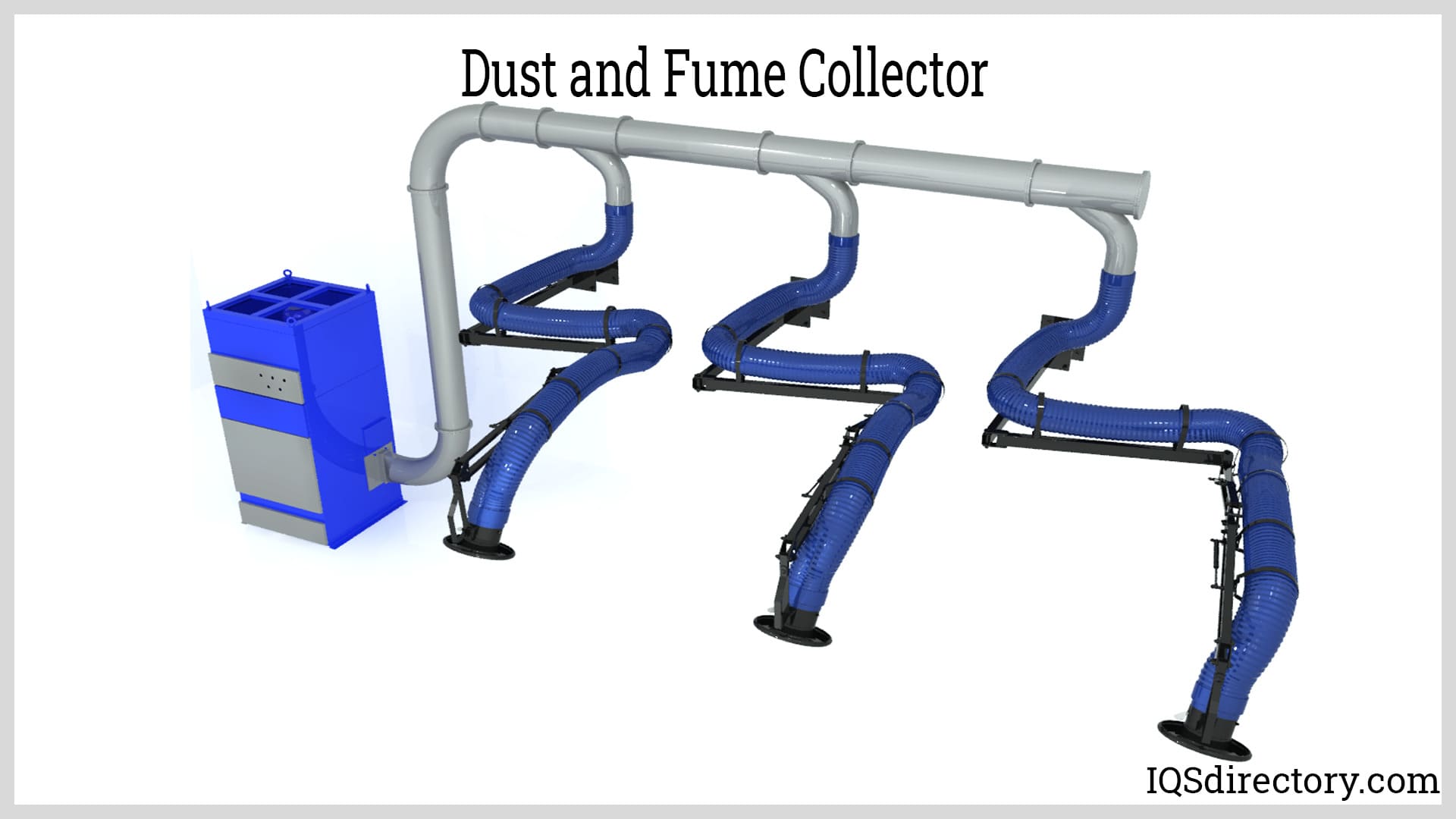
Industrial dust collectors are engineered with multiple components that work together to capture and filter airborne particles. Key elements include blowers, filtration systems, ductwork, and collection hoppers. Each component must be carefully designed to ensure optimal airflow, efficiency, and durability.
The blower is a central component that drives airflow through the system. It must be precisely engineered to handle specific airflow requirements while maintaining consistent performance. Additional components, such as filter media, housings, and dust collection bins, are selected based on the type of dust and application.
Manufacturers often enhance system performance with specialized coatings, filter treatments, and customization options. For example, pre-coat materials like limestone can improve filtration efficiency and extend filter life. These design considerations help ensure that dust collectors perform reliably in demanding industrial environments.
Dust Collector Images, Diagrams and Visual Concepts
Dust Collector Types
When comparing dust collector types, many buyers ask: which system offers the best performance for fine dust versus heavy particulates? The answer depends on application requirements, airflow volume, and maintenance considerations. Understanding these factors helps ensure the right system is selected for long-term performance.
Installation of a Dust Collector
Installing a dust collection system requires careful planning, especially for large-scale industrial setups. Proper installation ensures optimal airflow, system efficiency, and safety. Smaller systems may require minimal setup, while larger systems often involve professional installation and specialized equipment.
Standards and Specifications of Collectors
Compliance with OSHA and EPA regulations is a key consideration when operating dust collection systems. These standards help protect workers and ensure environmental responsibility. Systems must be designed and installed to meet these guidelines while maintaining efficient performance.
Things to Consider When Purchasing a Dust Collector
Buyers often search for answers to questions like: how do I choose the right dust collector for my application, and what features should I prioritize? By understanding these considerations, organizations can select systems that align with their operational goals and environmental requirements.
Proper Care for Dust Collectors
Regular maintenance is necessary to keep dust collectors operating efficiently. This includes cleaning filters, inspecting ductwork, and monitoring airflow performance. Proper maintenance helps extend system life and ensures consistent air quality.
Dust Collector Accessories
Accessories such as slide gates, HEPA filters, and dust drawers can enhance system performance and usability. These components allow operators to customize their systems for specific applications, improving efficiency and overall effectiveness.
As dust collection technology continues to advance, facilities have access to more efficient, adaptable, and high-performance systems. By understanding system types, design considerations, and operational requirements, businesses can implement solutions that improve air quality, enhance safety, and support long-term productivity.
Common Questions
7 questions
What Is the Purpose of a Dust Collector in Industrial Facilities?
A dust collector removes airborne particles such as dust and pollutants from industrial environments, ensuring clean air is recirculated or released. This improves workplace safety, protects equipment, and helps meet OSHA and EPA air quality standards.
When Did Dust Collectors First Become Widely Used?
Dust collectors became necessary during the Industrial Revolution in the 19th century as factories produced large amounts of fine dust. Early innovations included S.T. Jones’ single bag filter in 1852 and Wilhelm Beth’s cloth and tubular filter systems in 1921.
What Industries Rely on Dust Collection Systems?
Dust collectors are used in woodworking, metal fabrication, cement, mining, agriculture, pharmaceuticals, recycling, and chemical processing, where airborne particulates must be controlled.
What Are the Benefits of Using a Dust Collector?
Dust collectors improve air clarity, reduce fire and explosion risks, protect machinery, and support long-term operational efficiency with manageable maintenance costs.
What Types of Dust Collectors Are Available?
Common types include baghouse systems, cartridge collectors, cyclone separators, electrostatic precipitators, downdraft tables, pulse jets, and wet scrubbers.
How Are Industrial Dust Collectors Designed and Built?
Dust collectors are constructed with blowers, filtration media, ducting, and housings. Materials such as steel or stainless steel provide durability, while filters vary based on application needs.
What Maintenance Is Required for Dust Collectors?
Routine maintenance includes filter cleaning, duct inspections, and airflow monitoring to maintain efficiency and system longevity.