
- 5 leading manufacturers
- 20 additional suppliers
- 19 states and provinces
- 17 related categories
- 4 guide sections
Compactor Manufacturers and Suppliers

IQS Directory is a top industrial directory listing of leading industrial compactor manufacturers and suppliers. Access our comprehensive index to review and source compactor manufacturers with preview ads and detailed product descriptions. These compactor companies can design, engineer and manufacture compactor to your specifications and application need. A quick and easy to use request for quote form is provided for you to contact these compactor manufacturers and suppliers. Each company has detailed profile information, locations, phone number, website links, product videos and product information defined. We are the right resource for your information requirement whether its for a manufacturer of compactor machines, ground compactors, metal chip compactor.
Suppliers located in CA, FL, MI +16 more states
Contents (5 sections)
Leading Compactor Manufacturers
Showing all 5
| Placement No. | Manufacturer | Location | Contact | Actions | |
|---|---|---|---|---|---|
| 1 | Excel Baler LLCThe only thing stronger than an Excel baler is the loyalty of our customers. Excel continues to break new ground by designing equipment with energy-saving technologies, developing balers to fit your business and solve your problems, and introducing products that process more material and make you more money. While the competition makes their balers cheaper, we make Excel balers better! | St. Charles, MN | |||
| 2 | International Baler CorporationIf you are currently paying for the disposal of cardboard, paper, plastic or non-ferrous metals; than consider our range of industrial compactors and related equipment. We carry a large variety of models. We can even customize a piece of baling equipment to fit a client’s specific needs. You will be surprised at the variety of options that fit your budget. | Jacksonville, FL | |||
| 3 | SP Industries, Inc.SP Industries builds heavy-duty compactors, pre-crushers and transfer station equipment in Hopkins, Michigan. We work with customers to match the equipment to the application, whether the challenge is dry waste, wet waste, food waste, wood and pallets, scrap metal or fluid recovery. Our equipment is built for long service life using domestically sourced structural steel and proven, name-brand components. | Hopkins, MI | |||
| 4 | Ver-tech, Inc.At Ver-tech, we provide baling equipment and material handling solutions designed to help businesses manage recyclable materials, waste streams, and bulky products more efficiently. Our company offers balers engineered to compact cardboard, paper, plastics, and other recoverable materials into dense, manageable bales that simplify storage, transportation, and recycling. | Rockford, MN | |||
| 5 | SSI Shredding Systems, Inc.SSI Shredding Systems, Inc. has manufactured industry proven shredder solutions globally since 1980. Our shredders are versatile, effective, and ready to be fully integrated into the waste reduction systems already present in your process. We offer a full range of single shaft, two shaft, and four shaft shredders as well as primary reducers and compaction solutions. Contact us today find the right solution today. | Wilsonville, OR |
Claim your Page One Spot
Leading compactor manufacturers are listed first on this page, each with a website preview and a Request a Quote button on its row.
Additional Compactor Companies
The category’s other compactor companies are listed on their own page, with location, phone and website where each supplier provides them.
View 20 Additional Compactor CompaniesDo not see your company listed in Compactors?
Engineers and buyers use this page to find compactor suppliers. Add your company to the Compactors listings so they can find you too.
List Your Company- Listed in the Compactors directory
- A profile page for your company
- Buyers contact you directly
Compactor Industrial Manufacturing Guides
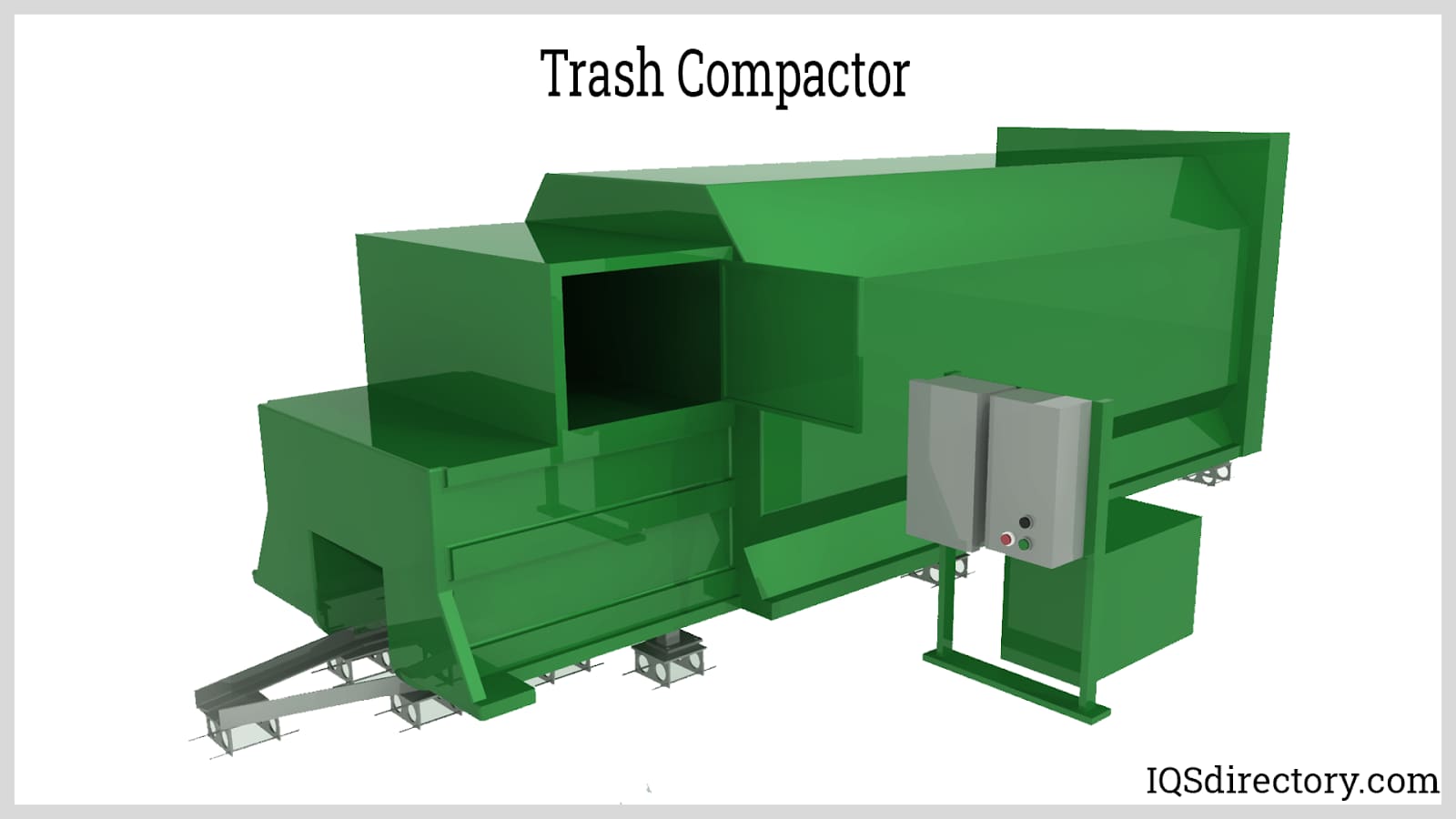
Trash Compactors: Types, Uses and Benefits
This article takes an in depth look at trash compactors and their use. You will learn more about topics such as: What is a Compactor? Types of Compactors How…
5 chapters
Quick Answers
- How many compactor manufacturers are listed on IQS Directory?
- 5 leading manufacturers and 20 additional suppliers.
- Where are compactor manufacturers located?
- The listed suppliers are in 19 states and provinces: California (2), Florida (2), Michigan (2), Minnesota (2), Ontario (2), Washington (2), Alabama (1), Arkansas (1), and 11 more.
- How do I get quotes from compactor suppliers?
- Select suppliers in the table and choose Request Quotes. IQS reviews your request and forwards it to every supplier you select.
Compactors
Compactors are designed to compress waste materials and scrap products for easier transportation, handling and better space efficiency.
Advantages of Compactors
Application of Compactors
Industries such as food processing, manufacturing facilities, retail and consumer businesses and automotive factories all benefit in terms of environmentally and economically from compacting trash. Reducing the bulk volume of trash reduces the money and effort required to dispose of it.
Types of Compactors
Compactors are similar to industrial balers in that they reduce waste, but are typically used for non-recyclable materials in order to save space in landfills and other trash disposal locations.
Compactors tend to be smaller than balers and result in more compact bundles of waste at the end of the process.
Specific types of compactors include trash compactors for residential, commercial or industrial purposes, compactors fitted into the back of garbage trucks to conserve space and compactors that are designed for specific materials. Most waste materials such as textiles, food products, containers, metals, plastics and fibrous materials can be processed with compactors, however hazardous materials such as aerosol cans, batteries and chemicals should be disposed of with an approved method. Recycling is an important way for manufacturers to reduce the carbon footprint of industrial activity, and compactors remain an integral part of this.
Design of Compactors
A large chamber, an electric motor, and a pneumatic or hydraulic press are the three main components of a compactor. Industrial compactors can have manual or automated loading functions from a large input area which is able to handle large volumes of waste material. The input area feeds the waste material into the chamber where it is pounded and compacted under great pressure from the press. Using a hydraulic press minimizes the energy lost in the process and reduces the heat produced by the machine.
Industrial compactors usually produce bales of compressed materials, while commercial or residential compactors are more likely to use bags or bins to store compressed waste until disposal. The compressed material is then ready for transport to a permanent disposal location, or to a recycling facility to be reused. Factories, hotels, schools, medical centers and manufacturing facilities typically have a compactor on the premises for ease of access and minimal transport costs. While the initial expense of purchasing a compactor may seem high, there are many advantages to using compactors onsite. For example, they help to minimize odor and vermin problems, reduce the frequency of required waste removal, eliminate spillage and leaks from overflowing waste containers and improve standards of housekeeping around a facility.