



HEPA Vacuum Cleaners: Everything you need to know about Types & Uses
IQS Directory EditorialUpdated 10 chapters
5 leading suppliers listed with this guide
Browse HEPA vacuum cleaners suppliersContents (10 chapters)
This article provides detailed information regarding HEPA vacuum cleaners and their use.
You will learn::
- What is a HEPA Vacuum Cleaner?
- How a HEPA Vacuum Cleaner Works
- HEPA Vacuum Cleaner Components
- Variation of HEPA Filters And Vacuum Design
- The Effectiveness of HEPA Vacuum Cleaners
- And much more …
Chapter One: Understanding HEPA Vacuum Cleaners
HEPA vacuum cleaners incorporate high-efficiency particulate air (HEPA) filters and are meticulously designed to be securely sealed, ensuring that every bit of air is filtered through the HEPA component. These specialized vacuum cleaners are capable of trapping dust, particles, dirt, allergens, and pollutants as minute as 0.3 microns (µ) from the surrounding air, making them a popular choice for allergy relief, asthma-friendly cleaning, and improved indoor air quality.
Within a HEPA vacuum cleaner, the HEPA filter is installed within an airtight housing to compel the incoming air to pass through it. The collection bag, dustbin, or chamber, along with the motor exhaust, are sealed to maintain the vacuum's efficiency and help prevent dust recirculation. HEPA vacuum cleaner filters accumulate significant amounts of particulates and require regular monitoring, filter replacement, and proper maintenance to ensure they function at optimal levels. When evaluating models, buyers often compare sealed filtration systems, suction power, filtration efficiency, washable versus disposable filters, and overall performance on fine dust, pet dander, pollen, and microscopic debris.
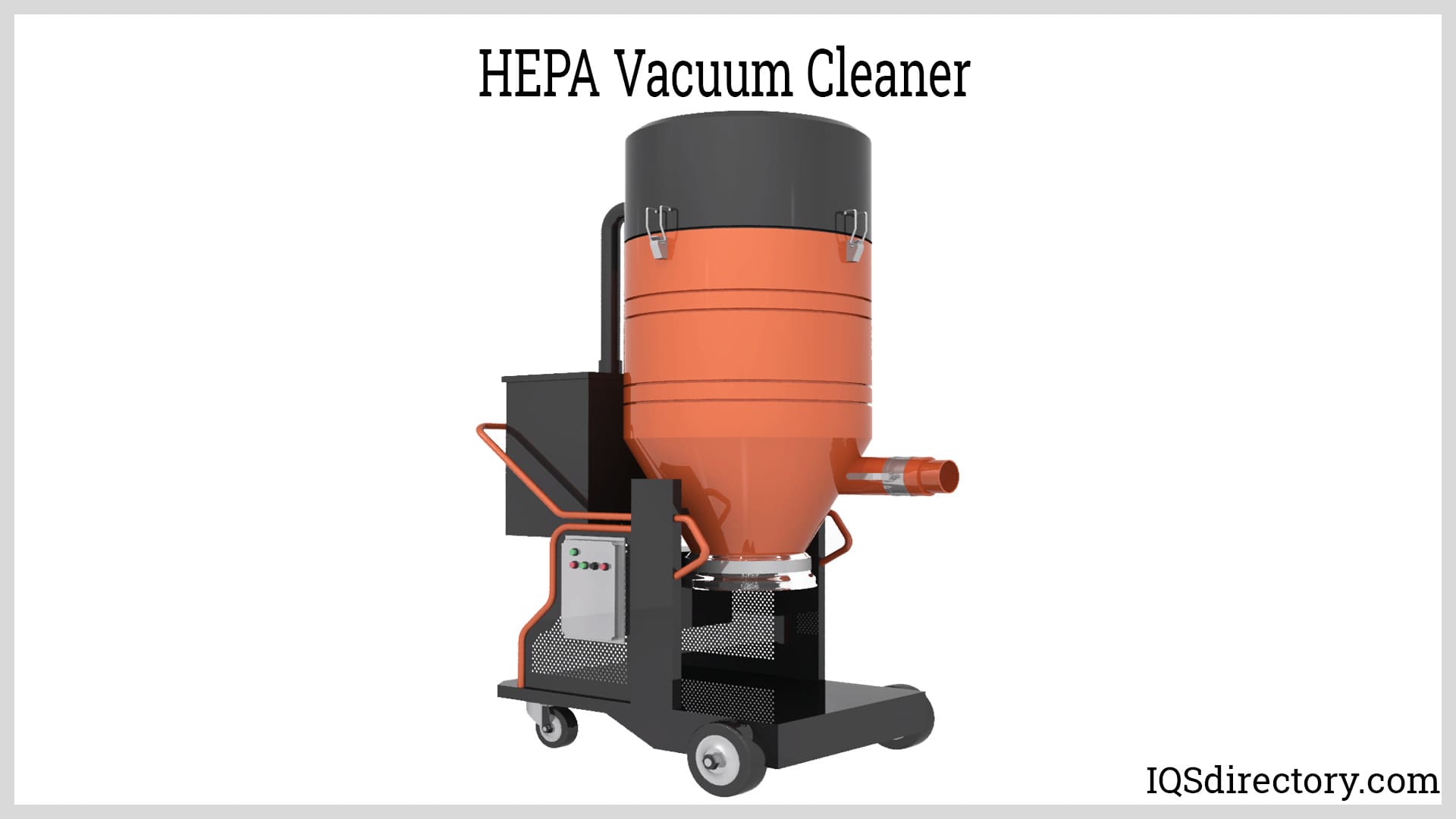
These vacuum cleaners are frequently used in environments such as hospitals, laboratories, and cleanrooms, where achieving exceptional air quality is essential. They are also widely used in commercial cleaning, food processing, pharmaceutical production, and other controlled environments where contamination control matters. They are available in a range of designs and sizes, from models suitable for domestic use to those robust enough for demanding industrial purposes, including upright, canister, backpack, and portable HEPA vacuum systems. For many buyers, the best option depends on the application, floor type, filtration needs, and the level of particulate capture required for safe, effective cleaning.
Chapter Two: What Are the Benefits of HEPA Vacuum Cleaners?
The use of a HEPA vacuum cleaner dramatically improves indoor air quality in homes, offices, industrial facilities, medical settings, and cleanrooms. Unlike conventional vacuum cleaners, which often circulate ultrafine particulate matter like dust, allergens, and bacteria back into the environment, HEPA filtration vacuum cleaners capture and trap up to 99.97% of particles as small as 0.3 microns. This advanced filtration technology ensures contaminants—such as mold spores, pet dander, and pollen—are effectively removed, supporting a healthier and safer indoor environment for all occupants.
Improved Air Quality
HEPA vacuum cleaners are engineered to capture and eliminate microscopic particles, including dust, pollen, pet hair, smoke, and fine debris, that easily escape standard vacuum filters. This enhanced particle capture helps reduce indoor air pollution and airborne contaminants, making indoor environments significantly cleaner and healthier, especially for those with respiratory conditions including asthma, allergies, COPD, or weakened immune systems.
Viral particles can range in size from 0.3 µm to 100 µm in diameter. A micron (or micrometer) is one millionth of a meter. The highly efficient filter media in quality HEPA vacuums can remove particles as small as 0.1 µm and are certified to trap 99.97% of particles 0.3 µm or larger. This capability is critical in reducing the spread of airborne pathogens and microscopic pollutants often overlooked by ordinary vacuums.

Increased Cleaning Efficiency
HEPA vacuum cleaners are highly efficient at removing both large and ultrafine debris from surfaces like carpets, hard flooring, mattresses, furniture upholstery, and even curtains. Thanks to multi-stage filtration, these vacuums trap deep-seated dust and allergens that traditional vacuum cleaners leave behind, resulting in a more comprehensive and effective cleaning routine with every use. Commercial-grade HEPA vacuum models are frequently recommended for hospitals, laboratories, and other hygienically sensitive environments where superior cleaning performance is essential.
- Enhanced suction power for thorough cleaning
- Prevention of dust recirculation into the room air
- Time-saving by requiring fewer cleaning passes
Reduction in Allergens and Triggers
For allergy sufferers and those with sensitivities, HEPA filtration vacuum cleaners play a vital role in removing common allergens such as dust mites, pet dander, mold spores, and pollen. By capturing these particles at their source, HEPA vacuums help minimize the triggers that cause symptoms like sneezing, coughing, watery eyes, and skin irritations. This is especially important for families with pets, as pet hair and microscopic allergens embedded in carpet fibers can be efficiently extracted. Regular use of a certified HEPA vacuum can significantly reduce overall allergen concentration, helping to create a healthier indoor environment year-round.
Improved Indoor Environment and Health Protection
HEPA vacuum cleaners not only improve air quality but also contribute to the overall well-being of building occupants by capturing airborne pollutants, including bacteria and some viruses. This is particularly important in healthcare, childcare, hospitality, and cleanroom environments, where maintaining strict cleanliness standards helps prevent illnesses, allergic reactions, and cross-contamination. HEPA vacuum cleaners offer peace of mind by actively supporting infection control and indoor hygiene.
Cost-Effective Long-Term Value
While HEPA vacuum cleaners may have a higher initial purchase price, they deliver long-term cost savings by preserving flooring, carpets, and upholstery, thereby reducing maintenance, repair, and replacement expenses. Additionally, their advanced allergen and dust removal capabilities can contribute to lower healthcare costs by minimizing allergy flare-ups and asthma attacks. Many models are also designed with durable components, longer filter life, and energy-efficient motors, reducing ongoing operational costs and environmental impact.
Better for the Environment
HEPA vacuum cleaners are an environmentally-friendly choice compared to standard vacuums. Their superior filtration system minimizes the number of pollutants and allergens released back into the atmosphere and many HEPA vacuum models are equipped with energy-saving features to reduce electricity use, helping lower utility bills and carbon emissions. By using fewer disposable bags and filters and prioritizing reusable or washable options, HEPA vacuums further contribute to less landfill waste and a smaller ecological footprint.
Additional Considerations When Choosing HEPA Vacuum Cleaners
When browsing HEPA vacuum cleaners for home, office, or commercial use, it is important to review HEPA filter certifications (such as True HEPA or HEPA H13), maintenance requirements, and vacuum capacity. Consider features like sealed systems, multi-layer filtration, and specialized attachments for targeted cleaning needs. Professional-grade models may offer noise reduction, large capacity dust bins, and advanced maneuverability for expansive or sensitive areas.
For those seeking the best vacuum cleaners for allergies, asthma, and air quality improvement, a certified HEPA vacuum cleaner is a top recommendation by industry experts, healthcare professionals, and air quality specialists.
Chapter Three: What Are the Components of a HEPA Vacuum Cleaner?
Vacuum cleaners equipped with high-efficiency particulate air (HEPA) filters are highly regarded for their ability to reduce indoor allergens, improve air quality, and remove fine dust, pet hair, and microscopic contaminants. The superior filtration offered by a HEPA vacuum cleaner—often essential in allergy-friendly homes and commercial settings—is largely attributed to the advanced HEPA filter, which forms the centerpiece of its multi-stage filtration system and traps particles as small as 0.3 microns with at least 99.97% efficiency.
Motor
The motor is the driving force of any vacuum cleaner, providing the power necessary to operate both the suction motor and, in some models, the brush roll motor. In HEPA vacuum cleaners, the motor is engineered to manage the added airflow resistance created by the dense HEPA filter media. Durable, energy-efficient motors help optimize suction while maintaining consistent airflow, which is crucial for effective HEPA filtration and thorough cleaning performance on carpets, hard floors, and upholstery.
The suction power and overall cleaning effectiveness of a HEPA vacuum cleaner directly depend on the motor’s wattage and amp rating—important specifications for buyers comparing vacuum cleaner performance. Models with higher wattage or amp ratings usually offer more robust deep-cleaning capability and are favored in both residential and industrial settings for removing embedded particles, dust mites, and pollen.

Suction Motor
The suction motor is responsible for generating the airflow required to draw in dust, debris, and air through the intake of the HEPA vacuum cleaner. By creating a pressure differential with a rapidly spinning fan—generally operating between 30,000 to 35,000 rpm—the suction motor pulls contaminants from the cleaned surface and channels them through the multiple filtration stages, including the crucial HEPA filter. This powerful airflow ensures that HEPA vacuum cleaners maintain strong performance, even as they capture the finest airborne contaminants, mold spores, and harmful pathogens.
The effectiveness of a suction motor is measured by its combined airflow rate (measured in cubic feet per minute or CFM) and vacuum pressure (typically in inches of water lift). This balance is essential for removing both surface dirt and deeply embedded allergens, meeting the needs of users in homes, medical facilities, or environments with strict air quality requirements.
Brush Roll Motor
Many HEPA vacuum cleaners, especially upright and canister models designed for carpets, feature a dedicated brush roll motor. This motor powers rotating brushes that agitate and lift stubborn particles, dander, and pet hair from deep within carpet fibers or textured flooring. The agitation helps to loosen dirt, making it easier for the vacuum’s airflow to capture and transport it towards the HEPA filter and collection bin. For users seeking comprehensive deep-cleaning solutions, a strong brush roll motor is a key consideration.
HEPA Filter
The HEPA filter is the centerpiece and most vital element of a HEPA vacuum cleaner’s advanced filtration system. Specifically engineered to trap ultrafine particles—including dust mites, pollen, bacteria, smoke, and viruses—the HEPA filter ensures that only clean, purified air is expelled back into the environment. Proper installation and regular replacement or cleaning of the HEPA filter are critical to prevent air bypass, which could compromise the vacuum’s ability to maintain indoor air quality and to comply with the strict HEPA standard mandated for true HEPA vacuum cleaners (tested and certified under EN1822 or MIL-STD standards).
Tip: When evaluating HEPA vacuum cleaners for allergy relief or sensitive environments, always confirm that it is a “sealed system” model, as this prevents leaks and maximizes allergen capture.

Collection Bin
The collection bin, also known as a dust cup or collection bag, plays a significant role in the vacuum’s overall filtration system. As suction draws in both large and fine debris, the initial separation of heavier particles occurs in the collection bin. From here, finer dust and microparticles continue through to the HEPA filter for advanced purification. For convenience and health, many modern HEPA vacuum cleaners feature easy-to-empty, bagless collection bins with HEPA-sealed closures to minimize exposure to allergens during disposal—a feature valued by health-conscious consumers and pet owners.
Hose
In canister and commercial-grade HEPA vacuum cleaners, the hose is a flexible conduit that connects the vacuum’s main body to its wide array of attachments and cleaning heads. A high-quality, anti-static or smooth bore hose design helps to maintain consistent suction while reducing the risk of clogs and maintaining powerful airflow. For maximum efficiency, a durable and flexible hose is essential for reaching under furniture, along baseboards, and into tight spaces where allergens like dust and dander often settle. The hose’s design and diameter can impact not only ease of use but also the vacuum’s energy efficiency and cleaning reach.

Attachments and Accessories
HEPA vacuum cleaners are equipped with a range of attachments and accessories, each enhancing versatility to address specific cleaning needs. These specialized tools allow users to tackle everything from hardwood floors and high-pile carpets to drapes, baseboards, automobile interiors, and electronics. Premium models may include anti-allergen or pet-hair specific tools that are especially beneficial for households with allergy sufferers or pets. Below are some of the most common and valuable accessories found with HEPA vacuum cleaners:
- Crevice Tools – Narrow and elongated, these tools make precision cleaning of tight corners, window tracks, vents, and car interiors easy. Their slim design ensures debris, pet hair, and dust bunnies are removed from hard-to-reach spots.
- Dusting Brushes – Equipped with soft bristles, dusting brushes allow for safe cleaning of delicate surfaces such as blinds, lampshades, and electronics, removing fine dust flurries and allergens without scratching.
- Upholstery Tools – Specifically designed for efficient removal of dust, fibers, and pet hair from sofas, mattresses, and stairs; some models include a mini-motorized brush for deeper agitation, ideal for allergy control and pet maintenance.
- Extension Wands – Offering extended reach for safely cleaning ceilings, fan blades, baseboards, and beneath beds or appliances without strain or the need for ladders.
- Floor Nozzles – Variously designed for bare floor and carpet cleaning, these attachments may feature adjustable suction settings or specialized rollers, enabling thorough removal of embedded debris and allergens on tiles, hardwood, or thick carpets.
Industrial and commercial-grade HEPA vacuum cleaners often include specialized hoses, like the four-inch smooth bore polyurethane hose, for high-volume debris transfer—crucial in environments such as construction sites, manufacturing plants, or healthcare facilities.

Each attachment and accessory not only increases the vacuum cleaner’s versatility and functionality but also contributes to a more comprehensive deep clean, ensuring fresher, healthier indoor environments. Whether you are seeking to reduce allergens, improve indoor air quality, or maintain rigorous hygiene standards, choosing a HEPA vacuum cleaner with the right blend of powerful components and targeted accessories is essential for optimal results.
Frequently Asked Questions
What Makes a Vacuum Cleaner HEPA-certified?
A HEPA-certified vacuum features a tightly sealed system and a HEPA filter that traps at least 99.97% of particles 0.3 microns or larger, ensuring only purified air is released back into the environment.
How Do HEPA Vacuum Cleaners Benefit Allergy Sufferers?
HEPA vacuum cleaners capture allergens like dust mites, pet dander, mold spores, and pollen. This reduces triggers for asthma or allergy symptoms and helps maintain healthier indoor air quality for sensitive individuals.
Which Environments Are Ideal for HEPA Vacuum Cleaners?
HEPA vacuum cleaners are recommended for locations demanding superior air quality—such as hospitals, laboratories, cleanrooms, allergy-friendly homes, medical offices, and industrial settings requiring strict cleanliness.
What Are the Key Components of a HEPA Vacuum Cleaner?
Essential components include the HEPA filter, suction motor, brush roll motor, collection bin, flexible hose, and various specialized attachments designed for comprehensive and efficient cleaning.
How Does a HEPA Vacuum Cleaner Improve Cleaning Efficiency?
With powerful suction and multi-stage filtration, HEPA vacuums capture both surface debris and deeply embedded dust, minimizing dust recirculation and reducing the number of cleaning passes needed.
Are There HEPA Vacuum Cleaner Models Suitable for Industrial Use?
Yes, robust industrial-grade HEPA vacuum cleaners handle large volumes of debris and are crucial for manufacturing plants, healthcare facilities, and construction sites where air quality is a priority.
Chapter Four: What Are the Types of HEPA Filters and HEPA Vacuum Cleaners?
HEPA filters are distinguished by their unique fiber arrangement, which features a random, interwoven pattern. This design prevents particles from traveling in a straight path, significantly enhancing the filter's effectiveness.
While many filters claim to be HEPA filters, only those that meet the rigorous standards for true HEPA filters fully qualify. When selecting a HEPA filter for a vacuum cleaner, it is crucial to ensure that it is a genuine HEPA filter rather than just one that is labeled as such.

Types of HEPA Filters
True HEPA
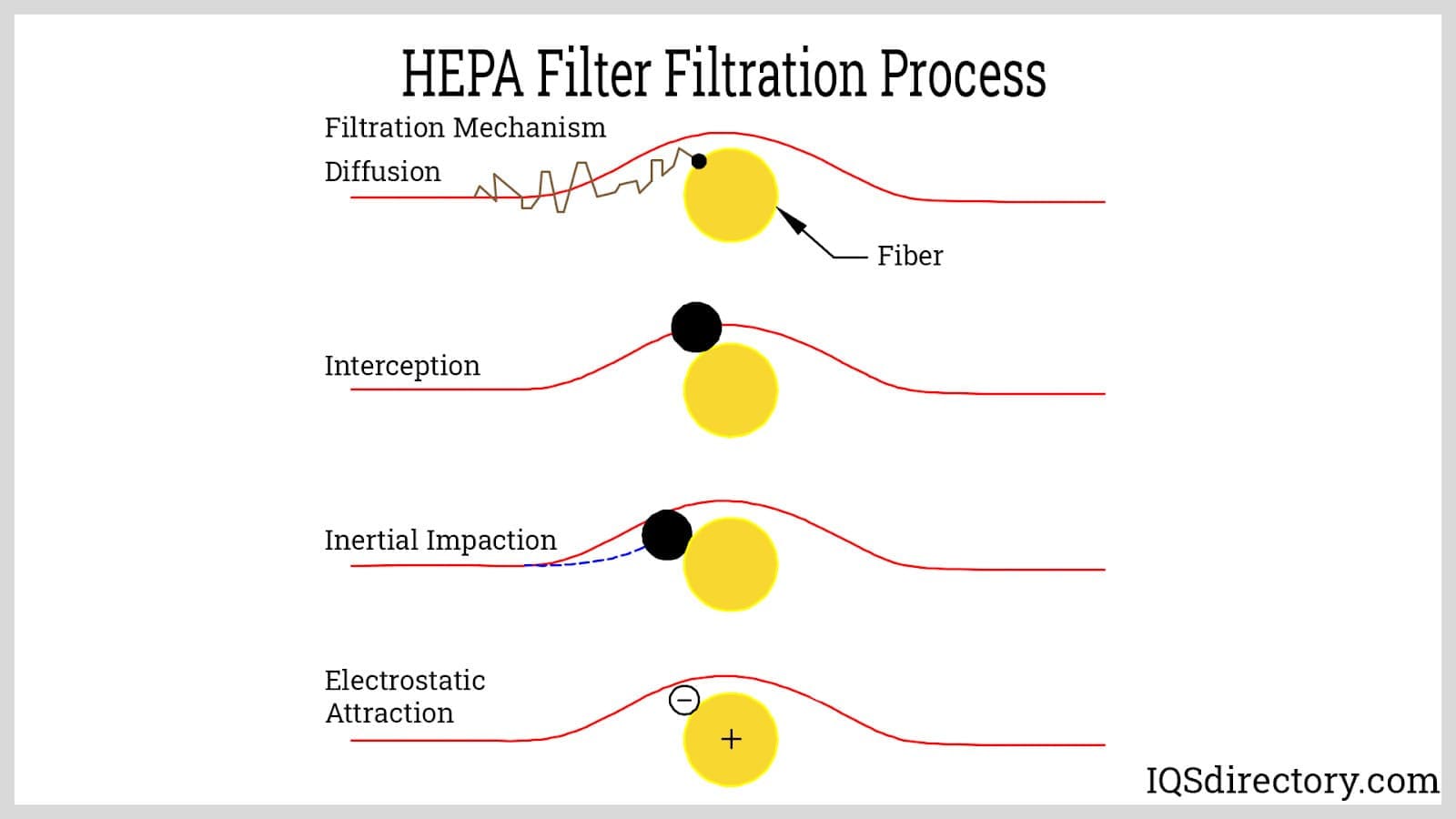
To be classified as a True HEPA filter, it must be capable of trapping at least 99.97% of airborne particles that are 0.3 microns (µ) in size or larger. These filters excel in capturing very small particles, such as pollen, dust mites, and pet dander. True HEPA filters utilize three primary physical processes for particle removal: inertial impact, interception, and diffusion.
- Inertial Impaction - When particles enter a HEPA filter, they continue in a straight line due to their inertia. Since they are moving rapidly, they collide with the randomly placed fibers of the filter and become trapped.
- Interception - Smaller particles of 0.3 µ up to 2.0 µ continue past the larger particles but are trapped by the distance between the fibers.
- Diffusion - Diffusion is the most difficult aspect of particle movement since particles move randomly in multiple directions due to their collision with gas molecules, which is referred to as Brownian motion. It is this characteristic of particle movement that led to the development of the HEPA filter. The interwoven and random positioning of HEPA fibers makes it possible for the filter to capture the smallest particles.
HEPA-Type
HEPA-Type filters are somewhat akin to True HEPA filters but fall short in efficiency. These filters typically capture 85-95% of particles that are 0.3 µ or larger. Although HEPA-Type filters are less costly compared to True HEPA filters, they might not be adequate for individuals with severe allergies or asthma.
HEPA-Like
HEPA-like filters rank as the least effective among the HEPA variants, capturing only 50-70% of particles that are 0.3 µ or larger. These filters are commonly found in lower-end vacuum cleaners and air purifiers and are not recommended for people with allergies or respiratory conditions.
Types of HEPA Vacuum Cleaners
Sealed HEPA
A sealed HEPA vacuum cleaner is built to ensure that particles do not re-enter the air. Featuring an airtight sealed housing, it prevents dust and allergens from escaping into the environment. Sealed models are ideal for healthcare settings and homes where individuals have severe allergies or asthma, though they tend to be pricier than non-sealed versions.
Bagged
A bagged HEPA vacuum cleaner comes with a disposable bag that collects dirt, dust, and debris, preventing these materials from escaping into the air. While replacing the bag can be inconvenient, it enhances the cleaning process and offers an additional layer of protection.
Bagless
Bagless HEPA vacuum cleaners may include additional filters alongside the HEPA filter to enhance protection against contaminants. The transparent collection bin allows users to see the debris collected and monitor when it needs to be emptied. Bagless models maintain consistent suction power, as they do not suffer from loss of suction due to a full bag.
Upright
Upright HEPA vacuum cleaners feature an integrated design where the motor, HEPA filter, intake port, and exhaust port are combined in a single upright unit. This design provides powerful cleaning performance and is convenient for storage and accessibility.
Cyclonic
Cyclonic HEPA vacuums are a type of bagless vacuum that uses high-speed spinning air, similar to a centrifuge, to separate dust and dirt. These vacuums include two HEPA filters located below the collection bin, ensuring that clean air is expelled through the exhaust port. The centrifugal force effectively removes dust and dirt from the air.
Canister
With a canister HEPA vacuum, the main unit is separated from the handle of the vacuum and is connected by a hose. The design is used for industrial HEPA vacuum cleaners that come in several varieties, which vary from backpack models to large rolling units with huge collection chambers. The division into the two components makes the unit easily maneuverable, a necessity in industrial settings.
The hose and handle design of canister vacuums allow for cleaning surfaces above floor level, such as walls, shelves, furniture, machinery, and conveyors. The flexibility of connecting accessories and attachments to the handle or hose adds to the versatility of canister units.
When selecting a HEPA vacuum cleaner, it is essential to consider the type and quality of the HEPA filter, along with the overall design and features. True HEPA filters offer superior performance but come at a higher cost. Sealed HEPA vacuum cleaners are particularly suited for specialized environments like cleanrooms and laboratories, as well as for individuals with allergies or asthma.
While canister vacuums were initially designed with a hand pump to create suction, modern canister HEPA vacuum cleaners have expanded their use beyond residential settings and are now prevalent in industrial cleaning applications. Upright vacuums, known for their compact design and ease of use, remain a convenient and effective cleaning tool.
Chapter Five: How Should HEPA Vacuum Cleaners Be Maintained?
Consistent upkeep and monitoring of HEPA vacuum cleaners are essential for maintaining their optimal performance and ensuring they effectively capture the highest amount of dirt and debris from the air. Maintenance requirements can vary based on the specific model, usage, environment, and overall condition of the HEPA vacuum cleaner.
Check and Replace Filters Regularly
The HEPA filter plays a vital role in capturing minute particles from the air in a vacuum cleaner. Regular inspection of the filter is necessary, and it should be replaced once it is dirty or obstructed. To ensure peak performance, it is advisable to change the filter at least every six months or according to the manufacturer's recommendations.

Clean the Brush Roll
The brush roll is the rotating component that engages with the cleaning surface. Over time, debris can become entangled around it, diminishing its efficiency. Regular cleaning with scissors or a comb is necessary to maintain its effectiveness.
Empty the Dustbin Regularly
The dustbin accumulates dirt and debris collected by the vacuum. It should be emptied after each use and cleaned thoroughly to prevent bacteria and mold growth.
Check for Blockages
Blockages in various parts of a HEPA vacuum cleaner can impair its ability to create a vacuum. Hoses, attachments, and accessories can become obstructed, leading to reduced suction and decreased performance. Blockages may strain the vacuum’s motors and affect overall functionality.
Use the Right Attachments
HEPA vacuum cleaners come with various attachments, including crevice tools, dusting brushes, and upholstery tools. Using the appropriate attachment enhances cleaning efficiency and helps protect surfaces from damage.
Maintenance for HEPA vacuum cleaners varies by model. Some feature washable filters that can be cleaned and reused, while others need filter replacements. Adhering to the manufacturer's maintenance guidelines is crucial. Additionally, models with UV-C light technology may require periodic UV-C bulb replacements.
Chapter Six: What Are the Regulations and Standards for HEPA Vacuum Cleaners?
Several regulatory bodies and laws oversee the use of HEPA vacuum cleaners. In the U.S., organizations like the Environmental Protection Agency (EPA), the American Society of Heating, Refrigerating and Air-Conditioning Engineers (ASHRAE), the Occupational Safety and Health Administration (OSHA), and Underwriters Laboratories (UL) provide guidelines, regulations, and monitoring for HEPA filters.
U.S. Congress has enacted legislation such as the Clean Air Act, the Consumer Product Safety Act, and the Occupational Safety and Health Act. These laws are updated regularly to reflect advancements and changes in work environments.
Environmental Protection Agency (EPA)
The EPA establishes indoor air quality standards and regulates air pollutant emissions from various sources, including vacuum cleaners. The EPA’s “Design for the Environment” program encourages the creation of environmentally friendly products, including HEPA vacuum cleaners.
American Society of Heating, Refrigerating and Air-Conditioning Engineers (ASHRAE)
ASHRAE is a professional body that sets standards for the design and operation of HVAC systems, including air-cleaning devices. ASHRAE Standard 52.2 covers the testing and performance rating of air-cleaning devices like HEPA filters.
Occupational Safety and Health Administration (OSHA)
OSHA is a federal agency responsible for enforcing workplace safety and health standards. It regulates exposure to airborne contaminants from vacuum cleaners and mandates that employers provide adequate respiratory protection for their workers.
Underwriters Laboratories (UL)
UL is an independent organization that assesses and certifies the safety and performance of products. UL 60335-2-69 is the standard for the safety and functionality of household electrical appliances, including vacuum cleaners.
Several U.S. laws impact HEPA vacuum cleaner usage.
Clean Air Act
The Clean Air Act governs emissions of pollutants from various sources, including vacuum cleaners. Those that exceed acceptable levels of dust or other pollutants may face fines and penalties.
Consumer Product Safety Act
The Consumer Product Safety Act oversees the safety of consumer products like vacuum cleaners. Products deemed unsafe may be subject to recalls and corrective measures.
Occupational Safety and Health Act
The Occupational Safety and Health Act mandates employers ensure a safe and healthy work environment. This includes providing appropriate protection against airborne contaminants from vacuum cleaners.
Chapter Seven: What Is HEPA Vacuum Cleaner Certification?
Certification of HEPA vacuum cleaners confirms that they adhere to specific standards and requirements.
For a vacuum cleaner to be certified as a HEPA model, it must meet rigorous filtration efficiency criteria. In the U.S., a vacuum cleaner must be capable of trapping at least 99.97% of particles measuring 0.3 µ or larger to qualify as a true HEPA vacuum cleaner.
Various organizations, such as the National Air Filtration Association (NAFA) and the Asthma and Allergy Foundation of America (AAFA), are responsible for certifying HEPA vacuum cleaners. The certification process involves verifying the vacuum cleaner's efficiency in filtration and air flow.
NAFA Certification
For NAFA certification, vacuum cleaners must achieve at least 99.97% efficiency for particles of 0.3 µm or larger and must sustain this level of performance even as the filter accumulates debris.
AAFA Certification
AAFA certification mandates that vacuum cleaners must effectively capture at least 95% of airborne particles sized 0.3 µm or larger and should be designed to minimize the release of particles back into the environment during operation.
The Carpet and Rug Institute (CRI) offers a Green Label certification program that includes evaluating filtration efficiency. While CRI certification does not exclusively focus on HEPA filters, it serves as a valuable reference for consumers seeking vacuums tested for their particle-capturing capabilities.
The American Society of Heating, Refrigerating, and Air-Conditioning Engineers sets standards for HEPA filters utilized in HVAC systems. Although these standards are not tailored for vacuum cleaners, they can provide insights into the performance of HEPA filters.
Chapter Eight: What Are Some Negative Aspects of HEPA Vacuum Cleaners?
Like any equipment, HEPA vacuum cleaners come with some drawbacks, primarily related to the cost of high-performance HEPA filters. These factors should be considered when incorporating a HEPA vacuum cleaner into a cleaning regimen. The price of HEPA vacuum cleaners increases significantly for models intended for large-scale or industrial cleaning tasks.
Cost
Vacuum cleaners equipped with true HEPA filters are generally more costly compared to traditional models with HEPA-like filters, due to the sophisticated technology involved in HEPA filtration. However, the investment is justified in environments that demand high-efficiency cleaning and sanitized conditions.
Maintenance
Regular maintenance is essential for HEPA vacuum cleaners to ensure optimal performance. This involves changing filters, cleaning the dust container, and monitoring suction power. Neglecting maintenance can lead to diminished suction and decreased filtration efficiency.
Noise
HEPA vacuum cleaners are often noisier than standard vacuums because of their powerful motors and advanced filtration systems. In industrial settings, employees must wear noise-canceling headsets and adhere to warnings to mitigate noise exposure.
Weight
HEPA vacuum cleaners can be heavier than conventional models due to the additional components required for advanced filtration. This added weight makes them less maneuverable. Therefore, industrial HEPA vacuums are typically equipped with wheels, although moving them remains challenging.
Energy Consumption
Operating HEPA vacuum cleaners consumes more energy because of their robust motors and sophisticated filtration systems, leading to higher energy bills and greater carbon emissions.
Replacement Filters
Regular replacement of HEPA filters is necessary, which can incur additional costs. It’s crucial to use high-quality replacement filters to sustain the vacuum cleaner's efficiency. Additionally, HEPA filters are resource-intensive, with their production potentially impacting the environment and their disposal posing challenges.
HEPA Vacuum Cleaner Effectiveness
The effectiveness of HEPA vacuum cleaners can differ based on the filter quality, vacuum design, and user cleaning practices. Research indicates that HEPA vacuum cleaners are effective in reducing indoor air pollution and enhancing air quality. For instance, a study in the Indoor Air journal reported significant decreases in airborne particulate matter with the use of HEPA vacuum cleaners.
Factors such as usage frequency, filter age and quality, and the types and levels of pollutants in the indoor space can limit the effectiveness of HEPA vacuum cleaners.
To maximize the benefits of a HEPA vacuum cleaner, it is essential to use it consistently and adhere to the manufacturer's guidelines for maintenance and filter replacement. In addition to using a HEPA vacuum cleaner, other measures can improve indoor air quality, such as minimizing the use of harsh chemicals and enhancing ventilation.
Chapter Nine: What Are Some Common Applications for HEPA Vacuum Cleaners?
HEPA filters and HEPA vacuum cleaners are rapidly gaining popularity due to increasing concerns about quality of life, sustainability, and environmental impact. These factors contribute to the widespread adoption of HEPA vacuum cleaners across various industries.
Commercial and Industrial Use
HEPA vacuum cleaners are essential in commercial and industrial settings where the removal of small particles and pollutants from the air is critical. They are commonly used in manufacturing facilities where air quality is a concern. In these settings, HEPA vacuum cleaners are used to remove contaminants such as dust, debris, and hazardous materials.

Medical, Hospital, and Laboratory Settings
In medical, hospital, and laboratory environments, HEPA vacuum cleaners play a crucial role in maintaining high standards of cleanliness and air quality. They are essential for eliminating bacteria, viruses, and other hazardous particles that could pollute the air and jeopardize the safety of patients and laboratory personnel.

Cleanrooms
In cleanroom environments, HEPA vacuum cleaners need to provide superior filtration efficiency compared to standard HEPA filters. Cleanroom cleanliness standards are categorized into various levels, each specifying different particle sizes and counts per cubic meter. HEPA vacuum cleaners designed for these specialized settings must adhere to the highest standards and feature the most effective type of HEPA filter.

Hazardous Material Cleanup
In hazardous material cleanup, HEPA vacuum cleaners are essential for removing dangerous particles from the air. They are employed in scenarios involving hazardous substances like asbestos, lead, and mold, which need to be extracted from buildings or structures. These vacuums are used alongside other protective gear, such as respirators and safety clothing, to protect cleanup personnel. Additionally, the casings of HEPA vacuum cleaners used in hazardous environments are designed to be explosion-proof.
Automotive Industry
Within the automotive sector, HEPA vacuum cleaners are utilized to eliminate dust, debris, and fine particles from car interiors and engines. They are particularly beneficial in detail shops for cleaning carpets, seats, and other interior components.
Construction Industry
In the construction industry, HEPA vacuum cleaners are frequently used to clear dust and debris from job sites. They are instrumental in cleaning up after demolition, sanding, and other processes that produce significant amounts of dust and debris.
Janitorial Services
Janitorial services use HEPA vacuum cleaners to maintain cleanliness in commercial and industrial buildings, effectively removing dust, debris, and fine particles from floors, carpets, and various surfaces.
Public Transportation
HEPA vacuum cleaners are employed in public transportation systems, such as buses and trains, to capture dust and fine particles, thereby enhancing air quality and cleanliness for both passengers and staff.
Aerospace Industry
In the aerospace sector, HEPA vacuum cleaners are crucial for removing dust and small particles from manufacturing facilities and cleanrooms. They help maintain a pristine environment essential for the production of aircraft and spacecraft.
Hospitality Industry
In the hospitality industry, including hotels and resorts, HEPA vacuum cleaners are used to uphold clean and healthy environments for guests by cleaning carpets, upholstery, and other surfaces, effectively removing dust, debris, and fine particles.
Educational Facilities
HEPA vacuum cleaners are employed in educational institutions, such as schools and universities, to enhance air quality and cleanliness in classrooms, laboratories, and other areas. They are used to remove dust, debris, and fine particles from carpets, floors, and other surfaces.
Retail Stores
Retail stores use HEPA vacuum cleaners to keep floors, carpets, and other surfaces free from dust and small particles, ensuring a clean and healthy shopping environment for both customers and employees.
Government Agencies
In various government agencies, including federal buildings and military facilities, HEPA vacuum cleaners are employed to ensure clean and healthy environments. They effectively remove dust, debris, and fine particles from floors, carpets, and other surfaces.
Home and Residential Use
HEPA vacuum cleaners are utilized in residential environments to enhance indoor air quality and overall cleanliness. They are particularly advantageous for individuals with allergies, asthma, or other respiratory issues, as they help eliminate irritants that can worsen these conditions. Additionally, in homes with pets, HEPA vacuum cleaners are effective at removing pet hair and dander from the air.
Chapter Ten: How Might HEPA Vacuum Cleaners Evolve or Be Used in the Future?
In the future, HEPA vacuum cleaners may play a significant role in smart homes and buildings. With the growing prevalence of the Internet of Things (IoT), these vacuum cleaners could be integrated with other smart devices to enhance and automate the cleaning process. For instance, a smart HEPA vacuum might be programmed to activate when indoor air quality falls below a certain level or be remotely controlled through a smartphone application.
As concerns about air pollution and indoor air quality continue to rise, the importance of HEPA vacuum cleaners is expected to grow. Increased awareness of the health risks linked to poor indoor air quality may drive up demand for these devices. Additionally, HEPA vacuum cleaners could become even more effective at trapping particles, solidifying their role as a crucial tool for ensuring optimal indoor air quality.