



Rubber Trim: Everything you need to know about Types & Process
IQS Directory EditorialUpdated 3 chapters
5 leading suppliers listed with this guide
Browse rubber trim suppliersContents (3 chapters)
This article provides comprehensive information about rubber trims and their production process. Read further to learn more about:
- What is Rubber Trim?
- Different types of rubber materials
- Extruded Rubber Manufacturing Process
- Testing and Quality Control
- And much more…
Chapter 1: Understanding Rubber Trim
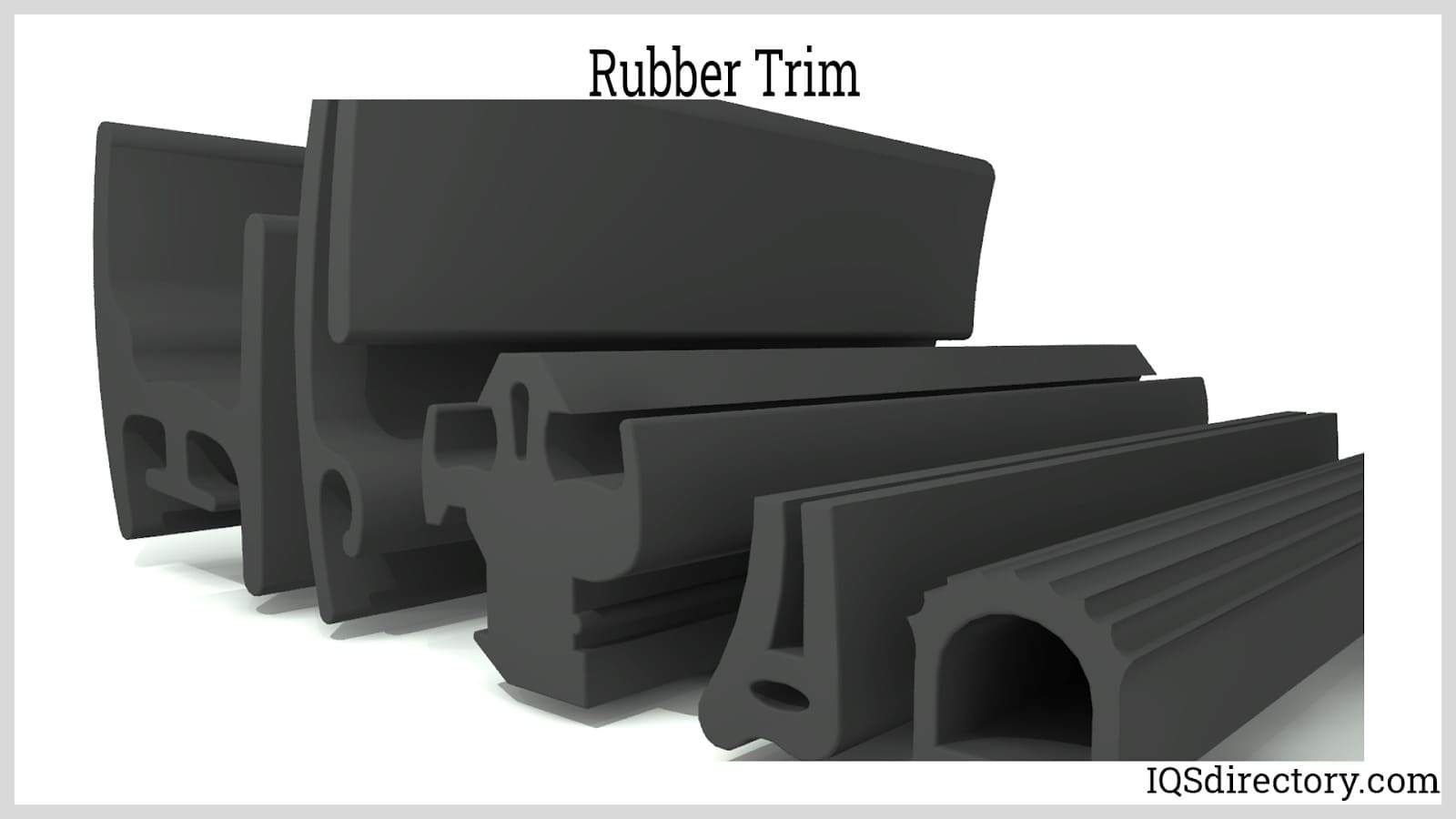
Rubber trim, whether extruded or molded, is designed to protect edges and surfaces from impact-related damage, vibration, and everyday wear. Typically found on panels, windows, doors, removable covers, machinery housings, and hatches, it also provides a dependable sealing function for adjoining components, acting much like rubber gaskets or O-rings. Crafted from dense rubber or flexible elastomer compounds, this highly adaptable material offers outstanding durability, ozone resistance, and weather resistance, securing and fitting tightly in demanding environments.
Rubber trim sometimes comes with a pre-applied adhesive like hot melt or butyl adhesive to enhance adhesion, simplify installation, and reduce slippage during assembly. Its widespread use is due to its superior resistance to abrasion from repeated impacts and grazes, as well as its ability to help reduce dust, moisture intrusion, and noise in finished products.

Made from various profiles, rubber trims are frequently tailored for specific uses across industrial, automotive, marine, and construction applications. Profiles are engineered and crafted onto a die before being installed on an extrusion machine to create the rubber product. The U-channel is the most prevalent, used for protecting edges on sheet metal, glass, plastic, and composite panels. The part's edge or substrate is inserted into the channel's open end, secured by either fasteners or adhesives. Some designs include inside protrusions or tongues to secure the rubber trim without needing permanent fasteners, improving retention and making replacement easier when service access is required.

For applications requiring a reliable seal, a solid or hollow cord or profile is integrated into the channel. This configuration, known as edge trim with a built-in seal, is produced through co-extrusion, where two different rubber types, each with distinct characteristics, are extruded together. When compressed, the cord conforms to mating surfaces, delivering a secure seal while the edge trim preserves structural integrity. Rubber trims are esteemed for their versatility in achieving varied hardness levels and their formidable resistance to chemicals, moisture, UV exposure, and elevated temperatures, making them a strong choice when selecting sealing profiles, edge protectors, or custom rubber extrusions for harsh service conditions.
Frequently Asked Questions
What Is Rubber Trim Used For?
Rubber trim is designed to protect edges and surfaces from impact damage and provides sealing between adjoining parts. It is commonly applied to panels, doors, windows, removable covers, machinery enclosures, and hatches, functioning similarly to gaskets, seals, and O-rings while helping block dust, moisture, and vibration.
Which Rubbers Are Commonly Used for Manufacturing Rubber Trim?
Popular elastomers for rubber trim include nitrile (NBR), EPDM, neoprene, silicone rubber, natural rubber, SBR, polybutadiene, butyl rubber, halogenated butyl, polyisoprene, polyurethane, and thermoplastic elastomers. Each offers distinct benefits for specific applications and environments, including resistance to oil, ozone, heat, chemicals, and weathering.
How Is Extruded Rubber Trim Manufactured?
Production involves polymerizing raw materials into rubber, compounding with various additives, mastication, masterbatching, extruding the mixture through a die, and then curing by vulcanization. Secondary processes such as splicing, adhesive taping, cutting to length, or coating may follow to improve fit, installation, and performance.
What Factors Are Important When Selecting Rubber Trim Material?
Key factors include environmental resistance, mechanical properties, compliance with industry standards, required customization, installation ease, cost, and expected lifecycle. Different materials meet different needs, from UV and chemical resistance to compression set performance, durometer requirements, and compliance certifications.
How Is the Quality of Rubber Trim Products Tested?
Quality control includes testing for properties like tensile strength, hardness, abrasion, heat resistance, tear resistance, water absorption, and aging. Methods follow standards such as ASTM D412, D2240, D395, and others, depending on intended application and performance requirements such as sealing reliability and long-term durability.
Which Type of Rubber Trim Is Best for Outdoor and Automotive Use?
EPDM rubber is widely chosen for outdoor and automotive applications due to its superior resistance to weathering, UV radiation, ozone, and temperature extremes. It is commonly used for weatherstripping, door seals, window seals, and exterior gaskets where reliable long-term sealing and edge protection are essential.
Chapter 2: What Are the Types of Rubber Used in Rubber Trim Production?
Rubbers are a diverse group of polymers known as elastomers, which are widely utilized in rubber trim manufacturing due to their remarkable elasticity and durability. Characterized by their ability to stretch and return to their original shape, elastomers provide the essential flexibility required for a variety of rubber extrusions used in automotive, industrial, and commercial applications. This elastic behavior is a result of the cross-linking of long polymer chains that form amorphous, flexible structures. These relatively weak intermolecular forces allow the material to easily deform under stress and conform precisely to the shapes of adjoining surfaces—making elastomers indispensable for producing reliable rubber seals, gaskets, weatherstripping, edge trims, and custom rubber profiles.
The selection of elastomer types for rubber trim production depends on environmental and application-specific factors. Degradation can occur depending on the curing method or vulcanization process, with exposure to water, ultraviolet (UV) radiation, oils, aggressive chemicals, or high temperatures contributing to aging, oxidation, or brittleness. Some elastomers exhibit outstanding performance in harsh conditions and chemical environments, while others excel in mechanical resilience or cost-effectiveness. Common industry-standard elastomers employed include nitrile (NBR), ethylene propylene diene monomer (EPDM), neoprene, silicone rubber, and natural rubber, each offering unique benefits for specific rubber trim applications ranging from automotive door seals to architectural weather seals and protective edge trims.

- Natural Rubber (NR): Extracted from latex harvested from the bark of Hevea and other rubber trees, natural rubber comprises polyisoprene chains. It is valued in rubber extrusion for its excellent resilience, high tensile strength, and remarkable fatigue resistance. NR offers superior elasticity and retains mechanical properties under repeated stress, making it suitable for dynamic seal and trim applications that require ongoing flexibility, especially in moderate environments. However, it is not ideal for use where resistance to oil, ozone, or extreme weather is required.
-
Polybutadiene Rubber (BR): Polybutadiene rubber is synthesized through the polymerization of butadiene monomers, producing rubbers with varying isomer content such as high-cis, high-trans, and lithium-based forms. This elastomer features outstanding abrasion resistance, low rolling resistance, and good resilience, serving well in impact-resistant trims and wear-prone sealing profiles. While highly valued in applications demanding durability, BR can be susceptible to ozone degradation and is typically blended with other rubbers to enhance performance in exterior environments.
- Styrene-Butadiene Rubber (SBR): Styrene-butadiene rubber is one of the most widely used synthetic rubbers in the industry. This copolymer of styrene and butadiene offers a balanced combination of abrasion resistance, aging stability, and affordability. SBR is often chosen for manufacturing automotive rubber trim, bumper seals, and flexible gaskets where cost-effectiveness and consistent performance are key. However, it may require protective additives or blending for improved resistance to oils and weathering.
-
Butyl Rubber (IIR): This is a copolymer of isobutylene and a small percentage of isoprene, which brings limited unsaturation essential for vulcanization. Butyl rubber is renowned for its exceptionally low permeability to air and moisture, alongside good aging, chemical, and ozone resistance. For rubber trim products that demand excellent airtight sealing—such as automotive window weatherstrips, HVAC gaskets, and vibration dampening trims—IIR provides unmatched performance. One limitation is its incompatibility with petroleum-based fluids and poor flame resistance.

- Halogenated Butyl Rubber (CIIR, BIIR): These variations of IIR are produced by introducing chlorine (CIIR) or bromine (BIIR) into the butyl rubber structure. Halogenation enhances cross-linking capability and endows these elastomers with improved resistance to chemicals, ozone, and hot air while preserving their outstanding barrier properties. As a result, halogenated butyl rubber is favored for specialized rubber trims used in chemical plants, pharmaceutical enclosures, and harsh outdoor conditions.
-
Acrylonitrile Butadiene (Nitrile) Rubber (NBR): Often referred to as nitrile rubber, this copolymer is highly valued for its notable resistance to petroleum oils, fuels, and a wide array of chemicals. These properties make NBR the top choice for oil-resistant rubber trims, fuel system seals, and industrial gaskets. Incorporating reinforcing fillers further enhances its low tensile strength and improves low-temperature flexibility, broadening its applications in demanding environments such as automotive under-the-hood components and hydraulic seals.

- Chloroprene (Neoprene) Rubber (CR): Neoprene rubber is the commercial name for the polymer of chloroprene. Its intrinsic flame resistance, moderate oil and ozone resistance, and robust physical properties make it a preferred choice for gasket manufacture, marine trims, and splash guards. Neoprene’s balance of flexibility and durability enables reliable sealing performance, even in tough industrial and automotive applications. However, it is generally costlier than natural rubber and offers limited cold temperature resilience.
-
Polyisoprene Rubber (IR): Polyisoprene rubber is a synthetic analog of natural rubber, produced through the controlled polymerization of isoprene monomers. As a result, IR delivers high purity and consistent quality, along with similar or superior elasticity and resilience. It is used in high-performance custom rubber profiles, medical grade seals, and specialty gaskets requiring strict material consistency.

- Ethylene Propylene Rubber (EPM, EPDM): EPDM rubber and its non-diene form, EPM, are popular in the extrusion of weatherstripping, roofing trims, appliance seals, and electrical gaskets. EPDM’s outstanding resistance to weathering, UV radiation, ozone, and temperature extremes (both high and low) make it the industry’s leading solution for exterior trim products, automotive door weatherseals, and outdoor gaskets. It also demonstrates exceptional electrical insulating properties, making it vital for a broad range of modern sealing applications.
-
Silicone Rubber: Distinguished by a silicon-oxygen polymer backbone, silicone rubber is exceptionally resistant to oxygen, ozone, heat, UV light, and moisture. Silicones are favored for high-temperature rubber trim applications, food-grade and medical silicone seals, and for use in environments where flexibility and non-reactivity are crucial. While its mechanical strength is lower compared to some organic rubbers and costs are higher, silicone delivers unmatched performance in demanding industries such as aerospace, pharmaceuticals, and electronics.

- Polyurethane Rubber: Polyurethane elastomer results from the reaction of polyether or polyester glycol with diisocyanates and curatives. In the world of rubber trim and seal manufacturing, polyurethane stands out for its high load-bearing capacity, superior abrasion resistance, and customizable hardness. It is widely used where trims and profiles are exposed to repetitive stress, heavy wear, or require extended service life, such as in machinery guards, vibration isolators, and impact bumpers.
- Thermoplastic Elastomers (TPE): Thermoplastic elastomers offer a combination of the processability of plastics and the elasticity of rubber. TPEs are increasingly popular for eco-friendly extruded trims, recyclable seals, and custom flexible profiles. Their ability to be shaped, reprocessed, and recycled supports modern sustainability goals while delivering reliable performance for trimming and sealing solutions in automotive interiors, consumer goods, and industrial equipment.
Choosing the Right Rubber for Your Application
When evaluating and purchasing rubber trim products, it’s important to assess the specific requirements of your application. Consider the following key factors to guide your selection:
- Environmental resistance: Determine if the trim will be exposed to UV, heat, ozone, chemicals, or petroleum products—materials like EPDM, neoprene, and silicone are ideal for high resistance.
- Mechanical properties: Evaluate the required strength, elasticity, compression set, and abrasion resistance. For high-wear applications, polyurethane and SBR may be best.
- Compliance standards: Certain industries, such as food processing, healthcare, and automotive, may require FDA or UL approved, non-marking, low-toxicity, or flame-retardant grades—silicone and EPDM are common for such specifications.
- Installation and customization: Some profiles require custom extrusions, adhesive backings, or co-extruded designs. Thermoplastic elastomers excel in applications where design flexibility and ease of installation are desired.
- Cost and lifecycle: Balance initial material costs with the expected durability, maintenance needs, and replacement intervals, as the long-term value often outweighs upfront savings.
By understanding the performance profiles of each rubber material, manufacturers and end-users can confidently select engineered rubber trims, edge seals, and gaskets tailored for automotive, marine, industrial, or architectural sealing challenges. Choosing the right compound ensures long-lasting, efficient, and compliant protection for equipment, vehicles, and built environments.
Chapter 3: What Is the Manufacturing Process for Extruded Rubber?

The manufacturing of extruded rubber is a very complicated process. The processes can be divided into two: the production of the raw rubber and the downstream processes that mainly involve compounding, forming (extrusion), and curing. The production of raw rubber converts gaseous or liquid petroleum-based compounds into polymers. This process is usually done in petrochemical plants. The rest is done in the rubber manufacturing plant, where the raw rubber and other materials are combined and formed to create the final product.
Production of Raw Rubber

Rubbers are created through the polymerization of organic compounds, which form long chains and are cross-linked to achieve their elastomeric properties. This polymerization can occur via either step-growth polymerization or chain-growth polymerization.
Step-growth polymerization, also known as polyaddition polymerization, involves a reaction mechanism where monomers with at least two reactive sites or functional groups link together to create oligomers. These oligomers further connect to form longer polymer chains. The process is managed by introducing monomers with a single functional group, which reacts with the oligomer's active sites. This method, known for its straightforwardness, is among the earliest used for polymerization. Common elastomers made using step-growth polymerization include polysiloxane (silicone) and polyurethane.

Chain-growth polymerization, also referred to as chain polymerization, involves the sequential addition of monomers to a growing polymer chain. This process is initiated by reactive species or intermediates, which start the reaction by breaking a bond in a monomer, creating an active site for further monomer addition. These initiators can include free radicals, cations, anions, or organometallic catalysts.
During chain propagation, the active site on the growing chain facilitates the addition of new monomers, which in turn opens one of their bonds, creating more active sites. The polymer chain continues to grow until it encounters another chain or a terminating agent, leading to chain termination.
To control the molecular weight of the polymer, a process known as chain transfer is used. This method helps regulate the average length of the polymer chains. Common rubber compounds produced through chain-growth polymerization include butadiene, isoprene, and chloroprene. In addition to homopolymers (polymers made from a single type of monomer), this process also allows for the creation of copolymers, such as styrene-butadiene (SBR), nitrile butadiene (NBR), and ethylene propylene diene monomer (EPDM).
Compounding Chemicals and Rubber
Compounding is the process of mixing specific chemicals with raw rubber to enhance its physical and chemical properties, reduce costs, and improve its processability and vulcanization. This formulation process aims to tailor the rubber's characteristics to suit its intended use. In addition to the base rubber (whether natural or synthetic), common ingredients used in compounding include:
-
Filler Systems: Filler systems include carbon blacks, clays, silica, and calcium carbonate, which are added to reinforce the elastomer structure to meet the required tensile strength and impact and abrasive resistance.
Carbon black is the most widely used reinforcing filler, which is produced from the incomplete combustion of heavy petroleum-based compounds, such as oil and tar. There are different types of carbon blacks, including super abrasion furnace (SAF), high abrasion furnace (HAF), fast extruding furnace (FEF), and semi-reinforcing furnace (SRF). Carbon black reinforces the elastomer by entangling the elastomer molecules on the porous surface of the filler. The deposition of carbon black particles into the elastomer matrix creates a composite with improved mechanical properties.

Non-carbon-based fillers, such as silica, clay, and calcium carbonate, are added to improve tear strength, reduce heat buildup, and create better compound adhesion for multicomponent products. These fillers do not bind well with elastomers in comparison with carbon blacks, resulting in a lower level of reinforcement, a problem that is solved by adding a silane coupling agent.
-
Stabilizer Systems: Stabilizer systems include antioxidants and antiozonants, which are added to prevent the degradation of rubber. Polymers, especially elastomers, tend to degrade due to the presence of carbon-to-carbon double bonds that can easily be broken and bonded onto by oxygen in the presence of ultraviolet light (photochemical reaction). The result is a broken polymer chain and a decrease in cross-linking density of the elastomer.
A broken polymer chain softens the elastomer, which decreases its abrasion resistance, while the decrease in cross-linking reduces the elastic property of the rubber and makes it stiff and prone to fatigue failure. Adding stabilizers helps limit the rate of oxidation by scavenging free radicals that can break the bonds of the polymer chain and prevents compounds, such as peroxides and hydroperoxides, from producing more free radicals by decomposing them.
Common antioxidants are phosphites, phenols, and hydroquinones. For the antiozonant, PPDs or paraphenylene diamines are the only classes used in significant quantities due to their potency and ability to further improve the fatigue and heat resistance of the rubber.

-
Vulcanizing or Curing Agents: Curing or vulcanizing agents are sulfur, peroxides, accelerators, activators, and retarders. The process of vulcanizing is where elastomers react with a system of compounds that inserts cross-links between the elastomer chains. It is often associated with sulfur systems, which are the most common method.
Sulfur curing systems consist of three main components: the vulcanizing agent (sulfur), the accelerators, and the activators. Accelerators act as catalysts that promote the vulcanization process by increasing the rate of the cross-linking process resulting in faster curing time and lower reaction temperatures. Accelerators increase the degree of cross-linking, resulting in a rubber matrix with better mechanical properties. Each type of accelerator works through different reaction mechanisms. Common accelerators are benzothiazoles, thiocarbamates, and amines.
Activators enable the efficient use of sulfur to increase the density of cross-links. The most common activator is zinc oxide combined with stearic acid. Zinc, when compared to other metal oxides, is most suited to forming sulfurating intermediates.

Adding the vulcanizing agents, accelerators, and activators to the elastomer prepares it for curing, which can occur prematurely during processing, making it harder to form. Premature vulcanization is termed as scorching. Retarders or inhibitors are added to prevent scorching without affecting the rate of vulcanization. The most popular rubber retarder is cyclohexylthiophthalimide (CTP), which is simply termed PVI or pre-vulcanization inhibitor.
-
Special Ingredients: Colorants, process oils, resins, and fibers are special ingredients used to give specific properties to the rubber. Colorants and pigments are supported by various compounds such as silica and titanium dioxide. Rubber is usually black due to the addition of carbon black.
Process oils are added to improve the processability of rubber. They can be paraffinic, naphthenic, and aromatic. Process oils also act as an extender to lower the cost of the rubber bulk. The type of process must be compatible with the elastomer to prevent it from migrating out of the compound.
Resins and fibers are added to improve the mechanical properties of the rubber. Hydrocarbon resins increase the viscosity of the compound when heated to achieve better flow, while fibers increase tensile strength and chipping resistance.

Mastication, Masterbatching, and Final Mixing
Mastication is a key step in the compounding process where the polymer chains are exposed to intense shear forces, which break the molecules into shorter chains. This treatment enhances the polymer’s ability to integrate with compounding ingredients. However, not all polymers need mastication, particularly those with stable and consistent chemistry. The use of chemical plasticizers or peptizers can aid in mastication by acting as oxidation inhibitors. These additives help prevent the reformation of broken polymer chains by neutralizing free radicals produced during the mixing process.

Mastication is usually done in open roll mills or internal mixers. Open mills consist of two rollers heated for temperature control. The rubber compound is sheared as it passes through the fixed clearance between the rollers. Internal mixers are high shear mixers that can either be a tangential rotor type or an intermeshing rotor type. The tangential rotor design shears the rubber between the clearance of the rotor and the walls or stator parts of the mixer. The intermeshing rotor design performs shearing by impinging the rubber between two rotors.
Masterbatching involves integrating most of the compounding ingredients into the masticated polymer, excluding the vulcanizing agents. This process helps prevent premature vulcanization, which could occur due to the heat generated during mixing. Masterbatching ensures an even dispersion of carbon black and achieves the desired viscosity of the rubber blend.
Final mixing is the stage where the vulcanizing agents are introduced. This step is typically performed using separate mixers that operate at lower speeds to control the mixing process. It is crucial to ensure thorough distribution of the final mix to avoid early vulcanization. Once mixing is complete, the blend is cooled and formed into slabs or bales, preparing it for the next stages of production.
Rubber Extrusion Process
In many manufacturing setups, the output from the mastication and mixing stages is fed directly into an extrusion machine equipped with either a single-screw or twin-screw system. This machine further blends the rubber compound, applies compression, and forces it through a die.
The die is crafted to the specific cross-section of the intended final product, accounting for any dimensional changes due to die swelling and vulcanization. Temperature control within the extruder is managed by steam jackets, water jackets, or electric heaters along the barrel to maintain optimal conditions.
Some extrusion systems integrate the processes of compounding, masticating, and mixing into a single unit. These machines feature screw elements with varied profiles to perform different functions: one set for mastication (kneading), another for mixing, and a third for compression. The extrudate is then passed through a heater or oven to commence the vulcanization process.

Rubber Curing Process
As previously discussed, the process of curing, also known as vulcanization, involves forming cross-links between elastomer chains. This process enhances the stability of the rubber, allowing it to withstand various environmental factors like heat, cold, and solvents. Historically, "curing" was the general term for this cross-linking process, while "vulcanization" specifically referred to curing rubber with sulfur. Sulfur was the first curing agent used to cross-link natural rubber or latex. Nowadays, other curing methods are employed that do not rely on sulfur as the primary agent. These modern methods use alternatives such as peroxides, and occasionally phenols and metal oxides.

Vulcanization is achieved by heating the rubber compound, which contains curing agents, to activate the sulfur molecules (S8) or sulfur donors. This heating process breaks the sulfur bonds, creating sites for cross-linking. Cross-links are formed when elemental sulfur or sulfur donors interact with the functional groups or unsaturated bonds on elastomer chains. Traditional vulcanization with elemental sulfur involves heating at approximately 284 °F (140 °C) for about five hours. This method produces rubber with good physical properties but tends to age quickly. The addition of activators, such as zinc oxide, shortens the curing time to around three hours. When combined with accelerators, this process further reduces the curing duration to just a few minutes, enhancing the rubber's aging resistance and overall properties.
Peroxide curing agents operate similarly to sulfur-based curing agents. Heating decomposes the peroxide into free radicals, which extract hydrogen atoms from the polymer chain, creating sites for cross-linking. Generally, peroxide curing offers superior temperature resistance, aging characteristics, solvent resistance, and reduces odor compared to sulfur curing. Additionally, peroxide curing does not require the use of activators and accelerators that can potentially produce carcinogenic nitrosamines.
Secondary Processes
Secondary processes are supplementary operations performed on products to tailor them for specific uses. These processes might include cutting, drilling, notching, splicing, coating, and other modifications. For rubber trims, common secondary processes involve splicing, applying slip coatings, injecting sealants, and using adhesive tapes, in addition to cutting.
- Splicing creates a continuous loop of extruded rubber for sealing without any weak points.
- Slip coating improves the abrasion resistance of edge trims by creating a surface with low friction.
- Seal injection is for rubber trims with pre-applied sealant to eliminate the additional sealing process during installation.
- Adhesive taping is used to simplify the installation process by creating pre-applied pressure or temperature-activated adhesives for attaching the rubber trim onto the substrate.

Quality Control and Testing
Testing and quality control are essential for assessing the final properties of the product and ensuring its uniformity and consistency. Major manufacturing facilities with compounding operations typically maintain an in-house testing laboratory. The final rubber compound is subjected to various tests, which may include:
|
Property |
Method / Standard |
Description / Instrument |
|---|---|---|
|
Cure Quality |
ASTM D2084 |
Oscillating disk cure meter (rheometer) |
|
Hardness |
ASTM D2240 |
Measurement of indentation using a durometer |
|
Tensile Strength |
ASTM D412 |
Universal testing machine (tensile test) |
|
Elongation |
ASTM D412 |
Analysis of stress-strain curve by elongating until rupture |
|
Compression Set |
ASTM D395 |
Measurement of residual deformation upon compression and deflection |
|
Heat Resistance (Thermal Aging) |
ASTM D865 / ASTM D572 / ASTM D573 |
Analysis of stress-strain curve or mechanical characteristics before and after heating in air or oxygen-rich atmosphere |
|
Abrasion Resistance |
ASTM D1630 / ASTM D2228 |
Measurement of material loss using NBS abrader or Pico abrader |
|
Tear Resistance |
ASTM D624 |
Similar to tensile test until rupture; the difference is the profile of the specimen cut by standard dies |
|
Resilience |
ASTM D2632 |
Measurement of rebound using vertical rebound tester |
|
Impact Resistance |
ASTM D256 |
Measurement of load causing permanent deformation using Izod and Charpy impact testers |
|
Flex Resistance |
ASTM D813 / ASTM D1052 |
Measurement of the number of cycles before failure using DeMattia or Ross flexer |
|
Heat Buildup |
ASTM D623 |
Measurement of the rise in temperature after rapid cycling using Goodrich flexometer |
|
Ozone Resistance |
ASTM D1149 / ASTM D3395 |
Analysis of mechanical properties in an ozone-rich atmosphere |
|
Outdoor Exposure |
ASTM D518 |
Analysis of physical properties when exposed to sunlight, soil, moisture, and bacteria |
|
Water absorption |
ASTM D570 |
Measurement of tensile properties after aging in humidity or water spray in the presence of ultraviolet light |
|
Solvent Resistance |
ASTM D471 |
Assessment of volume, weight, and other physical properties upon contact with test liquids |
|
Brittleness |
ASTM D746 |
Determining the temperature at which brittle fracture occurs |
|
Low Temperature Stiffness |
ASTM D1053 |
Measurement of modulus of rigidity in low temperatures using Gehman torsion tester |
It is important to note that not all tests are mandatory; the specific tests required depend on the customer’s needs and the product’s intended application. Once quality inspections are completed, the products are typically rolled, bundled, or packaged in preparation for distribution.
Conclusion
- Rubber trim is an extruded, sometimes molded, elastomer used that is used to protect the edges or surfaces of objects from sudden impacts.
- Aside from edge and surface protection, rubber trims also provide sealing on mating parts, acting the same way as rubber gaskets and O-rings.
- Rubbers are a class of polymers (elastomers) that have a highly elastic nature created by the cross-linking of long polymer chains into amorphous structures.
- The extruded rubber production processes can be divided into two: the production of the raw rubber and the downstream processes, which mainly involve compounding, forming (extrusion), and curing.
- Secondary processes are additional processes done on the product to suit a particular application. This can include cutting, drilling, notching, splicing, coating, and so on.
- Testing and quality control are done to determine the final properties of the product and to ensure the uniformity and consistency of the product.