




Plastic Pallets: Types and Production Process
IQS Directory EditorialUpdated 5 chapters
5 leading suppliers listed with this guide
Browse plastic pallets suppliersContents (5 chapters)
This article takes an in depth look at plastic pallets.
Read further and learn more about topics such as:
- What are plastic pallets?
- Advantages of plastic pallets
- Plastic pallet materials and manufacturing processes
- Types of plastic pallets
- Plastic pallet sizes
- And Much More...

Chapter 1: What Exactly Are Plastic Pallets?
Plastic pallets are sturdy, reusable platforms designed to support large quantities of goods during a wide range of material handling processes, helping protect product integrity from warehouse to final delivery. These processes include lifting, relocation, stacking, racking, storage, and both short- and long-haul transportation by land, air, or sea. To improve the efficiency of handling operations, plastic pallets are engineered to work seamlessly with forklifts, pallet jacks, front loaders, conveyor systems, and automated material handling equipment.
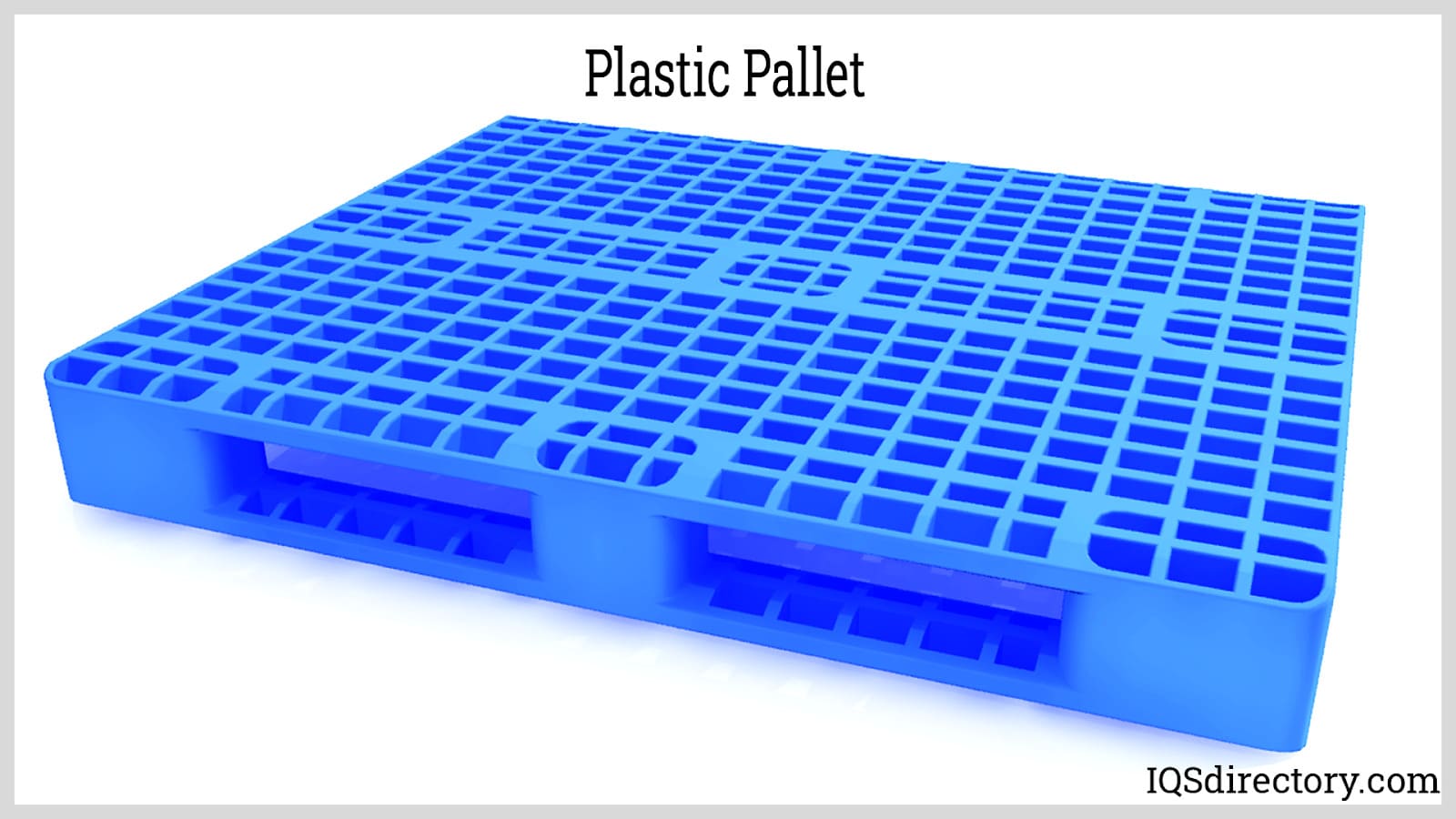
Typically, pallets can be manufactured from materials such as metal, plastic, wood, or paper, and each pallet material serves different logistics needs. Compared to other options, plastic pallets offer numerous advantages, including being lightweight, moisture-resistant, sanitary, durable, and budget-friendly over their service life. They are also easy to clean, resistant to contamination, and well suited for industries with strict hygiene requirements such as food and beverage, pharmaceuticals, and export shipping. Companies can choose from a variety of plastic pallet designs, including rackable, nestable, stackable, and export pallets, depending on their operational requirements, load capacity, and storage environment. You'll find plastic pallets in warehouses, manufacturing facilities, retail distribution centers, and transportation companies. Nevertheless, all pallet types play a crucial role in logistics, warehousing, and the broader supply chain.
Plastic pallets also feature standardized dimensions that comply with regional and international pallet regulations, helping reduce delays, simplify freight handling, and improve cross-docking efficiency when goods move between different areas or markets. These standard pallet sizes support smoother pallet shipping, safer stacking, and better compatibility with shipping containers, pallet racks, and automated warehouse systems. Pallets made from other materials are also subject to these guidelines, but plastic pallets are often preferred for their consistent sizing, long service life, and dependable performance in demanding supply chain applications.

Chapter 2: Advantages of Plastic Pallets
There are several advantages plastic pallets offer to the supply chain:
Plastic Pallets Are Resistant to Microbial Growth and Pest Infestation
One of the most important features of plastic pallets in supply chain management—especially for the food, beverage, pharmaceutical, and medical device industries—is resistance to microbial growth and pest infestation. Thanks to their non-porous surface, smooth plastic construction, and enhanced moisture resistance, plastic pallets inhibit the growth of pathogens, bacteria, fungi, and mold that can degrade perishable products, contribute to contamination, or present serious health risks.
Plastic pallets are inhospitable to pests and other harmful organisms, making them ideal for hygienic logistics, cold chain storage, grocery distribution, and other sensitive applications where compliance with food safety standards (like FDA, HACCP, or GFSI) is crucial.
Plastic Pallets Are Exempted from ISPM No. 15
Plastic pallets are exempted from the International Standards for Phytosanitary Measures No. 15, or the "Regulation of wood packaging material in international trade (ISPM-15)." It is a set of measures created by the International Plant Protection Convention (IPPC) aimed to mitigate the introduction and spread of invasive species (e.g., bugs, beetles, and pathogens) through the shipment of insufficiently processed and contaminated wood.
Wooden pallets, as well as other packaging materials like crates and dunnage, are affected by ISPM-15 and are required to undergo the approved treatment process stated in the regulation. Treatment of wooden pallets is supervised by the National Plant Protection Organization (NPPO) of the importing and exporting countries. An IPPC marking (as shown below) is issued to the individual wooden pallets as an identification of their compliance.

Being exempt from this regulation, plastic pallets are not required to undergo such treatments and inspections when entering international ports. This lends a significant advantage to companies involved in cross-border logistics and global supply chain operations, reducing shipping delays, administrative costs, and compliance burdens compared to standard wooden pallets.
Plastic Pallets Have Excellent Contamination, Odor, and Corrosion Resistance
The integrity of plastic pallets remains unaffected when they are exposed to spills, harsh cleaning agents, chemicals, and moisture. Since plastics are naturally corrosion-resistant and non-absorbent, no odors are retained or transferred to shipped goods, and cross-contamination risks can be significantly reduced. Once dirty or contaminated, plastic pallets are easy to clean, sanitize, and disinfect—suiting them perfectly for applications involving drums, chemical containers, pharmaceuticals, fresh produce, raw meats, dairy products, or hazardous materials. The use of hygienic plastic pallets supports industry requirements for sanitary transport, both in manufacturing and in warehousing environments.
Plastic Pallets Are Lightweight
Compared to wooden and metal pallets, plastic pallets are easy to handle and move from one point to another because they weigh less. Weight is a major concern during shipping, especially for airfreight shipments. Plastic pallets incur fewer transportation costs in all modes of transportation. They also induce less wear to the shipping vehicles‘ engines in the long run.
Lower tare weights offer cost savings in freight and logistics by reducing overall shipping costs, fuel consumption, and carbon emissions. Ergonomically designed lightweight plastic pallets also reduce workplace injuries and facilitate easier manual handling, which helps streamline material handling and warehouse operations.
Plastic Pallets Are Durable
Plastic pallets are usually constructed in one solid piece. They have seamless connections between their components because they are produced through the molding process. Their seamless connections eliminate the weak spots present in pallets with mechanical fasteners (e.g., screws, nails) to assemble the pallet. This makes the pallet durable, and it consequently has a long service life.
Unlike wood pallets, which are susceptible to splintering, breakage, and water absorption, plastic pallets resist impact and fatigue over repeated trips. Their durability makes them ideal for closed-loop and multi-use systems, demanding reverse logistics environments, and automated material handling applications such as conveyor systems, racking, and robotic warehouses. Many plastic pallets withstand thousands of cycles, lowering long-term total cost of ownership (TCO).
Plastic Pallets Are Reusable and Have a Long Service Life
Plastic pallets last longer than wooden pallets. They can be reused multiple times in the supply chain. They can endure many shipping cycles or long service times in stores, factories, distribution centers, and warehouses before they wear out.
Some plastic pallets are designed as nestable or stackable models to optimize warehouse storage and return logistics, and their repeated reuse helps companies meet sustainability targets and reduce operational expenditure (OPEX) in logistics and order fulfillment operations.
Plastic Pallets Are Recyclable
The raw, virgin plastic resins used to manufacture a plastic pallet are mixed with portions of recycled plastics. This is feasible with thermoplastics through another re-molding process. This lowers the production cost and reduces the carbon footprint of the plastic pallet. However, plastic pallets made from 100% virgin plastics have superior characteristics and performance.
At end-of-life, most plastic pallets can be easily recycled into new pallets or other industrial plastic products, ensuring responsible waste management and supporting corporate recycling initiatives. By choosing recyclable pallets, businesses help divert material from landfills and align with circular economy objectives.
Sustainability and the Circular Economy
A major issue that all companies are confronting in the modern economy and their business practices is sustainability and protection of the environment. Plastic pallets are an ideal solution since they can be designed, manufactured, put to use, end their useful life, and be recycled to raw material, which is used to produce more pallets.
The use of plastic pallets and their ability to be reprocessed and repurposed makes them the ideal tool for shipping and storage as well as a solution to meeting the needs of sustainability.

Modern supply chain managers increasingly rely on sustainable packaging solutions, such as returnable transport packaging (RTP), to reduce environmental impact, minimize packaging waste, and create closed-loop logistics networks. As part of a circular supply chain, plastic pallets can help improve resource efficiency and support companies’ ESG (Environmental, Social, and Governance) goals—delivering long-term value to stakeholders and customers alike.
Technological Advancements in Inventory Control
One of the focuses of any business or manufacturing operation is control, maintenance, and knowledge of their inventory. Bad choices, inaccurate counts, and poor organization can be costly errors and affect the bottom line.
Well aware of the need to monitor and oversee inventory, pallet manufacturers have developed various types of technological advancements that can be attached to pallets for better inventory tracking and include GPS, IoT (Internet of Things), and RFID, each of which enhances pallets and makes them more than just a flat piece of plastic to store materials.

Integrating smart technologies such as embedded RFID chips, QR code labels, Bluetooth beacons, or IoT sensors into plastic pallets allows for real-time asset tracking, automated stock-taking, and enhanced warehouse management system (WMS) integration. Smart pallets facilitate inventory accuracy, enable predictive maintenance, and streamline the supply chain process, making them a crucial component of advanced logistics and Industry 4.0 initiatives.
Cost Considerations and Limitations of Plastic Pallets
There are some disadvantages of plastic pallets:
- Plastic pallets cannot be easily repaired when damaged.
- Plastic pallets are more expensive than wooden pallets.
While the upfront cost of plastic pallets can be higher than standard wooden pallets, their reusability, reduced weight, hygiene benefits, and lower lifecycle maintenance costs often yield long-term ROI for enterprises with demanding logistics needs. However, for single-trip or export shipments with high risk of loss, wood pallets can sometimes be a more cost-effective option for certain businesses. Consideration of use case, product requirements, and total logistics expenditure is essential for choosing the optimal pallet type for your supply chain.
Chapter 3: Plastic Pallet Materials and Manufacturing Processes
Plastic pallets are essential in material handling and logistics, offering a durable, lightweight, and cost-effective alternative to traditional wooden and metal pallets. They are commonly fabricated from several high-performance plastics and composites, each imparting specific properties ideal for shipping, storage, food handling, pharmaceuticals, and export applications. Understanding the materials and manufacturing processes used in producing plastic pallets allows manufacturers, distributors, and end users to select products optimized for hygiene, load capacity, regulatory compliance, and environmental sustainability.
High-Density Polyethylene Pallets (HDPE)
HDPE pallets are the most widely-used plastic pallets because of their versatility, cost-effectiveness, and strength. They have high impact resistance, meaning they absorb shock and retain their stability if they are accidentally dropped or acted on by an immense force during shipping or storage. HDPE pallets have good corrosion and heat resistance and are compatible with most chemicals, making them excellent for use in pharmaceutical, food processing, and logistics sectors. However, extensive contact with oxidizing agents and hydrocarbons must be avoided to maintain the structural integrity of these pallets. HDPE plastic pallets are often chosen for their longevity, ease of recycling, and resistance to pests, mold, and bacteria, which makes them compliant with international export standards such as ISPM 15.
Polypropylene Pallets (PP)
PP pallets are the second most widely-used plastic pallets after HDPE pallets. They are more rigid and stronger than HDPE pallets, making them exceptionally capable of withstanding forklift and pallet jack abuse in demanding warehouse environments. Their chemical compatibility is excellent, and they perform exceptionally well under heavy static and dynamic loads. PP pallets are preferred for applications where high temperatures, repeated wash cycles, or exposure to caustic agents are expected. However, they tend to be more expensive than HDPE pallets, so cost-benefit analysis is important when choosing between the two materials.
Polyethylene Terephthalate Pallets (PET)
PET pallets offer good dimensional stability, a high strength-to-weight ratio, and reliable corrosion resistance. The surface of PET pallets is impenetrable by moisture, liquids, and gases, making them ideal for use in environments with strict hygiene requirements. PET pallets are highly recyclable, reducing environmental impact and supporting circular economy initiatives. When companies prioritize sustainability, PET pallets are an excellent choice due to their ease of repurposing and low carbon footprint.
Polyolefins Pallets
Polyolefin pallets are low-cost, highly rigid pallets made from a blend of HDPE, PP, and cellulose. However, they are brittle, difficult to mold, and sensitive to moisture. They are considered when they will be used as a one-way (or one-time use) export pallet, or when moisture is not an issue during transportation or storage. A one-way export pallet is a pallet that will not be returned once it is sent for shipment. These disposable pallets offer a lightweight, affordable solution for international exports where return logistics are not feasible.
Fiberglass Pallets
Fiberglass pallets are strong, durable, and impact-resistant. They are inherently resistant to fires and have fire-retardant properties, making them superior to wooden and paper pallets in facilities where fire safety regulations are stringent. However, fiberglass pallets are more expensive. Their rigidity and longevity make them suitable for cleanroom, pharmaceutical, and high-value industrial environments.
Plastic pallets can be produced by a variety of manufacturing processes (e.g., molding, extrusion). These methods are chosen based on end-use requirements such as static load capacity, racking compatibility, hygiene, and ease of cleaning. In the case of recycling, the used plastics undergo pre-treatment (e.g., cleaning, drying, and size reduction) before combination with the virgin resins for closed-loop manufacturing and eco-friendly production.
Injection Molding
Injection molding is the most common process for producing high-quality plastic pallets. This method involves the high-pressure transfer of molten plastic material into the mold where it solidifies and cools. The molten plastic occupies the volume of the mold cavities, creating pallets with precise tolerances and complex geometries. Injection molding is capable of producing pallets with intricate details, including vented decks, anti-slip surfaces, and features for automation compatibility (such as RFID tagging or barcode placement). This process ensures consistent product quality and is ideal for manufacturing high-volume SKUs demanded by warehouses and distribution centers.

Thermoforming
The process of thermoforming involves heating plastic sheets to their forming temperature and stretching or pressing them over a mold such that the heated plastic takes the shape of the mold. Thermoforming is popular for producing lightweight, nestable, and rackable plastic pallets used in export and closed-loop supply chains. The tooling for thermoforming is less expensive than injection molding, making it ideal for short production runs or custom pallet orders. The overall cost of the process varies depending on the color of the pallets and how the raw material is blended. Thermoformed pallets, especially those that are twin-sheet thermoformed, are durable, easy to sanitize, and widely used in food, pharmaceutical, and electronics industries. Nestable plastic pallets, designed for space-saving storage and return logistics, were developed from the thermoforming process.


Structural Foam Molding
Structural foam molding is a low-pressure injection molding that involves feeding an inert gas to the molten plastic to decrease the density and ultimately the weight of the plastic pallet. This method produces lightweight yet robust pallets ideal for both static and dynamic loads.
The molten plastic fed into the mold has a volume less than that of the cavity. Once the inert gas expands inside the mold cavity, it creates a foaming reaction with the molten plastic. The inert gas is also responsible for supplying the holding and final packing pressure. The resulting plastic pallet has a cellular structure in its core, but the walls remain dense. The produced plastic pallets have a high strength-to-weight ratio and high impact resistance, making them suitable for automated warehouses, bulk packaging, and heavy-duty racking systems.
Structural foam molding is cheaper than high-pressure injection molding because it does not require high pressure or a steel mold; the mold can be made from lighter and less expensive materials such as aluminum. This process is frequently used to produce reusable pallets that deliver long service life while reducing raw material consumption and shipping costs.

Rotational Molding
Rotational molding (or rotomolding) involves simultaneous heating of powdered plastic material contained in a hollow mold and slow rotation on two axes. As the plastic is heated, it melts and adheres to the inner walls of the mold and consequently takes its shape. After the molten plastic is settled on the inner walls, it is cooled to solidify and then taken out of the hollow mold.
Rotomolded pallets have uniform wall thickness on all sides, edges, and corners. This increases the pallet strength and integrity. This process is also economical because of its inexpensive tooling and lack of scrap from excess plastic materials (e.g., flashes, fillings from runners and sprues). Rotational molding is ideal for large, custom, or specialty pallets, and is commonly used for chemical, hazardous material, and heavy-duty industrial shipping applications where enhanced durability and UV resistance are necessary.

Blow Molding
A blow molding process uses compressed air to stretch a heated plastic across the interior walls of the mold cavity. Blow-molded pallets also have uniform wall thickness and higher load capacity. They also have higher strength and impact resistance than injection-molded pallets.
The process of blow molding involves the creation of a parison that is cut to the length required for the pallet. Once processed, the parison is blown into the mold cavity that has the shape and configuration of the pallet. The parison is inflated by high pressure air that forces it against the walls of the mold to produce an even thick surface on the interior of the mold. After the pallet cools and is completely formed, it is released from the mold for secondary finishing such as machining and trimming.
Many of the physical and performance properties of blow molded pallets are similar to twin walled thermoformed pallets. Load capacity for blow molded pallets varies between 6 to 10 metric tons with a dynamic range of 2 to 3 tons. The strength and weight capacity of blow molded pallets is related to the ability to control the uniform wall thickness during processing. These pallets are often utilized in heavy-duty shipping, export, and storage scenarios where consistent, high load capacity, and impact resistance are essential selection criteria.

Profile Extrusion
In profile extrusion, the individual pallet parts are produced by forcing the molten plastic through an extruder; then the parts are fastened together by nails, screws, heat, weld, or glue. The extruded plastic pallet resembles the structure of a wooden pallet, making it suitable for applications that require familiar handling processes but desire the enhanced performance and longer service life of plastic. However, the incorporation of fasteners lessens its durability. Profile extrusion is commonly selected for custom-size pallets and for industries transitioning from wood to plastic solutions due to its design flexibility.

Compression Molding Plastic Pallets
The compression molding process uses heat and pressure to cross link the various agents in the plastic resin. An essential part of the process is a thermosetting resin, known as a slug, which is placed between two mold halves. To avoid waste, and increase accuracy, the slug is weighed and precision measured prior to being placed between the die halves.
The mold halves move together at pressures between 800 psi to 2000 psi until the proper mold temperature is reached. The use of appropriate temperature and pressure ensures that the proper crosslinks are formed in the resin. When the mold is opened, the pallet is ejected while it is hot since a cooling cycle is not necessary in the compression mold process. This method is ideal for fabricating heavy-duty, chemical-resistant plastic pallets used in high-load storage and harsh industrial environments, where both dimensional stability and strength are top priorities.

Selecting the Right Plastic Pallet: When choosing the best plastic pallet material and manufacturing process, key factors include the intended load capacity (static, dynamic, and racking loads), the handling system (automated or manual), compliance with hygiene and export regulations, recyclability, and expected service life. Consider environmental conditions such as temperature extremes, exposure to moisture or chemicals, and requirements for international shipping. Comparing characteristics such as durability, cost, ease of cleaning, and customizability will ensure optimal performance in your logistics, warehousing, or supply chain operations.
In summary, the right combination of plastic material (HDPE, PP, PET, polyolefins, fiberglass) and production process (injection molding, thermoforming, structural foam molding, rotational molding, blow molding, profile extrusion, compression molding) provides tailored solutions for diverse material handling challenges. By understanding both the technical specifications and the functional demands of your application, you can select a plastic pallet solution for maximum operational efficiency, safety, and long-term savings.
Chapter 4: Types of Plastic Pallets
Plastic pallets may be grouped according to the mode of supporting the top deck of the pallet:
Stringer Plastic Pallets
In stringer pallets, the top deck is supported by parallel, longitudinal slabs, called stringers, that are positioned in opposite edges and across the center of the pallet.

Block Plastic Pallets
In block pallets, the top deck is supported by columnar posts, called blocks, that are positioned in the corners, in the centers of each edge, and at the center of the pallet itself.

Plastic pallets may be classified according to the number of entry points. The entry points are the areas wherein "forks" of the forklift or a pallet jack can be stuck to lift or move the pallet.
Four-Way Plastic Pallets
Four-way pallets allow entry on each side of the pallet. They provide more handling efficiency (e.g., less load and unloading time), especially when the floor space is small because all sides are accessible by the handling equipment. Generally, all block pallets are four-way pallets.

Two-Way Plastic Pallets
Two-way pallets only allow entry on two sides of the pallet, and they are opposite sides. Since the entry points are limited, the handling equipment is required to maneuver to a specific angle to gain access to the pallet. To be accessed by the handling equipment, these pallets must be stored at a specific orientation that exposes the entry points.
All non-modified stringer pallets are two-way pallets. Conversion of a two-way pallet into a four-way pallet involves the creation of notches; this can be easily done in wooden stringer pallets but is not feasible in plastic pallets. This conversion reduces the strength and load capacity of two-way pallets.

Plastic pallets can also be distinguished according to their deck design and configuration:
Plastic Skids
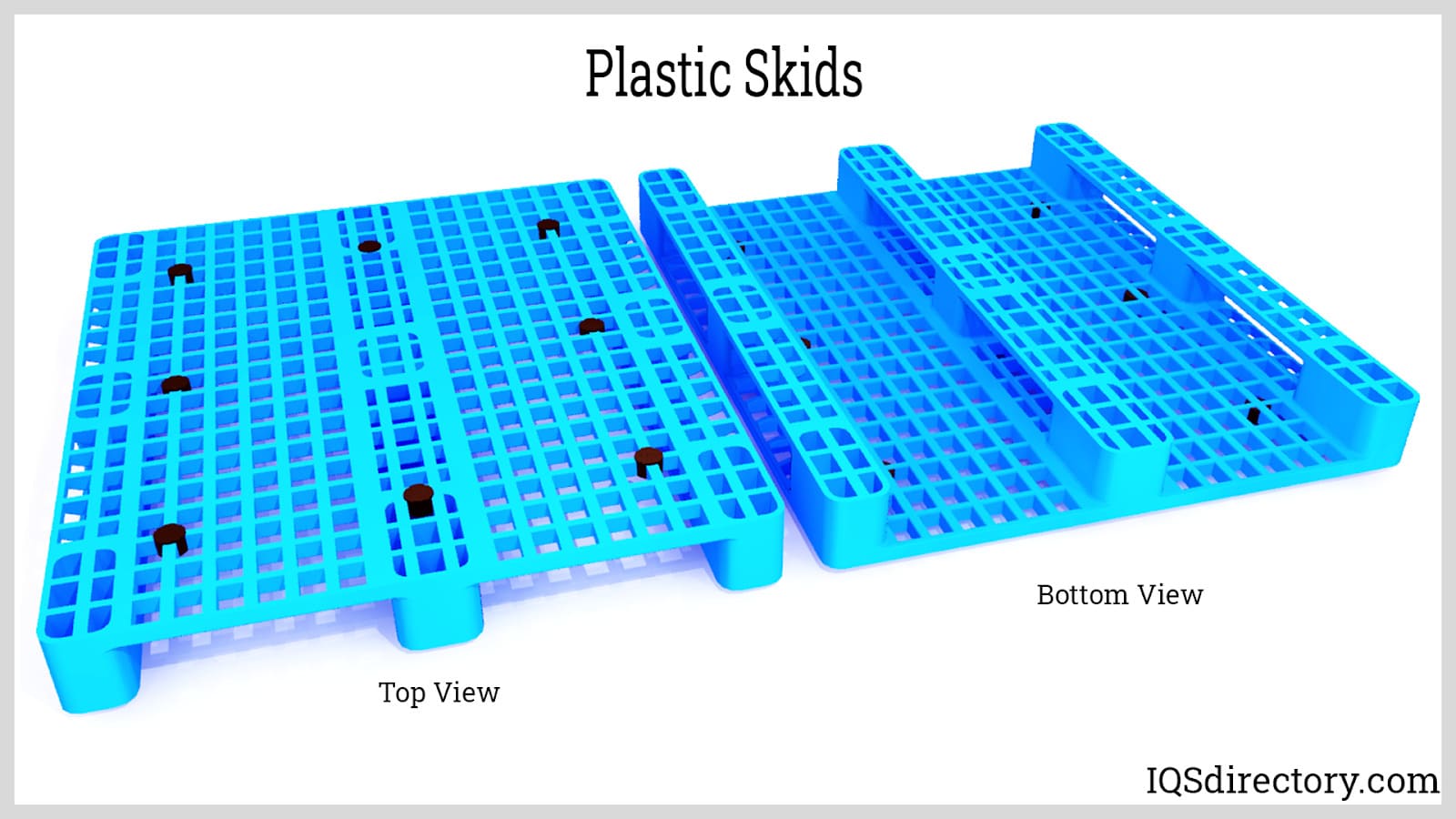
Skids and pallets are often used interchangeably. All pallets with no bottom deck are called skids. Plastic skids are lighter in weight. The absence of its bottom deck increases their mobility and makes them easier to slide.
Open-Deck Plastic Pallets
Open-deck plastic pallets have "ventilations" or mesh-like perforations in the top deck. The openings in the top deck allow easy drainage of wet products being carried. The openings also make the pallets lighter in weight and less expensive.

Closed-Deck Plastic Pallets
Closed-deck (or solid deck) pallets have no openings in their top deck. The top deck may have an anti-slip surface to prevent the sliding of products. Since there are no hard-to-reach areas created from the openings, closed-deck plastic pallets can be easily cleaned and are suitable for small items.

Double-Face Plastic Pallets
Double-face plastic pallets have two solid decks at the top and bottom of the pallet. This is different from the open and closed-deck pallets, which have an open bottom. The load carried by the pallet is also distributed to the bottom deck; this makes the pallet durable. A double-face pallet may be a reversible or non-reversible pallet:
Reversible Pallets
Have identical designs on their top and bottom decks. Products are stackable on either side of the pallet.
Non-Reversible Pallets
Have different top and bottom decks and weigh less than reversible pallets. The top deck has more plastic material to support the product when it is mounted on the pallet.

Double-Wing Plastic Pallets
Double-wing plastic pallets have top and/or bottom deck that extend beyond the surface of the stringers or blocks, creating more space for the products.

Lastly, there are special types of plastic pallets that have useful features to improve convenience and ergonomics when handling them. These special types of pallets are:
Drum Pallets
Drum pallets are used to hold drums and containers filled with oil, chemicals, and other liquid substances during transportation and storage. The drum fits in a customized recessed ring in the top deck built to hold it in place; other drum pallets may not have these recessed rings. Drum pallets may also be designed to have a catch panel to contain spills and leaks and prevent them from spreading further.

Stackable Pallets
Stackable pallets have solid bottom support that gives stability to the products loaded on top of them when they are placed on top of another loaded pallet. They are commonly used in warehouses to stack goods efficiently and to save floor space.

Nestable Pallets
Nestable pallets have hollow legs on their corners to enable stacking of empty pallets when they are not loaded. Unlike stackable pallets, they have an open bottom deck. Nestable pallets free up space during return trips from shipping and in warehouses when these pallets are not in use.

Rackable Pallets
Rackable pallets are injection molded, rotationally molded, or foam molded and are heavy duty pallets with significantly higher load capacity. The different types of rackable pallets are designed to meet the needs of different storage racks.
Full frame rackable pallets have six runners on the bottom to give them greater support and structure. Three runner rackable pallets are designed to be placed on racks such that the runners are perpendicular to the beams of the rack.

Chapter 5: Plastic Pallet Sizes
Generally, pallet sizes of all types are standardized to improve supply chain efficiency. Standardized pallet sizes eliminate the difficulties in the handling and transporting of goods performed by various groups and companies. Several organizations and associations regulate the sizing of shipping pallets. The most popular among them are:
ISO Pallet Sizes Many pallet sizes exist around the world. However, the ISO approves six, which are adopted from commonly used pallet sizes in different regions. This specification is detailed in the ISO Standard 6780:2003 Flat Pallets for Intercontinental Materials Handling – Principal Dimensions and Tolerances.
| Dimensions in mm (W x L) | Dimensions in inches (W x L) | Regions most used in |
|---|---|---|
| 1016 x 1219 | 40 x 48 | North America |
| 1000 x 2000 | 39.37 x 47.24 | Europe, Asia |
| 1165 x 1165 | 45.9 x 45.9 | Australia |
| 1067 x 1067 | 42 x 42 | North America, Europe, Asia |
| 1100 x 1100 | 43.3 x 43.3 | Asia |
| 800 x 1200 | 31.5 x 47.24 | Europe |
Grocery Manufacturers Association (GMA) Pallet Sizes The GMA is the national trade association that helps in the mobilization of packaged consumer goods in the United States of America. GMA lists twelve pallet grades and their dimensions and specifications. Each pallet grade is assigned to a specific industry.
| Dimensions in mm (W x L) | Dimensions in inches (W x L) | Production Rank | Industry |
|---|---|---|---|
| 1016 x 1219 | 40 x 48 | 1 | Grocery, many others |
| 1067 x 1067 | 42 x 42 | 2 | Telecommunications, Paint |
| 1219 x 1219 | 48 x 48 | 3 | Drums |
| 1219 x 1016 | 42 x 42 | 4 | Military, Cement |
| 1219 x 1067 | 48 x 42 | 5 | Chemical, Beverage |
| 1016 x 1016 | 40 x 40 | 6 | Dairy |
| 1219 x 1143 | 48 x 45 | 7 | Automotive |
| 1118 x 1118 | 44 x 44 | 8 | Drums, Chemical |
| 914 x 914 | 36 x 36 | 9 | Beverage |
| 1219 x 914 | 48 x 36 | 10 | Beverage, Shingles, Packaged Paper |
| 889 x 1156 | 35 x 45.5 | Unknown | Military ½ ISO container, fits 36" standard doors |
| 1219 x 508 | 48 x 20 | Unknown | Retail |
European Pallet Union (EPAL) Pallet Sizes EPAL pallet sizes, or EUR pallets, are the standard pallet sizes in Europe. All EUR pallets contain either the EUR logo or initials such as DB and EPAL.
| Euro Pallet Type | Dimensions (W x L x D) | ISO Alternative |
|---|---|---|
| EUR 1 or EUR | 800 mm × 1200 mm, 31.50 in × 47.24 in | ISO 1 |
| EUR 2 | 1200 mm × 1000 mm, 47.24 in × 39.37 in | ISO 2 |
| EUR 3 | 1000 mm × 1200 mm, 39.37 in × 47.24 in | |
| EUR 6 | 800 mm × 600 mm, 31.50 in × 23.62 in | ISO 0, half the size of EUR |
| 600 mm × 400 mm, 23.62 in × 15.75 in | quarter the size of EUR | |
| 400 mm × 300 mm, 15.75 in × 11.81 in | one-eighth the size of EUR |
Some pallet sizes listed by the GMA and the EPAL have counterparts in the ISO-approved pallet sizes.
Before choosing which plastic pallet size to acquire, it is critical to determine the region where it will be utilized. For instance, if a pallet will be used for the shipment of goods to a particular region, the shipping company must use a pallet size that is accepted in the region of the destination. Failure to do so can result in additional costs (due to the need to acquire the correct pallet) and delays in product delivery. In addition to geographical compliance, it is important to consider the application of the plastic pallet before selecting a size.
Plastic Pallet Load Capacity
The load capacity of plastic pallets is dependent on three forms of capacity ratings, which are dynamic, static, and racking. Over the years, it has been assumed that plastic pallets have a lower load capacity than wood pallets. The inaccuracy of such an assumption is due to the many varieties of plastic pallets, each of which has a different load capacity.

Dynamic Load Capacity
Dynamic load capacity is the maximum weight a pallet can hold when in motion.
Static Load Capacity
Static load capacity is the amount of weight a plastic pallet can hold when it is immobile, positioned, and not moving.
Racking Load Capacity
Racking load capacity is the maximum weight a pallet can hold in a racking system, where the center or edges of the pallet are unsupported.
The load capacity of a pallet is based on the assumption that the weight placed on the pallet is evenly distributed. For the best calculations of load capacity, the actual weight load should be lower than the presumed weight capacity.
Factors That Determine the Load Capacity of Plastic Pallets
In most cases, determining the load capacity of a wood pallet is rather straightforward since most wood pallets are made from the same types of wood. The many varieties of plastics makes the determination of a plastic pallet's load capacity more challenging due to the fact that each type of plastic has distinctly different capabilities, properties, and characteristics. Depending various design parameters, plastic pallets have a greater load capacity than wood.
Some of the factors that determine the load capacity of plastic pallets are the types of plastic material and work environment. In regard to plastic material, virgin plastics are stronger and more durable than recycled plastics and are capable of holding more weight. Polypropylene and high density polyethylene have the highest load capacity.
Polypropylene and high density polyethylene are resistant to most chemicals. The main factor that influences the weight capacity of plastic pallets is temperature where extreme temperatures affect their performance and load capacity.
Conclusion
- Plastic pallets are rigid structures that provide stability to goods during transportation or storage. They are one of the important tools in the supply chain and logistics industry.
- Plastic pallets offer many advantages over pallets constructed from other materials. They are lightweight, durable, have a long service life, and are highly recyclable.
- Plastic pallets are inhospitable to pests and other invasive species. They are exempt from ISPM No. 15.
- Plastic pallets are differentiated by their method of supporting the decks, number of entry points, and deck design and configuration. There are some types with additional features to improve the convenience and ergonomics during handling.
- Important characteristics of plastic pallets are high rigidity and impact resistance and resistance to corrosion, moisture, and fires.
- All plastic pallets are manufactured by a molding process. There are several molding techniques to choose from depending on the application and desired characteristics of the pallet.
- All pallets, including plastic pallets, come in standardized sizes as sanctioned by different governing bodies in a particular region. This is to eliminate the difficulties that may arise during handling and transportation.