


Thermal Shock Chambers: Principles, Types and Applications
IQS Directory EditorialUpdated 3 chapters
6 leading suppliers listed with this guide
Browse thermal shock chambers suppliersContents (3 chapters)
This article will take an in-depth look at thermal shocks.
The article will bring more understanding on topics such as:
- Principle of Thermal Shocks
- Types of Thermal Shock Chambers
- Applications and Benefits of Thermal Shock Chambers
- And Much More…

Chapter 1: Understanding the Principles of Thermal Shocks
This chapter delves into the intricacies of thermal shock chambers, with a focus on their design, construction, operational mechanics, and role in environmental stress screening, reliability testing, and product qualification.
Defining a Thermal Shock Chamber
Thermal shock chambers are specialized climate chambers designed to evaluate materials under drastic temperature shifts. They apply intense temperature fluctuations from high to low to uncover defects, fatigue, delamination, cracking, or potential failures, especially crucial in the electronics sector, where early-life failures and quality assurance risks can affect long-term performance.
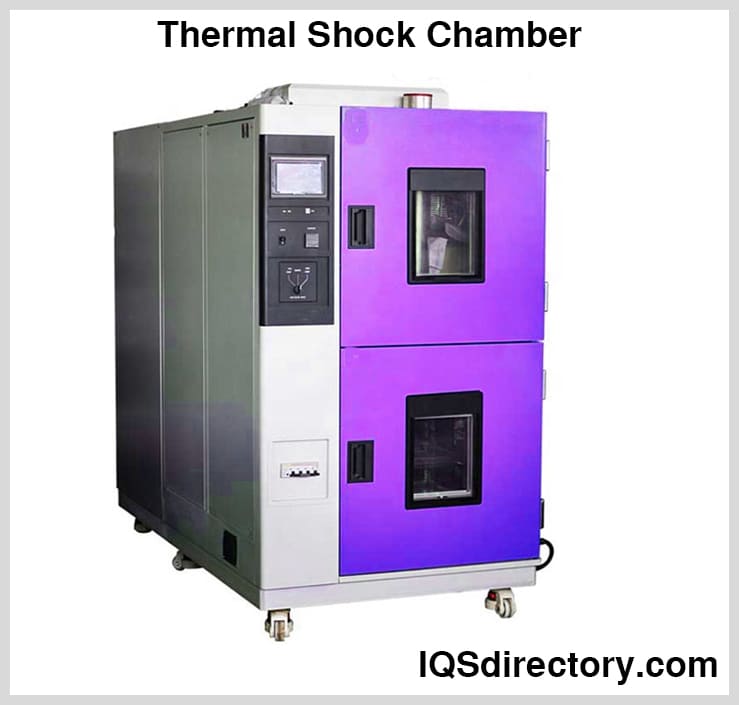
Materials are placed in a mobile basket that swiftly moves between hot and cold compartments, frequently cycling between these zones. This rapid thermal cycling typically completes within 10 seconds and involves multiple test chambers with two or more compartments, allowing manufacturers to simulate thermal stress conditions that occur in real-world use.
The test compartment's temperature and methodologies are governed by specific standards, outlining the cycle to be executed. These tests are meant to assess how the product endures thermal shock, thermal cycling, and repeated temperature changes. During these assessments, materials might experience uneven heating or cooling in certain spots, contingent on their characteristics. This can cause significant volume changes, leading to substantial mechanical stress on the sample, which may result in failure.

The reliability of electronic boards in fields like aeronautics, where dependability is essential, must be evaluated. Electronics may develop faults during intense thermal shocks, particularly if the shock surpasses the material's resistance limit. Materials with different thermal expansion coefficients can lead to issues like pin breakage, solder joint fatigue, weld failures, or component separation.
Implementing a thermal shock chamber is essential to detect potential flaws in products, production processes, or components ahead of manufacturing. It supports design validation, accelerated life testing, and failure analysis, ensuring that all required adjustments are made to optimize product performance, durability, and functionality.
Environmental Chambers
Thermal shock chambers are a subset of environmental chambers. The purpose of an environmental testing chamber is to simulate a variety of physical, climatic, and other demanding conditions that an object might encounter during use. They are utilized to create controlled environments like temperature variations, humidity, altitude, and pressure levels to analyze and test a product's properties, which researchers can rely on.

Environmental testing checks a product's quality by subjecting it to various tests. These evaluations help determine the product's performance and reliability, such as its susceptibility to rust, corrosion, emissions, material degradation, and environmental stress cracking. For buyers comparing chamber options, understanding chamber specifications, test standards, and application requirements is key to selecting the right solution for lab and production use.
Constructing a Thermal Shock Chamber
The construction of thermal shock chambers involves carefully engineered components that support rapid temperature change, airflow stability, insulation efficiency, and long-term durability.
Thermal Shock Cabinet
The cabinet's exterior is composed of galvanized steel, with a control cabinet to the right and refrigeration at the rear. It features two front-facing doors for the low and high-temperature test zones. Insulation provided by ultra-fine polyurethane foam and glass wool ensures excellent thermal efficiency. The base consists of a steel channel structure for robust load capacity, and the cabinet includes support feet and casters for easy mobility.

High Temperature Tank
Situated in the upper section of the chamber, the high-temperature tank requires materials capable of withstanding extreme temperatures without affecting physical properties. Made from 1.0mm 304-grade stainless steel, known for its resistance to temperature extremes, this tank exhibits high durability. Its front serves as a high-temperature test zone, suitable for thermal shock testing or high-temperature evaluations.
Behind the tank is a circulating air duct containing a rotating fan, heating element, and impeller. Air is heated in the duct, and the airflow is directed towards the front test area for cyclic testing. When a product is placed in the low-temperature area, the tank stores heat. On removal from the low-temperature zone, the high-temperature test mode activates quickly, helping maintain consistent test repeatability.
Low Temperature Tank
This tank, located at the bottom of the test chamber, accommodates materials capable of enduring low-temperature conditions. Constructed from 1.0mm thick 304-grade stainless steel, known for its durability and resistance to temperature extremes, it ensures durability and stable low-temperature performance.
The tank's front serves as a test area for both low-temperature and thermal shock testing. A circulation system with an impeller, fan, heating element, regenerator, and evaporator is situated at the back. Air passes through the evaporator, reaching the required low temperature for testing, before circulating through the air duct and test area to complete the test cycle. This controlled cooling process improves temperature uniformity and supports accurate thermal shock performance.
Once materials from the high-temperature zone relocate here, the tank transitions to the cold storage mode. After removing the sample from the high-temperature zone, the tank can switch back quickly to the low-temperature mode.
Thermal Shock Basket
Equipped with two sample racks, the basket allows the sample holder to be adjusted vertically. The basket is made from 304 grade stainless steel square tubing, with sealed plates at the top and bottom to confine the low and high-temperature areas. Sealing is achieved with a silicone belt, ensuring no warping occurs under extreme thermal changes, and maintaining an effective seal.

The basket's motion between temperature zones is cylinder-powered, using a combined cylinder, roller, and wire-rope mechanism for efficient temperature impact testing. This design avoids issues of casing deformation and outperforms traditional motors.
When the basket moves to the high-temperature area, the cylinder's force compresses the tension between the zones, ensuring an effective seal. Conversely, when it moves to the lower-temperature zone, the hanging basket's weight compresses the separator for optimal sealing, directly affecting the test quality.
Materials Utilized in Thermal Shock Chambers
The materials used for thermal shock chambers comprise corrosion-resistant, heat-tolerant, and structurally stable components selected to support repeated thermal cycling and long service life.
Galvanized Steel
This material results from a chemical reaction where molten zinc bonds with steel, creating a protective zinc layer that deters corrosion. The application of this zinc coating is most commonly achieved through hot-dip galvanizing.

The durability of galvanized steel is a critical quality attribute. It can last up to 20 years with severe water exposure and up to 100 years in normal conditions. Water poses the primary challenge for steel, leading to corrosion and rust. Galvanized steel, with its resilient zinc coat, resists rust effectively, and the hot-dip process protects all parts of the thermal shock chamber cabinet, even typically inaccessible areas.
304 Stainless Steel
304 stainless steel, a nickel-chromium austenitic alloy, includes at least 8% nickel and 18% chromium, and a maximum of 0.08% carbon. It boasts exceptional welding and forming abilities, oxidation and corrosion resistance due to the chromium, and remarkable durability, even at low temperatures. These qualities render it perfect for constructing low-temperature tanks within thermal shock chambers.

The Functioning of a Thermal Shock Chamber
The functionality of a thermal shock absorber encompasses precise thermal control, fast transfer timing, and stable operating conditions that support repeatable environmental testing.
Temperature Regulation
Efficient temperature control requires the chamber to both cool and heat properly. Furthermore, it has to ensure consistent temperature distribution across the test compartment.
Tackling specific concerns related to air distribution in the test compartment permits precise regulation of temperature values over time and space within the chamber, ensuring equal exposure of the product's surfaces and parts to temperature conditions. This level of control is essential for qualification testing, product validation, and comparative analysis between test cycles.

Uniform cooling is achieved via a refrigerant gas compression-expansion cycle. Climatic chambers typically fall into two categories based on temperature capacity: single-stage chambers reach -40°C, while double-stage (cascaded) chambers go as low as -70°C.
Hot air circulates through the test compartment, driven by ventilation. PLC programming governs both heating and cooling, with customizable cycle parameters, soak time, dwell time, and transfer time to achieve desired outcomes.
Humidity Control
The chamber must conduct both dehumidification and humidification processes, distributing humidity uniformly within the test area. Direct humidification occurs via an electric humidifier, which introduces steam post-fan for aerosol-free humidification. An algorithm enhances humidifier reliability.
Dehumidification employs a mechanical system based on the cold finger principle, also handling the cooling function. According to this, moisture condenses on a product's cooler surface at increased ambient temperatures. The evaporator, the coldest chamber component, is key in adjusting humidity levels as needed.
Specifications for Thermal Shock Chambers
Specifications include:
- Test Space Volume - Ranging from 60L to 120L, measured in liters.
- Number of Areas – Up to two areas in three types of thermal shock chambers, which could be convertible or fixed.
- Temperature Range Hot Area – Usually between 50°C and 220°C, though may vary.
- Temperature Range Cold Area – Typically ranges from -80°C to -40°C with deviations.
- Test Space Dimensions – Based on model and type, the smallest dimension spans 3.8m to 6m.
- Loading Capacity Maximum – Depending on the model and type, ranges from 20kg to 100kg.
- Refrigeration Unit – It is either air-cooled or water-cooled.
- Rated Power – Depending on the model, ranges from 8kW to 14kW or more.

Considerations When Selecting a Thermal Shock Chamber
Key considerations include chamber performance, application fit, and lifecycle cost, especially for laboratories, OEMs, and production environments evaluating thermal shock chamber price versus capabilities.
Temperature Range of Thermal Shock Chamber
Specification charts display attainable maximum and minimum temperatures for thermal shock chambers. Most manufacturers list maximum temperatures between +150°C and +180°C, with some offering up to +200°C. While maximum temperatures are typically uniform across models, minimum temperatures differ based on the mechanical cooling system, resulting in two main chamber types:
- Single cooling system from -20°C to -40°C
- Dual cooling system from -50°C to -70°C
In some instances, dual refrigeration chambers may not require extremely low temperatures but should facilitate rapid cooling at lower temperatures.

Rate of Temperature Exchange
The temperature exchange rate, expressed in °C or Kelvins per minute, reflects the speed of temperature changes within the testing chamber. This rate varies across models, generally ranging from 6°C/min to 10°C/min.
The exchange rate is influenced by the compressor's cooling capacity and heating elements within the chamber. Stronger compressors lead to faster cooling, whereas more heating elements enhance the heating rate. Buyers should also compare cycle recovery time, temperature uniformity, and programmable control options when evaluating models.
Chamber Volume
When testing products, factors like material, size, weight, and shape must be considered. The sample size helps determine the suitable volume for the chamber, ensuring adequate space. Ideally, the test sample shouldn't exceed one-third of the chamber's volume, while considering the product shape. Air circulation is essential to ensure uniform temperature distribution and minimize variations across the entire surface, maintaining test accuracy.
Sample Weight
The test piece's weight is crucial, as large volumes may impair test performance. Climatic chamber performance metrics, including temperature gradients, are specified with an empty chamber. Thus, a verification check is vital if the test sample’s required temperature exchange rate closely aligns with that of an empty chamber.
Weight also matters since test chamber racks only support samples up to a specified limit. Checking the rating plate for the maximum allowable weight is essential. If a sample surpasses this limit, reinforced brackets are required to manage the additional load.
Performance of Test Samples
Performance aspects for testing samples include application behavior, heat output, and special safety concerns that can affect chamber selection and operating procedures.
Sample Operation During Tests
When connected to a power source, the test sample might generate heat. At times negligible, it can also impact chamber performance, often specified with an empty chamber, overlooking heat dissipation or volume impacts.
Consequently, when active, the chamber accommodates the sample's heat without compromising performance, allowing for accurate test readings and dependable thermal reliability results.
Exceptional Cases
Special scenarios involve test samples emitting explosive, flammable, corrosive, or toxic substances. These situations necessitate careful management, as they might release harmful gases depending on specific temperature ranges. In these cases, users should confirm ventilation requirements, safety interlocks, and material compatibility before purchase or use.
Frequently Asked Questions
What Is the Main Purpose of a Thermal Shock Chamber?
A thermal shock chamber rapidly exposes products to drastic temperature changes, allowing testing of material durability and uncovering defects that could lead to early-life failures, especially in electronics, automotive, and aerospace industries.
Which Types of Thermal Shock Chambers Are Most Suitable for Large Assemblies?
Horizontal mobile thermal shock chambers are ideal for testing large assemblies, battery systems, and industrial or automotive modules due to their efficient thermal transfer and larger capacity.
What Materials Are Commonly Used in Constructing Thermal Shock Chambers?
Thermal shock chambers typically use galvanized steel for exterior cabinets to prevent corrosion, and 304-grade stainless steel for internal high and low-temperature tanks, ensuring durability and resistance to extreme temperatures.
How Is Temperature Rapidly Changed in a Thermal Shock Chamber?
The chamber uses a mobile basket that shifts samples between hot and cold compartments, completing the temperature transition in about 10 seconds, often under programmable PLC control for precise cycling.
How Are Thermal Shock Chambers Maintained for Consistent Performance?
Key maintenance includes regular condenser cleaning, monitoring the refrigerant system, defrost cycles, cleaning circulating fans and blades, and ensuring technicians oversee any relocation to prevent component damage.
What Are Some Common Real-World Applications for Thermal Shock Chambers?
Thermal shock chambers are used in industries like electronics, automotive, aerospace, building materials, pharmaceuticals, and food, for reliability testing, shelf-life studies, design validation, and environmental stress screening.
Chapter 2: What Are the Different Types of Thermal Shock Chambers?
Thermal shock chambers are specialized environmental test chambers designed to rapidly expose products and materials to extreme temperature changes. These chambers play a crucial role in thermal cycling testing, reliability evaluation, and product qualification in industries such as electronics, automotive, aerospace, and materials science. Understanding the different types of thermal shock chambers is essential for selecting the right chamber for your specific temperature shock testing requirements. The main types of thermal shock chambers include:
Three Box Thermal Shock Chambers
Firstly, there is the three-box thermal shock chamber. This type features a low-temperature zone, a high-temperature zone, a test area, a control cabinet, and a cold cabinet. The three-box design requires substantial heating and cooling capacity for consistent thermal cycling. Test products are placed in one of two product carriers, which are moved between the zones to create extreme thermal stress. The cold zone is continuously occupied by at least one sample product carrier.

This design enhances the efficiency of the cabinet’s cooling system, allowing for greater product testing capacity compared to conventional thermal shock chambers. Heaters are installed in the cold area for defrosting, enabling the chamber to function as a temperature cycling cabinet when not in use for thermal shock testing. An advantage of this design is that the test piece remains stationary, eliminating the need for a basket transfer device. This stability is ideal for delicate electronic components and assemblies that must undergo repeated temperature shock cycles without unnecessary movement.
Three-box systems are widely used for qualification of electronics, circuit boards, automotive parts, and aerospace components—especially in applications needing repeatable, high-throughput testing under controlled environmental conditions.
Vertical Lifting Thermal Shock Chambers
Secondly, there is the vertical lift thermal shock chamber. This chamber design includes a low-temperature area, a high-temperature area, a gondola, a control cabinet, and a cold cabinet. A single sample carrier moves between these areas, exposing the sample to significant temperature changes. The vertical lift mechanism minimizes external environmental impacts and enables precise control of test parameters. However, because the chamber's low and high-temperature zones are arranged vertically, a larger test area results in a longer overall chamber height.

As a result, this design can lead to operational inconvenience, making it more suitable for smaller test chambers. The vertical lift chamber is advantageous in that it requires minimal floor space, making it ideal for compact laboratories and R&D environments. It offers quick conversion times and typically requires lower cooling and heating capacities, helping to reduce energy consumption and operating costs.
Vertical lifting thermal shock chambers are especially popular for testing small components, semiconductors, microelectronics, and precision parts to ensure reliability under dynamic thermal stress conditions.
Horizontal Mobile Thermal Shock Chambers
Thirdly, there are horizontal mobile thermal shock chambers. This design features a low-temperature area, a high-temperature area, a mobile basket, a control cabinet, and a cold cabinet, all arranged horizontally. This configuration is suitable for larger test boxes and equipment requiring efficient thermal transfer and uniform exposure.

Among these, the horizontal moving type and the vertical lifting type are both considered two-box thermal shock chambers. Their advantages include reduced heating and cooling requirements, easier temperature setpoint control, and improved test throughput for mid-sized and large devices.
Horizontal chambers are highly recommended for testing larger assemblies, battery systems, industrial components, automotive modules, and telecommunications hardware where larger thermal mass and fast transfer times are critical. Their horizontal configuration makes them ideal for laboratories and testing facilities with more expansive floor plans or where side access is preferred.
Table 1: Differences Among Three Types of Thermal Shock Chambers
| Three-Box | Vertical Lift | Horizontal Mobile | |
|---|---|---|---|
| Characteristics |
Test zone is fixed Low temperature and high temperature converting in one box High throughput, consistent performance for production-level testing |
Down and up two boxes Low-temperature and high-temperature converting through the basket mobilizing up and down Space-efficient, quick cycle conversion, suited for R&D and quality control labs |
Right and left box Low temperature and high temperature converting by mobilizing the basket right and left Suitable for large and medium equipment with wider thermal mass |
| Application | The three-box type is best for high-volume, less complex but rigorous thermal cycling tests on electronics and subassemblies | The vertical lift type is best for precision testing of small parts, sensors, semiconductors, and electronic components | The horizontal mobile type is best for large and medium equipment, automotive modules, battery packs, and industrial hardware |
Choosing the Right Thermal Shock Chamber
When selecting a thermal shock chamber for your application, it's important to consider several factors, including test specimen size, number of samples, desired temperature range, transfer speed, and the type of environmental conditioning required. Advanced models may offer programmable controllers, data logging, humidity control, and integration with other environmental test equipment for comprehensive reliability testing.
Key criteria to evaluate before purchase include:
- Temperature range and transition speed (for simulating rapid temperature changes typical in industry standards such as MIL-STD-883 and IEC 60068)
- Chamber size and sample capacity (to ensure your product fits and your throughput targets are met)
- Automation and control features (such as touchscreen interfaces, programmable cycling, and remote monitoring)
- Maintenance, reliability, and service support from reputable suppliers
Leading thermal shock chamber manufacturers and suppliers often provide custom solutions for unique test scenarios. Engaging with experienced engineers can help optimize your environmental simulation process, ensuring reliable and repeatable results.
Chapter 3:What Are the Applications and Benefits of Thermal Shock Chambers?
This chapter will explore the applications and advantages of thermal shock chambers.
Applications of Thermal Shock Chambers
Thermal shock chambers can be applied to do product testing for the following industry divisions: building materials, automotive, chemicals, timber, electronics, cosmetics, aerospace, plastics, metal, tobacco, pharmaceuticals, textile, packaging industry, bio-tissue engineering, biotechnology, ceramics, veterinary and human medicine, beverage and food, surface technology, microbiology, and insect and plant growth.

In the food, cosmetics, and pharmaceutical industries, environmental and stability chamber monitors are essential for meeting international regulatory standards. Thermal shock chambers are used to control and measure temperature and humidity (such as mean kinetic temperature). Advanced aging studies conducted in these chambers help establish safe shelf-life levels and determine expiration dates.
In microbiology and biology, thermal shock chambers can be used to observe the effects of humidity, temperature, and other conditions on the growth of algae, plants, insects, viruses, and small animals, such as fruit flies (Drosophila). They also facilitate the cultivation of organs, cells, and tissues, as well as insect rearing and plant growth.
The aerospace industry relies on thermal shock chambers to simulate outer-space conditions through thermal vacuum, thermal experiments, and vacuum environments. This allows for testing of space system devices under extreme temperature and climate conditions. Thermal shock chambers are also used to test portable life support systems for astronauts, as well as cryogenic equipment, high-pressure oxygen systems, and other instruments to assess their performance under reduced altitude and pressure conditions.
In the automotive industry, thermal shock chambers are used to simulate extreme conditions such as intense sunlight and hot road surfaces. Vehicle manufacturers routinely perform these tests, often using drive-in chambers located within their own testing facilities. These chambers recreate real-world scenarios, including typical humidity levels, air and road temperatures, as well as extreme conditions, to evaluate vehicle performance. Drive-in car testing chambers are designed to be sealed and resistant to expansion and contraction.
In addition to complex research protocols employed by quarantine bureaus, universities, major manufacturers, and research organizations, thermal shock testing also plays a crucial role in quality control for everyday items such as electrical devices, plastics, batteries, paper products, and metals.
Many consumer products are purchased at face value, often without consideration of the rigorous testing they underwent to become commercially available. This highlights the critical role thermal shock chambers play in manufacturing and refining the performance and features of these products. They have been instrumental in advancing technology to its current state while ensuring the reliability and safety of everyday items.
Benefits of Thermal Shock Chambers
Inspecting products for reliability before they enter manufacturing is crucial to ensure they can withstand various environmental conditions. This approach helps reduce costs associated with warranties and recalls. Additionally, component testing can enhance competitiveness by aiding in the design and construction of more durable products, ensuring that components are ready for consumer use.
Reliability testing also aids customers in meeting supplier fundamentals. The most common forms of environmental testing include temperature and humidity.
Design Validation Testing
The product design is validated to ensure it performs reliably under normal conditions. This validation, typically completed during the R&D phase, ensures that the product can handle the conditions it will encounter throughout its lifespan. During the production phase, the goal is to pass all tests and meet the specifications without failure, resulting in a robust and dependable product.

Product Validation
Product validation ensures that the product meets the regulatory requirements and specifications for which it is intended. This process involves simulations similar to design validation to identify potential gaps or faults in the design or manufacturing phases that could lead to failures.
Environmental Stress Screening
Environmental stress screening applies various stresses, such as thermal cycling, to uncover latent defects in products during customer use. For newly manufactured or repaired components (particularly digital ones), the risk of failure can have significant consequences. Therefore, living products or components must demonstrate greater reliability compared to similar products or components that have not undergone such screening.
Product Lifecycle Testing
Producers of these four types of evaluations simulate real-world conditions, including temperature and humidity. Many products undergo standard testing procedures commonly recognized by organizations such as the IEC, UL, and the military.
Several key industries benefit from using thermal shock chambers for product reliability testing. These markets, including consumer electronics, aerospace, and automotive, conduct tests to ensure the protection and performance of their products. Testing is essential for electronics to ensure they function reliably under various environmental conditions and climates.
Drawbacks of Thermal Shock Chambers
The limitations of the various types of thermal shock chambers are:
Three Box Drawbacks
When temperatures are lowered and raised, significant requirements for preheating and pre-cooling arise. This necessitates substantial energy and power storage, which increases costs accordingly.
Drawbacks of Vertical Lifting
For large and medium-sized test chambers, using basket components can be challenging, and the maximum height of the test box can be cumbersome, making operation difficult.
Horizontal Mobile Drawbacks
The basket drive components require higher resistance to both low and high temperatures, while the mobile rails must meet stricter flatness standards.
Thermal Shock Chamber Maintenance
The condenser should be cleaned every three months. For air-cooled systems, regular overhauls and cleaning are necessary to maintain optimal heat transfer and ventilation performance. For water-cooled systems, it is essential to keep pressure and temperature within the specified range and ensure adequate flow rate. The condenser should also be regularly cleaned and descaled to maintain consistent heat transfer performance.
To maintain low temperatures for extended periods in a thermal shock chamber, the system should be set to 110°C. The chamber door must be opened for 2 hours to allow for defrosting. After each test, the temperature should be adjusted to near ambient levels. Additionally, the chamber should be allowed to cool for about 30 minutes before cutting off the power supply and cleaning the inner walls.
The thermal shock chamber requires regular cleaning to maintain optimal performance. Each sample may vary in cleanliness, and the forced air circulation causes the evaporator to collect numerous small particles, such as dust, which must be cleaned regularly.
The circulating air blade and condenser fan of the low-temperature test chamber must be regularly cleaned and balanced. Similar to the evaporator, these components collect dirt and small particles due to the varying operating environment. Therefore, routine cleaning of the test chamber is essential.

If the thermal shock chamber needs to be relocated, it is essential for the company's technicians to oversee the process to avoid damage. If a customer handles the relocation independently, a qualified electrician must inspect the circuitry to ensure it is safe before powering up the chamber. Failure to do so could result in damage to the test chamber components.
If the thermal shock test chamber has been in use for an extended period, it should be energized for at least 60 minutes every two weeks. Additionally, the operation of related components should be regularly tested to ensure proper functioning.
Conclusion
Thermal shock chambers are used to put the products to serious shocks through the repeated and sudden passage to low temperature areas from high temperatures, to ascertain defective parts or those contingent upon infantile. The purpose of these tests is to inspect the reaction of the product when it is put under a thermal shock. In these instances, the material may heat up or cool with differing speeds in differing parts reliant on the material. If this relates to huge contraction in volume or increase, the sample may suffer huge mechanical stress, thus leading to failure. There are three types of thermal shock chambers which are horizontal mobile, vertical lift, and three-box.