


Stability Chambers: Types, Applications and Considerations
IQS Directory EditorialUpdated 4 chapters
6 leading suppliers listed with this guide
Browse stability chamber suppliersContents (4 chapters)
This article will take an in-depth look at stability chambers.
You will understand more about topics such as:
- What are stability chambers?
- How do stability chambers work?
- Considerations when choosing stability chambers
- Types of stability chambers
- ICH guidelines for using stability chambers
- Standard features of stability chambers
- Areas of application for stability chambers
- Industries that use stability chambers
- And much more...

Chapter 1: How Do They Work, and What Should You Consider When Choosing Them?
Climate-controlled stability chambers and rooms are utilized to provide stable environments for testing and storage. These specialized facilities regulate temperature and humidity to determine how products or their packaging might deteriorate over time, whether in the short term or long term. Certain chambers are designed specifically for shelf life studies, while others focus on stability testing, research, drug evaluation, and biomedical preservation. These environments are commonly used for pharmaceutical and biotech products. It is crucial to assess the stability of products, degradation rates, packaging durability, and container performance to comply with standards for evaluating drugs, drug substances, active pharmaceutical ingredients (APIs), food products, life science materials, medical devices, and biomedical supplies.

The International Conference on Harmonization (ICH) and the US Food and Drug Administration (FDA) set specific guidelines for stability chambers and rooms. The FDA's Q1A standard provides industry guidance for stability testing of new drug ingredients and products, addressing aspects such as stress testing, batch selection, container closure methods, testing frequency, storage conditions, and stability commitments. The Q1A standard's drug product section includes similar subsections, along with additional requirements for photostability testing and labeling. For stability commitment, primary batches tested in stability chambers should follow the same stability methods used in long-term studies.
To evaluate product and package stability, as well as degradation, rapid stability testing is conducted in specialized chambers and rooms. These facilities assess drug stability, vitamin stability, container stability, pharmaceutical product stability, and food stability. Some stability chambers feature redundant heating and cooling systems and are constructed from stainless steel. Others come equipped with sensors and instruments that meet National Institute of Standards and Technology (NIST) standards. Additionally, there are various stability test chambers, cabinets, and enclosures that comply with different criteria, often meeting National Science Foundation (NSF) standards.
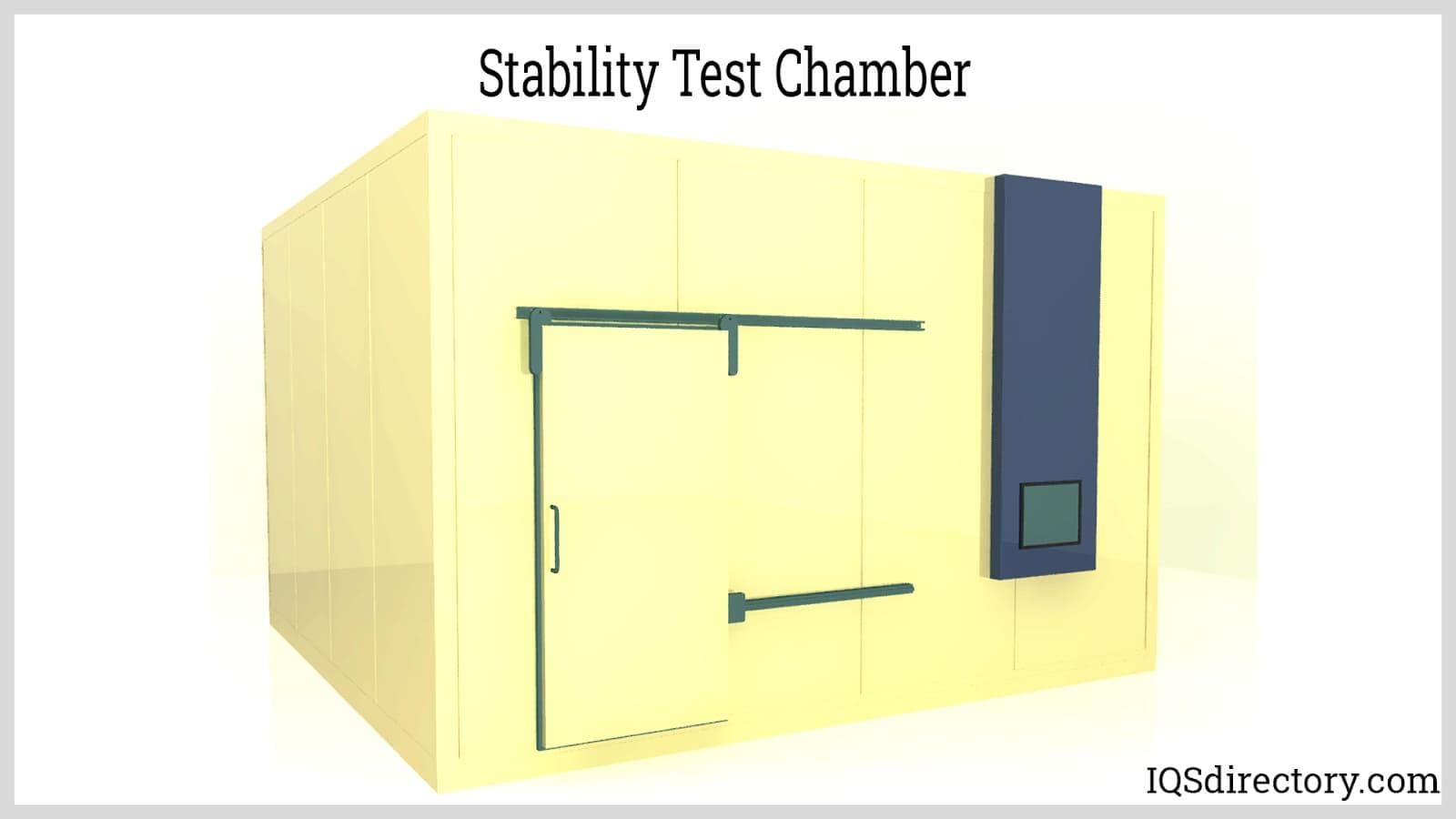
Considerations When Choosing Stability Chambers
Selecting the right test chamber is crucial for ensuring accurate testing of products and materials. When choosing a test chamber, consider the following factors:
- Testing Capabilities: Different test chambers have different capabilities. While some chambers are more adaptable, some are tailored to produce certain circumstances. Make sure the chamber chosen can produce the conditions required.
- Safety Features: Some chambers are equipped with alarms and emergency shut-off valves. These characteristics can aid in preventing harm to materials and products.
- Interfaces: Some chambers are equipped with interfaces that link the chamber to a computer or other electronics. These interfaces can control the chamber remotely or monitor its internal conditions.
- Controls: The chamber's controls are crucial. Make sure the controls on the chamber are simple to operate and comprehend. The user does not want to have to make assumptions about what the chamber is doing.
- Maintenance: Every test chamber needs maintenance to some extent. Make sure to pick a chamber that is simple to keep clean. One does not want to spend hours maintaining the cleanliness and functionality of the chamber.
- Size: The chamber's dimensions are crucial, particularly if the user intends to test bulky goods or materials. Please confirm that the chamber has enough space to meet the requirements.
How Stability Chambers Work
A stability chamber functions on the principle that maintaining a consistent temperature will also keep relative humidity stable. "Relative humidity" refers to the ratio of the amount of moisture in the air to the maximum amount the air can hold. As temperature increases, the air's capacity to hold water rises, leading to a decrease in relative humidity. This interaction ensures that both temperature and humidity are adjusted automatically and simultaneously. Adhering to ICH guidelines, it is crucial that the stability chamber's humidity and temperature do not vary by more than 5% and 2–3 degrees, respectively.
The chamber is designed with proper insulation lining the interior, and both the inner and outer bodies are made from corrosion-resistant stainless steel. It features removable shelves for convenient storage of products and is equipped with sensors to monitor temperature and humidity levels. Controlled airflow within the chamber helps maintain consistent conditions, and horizontal laminar airflow is recommended to ensure even air distribution across all shelves, even when fully loaded. Blowes connected to the system facilitate proper air circulation, while data loggers handle data transmission and reception.
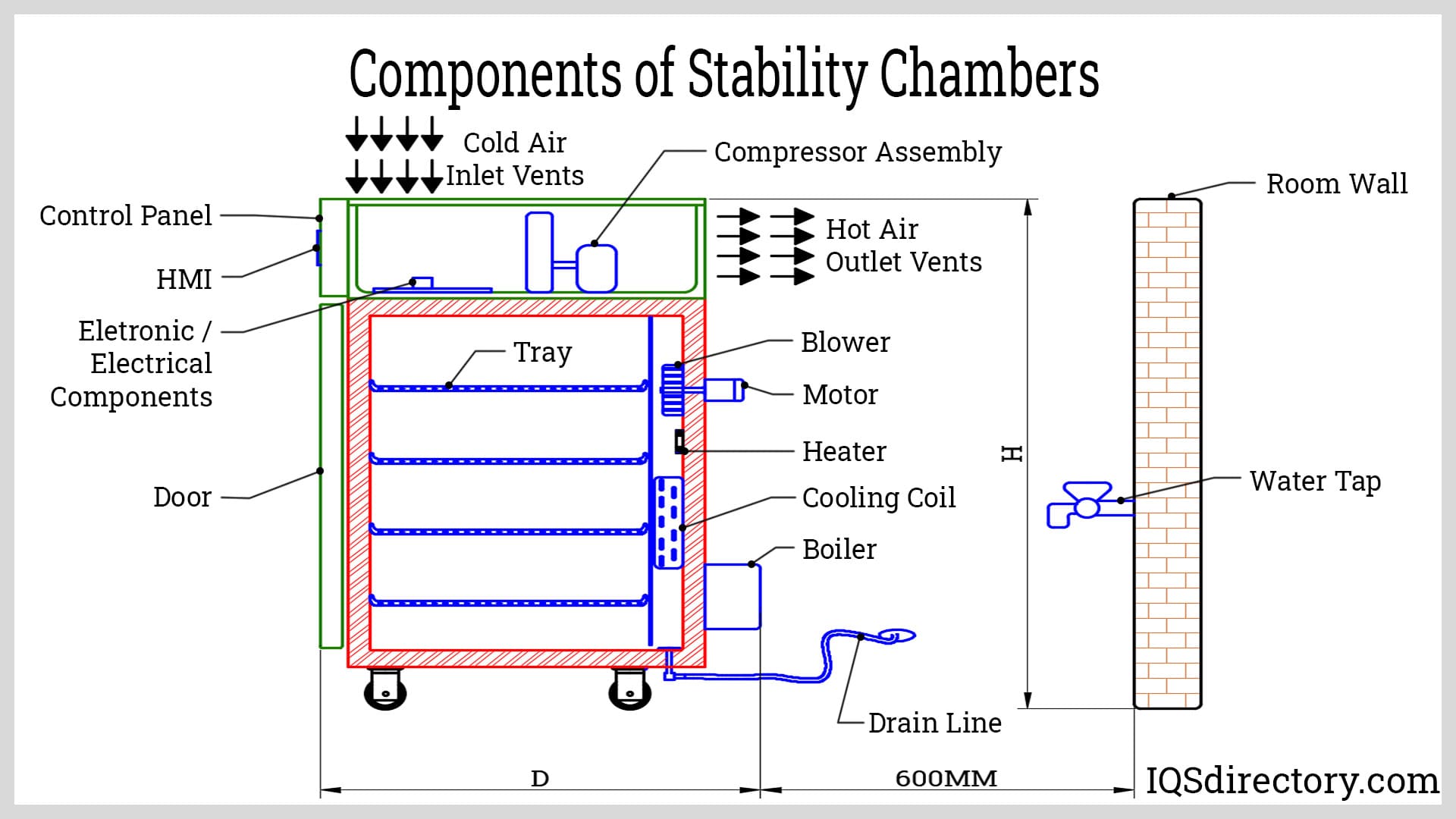
Adding a glass door, which allows one to observe what is going on inside without upsetting the temperature conditions within, is another highly beneficial feature. In addition, ports are accessible for routine exhaust air removal. Climate chambers, sometimes referred to as "environmental chambers," are used expressly to simulate a variety of climatic conditions for the testing of specific items. This type of chamber can supply any necessary environmental condition, whether dry or humid, rainy or corrosive. Their dimensions can range from being as large as a room to so small that they can also be reached from a bench.
Photostability testing is crucial for understanding how a product reacts to exposure from white light and UV radiation. Given the potential hazards associated with UV radiation, which can be harmful to humans upon close exposure, it is essential to use chambers equipped with safety features. Opt for chambers that automatically turn off UV light when the door is opened to enhance safety.
Chapter 2: What Are the Different Types of Stability Chambers?
Reach-In Chambers
Reach-in chambers are compact and practical, making them ideal for situations with fewer samples and where conditions may fluctuate.

Walk-In Chambers
For storing a large number of samples and maintaining consistent storage conditions over extended periods, walk-in chambers are more suitable due to their larger size.
Each storage condition should be maintained in a separate compartment. According to the International Conference on Harmonization (ICH) guidelines, the recommended temperature and humidity levels for pharmaceutical stability studies are as follows:
Long-term studies: 60% ± 5% RH and 25 ± 2°C
Intermediate studies: 65% ± 5% RH and 30 ± 2°C
Accelerated stability studies: 75% ± 5% RH and 40 ± 2°C

For stability data to be reliable, only constant environmental conditions may be used during product exposure. Therefore, automated data logging must be performed at regular intervals to fulfill this requirement, and stability chambers must undergo routine preventive maintenance procedures to ensure trouble-free operation throughout long exposure times.
Temperature-Humidity Chambers
A humidity chamber is a device designed to replicate various environmental conditions, allowing manufacturers to test their products under extreme scenarios. By simulating different humidity levels, producers can observe how their products react and evaluate their performance under challenging conditions. This testing helps assess the longevity and durability of products, providing valuable insights for improving designs and selecting more robust materials. The data gathered enables engineers to refine their designs and make informed decisions about material strength and product resilience.
Depending on the necessary information and the product type, testing can be carried out in a static or dynamic condition using various types of humidity chambers. To ascertain how a specimen will respond to increased moisture conditions over the course of weeks or months, humidity chambers are employed as extended testing chambers. The major elements of a humidity chamber are those that add heat and moisture. Several different techniques can be used to introduce spray or a bath of moisture into the chamber. The same idea holds for heat provided by coils or other heating components.
Humidity chambers are typically designed and built to meet specific environmental requirements set by the client. While there are various types of chambers, they all rely on fundamental elements such as heat and moisture to create the desired conditions. Temperature and humidity are crucial factors affecting product stability, with humidity being the second-most impactful variable. Variations in humidity can cause expansion and contraction, which is why manufacturers test how different humidity levels affect their products. Common methods for generating artificial humidity include steam generators, atomizers, and water baths.

Environmental Chambers
An environmental chamber is a specialized enclosure used to evaluate a product, component, part, or assembly under various conditions. These advanced tools are capable of replicating the environmental factors a product might encounter during its use. The conditions within the chamber are controlled by computer systems that can rapidly adjust or extend the simulation of these conditions.
Testing parameters are preset to deliver precise insights into how a product performs under real-world conditions. The testing conditions are often more rigorous than typical usage scenarios. Environmental chambers provide manufacturers with valuable data for improving their products and offer guidance on enhancing existing products. These state-of-the-art tools help companies develop more durable and higher-quality products.

Photostability Chambers
Under ICH Q1B guidelines for photostability testing of new drug substances and products, pharmaceutical companies are required to assess light sensitivity in photostability chambers. These chambers are available in two main sizes: a compact benchtop model and a larger upright version, both designed to ensure uniform light, temperature, and humidity distribution.

Photostability testing chambers utilize cool white and ultraviolet-A fluorescent lamps with power levels that allow for completion of tests in under 100 hours. Optimal testing conditions include high-quality equipment, up-to-date features, precise sensors, and user-friendly touchscreen controls.
Thermal Shock Test Chambers
One of the key challenges is a product's ability to withstand sudden changes in temperature and environmental conditions. During the design phase, engineers have a general understanding of the conditions the product is expected to endure. Therefore, it is essential to assess and understand the potential situations a product will encounter to accurately gauge its performance and resilience.

To achieve this understanding and ensure product reliability, manufacturers conduct thermal shock testing. This type of testing is among the most severe and demanding. It involves subjecting a specimen to rapid environmental changes and temperature fluctuations of 30°C or more per minute. Such testing is designed for applications that are expected to endure intense and strenuous conditions.
Anechoic Stability Chambers
The term "anechoic" refers to the absence of echoes. An anechoic chamber, typically the size of a room, is lined with materials designed to absorb both electromagnetic and sound waves. These chambers are engineered to minimize external noise and prevent sound waves from reflecting within the chamber.

Sound is absorbed to prevent external noise from affecting test outcomes. Anechoic testing is conducted to measure the noise levels produced by a product. This type of evaluation is commonly applied to items such as automobiles, microwaves, buses, airplanes, and computers.
Vacuum Chambers
A vacuum chamber creates a low-pressure environment by removing air and other gases from an enclosed space. This testing is used to assess how a technology or product performs in a vacuum. It is particularly essential for products in the aerospace and defense sectors.
Vacuum chamber sizes range from small enough to fit on a counter to large enough to fill an entire room. All instruments, gauges, and parts used on airplanes or spacecraft must be tested in a vacuum chamber.

Vibration Chambers
Vibration testing is performed using mechanical or electrodynamic shakers, often in combination with climatic testing. The vibrations can be applied vertically, horizontally, or along multiple axes. This type of testing is commonly included in highly accelerated life tests (HALT) and highly accelerated stress screening (HASS) to evaluate a new product's performance under extreme conditions. Additionally, vibration testing is frequently combined with environmental tests to assess how well a product withstands typical operational stresses.

Salt Spray Chambers
A salt spray chamber creates an extremely corrosive atmosphere to investigate the effects of prolonged exposure to salt-soaked materials. The temperature in a salt spray chamber must be stable to maintain the salt spray concentration. The ideal operating temperature for salt spray chambers is 35 °C. Testing with salt spray is done to determine how well coatings and finishes are held up under corrosive circumstances.

Chapter 3: What Are the ICH Guidelines and Standard Features for Stability Chambers?
ICH Guidelines for Stability Chambers
The International Council for Harmonisation of Technical Requirements for Pharmaceuticals for Human Use sets the standards for stability testing, which are followed by regulatory agencies worldwide, including the Food & Drug Administration (FDA), the European Commission (EC), and Health Canada. These guidelines are detailed in six ICH documents, from Q1A to Q1F. According to these stringent standards, humidity in stability chambers must not deviate by more than 5%, and temperature fluctuations should not exceed 2 or 3°C, depending on the specific requirements. Therefore, stability chambers used for this testing must record minimal temperature and humidity deviations over extended periods.
Additionally, maintaining a consistent temperature within the unit is crucial. Traditional stability chambers with non-directed airflow systems use a top-mounted fan to circulate air downward through wire shelves. When shelves are fully stocked, this airflow can be obstructed, leading to uneven temperatures within the chamber. Such inconsistencies can compromise the stability conditions and the accuracy of the stability testing process.
In contrast, stability chambers equipped with a horizontal laminar airflow system feature a positive pressure feed plenum on one side and a negative pressure return plenum on the opposite side. This setup creates a horizontal airflow across the surface of each shelf, ensuring optimal temperature uniformity throughout the chamber, even when fully stocked. By maintaining consistent temperature distribution, horizontal laminar airflow systems not only enhance the reliability of stability testing but also increase the chamber’s capacity, allowing for larger sample batches to be tested.
Standard Features for Stability Chambers
- Stable-state testing is centered on temperature reliability that has been fine-tuned. Time is lost if one can't be certain that the humidity and temperature will remain constant throughout a test for shelf life or durability. Effective chambers should have open ceramic-core nichrome heaters in their heating systems to maintain temperature control at 0.5°C.
- A temperature range of -20°C to 94°C (-4°F to 201°F) should be possible inside the chamber for testing purposes.
- The acceptable humidity range should be 20% to 95% RH (relative humidity). Some chambers have optional features, like a high humidity sensor that increases the humidity range to 98% RH. In contrast, one can install a desiccant air dryer to assist the chamber in achieving humidity levels as low as 5% RH.
- The cooling system is normally a mechanical, single-stage, self-contained, small refrigeration system in a stability chamber.
- Remote monitoring is one of the test chambers' more inventive, recent improvements. When a product or DUT is undergoing stability testing, it must soak for several hours, which can take a while if someone is required to keep an eye on it. As an alternative, remote monitoring technology allows engineers to leave the testing facility while keeping tabs on the test results. Testing can be stopped if a mistake is found.
- stainless steel and powder-coated mild steel or stainless steel on the inside and outside of a double-walled modular construction with 3" thick PUF insulation
- interior lighting
- inside a lockable gasketed full-length observation glass door
- a positive sealing handle and hinges with a lock and key arrangement
- heavy-duty door latches and hinges to maintain a tight seal
- stainless steel racks and trays with a 65 mm port hole and rubber seal for sensors to be inserted for validation
- interior lighting for the workspace
- nichrome wire air heaters in a U form
- humidity system with an arrangement for the water level in the reservoir tank and an evaporation tray
- compressor with a modern by-pass system for continuous compressor operation
- PLC-based control system with 7" color touchscreen HMI and CFC Free R 134 A/R 404 (Eco Friendly) refrigerant
- When temperature overshoots and undershoots, a safety controller sensor will cut off the supply and sound an audible and visual alarm.
- web-based internet surveillance
- I.Q., OQ, P.Q., documents, operations, and maintenance manuals fully furnished
- operates at 23 volts, one phase, 50 Hz
- full alarm and safety system
- compliance with 21 CFR Part 11 data management software that is window-based
- standby humidification and refrigeration systems (except for 90 ltrs.)
- Sensors, a printer interface, and a data storage facility are all included in the 4-point temperature and 4-point humidity scanner.
- system of mobile alerts
- security alarm system door access system
Chapter 4: What Are the Applications of Stability Chambers, and Which Industries Use Them?
Applications of Stability Chambers
Stability chambers serve a variety of critical functions across different industries. They are crucial for ensuring the quality and reliability of a product during its development and manufacturing stages. These chambers are used in fields such as pharmaceuticals, food technology, biomedical storage, and life sciences for research and product testing. For instance, a product prototype with potential defects is evaluated in a stability chamber before it goes into full-scale production.Humidity capsules, which regulate moisture levels within the chamber, are used during these tests. Before starting the test, these capsules are activated and placed inside the chamber. The test material is then introduced into the compartment, and the chamber is sealed with a specialized sensor cap. This cap collects and transmits vital data for analyzing the test material. Stability chambers come in various sizes and functionalities; some are basic, while others are multifunctional. Companies considering the purchase of a stability chamber should carefully evaluate their specific needs and available space to select the most suitable model.
- Temperature testing includes thermal shock testing. A product is exposed to different temperature gradients throughout its lifetime. In typical temperature testing, the product is exposed to one temperature for a protracted period. Thermal shock testing promptly and without hesitation transitions the product through various temperatures. The test's objectives are to look into potential expansion and contraction issues and pinpoint the product's failure point. Environmental testing of this kind is seen to be the most rigorous.
- The second factor affecting how quickly products deteriorate is humidity—all types of moisture cause serious harm to materials, substances, and goods. Since humidity contains both moisture and temperature, this is especially true of humidity.
- Determine the precise lifespan of a product with an accelerated aging test. The product is stressed in an accelerated aging test to simulate the aging process. Before environmental chambers were invented, a sample was used for extended periods to examine the aging process. Test chambers can expedite the procedure and provide information and predictions about the product's lifespan.
- How a sample responds to high pressure and vacuum conditions is the goal of altitude testing. When doing an altitude test in a typical environmental chamber, temperatures can vary from -65° C to 150° C at elevations between -200 ft and over 100,000 ft. Equipment used in space missions or air transport undergoes altitude testing.
- Another test used to assess how sunshine affects a product is UV weathering. Long-term solar radiation exposure can have various negative impacts, including the fading of garments, the weakening of polymers, and the cracking of cement. However, electromagnetic radiation, made up of UV waves and invisible and emitted by the sun, harms products.
- Corrosion testing or salt spraying may be used to determine how corrosion will impact a product's performance. Samples are subjected to a highly concentrated saline environment for a predefined period during this test. Coatings, paints, and other materials that may be exposed to corrosive environments are among the products examined. When the timing of the application of the saline solution is rapidly advanced, salt spray testing can also be a part of the accelerated aging process.
Industries That Use Stability Chambers
- Pharmaceutical Industry: The pharmaceutical sector is concerned with creating, investigating, and promoting medications that may benefit medical research. Since many people in various regions of the world will need these medications, guaranteeing proper drug production becomes a top issue. Individuals who take poorly made medicines may experience side effects and dangerous symptoms. Drug stability testing under various circumstances is therefore crucial. In this field, stability chambers are employed for this purpose. They support the testing of medications under various temperature, humidity, pH, radiation, and other conditions. They also determine how long a product will continue to function effectively. Stability chamber testing is also used to confirm the integrity of the product's packaging. The testing prevents a significant amount of time and loss by highlighting medication errors that could make them harmful in specific environmental situations. This testing also establishes a drug's expiration date. The shelf life of a drug is the length of time from the date of manufacturing that the medication will stay effective when stored under specific conditions. This number must be determined using stability chambers and displayed on the package for the consumer's knowledge. These chambers store medicine samples under both stable conditions and uniform temperatures, and those that are impossible to get naturally. To ensure accurate drug testing, the pharmaceutical business should take regular chamber maintenance and inspection seriously.
- Electrical Industry: Determining the humid conditions that cause component failure is crucial in developing electrical components and full systems. The humidity ranges from 60% to 85% in the test conditions. The testing serves multiple purposes, including predicting how products will function in difficult operational circumstances and during storage and delivery. It is not necessary to check humidity at low temperatures while testing devices. Humidity affects a product's performance as soon as the temperature exceeds 50°C. In addition, humidity needs to be measured to prevent condensation on electronic devices.
- Military: Products for the military must be tested in the wind, rain, dust, and extremely hot temperatures.

Stability chambers can replicate high-moisture environments to assess the durability of weapons or components under challenging conditions. In the U.S., military and defense standards are denoted by designations such as MIL-STD, MIL-SPEC, or MilSpecs. Adhering to these standards ensures that military equipment meets required criteria for reliability, compatibility, and interoperability. These standards define the optimal heat-to-moisture ratio for components, mechanisms, or assemblies intended for specific humidity conditions. Different testing scenarios are applied based on the defined environment. MIL-STD 810 G is the particular standard that addresses humidity testing for materials used in warm or humid conditions.
- Battery Manufacturers: It is crucial to test a battery’s ability to withstand the elements to ensure they perform at a high level. The durability, susceptibility to corrosion, and overall performance of batteries are crucial aspects that must be considered. Batteries are quickly cycled through a variety of environmental conditions in stability chambers. Special fixtures in stability chambers for batteries enable testing more than 50 batteries in a single testing cycle. Researchers can compile a wide range of data on the many designs by testing various battery combinations in a single test cycle. Battery testing chambers require additional electrical wires to be connected to the batteries during testing, in contrast to other stability chambers. Shelves or unique fixtures are also provided to enable the testing of several batteries. A stability chamber must be checked for unique battery fixtures and wires to confirm that it can test batteries.
- Plastics Industry: Plastics are susceptible to discoloration, surface crazing, chalking, and brittleness from moisture and humidity exposure. These elements must be tested since they may cause a plastic product to malfunction. The amount of damp heat cycles applied to plastic depends on the product's durability needs. For their plastic parts, automotive manufacturers have a set of norms and specifications. Stability chambers are designed to imitate those situations to study how the product's components behave under adverse circumstances. For automotive applications, the degree of testing depends on where the component is positioned in the car.