


EDM Machining: Types, Applications and Advantages
IQS Directory EditorialUpdated 5 chapters
7 leading suppliers listed with this guide
Browse EDM machining suppliersContents (5 chapters)
This article will take an in-depth look at EDM Machining.
The article will bring more understanding on topics such as:
- Operating Principle of EDM Machining
- Components of EDM Machining and their Functions
- Types of EDM Machines
- Applications of EDM Machining
- Advantages and Disadvantages of EDM Machining
- And Much More…

Chapter 1: Operating Principles of EDM Machining
This chapter delves into EDM machining and its core principles of operation, including how electrical discharge machining supports precision machining, complex part production, and high-accuracy metal removal in modern manufacturing.
Defining EDM Machining
Electrical Discharge Machining (EDM) is a non-traditional machining process utilized to eliminate material from a workpiece by employing a succession of rapid electrical discharges between electrodes within a dielectric fluid. This method is particularly effective for producing parts that are challenging or impractical to machine with conventional techniques, as it depends on electrical forces instead of mechanical ones. Because there is no direct contact between the tool and the workpiece, EDM is often preferred for intricate geometries, deep cavities, tight tolerances, and components that require exceptional surface finish.
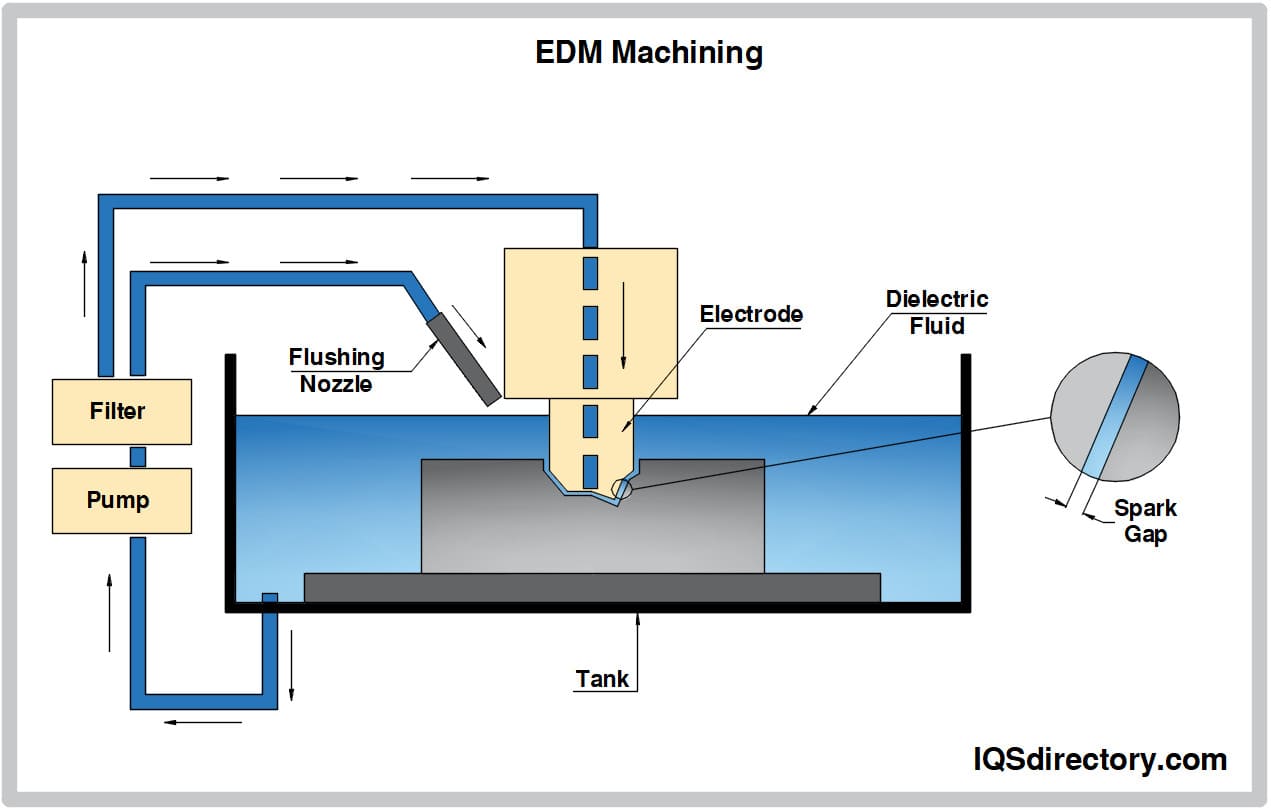
The precise nature of EDM makes it ideal for creating complex and detailed shapes, even from hard metals like titanium, hardened steel, carbide, and other difficult-to-machine conductive materials. To work properly, the materials involved in EDM must conduct electricity. For buyers and engineers evaluating machining methods, this conductivity requirement is a key factor when comparing EDM against milling, drilling, or grinding for tool and die making, mold fabrication, and aerospace components.
In an EDM machine, the workpiece electrode (anode) is linked to the positive terminal of a DC power source, while the tool electrode (cathode) attaches to the negative terminal. Both electrodes exist submerged in a dielectric fluid with a spark gap between them. Upon electrical discharge, intense electrothermal heat occurs at the spark gap, melting and vaporizing segments of the workpiece surface through spark erosion. This controlled erosion allows manufacturers to machine hardened parts without producing the cutting forces, burrs, or tool deflection associated with conventional metalworking.
The Working Principles of EDM Machining
Although the foundational principles of EDM machining are consistent, wire EDM and sinker EDM methods each have unique distinctions. Both methods employ anodes and cathodes to shape the workpiece according to specific parameters. However, the application of electrical current in shaping the workpiece varies distinctly between these techniques, which is why process selection depends on part geometry, production volume, material hardness, and required dimensional accuracy.
Sinker EDM machining involves establishing an electrical potential difference between the conductive tool and workpiece, submerged in a dielectric fluid like hydrocarbon oil or deionized water. The dielectric fluid satisfies the spark gap between the tool and workpiece, with the electric field relying on the potential difference and spark gap width. In many applications, sinker EDM is chosen for blind cavities, sharp internal corners, intricate molds, and dies where conventional machining cannot easily reach.
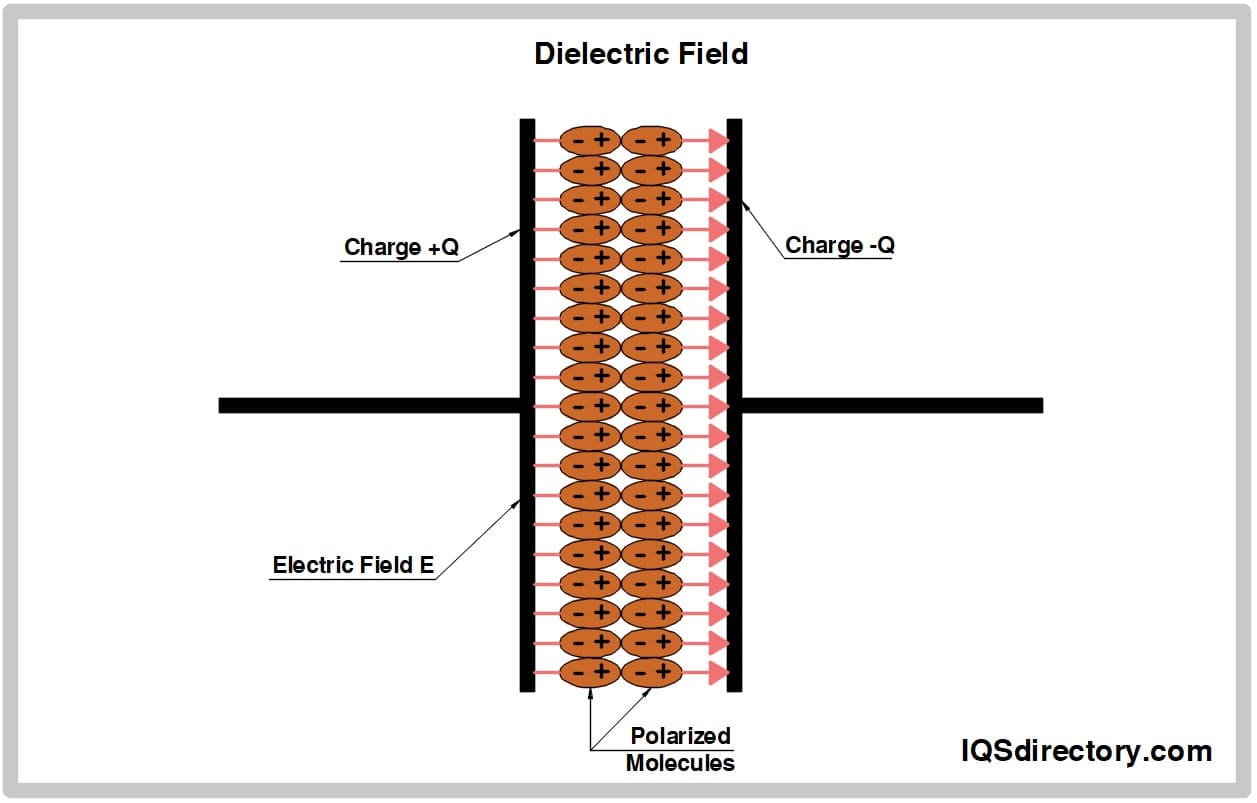
In sinker EDM, the tool connects to the negative terminal, and the work material connects to the positive terminal. The application of the electric field results in electrostatic forces on the tool's free electrons. If the tool exhibits a lower work function or bonding energy, electron emission, or cold emission, occurs from the tool due to its negative terminal connection.
Within the dielectric medium, these cold-emitted electrons accelerate toward the work material. As their velocity and energy increase, they collide with dielectric molecules, ionizing them, based on the dielectric’s work function or ionization energy and the electron's energy. The accelerated electrons continuously generate positive ions and additional electrons through these interactions.
This ongoing process intensifies electron and ion concentration within the dielectric fluid between the tool and work material at the spark gap, forming a “plasma.” The plasma channel’s minimal electrical resistance enables significant electron flux from the tool to the work material and rapid ion movement from the work material to the tool, known as an avalanche. This controlled plasma discharge is what gives EDM its ability to achieve fine detailing, precise repeatability, and low mechanical stress on delicate workpieces.
This swift movement of electrons and ions generates spark heat within the range of 8,000°C to 12,000°C. The fast-traveling electrons impact the work material, while ions strike the tool. These collisions on the workpiece's surface convert into thermal energy or heat flux, rapidly removing material in localized micro-craters and producing the characteristic erosion pattern associated with EDM machining.

The EDM wire machining process, an alternative to sinker EDM, functions similarly to a band saw, utilizing a wire for cutting. This wire, made from copper or brass, conducts a high voltage electrical discharge, enabling it to cut through the workpiece's thickness. Wire EDM is widely used for contour cutting, punch and die profiles, extrusion dies, and parts requiring narrow kerf widths and excellent edge quality.
In wire EDM, the wire generates sparks in deionized water where conductivity is meticulously controlled. This water simultaneously cools the material and removes excess material. The process ensures clean dielectric fluid is constantly introduced to flush away waste, stabilize the spark gap, and support consistent cutting speed, surface finish, and dimensional control throughout the machining cycle.

During the EDM process, extreme temperatures rapidly remove surplus material from the workpiece through methods such as vaporization, melting, or spark erosion. Some molten metal is displaced, and when the electric potential ceases, the plasma channel collapses, generating pressure waves that expel molten material and form a crater at the spark site. This repeated pulse-discharge cycle is carefully controlled to balance cutting speed, accuracy, and surface integrity.
Material removal occurs via shock waves formed from the collapsing plasma channels when the electric potential ceases, switching the work material to positive and the tool to negative. Electrons impacting the workpiece create craters through heating, melting, and material removal, while positive ions impact the tool, causing wear. Because electrode wear can affect precision, manufacturers often consider wear rate, flushing performance, and dielectric quality when selecting EDM tooling and process settings.
Electrical discharge machining requires significant power, necessitating generators capable of providing the necessary power for effective and successful operations. These generators are selected based on their capability to meet the specific power demands of the process, including pulse frequency, discharge energy, and machining stability. For industrial users comparing EDM equipment, generator performance, automation options, and maintenance requirements can all influence total operating cost and production efficiency.
Chapter 2: What Are The Components of EDM Machining and Their Functions
Electrical Discharge Machining (EDM) is a highly advanced manufacturing process that uses carefully controlled electrical discharges, or sparks, to remove metal from electrically conductive materials. There are three primary categories of EDM machines: sinker EDM, wire EDM, and hole drilling EDM, each of which employs the same fundamental system components and relies on the principles of spark erosion technology. Understanding the components of EDM machining and their functions is essential for precision engineering, optimal machining performance, and achieving desirable surface integrity in complex industrial applications.

DC Power Generator
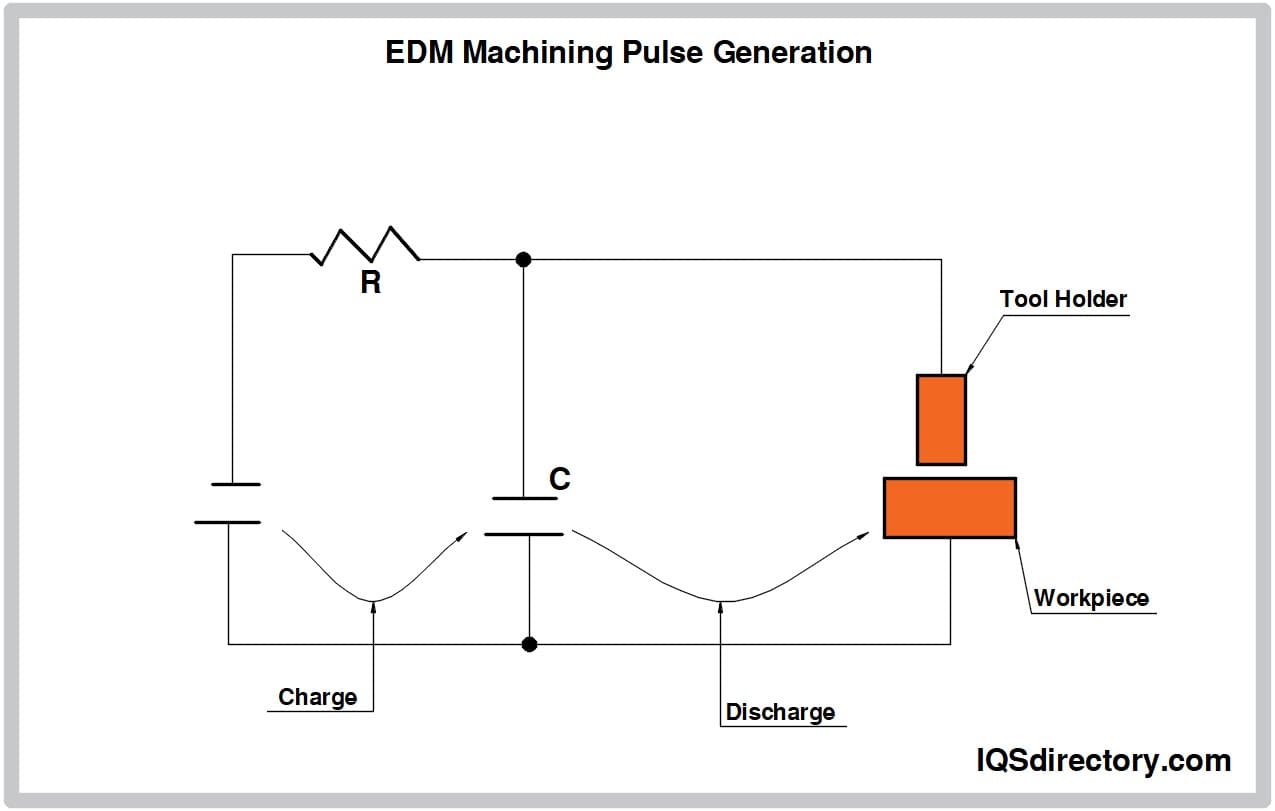
A DC power generator serves as the power supply for the EDM machining process, providing the consistent electrical energy required for spark erosion. In EDM, the negative terminal is typically connected to the tool electrode, while the positive terminal is attached to the workpiece. These precise energy discharges enable controlled material removal. Various types of EDM power generators are used based on application needs, including:
- Resistance-capacitance type (RC type) relaxation generator
- Rotary impulse type generator
- Electronic pulse generator
- Hybrid EDM generator

Workpiece Component
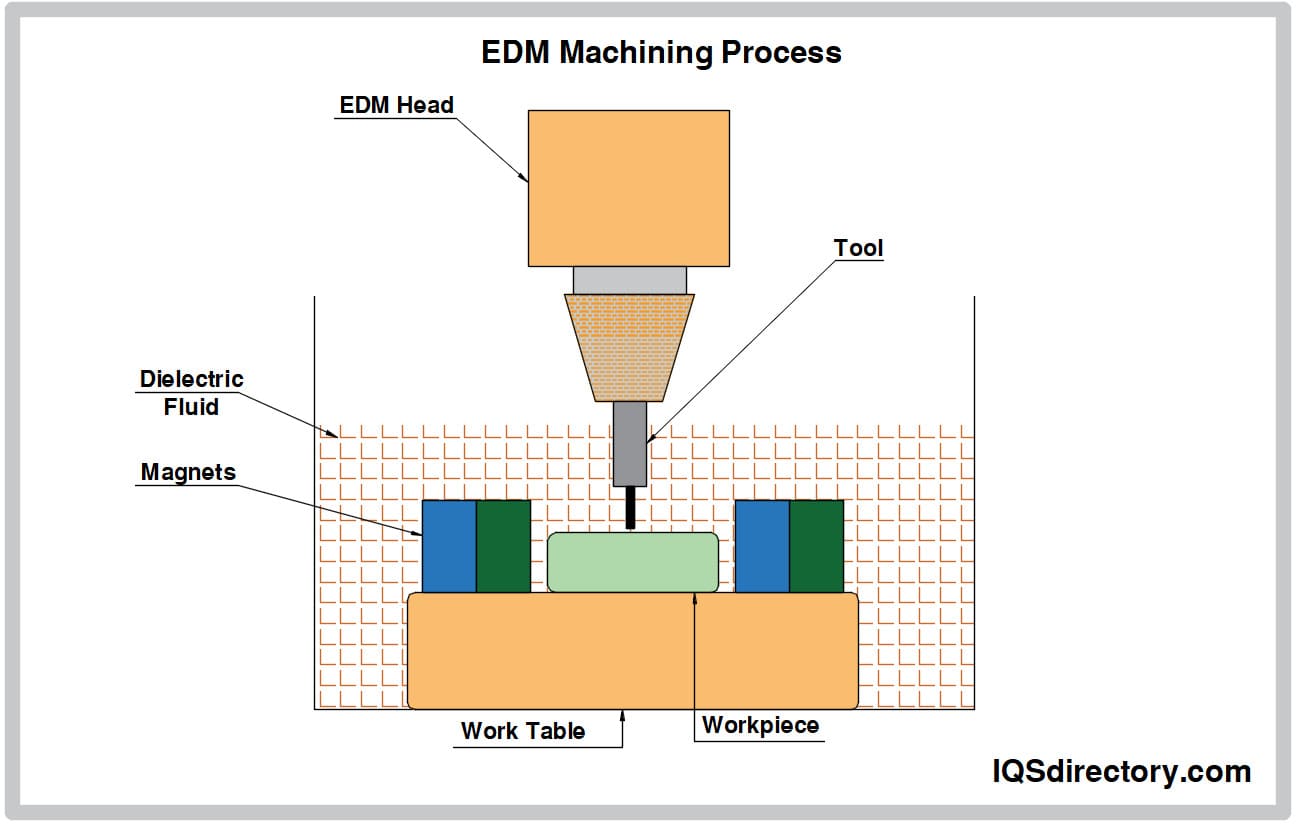
The workpiece is the component subjected to machining, often made of hard materials like tool steel, titanium, or carbide, that are difficult to shape with conventional methods. It is securely fixed within the dielectric container using a precision fixture and connected to the positive terminal of the power supply, ensuring accuracy and repeatability during machining operations.

Fixture Component
The fixture, a critical part of the EDM setup, is designed to hold the workpiece firmly in the dielectric container, maintaining alignment and stability under machining conditions. Proper fixturing minimizes vibration and positional errors, which is crucial for achieving high-precision tolerances and complex geometries in electrical discharge machining.

Dielectric Fluid
The dielectric fluid is a key component in EDM, directly influencing machining accuracy, surface finish, and tool wear.
The Dielectric Medium
The dielectric medium, typically low-viscosity hydrocarbon oil or deionized water, plays a crucial role in the EDM machining process. This insulating fluid fills the spark gap, preventing premature discharges while maintaining a controlled environment for spark generation. During pulse discharge, the dielectric fluid ionizes, forming a conductive bridge that allows the spark to jump between the tool and workpiece. When the electrode-workpiece gap narrows to approximately 0.03 mm and voltage climbs to about 7V, the dielectric breakdown initiates the spark.

The spark discharge produces localized temperatures up to 10,000°C and extremely high pressure, resulting in rapid vaporization and melting of the workpiece material at a microscopic scale. The dielectric fluid also quenches the molten material, facilitating the removal of eroded particles and ensuring a clean spark gap. Effective dielectric performance is critical to prevent secondary discharges, avoid arcing, and enhance both efficiency and surface finish quality.
Functions of the Dielectric Fluid
The dielectric fluid's essential functions in EDM machining include:
- Maintaining high electrical strength to insulate the spark gap until breakdown voltage is achieved
- Allowing for rapid electrical breakdown to facilitate efficient sparking at the critical threshold
- Quickly deionizing and quenching the spark gap to prevent continuous arcing and ensure process control
- Flushing away microscopic metal debris (slag) created during the erosion process
- Providing efficient cooling for both tool electrodes and the workpiece, which improves dimensional accuracy and reduces thermal distortion
Desirable Properties of Dielectric Fluid
For optimal EDM machining performance, the dielectric fluid must possess several important properties:
- High dielectric strength and electrical insulation ability
- High fire and flash points to minimize fire hazards in industrial EDM environments
- Excellent wetting properties and low viscosity for superior flushing action
- Chemical inertness to prevent corrosion or contamination of machined parts
- Non-toxicity for safer handling and workplace health compliance
- Low decomposition rates for extended fluid life and cost efficiency
- Low operational cost and easy recyclability
- Good quenching and cooling capabilities
Common Dielectric Fluids
The most widely used EDM dielectric fluids include hydrocarbon and mineral oils due to their low viscosity and consistent insulating properties. Alternatives such as paraffin oil, lubricating oil, transformer oil, and, especially for wire EDM applications, deionized or distilled water, are chosen based on cutting speed, surface finish needs, and environmental requirements. Deionized water offers higher material removal rates and is preferable in high-speed wire EDM for complex, high-precision parts such as molds, dies, and aerospace components.
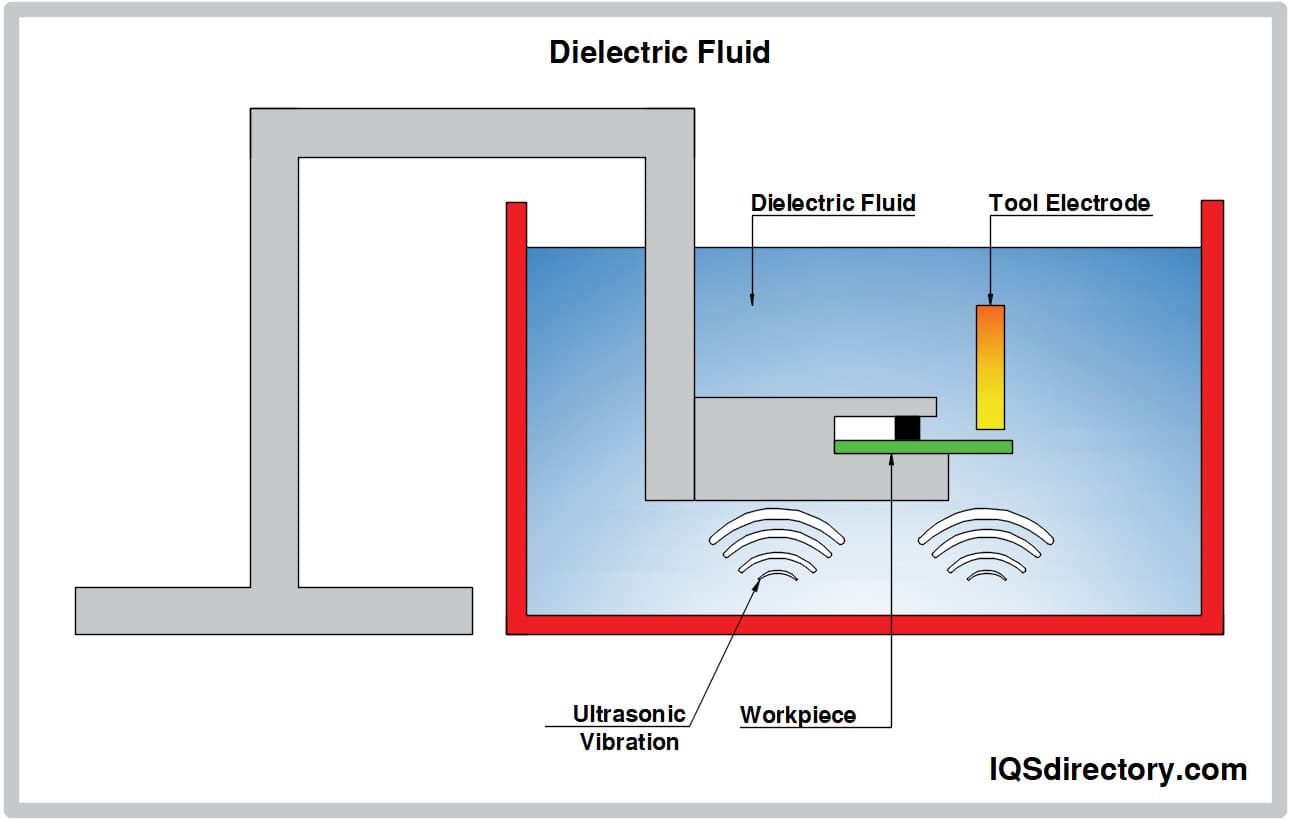
Each dielectric fluid type impacts performance factors differently. For example, distilled water supports moderate MRR with low electrode wear, while specialized oils like tetraethylene glycol can achieve high removal rates but result in increased tool wear. Proper filtration and regular maintenance of the dielectric system are vital to prevent sludge buildup, maintain consistent insulation properties, and prolong fluid life, all of which contribute to optimizing the electrical discharge machining process.
Flushing of Dielectric
Flushing is the method of circulating dielectric fluid between the workpiece and the tool electrode in EDM machining. Effective flushing removes eroded metallic particles, carbon, and breakdown byproducts, maintaining cleanliness and electrical insulation within the spark gap. Proper flushing is essential to avoid short circuits, arcing, and surface defects, directly impacting machining quality, electrode longevity, and surface finish.
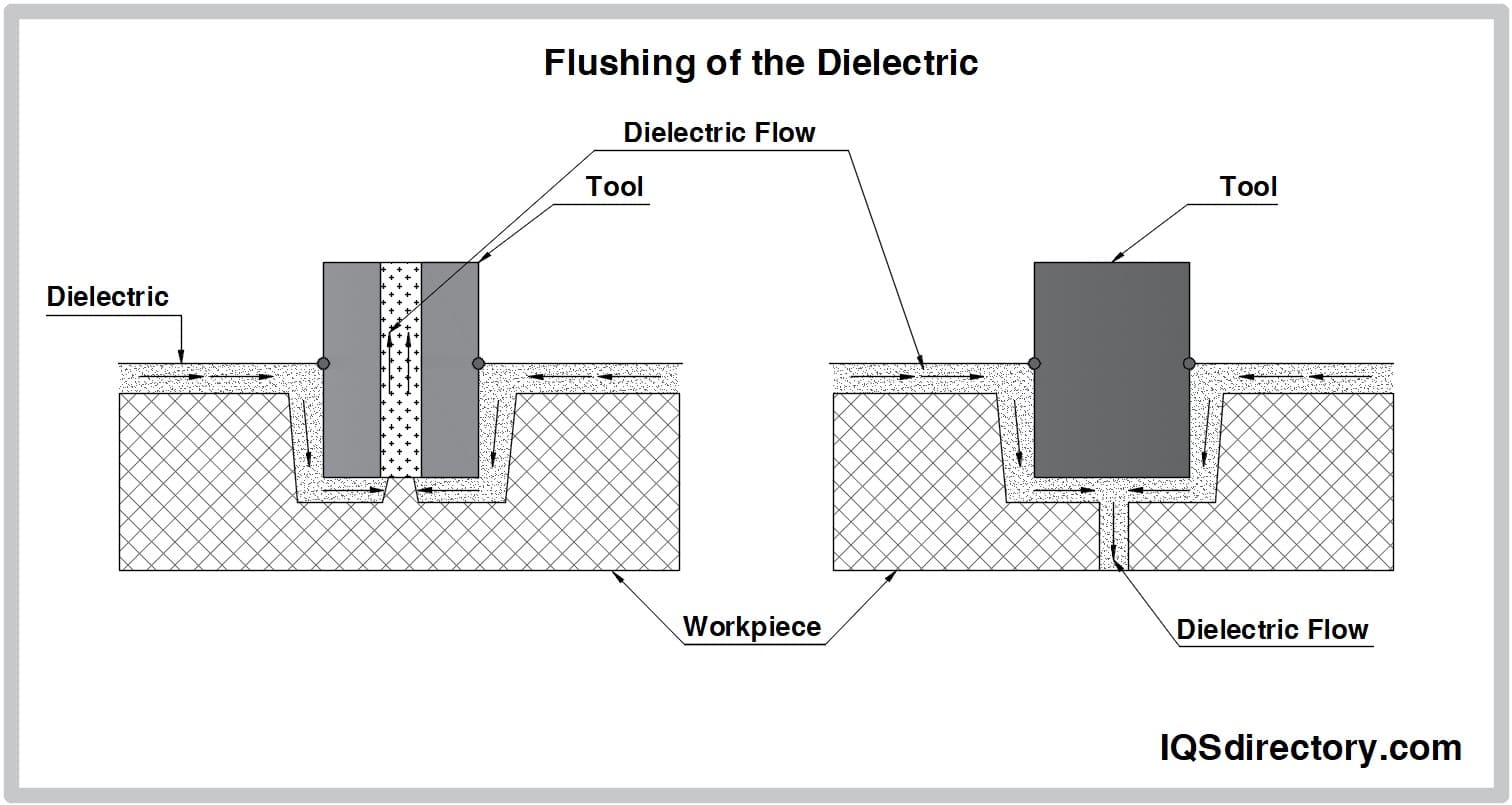
During machining operations, the dielectric fluid accumulates eroded debris that reduces its insulation capabilities. If left unchecked, this can cause erratic sparking, excessive tool wear, or even catastrophic short circuits. Advanced EDM systems are equipped with automatic flushing and debris management to enhance process stability during complex manufacturing or when producing fine features with tight tolerances.
The most common flushing techniques used in EDM include:
Pressure Dielectric Flow
Using pressurized flow, dielectric fluid is forced through holes in the tool electrode, washing away solid particles and cooling both the electrode and workpiece. This method is particularly effective for deep cavity machining and helps to maintain uniform erosion rates and superior surface finish.
Reverse Dielectric Flow
Reverse flow sends dielectric fluid upward from below the electrode through the machining gap. This method helps clear debris from complex features and maintains consistent dielectric conditions, preventing particle accumulation in corners and cavities.
Vacuum Dielectric
Vacuum flushing utilizes a pump to draw dielectric fluid and debris through a central electrode hole. It is optimal for producing straight, deep holes with minimal particle recirculation, making this method ideal for precision EDM hole drilling and micro-EDM applications.
Vibration Flush Cut
Tool vibration provides efficient flushing when small or solid electrodes are used, and conventional flushing is impractical. This approach supports deep hole machining, micro-feature EDM, and other scenarios where traditional dielectric flow is limited.
Pump Component
An onsite pump system ensures the continuous transport and circulation of dielectric fluid from the reservoir to the EDM machining zone and back. Reliable pump operation supports a consistent material removal rate (MRR) and efficient heat dissipation, both essential for high-productivity EDM applications.
Filter in a Machine
Industrial EDM machines use integrated filter systems—usually located above the pump—to remove particulate contaminants from the dielectric medium. Clean, filtered dielectric is vital for stable sparking, maintaining high-quality surface finishes, and minimizing electrode and workpiece wear.
Tool Holder
The tool holder secures the EDM electrode in the machine, precisely positioning the tool relative to the workpiece. High-quality tool holders minimize runout, ensure proper electrical contact, and maintain consistency throughout extended production runs.

Spark Generation
Within the EDM process, meticulously controlled electric sparks are generated between the tool electrode and the workpiece. These high-frequency, high-energy pulses cause localized melting and vaporization, resulting in the accurate removal of material and the formation of detailed surface structures. Precision in spark generation is vital for high-quality machining, especially when manufacturing complex die sets, molds, or micro-components.
Electrode Tool
EDM electrodes are made from electrically conductive materials including graphite, copper, tungsten, brass, and copper-tungsten alloys. The tool shape is precisely replicated in the machined cavity, making electrode design and manufacturing critical for accurate part production. Both tool and workpiece erode during EDM, with tool wear ratios varying from 5:1 to 100:1 depending on material properties, dielectric fluid, and operational parameters.

The wear ratio compares the amount of electrode tool wear to material removed from the workpiece. Influencing factors include the electrical conductivity of tool and workpiece, dielectric fluid selection, thermal and physical properties, machining power, and duty cycle. Hard-to-machine alloys and high-speed production applications, such as mold and die manufacturing or aerospace component fabrication, often necessitate specialized electrode materials for optimal balance between precision and tool longevity.
Wear ratio is given by: Wr=2.25Mt-2.3
Where, Wr is the work/tool wear ratio; and Mt is the Work/tool melting point ratio
As the cross-sectional area of both the workpiece and tool increases, the wear ratio decreases. However, for challenging materials such as sintered carbides (vanadium, molybdenum steels), increased cutting rates can raise tool wear. Advanced EDM optimization involves reversing polarity or utilizing copper tools to reduce wear when machining high-hardness or heat-resistant alloys. Modern electrode manufacturing methods—casting, CNC machining, and powder metallurgy—enable micro-scale electrode production down to 0.1 mm diameter for micro-EDM processes and fine-detail machining.
EDM Tool Material
Ideal EDM tool materials have high melting and vaporization temperatures as well as excellent thermal conductivity. Graphite is preferred for its superior machinability, cost-effectiveness, and minimal wear rate. Copper, copper-tungsten, and brass are also used, chosen based on part geometry, material removal rate, electrical efficiency, and cost constraints. Fine-grained, isotropic graphite offers consistent machining results and is especially valued in high-speed die sinking and precision component machining.
Key factors that determine electrode tool material suitability include:
- Achieving high metal removal rates (MRR) for production efficiency
- Providing low electrode wear to reduce replacement frequency and operational cost
- Ensuring high electrical conductivity and efficiency for consistent spark generation
Electrode material choice is influenced by machine compatibility, desired surface finish, dimensional stability, and workpiece material. For ultra-precise EDM operations, advanced graphite and copper composites deliver the stability and sharpness required for producing tight-tolerance features in aerospace, automotive, and medical device industries.

To further minimize wear and improve tool longevity, coatings and special finishes are sometimes applied. Adjusting parameters such as discharge frequency (commonly around 3000 kHz) and amperage (e.g., 30A for graphite electrodes) helps balance removal rate, surface roughness, and tool wear according to application-specific requirements.
Electrode design must also account for side clearance, which varies by electrode material, removal rate (roughing or finishing), and workpiece composition. Typical side clearances range from 0.25 mm (hardened steel/brass electrodes) to up to 0.5 mm for aggressive roughing cuts and as fine as 0.05 mm for finishing passes requiring top-tier surface finishes and dimensional accuracy.
Modern EDM technology enables rapid prototyping, intricate mold and die manufacturing, and micro-machining for high-value industries. The careful selection and preparation of electrode tools directly impact surface integrity, machining speed, and production yield.
Tool Feed Control
Throughout the EDM machining process, continuous removal of workpiece and tool material increases the spark gap, requiring precise feed control mechanisms. Automatic tool feed devices regulate this gap and arc voltage to avoid short circuits and maintain optimal machining conditions. These feedback-controlled systems react swiftly—using low inertia actuators and electrical sensors that monitor real-time gap voltage or working current—to ensure process stability and reduce rework in high-precision or unattended EDM operations.
Voltmeter Device
A voltmeter is an essential diagnostic instrument in EDM power supply systems for monitoring and measuring voltage during machining. Accurate voltage monitoring optimizes spark energy, improves process reliability, and contributes to consistent material removal rates.
Ammeter Measuring Device
An ammeter is integrated into the EDM circuit to measure and verify current flow during machining. Monitoring current in real time helps detect sparking irregularities, ensures process safety, and allows for quick adjustments to maintain optimal machining parameters.
Servo Controlled Feed
Servo-controlled feed mechanisms ensure the critical spark gap—often the thickness of a human hair—between the tool electrode and workpiece is maintained throughout the EDM process. Used in both wire EDM and vertical (sinker) EDM systems, this closed-loop servomechanism actively adjusts electrode position, preventing direct contact and accidental arcing. Precise servo control is vital in high-tolerance production, intricate cavity creation, and manufacturing of components with exacting dimensional and surface finish requirements.
Table Component
The machine table, often precision-ground, provides a stable foundation to securely hold and position the workpiece during EDM operations. High accuracy in table movement—achieved via CNC controls in many modern EDM machines—is critical for achieving repeatable results, tight tolerances, and complex geometries demanded in today's high-tech manufacturing sectors.
Chapter 3: What Are The Types of EDM Machines
This chapter will discuss the two main types of EDM (Electrical Discharge Machining) machines used in precision machining and advanced manufacturing processes. Understanding these types—Conventional EDM and Wire EDM—is essential for selecting the right equipment for your machining needs, whether you require high-precision machining for tool and die making, prototype development, or batch production in critical industries.
Conventional EDM Machines
This type of EDM machine is also known as sinker EDM, die sinking, volume EDM, ram EDM, and cavity-type EDM. Sinker EDM machines are popular in the manufacturing sector for their suitability in creating complex 3D shapes with high accuracy. These machines are especially valued for mold making, tool and die manufacturing, and the production of intricate parts with outstanding surface finishes.
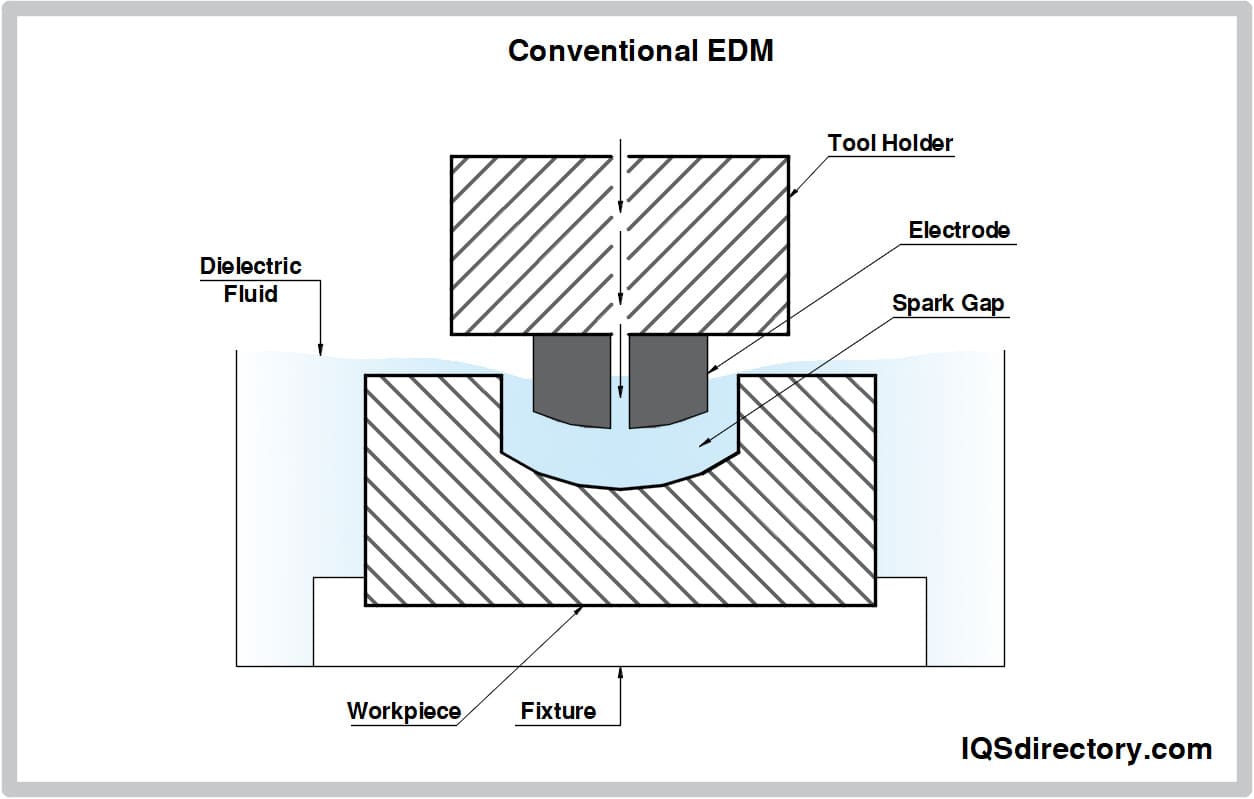
Conventional EDM involves machining a conductive electrode (typically made of graphite or copper) to form a specific shape, which is then "sunk" into the metallic workpiece. During this process, controlled electrical discharges—also called sparks—erode the material to achieve a negative impression or inverse of the electrode. Precise spark erosion allows the formation of intricate geometries that would be challenging with traditional CNC machining methods or milling.
Capabilities and Applications of Conventional EDM Machines
Conventional EDM utilizes custom-shaped electrodes, making it invaluable for producing detailed dies and injection molds required in mass production. This technology is particularly effective for machining hard materials and complex part geometries, including features like sharp internal corners and deep cavities. Conventional EDM is ideal for short-run production, prototyping, and manufacturing of parts used in the automotive, aerospace, medical device, and electronics industries where high tolerance and repeatability are critical. Additionally, this EDM method is frequently used in the fabrication of forging dies, stamping dies, and intricate cavity-type components.
Key benefits include:
- Exceptional accuracy for high-precision parts
- Ability to machine hardened steel and exotic alloys
- Minimal risk of workpiece distortion due to low cutting forces
- Excellent surface finish quality and dimensional stability
Wire EDM Machines
Wire EDM machines—also referred to as wire cutting, wire burning, spark EDM, or wire erosion systems—employ a thin, electrically charged wire as the electrode. This wire, typically made of brass or other conductive alloy, is guided and stabilized by a diamond or sapphire guide. As the workpiece is submerged in dielectric fluid, electrical discharges occur between the wire and the material, vaporizing and eroding the metal without actual contact. This non-contact cutting method allows for exceptional accuracy and the ability to machine intricate profiles, sharp corners, and delicate features with extremely tight tolerances.
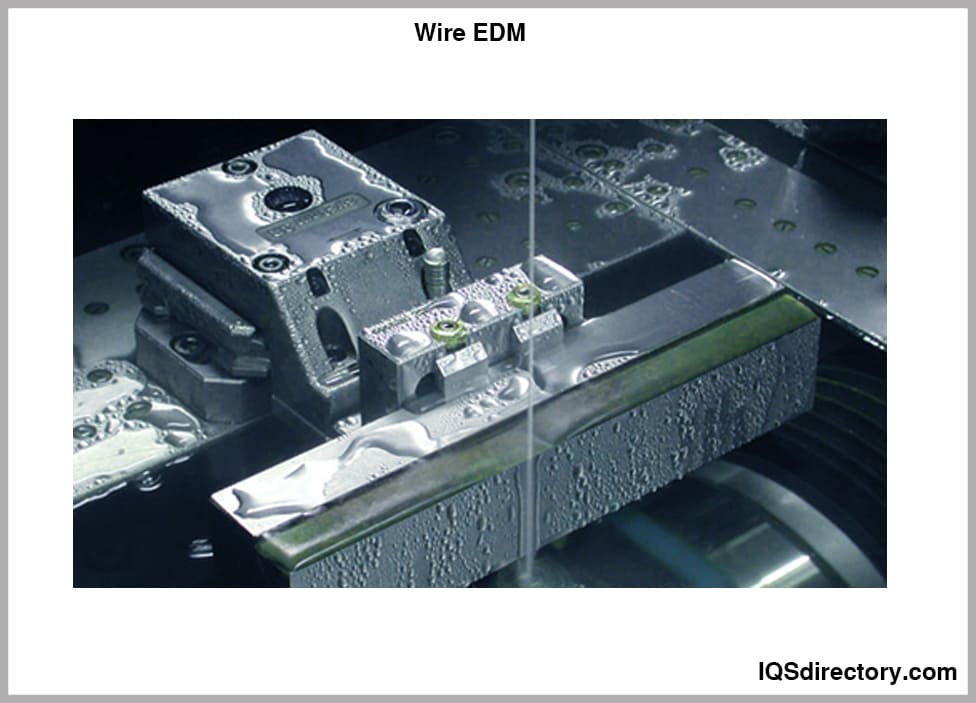
In wire EDM machining, the wire is continuously fed from an automated spool, ensuring a consistent cutting performance and enabling uninterrupted material removal. For parts with internal contours or complex geometries, wire EDM can be combined with hole-drilling EDM, where a small start hole is precisely drilled into the workpiece to allow the wire to be threaded through for accurate contour cutting. This hybrid approach leverages the use of tube-shaped electrodes and efficient dielectric fluid circulation to facilitate both initial drilling and subsequent wire cutting.
Capabilities and Applications of Wire EDM Machines
Wire EDM machining offers several unique advantages over conventional EDM processes, particularly when high-speed production, precision, and flexibility are key requirements. The technology is optimized for manufacturing complex components out of hard metals such as carbide, tool steel, titanium, and conductive composites. It’s a preferred choice for industries engaged in producing extrusion dies, stamping tools, medical instruments, and electronics hardware where burr-free edges and intricate shapes are crucial.
Key strengths and benefits of wire EDM include:
- Ease of automated, high-throughput production
- Fast setup and cutting speed for reduced lead times
- Significantly lower maintenance requirements—no need for electrode shaping or frequent replacement
- Consistently smooth surface finishes and precise dimensional repeatability
- Capable of producing tight-tolerance parts and fine details
Unlike traditional EDM, where electrodes erode and must be regularly machined to specific shapes, wire EDM eliminates pre-machining and increases efficiency, resulting in substantial time and material savings. This makes wire EDM particularly advantageous for rapid prototyping, low-volume production, and manufacturing highly complex or thin-walled structures where conventional subtractive machining falls short. The process also enables manufacturers to deliver optimal performance in applications that demand critical accuracy, such as aerospace mechanisms, electronic connectors, and custom tooling components.
When evaluating EDM machines for your operation, consider your workload, material choices, and the complexity of the parts you need to produce. Both conventional and wire EDM machines are cornerstone technologies in modern precision engineering, providing the flexibility and performance required for today's demanding manufacturing environments.
Frequently Asked Questions
What Is Electrical Discharge Machining (EDM) and How Does It Work?
EDM is a manufacturing process that removes material from a workpiece using rapid electrical discharges between electrodes submerged in dielectric fluid, enabling the creation of complex shapes in electrically conductive materials.
What Are the Main Types of EDM Machines?
The two main types of EDM machines are Conventional (sinker) EDM and Wire EDM. Conventional EDM is ideal for complex 3D cavity work, while Wire EDM excels at cutting intricate profiles and fine details with a wire electrode.
Why Is Dielectric Fluid Important in EDM Machining?
Dielectric fluid insulates the spark gap, allows precise spark generation, cools, and flushes away debris. Its optimal properties improve machining accuracy, surface finish, and tool life.
What Materials Are Commonly Used for EDM Electrodes?
EDM electrodes are typically made from graphite, copper, brass, tungsten, or copper-tungsten alloys. The choice depends on required precision, wear resistance, and workpiece material.
How Does Flushing Affect EDM Machining Quality?
Effective flushing of the dielectric fluid removes eroded particles, maintains insulation, and prevents defects like short circuits and arcing, directly impacting final surface quality and machining stability.
When Should Wire EDM Be Chosen over Conventional EDM for Precision Parts?
Wire EDM is preferred for intricate contours, tight tolerances, rapid setup, and when cutting hard metals or requiring burr-free edges, especially in mold, die, or electronics manufacturing.
Chapter 4: Who Are The Leading EDM Machine Manufacturers
A variety of EDM (Electrical Discharge Machining) machines are available today, crucial for their ability to precisely and intricately machine hard materials and complex shapes. These machines are essential in industries such as aerospace, automotive, and tooling. Here, we examine several prominent EDM machine brands in the United States and Canada, highlighting specific models and their unique features and capabilities:
Brand: Mitsubishi Electric
Model: MV2400-R Advance Plus M800
Features: The Mitsubishi Electric MV2400-R Advance Plus M800 is a high-precision wire EDM machine designed for superior accuracy and speed. It boasts advanced features including non-contact cylindrical drive technology, automatic wire threading, and intelligent power supply technology. The machine is equipped with sophisticated corner control and a user-friendly touchscreen interface that offers intuitive programming and monitoring. Additionally, the MV2400-R Advance Plus M800 supports unattended operation, enhancing productivity and efficiency.
Brand: Sodick
Model: AG60L
Features: The Sodick AG60L is a high-performance sinker EDM machine renowned for its linear motor technology, which delivers exceptional accuracy, surface finish, and productivity. It features a robust construction and intelligent control systems that ensure stable and efficient machining. The AG60L includes advanced automation features such as tool changers and electrode wear compensation. It also supports complex 3D machining and is equipped with a user-friendly interface for easy operation.
Brand: Makino
Model: EDAF2
Features: The Makino EDAF2 is a precision wire EDM machine designed for high-speed machining. It boasts advanced wire threading and automatic rethreading capabilities, along with intelligent control systems that enhance accuracy and reduce cycle times. The machine is equipped with Makino's Hyper-i control system for efficient programming and monitoring, supports fine surface finishes, and includes reliable flushing and filtration systems.
Brand: GF Machining Solutions
Model: FORM 20
Features: The GF Machining Solutions FORM 20 is a compact and versatile EDM machine.
Features: The GF Machining Solutions FORM 20 excels in high precision and superior surface finishes across various applications. It features an intelligent spark generator for optimized machining performance and incorporates advanced control systems to boost productivity and reliability. The FORM 20 also supports automation and offers customization options to meet specific machining requirements.
Brand: Fanuc
Model: Robocut α-CiC Series
Features: The Fanuc Robocut α-CiC series consists of wire EDM machines engineered for high-speed and precise machining. These machines are equipped with reliable wire threading, efficient power supply, and advanced servo control systems. They boast a compact design and high rigidity for stable and accurate performance. Featuring Fanuc’s intuitive CNC system with intelligent programming and operational capabilities, the Robocut α-CiC series supports unattended machining and offers versatile automation options.
Please note that specific model availability and features may vary over time, so it is advisable to contact the manufacturers or their authorized distributors for the most up-to-date information on the models that suit your requirements.
Chapter 5: What Are The Applications, Advantages, and Disadvantages of EDM Machining
This chapter will explore the various applications, benefits, and drawbacks of EDM machining. It will also cover key factors to consider when selecting the most suitable EDM machining option.
Applications of EDM Machining
- It is used to make holes with sizes that are less than 0.1 mm.
- It is utilized in die sinking or die manufacturing, fixtures, and gauging.
- It is used to make holes in air brakes or pneumatic brakes.
- It is used in press tools and extrusion dies.
- It is utilized in die molds for plastics.
- It is applied in die-casting dies and mold inserts.
- EDM machining is utilized in the repair of worn dies for hot and cold forging and re-machining.
- It is used to make forging dies like connecting rod forging dies etc.
- EDM machining is used in Sintering dies.
- It is used in calibrating tools.
- It is utilized in the shaping of carbide tools and templates.
- It is used in the following applications: Aerospace; Medical; Electronics; Semiconductor.
- It is used in the manufacture of hard Electrodes.
- It is used in the manufacture of micro-tooling for Micro-EDM, Micro-USM and such other applications for micromachining.
Advantages of EDM Machining
- It can be used even in the heat-treated condition, and for any hard material.
- Complicated shapes made on the tool are able to be reproduced.
- A high accuracy can be achieved; about 0.005 mm.
- Economically, a good surface finish can be achieved; up to 0.2 microns.
- Machining time is not more than the conventional machining process.
- Mechanical stresses are not developed in this process (the tool and work do not have contact).
- The tool life is longer due to proper lubrication and cooling.
- Hard surfaces that are also resistant to erosion can be developed easily on the dies.
- It can be applied to any material that is electrically conductive.
Disadvantages of EDM Machining
- Excessive wear of the tool
- Reproduction of the sharp corner is not possible
- Change in metallurgical properties of materials due to the development of high heat.
- The material to be machined must be an electrical conductor
- Requirement for redressing of a tool for deep holes
- Over-cut is formed
- Expert machinists are hard to find
However, it must be noted that the disadvantages of EDM machining are far outweighed by the advantages.
Choosing the Right EDM Machine
- When opting for a wire EDM, it is important to pay attention to the latest cheaper features. For example, choose an equipment with an operational mode that assists in reducing wire consumption by lowering the infeed rate of the wire.
- Pay attention to the hole tapering capabilities
- Use the right dielectric fluid
- The ease of maintenance must be taken into consideration.
Conclusion
Electrical discharge machining (EDM) is a high-power process, so the generators used must provide substantial power to ensure efficient operation. Choosing the right generator for EDM machining is crucial. Additionally, the type of dielectric fluid used plays a significant role, as different fluids have varying wear ratios and material removal rates. An optimal dielectric fluid should offer a high material removal rate while minimizing wear. While EDM machining offers advantages like high accuracy and excellent surface finish, it also has its drawbacks that should be considered.