
- 5 leading manufacturers
- 53 additional suppliers
- 18 states and provinces
- 17 related categories
- 4 guide sections
Aluminum Forgings Manufacturers and Companies
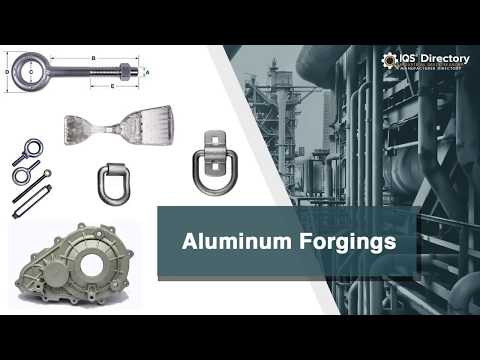
IQS Directory is a top industrial directory listing of leading industrial aluminum forging manufacturers and suppliers. Access our comprehensive index to review and source aluminum forging manufacturers with preview ads and detailed product descriptions. These aluminum forging companies can design, engineer and manufacture aluminum forging to your specifications and application need. A quick and easy to use request for quote form is provided for you to contact these aluminum forging manufacturers and suppliers. Each company has detailed profile information, locations, phone number, website links, product videos and product information defined. We are the right resource for your information requirement whether its for a manufacturer of aluminum forging alloys, small aluminum forges, aluminum forging suppliers.
Suppliers located in OH, CA, TX +15 more states
Contents (5 sections)
Leading Aluminum Forgings Manufacturers
Showing all 5
| Placement No. | Manufacturer | Location | Contact | Actions | |
|---|---|---|---|---|---|
| 1 | Anderson Shumaker CompanyAlthough we have over 100 years of experience, we are committed to continually expanding our offerings in all industries. We are not content to remain as we are, but we continually work to improve our products and processes each and every day. We will work with you to create the ultimate products for your needs. Find out more on our website, or you can give us a call today! | Chicago, IL | |||
| 2 | Viking ForgeAt Viking Forge, we manufacture high-quality forgings for customers who need strength, durability, and dependable performance in demanding applications. Our company serves industrial markets that rely on forged components for long service lives and structural integrity. By combining practical production knowledge with a strong focus on quality, we help customers source forgings that meet functional requirements, support reliable assembly, and perform consistently in real-world service every day. | Streetsboro, OH | |||
| 3 | Align ManufacturingAt Align Manufacturing, we specialize in high-performance forgings engineered to meet the demanding requirements of modern industry. Our company partners with OEMs and industrial clients to deliver precision-formed metal components that combine strength, durability, and dimensional accuracy. | Arroyo Grande, CA | |||
| 4 | Engel Tool + ForgeAt Engel Tool + Forge, we produce forgings for customers who need strength, consistency, and dependable manufacturing support for demanding industrial applications. Our company works with businesses that rely on forged parts for performance, durability, and long service life, and we focus on delivering quality forged parts with responsive service. We combine practical forging knowledge with disciplined production methods to help customers move from concept to finished components with confidence. | Milwaukee, WI | |||
| 5 | Chaparral Technologies, Inc.At Chaparral Technologies, Inc., we supply precision metal components through investment castings and forgings that support demanding industrial applications. Our company focuses on delivering parts that combine strength, dimensional accuracy, and dependable performance in environments where reliability is critical. We work to provide solutions that help customers maintain consistent quality while supporting efficient production and long-term equipment performance. | Fort Worth, TX |
Claim your Page One Spot
Leading aluminum forgings manufacturers are listed first on this page, each with a website preview and a Request a Quote button on its row.
Additional Aluminum Forgings Companies
The category’s other aluminum forgings companies are listed on their own page, with location, phone and website where each supplier provides them.
View 53 Additional Aluminum Forgings CompaniesDo not see your company listed in Aluminum Forgings?
Engineers and buyers use this page to find aluminum forgings suppliers. Add your company to the Aluminum Forgings listings so they can find you too.
List Your Company- Listed in the Aluminum Forgings directory
- A profile page for your company
- Buyers contact you directly
Aluminum Forgings Industrial Manufacturing Guides
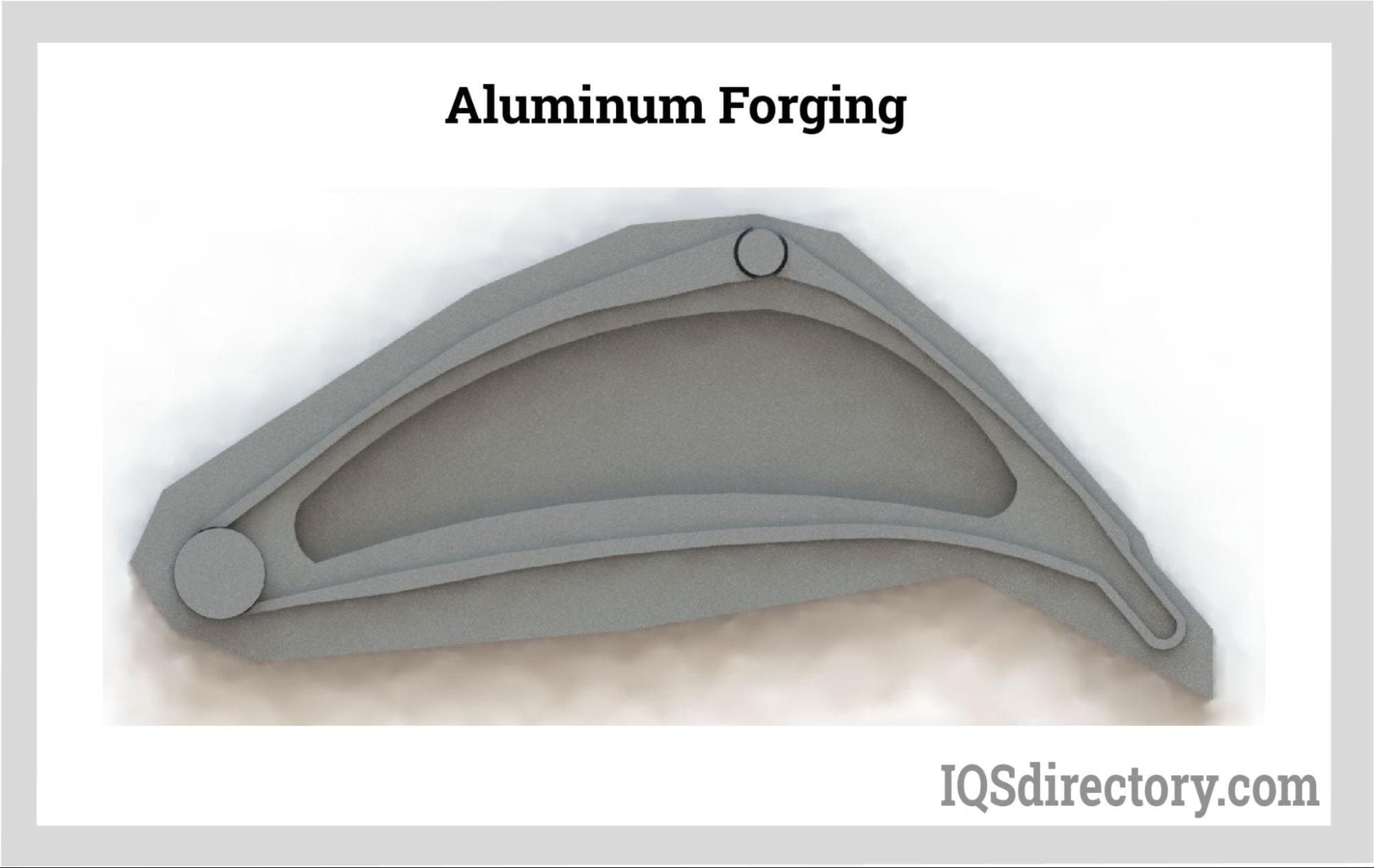
Aluminum Forgings: Types, Processes and Applications
This article contains everything you need to know about aluminum forgings, including how they are made, how they are used, and the types of aluminum alloys.…
4 chapters
Quick Answers
- How many aluminum forgings manufacturers are listed on IQS Directory?
- 5 leading manufacturers and 53 additional suppliers.
- Where are aluminum forgings manufacturers located?
- The listed suppliers are in 18 states and provinces: Ohio (11), California (8), Texas (7), Wisconsin (6), Illinois (5), Pennsylvania (5), Michigan (3), Massachusetts (2), and 10 more.
- How do I get quotes from aluminum forgings suppliers?
- Select suppliers in the table and choose Request Quotes. IQS reviews your request and forwards it to every supplier you select.
Aluminum Forgings
When aluminum is fabricated into a certain configuration by way of a compressing force, the resulting product is known as an aluminum forging. In the process of forging, the aluminum’s grain structure is altered in order to conform to the desired shape. As a result, the metal is fortified and the final product turns out much stronger than it would if it were made by fabrication, casting, or welding.
Applications of Aluminum Forgings
Aluminum forgings are frequently used in industries where weight is a concern, such as aerospace, because of their strength-to-weight ratio, low production cost, low density, and ability to handle the harsh conditions of space. Another industry that uses aluminum forging is the competitive racing industry, as aluminum forged wheels are light in weight, stiff, and strong. Outside of race cars, aluminum forged wheels are used in some models from brands such as Lamborghini, Audi, and Porsche.
Other applications that frequently utilize aluminum forgings include missiles, engines, oil drilling equipment, ships, and tractors. Aluminum forgings can come in a multitude of standard configurations, such as flanges, hubs, sleeves, discs, blocks, bars, cylinders, and rings. Many companies also offer customization services.
Manufacturing Process of Aluminum Forgings
In the process of aluminum forging, a cast or extruded piece of aluminum is heated, and is forced by a hammer or press to take the shape of a die. The process uses extreme pressure to form the die’s shape, as opposed to casting, in which the metal is melted down and poured. However, hot forging is one method that can be implemented and is used to make aluminum parts that can weigh up to 25 tons.
Alternatively, cold forging is a process that hammers or presses aluminum parts ranging from room temperature to several hundred degrees Fahrenheit into a die. In the cold forging process, the final product is made even stronger, due to its crystalline structure conforming to the component’s shape. Regardless of the process, aluminum forging improves the aluminum’s physical properties, such as its mechanical characteristics and strength, all while reducing its size.
Benefits of Using Aluminum Forgings
Aluminum is highly reliable and economical. It is one of the easiest metals to forge, due to its mechanical properties. Advantages to aluminum forgings include electrical and thermal conductivity, resistance to fractures, and a smooth appearance. Additionally, forgings made from aluminum are more economical compared to other metals, such as copper, titanium, or stainless steel. Aluminum is roughly one third the density of steel and a favorable material for applications that are sensitive to weight. Aluminum forgings are also temperature resistant, and are capable of being used in work environments up to 400 degrees Fahrenheit (204.4 degrees Celsius).
Numerous chemicals and a great amount of energy is required to manufacture and fabricate metal. Therefore, these processes are not environmentally friendly. However, there are many aluminum forging facilities that have discovered and implemented ways to make their manufacturing process “greener.” One step that they have taken is scrap product recycling. The costs of purchasing aluminum and transporting the metal can be greatly reduced if a company chooses to manufacture products using recycled scrap metal instead of new aluminum.
Recycling metal reduces the need for energy-consuming equipment, chemicals needed to treat the metal, and fuel-consuming vehicles to transport the aluminum from place to place. Up to 90 percent of the transportation costs can be saved by choosing to recycle metal. Additional green practices that companies have begun to use include natural fuels for the forging procedures, making the switch to co-generation energy systems, switching to energy-efficient lighting methods, and the use of energy-efficient forging equipment. Each of these steps goes a long way in saving both the environment and company money.
Other Types of Forging Processes