
- 4 leading manufacturers
- 16 additional suppliers
- 13 states and provinces
- 11 related categories
- 10 guide sections
Pulverizer Manufacturers and Companies

IQS Directory provides a detailed list of pulverizer manufacturers and suppliers. Find pulverizer companies that can design, engineer, and manufacture pulverizers to your specifications. Peruse our website to review and discover top pulverizer manufacturers with roll over ads and complete product descriptions. Connect with the pulverizer companies through our hassle-free and efficient request for quote form. You are provided company profiles, website links, locations, phone numbers, product videos, and product information. Read reviews and stay informed with product new articles. Whether you are looking for manufacturers of coal pulverizing mills, juicer pulverizer, and concrete pulverizer of every type, IQS is the premier source for you.
Suppliers located in NJ, PA, MN +10 more states
Contents (5 sections)
Leading Pulverizer Manufacturers
Showing all 4
| Placement No. | Manufacturer | Location | Contact | Actions | |
|---|---|---|---|---|---|
| 1 | Granutech-Saturn SystemsSaturn® Systems leads in high-performance powderizers, transforming crumb rubber, scrap, and tires into high-value granulate and powder. Our Saturn® Hammermills support diverse applications, from metal recycling to waste-to-energy. Built for durability, consistency, and maximum throughput, our solutions deliver reliable performance in demanding environments, backed by decades of expertise. Saturn® Systems provide the reliability, performance, and results that drive your operation forward. | Grand Prairie, TX | |||
| 2 | AVEKA GroupAt AVEKA Group, we specialize in providing size reduction equipment and particle processing solutions designed to meet the demands of various industrial operations. Our company focuses on delivering efficient technologies for reducing, refining, and controlling particle sizes across a wide range of materials. | Woodbury, MN | |||
| 3 | JERSEY CRUSHER, Inc.At Jersey Crusher, we provide size reduction equipment designed to help customers process bulk materials into more manageable, consistent sizes for handling, production, and downstream operations. Our company focuses on dependable crushing and breaking solutions that support efficient material flow while reducing oversized product. | Wayne, NJ | |||
| 4 | Powder Technology, Inc.At Powder Technology, we specialize in providing size reduction solutions designed to meet the demands of industrial material processing. Our company focuses on helping customers achieve precise particle sizes, consistent material properties, and efficient production processes. | Arden Hills, MN |
Claim your Page One Spot
Leading pulverizer manufacturers are listed first on this page, each with a website preview and a Request a Quote button on its row.
Additional Pulverizer Companies
The category’s other pulverizer companies are listed on their own page, with location, phone and website where each supplier provides them.
View 16 Additional Pulverizer CompaniesDo not see your company listed in Pulverizers?
Engineers and buyers use this page to find pulverizer suppliers. Add your company to the Pulverizers listings so they can find you too.
List Your Company- Listed in the Pulverizers directory
- A profile page for your company
- Buyers contact you directly
Pulverizer Industrial Manufacturing Guides
Pulverizers
The importance of pulverizers and their use with a list of recommended manufacturers You will learn: What is a Pulverizer? Uses for Pulverizers Components of a…
5 chapters
Quick Answers
- How many pulverizer manufacturers are listed on IQS Directory?
- 4 leading manufacturers and 16 additional suppliers.
- Where are pulverizer manufacturers located?
- The listed suppliers are in 13 states: New Jersey (4), Pennsylvania (4), Minnesota (2), Arizona (1), Indiana (1), Massachusetts (1), Missouri (1), New York (1), and 5 more.
- How do I get quotes from pulverizer suppliers?
- Select suppliers in the table and choose Request Quotes. IQS reviews your request and forwards it to every supplier you select.
Pulverizers
Pulverizers are used to reduce the size of materials through grinding, crushing, and controlled particle size reduction. Size reduction plays a major role in a wide range of industrial processes, from material handling and recycling to combustion, batching, and product preparation. Pulverizer manufacturers provide equipment for many different material types, including brick, shale, coal, concrete, limestone, wood, and even plastic materials. Because applications, feed characteristics, moisture levels, and desired fineness vary so widely, pulverizers are available in many configurations to match different processing goals.
The History of Pulverizers
The practices of grinding, crushing, and pulverizing materials have existed for centuries. Modern pulverizing machines, however, are a more recent industrial development shaped by mining, agriculture, power generation, recycling, and advanced material processing.
Before dedicated pulverizing technology became common, workers reduced coal and other mined materials with hand hammers or water-powered trip hammers in small charcoal-fired iron works and smithies. This method was common from the Renaissance into the middle of the Industrial Revolution. After explosives became more widely used in mining, larger crushers began replacing much of that manual labor, first in foundries and later in coal breaker facilities. As coal use expanded for heating and steam power, interest in dependable fine grinding also grew. In 1824, Sadi Carnot published work on the thermodynamic cycle of the heat engine, influencing later efforts involving pulverized coal combustion.
While coal was one of the earliest priorities for pulverizing equipment, the technology soon diversified. In the United States during the late 1800s, several inventors received patents for machines designed to pulverize or crush soil. Many of these were created for farm use and land preparation. In 1886, for example, Fred Hepworth and Lou Satany of Aurora, Illinois received a patent for a "soil pulverizer." In 1892, Frederick Meier of Battle Creek, Michigan received a patent for a "clod crusher." These developments helped show that size reduction equipment could serve far more than mining alone.
During the 1900s, engineers and manufacturers continued developing new and improved pulverizer equipment. In 1954, for example, engineers introduced a jet pulverizer capable of reducing materials such as coal at very high speeds. Mills that were once powered by hand later transitioned to electric drives, making higher throughput and more consistent performance possible. Today, pulverizers are often supported by automation and CNC technology, allowing more precise control over feed rate, fineness, and repeatability. Modern manufacturers also continue pursuing better energy efficiency, lower emissions, improved wear life, and more sustainable processing practices.
Advantages and Disadvantages of Pulverizers
It is important to explore the safety regulations associated with the material being reduced and the operating environment in which the pulverizer will run. Because industrial pulverizers apply high force, pressure, impact energy, and, in some systems, heated or pressurized air, the risk of employee injury can increase when guarding and controls are inadequate. Safety components such as guard rails, shields, sensors, interlocks, emergency stops, dust collection systems, and auto shut-off controls help reduce accidents and support safer operation. When properly installed, maintained, and operated by trained professionals, pulverizers provide dependable particle size reduction, improved process efficiency, better material consistency, and strong value across demanding industrial applications.
Design of Pulverizers
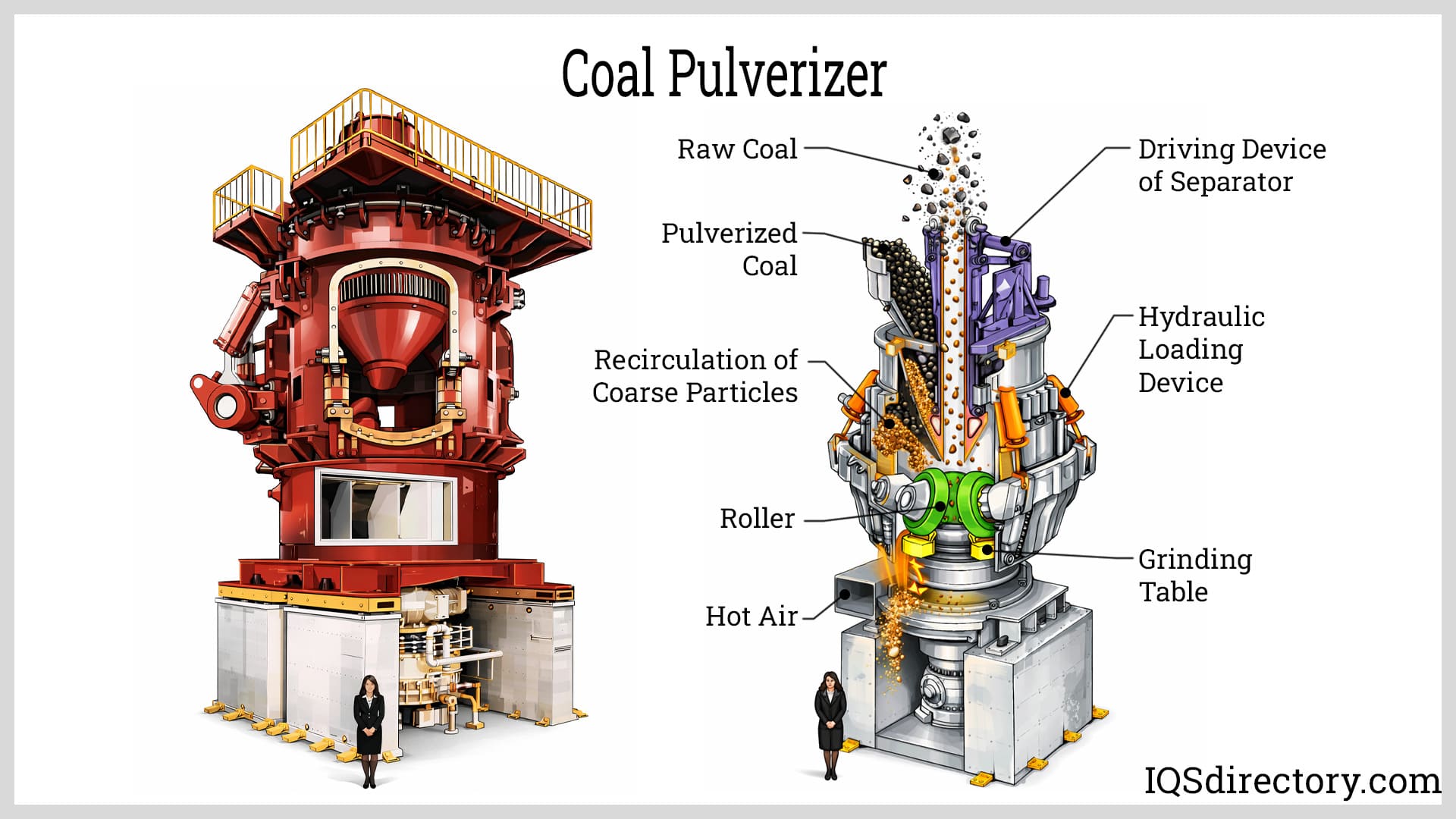
Every coal pulverizer is designed with a particular fuel grinding capacity, or throughput, at a certain Hardgrove grindability index (HGI), based on moisture content, a defined raw coal size, and a desired fineness level. These factors all influence pulverizer capacity, wear rate, airflow needs, and overall combustion performance. A well-performing pulverizer requires good fuel fineness and balanced airflows to support efficient drying, classification, and combustion in the boiler. Buyers comparing pulverizer systems often review throughput, target particle size, classifier design, and maintenance access together rather than treating them as separate issues.
Pulverizer machines can be used to pulverize or granulate and simultaneously air classify materials such as:
- Chemicals
- Minerals
- Limestone
- Phosphate Rock
- Pigments
- Tobacco
- Clay
- Barite
Characteristics of Pulverizers
Some pulverizers are capable of processing materials continuously, while others process materials in batches. Single-batch pulverizers shut off after a designated cycle time in order to achieve the desired particle size range or powder consistency. Denser materials such as plastic or wood are often processed in single-batch pulverizers, whereas concrete, minerals, grain, or coal can be continuously fed into a pulverizer by a conveyor or other automated feed system. The right choice depends on feed size, production volume, target fineness, and whether the process is part of a high-volume line or a more controlled laboratory or specialty application.
Pulverizers are available in carbon, stainless steel, and other construction materials depending on their intended use. Certain materials are better suited for specific applications, especially in industries such as food, pharmaceuticals, and specialty chemicals where sanitary surfaces, contamination control, washdown compatibility, or corrosion resistance may be required. Equipment selection may also depend on abrasion resistance, replaceable wear parts, access for cleaning, and the ability to maintain consistent product quality over long production runs.
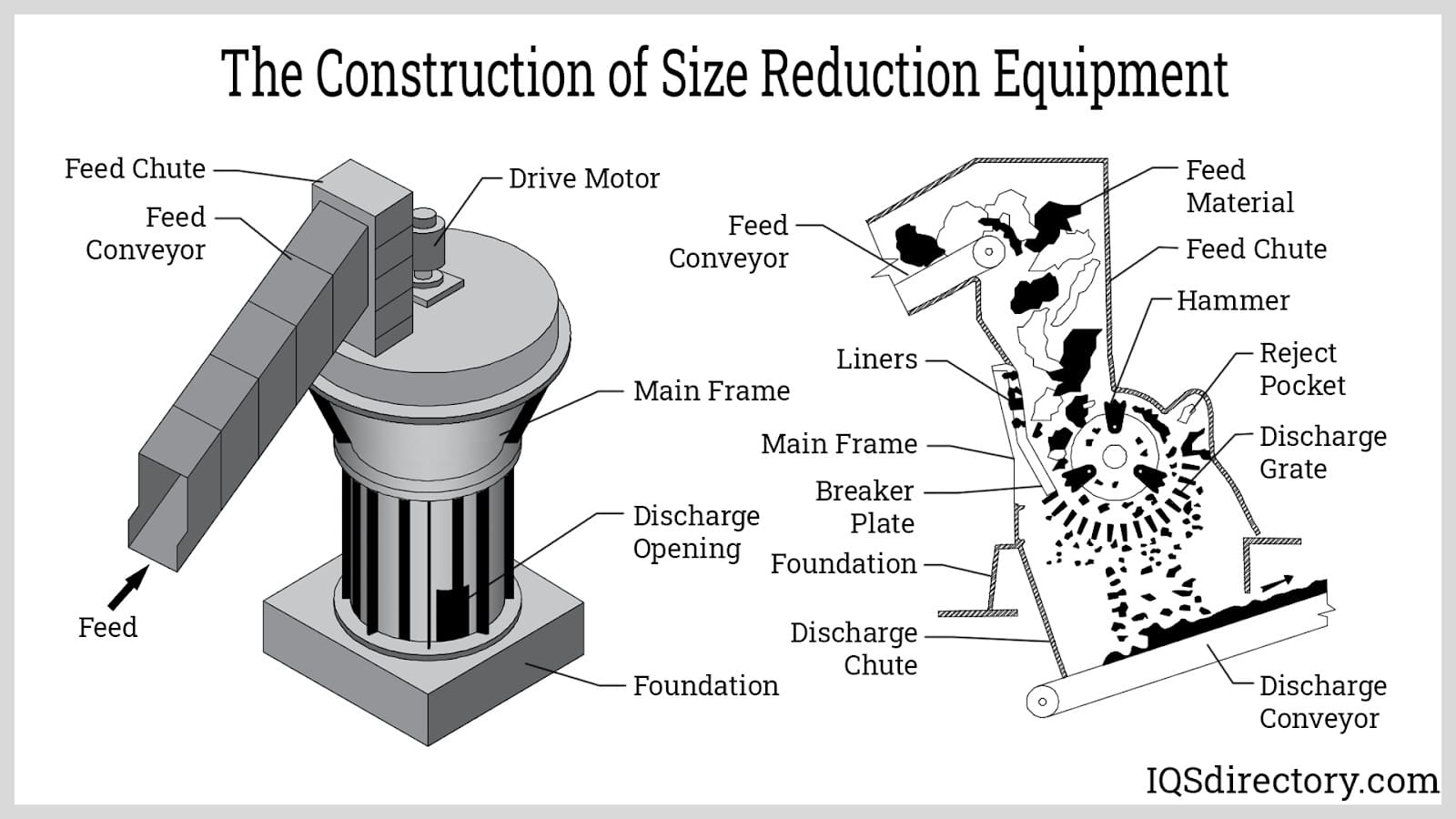
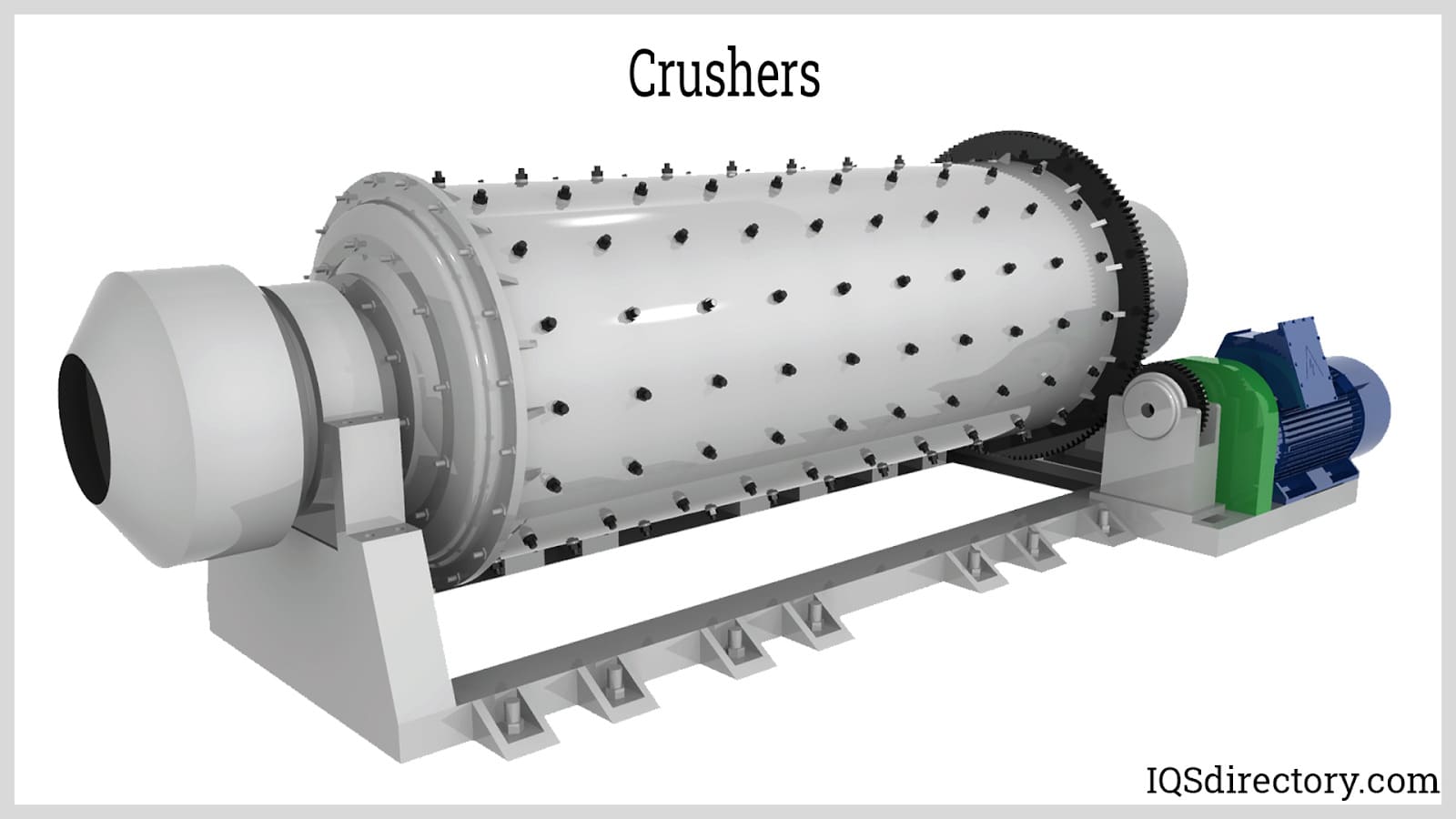
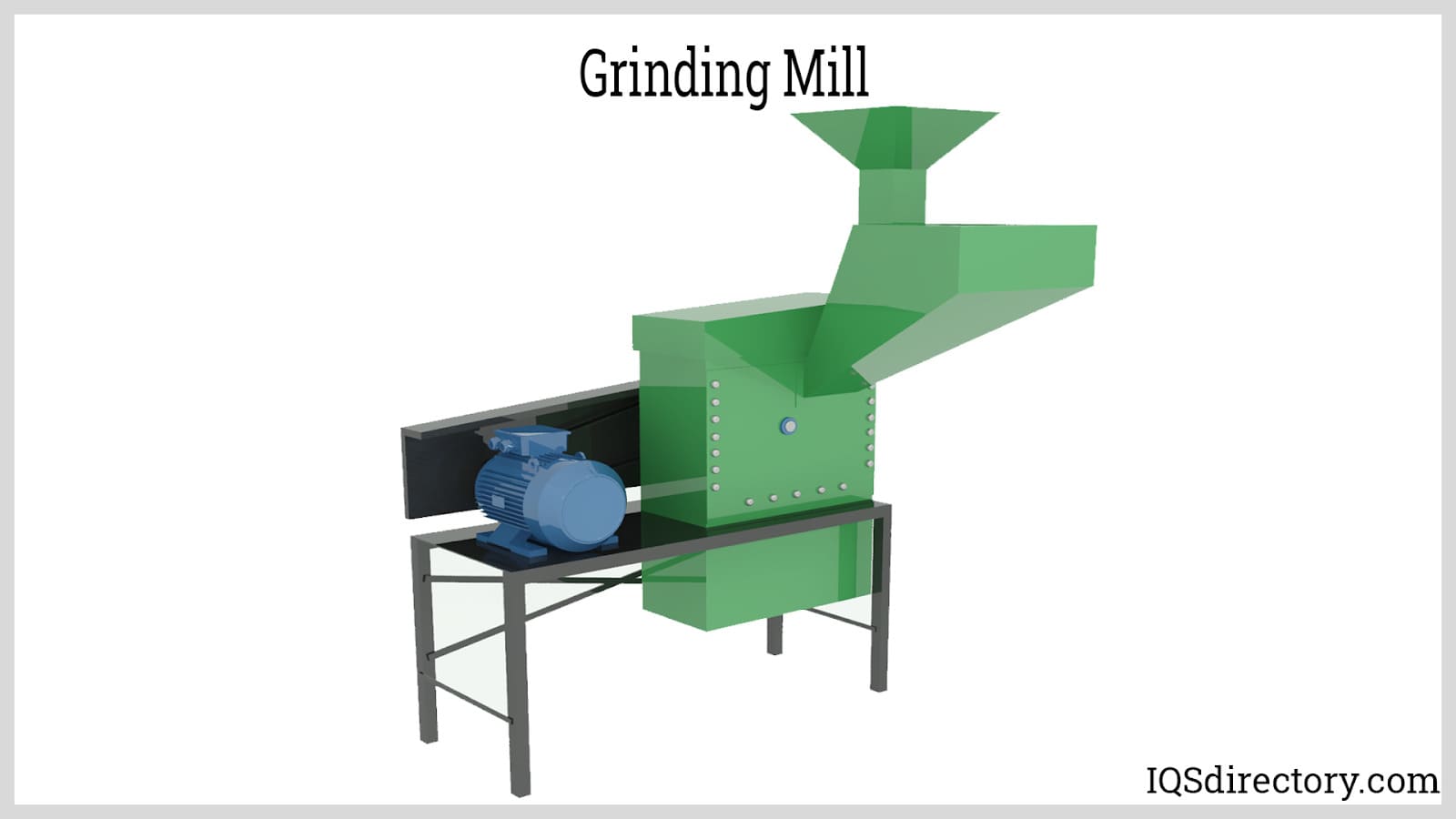
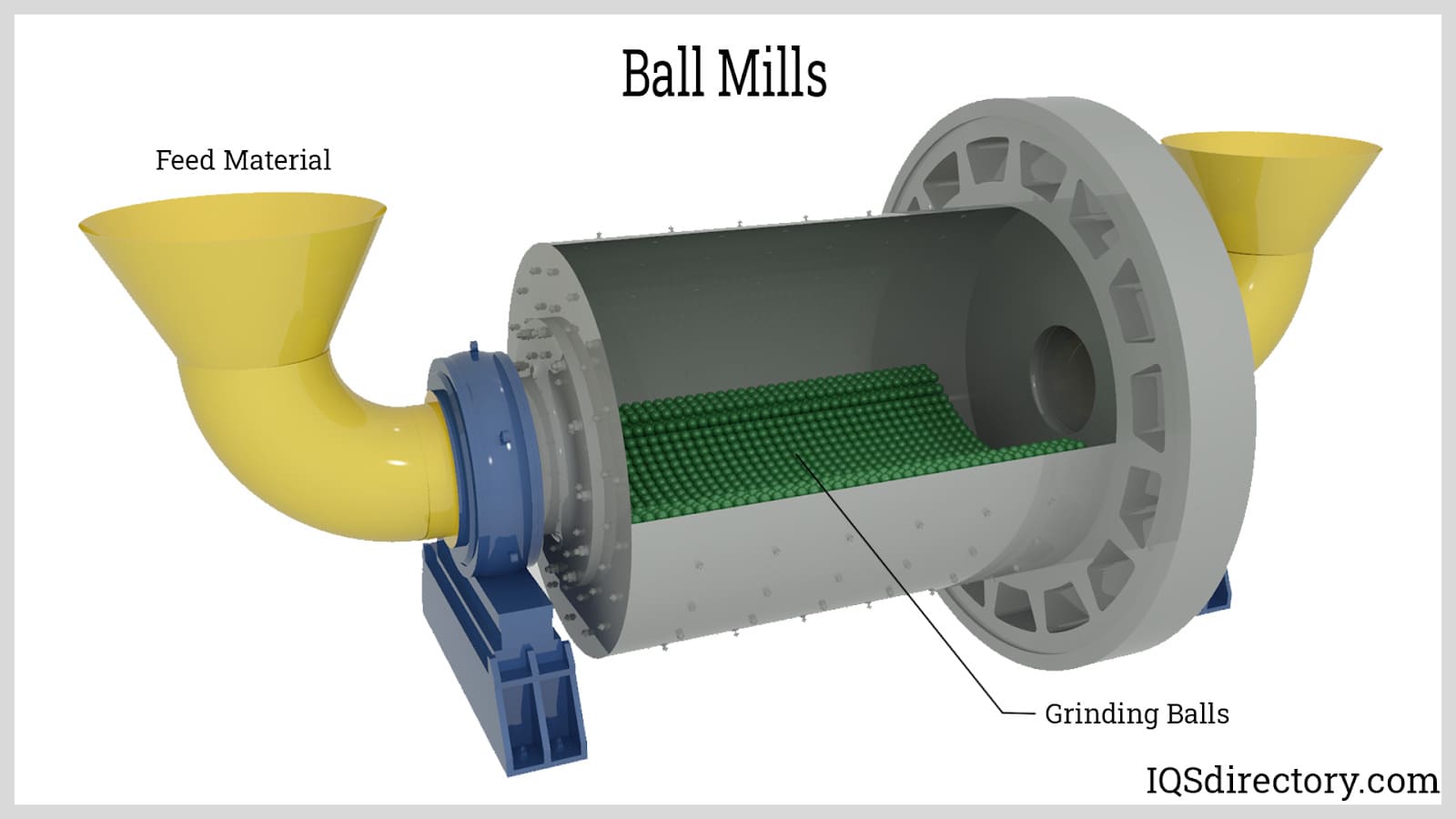
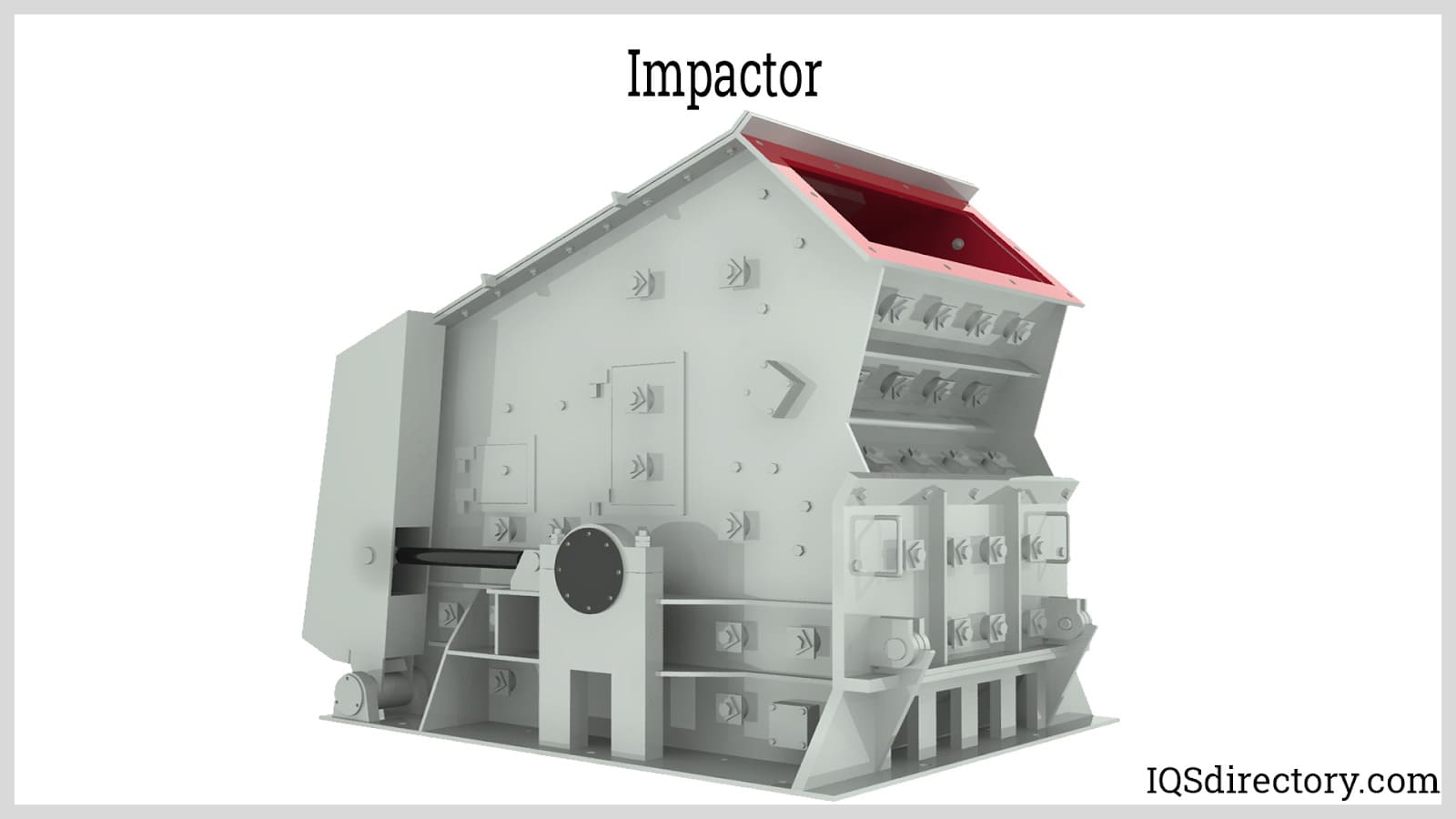
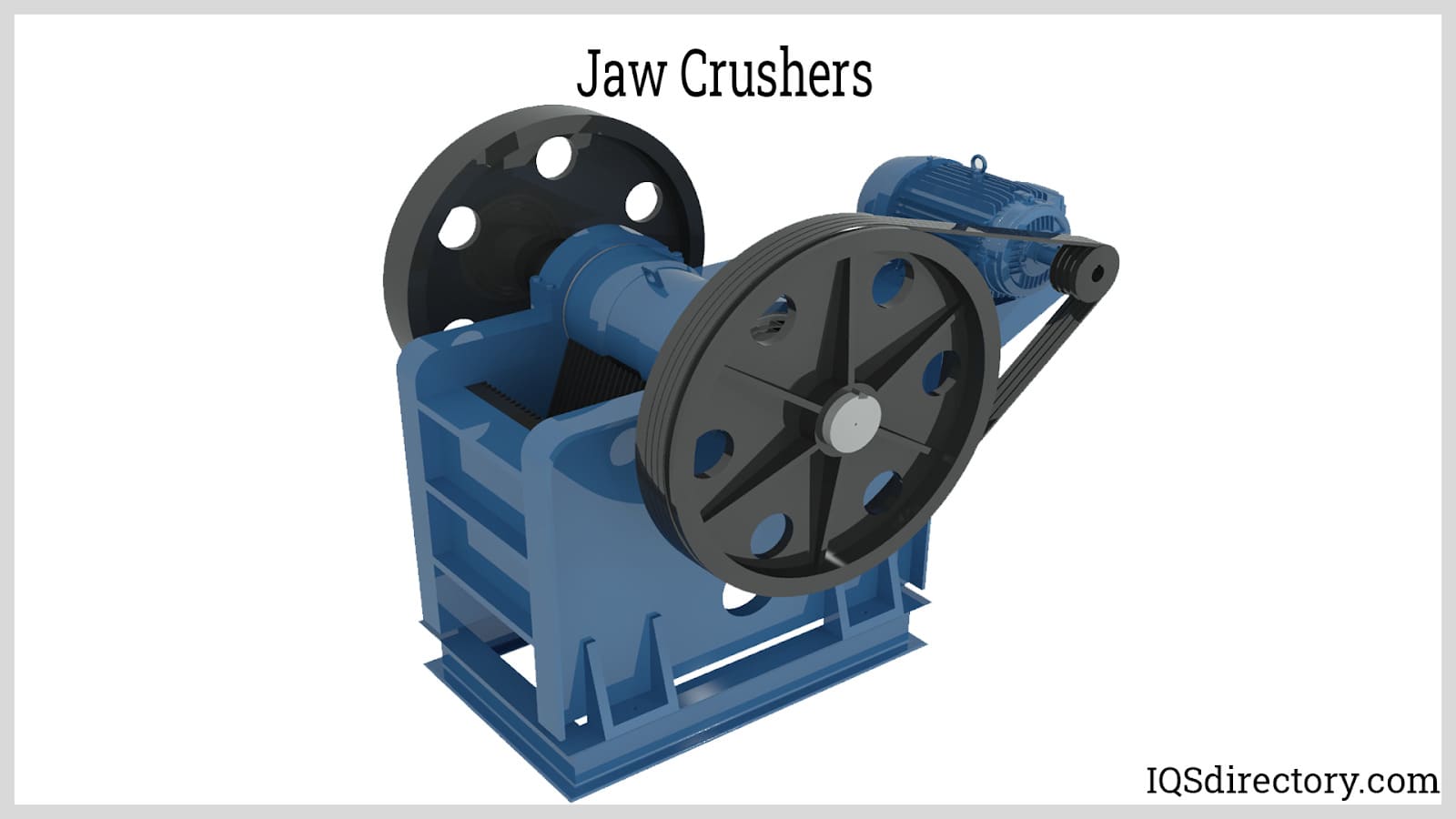
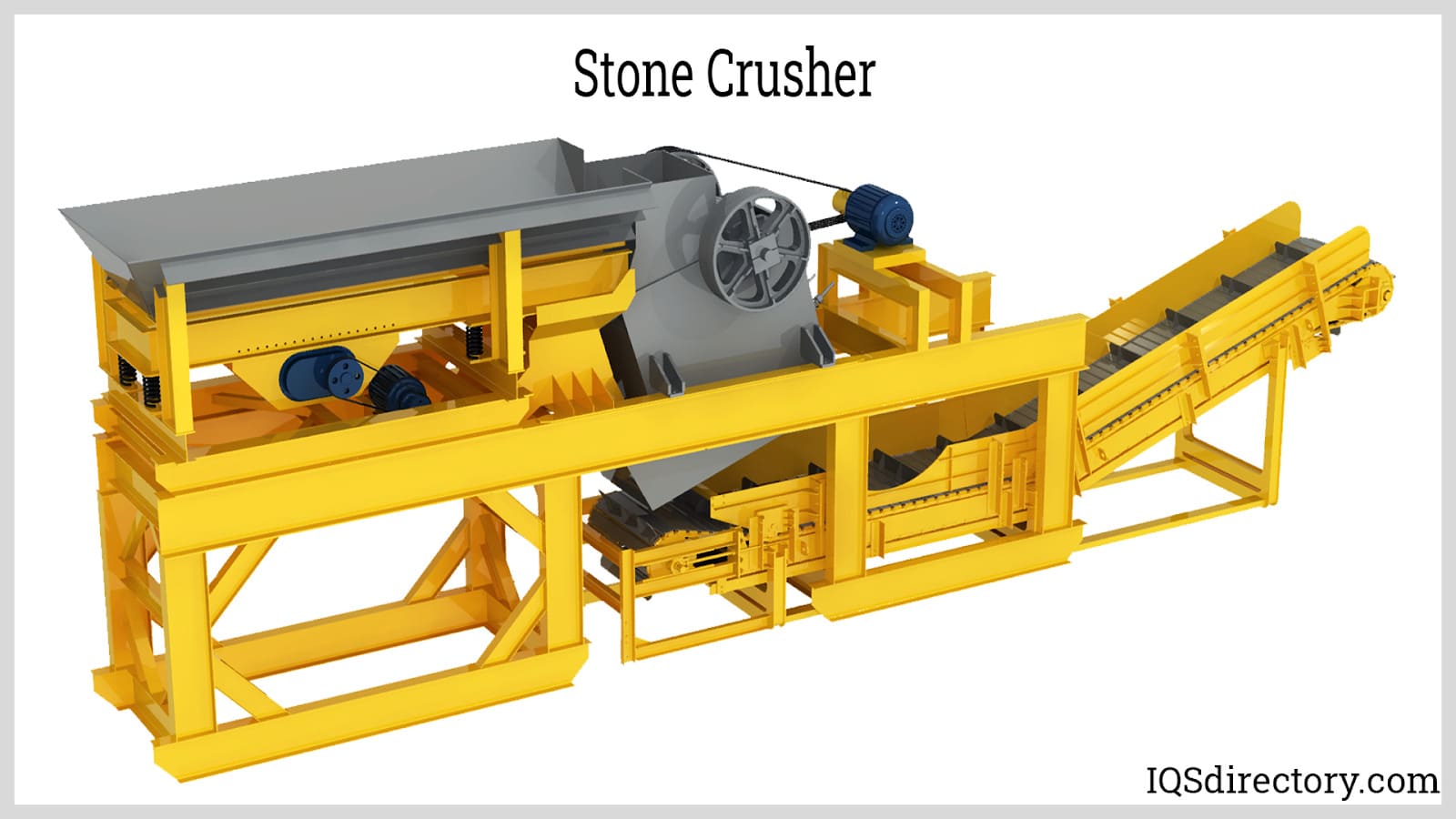
Pulverizer Images, Diagrams and Visual Concepts
Types of Pulverizers
Applications for Pulverizers
Some of the industries in which crushers and impactors are used include:
Pharmaceutical Application Pharmaceutical product development, where medicines and compounds are ground into powder form for encapsulation, formulation, blending, and other processing applications. Construction Use Construction work in which stone crushers, concrete pulverizers, and related machines are used for reducing building materials, preparing aggregate, and recycling demolition debris. They are also used for loosening, pulverizing, and leveling packed or encrusted soils in preparation for seeding or laying new sod, making them useful to landscapers, rental yards, construction contractors, and professional turf managers. Industrial Manufacturing Industrial manufacturing environments that rely on material processing, particle size control, blending preparation, and feed conditioning for downstream production. Agricultural Uses Agricultural operations that use size reduction equipment for grain, soil, and other produce intended for food products, land preparation, or handling efficiency. Printing Production Printing and paper production processes that create pulp and other pastes used in the manufacture of paper products. Power Generation Power generation systems in which coal mills process coal before it is introduced into boilers, burners, and related combustion equipment. Other Applications Tire Shredding and Recycling Industrial Rubber Shredding Automobile Crushers Electronic Scrap Shredding Hazardous Waste Shredding Ferrous Scrap Metal Shredding and Recycling Non-Ferrous Scrap Metal Shredding and Recycling Waste-to-Energy Recycling Industrial Paper Shredding and Recycling Industrial Plastics Shredding Solid Waste Shredding White Goods RecyclingThings to Consider When Purchasing a Pulverizer
The following criteria are important to consider when selecting a suitable pulverizer:
- Material Properties of the Sample (e.g. Hardness, Friability, and Breaking Behavior)
- Feed Size of the Sample
- Required Final Fineness or Target Particle Size Distribution
- Feed Quantity, Throughput Goals, and Duty Cycle
If the initial particle size of the sample is coarse, it may be necessary to use two different pulverizer machines: one for preliminary size reduction and another for fine grinding. This staged approach can improve efficiency, help protect wear parts, and make it easier to achieve analytical fineness or a tighter particle size range.
Choosing suitable grinding tools is also part of the selection process for finding the right pulverizer for your material. Important criteria include hardness, abrasion resistance, possible contamination, cleanout requirements, and, for ball mills, the amount of energy input. Buyers also often compare classifier performance, maintenance access, replacement part availability, dust control, and whether the machine can support present and future production needs. Trying to compare feed size, final fineness, and throughput at the same time often leads to a better purchase decision.
IQS Directory provides a detailed list of pulverizer manufacturers and suppliers. Find pulverizer companies that can design, engineer, and manufacture pulverizers to your specifications. Peruse our website to review top pulverizer manufacturers with rollover ads, complete product descriptions, and useful information that can support supplier comparison.
Connect with pulverizer companies through our hassle-free and efficient request for quote form. You are provided company profiles, website links, locations, phone numbers, product videos, and product information. Read reviews and stay informed with new product articles. Whether you are looking for manufacturers of coal pulverizing mills, juicer pulverizers, or concrete pulverizers of every type, IQS is a premier source for supplier discovery and comparison.
Pulverizer Accessories
Pulverizing mills offer many configuration possibilities. By adding an air heater to the system, pulverizers can also dry product while grinding and classifying. Direct Fired Roller Mills are also a strong option for pulverizing coal and petroleum coke fuel for direct firing into boilers and kilns. Depending on the application, buyers may also evaluate feeders, classifiers, dust collection components, and wear-resistant liners as part of the complete system.
Tractor Pulverizers mount to the three-point hitch of a tractor and are used to scarify, break up, smooth, and prepare dirt areas such as arenas for use, or to prepare rough dirt areas for primary seeding and seed bed preparation. These tools are widely used when operators need a straightforward way to condition soil, level surfaces, and improve ground readiness for landscaping or agricultural work.
Pulverizers Terms