
- 7 leading manufacturers
- 28 additional suppliers
- 18 states and provinces
- 18 related categories
- 3 guide sections
Protective Covers Manufacturers and Companies
IQS Directory is a top industrial directory listing of leading industrial protective cover companies and suppliers. Access our comprehensive index to review and source protective cover companies with preview ads and detailed product descriptions. These protective cover companies can meet your specifications and application need. A quick and easy to use request for quote form is provided for you to contact these protective cover companies and suppliers. Each company has detailed profile information, locations, phone number, website links, product videos and product information defined. We are the right resource for your information requirement whether its for tarps, canopies, or industrial sewing.
Suppliers located in CA, MN, OH +15 more states
Contents (5 sections)
Leading Protective Covers Manufacturers
Showing all 7
| Placement No. | Manufacturer | Location | Contact | Actions | |
|---|---|---|---|---|---|
| 1 | CustomFab USACustomFab USA has been a trusted American sewing contractor since our inception in 1990. Our 77,000 square foot high-tech manufacturing facility allows us to produce and ship a myriad of products. We have experience serving industries such as medical, sporting goods, military, aerospace, pets, and travel. With unparalleled customer service, a skilled manufacturing workforce, and tried-and-true processes that protect your intellectual property, you can count on our team to meet your needs. | Garden Grove, CA | |||
| 2 | Fabri-Tech, Inc.Our dedicated team of professionals is here to bring reliable and dependable products to you! At Fabri-Tech, we use our 85 years of experience to exceed your expectations. Our comprehensive process for tarps, soft luggage, pouches, and many other products are unrivaled in quality. We place emphasis on our efficient process and the highly customizable options with design. Check out our website today for more details! | McCordsville, IN | |||
| 3 | Way Out West, Inc.Since 1979, we, at Way Out West, Inc., have been dedicated to the art and precision of contract sewing. Our team boasts extensive expertise in various sewing processes and projects, making us a reliable partner for your diverse needs. We focus on industrial sewing production at scale, servicing the military, aerospace, medical, healthcare and safety industries. We take pride in our ability to deliver high-quality results that meet and exceed our client’s expectations. | Gardena, CA | |||
| 4 | Canvasworks Inc.Canvasworks Inc. sews heavy-duty fabric products for OEMs and other businesses, focusing on outdoor, commercial, and industrial use. We make protective covers, custom fabric components, and other sewn products that can withstand weather and repeated use. Whether you have a finished pattern or an idea that needs development, we can help you work through the materials, design, and sewing details to get it into production. | Cokato, MN | |||
| 5 | CSE PackagingAt CSE Packaging, we stand as a trusted leader in the realm of custom sewn products, offering a comprehensive suite of design and manufacturing solutions tailored to meet the diverse needs of our clients. With an extensive history of excellence in the industry, we have solidified our reputation for delivering unparalleled quality and craftsmanship in every project we undertake. | Brooklyn, NY | |||
| 6 | Beowulf Industrial SewingAt Beowulf Industrial Sewing, we are dedicated to providing comprehensive industrial sewing solutions that meet the demands of a wide array of industries. With years of expertise and a commitment to craftsmanship, we take pride in delivering precision-driven solutions for even the most complex sewing projects. Let us bring your sewing projects to life with the precision and quality that define our work. | Grass Valley, CA | |||
| 7 | Acme AwningAt Acme Awning, we provide professional sewing contractor services for customers requiring durable, precisely fabricated textile products for commercial, industrial, and specialty applications. We work with a variety of heavy-duty fabrics and flexible materials, using dependable sewing and fabrication techniques to create products that meet specific dimensional, performance, and appearance requirements. | St. Paul, MN |
Claim your Page One Spot
Leading protective covers manufacturers are listed first on this page, each with a website preview and a Request a Quote button on its row.
Additional Protective Covers Companies
The category’s other protective covers companies are listed on their own page, with location, phone and website where each supplier provides them.
View 28 Additional Protective Covers CompaniesDo not see your company listed in Protective Covers?
Engineers and buyers use this page to find protective covers suppliers. Add your company to the Protective Covers listings so they can find you too.
List Your Company- Listed in the Protective Covers directory
- A profile page for your company
- Buyers contact you directly
Protective Covers Industrial Manufacturing Guides
Protective Covers: Everything You Need to Know about Benefits
This article shares important knowledge regarding the creation of protective covers, their use, and much more information on protective covers. You will learn…
5 chapters
Quick Answers
- How many protective covers manufacturers are listed on IQS Directory?
- 7 leading manufacturers and 28 additional suppliers.
- Where are protective covers manufacturers located?
- The listed suppliers are in 18 states: California (8), Minnesota (4), Ohio (4), New York (3), Indiana (2), Delaware (1), Georgia (1), Illinois (1), and 10 more. 1 supplier does not list a location.
- How do I get quotes from protective covers suppliers?
- Select suppliers in the table and choose Request Quotes. IQS reviews your request and forwards it to every supplier you select.
Protective Covers
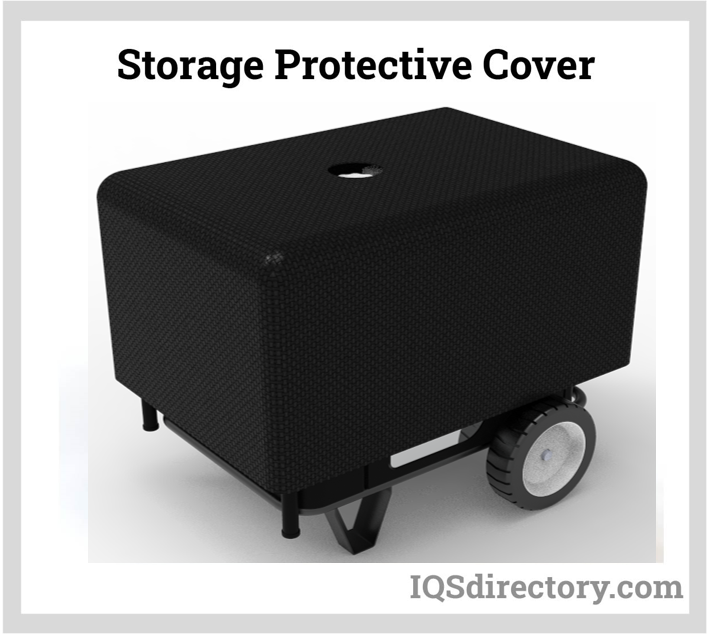
Protective covers are a type of fabric cover that are designed to protect objects from damage or wear and tear. They can be used to protect anything from furniture to machinery.
Creating Protective Covers
Protective covers can be created using sewing machines and can be customized to fit a specific object or space. The general process used to create protective covers involves:
Measurement The first step in creating a protective cover is to measure the object that the cover will be used to protect. This is important to ensure that the cover fits properly and provides the necessary protection. Design Once the measurements have been taken, the next step is to design the cover. This includes determining the shape and size of the cover, as well as any features that may be needed, such as pockets, zippers, or openings for cords or cables. After the design has been finalized, the best materials are chosen. This varies based on the application and level of protection required. Cutting & Sewing Once the materials have been selected, the next step is to cut them to the appropriate size and shape. This is typically done using scissors or a rotary cutter. The pieces of material are sewn together using a sewing machine. This may involve multiple steps, such as stitching together the main body of the cover, attaching any pockets or other features, and adding any necessary fasteners, such as zippers or snaps. Finishing Once the cover has been sewn together, the final step is finishing. This may involve trimming any excess fabric, adding any necessary reinforcements or padding, and adding any finishing touches, such as branding or labels.Depending on the application, additional features such as zippers, pockets, and straps may be added to the cover to make it more functional and easier to use.Protective Covers and Safety
Safety considerations are important when it comes to protective covers to ensure the safety of the user and anyone who comes in contact with the cover. Here are some safety considerations that should be taken into account when using or creating protective covers:
Fire Safety Depending on the materials used, some protective covers may be more prone to catching fire or melting. It is important to ensure that the cover is made of fire-retardant materials or treated with a fire-resistant coating to reduce the risk of fire. Chemical Safety Some protective covers may be used to protect against chemicals, but it is important to ensure that the materials used are not harmful or toxic to the user or anyone who may come into contact with the cover. This is especially important when dealing with hazardous materials or chemicals. Sharp Edges Protective covers for machinery or equipment may need to have cutouts or openings to allow access to controls or other parts. It is important to ensure that these openings are designed to minimize the risk of injury from sharp edges. Proper Fit A protective cover that does not fit properly can be a safety hazard. If a cover is too loose, it may get caught in moving parts, and if it is too tight, it may restrict movement or cause equipment to overheat. It is important to ensure that the cover is designed to fit the equipment properly. Visibility Some protective covers may be opaque, which can be a safety hazard if it restricts visibility of the equipment or the surrounding area. It is important to ensure that the cover does not obstruct the user's view of the equipment or surrounding area. Weight Protective covers that are too heavy can be difficult to move or lift, which can be a safety hazard. It is important to ensure that the cover is designed to be lightweight and easy to handle. Electrical Safety If a protective cover is used to protect electrical equipment, it is important to ensure that the cover does not interfere with the electrical components or wiring, and that it is properly grounded to prevent electrical hazards. Maintenance and Cleaning Protective covers should be designed to be easy to maintain and clean. It is important to ensure that the cover can be easily removed and replaced for cleaning, and that it is not difficult to maintain.In addition to these safety considerations, it is important to follow any safety guidelines or regulations set forth by regulatory agencies such as OSHA (Occupational Safety and Health Administration) in the United States or similar agencies in other countries. These guidelines may include specific requirements for protective covers used in certain industries or applications and lead into our next topic of discussion.
Benefits of Protective Covers
While there are some considerations associated with protective covers, the benefits provided by protective covers outweigh these concerns. Some of the benefits of protective covers include:
Protection As the name suggests, protective covers offer protection to the item they are covering. This can include protection from dirt, dust, moisture, and other environmental factors that could damage or degrade the item. Durability Many protective covers are designed to be durable and long-lasting, which can help extend the life of the item they are covering. Customization Because protective covers can be made from a variety of materials and in a range of sizes and shapes, they can be customized to fit a particular item or application.Protective covers can also enhance the appearance of an item, particularly if the cover has a unique design or branding. Convenience Protective covers can be easily removed and replaced as needed, which can make them a convenient option for protecting items that are used frequently. Cost-Effective Protective covers can be a cost-effective way to protect valuable items, particularly if the alternative is replacing or repairing the item due to damage or wear and tear. Health and Safety Protective covers can also have health and safety benefits, particularly in medical or laboratory settings where they can help prevent the spread of germs or contamination. Security In some cases, protective covers can also provide a degree of security by preventing unauthorized access to an item or restricting visibility of the item.Other potential benefits of protective covers may include insulation, noise reduction, and impact resistance, depending on the specific materials and design of the cover. Overall, the benefits of protective covers will depend on the intended application and the specific needs of the user.