
- 4 leading manufacturers
- 29 additional suppliers
- 17 states and provinces
- 12 related categories
- 12 guide sections
Pressure Gauges Manufacturers and Companies

IQS Directory provides a comprehensive list of pressure gauge manufacturers and suppliers. Use our website to review and source top pressure gauge manufacturers with roll over ads and detailed product descriptions. Find pressure gauge companies that can design, engineer, and manufacture pressure gauges to your companies specifications. Then contact the pressure gauge companies through our quick and easy request for quote form. Website links, company profile, locations, phone, product videos and product information is provided for each company. Whether you are looking for manufacturers of high pressure gauges, low pressure gauges, hydraulic pressure gauges or customized pressure gauges of every type, this is the resource for you.
Suppliers located in PA, CA, GA +14 more states
Contents (6 sections)
Leading Pressure Gauges Manufacturers
Showing all 4
| Placement No. | Manufacturer | Location | Contact | Actions | |
|---|---|---|---|---|---|
| 1 | AMETEK® U.S. Gauge, PMT ProductsAt AMETEK® U.S. Gauge, PMT Products, we take pride in designing and manufacturing precision pressure gauges that set the standard for performance and reliability. We specialize in creating instruments that deliver accurate readings under the most demanding industrial conditions, ensuring dependable operation across a wide range of applications. | Horsham, PA | |||
| 2 | EmersonWe take pride in offering a wide range of pressure gauges designed to deliver precision, reliability, and durability across industrial applications. At Emerson, we engineer our gauges to meet the demands of challenging environments where accurate pressure monitoring is critical to performance and safety. | St. Louis, MO | |||
| 3 | WIKA USASince 1946, WIKA has continuously advanced instrumentation for pressure, temperature, level, flow, and force measurement. A global leader in lean manufacturing, WIKA has manufacturing locations around the globe, which enables flexibility and the ability to meet high delivery demands. | Lawrenceville, GA | |||
| 4 | Endress & Hauser Inc.Endress + Hauser makes highly accurate equipment with electric output signals, which function as digital process pressure and differential pressure gauges. Our differential pressure gauges measure dusts, gases, liquids and vapors. Ceraphant is our pressure switch used in absolute and pressure gauges. | Greenwood, IN |
Claim your Page One Spot
Leading pressure gauges manufacturers are listed first on this page, each with a website preview and a Request a Quote button on its row.
Additional Pressure Gauges Companies
The category’s other pressure gauges companies are listed on their own page, with location, phone and website where each supplier provides them.
View 29 Additional Pressure Gauges CompaniesDo not see your company listed in Pressure Gauges?
Engineers and buyers use this page to find pressure gauges suppliers. Add your company to the Pressure Gauges listings so they can find you too.
List Your Company- Listed in the Pressure Gauges directory
- A profile page for your company
- Buyers contact you directly
Pressure Gauges Industrial Manufacturing Guides

Pressure Gauges: Types and Uses
This article takes an in depth look at pressure gauges. You will learn more about topics such as: What is a pressure gauge? How a pressure gauge works Types of…
5 chapters
Quick Answers
- How many pressure gauges manufacturers are listed on IQS Directory?
- 4 leading manufacturers and 29 additional suppliers.
- Where are pressure gauges manufacturers located?
- The listed suppliers are in 17 states and provinces: Pennsylvania (4), California (3), Georgia (3), Ohio (3), Texas (3), Connecticut (2), Illinois (2), New Jersey (2), and 9 more.
- How do I get quotes from pressure gauges suppliers?
- Select suppliers in the table and choose Request Quotes. IQS reviews your request and forwards it to every supplier you select.
Pressure Gauges
Pressure gauges, also known as pressure gages, are devices used to measure and indicate the pressure of gases or liquids within a closed system or vessel. These instruments are suitable for monitoring a wide range of fluids and gases, from compressed air and hydraulic oil to steam, water, and corrosive chemicals. Accurate pressure measurement is essential for maintaining safe operating conditions, preventing equipment failure, and optimizing process efficiency across many industries.
Pressure Gauge Applications
Pressure gauges are used to monitor and display the internal pressure in vessels or systems—especially where dynamic operating conditions require continuous measurement. Reliable pressure readings are critical in applications where the safe and effective operation of equipment depends directly on precise gauge readings. They help operators detect leaks, overpressure situations, or vacuum conditions before they become hazardous.
Pressure gauges are commonly found in a range of industrial systems and products, including specialty tanks like fire extinguishers and medical gas cylinders, high purity semiconductor gas and liquid systems, tire inflation, pressure canning, pesticide spraying equipment, and nitrous systems for bottles and solenoids. Additional common uses include boilers, compressors, pumps, hydraulic presses, refrigeration units, and laboratory test equipment. When evaluating pressure gauges for a new installation, many buyers ask: “What pressure gauge applications are most common in my industry?” or “How do I choose the right gauge for high-vibration or corrosive environments?” These questions help ensure the selected gauge matches the specific demands of the system.
The History of Pressure Gauges
The long history of pressure gauges underscores their importance in industrial safety and process control. From early barometers and Bourdon tube designs to today’s digital and liquid-filled models, these instruments have evolved to meet increasingly demanding requirements for precision, durability, and environmental resistance. Engineers and buyers frequently ask: “How has the development of the Bourdon tube influenced modern pressure gauge reliability?” or “What historical innovations still shape the selection of pressure gauges for high-pressure or hygienic applications?” This context helps teams choose the right gauge technology for their specific operating conditions and regulatory needs.
Pressure Gauge Design
Pressure gauges are available in a variety of styles, sizes, and materials to suit different applications. Display types include graphical and video displays, digital readouts, or analog meters with needle indicators. Some pressure gauges feature electrical contacts for activating signal lights, alarms, or controlling pumps and valves.
Core design elements include the sensing mechanism (Bourdon tube, diaphragm, or bellows), case material for environmental protection, dial size and readability, connection type (bottom, back, or panel mount), and accuracy class. Manufacturers tailor these features to balance cost, durability, and performance. Many design teams ask: “What gauge design features are critical for vibration-heavy or corrosive environments?” or “How does case material and fill fluid affect gauge longevity and readability?” Proper design consideration ensures accurate, reliable readings and reduces maintenance requirements over the instrument’s service life.
Pressure Gauge Materials
Pressure gauges are constructed from strong, durable materials to withstand harsh environments. Stainless steel is the most widely used material for its corrosion resistance, suitability for high-pressure cleaning, and compatibility with chemical or hazardous substances. Additionally, stainless steel pressure gauges are ideal for applications with strict sanitary requirements, such as sanitary pressure gauges.
Other common materials include brass for general-purpose applications, plastic for cost-sensitive or low-pressure uses, and specialized alloys for extreme temperatures or aggressive media. Wetted parts (those in direct contact with the process fluid) are often stainless steel or Monel to prevent corrosion and contamination. Buyers frequently evaluate: “Which pressure gauge material offers the best corrosion resistance for my chemical or food processing application?” or “How does material selection impact gauge accuracy and maintenance intervals?” Choosing the right materials directly affects safety, performance, and total cost of ownership.
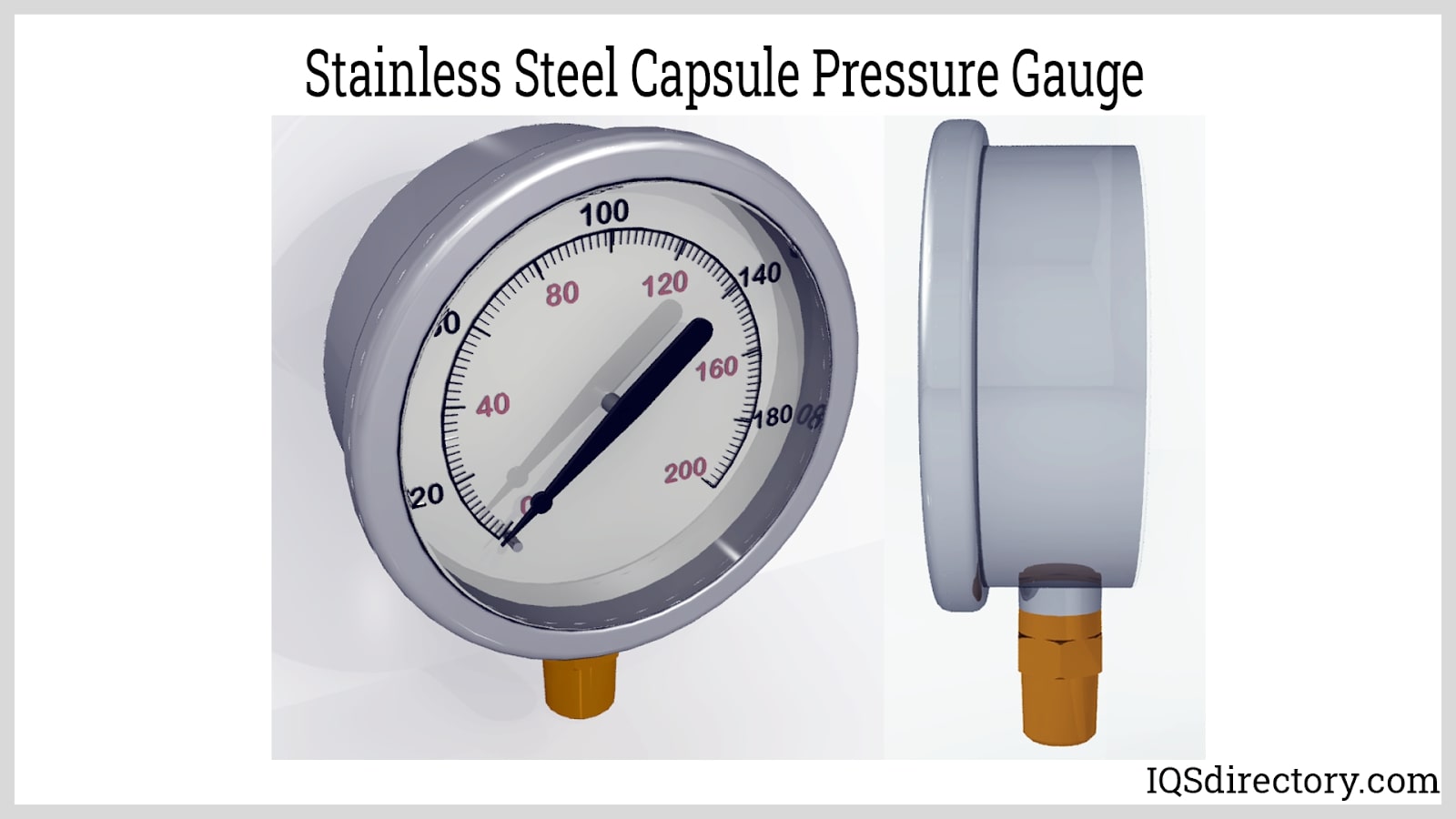
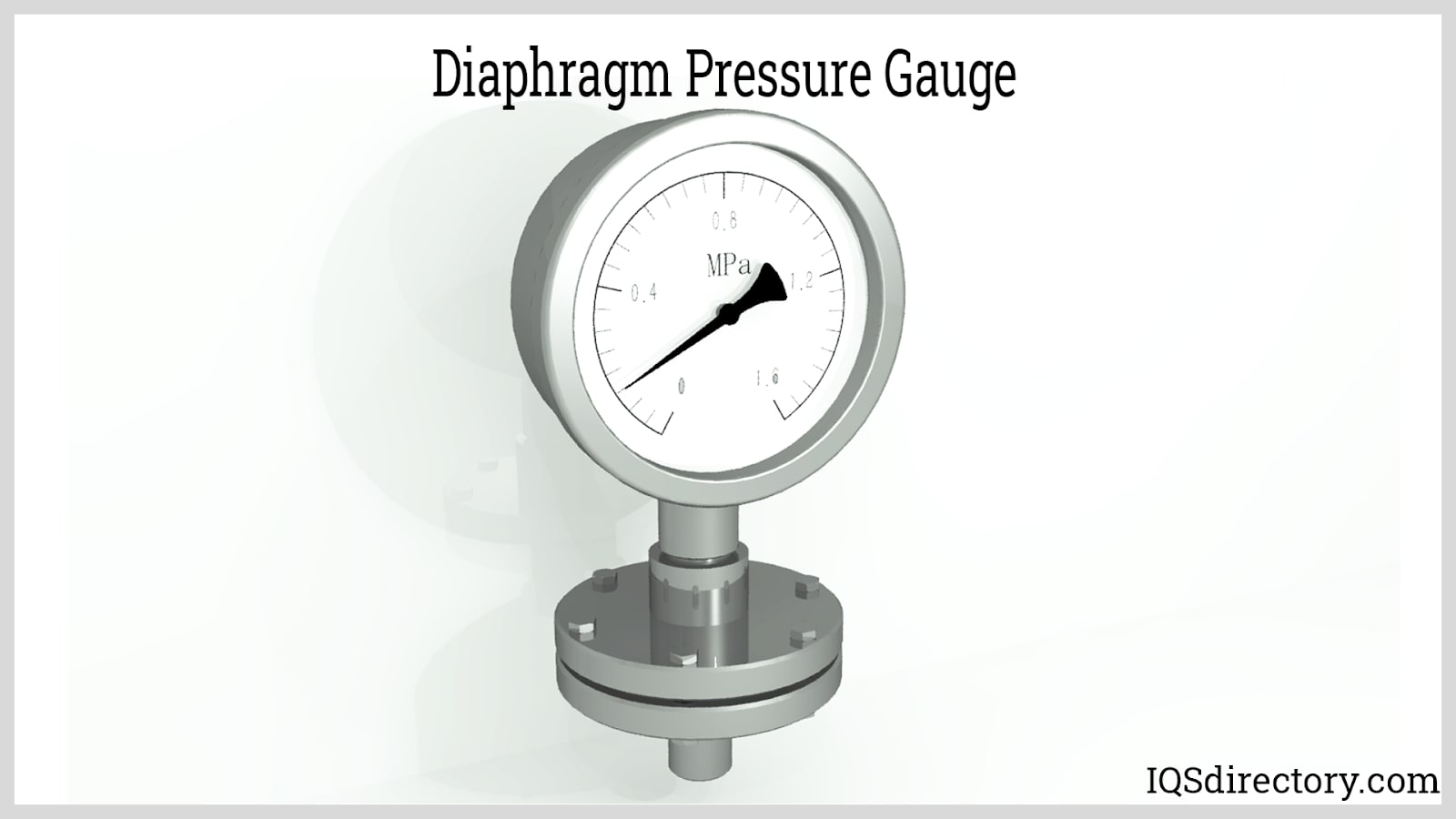
Pressure Gauge Images, Diagrams and Visual Concepts
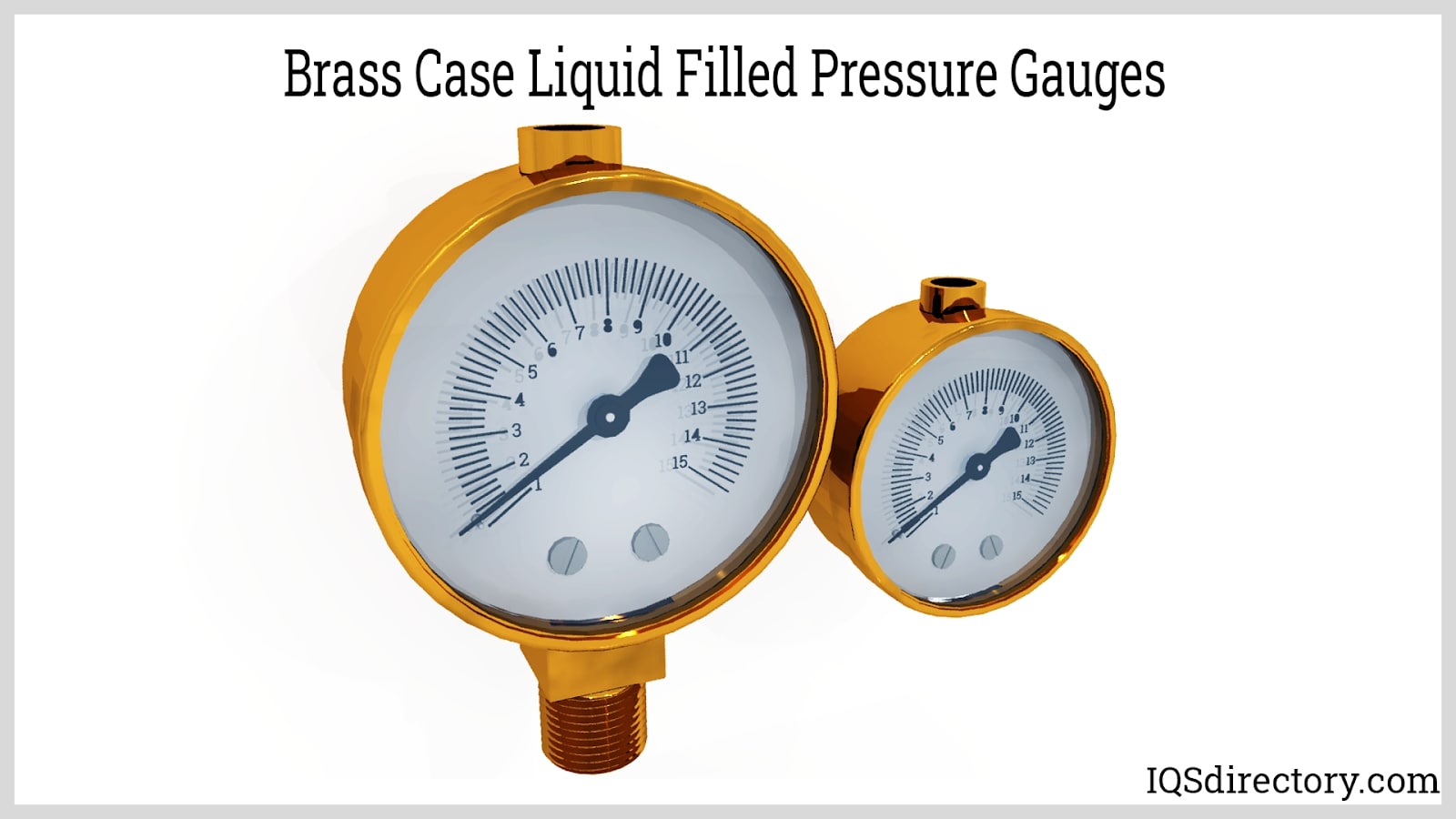
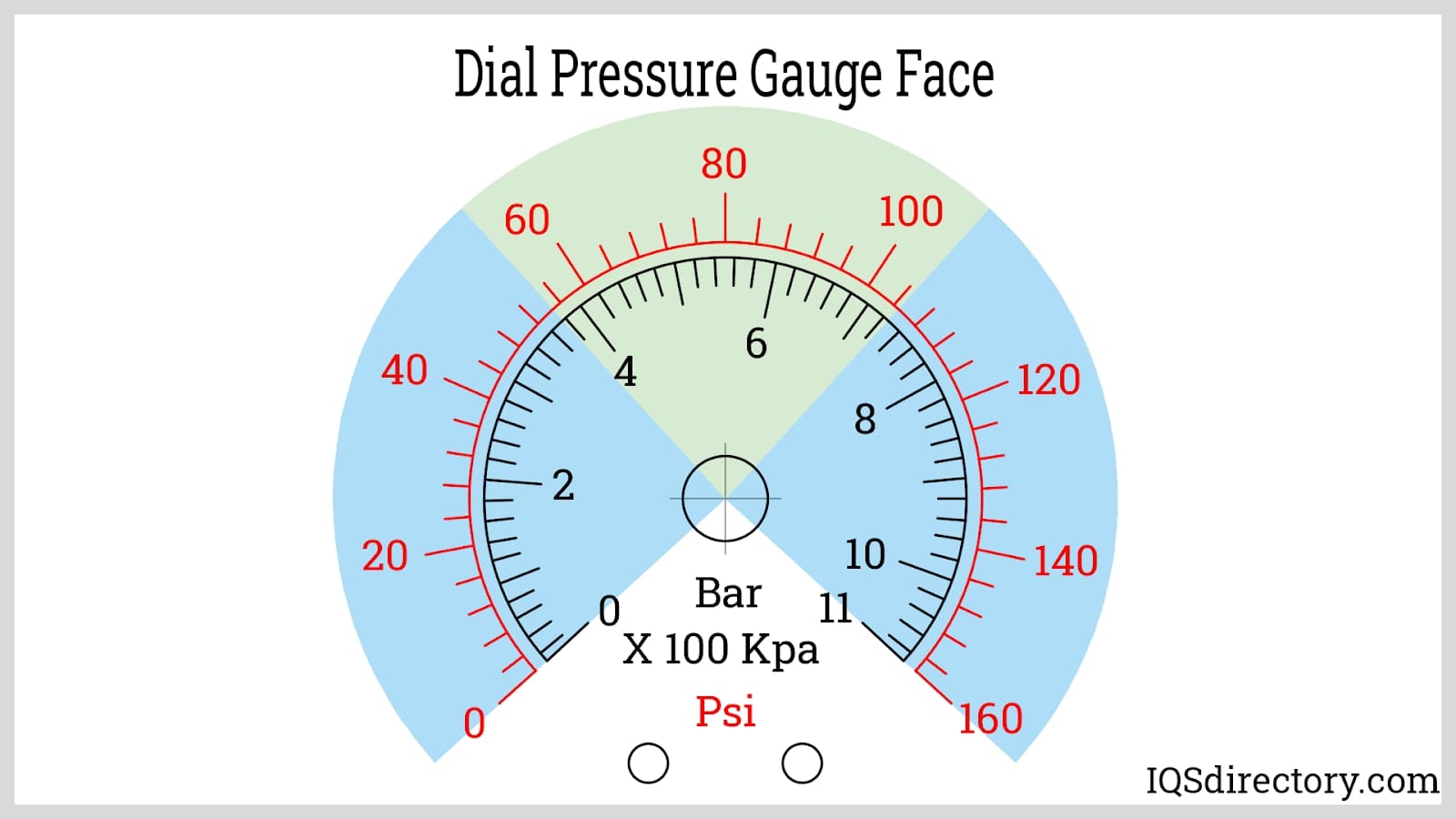
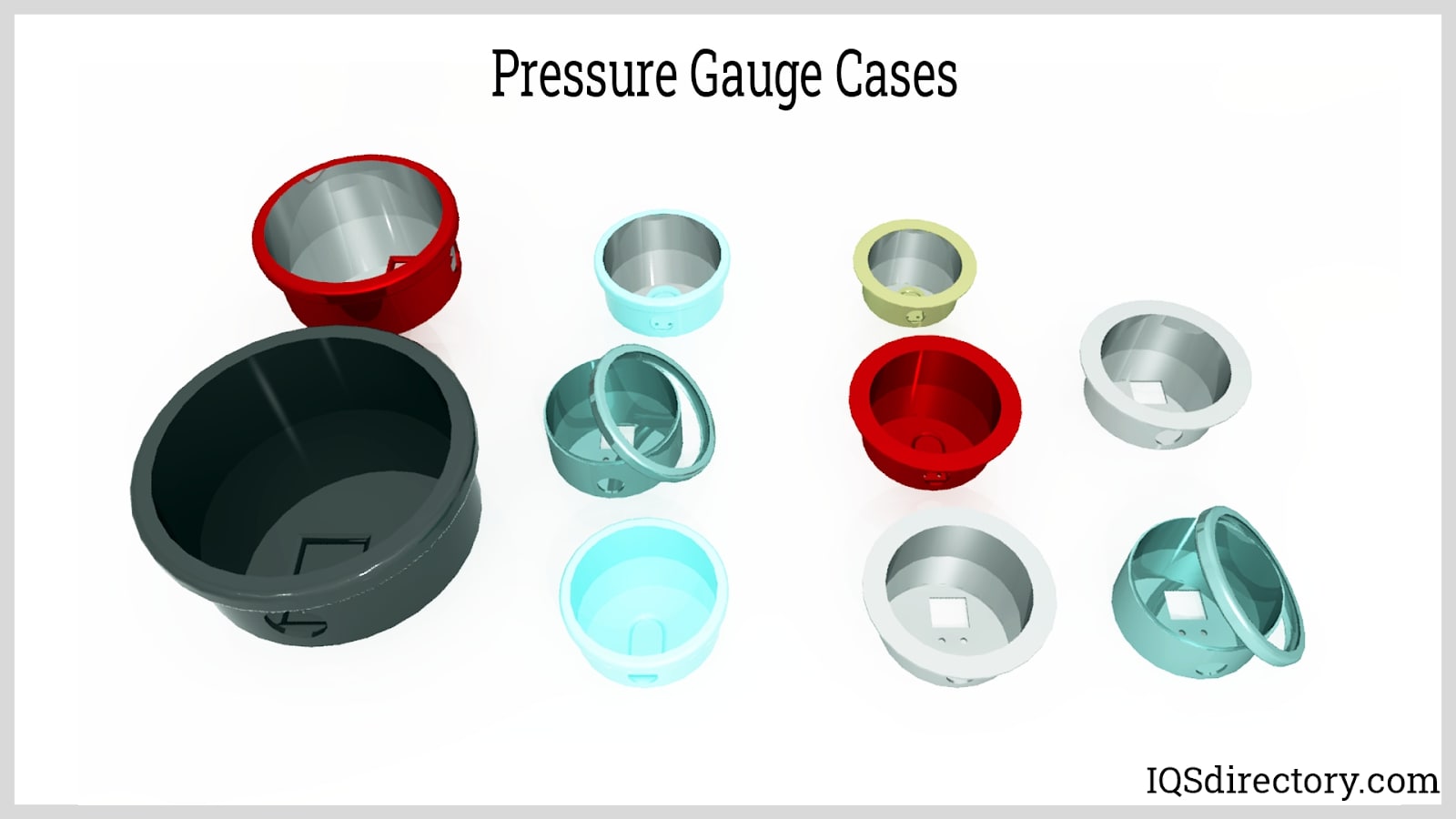
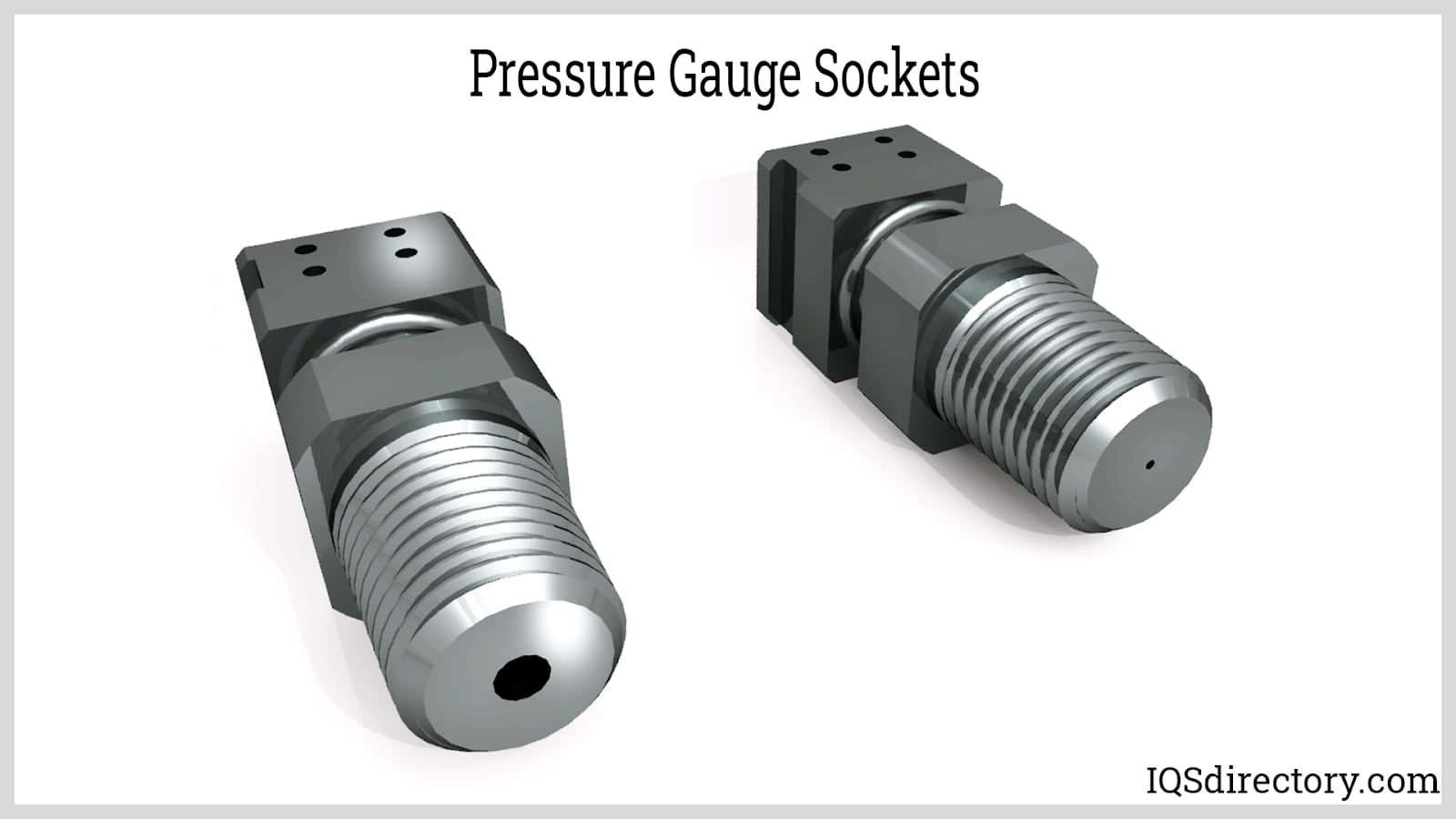
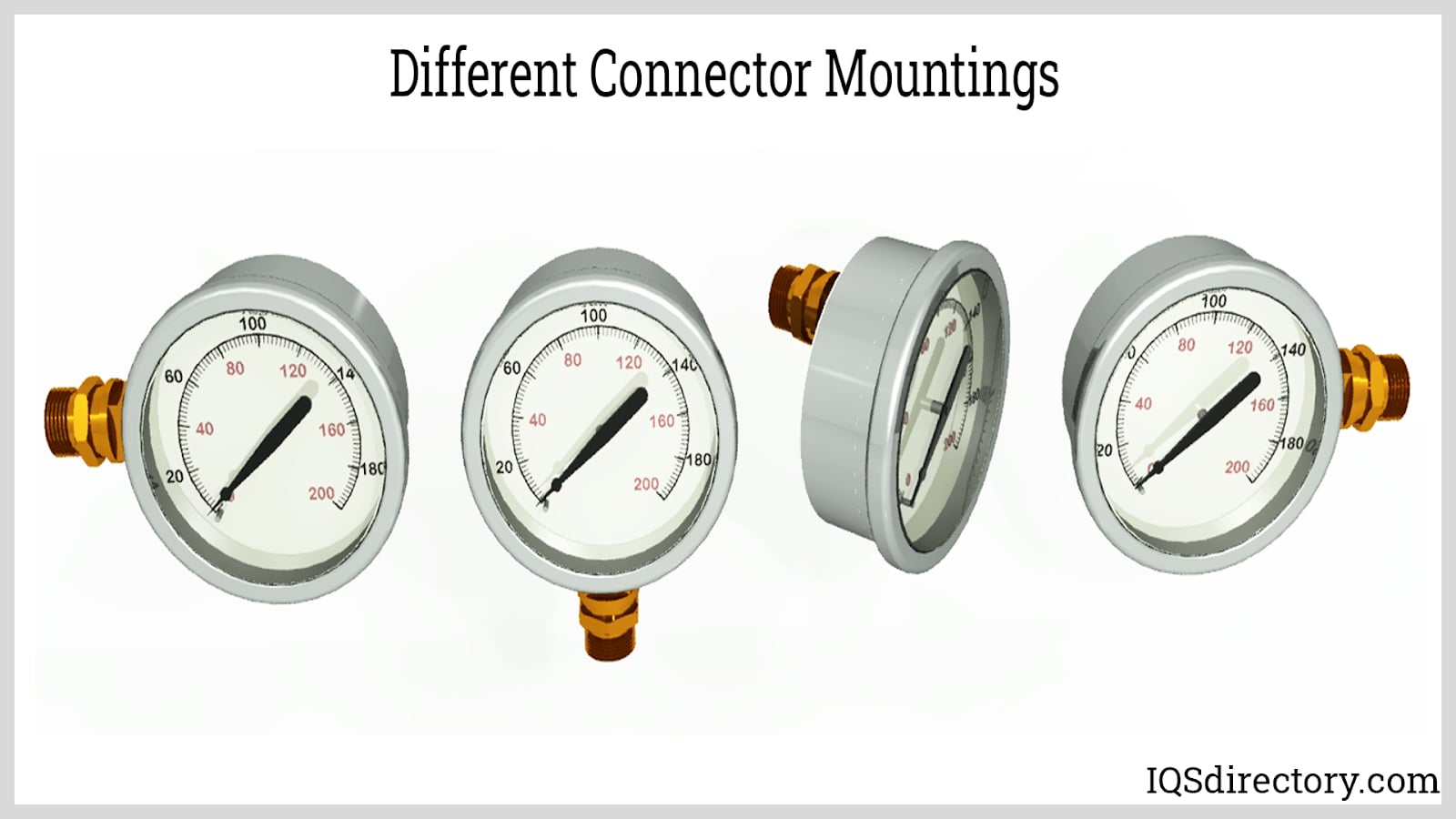
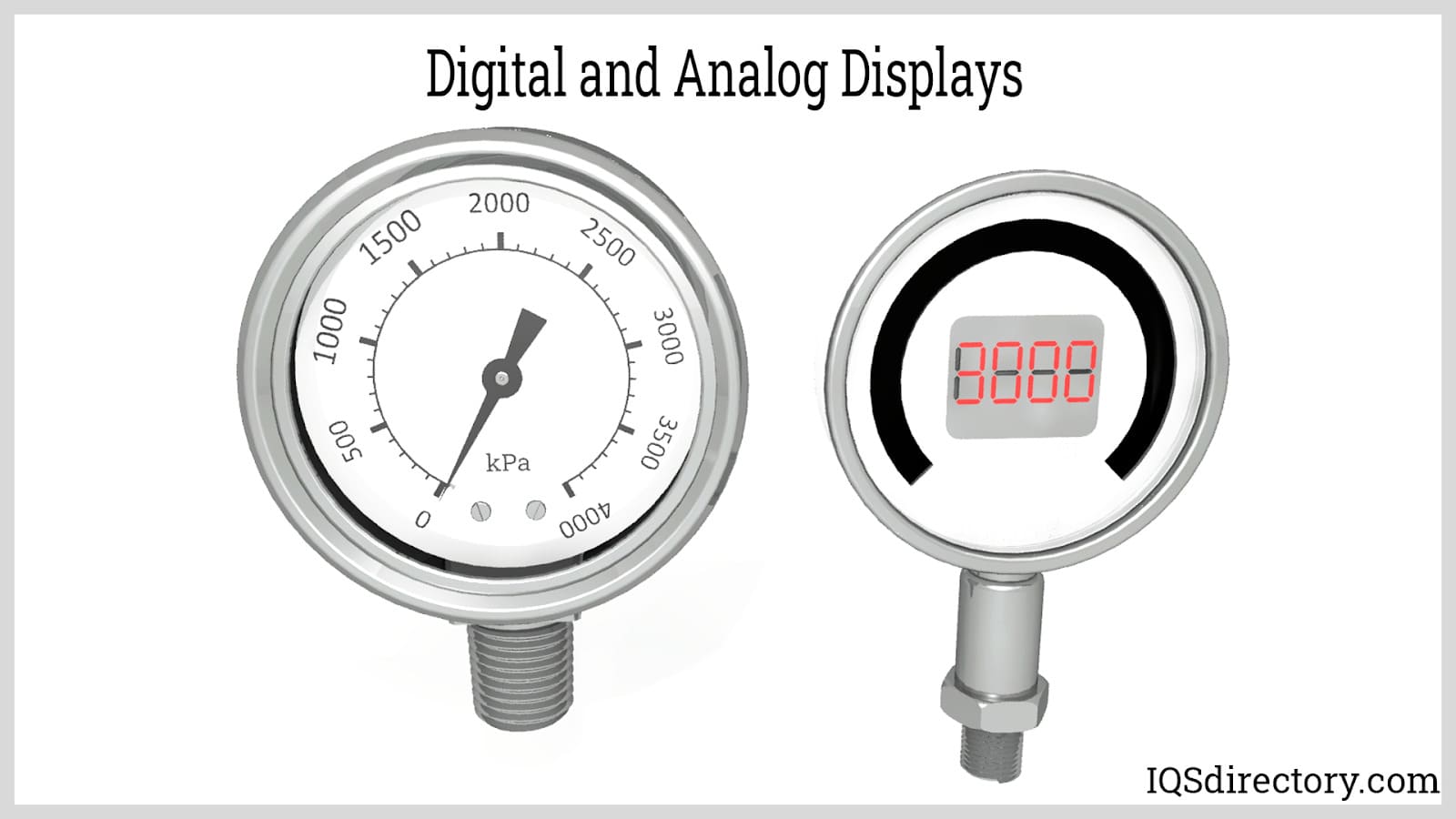
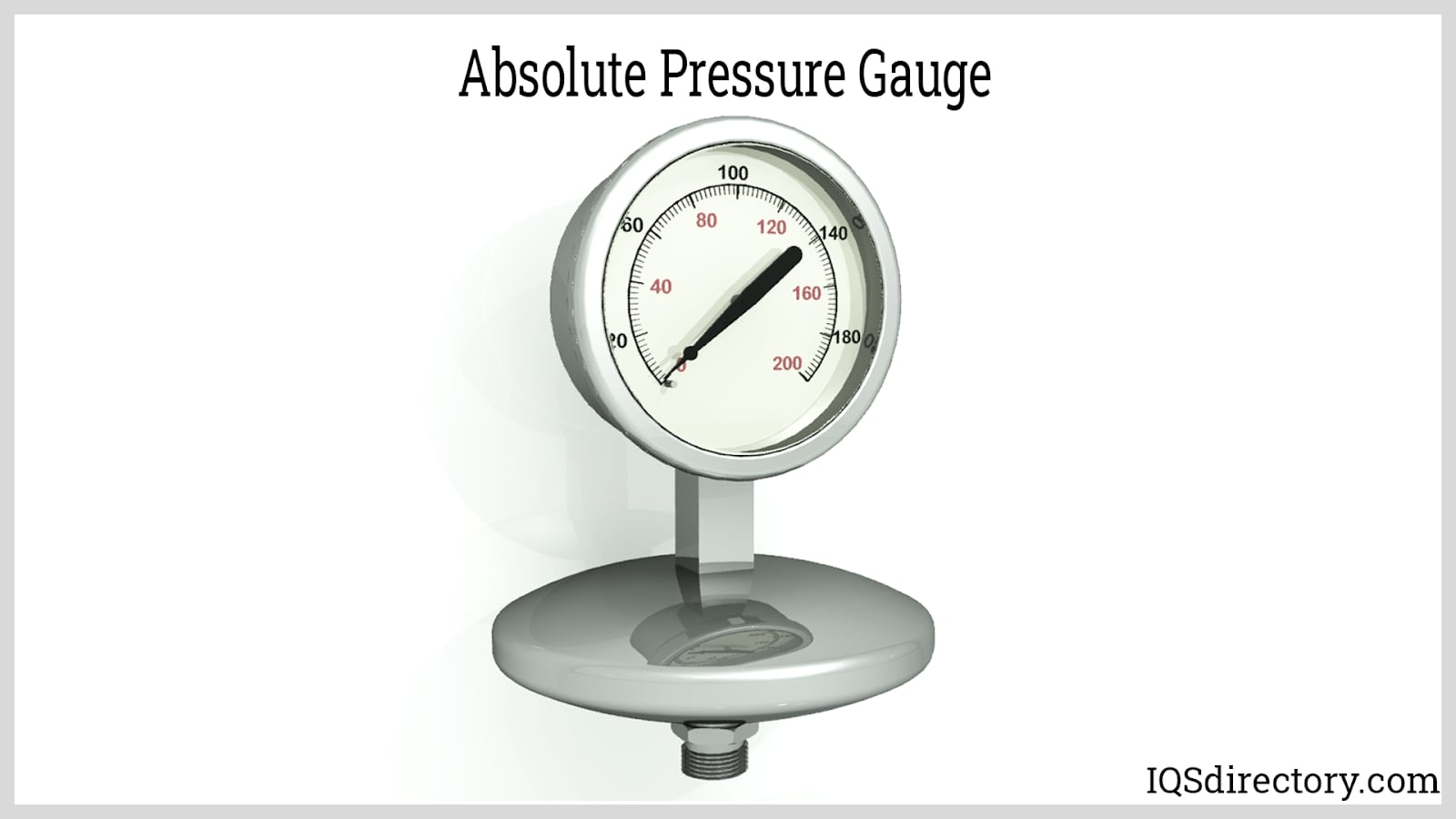
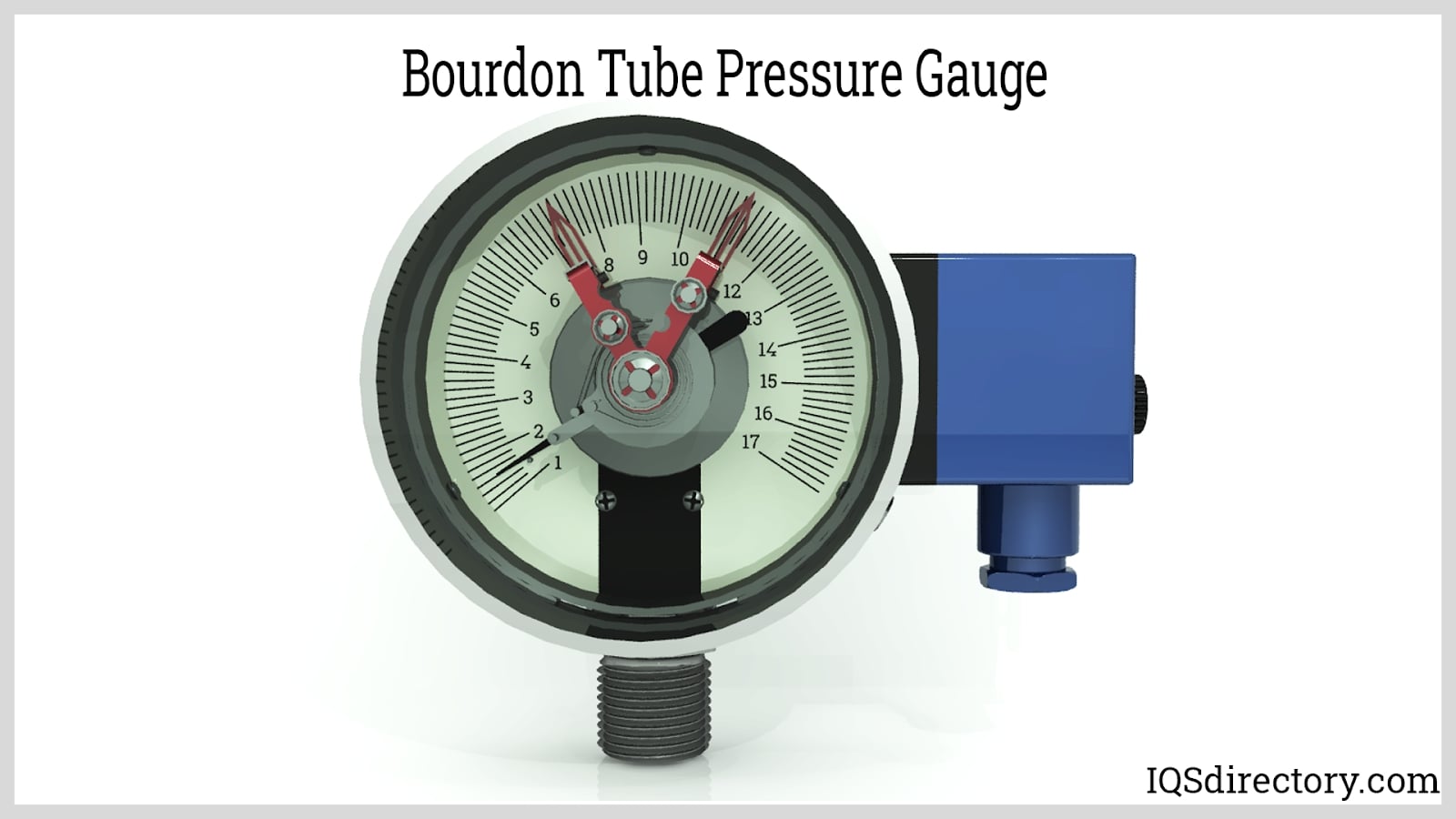
Types of Pressure Gauges
There are many different kinds of pressure gauges, and they are applied in all kinds of contexts.
Air Pressure Gauges Measure pneumatic pressure in any air-operated equipment and can feature analogue or digital displays, as can most gauge varieties. Differential Pressure Gauges Instruments that measure the difference in pressure of a gas or liquid between two points. This eliminates the need for an operator or computer system to watch two gauges and perform the math. Differential pressure gauges are fast and efficient and immediately and constantly display information in one location. Water Pressure Gauges Monitor the pressure of any water-based system. These type pressure gauges are commonly attached to tanks that require monitoring of the liquid within. Fuel Pressure Gauges Instruments that specify the pressure of the fuel supply to the intake manifold in a combustion engine vehicle. This display represents how much gas is left in the tank. Oil Pressure Gauges Tools that measure the pressure of oil circulating in any lubricating system. Maintaining the correct amount of oil in a vehicle can increase its longevity; the same is true in machinery. Gas Pressure Gauges Measure and display the pressure of a gas. They are widely used by manufacturing plants or industrial companies where it is important to monitor any changes in pressure in order to control the rate of flow of gases such as propane or natural gas. They are used to measure very high pressures as well as low pressures. Vacuum Gauges Instruments used to measure and display sub-atmospheric or vacuum pressures within a system or vessel. Vacuums are frequently used to create cold temperatures for certain processes. Temperature Gauges Take measurements in a variety of materials including air, oil and water. They are used for home purposes as well as in scientific processes. Digital Pressure Gauges Attached to an instrument that measures the pressure of a gas or liquid and gives numerical readings. They display readings in digital, rather than analog, form. Digital readouts are typically easier to read and provide greater accuracy. They usually run on batteries and are available on most kinds of pressure gauges. High Pressure Gauges Instruments that measure and display the pressure of gases and liquids moving at high velocities. When the temperature rises or more gas and liquid is added to the container, the pressure increases even more. High pressure gauges are manufactured for industrial and manufacturing applications, mainly for high pressure hydraulic technology including water cutting machines, hydroblasting pumps and hydro-demolition. Some high pressure gauges are specifically designed for use in high purity semiconductor gas and liquid applications; they feature pressure ranges from less than 15 PSI to as high as 10,000 PSI. Low Pressure Gauges Generally measure pressures of 10 to 15 PSI. Gauges designed for low pressure are extremely sensitive and accurate out of necessity; many processes depend on the correct pressure to function properly and safely. Gauges Used in environments where the pressure tends to fluctuate frequently and so requires constant monitoring. Absolute Pressure Gauges Measure any pressure above zero pressure. It is impossible to create a perfect vacuum artificially, and no perfect vacuums exist on earth or anywhere in space. Absolute pressure gauges measure pressures on a scale that begins with zero, though a pressure of zero is impossible to achieve. Ambient Gauges Also called "sea level gauges," are the most commonly used gauge. They are used in meteorology. Ambient gauges are preset to read zero pressure at standard atmospheric pressure (~14.7 psi). Combination Gauges Measure both pressure and vacuum. Commercial Gauges Also referred to as "general purpose gauges" or "equipment gauges," are low-cost measuring instruments designed for applications that do not have severe conditions. Commercial gauges may be ruggedly constructed but are not typically economical to repair. Fuel Pressure Gauges Instruments that indicate the pressure of the fuel supply to the intake manifold in a combustion engine. Gas Pressure Gauges Instruments designed to measure and display the pressure of a gas. High Pressure Gauges Instruments that measure and display the pressure of gases and liquids moving at high velocities, up to 10,000 PSI, a very high pressure when compared to the atmospheric pressure of ~14.7 PSI. Industrial Gauges Have heavy-duty sensing elements and case designs and higher accuracy requirements than general purpose gauges. They are built for extended life and are designed for use in harsh environments. Liquid Filled Gauges Can be filled with various fluids, such as silicone oil, mineral oil and glycerin. The liquid fill provides protection to internal components of the gauge in severe environments in which the gauge may encounter excessive vibration and pulsation. Liquid filled gauges are utilized in nitrous systems on nitrous bottles or solenoids. Low Pressure Gauges Designed to accurately measure pressures less than 15 PSI using a capsule sensing element. Oil Pressure Gauges Instruments that measure and display the pressure of the oil in an enclosure, particularly oil circulating in a lubricating system. Precision and Test Gauges Extremely sensitive and highly accurate instruments that are used in applications that demand precision and consistent results, such as instrument shops, gauge repair and calibration shops and testing laboratories. Process Gauges Made from corrosion resistant material to meet the demanding heavy-duty operating and construction requirements of the chemical and petroleum industries. Process gauges are also designed to fulfill the exacting accuracy and service life needs of a variety of process applications. Retard Gauges Have a scale that is compressed at either one or both of its ends. Temperature Gauges Instruments that indicate the temperature of an item or substance being measured. The results may be displayed through an analog dial or digital readout. Vacuum Gauges Indicate negative atmospheric pressure or the degree of rarefaction below atmospheric pressure. Water Pressure Gauges Designed to determine and monitor the pressure of any system that uses water.When comparing pressure gauge types, many users ask: “Should I choose a liquid-filled or dry pressure gauge for my vibrating equipment?” or “What type of pressure gauge is best for high-purity or sanitary applications?” These decisions impact accuracy, durability, and compliance with industry standards.
Pressure Gauge Accessories
Typical accessories for pressure gauges include diaphragm seals, valves, panel mounts, siphons, test plugs, snubbers, and pulsation dampeners.
Diaphragm seals isolate the gauge from corrosive, viscous, or high-temperature media while transmitting pressure accurately. Snubbers and pulsation dampeners reduce the effects of pressure spikes and vibration, extending gauge life. Other useful accessories include gauge cocks for isolation, protective cases, and calibration kits. Selecting the right accessories improves safety, readability, and overall system performance.
Pressure Gauge Installation
During installation, ensure the pressure gauge is isolated from disruptive forces such as vibration, moisture, and extreme temperatures. Mount the gauge securely to a stable wall, panel, or surface away from piping strains. It is advisable to use a shut-off valve between the gauge and the system, allowing you to isolate the gauge for maintenance without interrupting the entire system. For further installation details, consult your supplier.
Proper installation practices include using thread sealant compatible with the process media, avoiding over-tightening that could distort the socket, and positioning the gauge for easy reading and maintenance access. In high-vibration areas, consider remote mounting or the use of flexible tubing. Teams often ask: “What installation techniques minimize measurement error and extend gauge life?” Following manufacturer guidelines and industry best practices ensures accurate readings and reduces the risk of premature failure.
Standards and Specifications for Pressure Gauges
Pressure gauges used in the United States should comply with ANSI (American National Standards Institute) or ASME (American Society of Mechanical Engineers) standards to ensure quality and safety. For industry-specific requirements, contact relevant authorities.
Key standards cover accuracy classes, dial markings, case construction, and performance under environmental stress. Compliance helps guarantee consistent measurement, interchangeability, and adherence to safety regulations. Many applications also require traceability to NIST or third-party certification. Reviewing applicable standards early in the selection process prevents costly mismatches and supports regulatory compliance.
Things to Consider When Purchasing Pressure Gauges
When selecting a pressure gauge, partner with a reputable manufacturer who understands your requirements. Review the list of providers at the top of this page and consider factors such as lead times, budget, compliance standards, delivery options, and post-delivery support like installation, calibration, or maintenance. Shortlist three or four promising suppliers, discuss your needs with each, and then compare your options to find the best fit.
Manufacturers designing custom pressure gauges take into account factors such as the intended environment, the type of substance being measured, frequency of use, and available installation space.
To enhance performance for specific applications, manufacturers may integrate the pressure gauge with related instruments like pressure transducers, strain gauges, pressure sensors, transmitters, or switches. These can be installed together or housed in a single enclosure, and can be fabricated in any size to fit your system’s requirements.
Additional considerations include accuracy class, dial size and readability, wetted materials compatibility, overpressure protection, and whether a dry or liquid-filled design is more appropriate. Many buyers ask: “What specifications are most important when choosing a pressure gauge for a vibrating or high-temperature application?” A structured evaluation ensures the selected gauge delivers reliable performance and value throughout its service life.
Proper Care for Pressure Gauges
Maintaining the safety and accuracy of pressure gauges requires regular inspection. Routine checks help detect potential issues early, preventing costly repairs or failures. The inspection frequency should be determined based on your application and in consultation with your manufacturer. Pay attention to signs of excessive wear, damaged sockets, or threads, and replace components as needed.
Best practices include periodic calibration, cleaning the lens and case, checking for leaks at connections, and protecting the gauge from excessive vibration or temperature swings. For liquid-filled gauges, verify the fill fluid level and condition. Consistent maintenance extends service life, maintains accuracy, and supports overall system safety.
Pressure Gauges Terms
Common Questions
8 questions
What Is the Main Purpose of a Pressure Gauge?
A pressure gauge measures and displays the pressure of gases or liquids within a closed system, ensuring safe operation and performance. It helps detect leaks, monitor fluid intensity, and maintain precise pressure control in industrial, commercial, and laboratory applications.
How Does a Bourdon Tube Pressure Gauge Work?
A Bourdon tube pressure gauge uses a curved, thin-walled metal tube that straightens as pressure increases. This movement drives the pointer on the dial, providing a visual indication of system pressure. It can measure ranges from -1 bar up to 1000 bar with high reliability.
What Materials Are Commonly Used in Pressure Gauge Construction?
Pressure gauges are typically made from stainless steel, brass, or plastic. Stainless steel is preferred for its corrosion resistance and durability, especially in harsh or sanitary environments like chemical plants or food processing facilities.
What Are the Main Types of Pressure Gauges?
Common types include differential, digital, vacuum, oil, water, and high-pressure gauges. Each type is designed for specific fluids, pressure ranges, and applications, from automotive systems to semiconductor manufacturing and hydraulic equipment.
Why Are Liquid-Filled Pressure Gauges Used in Industrial Systems?
Liquid-filled gauges contain fluids like glycerin or silicone oil to protect internal components from vibration, pulsation, and moisture. This design enhances accuracy and extends service life in demanding environments such as hydraulic and pneumatic systems.
What Standards Apply to Pressure Gauges in the United States?
Pressure gauges used in the U.S. should meet ANSI or ASME standards, which ensure performance, safety, and measurement accuracy across industrial and commercial applications.
How Should a Pressure Gauge Be Installed for Accurate Readings?
Install the gauge securely on a stable surface, isolated from vibration and temperature extremes. Use a shut-off valve between the system and gauge to allow safe maintenance without disrupting pressure monitoring.
How Often Should Pressure Gauges Be Inspected or Maintained?
Routine inspections help maintain safety and accuracy. The frequency depends on operating conditions and should be determined with the manufacturer’s guidance, checking for wear, damaged threads, or socket issues.