
- 4 leading manufacturers
- 17 additional suppliers
- 12 states and provinces
- 13 related categories
- 10 guide sections
Metal Spinning Manufacturers and Companies

IQS Directory implements a thorough list of metal spinning companies and suppliers. Utilize our listing to examine and sort top metal spinning companies with previews of ads and detailed descriptions of each product. Any metal spinning company can design and provide metal spinning services to meet your companies specific qualifications. An easy connection to reach metal spinning companies through our fast request for quote form is provided on our website. The company information includes website links, company profile, locations, phone, product videos and product information. This source is right for you whether it's for a company of steel spinning, brass spinning, or stainless steel metal spinning.
Suppliers located in OH, IN, CA +9 more states
Contents (6 sections)
Leading Metal Spinning Manufacturers
Showing all 4
| Placement No. | Manufacturer | Location | Contact | Actions | |
|---|---|---|---|---|---|
| 1 | Ace Metal Spinning, Inc.At Ace Metal Spinning, Inc., we specialize in precision metal spinning, transforming various metals into complex, seamless shapes with unmatched quality and craftsmanship. For decades, we have honed our expertise in metal spinning to meet the diverse needs of our clients. Our team’s deep knowledge and commitment to excellence enable us to consistently and accurately produce everything from prototypes to high-volume production runs. | Alsip, IL | |||
| 2 | Metalspun Products Company, IncorporatedMetalspun Products Company, Inc. is a manufacturer of precision metal spinnings and provides metal stamping, deep drawing, welding and anodizing services. Materials include aluminum, brass, bronze, copper, titanium and stainless steel. Short and long production runs are available. Serving the electronic, missile, laboratory, medical, food service, lighting and decorative industries for many years! | Oak Creek, WI | |||
| 3 | G&G Metal Spinners, Inc.At G&G Metal Spinners, Inc., we specialize in precision metal spinning services that transform flat metal blanks into seamless, symmetrical components for a wide range of industrial applications. Our company is dedicated to producing high quality spun parts that meet strict dimensional and structural requirements. We focus on delivering durable, accurately formed components that integrate efficiently into our customers’ assemblies and finished products. | Indianapolis, IN | |||
| 4 | Prime Metal ServicesAt Prime Metal Services, we specialize in precision metal spinning solutions that transform raw materials into high-performance components for demanding industrial applications. Our company combines advanced forming techniques with hands-on expertise to deliver consistent, repeatable results across a wide range of geometries. | Freeport, NY |
Claim your Page One Spot
Leading metal spinning manufacturers are listed first on this page, each with a website preview and a Request a Quote button on its row.
Additional Metal Spinning Companies
The category’s other metal spinning companies are listed on their own page, with location, phone and website where each supplier provides them.
View 17 Additional Metal Spinning CompaniesDo not see your company listed in Metal Spinning?
Engineers and buyers use this page to find metal spinning suppliers. Add your company to the Metal Spinning listings so they can find you too.
List Your Company- Listed in the Metal Spinning directory
- A profile page for your company
- Buyers contact you directly
Metal Spinning Industrial Manufacturing Guides
Metal Spinning: Types, Applications, Advantages and More
Descriptions of metal spinning with a list of highly qualified metal spinning companies You will learn: What is Metal Spinning? Metal Spinning Machinery Types…
7 chapters
Quick Answers
- How many metal spinning manufacturers are listed on IQS Directory?
- 4 leading manufacturers and 17 additional suppliers.
- Where are metal spinning manufacturers located?
- The listed suppliers are in 12 states and provinces: Ohio (4), Indiana (3), California (2), Minnesota (2), New York (2), Texas (2), Illinois (1), Massachusetts (1), and 4 more.
- How do I get quotes from metal spinning suppliers?
- Select suppliers in the table and choose Request Quotes. IQS reviews your request and forwards it to every supplier you select.
Metal Spinning
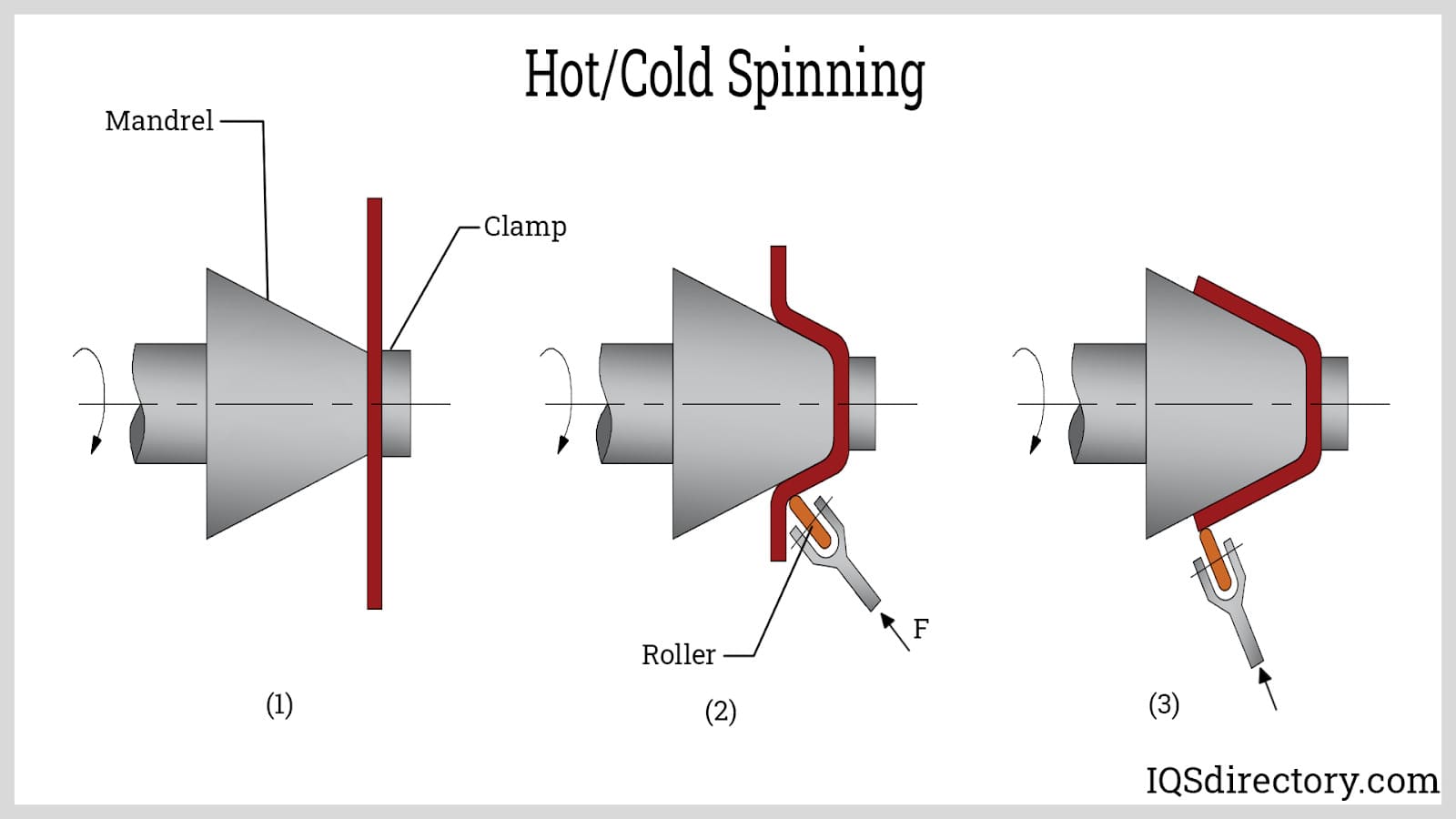
Metal spinning, also known as spin forming, is a cold metalworking technique where a flat metal disc, mounted on a lathe mandrel, rotates at high speed and is shaped by various forming tools.
Sheet metal spinning produces high-quality components used across multiple industries, such as aerospace, food processing, healthcare, defense, pharmaceuticals, paper manufacturing, music, architecture, interior design, and home appliances.
The History of Metal Spinning
The Benefits Metal Spinning
Metal spinning provides several key benefits. The finished parts are free of wrinkles and warping. The process is efficient, typically forming a metal piece in just five to ten minutes. Metal spinning generates minimal scrap, reducing material waste. It is often more affordable than other metal forming methods, particularly for small production runs. Additionally, the spinning process can work-harden the metal, resulting in stronger finished components.
How Metal Spinning Works
The metal spinning process is simple and consists of the following steps:
The metal spinner uses a tool or multiple tools, known as spoons, to apply pressure to a rotating metal disc, or blank, shaping it over a mandrel. Sometimes, manufacturers pre-form the metal using deep drawing before spinning. Rollers attached to levers are also commonly used to smooth and shape the material prior to reaching the mandrel. Generally, a larger roller diameter results in a smoother surface on the finished product.
Materials Used in Metal Spinning
Metal spinning is suitable for a variety of ductile metals and alloys, such as aluminum, titanium, stainless steel, and copper.
Aluminum Metal Known for being cost-effective and highly malleable, aluminum is selected for its ease of forming, strong corrosion resistance, and low weight. It is a preferred choice for aerospace, construction, and transportation applications. Titanium Metal Titanium is exceptionally strong and durable, featuring excellent corrosion and heat resistance, low density, and a high strength-to-weight ratio. These qualities make it especially valuable in the aerospace industry. Stainless Steel Stainless steel is widely used in metal spinning for its outstanding strength-to-weight ratio, ease of fabrication, and competitive cost. Its durability, attractive finish, heat resistance, and corrosion resistance make it ideal for products like cutlery, automotive parts, and more. Copper Metal Copper is a non-magnetic metal valued for its appearance, corrosion resistance, ductility, and workability. It is recyclable, antimicrobial, and both electrically and thermally conductive. Common spun copper items include pipes, sinks, architectural elements, jewelry, and medical devices.Metal Spinning Images, Diagrams and Visual Concepts
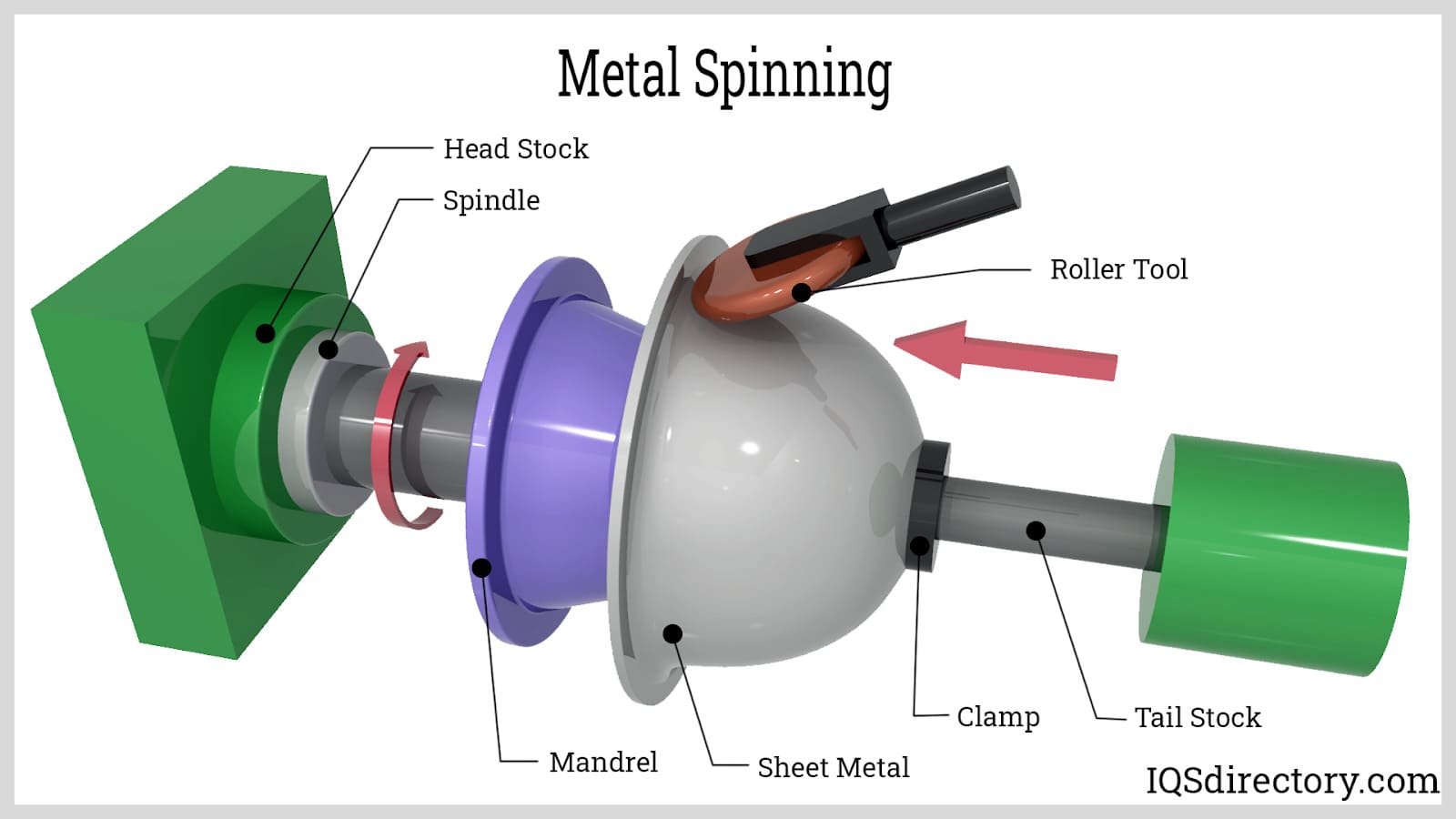
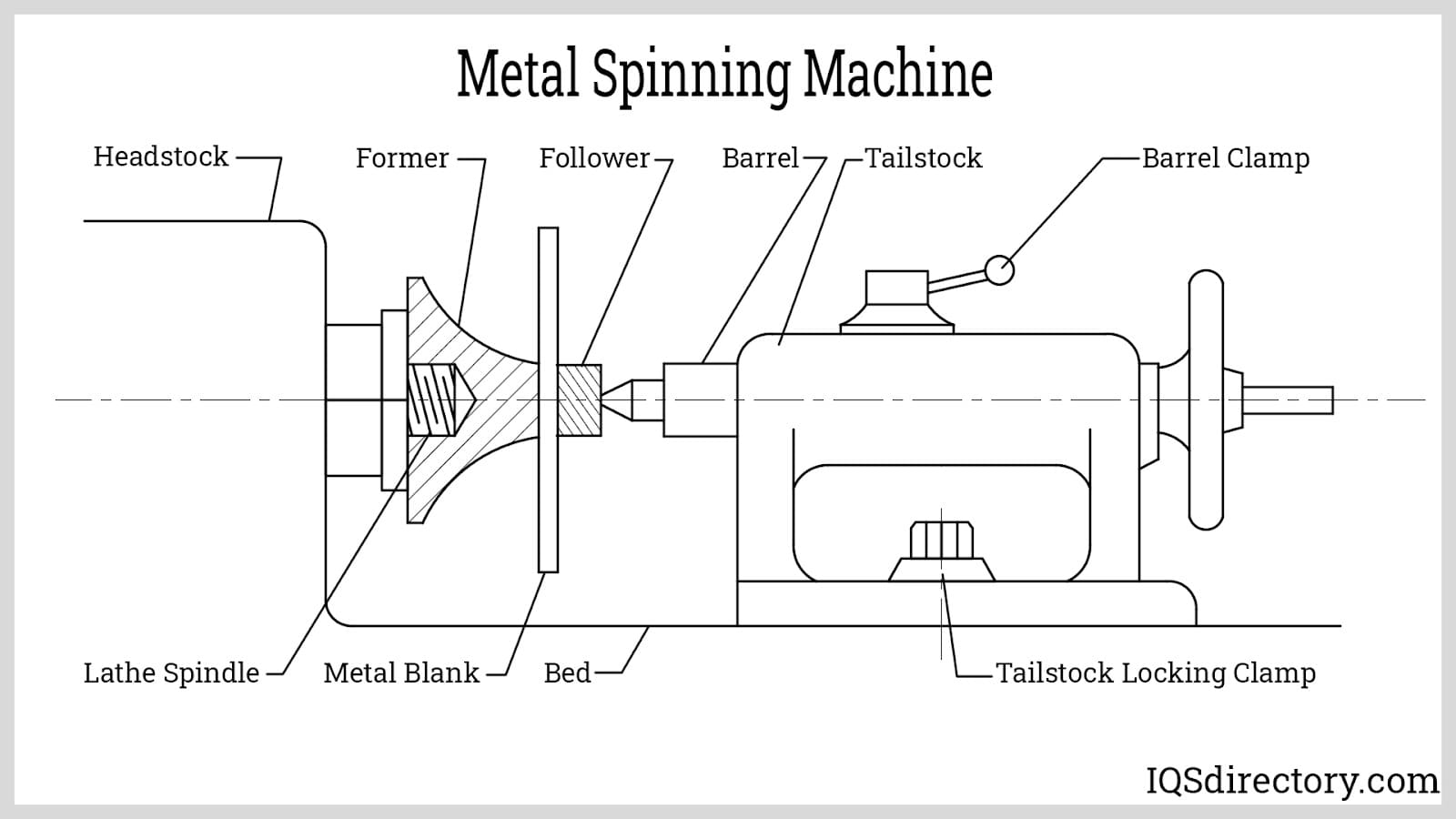
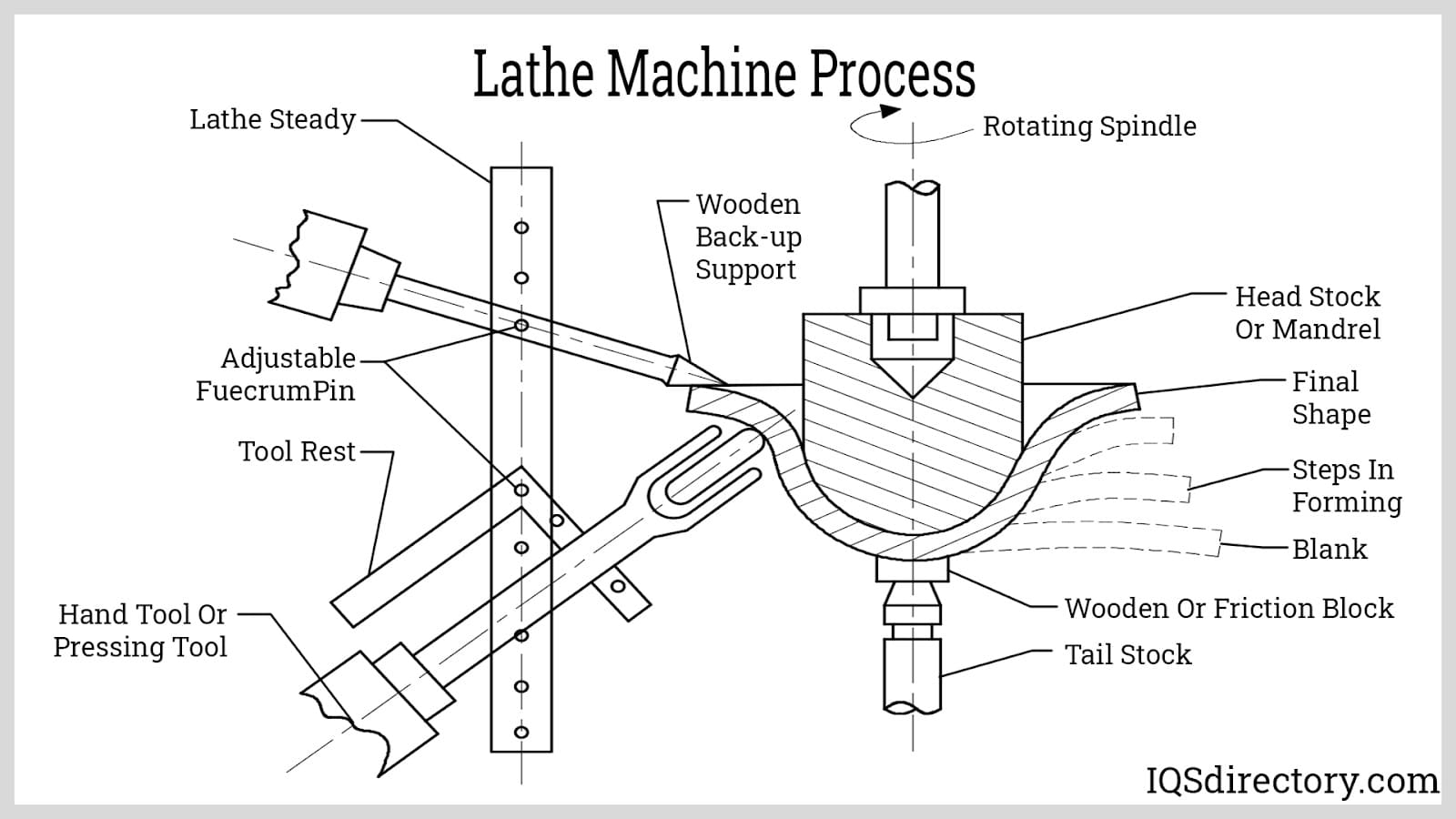
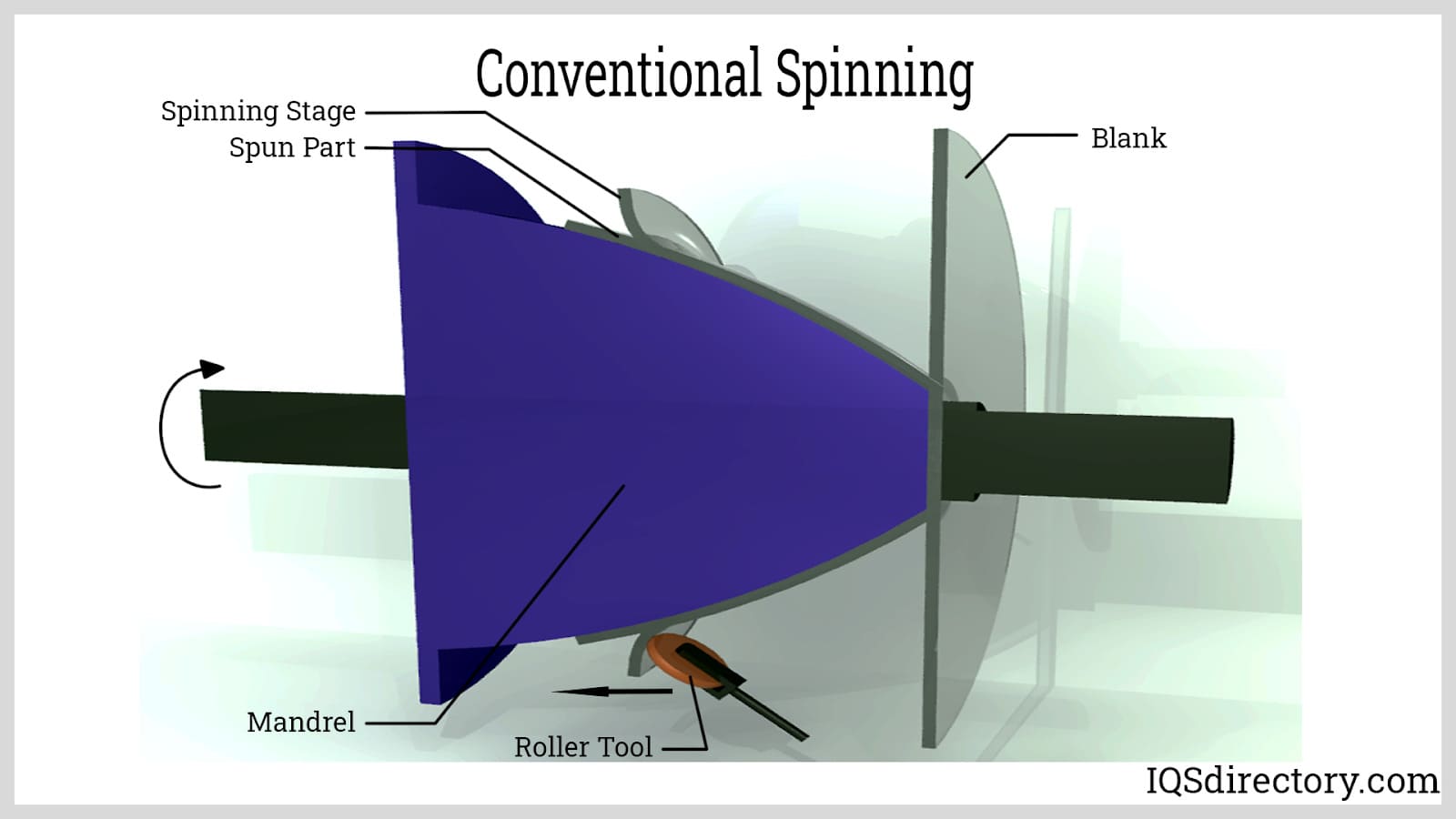
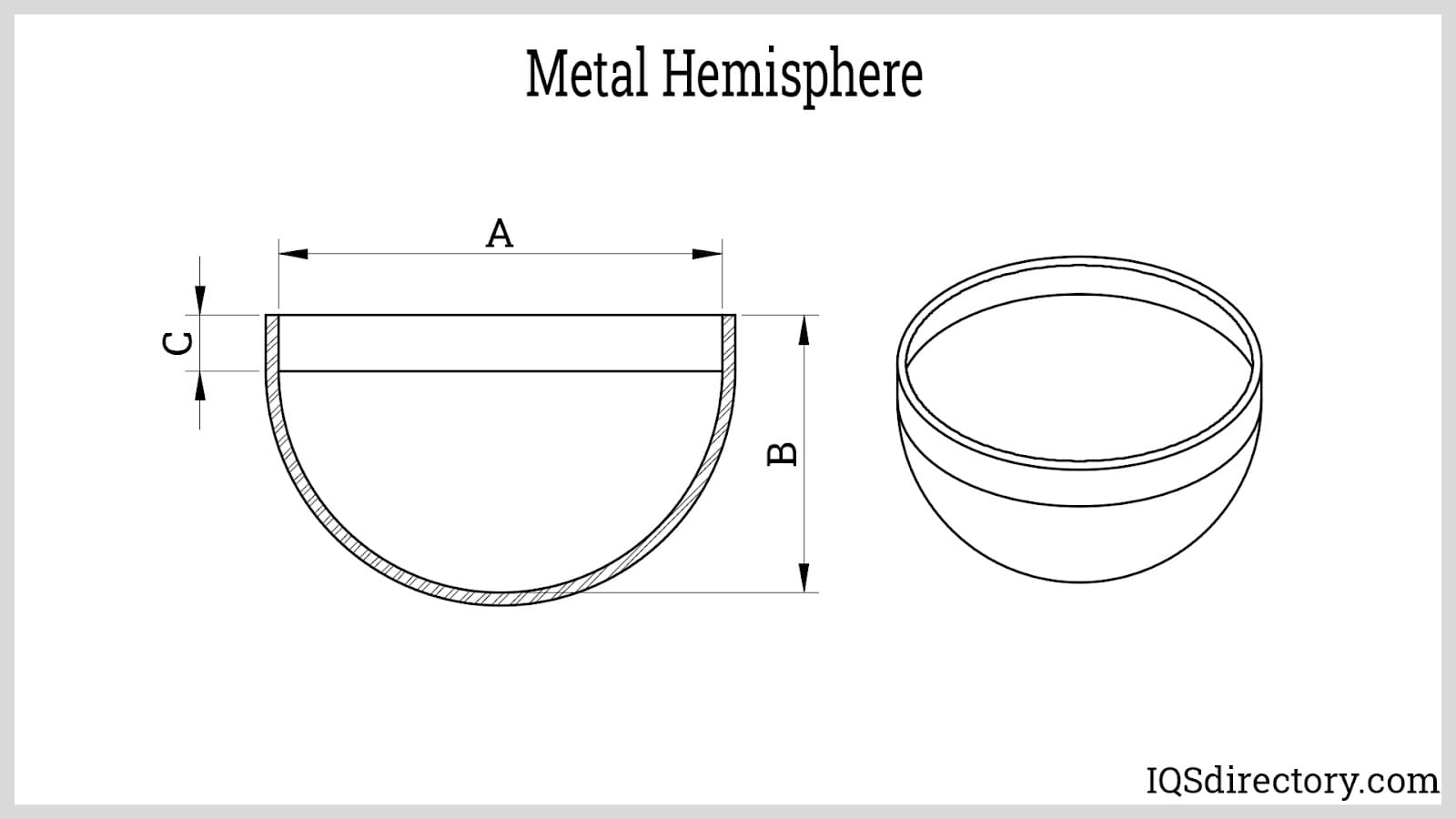
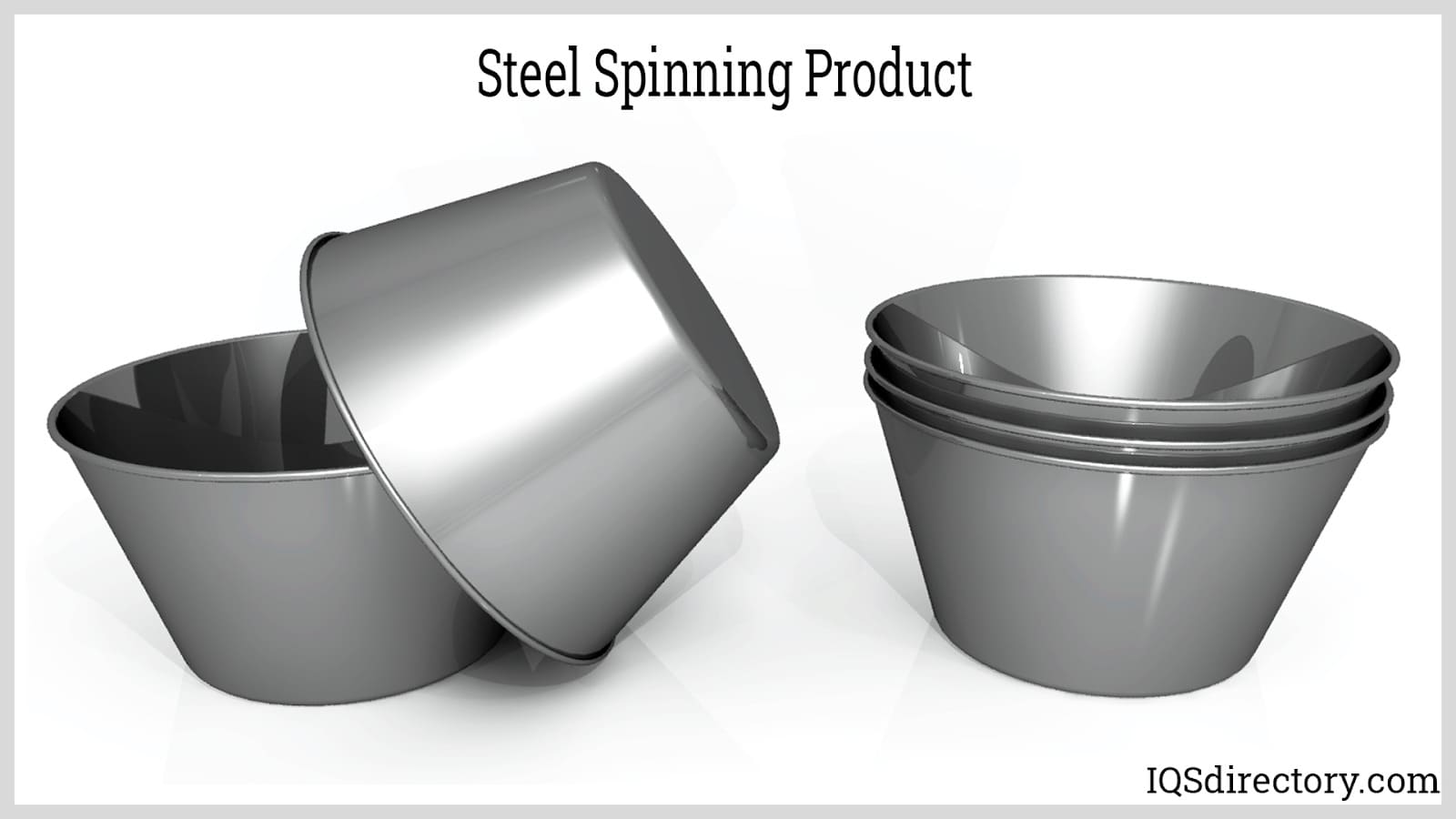
Machinery Used in Metal Spinning
Although metal spinning can be performed by hand, most modern metal spun products are made using CNC metal spinning machines—computer numerically controlled equipment.
Some manufacturers still use hand metal spinners, but these are increasingly uncommon. While the machine controls the spinning, the pressure is applied manually, making the process labor-intensive and potentially resulting in less consistent parts.
CNC metal spinners (computer numerically controlled spinning) and associated equipment are now the primary tools for metal spinning. Modern CNC technology allows for rapid, high-volume production of precision, concentric metal parts with tight tolerances. CNC spin machines are also employed in fabricating other sheet metal parts.
Most metal spinning shops use custom metal spinners. This approach offers lower costs due to fast setup times and flexible tooling, making custom metal spinning more cost-effective than many other metal fabrication methods.
Products Produced Through Metal Spinning
Precision metal spinning enables the creation of products such as engine components, gas cylinders, nozzles, tank heads, rocket nose cones, brass instrument bells, decorative items, specialty lighting, public waste bins, funnels, freezer parts, mixing bowls, cookware, filter housings, pressure vessels, and cartridges.
Variations and Similar Processes of Metal Spinning
Metal spinning has various adaptations and related processes, including hot spinning, reducing, flow forming (with tube forming, forward flow forming, reverse flow forming, and shear spinning), and hydroforming (with tube hydroforming, panel hydroforming, low pressure hydroforming, and high pressure hydroforming).
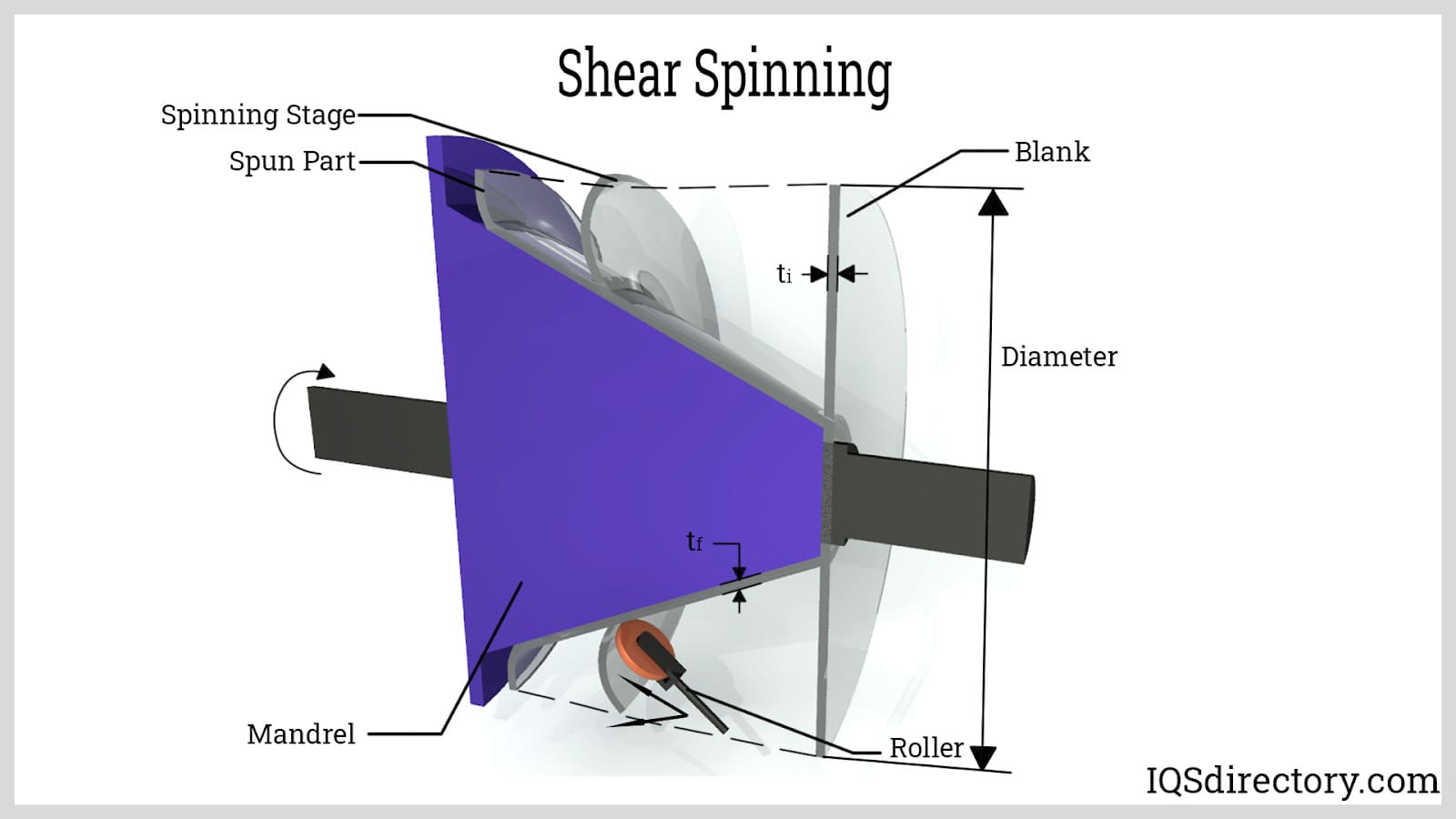
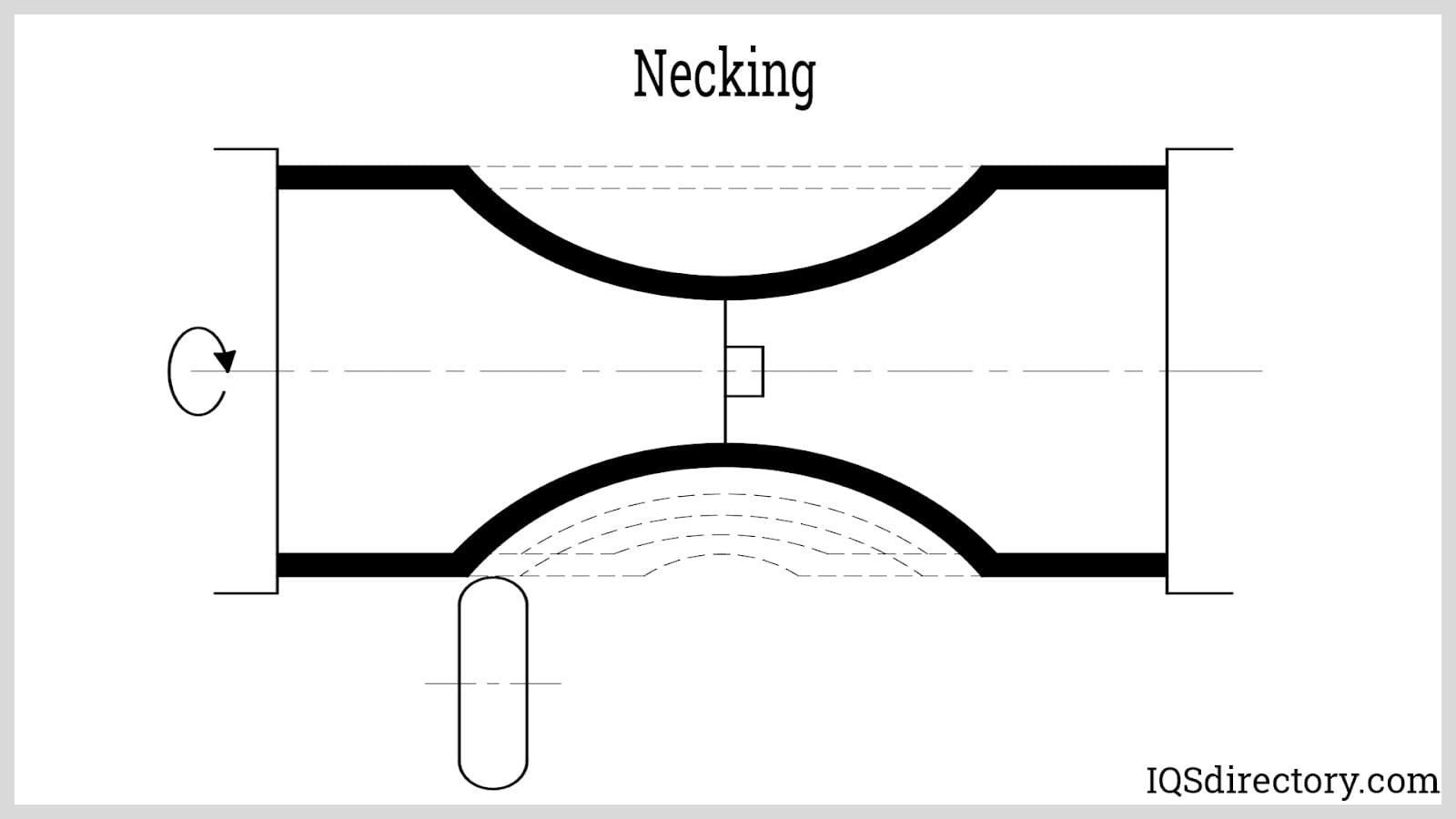
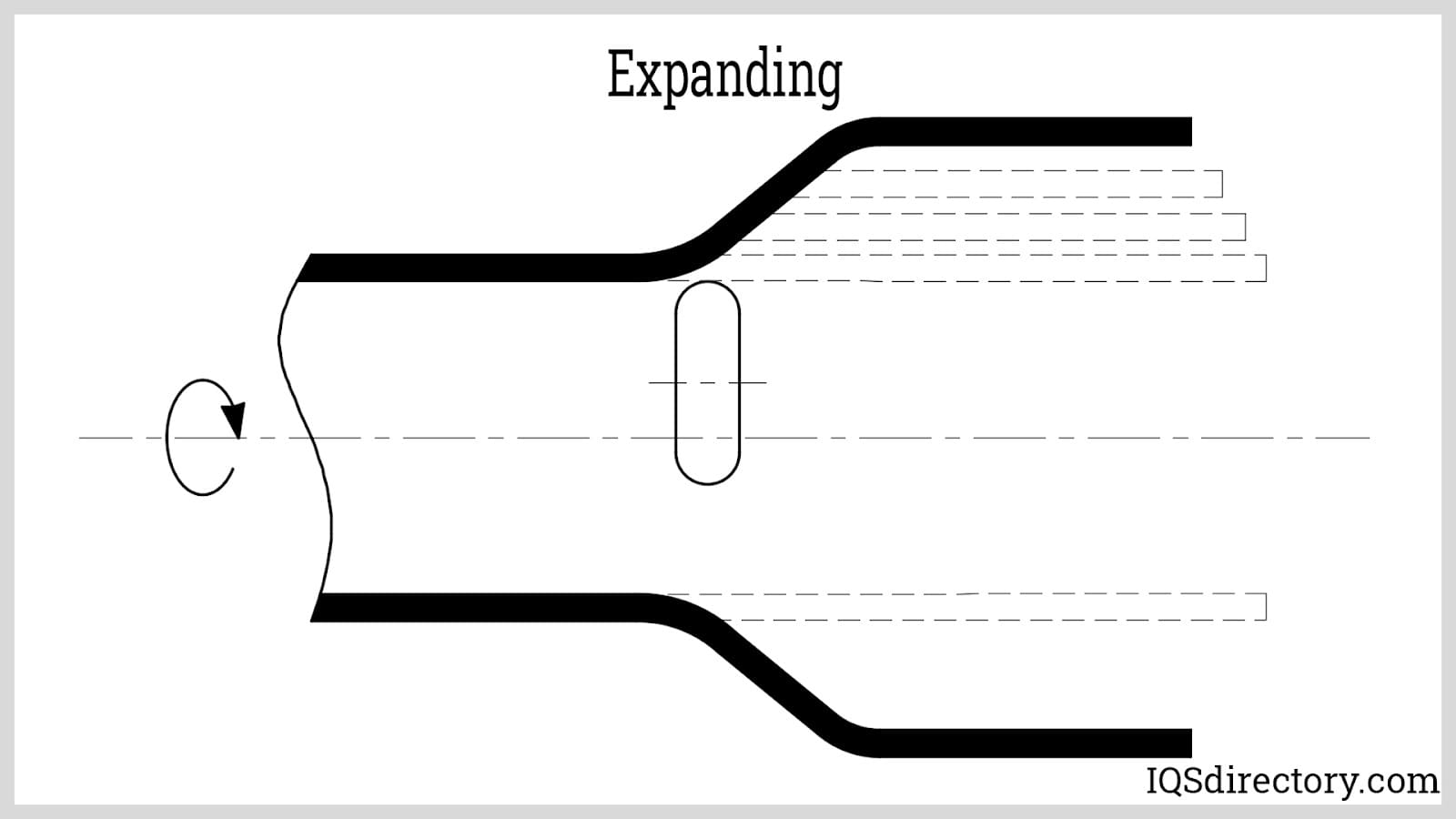
Hot Spinning This variation uses heat to make the workpiece more pliable, allowing for the creation of smaller diameters with seamless shoulders. The application of heat reduces the force required for shaping the metal. Reducing Method This method allows metal spinners to form parts with inward angles and smaller diameters. For parts where precise angles or surface finishes are less important, spinning is done without a mandrel—called "spinning on air." For critical forms and finishes, the workpiece is spun on an eccentrically mounted mandrel. Flow Forming Flow forming is an advanced alternative to spin forming, used for designs that require variable wall thickness and higher complexity. It creates seamless, flexible components with greater tensile strength. In flow forming, rollers extrude a pre-formed metal blank or perform over a mandrel, producing hollow, symmetrical shapes. Wall thickness is controlled by the gap between the mandrel and rollers, which can be adjusted for variable or uniform thickness. The resulting parts are round in cross-section and can be straight-sided cones or contoured shapes. The blank may be welded or made from sheet metal. Materials like stainless steel are ideal due to their ductility and strength, making them suited for cold extrusion. Tube Forming A type of flow forming that produces cylindrical shapes by cold working tubular preforms using rollers and a mandrel. Forward Flow Forming This tube forming process is used to create shapes with one closed end, such as vessels. The material moves in the same direction as the rollers, with the preform's bottom resting against the mandrel face. Reverse Flow Forming This flow forming method produces parts with two open ends, like tubes. Rollers apply force against a serrated mandrel ring, compressing and extruding the material. Shear Spinning Shear spinning, a main type of flow forming, creates cone-shaped or contoured metal parts by using rollers to shear a flat blank over a rotating mandrel. The blank's diameter remains the same, but the wall thickness is reduced based on the mandrel angle. No material is lost during this process. Hydroforming as an Alternative Hydroforming is used when traditional spinning or flow forming are not suitable. It uses high-pressure hydraulics to force metal around a punch, resulting in parts with uniform thickness. Hydroforming includes tube hydroforming, panel hydroforming, low pressure hydroforming, and high pressure hydroforming. Tube Hydroforming The most common hydroforming process, typically performed at low pressure, creates tubular parts with excellent structural integrity. Panel Hydroforming This high-pressure process is used to manufacture parts for the automotive and aerospace sectors. Low Pressure Hydroforming Used for reshaping tubes where strict cross-sectional definition is not required. High Pressure Hydroforming This method achieves greater reshaping of tubing, allowing the length-to-circumference ratio to change by up to 50 percent.Things to Consider When Choosing Metal Spinning
Metal Spinning Terms
Common Questions
7 questions
What Is Metal Spinning and How Does It Work?
Metal spinning, or spin forming, shapes a flat metal disc over a mandrel on a rotating lathe. Using tools or rollers, pressure forms the metal into round, symmetrical components without cutting or removing material, resulting in smooth, uniform parts.
Which Industries Commonly Use Metal Spinning?
Metal spinning is used in aerospace, food processing, healthcare, defense, architecture, and appliance manufacturing. It’s ideal for producing precision components like engine parts, cookware, lighting fixtures, and decorative metalwork for industrial and commercial applications.
What Materials Are Best for Metal Spinning?
Common materials include aluminum, titanium, stainless steel, and copper. Each offers unique advantages—aluminum for its light weight, titanium for strength, stainless steel for durability, and copper for its conductivity and decorative appeal.
What Are the Advantages of Metal Spinning?
Metal spinning is cost-effective, fast, and produces wrinkle-free, high-quality parts. It minimizes material waste and work-hardens the metal for added strength, making it ideal for both small and medium production runs in U.S. manufacturing facilities.
How Does CNC Metal Spinning Differ from Manual Spinning?
CNC metal spinning uses computer-controlled machines for precise, repeatable production. Unlike manual spinning, which depends on operator skill, CNC systems automate shaping, ensuring consistent quality, higher production rates, and tighter tolerances for complex designs.
What Is the Difference between Hot Spinning and Cold Spinning?
Hot spinning heats the metal to make it more pliable, enabling smaller diameters and seamless shoulders. Cold spinning is performed at room temperature and is preferred for applications requiring dimensional accuracy and work-hardened strength.
What Should I Consider When Choosing a Metal Spinning Manufacturer?
Review factors like production capacity, material capabilities, order size, and lead times. Some U.S. metal spinning shops specialize in small-batch or large-diameter parts, while others offer in-house tooling for faster, cost-efficient turnaround.