
- 4 leading manufacturers
- 19 additional suppliers
- 16 states and provinces
- 14 related categories
- 11 guide sections
Heating Element Manufacturers and Companies

IQS Directory provides a detailed list of heating element manufacturers and suppliers. Find heating element companies that can design, engineer, and manufacture heating elements to your specifications. Peruse our website to review and discover top heating element manufacturers with roll over ads and complete product descriptions. Connect with the heating element companies through our hassle-free and efficient request for quote form. You are provided company profiles, website links, locations, phone numbers, product videos, and product information. Read reviews and stay informed with product new articles. Whether you are looking for manufacturers of calrod heating element, heating plate element, thermostat controlled heating element of every type, IQS is the premier source for you.
Suppliers located in OH, CA, IN +13 more states
Contents (6 sections)
Leading Heating Element Manufacturers
Showing all 4
| Placement No. | Manufacturer | Location | Contact | Actions | |
|---|---|---|---|---|---|
| 1 | Backer Hotwatt, Inc.Hotwatt manufactures a complete line of heating elements for a wide range of uses. We offer a broad product line from electric to cartridge and countless other systems as well. For those difficult applications, custom products are also available. At Hotwatt, we have been creating elements for sixty years; let us put our expertise to work for you. Call today for a quote on you next project. | Danvers, MA | |||
| 2 | Hi-Heat Industries, Inc.As Hi-Heat Industries, Inc., we take immense pride in our expertise in crafting custom heating elements specifically designed for industrial applications. With years of experience and a commitment to innovation, we have become a leading provider of high-quality heaters in the market. Our diverse range of heating solutions caters to various industries and offers exceptional performance and reliability. | Lewistown, MT | |||
| 3 | TUTCO-FarnamAt TUTCO-Farnam, we specialize in designing and manufacturing advanced heating elements that deliver precise and reliable thermal solutions for diverse applications. With our deep expertise in custom engineering, we create heating elements tailored to meet the unique demands of industries such as medical, automotive, packaging, and electronics. | Arden, NC | |||
| 4 | Hyndman Industrial Products Inc.At Hyndman Industrial Products, Inc., we specialize in delivering high-performance heating elements designed to meet the diverse needs of industrial and commercial applications. Our expertise lies in engineering solutions that ensure efficient and reliable thermal management, tailored to the unique demands of our customers. | Fort Wayne, IN |
Claim your Page One Spot
Leading heating element manufacturers are listed first on this page, each with a website preview and a Request a Quote button on its row.
Additional Heating Element Companies
The category’s other heating element companies are listed on their own page, with location, phone and website where each supplier provides them.
View 19 Additional Heating Element CompaniesDo not see your company listed in Heating Elements?
Engineers and buyers use this page to find heating element suppliers. Add your company to the Heating Elements listings so they can find you too.
List Your Company- Listed in the Heating Elements directory
- A profile page for your company
- Buyers contact you directly
Heating Element Industrial Manufacturing Guides
Heating Elements: Types and Properties
This article presents a comprehensive guide about heating elements. Read further to learn more about: What is a heating element and how does it work? Heating…
5 chapters
Quick Answers
- How many heating element manufacturers are listed on IQS Directory?
- 4 leading manufacturers and 19 additional suppliers.
- Where are heating element manufacturers located?
- The listed suppliers are in 16 states: Ohio (4), California (3), Indiana (2), Massachusetts (2), Connecticut (1), Maine (1), Michigan (1), Missouri (1), and 8 more.
- How do I get quotes from heating element suppliers?
- Select suppliers in the table and choose Request Quotes. IQS reviews your request and forwards it to every supplier you select.
Heating Elements
Heating elements play an integral role in daily life and industrial operations alike. Whether we are adjusting the thermostat, taking a hot shower, styling our hair with a blow dryer or curling iron, brewing coffee or tea, making breakfast, or toasting bread, we are relying on electric heat. These components are often hidden inside appliances, process equipment, and HVAC systems, yet they power many of the heating applications buyers compare when searching for reliable thermal performance, fast warm-up time, and long service life.
Electric heating elements are devices that convert electrical energy into heat. That heat is then used to warm air, liquids, surfaces, and process materials across residential, commercial, and industrial settings. These elements are made from materials that can endure repeated high and low temperature cycles without deteriorating or melting. They rely on radiation, conduction, or convection to transfer heat to surrounding solids, liquids, or gases. In a hair dryer, for example, the heating element transfers heat through moving air by convection. In a toaster, the element uses radiant heat to evaporate moisture from the bread and brown the surface evenly. When buyers evaluate heating technology, they often compare watt density, temperature range, corrosion resistance, element material, and how well the design fits the intended application.
How Heating Elements Work
For a material to be suitable for use in a heating element, it must be able to resist the flow of electricity when current is applied. This resistance causes electrical energy to be converted into heat energy through Joule heating. The amount of heat generated depends on how much the material resists the electrical current, along with the element geometry, cross-sectional area, and operating load. The resistivity of a heating element is determined by the resistance per unit length and cross-sectional area, and it is measured in Ohms per meter. These Ohms values are then used to calculate the kilowatt (kW) load of the element. Specific calculations are employed to determine the resistivity of various element types, including round wires, tape elements, and coiled or spiral designs. For engineers, buyers, and maintenance teams, understanding these performance factors helps narrow down the right heating element for fast response, stable temperature control, and long-term operating reliability.
Applications That Use Heating Elements
Heating elements are widely used across residential, commercial, and industrial sectors. In the home, they can be found in appliances such as electric water heaters, oven, furnace, radiators, and clothes dryers, as well as many other household devices. In commercial settings, heating elements are used in food warmers, fryers, steam tables, espresso machines, saunas, and steam cleaners. Industrial applications include medical devices, pipe heaters, oil diffusion pumps, liquid immersion heaters, gas heating systems, kilns, and curing processes. Industries such as food production, glass, steel, ceramic and electronics manufacturing are significant users of heating element technology. Search-driven buyers often look for heating elements by process, environment, and media type, such as air heating, liquid heating, surface heating, rapid infrared heating, or high-temperature furnace heating, because the correct match affects efficiency, heat transfer, safety, and maintenance intervals.
The History of Heating Elements
Thomas Edison is often associated with the early development of heating technology because the carbon filament in the incandescent light bulb generated light by reaching very high temperatures. However, dedicated heating elements designed specifically to generate usable heat came later. In the late 19th century, scientists James Prescott Joule and Julius Robert Mayer helped establish the connection between heat and work through the first law of thermodynamics. That foundational understanding led inventors and manufacturers to explore practical electric heating applications in appliances, industrial systems, and temperature-controlled equipment.
In 1868, British painter Benjamin Waddy Maughan invented the first gas water heater, known as a geyser. Unfortunately, it was not suitable for residential use because it lacked proper ventilation for the vapors produced during operation. It took another 21 years before Norwegian-American engineer Edwin Ruud developed the electric water heater, opening the door for broader household and commercial use of electrically generated heat.
The invention of the first practical electric heater is credited to Albert Marsh, who discovered chromel, now widely known as NiChrome, an alloy of nickel and chrome, in 1905. This material ran much hotter than earlier alternatives and was patented in 1906. Marsh’s discovery was quickly applied to electric heaters and consumer appliances. In 1909, General Electric launched its first successful toaster using Marsh’s invention. Around the same time, tea kettles began to be electrified. Initially, they were heated using coiled elements, but they were eventually designed with integrated electric heating elements that improved convenience and heating consistency.
In 1891, American inventor Edward G. Acheson created silicon carbide while attempting to make artificial diamonds. Instead, he produced one of the hardest synthetic materials, which also functions as a semiconductor. Silicon carbide has since been used in heating elements for high-temperature applications where material stability matters. By the 21st century, heating elements had expanded to include a wide variety of materials, configurations, and use cases, supporting everything from home appliances to industrial furnaces, curing ovens, and precision thermal processing systems.
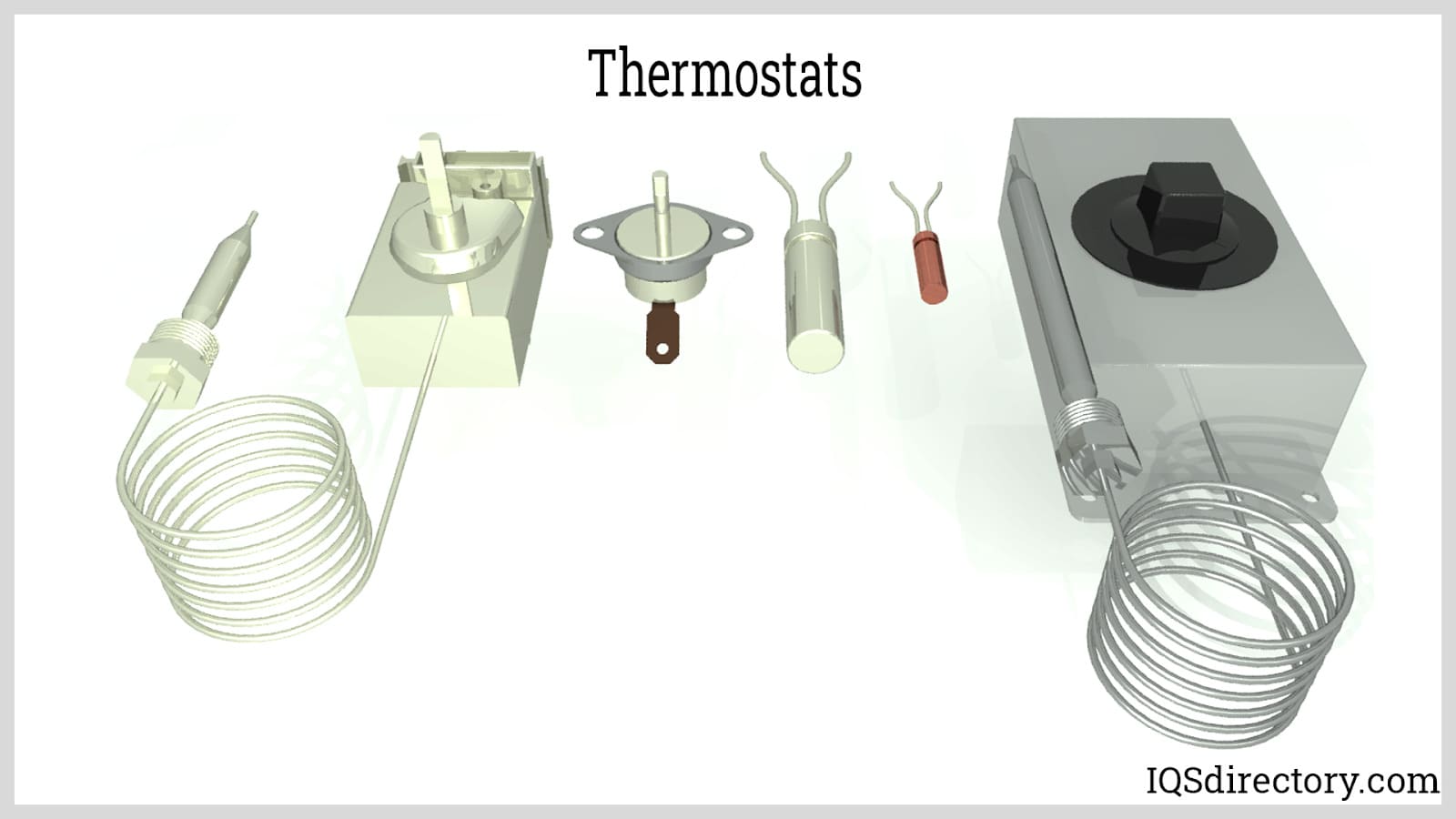
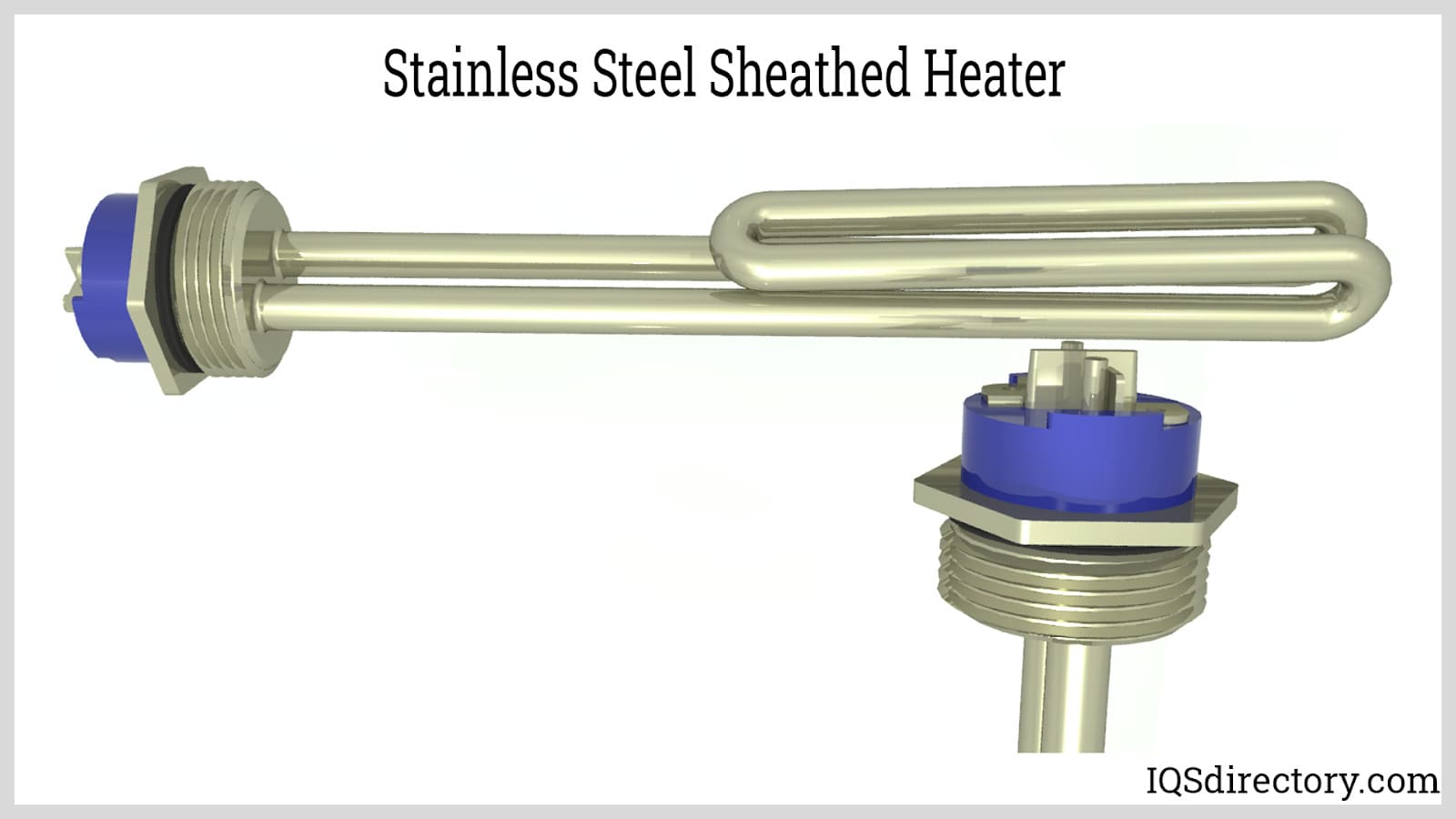
Heating Element Images, Diagrams and Visual Concepts
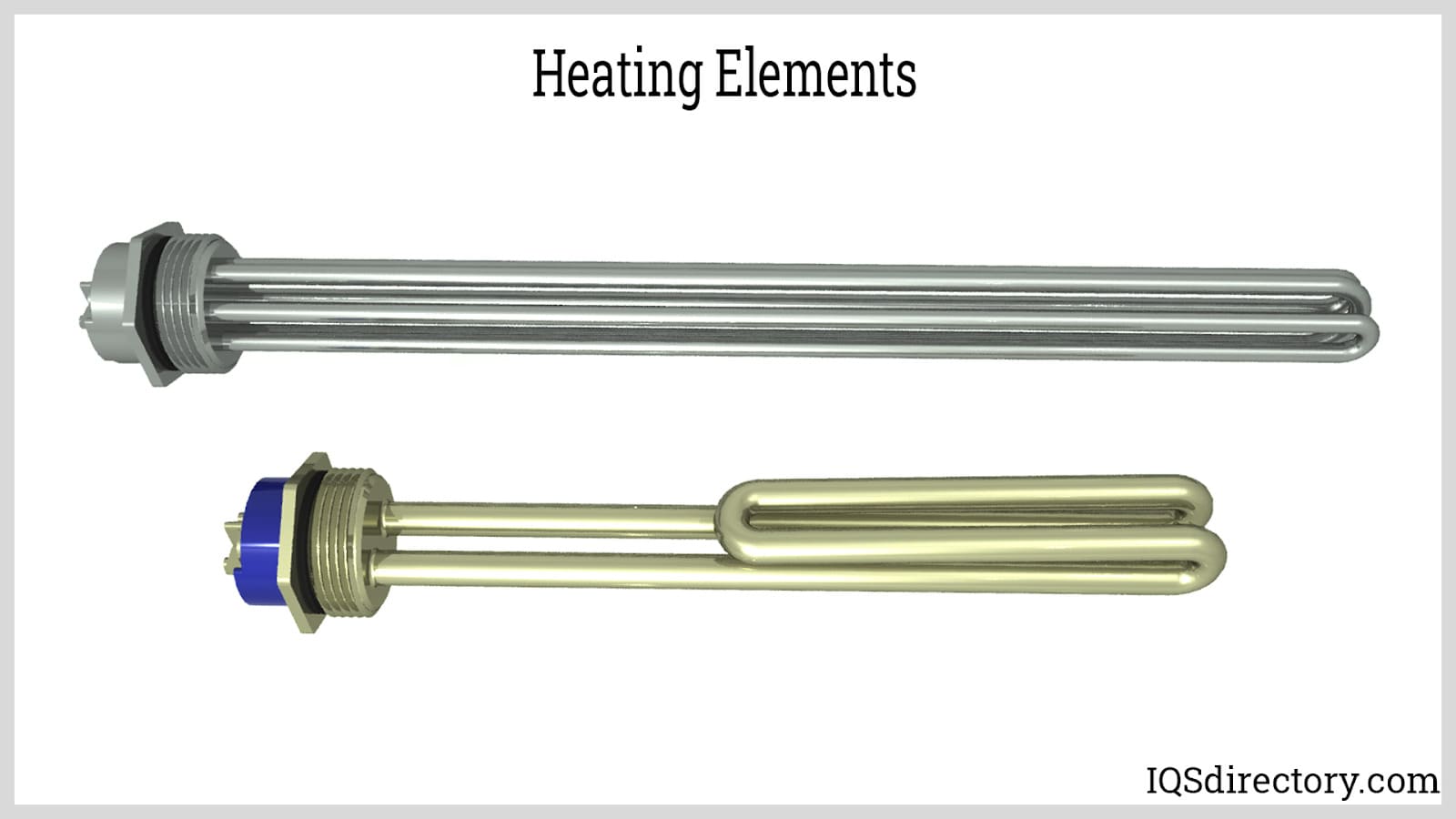
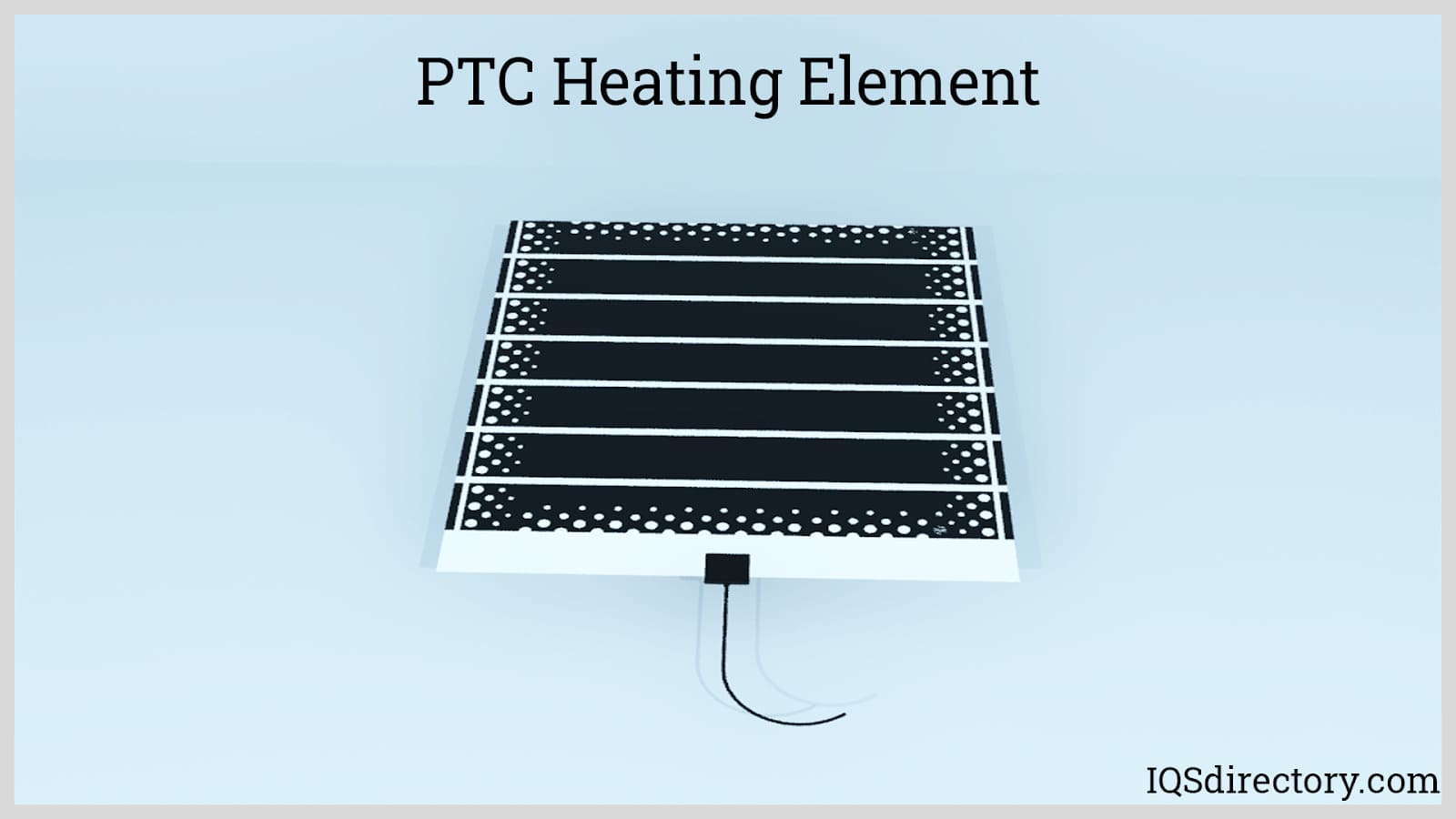
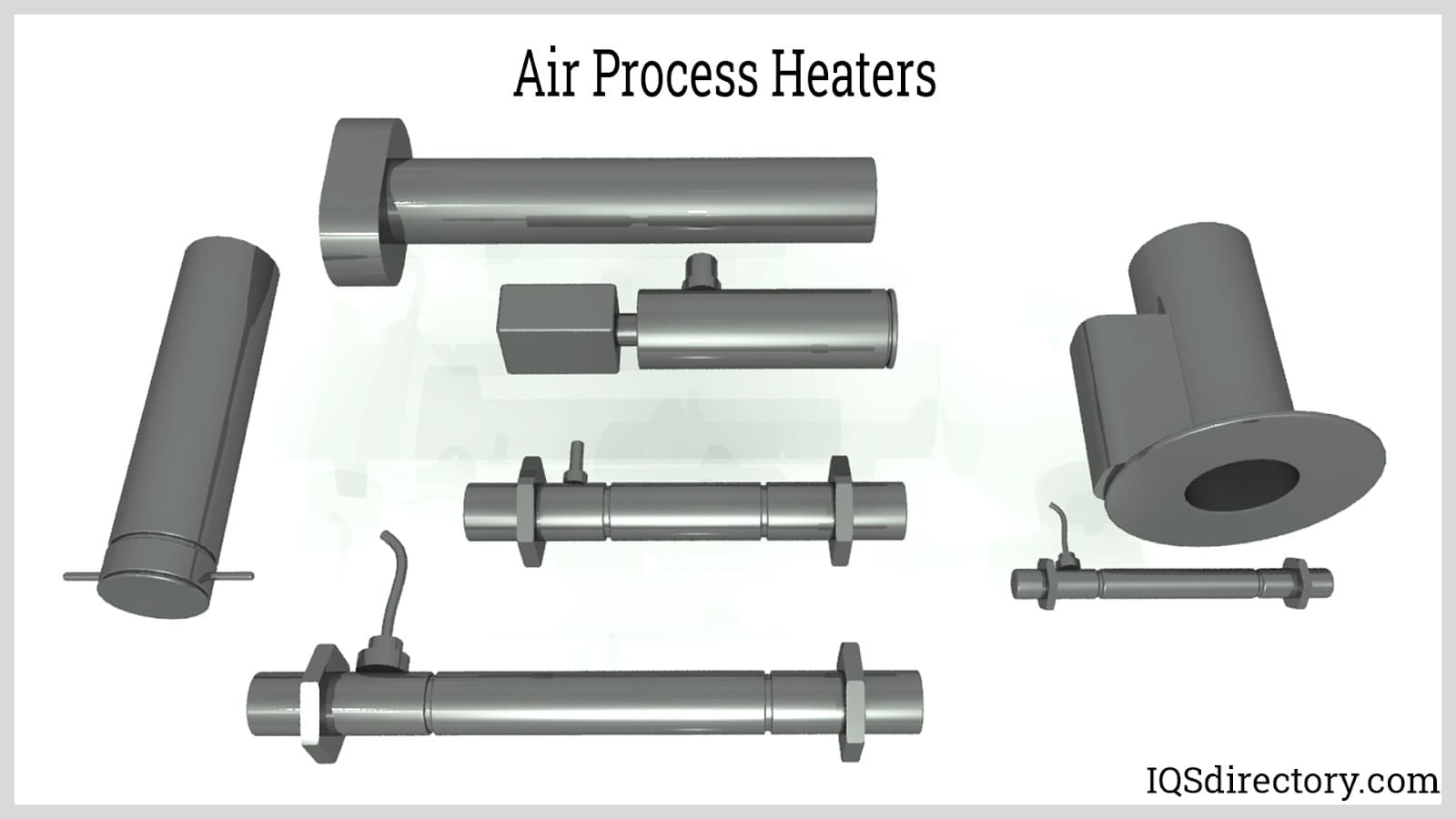
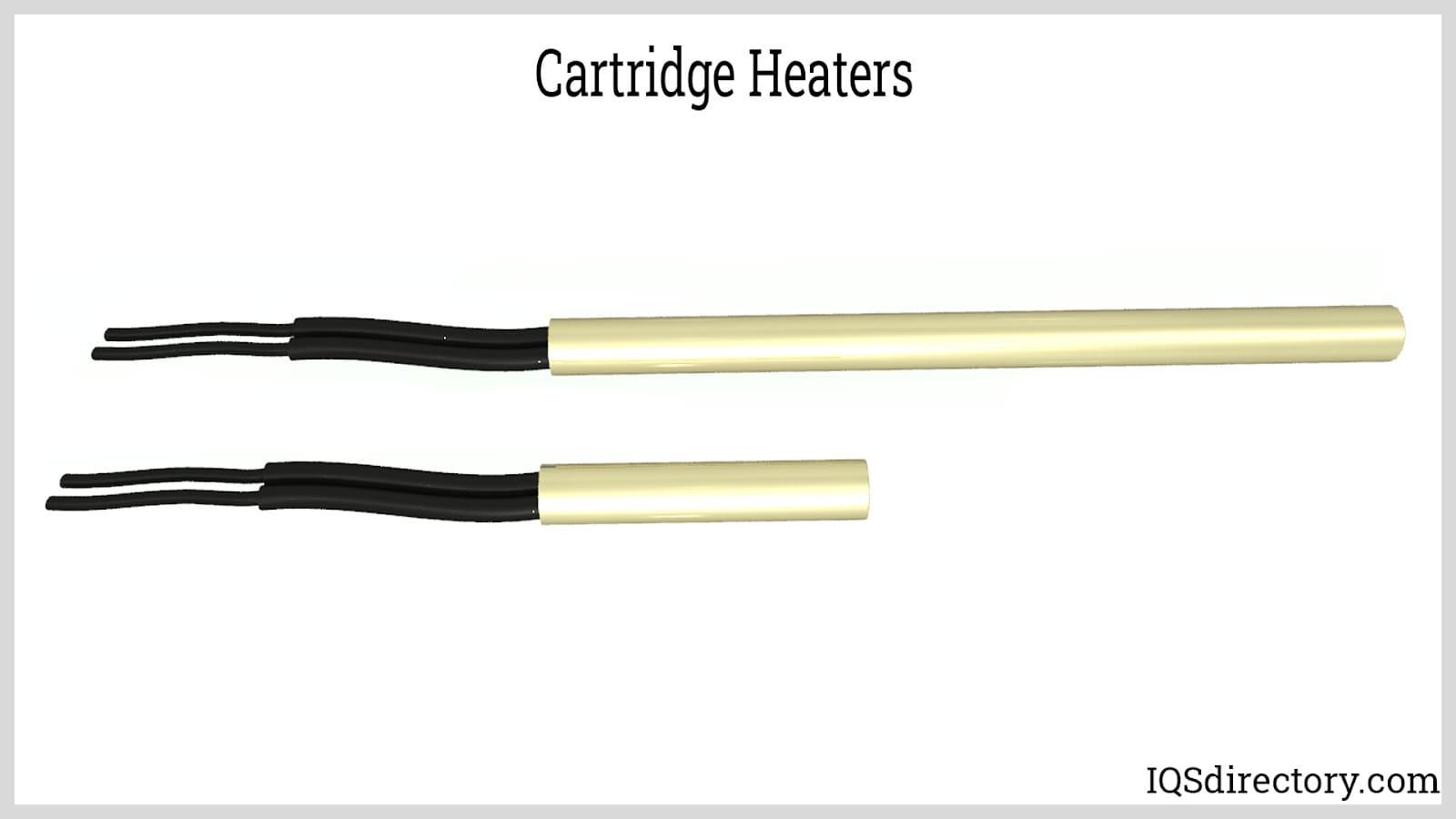
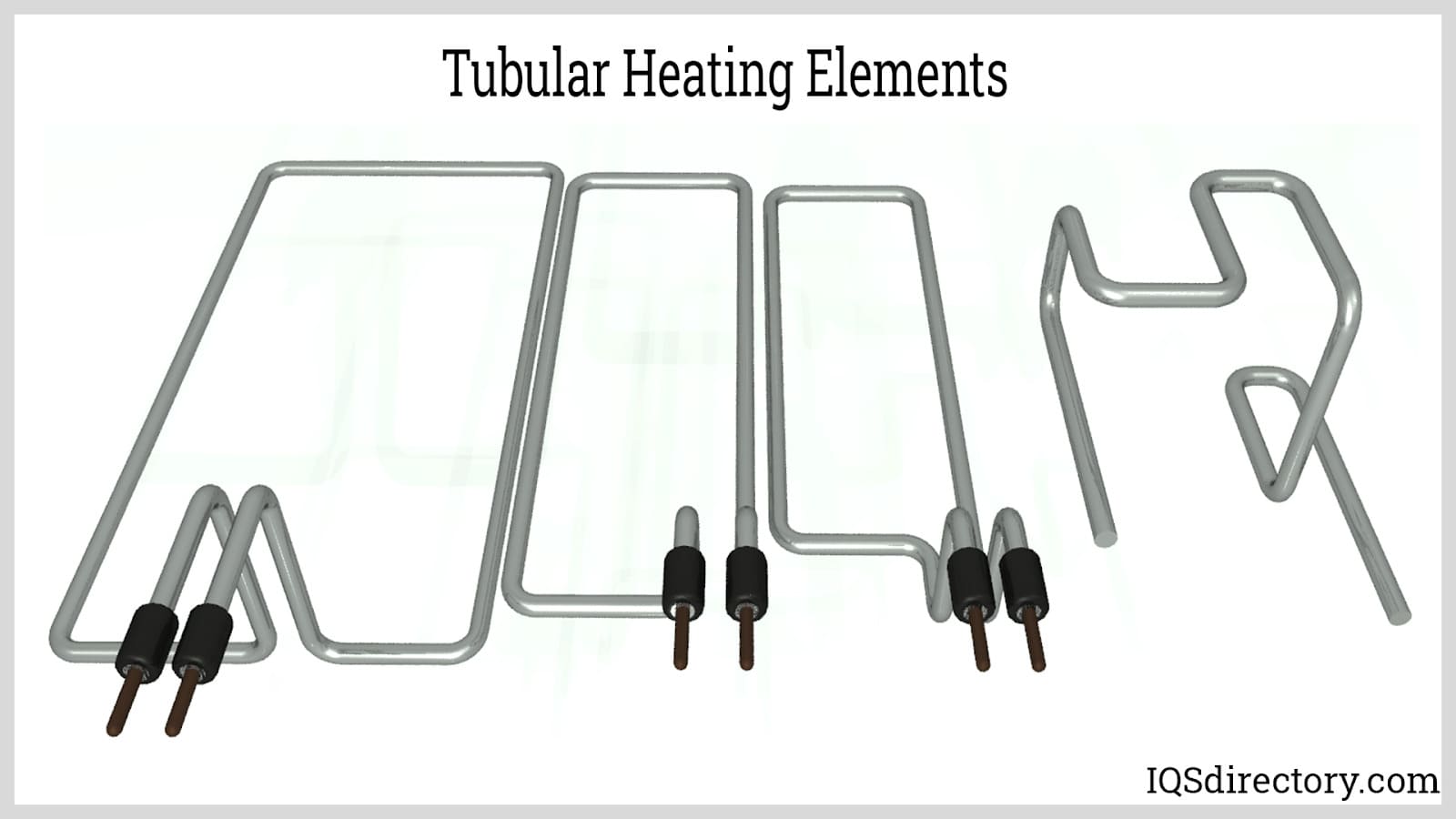
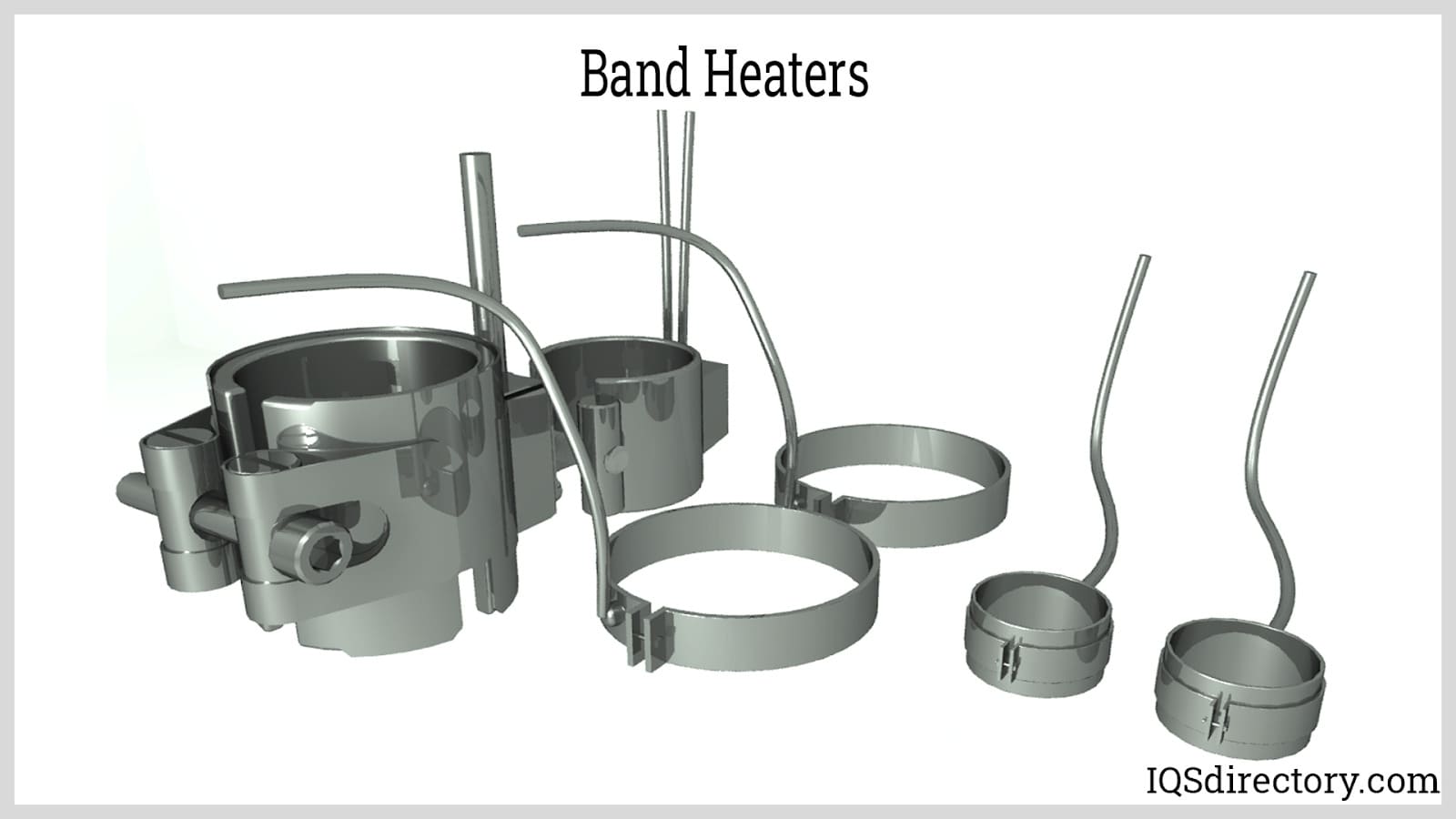
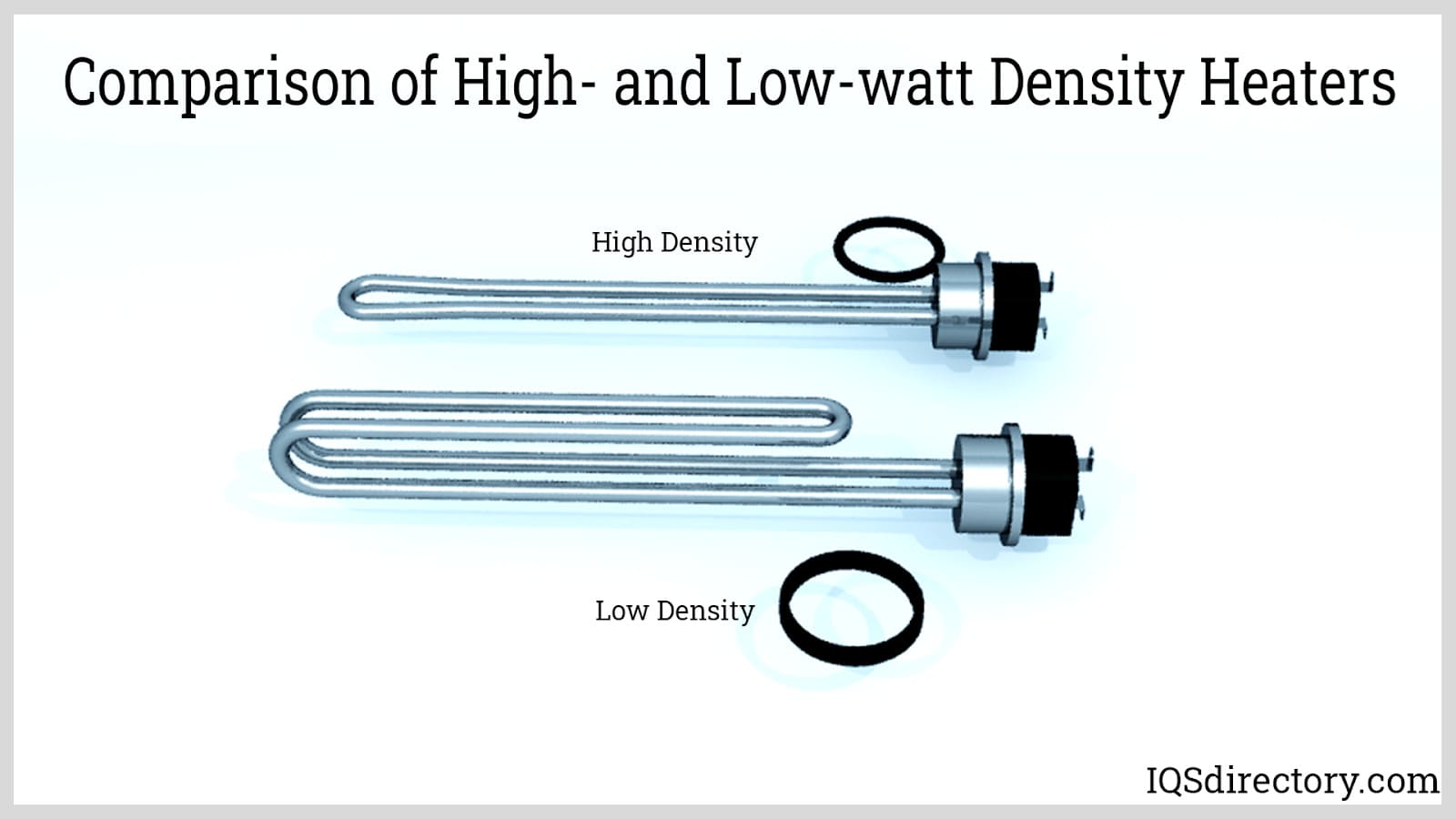
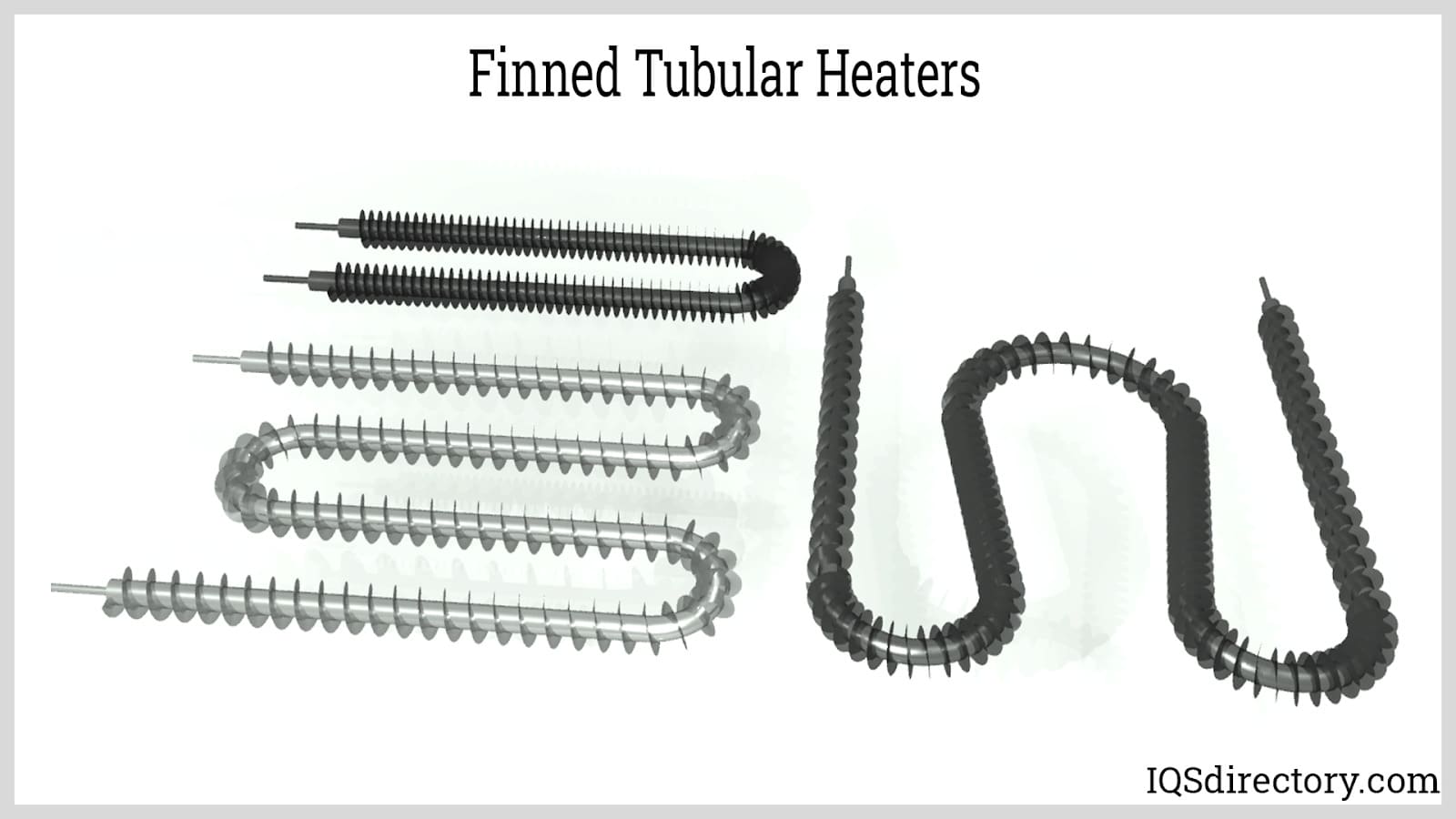
Heating Element Types
Materials Used to Manufacture Heating Elements
Customizing Heating Elements
Heating elements can be tailored to suit specific applications, and they can be made from materials such as nickel, iron, molybdenum, and ceramic. The configuration of these elements can vary, with options including wire, tape (ribbon), coil, chips, or stones. The size and shape of the heating element depend on the intended use. For instance, the elements in electric stovetops and kettles are typically coiled, while industrial immersion heaters are often bent into a hairpin shape. Tubular elements are commonly used in electric ovens, grills, diffusion equipment, water immersion heaters, and kettles. Mica-wound elements are found in band heaters and toasters, while spiral heating elements are used in convectors and fan heaters. Flexible heating elements are ideal for specialized equipment in fields such as medical, aviation, and automotive industries. Made from etched foil, these flexible elements can be used in applications like LCD displays, optical equipment, PC boards for computers, and devices designed to prevent outdoor equipment from freezing. When customers search for custom heating elements, they often compare form factor, watt density, operating temperature, lead configuration, sheath material, and the media being heated to determine the best fit.
Heating Element Maintenance
Heating elements typically fail before the surrounding equipment, and in some cases, it may be more cost-effective to replace the entire appliance or equipment rather than just the heating element. This is often the case with small appliances like hair dryers, toasters, and space heaters. However, in other situations, it is more desirable to replace the element to extend the life of the equipment, such as with water heaters, furnaces and ovens. The wiring diagram provided with the equipment can guide the process of removing the old element and installing and rewiring the new one. In some cases, the electrical box may need to be opened to connect the heating cables to other wires and the power source. Buyers and maintenance teams often compare repair-versus-replace costs based on downtime, labor, equipment age, and the availability of replacement parts.
In addition to the heating elements themselves, certain accessories support safe and effective operation. For example, water heater elements require a silicone o-ring to ensure a proper seal. Electric furnaces often use braided wires, clips, and bolts. Various other components like electrical boxes, power cords, extensions, and adapters may be needed for different applications. Matching accessories to the heater design helps support reliable installation, temperature control, and longer service life.
Standards and Specifications for Heating Elements
UL (Underwriters Laboratories) compliance is required for heating element manufacturers seeking recognized safety approval for many applications. The UL 197, UL 499, and UL 1030 standards apply to commercial electric cooking and electric heating appliances. For electric sheathed heating elements to gain approval, their design specifications must align with these standards. Additionally, electric duct heaters must adhere to UL 1996 to be compliant. For manufacturers and purchasers alike, standards help define product safety, testing expectations, and acceptable performance benchmarks.
The National Electrical Code (NFPA 70) outlines standards for the installation of electric wiring, including heating elements. Although it is not a federal law, many states have adopted these guidelines for electrical installations, making code awareness an important part of equipment selection, installation planning, and long-term facility safety.
Things to Consider Before Selecting a Manufacturer
Choosing the right heating element manufacturer depends largely on the specific customizations and intended use of the heating elements. For instance, toasters require small, exposed NiChrome tape or ribbons, radiators use long bars, some space heaters rely on PTC ceramic elements, and diffusion pump heaters need specialized processes. In many buying journeys, the search begins with application needs such as temperature range, warm-up time, operating environment, element geometry, and expected service life.
When selecting a manufacturer, it is important to confirm that they can meet your needs while adhering to industry standards and regulations. The manufacturer must have expertise in matching the right type of element to each application. Using the wrong heating element can lead to product damage, fires, short circuits, poor efficiency, and equipment failure. Buyers comparing suppliers often look for application knowledge, design support, material options, lead times, and quality control practices.
Several factors need to be considered before choosing a manufacturer. Do they design products for residential, commercial, or industrial use? Are they compliant with UL standards? Can they produce heating elements for specific temperature ranges and materials? Are they familiar with industry standards for different applications? What maintenance services do they offer? Do they provide warranties on purchased elements and parts? What is their reputation in the industry for response times when replacement elements are needed? These questions should be answered before proceeding. Choosing the right manufacturer and maintenance schedule can improve product safety, reduce downtime, and extend service life. For a list of top heating element manufacturers, you can visit the top of this page.
Heating Element Terms
Common Questions
8 questions
What Materials Are Commonly Used to Make Heating Elements?
Common materials include NiChrome, PTC ceramic, silicon carbide, molybdenum disilicide, quartz, stainless steel, and mineral insulation. Each material offers a different balance of heat resistance, maximum temperature, oxidation resistance, and durability for residential, commercial, and industrial heating applications.
How Do Electric Heating Elements Generate Heat?
Electric heating elements convert electrical energy into heat through resistance. As current passes through a material with high resistivity, it produces heat, which is then transferred by conduction, convection, or radiation depending on the equipment design and the material being heated.
What Are the Main Types of Heating Elements Used in Industry?
Industrial settings commonly use cartridge, tubular, immersion, quartz, ceramic, silicon-carbide, and infrared heating elements. These types convert electrical energy to heat for processes involving air, liquids, and solids in sectors such as glass, steel, ceramics, food processing, and electronics manufacturing.
Why Is NiChrome Popular for Heating Element Manufacturing?
NiChrome, an alloy of nickel and chromium, is flexible, oxidation-resistant, and capable of handling high operating temperatures. Its durability, shape retention, and predictable resistance make it a popular choice for heating elements in toasters, hair dryers, dryers, ovens, and many industrial heaters.
What Industries Rely Most on Heating Element Technology?
Heating elements are widely used in the food, glass, steel, ceramics, electronics, medical, and general manufacturing sectors. They are found in ovens, furnaces, kilns, curing systems, water heating systems, and temperature-controlled equipment used for production and process heating.
How Can Heating Elements Be Customized for Specific Applications?
Heating elements can be customized in shape, size, watt density, sheath material, and element material. Options include coiled, ribbon, tubular, flexible etched foil, ceramic, and molybdenum-based designs for applications ranging from electric kettles and ovens to aerospace, medical, and precision process equipment.
What Standards Ensure Heating Element Safety and Performance?
Heating elements are commonly evaluated for compliance with UL 197, UL 499, UL 1030, and UL 1996, depending on the appliance or heating system. The National Electrical Code (NFPA 70) also guides installation practices adopted by many states for electrical heating systems.
When Should a Heating Element Be Replaced Instead of Repaired?
For small appliances such as toasters, hair dryers, and portable heaters, replacing the entire unit is often more economical. In larger systems such as water heaters, ovens, and furnaces, replacing the heating element can extend equipment life, restore efficiency, and reduce downtime.