





Extension Springs: Production Process and Types
IQS Directory EditorialUpdated 7 chapters
7 leading suppliers listed with this guide
Browse extension spring suppliersContents (7 chapters)
This article takes an in depth look at extension springs and their applications.
In this article you will learn more about topics such as:
- What are extension springs
- Material used for extension springs production
- Extension spring finishing
- Processes for extension spring production
- Extension spring mechanism
- Types of extension spring ends
- Applications of extension springs
- And much more…
Understanding Extension Springs
An extension spring, a specific type of helical spring, is tightly coiled to provide resistance during stretching and returns to its initial form when the applied force is released. Also known as a tension spring, this mechanical component is designed to absorb and store energy under load, making it an essential part of many motion control and load-bearing applications.
These springs are distinguished by their compact coil design, creating inherent tension within the coils. This initial tension aids the spring in resisting applied stretching forces. The tension level influences the coil's tautness and method of attachment. Typically, extension springs feature loops, hooks, or coils at each end to simplify attachment and usage in extension activities. Common end types include machine hooks, extended hooks, cross-over center loops, and double loops, each selected based on the required load capacity, assembly method, and durability.
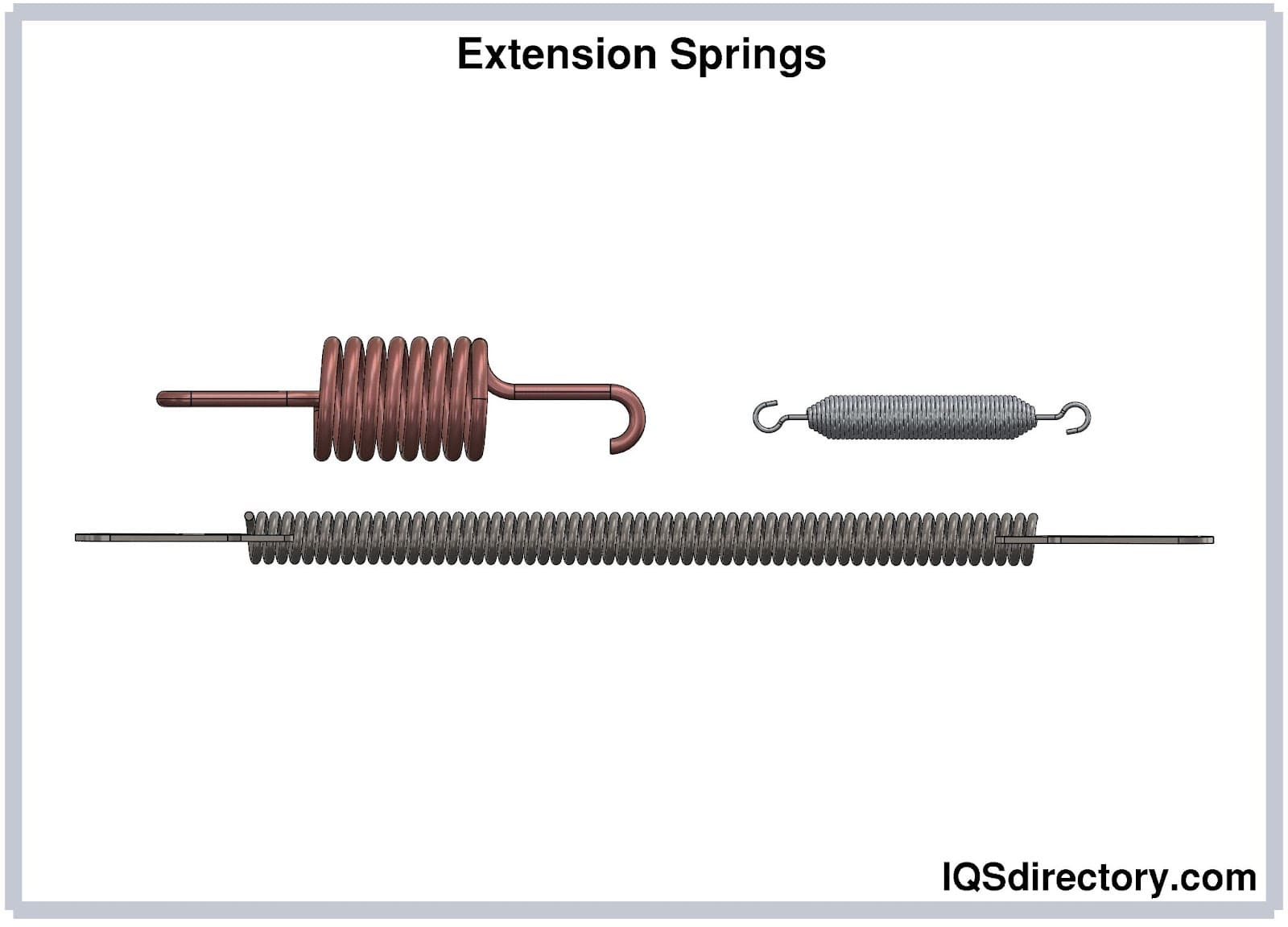
Extension springs excel at storing and absorbing energy while opposing pulling forces. When force causes the attached parts to separate, the spring’s tensile strength effectively draws them back together. They are widely utilized across numerous applications, including hardware, washing machines, doors, toys, aircraft landing gear, garage doors, agricultural equipment, automotive hood mechanisms, and industrial machinery. Because they are available in a range of wire diameters, spring rates, materials, and finishes, extension springs can be custom engineered to meet specific force, travel, corrosion resistance, and fatigue life requirements. Below is a diagram illustrating an extension spring:

What Materials Are Used for Extension Springs?
Extension springs, also known as tension springs, are coiled mechanical components engineered to store and release energy when pulled apart. Selecting the appropriate extension spring material is a critical factor for ensuring performance, longevity, and reliability in a wide variety of applications. The choice of spring wire material significantly impacts load capacity, corrosion resistance, fatigue strength, temperature resistance, and overall cost. Key considerations in extension spring design and material selection include:
- Spring design and operational parameters (load, stress, deflection)
- Required corrosion and chemical resistance
- Operating temperature and thermal stability
- Magnetic properties
- Electrical conductivity (for specialty applications)
- Application-specific industry standards
Carbon steel remains one of the most widely used materials in spring manufacturing, but numerous specialty alloys—including stainless steels, copper alloys, nickel alloys, and even engineered plastics—are also utilized to meet the unique demands of each extension spring application.
High Carbon Steels (Spring Steels)
High carbon steels—often referred to as spring steels—contain 0.60% to 1.00% carbon. This higher carbon content provides increased strength and exceptional fatigue resistance, making them a popular choice for industrial extension springs, automotive components, garage door springs, and general-purpose hardware. High carbon steel wire, including music wire, can be heat treated and cold drawn for greater toughness and tensile strength.
Strength, fatigue performance, and temperature stability of high carbon steels are further improved by alloying with chromium, manganese, molybdenum, nickel, silicon, and vanadium. The precise blend of these elements can be tailored to enhance resistance to high stress, cyclic loading, and thermal cycling, which is critical for demanding environments such as engines and heavy equipment.
For superior fatigue resistance and operating temperature range, manufacturers often select from specialized alloys:
- Chrome Vanadium Steel: Known for exceptional toughness, high impact resistance, and ability to withstand repeated shock loading. Common in heavy-duty automotive and aerospace springs.
- Chrome Silicon Steel: Delivers higher tensile and yield strength alongside enhanced performance at elevated temperatures—up to 475°F—making it ideal for performance vehicles, racing applications, and high-temperature industrial machinery.
- Chrome Silicon Vanadium Alloy: Combines the best features of chrome vanadium and silicon for maximum resilience and wear resistance.
These high-carbon and alloyed spring steels are available in oil-tempered, music wire, and hard drawn wire types, each offering distinct performance characteristics tailored to the end-use environment.

High Carbon Steel: Common Types
-
Music Wire – Recognized for its high uniformity, fatigue resistance, and versatility, music wire is frequently used for precision tension springs.

-
Hard Drawn MB – Cost-effective and suited for lower-stress, less demanding applications.

-
Oil Tempered MBM – Offers greater shock resistance and is frequently used in manufacturing commercial-grade extension springs.

High carbon spring wires are highly magnetic and possess outstanding tensile strength, excellent elasticity, and good fatigue properties. They are widely used for low to moderate stress extension spring applications where cost-effectiveness and performance are required. In the table below, you will find the most relevant properties—including ASTM specifications, chemistry, density, modulus of elasticity and torsion, and temperature limits—that inform materials engineering decisions in the spring industry:
Stainless Steels
Stainless steel extension springs are industry staples in environments where corrosion resistance, durability, and non-magnetic properties are critical. Frequently specified for marine, medical, food processing, and outdoor applications, stainless spring wire combines good mechanical strength with resistance to oxidation, humidity, and most chemicals. Although typically more expensive than standard carbon steel, stainless steel springs offer a longer operational life in challenging environments—minimizing maintenance and failure risk.

Popular Stainless Steel Grades for Extension Springs
-
Stainless Steel 302 – Excellent overall corrosion resistance, widely used in general-purpose extension spring applications.

-
Stainless Steel 304 – Features lower carbon content for better resistance to weld decay; suitable for applications subject to periodic temperatures.

-
Stainless Steel 316 – Offers the best saltwater and chemical resistance, making it the first choice for marine and highly corrosive environments.

-
Stainless Steel 17-7 PH – Known for increased strength after heat treatment; commonly used in aerospace and defense spring systems.

Each grade exhibits unique properties that address specific customer needs, from food-grade compliance and rust prevention to high cycle endurance and heat resistance (up to 600°F for some grades). Stainless steel wires also suit applications requiring non-magnetic or semi-magnetic extension springs and are generally available in either austenitic or precipitation-hardened types.
Alloy Steels for Extension Springs
Engineered alloy steels are selected for their ability to handle high stresses, cyclical loading, and exposure to elevated temperatures while maintaining performance. By combining elements such as manganese, molybdenum, nickel, chromium, and vanadium, alloy spring steels provide enhanced strength, impact resistance, and long-term reliability. These materials excel in the automotive, oil & gas, and industrial sectors, and are common where springs must reliably endure severe service conditions without fatigue or loss of load-carrying capacity.
-
Oil Tempered Chrome Vanadium Spring – The industry standard for heavy-duty, high-cycle springs in automotive and aerospace segments.

-
Oil Tempered Chrome Silicon Spring – Performs in high-shock, high-temperature, and vibration-prone environments—ideal for racing, manufacturing automation, and transportation equipment.

Alloy steels are typically selected when ultra-high strength, fatigue-resistance, and longevity are required. These spring wires are supplied to precise standards, such as ASTM A232 and A877, ensuring consistent mechanical properties and chemical composition batch after batch.
Notably, ASTM A232 chrome-vanadium steel and ASTM A877 chrome-silicon steel are frequently used for valve springs and performance extension springs subject to continual cyclic loading in extreme environments.
Copper Alloys
Copper-based alloys deliver a unique combination of high electrical conductivity, excellent corrosion resistance, and non-magnetic properties. Copper alloy extension springs are crucial for applications in electronics, telecommunications, marine hardware, and corrosive industrial environments. These materials are the top choice for use in saltwater, acidic, or low-temperature settings and when reliable electrical contact and non-sparking properties are needed.

Copper alloys are available in several types, each with specialized mechanical, chemical, and conductivity features:
-
Phosphor Bronze – Exceptionally resilient, offering high fatigue resistance and chemical stability. Frequently used for extension springs in electrical, marine, and precision instrument applications.

-
Beryllium Copper (BeCu) – Renowned for its strength, ductility, and outstanding conductivity. It is the go-to material for connectors, relays, and miniature extension springs in electronics where spring performance and electrical transfer are critical.

-
Brass – Combines good spring properties with affordability; widely used in decorative and low-voltage electrical spring products.

-
Monel 400 & Monel K 500 – Premium nickel-copper alloys exhibit excellent resistance to harsh environments, acids, seawater, and temperature extremes. Common in marine, chemical processing, and petroleum industries for corrosion-resistant extension springs.


These copper-based materials are non-magnetic and withstand exposure to chemicals and moisture. For demanding electrical contact or marine projects, phosphor bronze and BeCu are frequently engineered for reliable performance and are tolerant of low-temperature and subzero environments. The following table highlights the critical mechanical and operational properties for each alloy, assisting engineers in making an informed choice for their specific spring requirements:
Nickel Alloys
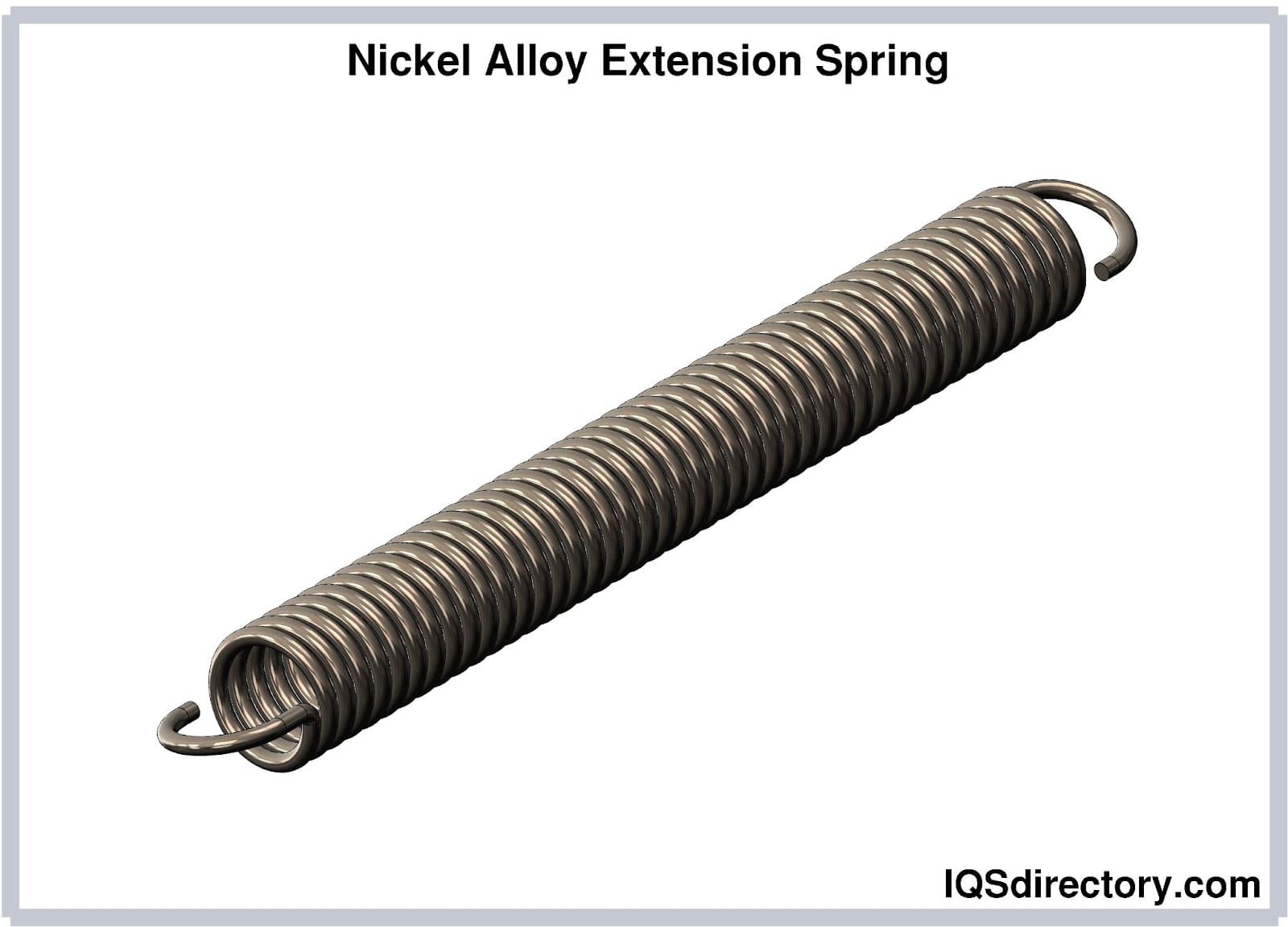
Nickel-based alloys are recognized worldwide for their extraordinary durability, strength, and resistance to high temperatures and harsh chemical environments. Nickel alloy extension springs are indispensable in aerospace, energy, petrochemical, and marine industries—anywhere that long service life, resistance to creep, oxidation, and chlorides at elevated temperatures are essential.
Key Nickel Alloy Grades for Extension Springs
-
Inconel 600, 718, and X750 – These alloys deliver remarkable resilience against oxidation and thermal degradation, maintaining over 70% of tensile strength at sustained high temperatures. Inconel extension springs are frequently specified in automotive exhausts, power generation, and high-temperature manufacturing processes.


-
Elgiloy – A premium, non-magnetic alloy featuring cobalt, chromium, nickel, and molybdenum. It offers outstanding resistance to sulfide stress, fatigue, and crevice corrosion. Elgiloy extension springs are used in medical, oilfield, and hostile-service applications.

-
Hastelloy (e.g., C276) – With exceptional resistance to acids, chlorides, and sulfur compounds, Hastelloy springs are the top choice for waste treatment, pollution control, and marine projects. Their operational reliability at high and low temperatures is widely recognized.

Other specialty nickel alloys, such as NiSpan C, provide unique magnetic and physical properties for timekeeping, weighing, and sensitive instrumentation. Each nickel alloy material is designed to be precipitation hardened after spring forming, ensuring optimal fatigue resistance and load retention even after extended service at elevated or subzero temperatures. The table below details key performance characteristics, so you can match your environmental and mechanical requirements with the right nickel alloy extension spring solution.
Plastic Composite Extension Springs
Although metal extension springs dominate the market, engineered plastic composite springs are increasingly used for applications requiring lightweight construction, excellent chemical resistance, and thermal insulation. Unlike metal spring wires, plastic composites are non-corrosive, inherently resistant to a wide variety of chemicals, and suitable in environments where electrical insulation or non-magnetic properties are essential. They also offer low flammability, making them a solid choice for electronics or sensitive instrumentation.

Ultem, a thermoplastic polyetherimide (PEI) resin, is one of the most advanced plastics employed for tension spring manufacturing. Renowned for its outstanding heat resistance (operating under continuous thermal loads up to 340°F), dimensional stability, and flame retardancy, Ultem offers a valuable alternative where traditional metal alloys may corrode or conduct unwanted electricity.
How to Choose the Right Extension Spring Material for Your Application
When selecting the best extension spring material for your project, it is vital to consider the spring’s operating environment, load requirements, compliance with industry standards, expected life cycle, and cost constraints. Consulting an experienced extension spring manufacturer can streamline this process—ensuring your application receives the most reliable, high-performance spring solution. Manufacturers often offer custom extension springs with tailored wire diameters, end configurations, and surface finishes to address unique operational or environmental demands. For more information on sourcing and specifying precision extension springs, visit trusted online industry directories or reach out to leading manufacturers listed below.
Leading Manufacturers and Suppliers

What Are the Different Finishes for Springs?
Extension springs, compression springs, and other custom spring types are often treated with a variety of surface finishes and coatings to enhance their performance and lifespan in demanding applications. Applying the right finish helps to address common concerns such as conductivity, heat resistance, fatigue strength, and, most notably, corrosion protection—key factors for industries ranging from automotive and aerospace to electronics and manufacturing. Selecting the appropriate spring finish can also contribute to improved wear resistance, aesthetic appearance, and overall reliability, ensuring the spring continues to perform optimally in various environments.
Black Oxide
Black oxide is a cost-effective coating widely used in the spring manufacturing industry for its outstanding durability and strong corrosion prevention. This finish creates a robust, matte black surface layer that helps minimize light reflection and enhances wear resistance. Black oxide finished springs are especially suited to indoor environments with moderate humidity and are frequently selected for applications where additional lubrication or a discreet, non-reflective appearance is desirable.
Gold Iridite
Gold Iridite, also known as yellow chromate or chem film, is a chemically applied coating that significantly enhances the conductivity and durability of metal springs. This finish provides excellent corrosion protection, making it ideal for use in electrical assemblies and sensitive electronic components where maintaining electrical continuity and resistance to oxidation is critical. Gold Iridite is also RoHS compliant and is valued for its effectiveness in harsh or high-performance operating conditions.
Passivation
Passivation is a premium finishing process commonly used on stainless steel springs. By applying a thin layer of oxide or nitride, this treatment removes surface contaminants and boosts the metal’s resistance to corrosion, rust, and chemical attack. Passivated springs are recommended for environments where exposure to moisture, chemicals, or extreme temperatures is a concern—such as food processing, medical devices, and marine applications. Passivation helps extend the overall performance life and reliability of precision springs.
Zinc
Zinc coating, often achieved through a process called galvanizing, involves covering spring coils with a protective zinc layer that acts as a barrier against moisture and corrosive elements. This protective finish is highly effective for springs intended for outdoor use or environments prone to rust and oxidation—such as agricultural equipment, construction hardware, or automotive components. Zinc-plated extension springs offer a shiny, attractive appearance while providing long-lasting protection, making them a popular choice for product designers seeking both aesthetics and durability.
Choosing the optimal finish for your spring depends on several factors, including the intended environment, load requirements, exposure to corrosive agents, and conductivity needs. For critical applications, consulting with a spring manufacturer or design engineer can help determine which spring surface treatment will best meet your operational requirements and ensure maximum longevity. By leveraging advanced finishes and protective coatings, you can greatly enhance the performance, appearance, and resilience of your extension and compression springs.
Frequently Asked Questions
What Is an Extension Spring and How Does It Function?
An extension spring is a tightly coiled helical spring that resists stretching and returns to its original shape when force is released. It stores and absorbs energy, pulling attached parts back together when separated.
Which Materials Are Commonly Used for Extension Springs?
Common extension spring materials include high carbon steel, stainless steel, alloy steels, copper alloys, nickel alloys, and engineered plastics. Each material is chosen based on factors such as strength, corrosion resistance, and application requirements.
How Do Different Finishes Improve the Performance of Extension Springs?
Finishes like black oxide, gold iridite, passivation, and zinc enhance spring durability, prevent corrosion, improve conductivity, and optimize appearance, extending operational lifespan in challenging environments.
What Spring Materials Are Best for Marine, Food Processing, or Medical Uses?
Stainless steels—such as 302, 304, and 316—are preferred in marine, food processing, and medical applications due to their corrosion resistance, durability, and suitability for moisture-rich or hygienic environments.
How Should I Choose the Right Extension Spring Material for My Application?
Consider the operating environment, load demands, corrosion resistance, temperature range, and compliance with industry standards. Consulting a manufacturer can help determine the optimal spring wire and finish for your needs.
Are There Specific Spring Materials Suited for Electronic or High-Conductivity Uses?
Copper alloys such as phosphor bronze and beryllium copper are excellent for electronics, delivering high conductivity, non-magnetic properties, and reliable performance in electrical and telecommunications applications.
How Extension Springs Are Made?
Key Parameters for Designing Extension Spring
Several key parameters and specifications must be considered when designing extension springs to ensure they are resilient and effective. These essential factors include:
- Outside and inside diameter of spring
- Wire diameter
- The type of material that is used
- Initial tension of the spring
- Load that a certain length can get hold of
- Rate pounds per inch of extension
- The length that is installed and maximum extended length in application
- Type of spring ends
- Position of ends relative to each other
- Gap opening in hooks

Steps for Extension Spring Manufacturing
Mechanical springs are ubiquitous in our daily lives. While the manufacturing process for extension springs is generally simple and straightforward, variations can occur depending on the specific type of spring being produced. In this chapter, we will explore the manufacturing process for extension springs, which involves three main steps:
- Winding
- Heat treating
- Coating and finishing
Spring Winding
The first step involves feeding the spring wire into mechanical machinery that straightens the wire and shapes it into the desired form. The process of straightening and coiling the spring wire is detailed below:
Spring Coiling
The wire is passed through a set of rollers to the spring coilers or computer numerical control (CNC) machine. It is then guided to the coiling points where it is wound to form the spring shape.
Forming Machinery Use
The spring is then transferred to a forming machine, which is equipped with six to eight tooling sides that shape the spring into various designs.
Wire Bending
Next, the spring is moved to the CNC wire bender, where a movable tooling head guides the wire and bends it into the desired shapes.

Heat Treating
After the spring is formed, it undergoes a stress-relieving process. The spring is transferred to a conveyor belt oven, where it is heated to a specified temperature for a set duration, depending on the type of spring and the material used. Following heating, the spring is allowed to cool in a designated receiving box before moving on to the next step.

Coating and Finishing
The final step in spring production involves coating or finishing the spring. During this process, the spring is treated with additional layers of various elements to enhance its properties, such as heat resistance, corrosion resistance, or overall durability. Common coating processes include:
- Shot peening
- Plating
- Powder coating
How Does the Mechanism of an Extension Spring Work?
Extension springs are renowned for their ability to store mechanical energy in their coils and release it as they expand. These springs are designed to handle tension, absorbing and storing pulling energy to resist a force applied to their ends. Typically, extension springs are connected to components at both ends, with hooks or loops allowing the application of a pulling force. When a force is applied and the components move apart, the spring attempts to return to its original position. The initial tension within the spring determines the tightness of the coils, which is crucial for assessing the load capacity for specific applications. While the spring adheres to Hooke’s law when not stretched or compressed, it follows simple harmonic motion when a load is applied. The ends of extension springs experience greater tension due to the energy stored in the loops or hooks, while the coils, when tightly wound, are stress-free. This distribution of energy between the hooks and coils can impact the spring’s performance.

What Are the Types of Extension Spring Ends?
Extension springs are equipped with various types of end fittings or hooks that are used to connect the spring to the force source. It is important to carefully consider these ends to prevent undue stress on the spring due to initial tension. Although there are several types of hooks or loops designed for different applications, machine loops and crossover loops are among the most commonly used. The loop ends of extension springs are classified based on whether they require specialized tools for manufacturing. The types of loop ends that do not require special tools are illustrated in the figure below:

What Are the Applications of Extension Springs?
Extension springs come in various hoop and loop configurations, each serving different functions. These springs are widely used in everyday applications, ranging from car garages to automobiles, toys, electronics, and beyond.
Below are some common applications of extension springs in daily life:
Automotive Uses
Extension springs are found both inside and outside vehicles. While their use has decreased in modern cars, they were once a critical component in the vehicle's carburetor system.
Garage Doors
Extension springs are commonly used in garage doors, where they are mounted on either side to assist with the door’s movement. These springs help reduce the effort required to open and close the door.
Springs in Trampolines
Trampolines rely on extension springs to provide their bouncing effect. The springs at the base allow users to rebound and continue jumping effortlessly. A greater number of springs typically results in increased bounce.
Toy Applications
Extension springs are widely used in toys, particularly those involving projectile motion, such as toy guns and cars. They are essential for toys that feature rapid motion or throwing actions.
Vise Grip Pliers
Extension springs in vise grip pliers ensure a secure grip on objects, keeping them firmly locked in place once clamped.
Washing Machines
In washing machines, extension springs are crucial for stabilizing the spinning drum. They help prevent excessive noise by ensuring the drum remains steady and does not knock against the sides of the machine.
Medical Devices
Extension springs are used in a variety of medical devices, such as stretchers, surgical lights, and various instruments, to provide necessary mechanical functions.
Farming Equipment
Extension springs are utilized in farming equipment like harvesters, tractors, and ploughs to assist with heavy-duty tasks and make agricultural work more efficient.
Baby Carriages
Extension springs in baby carriages allow them to gently rock back and forth with minimal effort, providing a smooth and soothing motion for the baby.
Fence Gates
Extension springs in fence gates enable them to close automatically after being opened, enhancing convenience and functionality.
Magazine Springs
Magazine springs provide the necessary tension to push cartridges into the firing chamber of a firearm’s magazine, allowing for rapid and reliable feeding. Made from high carbon steel, these springs are designed to withstand repeated use without losing strength.
Recoil Spring
The recoil spring, situated within the bolt of an automatic or semi-automatic firearm, absorbs the shock generated when a bullet is fired. This helps reduce the recoil experienced by the shooter, making the firing experience more comfortable.
Conclusion
- Extension springs are closely wound coils that store and absorb energy and are bound to resist the force applied to them.
- There is initial tension exists in the coils of the spring, which determines how tightly the coils are attached.
- Many different types of materials are used for the production of extension springs such as copper alloys, carbon steels, stainless steels, nickel alloys composite etc.
- Stainless steel is the most economical and is used widely for spring production.
- Different types of finishes are done to give the spring more durability and conductivity properties.
- Certain Parameters need to be considered in extension spring production such as spring diameter, wire diameter, initial tension, loop ends and many more.
- Many different types of loop ends are also available and are specific in their functions. Some need tools for production, others do not.
- Extension springs are used in our daily life in many things such as garage doors, toys, appliances, fence gates, and many more.