



Aqueous Part Washers: Types & Benefits | IQS Directory
IQS Directory EditorialUpdated 3 chapters
4 leading suppliers listed with this guide
Browse aqueous parts washer suppliersContents (3 chapters)
This article will take an in-depth look at aqueous part washers.
The article will bring more detail on topics such as:
- Principle of Aqueous Part Washers
- Types of Aqueous Part Washers
- Applications and Benefits of Aqueous Part Washers
- Safety of Aqueous Part Washers
- And much more…
Chapter 1: Understanding the Principle Behind Aqueous Part Washers
This chapter explores the core principle behind aqueous part washers, including how these industrial cleaning systems are designed, how they operate, and why they are widely used for precision parts cleaning, degreasing, and contamination removal in modern manufacturing.
Defining Aqueous Part Washers
An aqueous part washer is a fully or semi-automated parts cleaning machine designed to remove heavy grease, oils, metal shavings, coolant, carbon residue, and other contaminants from a wide range of components, regardless of size or geometry. These water-based washing systems not only clean but also rinse and dry parts, preparing them for shipping, assembly, coating, painting, or other surface treatment applications.
Cleaning is an indispensable step because, during the manufacturing process, parts frequently accumulate machining fluids, oils, metalworking residues, and other surface contaminants that can affect part quality, performance, and adhesion.
Structural Design of Aqueous Part Washers
When considering the fundamental design of aqueous part washers, the dimensions, shape, and layout of the parts requiring cleaning come first. Additional considerations include weight distribution, surface area, blind holes, internal passages, and hidden cavities that may trap debris. Manufacturers often integrate CNC programming, loading baskets from either side, racks, trays, conveyor belts, and rotary tables for certain washer models to support efficient batch processing and automated parts handling.

The majority of parts washers are aqueous in nature, utilizing water-based cleaning solutions to efficiently immerse, spray, boil, or blast components covered in grime. Essential parts of these washers include a water heater, pumps, a filtration system, brushes, scrubbers, and an enclosed cabinet. Depending on the application, systems may also include rinsing, drying, agitation, and programmable cycle controls for consistent cleaning performance.
Components of the Water Heater
The water heater is a pivotal element of the cleaning apparatus. It can operate using gas, steam, or electricity to heat the cleaning solution, thereby speeding up the cleaning cycle. Higher temperatures promote quicker chemical reactions among solvents, detergents, and other cleaning agents, improving industrial degreasing efficiency and reducing cycle times.

The Role of the Filtration System
The filtration system purifies the water entering the system. Upon starting, the cleaning agent flows from the cleaning tank to the storage tank, passing through dual filters. The initial filter traps larger debris, while the secondary one captures finer particles that bypass the first. This recirculation process helps extend solution life, protect pumps and nozzles, and support consistent cleaning quality across repeated wash cycles.

Functions of the Parts Washer Pump
The pump's role is to circulate the cleaning substances—be it solvent, water, or detergent—through the system. Continually functioning at high temperatures and flow rates, it ensures thorough cleaning by moving solutions from the storage to the cleaning tank. If this process is inefficient, the cleaning suffers in effectiveness. In high-pressure parts washer systems, pump performance directly affects spray force, coverage, and the ability to remove stubborn grease from complex surfaces.

Scrubbers and Brushes Equipment
Scrubbers in parts washers usually consist of sprayers or a series of brushes. The cleaning solution is pumped from the tank to these scrubbers, aiding in the overall cleaning procedure. For heavily soiled parts, mechanical scrubbing can help dislodge embedded contaminants and improve wash results on machined surfaces, threads, and recesses.
Design and Function of the Washer Cabinet
Washer cabinets are available in different sizes and capabilities, catering to varied cleaning requirements. The cleaning procedure is carried out using high-pressure aqueous solutions inside the cabinet or across a conveyor belt. Adequate water pressure is crucial for removing contaminants effectively. Cabinets are solidly built to withstand the strain from high-pressure operations and resistant to corrosive materials, helping support durability, operator safety, and reliable long-term performance.
Low Water Shut-Off Valve Mechanism
Ensuring the water level in the storage tank is at the correct level is crucial; if it drops too low, heaters may incur damage. An automatic low water shut-off valve prevents this by stopping the parts washer until optimal water levels are restored. This safety feature also helps prevent dry firing, reduce equipment wear, and protect the heating element and other critical components.
The Working Mechanism of Parts Washers
The operation of a parts washer is segmented into timed phases. Initially, parts are placed onto a turntable within the washer, and the door is closed securely. The cleaning cycle activates, spraying high-temperature and high-pressure water-detergent solutions to remove dirt, grease, and other contaminants from the part surfaces.

A closed-loop waste minimization system is integral to the washer's functionality. Key factors influencing operation include:
Washer Power and Pressure Dynamics
The cleaning effectiveness of a washer is mainly dictated by its power level—higher power provides a stronger blast for removing residues from parts. This power stems from the solution's pressure and flow rate, which together generate the necessary force to clear soils and residues. In practice, selecting the right pressure and spray pattern helps balance cleaning performance with part protection, especially for delicate or precision components.
Solution Temperature and Chemical Interaction
Raising the temperature of the cleaning solution increases the fluidity of oil and grease, thus lowering their viscosity. Grease, which often acts as a binding agent for dirt, becomes easier to manage as the temperature escalates. Heating the solution to approximately 160 °F (71 °C) enhances the cleaning process by effectively breaking down grease.
Higher temperatures also accelerate the chemical reactions within the cleaning solution. Typically, an increase of about 54 °F (12.22 °C) can double the pace of these reactions, yielding quicker and more comprehensive results. This is especially important for industrial parts cleaning applications that require consistent results before downstream processes like coating, welding, or final assembly.
Composition of the Chemical Solution
The chemical composition of the cleaning solution is vital for harnessing the washer's industrial strength. Chemicals are added to bolster the solvent's cleaning capability, with some exhibiting abrasive or corrosive traits for more robust stain and grease removal. Alkaline chemicals are frequently used to mitigate environmental impacts, improve compatibility with water-based cleaning systems, and support safer operation compared with many solvent-based alternatives.
Frequently Asked Questions
How Do Aqueous Part Washers Clean Components More Safely and Effectively Than Solvent-Based Machines?
Aqueous part washers use water-based solutions, alkaline detergents, and heat instead of hazardous solvents, reducing risks of VOC emissions, flammability, and toxic exposure while providing thorough automated cleaning, rinsing, and drying of parts.
What Industries Benefit Most from Using Aqueous Parts Washers?
Automotive, aerospace, metalworking, manufacturing, and electronics industries benefit most, as aqueous washers deliver precision degreasing, reliable contamination removal, and repeatable cleaning performance for diverse parts and assemblies.
Which Aqueous Parts Washer Type Is Ideal for Intricate or Delicate Components?
Ultrasonic aqueous parts washers excel at cleaning complex or delicate components, such as medical instruments and electronics, by using cavitation to reach microscopic crevices and remove fine contaminants thoroughly.
What Are the Main Drawbacks or Risks of Using Aqueous Part Washers?
Drawbacks include higher initial investment, reliance on electricity, potential for system corrosion, need for regular maintenance, difficulty cleaning very large parts, and challenges removing some stubborn residues. Choosing the right washer size, filtration package, and detergent chemistry can help reduce these concerns.
How Do Aqueous Part Washers Help Manufacturing Facilities Reduce Operational Costs?
Aqueous part washers lower scrap production, minimize machine downtime, reduce maintenance and repair needs, and support worker safety—ultimately cutting long-term labor and operational expenses while improving cleaning throughput and part quality.
How Can Facilities Ensure Compliance with Local Environmental Regulations Using Aqueous Cleaning Systems?
Facilities should manage water usage, avoid harmful additives, install proper filtration, regularly test cleaning solutions, and adhere to proper storage and disposal practices to meet environmental guidelines. Preventive maintenance and wastewater management practices also help support compliance with industrial cleaning regulations.
Chapter 2: What Are the Different Types of Aqueous Part Washers?
Aqueous part washers, a cornerstone in industrial parts cleaning, are available in several types—each engineered to meet unique cleaning and degreasing needs in manufacturing, automotive, aerospace, and metalworking environments. Categorized by construction, cleaning method, and operational capability, aqueous parts washers utilize water-based solutions, environmentally friendly detergents, and advanced mechanical systems to effectively remove oil, grease, carbon deposits, and particulate contaminants from a wide variety of components.
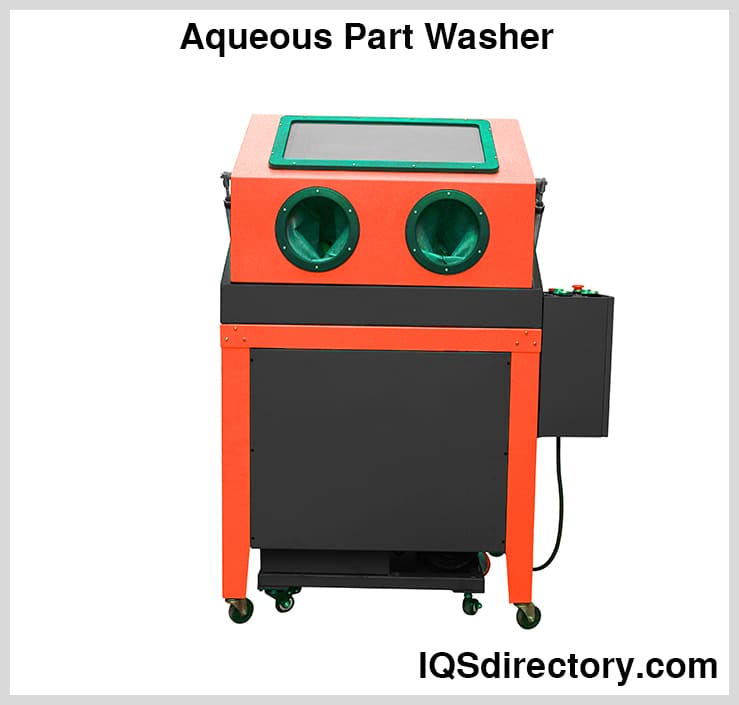
Spray Washer Aqueous Part Washer
Spray washer systems are automated units that deliver high-impact cleaning through spray jets. These part washer cabinets utilize heated aqueous solutions sprayed at moderate to high pressures for cleaning diverse surfaces—removing heavy soils, oil, lubricants, machining residue, and surface contaminants. Available in various capacities, spray cabinet parts washers accommodate everything from small machined parts to large engine blocks. Strategically placed spray nozzles ensure complete coverage, accelerating cycle times and reducing manual labor for industries prioritizing industrial component cleaning, such as automotive and aerospace.

In these industrial cleaning machines, parts are loaded via a front cabinet door into a perforated basket. The rotating basket exposes the parts to powerful sprays of aqueous cleaning chemicals and detergents. This action penetrates complex geometries and effectively dislodges stubborn residues such as carbon, coolant deposits, and burnt-on oils. Spray cabinet washers are an energy-efficient, eco-friendly solution for high throughput environments requiring repeatable and reliable results in precision cleaning.
Sink Top (Drum Top) Aqueous Part Washer
The sink-top aqueous parts washer, also known as a drum top parts washer, is designed for manual cleaning of individual or small batches of parts. It features a rugged sink mounted on a sealed drum, which acts as the reservoir for the water-based cleaning solution or degreasing solvent. A recirculating pump and brushes empower technicians to direct cleaning fluid precisely where it’s needed—facilitating removal of light oils, grease, paint, adhesives, and other surface contaminants by hand. Sink-top washers are ideal for maintenance, repair, and small operations needing spot cleaning or touch-up for delicate assemblies and intricate component surfaces.

Ultrasonic Aqueous Part Washer
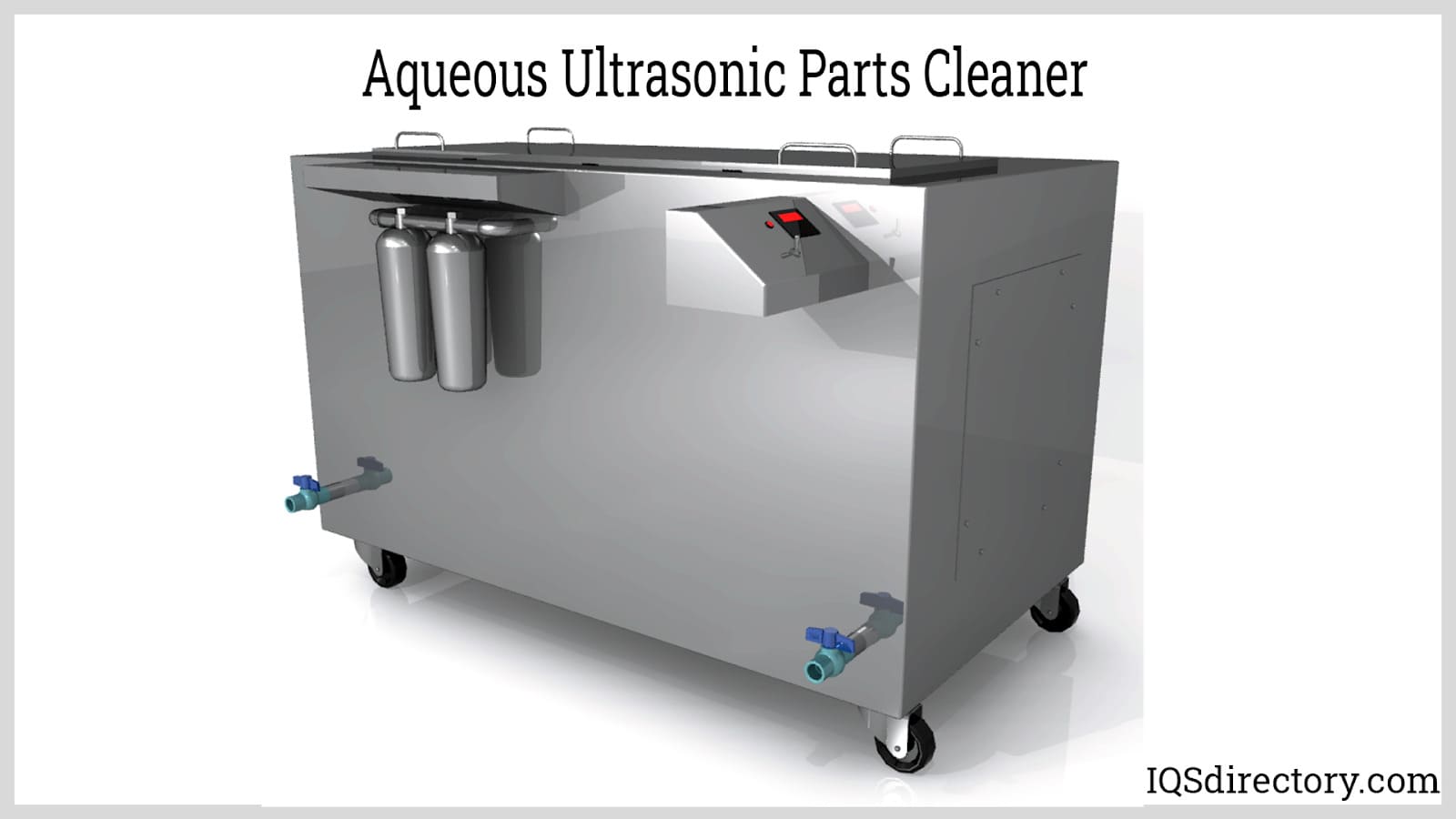
Ultrasonic aqueous parts washers deliver high-precision cleaning through cavitation technology. These systems are engineered for cleaning intricate and sensitive components—such as medical instruments, electronics, and aerospace hardware—where conventional spraying or agitation cannot reach microscopic crevices, blind holes, or intricate passages. By generating ultrasonic waves (20–400 kHz), transducers create millions of microscopic bubbles within the heated, chemical solution, gently but thoroughly dislodging contaminants like oxides, fine particulates, and process residues.

Transducers transform electrical signals into ultrasonic vibrations, inducing intense agitation at the molecular level. This ultrasonic cavitation leaves no surface untouched, even in the most complex parts or assemblies. Ultrasonic parts washing systems are available as benchtop units for laboratories or modular, large-scale platforms for bulk processing. These versatile washers optimize both cleaning quality and process efficiency, supporting a broad range of automated and precision cleaning applications.
Immersion Spray Aqueous Part Washer
Immersion part washers are robust cleaning solutions designed to provide thorough washing by submerging parts in a water-based cleaning fluid. These tanks incorporate pneumatically driven agitation or oscillation mechanisms, which move the components within the bath to accelerate removal of dirt, oils, grinding debris, polishing paste, and even stubborn buildup from hard-to-reach areas. The immersion washer method is especially effective for cleaning complex geometries, such as gears, hydraulic valves, and heat exchangers.

After immersion fully coats every surface, agitation and oscillatory vibrations create turbulence, promoting contact between the cleaning solution and contaminants. Some systems also combine immersion with high-pressure spray or ultrasonic agitation, providing an enhanced, multi-stage cleaning process optimized for heavy-duty and industrial use.
Belt Conveyor Spray Aqueous Part Washer
Conveyor parts washers employ a continuous, automated cleaning line ideal for mass production operations and manufacturing assembly plants. These aqueous cleaning systems feature an enclosed belted conveyor—such as wire mesh or chain—which transports components through a sequenced tunnel that includes washing, rinsing, and drying zones. Precise spray nozzles, integrated filtration, and moisture blow-off features ensure comprehensive parts washing at high throughput rates, while variable speed control and custom fixtures accommodate a diverse range of shapes and sizes.

Modern conveyor parts washers support modular expansion, enabling integration into larger manufacturing cells or lean production lines. Advanced options such as robotic loading/unloading, touch-screen controls, and automated solution monitoring can increase efficiency and traceability. Industries seeking to maximize productivity and maintain rigorous cleanliness standards for high-volume parts—including automotive, aerospace, medical device, and metal stamping facilities—often select conveyor washer systems for their proven reliability and operational efficiency.
Key purchasing considerations for conveyor washers include the flexibility of part handling (basket or fixture options), compatibility with different cleaning agents, temperature controls, and the availability of tailored washing, rinsing, and drying programs to suit diverse industrial cleaning needs.
Rotary Drum Aqueous Part Washer
Rotary drum washers are specialized parts cleaning machines developed for bulk processing of small, high-volume items such as fasteners, bearings, pins, or castings. The rotating drum, equipped with internal helical flights, gently advances and tumbles parts through one or more washing and rinsing stages. Rotary drum washers rely on a combination of spray cleaning, immersion, and agitation to efficiently remove manufacturing lubricants, chips, and surface contaminants without damaging delicate or precision parts.

Drum sizes can be configured from 12 to 72 inches (30.48 to 182.88 cm), with adjustable helix pitch, part agitation, and dwell time to meet specific throughput and surface-cleanliness requirements. Rotary drum parts washers support a range of operations—spray, immersion, oil separation, rinsing, drying, and more—making them highly adaptable for electronics, precision machining, and metal finishing applications. These automated, high-capacity aqueous washers enhance operational efficiency, reduce waste, and streamline post-machining cleaning, contributing to sustainable and cost-effective manufacturing workflows.
How to Choose the Right Aqueous Parts Washer for Your Application
Selecting the optimal aqueous part washer depends on several key factors: the size and material of the parts, type and tenacity of contaminants, required throughput, desired level of automation, and compliance with environmental regulations. Industries must also consider maintenance requirements, available shop floor space, and compatibility with industrial cleaning chemicals or biodegradable detergents. Consulting with industrial parts washer manufacturers and reviewing technical specifications can help ensure you invest in a system tailored for your application—whether you need a robust spray cabinet for engine components, a gentle ultrasonic cleaner for electronics, or a high-throughput conveyor washer for mass production.
For detailed guidance, visit industry leaders such as IQS Directory Parts Washers to compare features, request quotes, and read reviews from verified buyers. Ensuring your chosen aqueous washer is engineered for your cleaning requirements will result in increased productivity, higher cleanliness standards, and compliance with strict industry benchmarks.
Aqueous Part Washer FAQs
- What is an aqueous parts washer? An aqueous parts washer is an industrial cleaning device that uses water-based cleaning solutions—often combined with biodegradable detergents—to wash, degrease, and clean a wide range of materials and components.
- Are aqueous part washers environmentally friendly? Yes, compared to solvent-based washers, aqueous systems typically use environmentally friendly, non-toxic cleaning agents that reduce hazardous waste and increase workplace safety.
- What industries use aqueous parts washers? They are widely used in automotive, aerospace, heavy equipment manufacturing, metal fabrication, maintenance and repair operations (MRO), and electronics industries for precision cleaning of parts and assemblies.
- Can aqueous washers remove heavy oils and grease? Advanced aqueous part washing systems equipped with heated solutions, agitation, and ultrasonics are engineered to remove even the toughest greases and industrial contaminants.
By understanding the different types of aqueous parts washers and matching system capabilities to your specific cleaning requirements, you can maximize productivity, extend equipment lifespans, and uphold high-quality standards while embracing eco-friendly industrial cleaning solutions.
Chapter 3: What Are the Applications and Benefits of Aqueous Part Washers?
Aqueous part washers offer various applications and benefits, including:
Applications of Aqueous Part Washers
Aqueous part washers are utilized across a broad range of applications, from industrial settings to everyday commercial activities. If a machine fails, it can disrupt the entire system, potentially damaging products and harming the brand's reputation, which may impact future sales. In particular, part washers are extensively used in the automotive industry for degreasing and cleaning parts and equipment affected by grease and oil.

Parts are cleaned using aqueous part washers to ensure proper reconditioning and servicing, enabling continued, efficient operation. In addition to their use in the aerospace sector, part washers are also employed to clean aeronautical components, providing thorough and reliable cleaning for sustained performance. They are particularly effective for cleaning metal pipes, handling any size, shape, or material with consistent reliability.

Benefits of Aqueous Part Washers
Many chemicals used in parts cleaning can be harmful and pose significant health risks. Examples include trichloroethylene, perchloroethylene, and n-propyl bromide, all of which release volatile organic compounds (VOCs). These substances are highly flammable and can lead to severe health issues, such as headaches, dizziness, respiratory problems, and exacerbated allergy symptoms. Part washers are crucial in reducing direct human exposure to these hazardous chemicals. They primarily use water, heat energy, and alkaline detergents, which generally pose fewer health risks.

The chemicals used in parts cleaning not only pose risks to human and animal health but also to the environment. Solvent cleaners contribute to land and air pollution, which can be significantly reduced by using less harmful aqueous part washers. These washers utilize environmentally friendly materials, and residues are carefully managed before disposal.
Facility owners should prioritize worker safety alongside business needs. Aqueous part washers offer short run times, resulting in lower electricity costs and reduced labor requirements. They are highly economical due to their efficient mechanical performance.
In the manufacturing process, maintaining clean and well-maintained industrial machines is essential for uninterrupted operations. Regular upkeep ensures that equipment remains in optimal condition with minimal downtime. Aqueous part washers and other cleaning equipment are crucial for ensuring the safety, longevity, and quality of machinery and, consequently, the final products. The following sections detail how aqueous part washers benefit the manufacturing industry.
Improved Production Tolerances
Incorrect components can compromise the entire product and damage the brand's reputation. They can also affect machine performance, leading to breakdowns and interruptions. Parts cleaners help remove residues and ensure smooth machine operation. Regular maintenance prevents surface damage, a major issue for industrial machines. Utilizing stock resource baskets and ultrasonic baskets can help prevent part damage.
Reduced Scrap Production
Scrap production is an inevitable part of any manufacturing process and contributes to increased production costs. However, aligning maintenance with parts washing can significantly reduce scrap. Addressing part damages and removing debris and grease helps minimize waste and improve efficiency.
Minimized Production Delays
Production delays can severely impact output, sales, and brand reputation. Using parts cleaning machines helps prevent unforeseen machinery breakdowns, thereby reducing the likelihood of production delays.
Cut Costs
Machines that lack regular maintenance are prone to frequent breakdowns, leading to higher repair and maintenance costs. Investing in reliable equipment like conveyor parts cleaners, part cleaning systems, and industrial cleaners can reduce the need for frequent repairs and replacements, offering long-term cost savings.
Drawbacks of Aqueous Part Washers
Aqueous part cleaners involve a moderate to high initial investment. Setting up these systems requires technical expertise to ensure reliability and efficiency. They use electrical energy for heating and energy conversion, making them more expensive compared to traditional solvent units. Additionally, aqueous part washers can be vulnerable to corrosion from oxygen or water. To mitigate rusting, rust inhibitors and additional drying mechanisms should be used to prevent moisture accumulation. Some stains and residues can be particularly stubborn and challenging to clean.

Chemical residues can be difficult to remove, even with ultrasonic part washers. Aqueous part washers require significant attention and intensive maintenance to prevent blockages, clogs, or damage caused by residual dirt from cleaned parts. Additionally, some part washers have a compact design that limits their ability to clean very large components. Their cleaning compartments may be too small to accommodate larger parts effectively.
Safety and Economic Control for Aqueous Part Washers
Aqueous part washers operate similarly to other industrial part washers, with the primary goal of removing dust, oil, and grease from machine surfaces. However, these devices use different methods compared to other types of washers. Aqueous cleaners employ detergents, water, corrosive agents, and heat energy to remove debris from mechanical parts. While they are generally safe to operate, these washers can become hazardous if contaminated beyond their operational limits. Excessive contamination can lead to flash points exceeding 140 °F (60 °C), increasing the risk of flammability during the cleaning process.
In addition to increased heat output, aqueous cleaning systems can present other serious safety concerns. Without proper monitoring, these systems can reach pH levels below 2.0 (highly acidic) or above 12.5 (highly alkaline), both of which can have detrimental effects on the environment.
Reducing Waste with Aqueous Cleaning Machines
Aqueous cleaning machines use water to clean and rinse machine parts. Businesses must manage their water usage to comply with regulations and control costs. Facilities using aqueous cleaning systems should implement strategies to minimize water consumption while maintaining effective cleaning processes.
- Only make use of the parts washing machine when necessary.
- Avoid using chlorinated aerosols like brake and carburetor solutions because they can greatly contaminate the exhaust supply and demand the need for proper filtration. Ascertain that a filtration system is installed prior to the inlet supply.
- Check that there are no taps or supply inlets open before initiating the cleaning process. All pipes should be kept closed when not in use. It is also crucial to completely dry the machine to keep airborne contaminants from the solution.
Toxicity of Chemical Solutions
To protect both final products and employees during production and cleaning, operators must monitor the hazard levels of cleaning solutions. While some part washing systems are marketed as non-toxic or non-hazardous, these solutions can become hazardous over time. As they accumulate metal-bearing oils and grease, their toxicity and potency can increase. The following techniques can help control toxin levels in the cleaning solution:
- Control the flashpoint so that it never exceeds the 140 °F (60 °C) level since, at this point, the solution becomes flammable.
- Keep a record of the tests performed on the parts cleaning machines, and keep a keen eye on the levels of toxins rising.
- Constantly change the filter to ensure that the solution is safe from possible contaminants.
- Adhere to maintenance guidelines in the proper storage and disposal of the waste or discarded solutions.
Parts Washer Detergents
Another critical factor in part washing is the choice of chemical or detergent used. The selection of detergent depends on the nature of the parts being cleaned and the cleaning method employed, whether ultrasonic or spray.
Parts cleaning often involves hazardous and toxic detergents and chemicals. Therefore, it is crucial to monitor the workplace environment to ensure proper control over these chemicals to prevent illness and injuries.
Chemicals and Detergents for Parts Cleaning
Detergents and chemicals used in parts cleaning generally include:
Biodegradable Chemicals
Cleaning parts effectively requires materials designed to remove grease, oil, grime, chemical residues, and soil from high volumes of parts. Due to growing environmental concerns, manufacturers are increasingly using biodegradable ingredients in their cleaning solutions.
Oil-Eating Detergents
Oil-eating detergents are highly effective for cleaning industrial parts and can serve as acid-free degreasers.
Water-Based Chemicals
Water-based cleaning chemicals typically have a neutral pH and are non-toxic, non-flammable, and non-irritating. They are also suitable for use in bioremediation systems.
Detergent Solvents
Detergents for aqueous parts cleaners are formulated for use in jet sprayers and power stream washers. To maximize efficiency, these detergent solvents include defoamers that rise to the surface of the cleaning solution to prevent foaming.
Numerous types of washing solutions are designed to be used in ultrasonic parts cleaners. The different types include acidic chemicals, alkaline chemicals, high caustic solutions, deionized water, enzymatic chemicals, neutral solution, and mildly alkaline chemicals.
Ultrasonic washing solutions are classified as either demulsifying or emulsifying. Demulsifying solutions are used to remove oily contaminants and should be drained from the tank promptly after cleaning. Emulsifying solutions, in contrast, suspend contaminants within the tank. If used over multiple cleaning cycles, debris may adhere to the parts upon removal.
Effective parts cleaning often requires strong abrasive chemicals for superior performance. Powerful cleaning agents, such as Trichloroethylene, Sodium Hydroxide, Butyl Cellosolve, Acetone, Toluene, and Benzene, are commonly used. Each of these chemicals serves a specific purpose:
Trichloroethylene is a water-like solvent used in various cleaning solutions. Sodium Hydroxide is a caustic agent that can dissolve grease, oil, fatty acids, and protein deposits. Butyl Cellosolve is frequently used in both industrial and household cleaners. Acetone is a versatile cleaner often used to prepare metals for painting.
Toluene, a solvent less potent than acetone and butanone, is primarily used in paint thinners and can dissolve adhesives, rubbers, and sealants. Bacteria, employed in part cleaners, offer a natural method of stain and soil removal through bioremediation. Benzene is widely used in manufacturing but requires careful handling due to its hazardous effects.
Conclusion
In summation, aqueous part washers are a form of machinery used to clean small to medium parts of industrial machines through the use of water-based solvents and temperature controls.