




Force Calibration: Types, Equipment and Characteristics
IQS Directory EditorialUpdated 3 chapters
7 leading suppliers listed with this guide
Browse force calibration service suppliersContents (3 chapters)
This Article takes an In-depth look at Force-calibration
You will learn more about topics such as:
- Characteristics of Force Calibration
- History of Force Calibration
- What is Force Calibration?
- Types of Force Calibration
- Force Calibration Equipment and Gauges
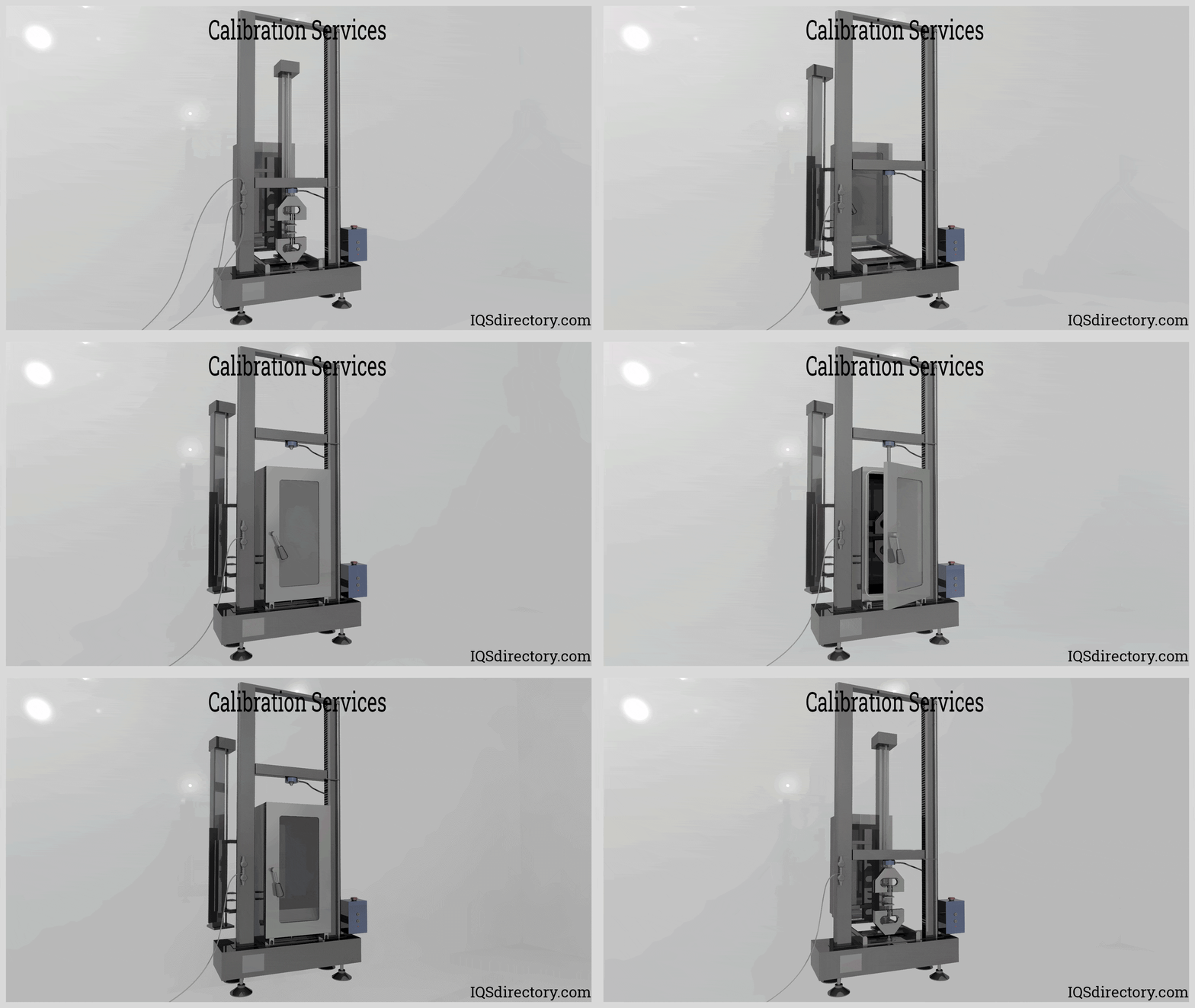
Characteristics of Force Calibration
Force calibration is a critical process for testing the materials used in manufacturing equipment, machines, and other devices. Metals and other materials can expand and contract during use, making it essential to understand their characteristics and durability for consumer safety and industrial processes. The properties of materials are crucial in product design as they influence the product's useful life. Knowing these qualities helps in assessing whether a product can withstand the forces it will encounter.
History of Force Calibration
The need for testing materials emerged from metal failures in the late 19th and early 20th centuries, which led to catastrophic disasters causing property damage and severe casualties. During that period, testing methods were neither controlled nor adequate to ensure equipment stability.
The initial testing device was the Brinell tester, which used a 10 mm metal ball pressed against the material. This device operated with a pneumatic piston to drive the ball. However, the readings from the Brinell tester were unreliable due to the inconsistent force provided by the pneumatic drive, resulting in highly variable results.
The inconsistent results and inaccuracies prompted the development of more precise measuring devices, in collaboration with the United States National Bureau of Standards. Over nearly a century, force calibration methods have significantly improved, and today’s instruments offer the most accurate and reliable data available.
Force Calibration Measurements
Sir Isaac Newton famously noted that motion is governed by force. To manage motion effectively, one must first manage the force. In the realm of physics, force is defined as the product of mass and acceleration. Accurate force measurement requires specific parameters and benchmarks to ensure the precision of the instruments.
The National Institute of Standards and Technology (NIST) offers calibration services for instruments that measure force. For accurate results, NIST experts apply various forces, including compression and tension, to an elastic transducer and document the resulting deformations. Their reports detail the correlation between the applied force and the observed deformation data.
When companies involved in measurement and calibration perform a force calibration, they align their results with those obtained from NIST. Each device is evaluated to confirm its accuracy. If discrepancies arise between the device's readings and NIST standards, adjustments and recalibrations are made to ensure conformity.
What Is Force Calibration?
Force, which can manifest as either a push or pull, is inherently mechanical. A force calibration device provides measurements on the amount of force exerted on an object, material, or device. Since force is a universal application, these measurements help determine the limits of tension, compression, or impact that an object can withstand. The effectiveness of a calibration depends on the device's proper alignment—ensuring it is plumb, level, square, rigid, and with minimal torsion. If these conditions aren't met, the accuracy of the data may be compromised.
While the idea of measuring force might seem straightforward, the underlying science and technology involved in achieving precise readings are quite complex. For force calibration, maintaining accuracy and reliability is crucial, as the safety and error minimization of the data are paramount.
Manufacturers and producers depend on accurate force measurements to establish the specifications for their products. This calibration data is often included in product documentation and sales materials. For instance, knowing the maximum force a shipping crane’s cable can handle is essential for ensuring safety and defining its lifting capabilities.
Cranes are tailored to meet specific customer needs based on their force calibration results. Inaccurate force data can lead to severe and hazardous conditions, potentially compromising a company’s operations and safety. Proper force calibration provides critical information to prevent such risks, ensuring the safety of both personnel and equipment.
Types of Force Calibration
Force is a fundamental concept that must be accurately measured and recorded to ensure the optimal performance of devices and materials. Throughout the nearly century-long history of force calibration, manufacturers have refined and advanced techniques to meet the specific requirements of various objects and materials with precision.
Tension
Tension calibration involves the process of pulling, stretching, or extending an object, in contrast to compression calibration, which deals with pushing or compressing forces.
Compression
Compression calibration involves measuring the force applied to compress or squeeze an object. It typically assesses pushing or squeezing forces. For accurate results, the calibration setup must be correctly aligned, ensuring that the force applied is as direct and aligned as possible, without any unintended angles or deviations.
Hardness
The fundamental principle of hardness is the ability of a material to resist indentation. When a constant force or load is applied, a smaller indentation indicates greater hardness of the material. The hardness is quantified by measuring either the depth or the area of the indentation using various testing techniques.
Impact
Impact testing assesses a material's resilience to sudden impact. This method evaluates how materials respond to shock loading, such as bending, tension, or torsion. By measuring a material's reaction to sudden stress, impact testing helps determine its toughness and susceptibility to brittleness.
Force Calibration Equipment and Gauges
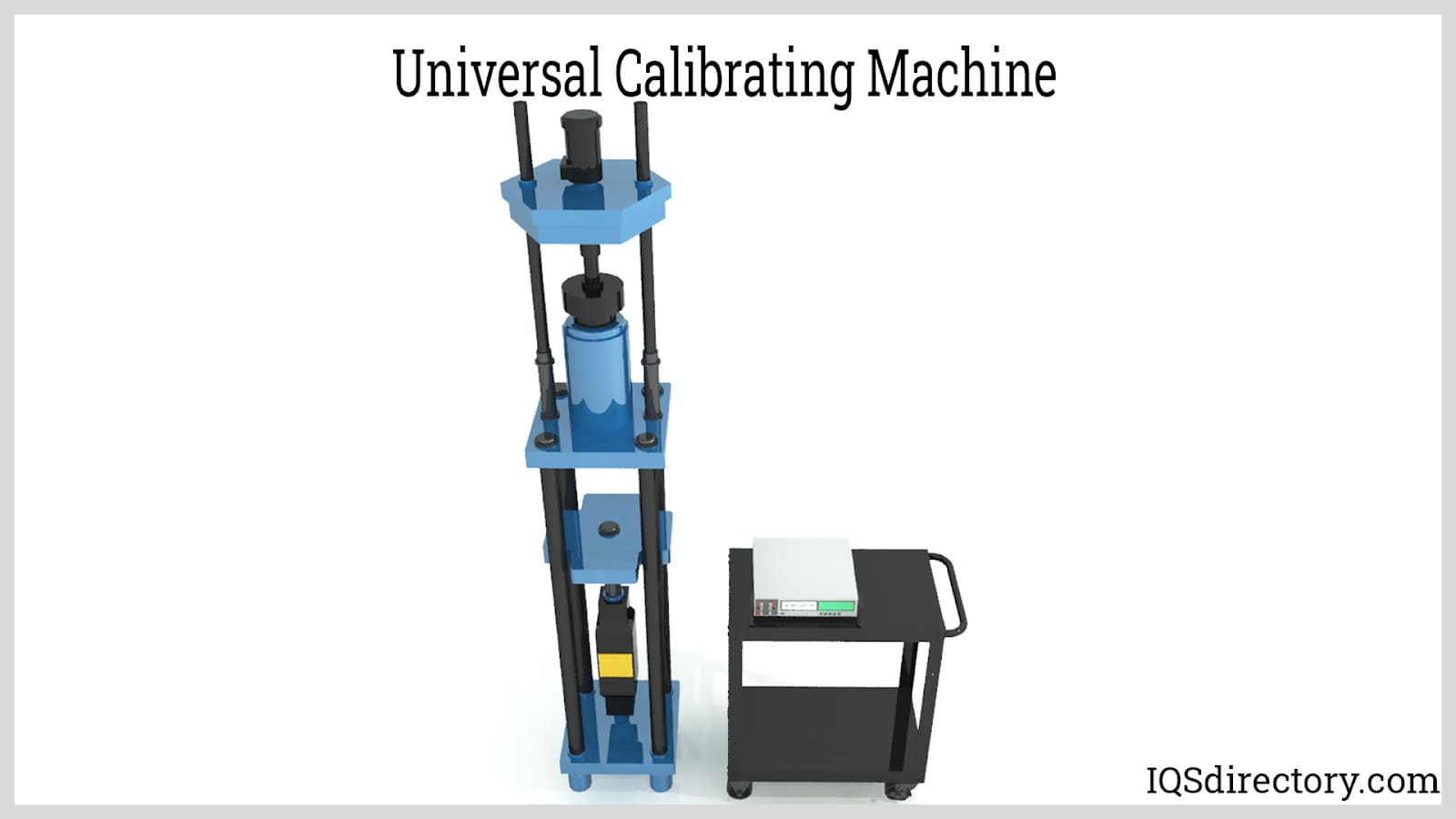
Force calibration utilizes a variety of instruments and devices, ranging from handheld pull and stretch gauges to large press-like machines. The choice of device depends on factors such as the material being tested and the specific testing standards required.
Adapters play a vital role in force calibration, present in all calibration devices regardless of their size. They guide the force application toward the test object, ensuring accurate calibration by directing the forces precisely. For tension calibrations, adapters typically include two ball nuts and two ball cups, while compression tests use ball seats and spherical adapters. Other types of adapters include pin tension links and alignment plugs.
Load Cell
Load cell calibration involves comparing an unknown device to a reference device to characterize and categorize the unknown device. A load cell transforms mechanical energy into electrical signals and indicates force values when connected to an indicator. Regular calibration of load cells is essential to maintain their accuracy.
Force Gauges
Ideal for conducting push or pull tests on springs, metal wires, and gun triggers.
Test Stands
Available in both manual and motorized versions, test stands are used for evaluating materials and products.
Tension Dynamometers
Tension dynamometers are used to measure the output force.
Wheel Pads
Wheel pads are designed for weighing vehicles.