
- 6 leading manufacturers
- 23 additional suppliers
- 14 states and provinces
- 19 related categories
- 5 guide sections
Alumina Ceramic Companies and Suppliers
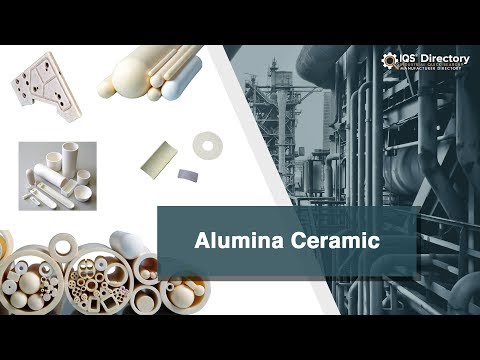
IQS Directory is a top industrial directory listing of leading industrial alumina ceramic manufacturers and suppliers. Access our comprehensive index to review and source alumina ceramic manufacturers with preview ads and detailed product descriptions. These alumina ceramic companies can design, engineer and manufacture alumina ceramics to your specifications and application need. A quick and easy to use request for quote form is provided for you to contact these alumina ceramic manufacturers and suppliers. Each company has detailed profile information, locations, phone number, website links, product videos and product information defined. We are the right resource for your information requirement whether its for a manufacturer of aluminum oxide, aluminum nitride, boron nitride.
Suppliers located in PA, CA, NY +11 more states
Contents (5 sections)
Leading Alumina Ceramic Manufacturers
Showing all 6
| Placement No. | Manufacturer | Location | Contact | Actions | |
|---|---|---|---|---|---|
| 1 | LSP Industrial Ceramics, Inc.The alumina ceramic that we offer cannot be topped! We provide technical and industrial ceramics to a broad customer base around the world. Our products serve a wide range of diverse industries including fluid handling, food processing, military, textiles and much more. Our technicians will work closely with you to come up with a product to fit your exact specifications! Visit our website today to learn more! | Myrtle Beach, SC | |||
| 2 | C-Mac International, LLCC-Mac International manufactures custom advanced technical ceramic solutions. Our specialties are Zirconia (MgO stabilized and Yttria stabilized), Alumina (90%, 96%, and 99.5% purity), and Tungsten Carbide (Cobalt and Nickel Binder). We also work with steatite, cordierite, silicon nitride, ceramic crucibles, and crushable ceramics. We prioritize customer needs - we have a 48-hour delivery on blanket releases, and we can get you a quote within 24 hours. | Cheswick, PA | |||
| 3 | Insaco Inc.Insaco provides custom grinding and machining services to fabricate precision parts from sapphire, quartz, and most technical ceramics including alumina, zirconia, silicon carbide, silicon nitride, aluminum nitride, and others. Engineers are available to discuss material options/alternative recommendations, as well as design concepts to help our customers minimize fabrication costs. Since 1947 Insaco has enjoyed an extremely strong reputation for reliably meeting the toughest grinding and machining requirements in working with these difficult materials. | Quakertown, PA | |||
| 4 | Applied CeramicsApplied Ceramics is a fabricator of custom-made ceramic parts designed for semiconductor, solar, fuel cell, oil drilling, nuclear, and numerous other industries. Materials include ACI-995 Alumina, Zirconia, and more. Our extensive experience with precision designs supported by our team of specialists ensures that our customers have the ideal solution to meet the needs of their application. To get started, contact us today! | Fremont, CA | |||
| 5 | Aremco Products, Inc.Aremco is a leader in the custom formulation of advanced industrial materials including technical ceramics. Offering many capabilities for a broad range of machinable & dense ceramic materials, Aremco serves aerospace, automotive, electrical, electronics, heat treating, metallurgical, petrochemical & plastics applications with superior finished ceramic parts. 100’s of standard industrial products! | Valley Cottage, NY | |||
| 6 | Ceramic SolutionsAt Ceramic Solutions, we provide ceramic manufacturing services that deliver durable, high-performance components for demanding industrial applications. Our company focuses on producing ceramic parts that offer strength, thermal stability, and resistance to wear and corrosion in environments where traditional materials may not perform as effectively. We develop solutions that help customers maintain consistent performance while supporting reliability in challenging operating conditions. | Conroe, TX |
Claim your Page One Spot
Leading alumina ceramic manufacturers are listed first on this page, each with a website preview and a Request a Quote button on its row.
Additional Alumina Ceramic Companies
The category’s other alumina ceramic companies are listed on their own page, with location, phone and website where each supplier provides them.
View 23 Additional Alumina Ceramic CompaniesDo not see your company listed in Alumina Ceramic?
Engineers and buyers use this page to find alumina ceramic suppliers. Add your company to the Alumina Ceramic listings so they can find you too.
List Your Company- Listed in the Alumina Ceramic directory
- A profile page for your company
- Buyers contact you directly
Alumina Ceramic Industrial Manufacturing Guides
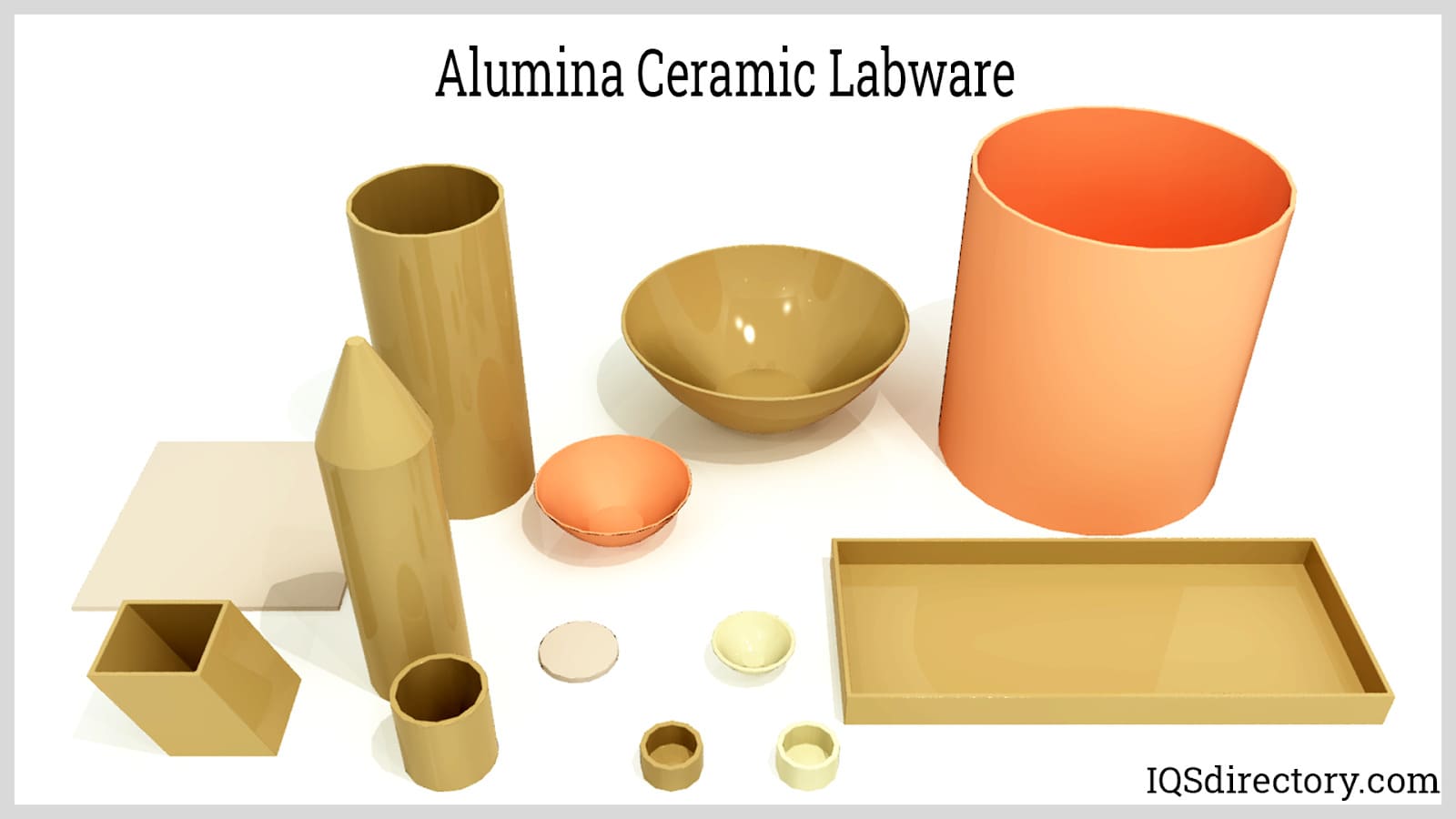
Alumina Ceramics: Properties & Uses
Here is the most concise information on alumina ceramics on the internet. You will learn: What are Alumina Ceramics? The Properties of Alumina Ceramics How…
6 chapters
Quick Answers
- How many alumina ceramic manufacturers are listed on IQS Directory?
- 6 leading manufacturers and 23 additional suppliers.
- Where are alumina ceramic manufacturers located?
- The listed suppliers are in 14 states: Pennsylvania (8), California (4), New York (3), Ohio (3), Texas (2), Arizona (1), Colorado (1), Florida (1), and 6 more.
- How do I get quotes from alumina ceramic suppliers?
- Select suppliers in the table and choose Request Quotes. IQS reviews your request and forwards it to every supplier you select.
Alumina Ceramic
Alumina ceramics are products made from the chemical compound with the same name, alumina ceramic. Alumina ceramic, also known as aluminum oxide, is a combination of aluminum and oxygen. It occurs naturally, most often as corundum, as a crystalline form of the compound that, when gem quality, manifests as sapphire or ruby. Alumina ceramic is extremely hard and durable, resistant to compressive strength, resistant to weathering, resistant to chemicals, electrically insulating, highly dense and stiff and incredibly thermally conductive. In fact, it is up to twenty times more thermally conductive than the majority of other oxides. In addition, it is quite cost effective.
Materials in Alumina Ceramics
Before coming any number of useful products, all alumina ceramics begin as granular powder. This powder can be used alone, but, as is usually the case, it can also be mixed with other substances and stabilizers, selected based on the way or ways that they can improve the alumina. A common additive, zirconia, for instance, is added to the mix in order to increase the ceramic’s fracture toughness. Examples of other additives include manganese oxide, titania, silica, copper and brass. Note that, when it is in its natural state, alumina is white, but when mixed with additional substances, it frequently changes color. For example, alumina ceramics that are around 96% pure are typically brown in color, while those alumina ceramics that are less pure, around 88% for instance, are usually pink.
Phases and Grades of Alumina
In addition, alumina is categorized by phase and grade. These categorizations help manufacturers understand the properties of a particular aluminum oxide and how it might benefit an application. For instance, one of the most commonly used aluminum oxides is smelter grade alumina, also known as metallurgical grade alumina, which is non-toxic, non-flammable and non-hazardous. This stable and low maintenance alumina is the nearly exclusively selected grade of alumina aluminum metal production. Other alumina grades include high purity alumina, calcined alumina, fused alumina, low soda alumina, tabular alumina and reactive alumina. High-purity alumina is defined as any alumina that has a purity of 99.99% or above. It is used to manufacture instrument windows, synthetic gemstones and laser tubes and other laser components. Next, calcined alumina is created when aluminum hydroxide is heated above 1100. Calcined alumina is known to improve the performances of both monolithic and shaped refractories. Fused alumina, which is formed in an electric arc furnace, is used in a crushed form. Low soda alumina is defined as any alumina that has a soda content of <0.1% by weight. It is used primarily with and as electronic and electrical components. Tabular alumina, which is recrystallised or sintered a-alumina, is used in both unshaped and shaped refractories for waste incineration, petrochemical, glass, cement steel and foundry applications. Finally, reactive alumina is fairly pure, small crystal alumina. It is used in the creation of high-performance refractories that require consistent placement characteristics and defined particle packing.
Alumina Ceramic Manufacturing Processes
After an alumina formula has been selected and finalized, it is further processed and manufactured using any number of processes, such as injection molding, extrusion, pressing or slip casting. The only processes through which alumina ceramic products cannot be created are forging, stretching, blowing and thermoforming; all of these processes would put the alumina at risk of becoming brittle, a state that would likely lead to breakage.
Applications of Alumina Ceramics
Finished alumina ceramics are highly useful and exhibit high performance levels and durability. Some of the most common products in which alumina ceramics are found include: grinding media, paint, plastic, sunscreen, blush, lipstick, nail polish and other cosmetics, glass, composite fiber and sodium vapor lamps. They serve roles as gas stream purifiers, sandpaper abrasives, ceramic eyes on fishing rods, coating suspensions in fluorescent lamps, material in birth control pills, material in hip replacements, electrical insulators, thermocouples, thread guides, wear components, tunnel barriers during the fabrication of superconductors and more. Alumina ceramics are particularly useful in the creation of insulation for high heat furnaces. Alumina ceramics-based insulation, which are often mixed with varying percentages of silica, can be made in many forms, including in the forms of bricks, loose fibers, blankets and boards. Alumina ceramics also make excellent spark plug insulators.
These qualities make alumina ceramics ideal for a wide variety of industrial and commercial applications, including: automotive and aerospace engineering, medical instrument fabrication, prosthetic limb creation, ballistic ceramic armor creation, metalizing, seal ring fabrication, welding, plating and the pre-finishing of wood flooring.
Alumina is an amazingly diverse product with breathtaking prominence in the world. To find out how alumina ceramics might serve you, contact a reputable ceramic manufacturer.
Engineering Properties of Alumina Ceramics*
|
Mechanical |
Units of Measure |
SI/Metric |
(Imperial) |
| Density |
gm/cc (lb/ft3) |
3.26 |
(203.5) |
| Porosity |
% (%) |
0 |
(0) |
| Color |
— |
gray |
— |
| Flexural Strength |
MPa (lb/in2x103) |
320 |
(46.4) |
| Elastic Modulus |
GPa (lb/in2x106) |
330 |
(47.8) |
| Shear Modulus |
GPa (lb/in2x106) |
— |
— |
| Bulk Modulus |
GPa (lb/in2x106) |
— |
— |
| Poisson’s Ratio |
— |
0.24 |
(0.24) |
| Compressive Strength |
MPa (lb/in2x103) |
2100 |
(304.5) |
| Hardness |
Kg/mm2 |
1100 |
— |
| Fracture Toughness KIC |
MPa•m1/2 |
2.6 |
— |
| Maximum Use Temperature (no load) |
°C (°F) |
— |
— |
|
Thermal |
|||
| Thermal Conductivity |
W/m•°K (BTU•in/ft2•hr•°F) |
140–180 |
(970–1250) |
| Coefficient of Thermal Expansion |
10–6/°C (10–6/°F) |
4.5 |
(2.5) |
| Specific Heat |
J/Kg•°K (Btu/lb•°F) |
740 |
(0.18) |
|
Electrical |
|||
| Dielectric Strength |
ac-kv/mm (volts/mil) |
17 |
(425) |
| Dielectric Constant |
@ 1 MHz |
9 |
(9) |
| Dissipation Factor |
@ 1 MHz |
0.0003 |
(0.0003) |
| Loss Tangent |
@ 1 MHz |
— |
— |
| Volume Resistivity |
ohm•cm |
>1014 |
— |
|
Mechanical |
Units of Measure |
SI/Metric |
(Imperial) |
| Density |
gm/cc (lb/ft3) |
3.69 |
(230.4) |
| Porosity |
% (%) |
0 |
(0) |
| Color |
— |
white |
— |
| Flexural Strength |
MPa (lb/in2x103) |
330 |
(47) |
| Elastic Modulus |
GPa (lb/in2x106) |
300 |
(43.5) |
| Shear Modulus |
GPa (lb/in2x106) |
124 |
(18) |
| Bulk Modulus |
GPa (lb/in2x106) |
165 |
(24) |
| Poisson’s Ratio |
— |
0.21 |
(0.21) |
| Compressive Strength |
MPa (lb/in2x103) |
2100 |
(304.5) |
| Hardness |
Kg/mm2 |
1175 |
— |
| Fracture Toughness KIC |
MPa•m1/2 |
3.5 |
— |
| Maximum Use Temperature (no load) |
°C (°F) |
1700 |
(3090) |
|
Thermal |
|||
| Thermal Conductivity |
W/m•°K (BTU•in/ft2•hr•°F) |
18 |
(125) |
| Coefficient of Thermal Expansion |
10–6/°C (10–6/°F) |
8.1 |
(4.5) |
| Specific Heat |
J/Kg•°K (Btu/lb•°F) |
880 |
(0.21) |
|
Electrical |
|||
| Dielectric Strength |
ac-kv/mm (volts/mil) |
16.7 |
(418) |
| Dielectric Constant |
@ 1 MHz |
9.1 |
(9.1) |
| Dissipation Factor |
@ 1 kHz |
0.0007 |
(0.0007) |
| Loss Tangent |
@ 1 kHz |
— |
— |
| Volume Resistivity |
ohm•cm |
>1014 |
— |
|
Mechanical |
Units of Measure |
SI/Metric |
(Imperial) |
| Density |
gm/cc (lb/ft3) |
3.72 |
(232.2) |
| Porosity |
% (%) |
0 |
(0) |
| Color |
— |
white |
— |
| Flexural Strength |
MPa (lb/in2x103) |
345 |
(50) |
| Elastic Modulus |
GPa (lb/in2x106) |
300 |
(43.5) |
| Shear Modulus |
GPa (lb/in2x106) |
124 |
(18) |
| Bulk Modulus |
GPa (lb/in2x106) |
172 |
(25) |
| Poisson’s Ratio |
— |
0.21 |
(0.21) |
| Compressive Strength |
MPa (lb/in2x103) |
2100 |
(304.5) |
| Hardness |
Kg/mm2 |
1100 |
— |
| Fracture Toughness KIC |
MPa•m1/2 |
3.5 |
— |
| Maximum Use Temperature (no load) |
°C (°F) |
1700 |
(3090) |
|
Thermal |
|||
| Thermal Conductivity |
W/m•°K (BTU•in/ft2•hr•°F) |
25 |
(174) |
| Coefficient of Thermal Expansion |
10–6/°C (10–6/°F) |
8.2 |
(4.6) |
| Specific Heat |
J/Kg•°K (Btu/lb•°F) |
880 |
(0.21) |
|
Electrical |
|||
| Dielectric Strength |
ac-kv/mm (volts/mil) |
14.6 |
(365) |
| Dielectric Constant |
@ 1 MHz |
9.0 |
(9.0) |
| Dissipation Factor |
@ 1 kHz |
0.0011 |
(0.0011) |
| Loss Tangent |
@ 1 kHz |
— |
— |
| Volume Resistivity |
ohm•cm |
>1014 |
— |
|
Mechanical |
Units of Measure |
SI/Metric |
(Imperial) |
| Density |
gm/cc (lb/ft3) |
3.89 |
(242.8) |
| Porosity |
% (%) |
0 |
(0) |
| Color |
— |
ivory |
— |
| Flexural Strength |
MPa (lb/in2x103) |
379 |
(55) |
| Elastic Modulus |
GPa (lb/in2x106) |
375 |
(54.4) |
| Shear Modulus |
GPa (lb/in2x106) |
152 |
(22) |
| Bulk Modulus |
GPa (lb/in2x106) |
228 |
(33) |
| Poisson’s Ratio |
— |
0.22 |
(0.22) |
| Compressive Strength |
MPa (lb/in2x103) |
2600 |
(377) |
| Hardness |
Kg/mm2 |
1440 |
— |
| Fracture Toughness KIC |
MPa•m1/2 |
4 |
— |
| Maximum Use Temperature (no load) |
°C (°F) |
1750 |
(3180) |
|
Thermal |
|||
| Thermal Conductivity |
W/m°K (BTU•in/ft2•hr•°F) |
35 |
(243) |
| Coefficient of Thermal Expansion |
10–6/°C (10–6/°F) |
8.4 |
(4.7) |
| Specific Heat |
J/Kg•°K (Btu/lb•°F) |
880 |
(0.21) |
|
Electrical |
|||
| Dielectric Strength |
ac-kv/mm (volts/mil) |
16.9 |
(420) |
| Dielectric Constant |
@ 1 MHz |
9.8 |
(9.8) |
| Dissipation Factor |
@ 1 kHz |
0.0002 |
(0.0002) |
| Loss Tangent |
@ 1 kHz |
— |
— |
| Volume Resistivity |
ohm•cm |
>1014 |
— |
*All properties are room temperature values except as noted.
The data presented is typical of commercially available material and is offered for comparative purposes only. The information is not to be interpreted as absolute material properties nor does it constitute a representation or warranty for which we assume legal liability. User shall determine suitability of the material for the intended use and assumes all risk and liability whatsoever in connection therewith.