
- 6 leading manufacturers
- 35 additional suppliers
- 15 states and provinces
- 11 related categories
- 10 guide sections
Air Pollution Control Manufacturers and Suppliers

IQS Directory provides a comprehensive list of air pollution control equipment manufacturers and suppliers. Use our website to review and source top air pollution control equipment manufacturers with roll over ads and detailed product descriptions. Find air pollution control equipment companies that can design, engineer, and manufacture air pollution control equipment to your companies specifications. Then contact the air pollution control equipment companies through our quick and easy request for quote form. Website links, company profile, locations, phone, product videos and product information is provided for each company. Whether you are looking for manufacturers of air pollution equipment, air pollution control or customized air pollution control equipment of every type, this is the resource for you.
Suppliers located in PA, WI, NY +12 more states
Contents (6 sections)
Leading Air Pollution Control Manufacturers
Showing all 6
| Placement No. | Manufacturer | Location | Contact | Actions | |
|---|---|---|---|---|---|
| 1 | Anguil Environmental Systems, Inc.Anguil Environmental provides highly-engineered, environmental equipment and service solutions that help clients solve complex industrial air pollution control and wastewater treatment challenges across the globe. Anguil air pollution control systems include thermal and catalytic oxidation technologies for compliance with VOC, HAP and odor regulations. | Milwaukee, WI | |||
| 2 | Dürr CTS Inc.Dürr is a leading global supplier of environmental solutions and engineered products tailored to meet customers' industrial process requirements. We offer a complete portfolio of air pollution control technologies including scrubbers, wet electrostatic precipitators, thermal and catalytic oxidizers, and solvent recovery systems. | De Pere, WI | |||
| 3 | The CMM GroupThe CMM Group provides design and build, and technical engineering services for VOC emission control, odor abatement solutions and energy recovery systems. CMM Aftermarket Services team provides preventive maintenance and inspection services, controls upgrades, retrofit and rebuild services to extend the life of existing equipment. For small or large, complex projects, The CMM Group’s extensive process and equipment knowledge helps to find the correct solution for customer applications. | De Pere, WI | |||
| 4 | Ducon Environmental SystemsMeet stringent environmental regulations with Ducon's complete line of the most advanced air pollution control equipment: cyclones, scrubbers, incinerators, electrostatic precipitators, activated carbon absorbers, gas absorption towers, flue gas desulfurization, chemical strippers, NOx & VOC Control, etc. | Farmingdale, NY | |||
| 5 | Air Impurities Removal SystemsAt Air Impurities Removal Systems, we specialize in advanced air pollution control solutions designed to help industrial facilities maintain clean, compliant, and efficient operations. Our company engineers and manufactures comprehensive systems that capture, filter, and remove airborne contaminants generated by manufacturing, processing, and material handling applications. | Wauwatosa, WI | |||
| 6 | Air Dynamics Industrial Systems CorporationAir Dynamics Industrial Systems Corporation designs and manufactures engineered air pollution control and material-handling systems for demanding industrial applications. Rather than applying off-the-shelf equipment to every problem, we start with the process—evaluating the contaminant, source, airflow, material characteristics, facility conditions and operational requirements before recommending equipment. | York, PA |
Claim your Page One Spot
Leading air pollution control manufacturers are listed first on this page, each with a website preview and a Request a Quote button on its row.
Additional Air Pollution Control Companies
The category’s other air pollution control companies are listed on their own page, with location, phone and website where each supplier provides them.
View 35 Additional Air Pollution Control CompaniesDo not see your company listed in Air Pollution Control?
Engineers and buyers use this page to find air pollution control suppliers. Add your company to the Air Pollution Control listings so they can find you too.
List Your Company- Listed in the Air Pollution Control directory
- A profile page for your company
- Buyers contact you directly
Air Pollution Control Industrial Manufacturing Guides
Air Pollution Control Equipment: Types and Applications
This article will take an in-depth look at air pollution control equipment. You will learn about: What is Air Pollution Control Equipment? History of Air…
6 chapters, the longest in this category
Quick Answers
- How many air pollution control manufacturers are listed on IQS Directory?
- 6 leading manufacturers and 35 additional suppliers.
- Where are air pollution control manufacturers located?
- The listed suppliers are in 15 states and provinces: Pennsylvania (6), Wisconsin (6), New York (4), Texas (4), Illinois (3), Indiana (3), Michigan (3), California (2), and 7 more.
- How do I get quotes from air pollution control suppliers?
- Select suppliers in the table and choose Request Quotes. IQS reviews your request and forwards it to every supplier you select.
Air Pollution Control
Air pollution control equipment is engineered to capture, neutralize, and eliminate airborne contaminants across a wide spectrum of industrial processes. These systems target volatile organic compounds (VOCs), hazardous air pollutants (HAPs), particulate matter, and industrial emissions such as sulfuric fumes, gases, odors, and vapors. By reducing pollutant output at the source, air pollution control solutions help industries meet environmental regulations, improve workplace air quality, and reduce long-term ecological impact. Businesses exploring solutions often ask: how can emissions be reduced without compromising productivity? Modern control technologies answer this by combining efficiency, automation, and energy recovery to deliver measurable environmental and operational benefits.
The History of Air Pollution
Industrialization introduced large-scale emissions from factories, transportation systems, and power generation. Over time, these emissions reshaped air quality across urban and industrial regions. Major historical events demonstrated the consequences of uncontrolled emissions, prompting governments and industries to adopt monitoring, compliance strategies, and engineered pollution control systems.
These turning points reshaped how businesses approach emissions today. Companies now actively seek solutions such as industrial scrubbers, oxidizers, and filtration systems to align with environmental standards while maintaining production efficiency.
What Is Air Pollution?
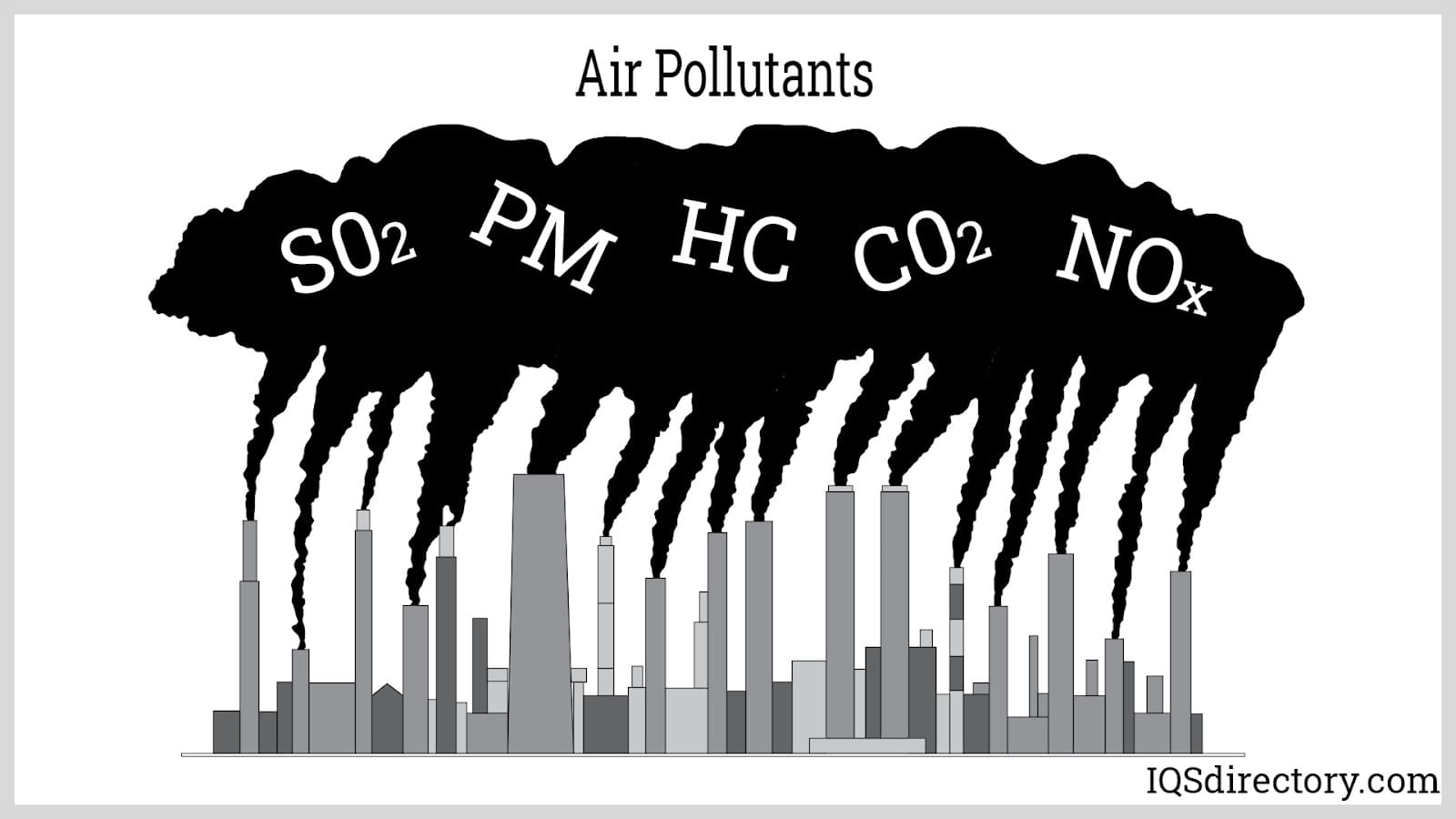
Air pollution refers to the presence of harmful substances in the atmosphere, including gases, particles, and chemical compounds that disrupt natural air composition. Common pollutants include carbon monoxide, nitrogen oxides, sulfur dioxide, and particulate matter. These emissions originate from industrial processes, combustion systems, and transportation networks.
As industries expand, controlling emissions becomes a central concern for regulatory compliance and operational sustainability. Businesses often evaluate emission levels, monitoring systems, and mitigation technologies to maintain safe atmospheric conditions.
What Is Air Pollution Control Equipment?
Air pollution control equipment includes engineered systems designed to capture, transform, or eliminate pollutants before they enter the atmosphere. Facilities use oxidizers, scrubbers, filtration units, and electrostatic systems to address specific emission challenges. Choosing the right system often depends on pollutant type, airflow rate, temperature conditions, and regulatory requirements.
Advanced systems integrate automation, sensors, and real-time monitoring, allowing operators to track emissions and optimize performance. Businesses frequently ask: which system best fits my process? The answer depends on factors such as emission composition, required removal efficiency, and long-term operating costs.
How Air Pollution Is Created
Air pollution results from industrial activity, combustion processes, and chemical reactions. Manufacturing plants, power facilities, and transportation systems release gases and particulates that accumulate in the atmosphere. Without control systems, these emissions can exceed safe thresholds.
- Carbon Monoxide (CO): Produced through incomplete combustion, posing risks in enclosed environments.
- Nitrogen Oxides (NOx): Formed during high-temperature combustion and associated with smog formation.
- Sulfur Dioxide (SO2): Released from fossil fuel combustion, contributing to acid rain.
Air Pollution by Smog
Smog forms when pollutants react with environmental factors such as sunlight and atmospheric conditions. Photochemical smog is common in industrial regions and urban centers, where emissions combine with ultraviolet radiation. Monitoring and control systems help businesses reduce smog-forming emissions and maintain compliance.
Air Pollution and Human Health
Exposure to polluted air affects respiratory and cardiovascular health. Long-term exposure can lead to chronic conditions, making emission control an important factor in workplace safety and community health. Improving indoor air quality (IAQ) through filtration and ventilation systems also supports healthier environments.
Organizations evaluating air quality solutions often focus on reducing particulate matter, eliminating harmful gases, and maintaining consistent airflow conditions within facilities.
How Air Cleaning Devices Work
Air pollution control devices operate through multiple mechanisms that target pollutants at different stages:
- Destroying contaminants: Systems chemically convert pollutants into safer compounds.
- Modifying chemicals: Technologies alter pollutant composition to reduce toxicity.
- Removing hazards from the air: Filtration and capture systems physically separate contaminants.
Air Pollution Control Equipment
Environmental regulations and sustainability initiatives continue to drive the adoption of air pollution control systems. Businesses increasingly prioritize solutions that balance emission reduction with energy efficiency, operational cost control, and long-term reliability.
Purpose of Air Pollution Control Equipment
Air pollution control systems are designed to reduce VOCs, HAPs, and particulate emissions while supporting compliance with environmental standards. These systems help industries improve operational performance while minimizing environmental impact.
Oxidizers for Pollution Control
Thermal Oxidizers
Thermal oxidizers use elevated temperatures to break down hazardous compounds. Variants such as regenerative thermal oxidizers (RTOs) and recuperative systems improve energy efficiency through heat recovery.
Catalytic Oxidizers
Catalytic oxidizers rely on catalysts like platinum or palladium to accelerate chemical reactions at lower temperatures. This approach reduces energy consumption while maintaining effective VOC destruction.
Both systems are widely used in industries such as chemical processing, printing, coating, and manufacturing.
Carbon Absorbers for Pollution Control
Carbon absorption systems capture VOCs using activated carbon media. These systems are often selected for odor control, solvent recovery, and emission reduction applications.
- Amines: Used in gas treatment processes.
- Minerals and Zeolites: Provide adsorption capabilities.
- Sodium Hydroxide: Neutralizes acidic gases.
- Lithium Hydroxide: Used in specialized absorption systems.
While installation and operating costs can vary, these systems offer reliable performance for targeted emission control applications.
Other Types of Pollution Control Equipment
Electrostatic Precipitators
Electrostatic precipitators remove fine particles from exhaust streams with high efficiency, making them suitable for power plants and industrial operations.
Cyclones
Cyclones act as pre-cleaners by separating larger particles through centrifugal force, often used alongside other systems.
Air Pollution Scrubbers
Scrubbers remove pollutants using liquid or dry processes, offering flexibility across various industrial applications.
Baghouse Filters
Baghouse systems capture particulate matter using fabric filters, delivering high removal efficiency for industrial dust collection.
Key Considerations for Purchasing Air Pollution Control Systems
Quality Equipment Selection
Select systems based on pollutant type, airflow requirements, and desired removal efficiency.
Reputable Suppliers
Evaluate suppliers based on experience, system design capabilities, and service offerings.
Cost vs. Quality
Balance upfront investment with long-term performance and maintenance considerations.
Installation and Maintenance
Proper installation and ongoing maintenance ensure consistent system performance and compliance with environmental standards.
Common Questions
7 questions
What Is Air Pollution Control Equipment Used For?
Air pollution control equipment removes harmful pollutants such as VOCs, sulfuric fumes, and hazardous gases. It reduces environmental risks like smog, acid rain, and global warming while protecting human health and ensuring regulatory compliance.
How Do Thermal Oxidizers Reduce Air Pollution?
Thermal oxidizers use high heat to convert hazardous compounds into harmless gases like carbon dioxide and water. Many systems incorporate heat recovery, improving energy efficiency and lowering operational costs in industrial environments.
What Pollutants Are Commonly Targeted by Scrubbers?
Scrubbers remove acid gases, particulates, and toxic fumes. Wet scrubbers use liquid sprays to clean flue gas, while dry scrubbers use sorbents to neutralize emissions and improve air quality.
What Role Did the Clean Air Act Play in Pollution Control?
The Clean Air Act established federal authority to regulate emissions, requiring industries to implement pollution control systems and maintain compliance with air quality standards.
How Do Electrostatic Precipitators Clean Emissions?
Electrostatic precipitators use electrical charges to capture fine particles from an airstream, achieving high efficiency in removing dust, ash, and industrial particulates.
What Health Risks Are Linked to Air Pollution Exposure?
Exposure to air pollution can lead to respiratory conditions, cardiovascular disease, and long-term health complications, particularly in vulnerable populations.
Why Are Regenerative Thermal Oxidizers Popular in U.S. Facilities?
Regenerative thermal oxidizers maximize heat recovery and reduce fuel consumption, making them a cost-effective and efficient solution for industrial emission control.